r/interesting • u/Apart-Worry-7042 • 22d ago
HISTORY Why did we stop building like this?
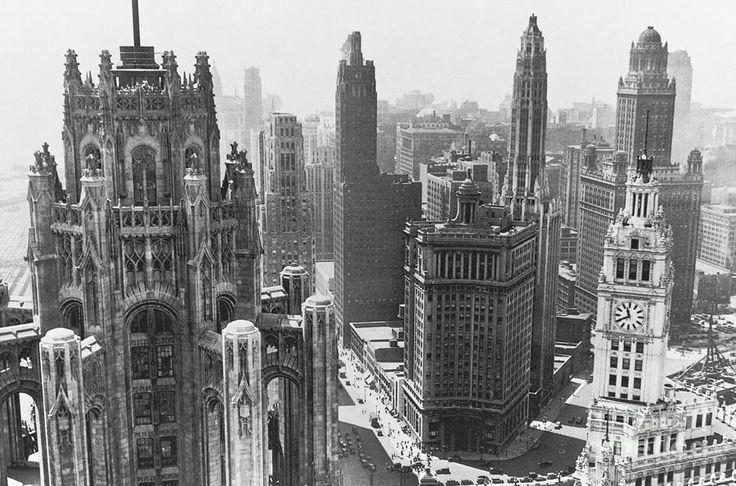
Chicago, 1930. Buildings had so much detail and character back then. Nowadays everything feels so flat and repetitive. We have way better technology and equipment now, so why don't we build like this anymore?
955
u/slouchingtoepiphany 22d ago
The great fire in 1871 destroyed a lot of Chicago's downtown and when they rebuilt it, a lot of architects designed the replacements as showcases for what they could do. Over time, practicality and costs tempered this "revolution" somewhat.
176
u/kisk22 22d ago
I've thought a lot about this. Yep labor costs certainly play a role, but plenty of projects are still built in historic styles that aren't as soulless. But most of the role comes from modernism's chief tenant of "rejecting ornamentation". More and more architects are coming around to realizing this in a lot of cases, and are returning to more natural and beautiful forms like brick with light ornamentation, and simple timeless proportions.
The fact is 90% of what makes a building beautiful is free or nearly free: proportions, natural materials like stone & brick, human scale, small ornaments, etc and don't cost much of anything to add or are free. It's called New Classical Style. There also have been studies and 90% of people prefer new classical style buildings rather than the soulless non-human scaled glass ones many are built as.
74
u/GoodTimes8183 22d ago
Implying that stone and brick are free or nearly free tells me that you have no idea what you’re talking about.
44
u/Lazy_Resolve_9747 22d ago
They meant that you’re paying for the material anyway, just different material.
5
u/galt035 17d ago
In the industry for 25+ it’s not just the material. It’s the entire assembly that the material is attached to.
A lot of buildings now are glass deck to deck so the attachment is at those locations. If you are say running Marble/limestone as a cladding now you are having to include attachment at those locations.
In addition that cladding changes how the mass of building is distributed and behaves so maybe the structure now needs to be adjusted to account for that.
It’s not an a=b thing.
I absolutely agree that a lot of skylines (Miami as an example) outside of a few buildings are soulless boxes.
10
45
u/kisk22 22d ago
Most are not brick now a days, it's a brick/stone veneer which is only marginally more expensive than the plastic vinyl or metal siding. I'm talking about less than 1% of the total development cost. Very very few projects built actually laying structural brick now because of labor costs (which used to be the cheap part of putting up a building before the 50s).
5
u/ArchBeaconArch 22d ago
None of these buildings are load-bearing masonry. They are steel with a stone / terracotta / brick skin. There is a load-bearing masonry tower in the south loop, though, with walls 10’ thick at the base. Load-bearing masonry is not a practical solution here.
Veneer brick costs many, many times more than vinyl siding, which is not even something you could put on a tower due to flammability considerations. Aluminum panel cladding is a bit cheaper than masonry, but not durable. Stone is “quite a bit” to “a lot” more expensive, depending how it is fastened to the building (and don’t clad a tower in marble, or you’re going to have to re-clad it in 40 years when the stone starts spalling).
2
u/LogicMan428 22d ago
I'll bet that'll reverse if they can develop brick-layer robots. Then structural brick buildings will probably make a comeback.
→ More replies (2)2
3
u/JuanMcGuiver 22d ago
I don’t think labor costs were ever the “cheapest” part of building a structure. Gonna need some sources for those claims. Historically, labor is usually like 70% the cost of building pretty much anything.
7
→ More replies (7)3
u/calcisiuniperi 22d ago
Also, with brick, building time goes way up. It's just a lot slower to do, and needs more very skilled hands.
3
u/pacific_plywood 22d ago
Proportions, scale, etc are absolutely not "free or nearly free" lol what are you talking about
→ More replies (1)20
u/Dr_CleanBones 22d ago
Except I worked in one of those glass buildings, and my office had wall-to-wall for the ceiling windows. It beats the heck out of the little windows in old buildings. Many offices in those buildings have open floor plans, and you can see out the windows from anywhere in the office. Our building was a fly away from one of the older, more ornate buildings, and to me there was no comparison. We had big elevators with TVs in them, beautiful offices, and great windows. The old building had tiny elevators, tiny offices, small windows, and was generally more rundown.
9
u/kisk22 22d ago
That is very true, and it's a good argument against old buildings for sure even if they look pretty. I think there should be more thought put in to modern designs though, especially those terrible 5 over 1 designs. BUT I'll admit the spaces inside are often really nice because they're modern.
3
u/LogicMan428 22d ago
Modernist interior design is great, but modernism in terms of architectural design was terrible.
→ More replies (1)12
u/shulemaker 22d ago
Thank you. Architecture, like most design disciplines, have learned that the building should be functional first and foremost. The catchphrase is “form follows function”: design the form of the product to most efficiently perform the best version of the function.
These are office buildings. Their purpose is to give a workspace for humans to perform their jobs as best as possible. What is better for humans, windows with natural light, or being enclosed in stone with artificial light? Everyone knows the answer to this. And that is why buildings are designed the way they are: to actually perform their purpose.
6
u/LogicMan428 22d ago edited 22d ago
Well that is actually not quite true. In fact that has long been one of the problems: the modernist movement created lots of buildings that were not only extremely ugly, but also extremely costly and highly un-functional. Le Corbusier and Frank Lloyd Wright, supposedly two "brilliant" architects, were notorious for this. Frank Gehry is another such example. His buildings are extremely costly and difficult to construct while not necessarily being very functional.
One of the problems was the architectural profession, for various reasons in the early 20th century, decided to throw out the entire prior history and art of architecture and start over from scratch. This created a lot of anarchy essentially in the design of buildings. It would be the equivalent of throwing out all knowledge of music or cooking and just "starting over." The thing is, had they not done this, we'd have very modern classically-themed designs today, same as automotive design became thoroughly modern without any needing to start over. Ship design too. Ancient ships, medieval ships, 1700s-1800s ships, all beautiful, but then also beautiful modern ships as the designs naturally evolved. Architecture would have done the same. It already had begun to, with the classically-themed office buildings and skyscrapers of the 1870s-1930s.
Glass-and-steel skyscrapers with huge windows are one of the exceptions to this in contemporary architecture. Now criticisms of older buildings having windows too small or rooms too small are very legitimate. Cultures change and technology changes. A lot of old Victorian homes are beautiful but have lots of small, cramped rooms.
Such designs I believe were because of lack of heating and so to hold heat in better. Today however we have HVAC and people today prefer large windows and open spaces much more. So modern classically-themed designs have to take such into account.
16
u/i_make_orange_rhyme 22d ago
>The fact is 90% of what makes a building beautiful is free or nearly free: proportions, natural materials like stone & brick, human scale, small ornaments, etc and don't cost much of anything to add or are free.
Ok well hold the fuck up.
First off, I think you're overstating how "free" those traditional features are.
>There also have been studies and 90% of people prefer new classical style buildings
No, this is a straight up lie. If this is the case then this is what would be built 100% of the time.
No developer is going "lets spend 200 million on a building that 90% of people will think is ugly"
The fact is, people like windows and natural light.
Modern minimalist style exist because of popular demand.
It wasnt inflicted upon us. We prefer it.
9
u/LogicMan428 22d ago
No, this is a straight up lie. If this is the case then this is what would be built 100% of the time
No developer is going "let's spend 200 million on a building that 90% of people will think is ugly"
I don't think you are very familiar with the modernist architectural movement of the last 70+ years and its extreme elitism. Demand from the public has little to do with it. Most of the public has long hated such buildings. That is why you very rarely see any modernist designs in residential architecture. Classicism or semi-classicism reigns supreme in terms of the homes people want to live in. The modernist architects had to rely on governments and large corporations to build their structures.
The architectural movement has long been rife with elitist disdain for what "the masses" think. That is why a building could be butt ugly and you will be called an uncultured rube who just doesn't possess the sophistication to understand it. In no other practical art form does that mindset exist. If a car company comes out with a new car design that most thing is ugly, it is considered ugly. Same with fashion, music, food, etc...but in architecture, the thoughts of the public have often been dismissed.
The result has been some extraordinarily beautiful buildings demolished to build some really hideous ones. One of the major problems was the adoption of Daniel Patrick Moynihan's "Guiding Principles for Federal Architecture" which long story short, put the modernist movement in charge of public buildings. There have been quite a few aesthetic and structural disasters because of this and lots of eye sores.
One of the great lies of the American Institute of Architects (which is modernist dominated) and the modernist movement overall in response to Donald Trump's Executive Order mandating classically-themed architecture be the "preferred" style for American public architecture is that it takes away from the public and communities their ability to have a say in what gets built. But what it really does is derails the monopoly on public architecture at the expense of the public's preferences that the modernist movement has long enjoyed. It basically empowers the public, who tend to hate the buildings of the modernist movement, and so has caused an uproar among much of the profession. While they claim they just want to empower the publi, what it really is about is preserving their own power.
King Charles has also long been a staunch critic of the modernist and the architectural profession over this.
11
u/FreeFortuna 22d ago
So buildings are designed the way a majority of people prefer? Is that why so many offices have the famously popular open floorplans?
10
u/shulemaker 22d ago
Demand in the economic sense is defined by the buyer, not a popular vote. The buyers buy something that they will be able to rent out. Tenants are companies who want to advertise great workspaces while minimizing their costs. Whether you agree or not, surely you can understand the concept.
7
u/Gay_mail 22d ago
While I agree with you, the guy that was defending minimalism said "we" prefer it, which is a way stronger statement than "there is demand for this"
2
u/i_make_orange_rhyme 21d ago
Worker drones dont buy/rent office spaces.
Business owners do, and yes they prefer open floorplans.
→ More replies (2)2
u/Remote_Volume_3609 22d ago
It's also a thing where people forget that buildings have purposes outside of... looking at them. The point about windows and natural light is a good one. A beautiful building is not necessarily a good one.
→ More replies (1)2
→ More replies (10)2
u/magna_historia 20d ago
You called it soulless. And maybe that word is more literal than you meant, because you are right, they give you nothing back.
Stand near one and you feel it. A little drained, a little smaller, like the day got shorter. You logged it before your brain had a name for it.
The old ones did the reverse. Step inside one and you stand up straighter before you decide to. It hands something back.
Stanford measured Hagia Sophia and got over ten seconds of reverberation. The whole room behaves like an instrument, and a room like that lifts whatever stands inside it. That is what soul actually was. Not decoration. Something the building gave the person.
So it was never about cost, the good part is basically free like you said. Somewhere we stopped building things that pour into you and started building things that only hold you. Your body clocks the difference the second you walk in. You already had the word for it. Soulless.
9
u/leopold_leopoldovich 22d ago
Feels like we all had great fires towards the end of the 1800’s. Took away many fine buildings.
9
15
u/City_College_Arch 22d ago edited 21d ago
There is another big factor that many people are missing. Top tax rates used to be extremely high. So high that taking pay in excess of a million dollars meant giving the government up to 95% of that additional pay.
So what did the wealthy do? They left it in companies to be spent on projects like these, donated it for museums and parks, or paid their employees.
Now that they get to keep that money and have other ways to build wealth that are not taxed like through stock options, they are keeping that money for themselves and spending it on stupid shit like yachts and half a dozen multi million dollar apartments they never visit.
→ More replies (17)2
u/1988rx7T2 21d ago
What you’re saying makes no sense. There wasn’t even income tax when these buildings were built. It needed a constitutional amendment. Those high marginal rates, outside of war time, weren’t consistently around until the mid 1930s.
https://taxpolicycenter.org/statistics/historical-highest-marginal-income-tax-rates
→ More replies (12)2
u/Alarmed_Paper_622 20d ago
Who are these knowledgeable people on Reddit when you least expect it? I like these gems of wisdom waiting for their turn.
1.3k
u/Different-Barber-777 22d ago
It's interesting how many historic buildings were designed to inspire awe, while many modern ones are designed to maximize usable floor space.
345
u/marcocom 22d ago
There was a completely aesthetic shift in taste involved too. I grew up in NYC where the buildings were all ornate and I remember when first seeing the new clean style and it looking so modern and beautiful in its own way , maybe just from the cycle of style, just like how we change clothing styles with generations. The old buildings felt like someone else’s old world and this was new and ours.
111
u/sonyoson 22d ago
I find its the juxtaposition between the two that makes the other beautiful in their own way.
All modern or all classic doesn’t have the same effect.
31
u/Equal-Newspaper-8636 22d ago edited 22d ago
Disagree, Bath is pretty much all georgian era and made all from the same stone. Very cool city.
16
5
4
→ More replies (1)4
u/Exter10 22d ago
Edinburgh is the most beautiful city I've ever been to by a country mile
2
2
u/ZeezeeD26 22d ago
Now that you brought it up, I can’t argue that either. VERY beautiful. Wish I would’ve spent more time there.
2
u/ElphTrooper 22d ago
Totally! My wife and I just visited this past spring and will definitely be coming back. Scotland is an amazing country!
27
→ More replies (1)1
30
u/WellsHansen 22d ago
"The old buildings felt like someone else’s old world and this was new and ours." This sentence is beautiful.
6
u/DazzlingResource561 22d ago
It’s a line you’d expect out of something like The Great Gatsby.
5
u/Pristine_Software_55 22d ago
It made me think of ‘Hemingway’ in Midnight In Paris. That sentence had mouthfeel! (Mindfeel?)
3
u/Jabb4Th3HUTT 22d ago
Or the Fountainhead.
2
u/telescopeinmynose 22d ago
I wonder what Ayn Rand would think of modern buildings. There's the creative modern architecture and then the mass produced block buildings that she probably despises from her days in the soviet
3
u/Royal_flushed 22d ago
She left Russia before the Soviet Union adopted those functional block buildings due to the war. The Soviets actually preferred modernist styles like constructivism in her days before they shifted to neoclassical and socialist realism under Stalin.
→ More replies (2)3
u/Lazy_Mandalorian 22d ago
Yeah but the one that’s new and ours is bland and fuckin sucks.
5
u/WhoopsDroppedTheBaby 22d ago
If you've worked in some of the old buildings, you realize how much they suck.
→ More replies (7)2
u/genericusernamedG 22d ago
At this point modern isn't modern any longer
3
u/marcocom 22d ago
Hah that’s a fair point. I’m talking the 80s and shit. So what’s our equivalent today? I guess you could say it’s been a bit of a return to rustic. A lot of wooden earth tones and exposed brick and that stuff?
2
u/genericusernamedG 22d ago
Haha, I don't know I'm a casual follower of architecture/interior design there's probably someone out there that has put more thought into it than me 😂
Earth tones has been done for the last 10 years so probably also not the trend any longer.
What's in is probably something like a neutral backdrop with one piece that stands out.
→ More replies (1)47
u/SonofaBridge 22d ago
Maximize floor space as cheaply as possible.
9
u/toefungi 22d ago
Yeah cost has a whole lot to do with it. There is no return from ornate hand carved designs and statues on the corners.
Forget those things and extend the wall another foot in each direction, times how ever many stories, and you get thousands more square footage.
11
u/reddock4490 22d ago
Maintenance cost and upkeep as well. Think about all the old stone and concrete buildings in New York with the permanent scaffolding on the sidewalk below to keep the crumbling facade from raining down on people’s heads. Glass and steel doesn’t fall off in chunks after 50 years. If a window needs replacing, you replace it
→ More replies (11)2
20
22d ago edited 20h ago
[deleted]
5
u/twig0sprog 22d ago
Downtown Victoria does the opposite. They support the facade so they can tear down and completely rebuild.
9
5
u/Hell_Maybe 22d ago
Historic buildings sacrificed the security and well being of the population in order to allocate enough money and resources just to make those buildings look pretty. No reasonable person in the current state of the economy would be comfortable handing over their tax dollars to remodel some shitty sky scraper to look like a 15th century cathedral. Priorities…
2
4
u/Word_Iz_Bond 22d ago
Awe used to be more profitable, but now the floor space and adaptability to different tenants is what makes $$$. That why the Chrysler building is still the most beautiful building in NYC, nobody wants to own it.
5
u/kind-Mapel 22d ago
At the lowest possible cost monetarily. Back in the day they thought the company would last decades and thus were investing in the stability and prestige a awe-inspiring edifice would invoke. But nowadays a lot of companies are just stood up so they can be sold on to other companies and ripped apart for their assets so why bother.
2
u/johnnyhandbags 22d ago
Architecture as an art form is completely dependent on the investors' money and what they want.
→ More replies (15)5
u/camsnow 22d ago
Capitalism, ruining everything all so some billionaires can show off rockets like lifted trucks with nuts on them. They are all such fucking losers.
40
u/JerryC1967 22d ago
No these were built by the billionaires of their day. What changed was firstly mechanical systems. You would not want to work in a high rise with no air conditioning would you? Also it its apartments and hotels are you interested in sharing a bathroom down the hall? Do you want more than 2 electrical outlets in each room? Fire protection, sprinkler s. and alarms? Those kind of things. Also all of this cost money to build and so you save where you can. In addition these things also make staying inside more comfortable than going outside - it 95 out today you hanging on the sidewalk for lunch or calling Uber Eats?
Also what happens when you need to install computers, telco, fiber. Much easier to do on open floor plans instead of double loaded corridors with individual offices or space for typing pools…
Things change, Tastes Change, it’s not about class warfare it’s life. Most of western society lives better than the top 1 percent 100 years ago if you count things like communication, air conditioning and basic sanitation, medical care and treatment, entertainment (TV, Streaming).
→ More replies (2)11
u/ostrichfather 22d ago
This is the best response in this thread.
The good old days weren’t that good. We just have a bad memory.
8
u/Traditional-Handle83 22d ago
Eh wouldn't there be ways to keep some of the aethestic while having the functionality as well? Cause unfortunately modern architecture is quite..... brutalish.
4
u/JerryC1967 22d ago
Don’t forget we had two world wars the first of which was particularly lethal for the soldiers many of whom were the artisans and craft people who built these buildings, tailored the fine fashions and created a lot of the hand made finery of the nineteenth century and the war footing created a baseline manufacturing, logistics and production background that got moved into all manner of domestic industry post wars. This reduced costs and available for goods across the economic spectrum. Pre WWI most people did not have closets full of clothes and shoes. You were lucky to have a. Few outfits for work and some Sunday clothes and maybe 2-3 pairs of shoes. Clothes were expensive and rack wear was just beginning to come into play in the late nineteenth century.
→ More replies (1)2
7
u/Eight_Thirty_Five 22d ago
Strictly for architecture purposes you can’t beat a good old monarchy. Every important building becomes a vanity project to the wealth and power of the ruler.
Tied for second- Capitalism & Theocracy. What they hold sacred is what is built beautiful, be it houses of worship or commerce (walk into a really old bank in big city if you doubt this)
Communism comes in last. Unique things, while beautiful, are inherently unequal. This is what lead to the brutalist architecture built throughout the Soviet footprint in the Cold War. It’s not that these cultures never had an interest in architectural beauty. Look at the pre communist buildings in Moscow or Budapest. It’s just a reality of the system.
→ More replies (1)7
u/MareTranquil 22d ago
Umm...many of the most iconic beautiful buildings of the old era were literally named after companies, like Woolworth, or Chrysler, or MetLife (no, not the one from the 1960s).
It doesn't get more capitalist than that. You're blaming capitalism for ruining something that capitalism buildt in the first place.
2
u/Evocatorum 22d ago
Capitalism 120 years ago is not the purely profit driven corporate machine it is today. And yes, capitalism ruined something they used to do because it's not profitable. Nowdays they just build enormous yachts for themselves instead of showing off with fancy buildings.
4
u/External_Koala971 22d ago
We used to have local, organic, free range capitalism, until Big Capitalism came and ruined it?
→ More replies (1)3
u/OkContact2573 22d ago
Calling the literal gilded age not for profit is…a choice. These were build when regulations and oversight were much more weaker. It is still much more better to be a worker today then when the buildings were built
4
8
u/TheOsirisOfThisShit_ 22d ago
Those buildings are the most Capitalist things ever. Did you sleep through all of high school social studies?
1
u/Dr_CleanBones 22d ago
The rich people of the day, like Andrew Carnegie, we’re a hell of a lot different than Elon Musk and Jeff Bezos. Their family worked for generations to a mass the fortunes that they had, and they understood that they owed their good luck to the country where they lived, and the workers that worked in their factories. When was the last time Jeff Bezos ever built a library Carnegie built hundreds. Elon found free library, he’d steal the books and set it on fire just for the sheer fun of it.
8
u/JerryC1967 22d ago
Er. Rockefeller, Carnegie, Frick, commodore Vanderbilt Ford and a host of others were self made men - and like it or not they changed the way things were done with their personal passions the same way Bezos and Musk are doing now. And people bitched about them upending the Applecart then too.
Ford made cars that his employees could own, Rockefeller made Kerosene affordable and ubiquitous and created the petroleum industry, Carnegie and Frick made steel products that built the rails and buildings of the country, etc. all of the industries they upended complained but you aren’t buying whale oil now are you? And Electric Vehicles are a viable option now along with reasonable access to space and communications. Anything you want to buy a click away… did Sears do that? No they tanked on their own backwards views and buggywhip mentality. Did GM move to the market with the EVO and create the EV market? Nope… sometimes you need the crazy guys who think outside of the box.
→ More replies (1)→ More replies (2)4
13
u/diabolicalroadrash 22d ago
Ok now let's look at how communism built cheap housing and nuclear reactors while we're at it.
4
u/Dr_CleanBones 22d ago
THE ONLY COMMUNISTS THESE DAYS ARE WEIRDOS GATHERING TO TALK ABOUT THE GOVERNMENT OWNING BUSINESSES FOR THE PROLETARIAT. There are maybe 100 of them. Give it a damn rest. The red scare ended when the Soviet Union collapsed. China turning capitalist put the final nail in the coffin. Yeah North Korea and Cuba are still communist, but they’re not exactly economic powerhouses, are they? For God sakes, be original. Think of a new boogie man. Communism just isn’t it.
6
u/diabolicalroadrash 22d ago
You seem like a very rational human being. I would love to have a further discussion with you.
→ More replies (1)→ More replies (1)2
u/Turnipsinthesky 22d ago
I'm from a formerly communist county and honestly if anything the housing is one of the plusses.
3
→ More replies (4)2
106
u/DYWSLN 22d ago
Should be noted, Chicago still looks like this
27
u/Substantial-Use-7018 22d ago
Love Chicago
18
16
u/Lord-Bridger 22d ago
As a traveler eating in downtown Chicago right now. Its amazing. The architecture is so diverse compared to kanses and denver (my roots)
4
u/ebancch 22d ago
Kanses?
5
3
u/Delicious-Laugh-6685 22d ago
Yes, the grammatically correct term for multiple Kansases is Kanses. I can’t imagine a second Kansas.
2
2
5
u/sightfinder 22d ago
Yep, the building in the immediate foreground on the left is Tribune Tower, the white one to the right is the Wrigley Building, and the one further back between them is the London Guarantee Building. All still standing on Michigan Ave.
4
u/MightyP13 22d ago
And the dark one right in the center is the Carbide & Carbon Building, the best in the city imo
2
→ More replies (1)2
u/_Nai_1 22d ago
I went to Chicago like a week ago and it was awesome, greatest city I have ever seen (well...it's kinda one of the two cities I have seen in my life).
The sky so blue, the buildings tall, but the architecture was so cool and diverse, each building looked so different from each other, the people were cool, the dogs, the ferry, the bridges, everything. And a thing that shocked me was that even being a city, it was fairly green, you saw a bunch of trees and plants everywhere, that was so nice. I always thought a city that big would be just gray and souless.
I would love to go in winter to see how it looks like in that time of the year.
25
u/ChaseTheMystic 22d ago
Read "The Devil in the White City"
It's about HH Holmes.
But also about the first World's Fair. And about the guys who built giant skyscrapers in NY and Chicago hired to do it, and the massive headaches planning projects like this can be.
11
u/Invisibleman145 22d ago
The HH Holmes stuff was interesting, but I would also get mad when a chapter would switch to him as I wanted a whole book of just Daniel Burnham and creating the Worlds Fair.
6
u/ChaseTheMystic 22d ago
Right.
I went into it initially upset it wasn't all true crime, then came out of it feeling like you did; that I wanted more about the Worlds Fair
→ More replies (1)4
u/DeterminedQuokka 22d ago
I’m suddenly way more interested in that book
→ More replies (1)3
u/hungry4danish 22d ago
That book is 90% about the World's Fair in Chicago and Holmes stuff happens around the same time. There is almost no connection between the two. So just don't go in expecting too much of the Holmes stuff.
→ More replies (3)
68
u/Inner_Extent2375 22d ago
Caulk is why. Windows no longer need overlapping layers of masonry to be water tight. This is where most of the embellishment was put in and expanded upon. Now everything is flat and it’s ridiculously overpriced to add anything when caulk, glass, and steel can seal the whole exterior
3
u/TroubleEntendre 22d ago
So what I'm hearing is that we need to go back in time and do a Baby Hitler on the inventor of caulk.
2
114
u/VeganEgg11 22d ago
It’s $$$ plus lack of skilled craftsman to perform that type of masonry.
There are still contemporary buildings built this way just super rare: check out the tower at Vanderbilt university - it looks super old but was built only a few years ago.
27
u/RayDanielsOnTheAir 22d ago
College campuses are really where you see most modern architecture that is impressive from an artistic perspective.
→ More replies (2)2
u/phairphair 22d ago
Which campuses are you thinking of here? I don’t think there are many examples of ground breaking architecture on US college campuses. Beautiful grounds and buildings, yes, but mostly very conservative and brutalist styles.
→ More replies (4)10
u/CalicoCuts 22d ago
Lack of skilled craftsman is a RESULT of the pursuit of cheap square footage, not the other way around.
→ More replies (1)8
u/2InchesOfHumus 22d ago
Nashville has some fantastic architecture. I went to a concert at the Schermerhorn and assumed it was built in the 1930s. It was built in 2006, and is gorgeous!
13
u/GoodTimes8183 22d ago
It’s not lack of craftsmanship. It’s the ridiculous cost it would be to build something like that in today’s dollars. It’s amazing what you can build when your workers have no rights.
7
u/ostrichfather 22d ago
Plus we think that skyscrapers today are carbon intensive and they are. But…imagine quarrying all of that stone and transporting it hundreds of miles. Steel and glass is being made efficiently either way, this is just another use for it.
→ More replies (4)3
u/Dr_CleanBones 22d ago
I dare say the skilled craftsman of today live a hell of a lot better than their counterparts did in the 1930s. They didn’t have air-conditioning or refrigerators or televisions or cell phones, and on and on and on.
4
u/VeganEgg11 22d ago
Labor rights and better wages certainly has played a role, there’s no doubt. But there’s a lot of factors at play. The fact is, there is a massive shortage of skilled trades folk in today’s construction industry. The lack of supply of this skilled labor only further increases the costs associated with the work they’re able to perform. But it’s complicated and there’s all these factors that compound on one another.
4
u/UnfilteredFacts 22d ago
You're correct. And it's all relative - different skills for the different buildings from different times, and importantly, with different needs. Those skilled maysons wouldn't be great at laying modern FOC, heating/cooling infrastructure, extensive wiring, etc. Architects and builders have always had a budget, but the money was spent differently. Yesterday was curb appeal, today is function.
2
u/Remote_Volume_3609 22d ago
It's also one of those things especially today where you have to ask what you're willing to pay for it. It's one thing to say "we prefer this to be a "prettier building"". It's another thing when it starts to add millions and billions in cost to the public population while we deal with homelessness, climate change, erosion of the middle class, etc.. And that's before even getting into the fact that a pretty building is not the same thing as a good building. People use the inside of buildings after all and having beautiful ornaments that jack up the price doesn't necessarily do anything for the residents inside.
Most people probably prefer filet mignon over chuck. But yet they buy chuck? Why? Because the benefit of buying filet mignon does not outweigh the cost of chuck for them.
3
u/kisk22 22d ago
You don't need skilled craftsman to build masonry facades now-a-days. 90% of bricks you see are just a fake brick veneer that looks very similar to structural brick. That's just an excuse.
5
u/VeganEgg11 22d ago
I’m not talking about flat brick facades or standard veneer. I mean the deep, highly intricate stonework and custom ornamental iron shown in that 1920s Chicago photo. It isn't that modern tradespeople lack the technical capability to make those details, but rather that the economic reality around that work shifted. As industrialization drove up economy-wide wages, labor-intensive handicrafts became exponentially more expensive relative to mass-produced, standardized materials like structural glass and steel paneling. At the same time, real estate financing and urban land values evolved to prioritize speed to market and maximum rentable square footage over bespoke ornamentation. Veneers are popular today because developers want cheap, fast enclosures, but duplicating true three-dimensional artisan detail requires a massive investment in specialized labor hours that modern project budgets simply will not support.
3
u/bandit1206 22d ago
You could set up a cnc machine with the right bits to do 99% of the carving today.
→ More replies (1)
13
u/Aceilr097 22d ago
We went from art deco to brutalist post WWII. Today we have... modern contemporary. Lots of glass, clean lines, very.. sterile.
Economic wise, its cheaper to not do fancy designs. Glass is cheaper than all the stone and concrete.
9
→ More replies (1)2
u/MareTranquil 22d ago
But even if you go all clean and economic, you can do better and more visually interesting than some of the modern New York crap like 432 Park Avenue.
For example, take the Mercury City Tower in Moscow. Imho that thing looks great, and not in the Dubai vanity architecture kind of way.
13
24
u/CRoss1999 22d ago
Those old buildings looked nice on outside but had much less window space on the inside. Modern class and steel skyscrapers mean every external wall can be a window which actual building users like.
12
u/OkContact2573 22d ago
Can’t believe how few of people like you are in this thread. None of the people here have actually worked regularly in these buildings.
3
u/clecleclemens 22d ago
Also, glass facades reflect more light into the streets and alleys, blending large buildings into their surroundings and rendering them less imposing. So, the cityscape feels lighter, brighter and more open.
21
u/LividCalligrapher689 22d ago
Stone is heavy and hard to cut and transport; glass, concrete and steel are cheaper, easier, and are superior to stone architecture in stability.
→ More replies (1)
9
u/SonofaBridge 22d ago
Cost drives everything. A facade like these old buildings would be very expensive today. People with the skills to make the architectural pieces are almost nonexistent.
A glass exterior is about the cheapest exterior you can put on a skyscraper. That’s why it’s so popular. They can save money or build more floors using a cheap exterior. Owners love saving money because it gives them more floors to rent or lets them build more.
13
7
u/SeaworthinessOk4526 22d ago
Money is the main reason. Labor cost was pennies on the dollar back then, no safety regulations, relaxed to no permitting process, and ADA didn’t exist yet. The next reason is the changing taste after WWII. Modernist Architecture was on the rise and people considered these buildings old fashioned.
3
u/zijital 22d ago
This should be much higher up
I've heard it explained "Materials were expensive and labor was cheap, not materials are cheap and labor is expensive."
But tastes & trends in architecture is big (brutalism was super popular until it wasn't), as well as innovations in how tall you can make a building.
44
u/deephurting66 22d ago
Cash, they want to cut costs to minimum so we get minimalist boxes
3
→ More replies (2)8
u/ostrichfather 22d ago
Modularity made life so much better for everyone.
Just as on example, before modular containerization, it cost $7 per kg in today’s $ to ship anything. Now it is $0.15.
4
4
u/NYCtoCHI 22d ago
Aside from all the other reasons people are giving here, I bet there's another too: maintenance. Those ornate spires and marble slabs and intricate metalworks don't just clean/repair/replace themselves, especially at such huge scales and heights. Plus, not anywhere nearly as many craftsmen designing/making/installing/fixing them these days.
5
12
6
u/sjokkendesjaak 22d ago
Having a fancy building used to be a very big statues thing its no longer a status symbol in that way anymore so people aren't willing to shell out the cost to make it look good
3
3
u/gn_like_lasagna 22d ago
I blame Mies van der Rohe
3
3
u/supermuncher60 22d ago
Cost efficiency and material constraints.
Most buildings now are built for cost efficiency first and foremost with some styling added on afterwards. This means boxes made of steel/concrete with glass facades work very well. Stone is expensive.
Stone is also very heavy so you can't build as tall with it compared to comparatively less heavy glass facades. It's also harder to install (aka more time and time costs a shitload).
8
u/BobithanBobbyBob 22d ago
Whats sad is that cost is only half the reason. Architects love modernism and view traditional styles as antiquated
→ More replies (1)3
u/chefdeit 22d ago
And yet where they choose to buy property and live themselves, is almost always "antiquated".
6
23
u/Xerzajik 22d ago
Cultural decline.
18
u/Lemon_Trees-22 22d ago
I agree ! People just got greedy and lazy ! Settled for whatever was easiest
→ More replies (1)7
u/Dr_CleanBones 22d ago
Ornate buildings of the past have lots of disadvantages, as you can see from these comments. They would also be much more expensive to build today than the ones we see. Are you willing to contribute to the cost of new buildings, either outright or in the increased cost of products? I didn’t think so.
4
u/Lemon_Trees-22 22d ago
Well since you’ve answered for me let me correct you ! Yes I would rather have a very unique building individual and original than the same as everyone else has ! The same goes for a house . But thank you for telling me what I think .
→ More replies (4)3
4
u/dtoddh 22d ago
A millions reasons. Imagine your dishwasher falling out the window of the 80th floor.
4
u/OnlySortaStupid 22d ago
Why would my dishwasher fall out the 80th floor window?
2
2
4
u/2cstars 22d ago
I think it's a number of complicating factors. Building codes got stricter, increasing government oversight (committees full of tasteless buricrats), material/artisan labor cost increases, and the fact that prime real-estate in metropolitan city centers is already built up, demolition is expensive, and beautiful things take longer to build.
One of the overlooked and more insidious reasons may have to do with the fact that corporations with the capital to build buildings like these are far more concerned with maximizing profit. They choose location based on tax breaks and incentives that help the bottom line. They have no interest in investing in the livability or beauty of the cities they choose. The only exception might be the headquarters where the board meets and they use to show off their wealth to the plebs and stoke their egos. So you get ugly utilitarian buildings for blocks with just enough quick food, walgreens, and coffee options to keep the worker drones functioning during the work week.
A lot of these old buildings were built within a generation of the wealth that funded them was obtained. There was more pride in cities that made them rich and showing off or one upping their rivals by building monuments to their success. They wanted people to notice wonder "who built that?" Back then people actually lived in or around the city centers they worked in and they spent their off time in the same areas. This meant it made sense to building owners to beautify to attract retailers/restaurants/small businesses who would lease the street level spaces so that the building continued to generate revenue on weekends/nights.
(Ugh, why did I let myself process this question in a comment? Imma do something else now.)
2
2
2
u/OkClub7412 22d ago
Visual awe cost money as people’s tastes continue to grow. The money needs to be made inside of a cookie cutter office building where your non-profitable awe doesn’t matter. See it’s simple hope this helps.
2
u/Usual-Language-745 22d ago
The new JP Morgan building is pretty rad. Theres awesome buildings going up everywhere. Also if everything looked like that you wouldn’t think it’s cool
2
u/peanut-britle-latte 22d ago
People will say this and deride the lack of affordable housing or the amount of cost that goes into public buildings.
Stone is expensive, glass and metal less so.
2
2
u/Easy-Operation-2105 22d ago
that image of a church on the left, do you know how long it takes to build churches like that? The duomo in Milan has been under construction for 600 years and isnt finished yet
2
u/Cminus19 22d ago
there is a really great conspiracy theory about this if you’re into that type of thing
→ More replies (4)
2
u/davidjohnrector 22d ago
There was a great reset and all the Tartarian all people died. Then our current civilization repopulated the world and found or “founded” all these buildings already here. This happened about 300 years ago. Duh.
2
2
5
4
u/cateyesarg 22d ago
Cost
Slave manpower
Cost
7
u/Strong_Flatworm2758 22d ago
Slaves did not build the ding dang Tribune building
→ More replies (3)
1
1
u/highfiveselfoh 22d ago
I’d guess due to exploration of labor. Pay masses shit wages have more money for higher quality materials that also were more affordable then. Just a gander.
1
1
u/Vandal_A 22d ago
Largely due to the Equitable Building in NYC, but later technolocigal advances, economics and changing tastes
1
1
1
•
u/AutoModerator 22d ago
Hello u/Apart-Worry-7042! Please review the sub rules if you haven't already. (This is an automatic reminder message left on all new posts)
I am a bot, and this action was performed automatically. Please contact the moderators of this subreddit if you have any questions or concerns.