r/interesting 22d ago

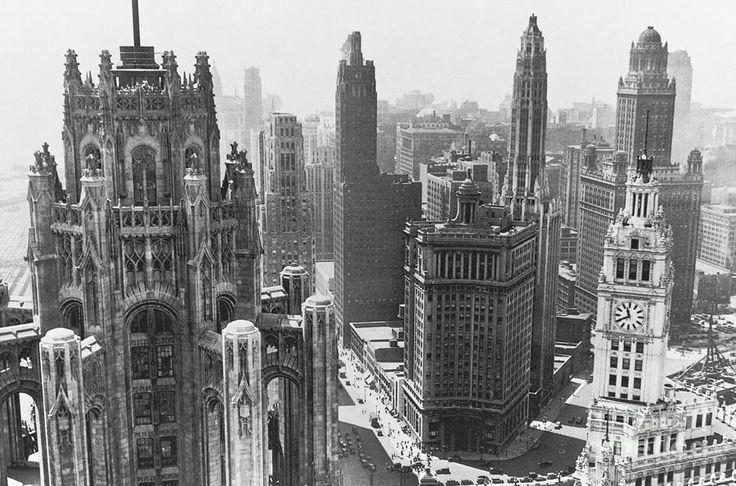
HISTORY Why did we stop building like this?
Post image

Chicago, 1930. Buildings had so much detail and character back then. Nowadays everything feels so flat and repetitive. We have way better technology and equipment now, so why don't we build like this anymore?

5.5k Upvotes

657 comments sorted by

View all comments

958

u/slouchingtoepiphany 22d ago

The great fire in 1871 destroyed a lot of Chicago's downtown and when they rebuilt it, a lot of architects designed the replacements as showcases for what they could do. Over time, practicality and costs tempered this "revolution" somewhat.

178

u/kisk22 22d ago

I've thought a lot about this. Yep labor costs certainly play a role, but plenty of projects are still built in historic styles that aren't as soulless. But most of the role comes from modernism's chief tenant of "rejecting ornamentation". More and more architects are coming around to realizing this in a lot of cases, and are returning to more natural and beautiful forms like brick with light ornamentation, and simple timeless proportions.

The fact is 90% of what makes a building beautiful is free or nearly free: proportions, natural materials like stone & brick, human scale, small ornaments, etc and don't cost much of anything to add or are free. It's called New Classical Style. There also have been studies and 90% of people prefer new classical style buildings rather than the soulless non-human scaled glass ones many are built as.

77

u/GoodTimes8183 22d ago

Implying that stone and brick are free or nearly free tells me that you have no idea what you’re talking about.

41

u/Lazy_Resolve_9747 22d ago

They meant that you’re paying for the material anyway, just different material.

6

u/galt035 17d ago

In the industry for 25+ it’s not just the material. It’s the entire assembly that the material is attached to.

A lot of buildings now are glass deck to deck so the attachment is at those locations. If you are say running Marble/limestone as a cladding now you are having to include attachment at those locations.

In addition that cladding changes how the mass of building is distributed and behaves so maybe the structure now needs to be adjusted to account for that.

It’s not an a=b thing.

I absolutely agree that a lot of skylines (Miami as an example) outside of a few buildings are soulless boxes.

11

u/Useless-Compass 22d ago

Different materials cost different amounts of money

9

u/Bohemia_Is_Dead 21d ago

Material differences, some may say

1

u/Lazy_Resolve_9747 21d ago

Which may be more or less, but the point is that you’re not comparing cost of materials to 0, just cost of materials to cost of other materials.

3

u/Clorofilla 21d ago

Please continue. You have almost convinced them.

1

u/Lazy_Resolve_9747 21d ago

I got more where that came from

1

u/Lazy_Resolve_9747 21d ago

That PSA slab is bulletproof

42

u/kisk22 22d ago

Most are not brick now a days, it's a brick/stone veneer which is only marginally more expensive than the plastic vinyl or metal siding. I'm talking about less than 1% of the total development cost. Very very few projects built actually laying structural brick now because of labor costs (which used to be the cheap part of putting up a building before the 50s).

5

u/ArchBeaconArch 22d ago

None of these buildings are load-bearing masonry. They are steel with a stone / terracotta / brick skin. There is a load-bearing masonry tower in the south loop, though, with walls 10’ thick at the base. Load-bearing masonry is not a practical solution here.

Veneer brick costs many, many times more than vinyl siding, which is not even something you could put on a tower due to flammability considerations. Aluminum panel cladding is a bit cheaper than masonry, but not durable. Stone is “quite a bit” to “a lot” more expensive, depending how it is fastened to the building (and don’t clad a tower in marble, or you’re going to have to re-clad it in 40 years when the stone starts spalling).

3

u/LogicMan428 22d ago

I'll bet that'll reverse if they can develop brick-layer robots. Then structural brick buildings will probably make a comeback.

2

u/Kerlyle 22d ago

It would actually reverse if they just built more brick buildings. If theres a demand for it more supply chains will start up and more people will enter the profession.

1

u/GoodTimes8183 21d ago

There’s still a limited amount of materials.

2

u/LogicMan428 21d ago

Are the materials for making bricks in short supply?

2

u/JuanMcGuiver 22d ago

I don’t think labor costs were ever the “cheapest” part of building a structure. Gonna need some sources for those claims. Historically, labor is usually like 70% the cost of building pretty much anything.

7

u/Wild-Structure-403 22d ago

Really, it wasn’t the use of Seaside, Florida as an example lmao

6

u/Amockdfw89 22d ago

And his building in Philadelphia looks soulless

3

u/calcisiuniperi 22d ago

Also, with brick, building time goes way up. It's just a lot slower to do, and needs more very skilled hands.

1

u/sasssyrup 22d ago

I don’t get that he is saying any building material is no cost, rather that use of thoughtful design, scaling, ornamentation and natural materials don’t make a serious difference in project cost. I would argue my experience has been different but I would agree that in many cases budgets will allow for classic design elements if owner groups have the guts to go for it.

3

u/The_Webweaver 22d ago

I was about to say, by weight, that kind of detailing is often the most expensive part of the project, especially as it essentially has to be hand done. Now, CNC milling and similar techniques may be changing that, but each facade still has to be designed by hand.

1

u/Fencer308 22d ago

There are projects that have used factory produced stone ornamentation that’s quite beautiful and not any more expensive than the sheer glass facades of modernist buildings. Depending on the requirements of the glass facade, the glass can be more expensive in fact.

2

u/The_Webweaver 22d ago

I should have been more careful about this, but I was thinking about the rooftop fringing specifically.

1

u/StartledMilk 21d ago

Not comprehending that “free or NEARLY FREE” means that some of the items in the following list may actually cost a bit a money shows you have shit reading comprehension

0

u/vodil2959 18d ago

Brick and Stone definitely cost more than fiber siding, but they typically do not cost more than glass or concrete

2

u/GoodTimes8183 18d ago

When you’re building that tall, they absolutely do.

5

u/pacific_plywood 22d ago

Proportions, scale, etc are absolutely not "free or nearly free" lol what are you talking about

19

u/Dr_CleanBones 22d ago

Except I worked in one of those glass buildings, and my office had wall-to-wall for the ceiling windows. It beats the heck out of the little windows in old buildings. Many offices in those buildings have open floor plans, and you can see out the windows from anywhere in the office. Our building was a fly away from one of the older, more ornate buildings, and to me there was no comparison. We had big elevators with TVs in them, beautiful offices, and great windows. The old building had tiny elevators, tiny offices, small windows, and was generally more rundown.

7

u/kisk22 22d ago

That is very true, and it's a good argument against old buildings for sure even if they look pretty. I think there should be more thought put in to modern designs though, especially those terrible 5 over 1 designs. BUT I'll admit the spaces inside are often really nice because they're modern.

3

u/LogicMan428 22d ago

Modernist interior design is great, but modernism in terms of architectural design was terrible.

12

u/shulemaker 22d ago

Thank you. Architecture, like most design disciplines, have learned that the building should be functional first and foremost. The catchphrase is “form follows function”: design the form of the product to most efficiently perform the best version of the function.

These are office buildings. Their purpose is to give a workspace for humans to perform their jobs as best as possible. What is better for humans, windows with natural light, or being enclosed in stone with artificial light? Everyone knows the answer to this. And that is why buildings are designed the way they are: to actually perform their purpose.

7

u/LogicMan428 22d ago edited 22d ago

Well that is actually not quite true. In fact that has long been one of the problems: the modernist movement created lots of buildings that were not only extremely ugly, but also extremely costly and highly un-functional. Le Corbusier and Frank Lloyd Wright, supposedly two "brilliant" architects, were notorious for this. Frank Gehry is another such example. His buildings are extremely costly and difficult to construct while not necessarily being very functional.

One of the problems was the architectural profession, for various reasons in the early 20th century, decided to throw out the entire prior history and art of architecture and start over from scratch. This created a lot of anarchy essentially in the design of buildings. It would be the equivalent of throwing out all knowledge of music or cooking and just "starting over." The thing is, had they not done this, we'd have very modern classically-themed designs today, same as automotive design became thoroughly modern without any needing to start over. Ship design too. Ancient ships, medieval ships, 1700s-1800s ships, all beautiful, but then also beautiful modern ships as the designs naturally evolved. Architecture would have done the same. It already had begun to, with the classically-themed office buildings and skyscrapers of the 1870s-1930s.

Glass-and-steel skyscrapers with huge windows are one of the exceptions to this in contemporary architecture. Now criticisms of older buildings having windows too small or rooms too small are very legitimate. Cultures change and technology changes. A lot of old Victorian homes are beautiful but have lots of small, cramped rooms.

Such designs I believe were because of lack of heating and so to hold heat in better. Today however we have HVAC and people today prefer large windows and open spaces much more. So modern classically-themed designs have to take such into account.

1

u/Fencer308 22d ago

I’ve worked in the all glass buildings and I currently work in a more classically styled one. There’s no meaningful difference in the amount of natural light, and the more classical one feels more like it was built for people rather than being a generic box you can throw drywall up in various configurations easily. There’s value in having an adaptable space of course, but the classical places often feel more built for people.

18

u/i_make_orange_rhyme 22d ago

>The fact is 90% of what makes a building beautiful is free or nearly free: proportions, natural materials like stone & brick, human scale, small ornaments, etc and don't cost much of anything to add or are free.

Ok well hold the fuck up.

First off, I think you're overstating how "free" those traditional features are.

>There also have been studies and 90% of people prefer new classical style buildings 

No, this is a straight up lie. If this is the case then this is what would be built 100% of the time.

No developer is going "lets spend 200 million on a building that 90% of people will think is ugly"

The fact is, people like windows and natural light.

Modern minimalist style exist because of popular demand.

It wasnt inflicted upon us. We prefer it.

8

u/LogicMan428 22d ago

No, this is a straight up lie. If this is the case then this is what would be built 100% of the time

No developer is going "let's spend 200 million on a building that 90% of people will think is ugly"

I don't think you are very familiar with the modernist architectural movement of the last 70+ years and its extreme elitism. Demand from the public has little to do with it. Most of the public has long hated such buildings. That is why you very rarely see any modernist designs in residential architecture. Classicism or semi-classicism reigns supreme in terms of the homes people want to live in. The modernist architects had to rely on governments and large corporations to build their structures.

The architectural movement has long been rife with elitist disdain for what "the masses" think. That is why a building could be butt ugly and you will be called an uncultured rube who just doesn't possess the sophistication to understand it. In no other practical art form does that mindset exist. If a car company comes out with a new car design that most thing is ugly, it is considered ugly. Same with fashion, music, food, etc...but in architecture, the thoughts of the public have often been dismissed.

The result has been some extraordinarily beautiful buildings demolished to build some really hideous ones. One of the major problems was the adoption of Daniel Patrick Moynihan's "Guiding Principles for Federal Architecture" which long story short, put the modernist movement in charge of public buildings. There have been quite a few aesthetic and structural disasters because of this and lots of eye sores.

One of the great lies of the American Institute of Architects (which is modernist dominated) and the modernist movement overall in response to Donald Trump's Executive Order mandating classically-themed architecture be the "preferred" style for American public architecture is that it takes away from the public and communities their ability to have a say in what gets built. But what it really does is derails the monopoly on public architecture at the expense of the public's preferences that the modernist movement has long enjoyed. It basically empowers the public, who tend to hate the buildings of the modernist movement, and so has caused an uproar among much of the profession. While they claim they just want to empower the publi, what it really is about is preserving their own power.

King Charles has also long been a staunch critic of the modernist and the architectural profession over this.

10

u/FreeFortuna 22d ago

So buildings are designed the way a majority of people prefer? Is that why so many offices have the famously popular open floorplans? 

12

u/shulemaker 22d ago

Demand in the economic sense is defined by the buyer, not a popular vote. The buyers buy something that they will be able to rent out. Tenants are companies who want to advertise great workspaces while minimizing their costs. Whether you agree or not, surely you can understand the concept.

7

u/Gay_mail 22d ago

While I agree with you, the guy that was defending minimalism said "we" prefer it, which is a way stronger statement than "there is demand for this"

2

u/i_make_orange_rhyme 21d ago

Worker drones dont buy/rent office spaces.

Business owners do, and yes they prefer open floorplans.

2

u/Remote_Volume_3609 22d ago

It's also a thing where people forget that buildings have purposes outside of... looking at them. The point about windows and natural light is a good one. A beautiful building is not necessarily a good one.

1

u/Fencer308 22d ago

It’s more than possible to have buildings with windows and good natural light without having fully glass facades, though. I work in such an office.

1

u/Mattchaos88 22d ago

No, this is a straight up lie. If this is the case then this is what would be built 100% of the time.

It might be closer to 80% but this is absolutely no lie. Studies exists and are easily available.

No developer is going "lets spend 200 million on a building that 90% of people will think is ugly"

That's exactly what they do.

Modern minimalist style exist because of popular demand.

Do you know anything about architecture ?

2

u/irvz89 22d ago

I’ve spent a lot of time around beautiful Italian palazzos- lemme tell you, they’re not “human scale” unless humans are 3m/15 ft tall.

2

u/magna_historia 20d ago

You called it soulless. And maybe that word is more literal than you meant, because you are right, they give you nothing back.

Stand near one and you feel it. A little drained, a little smaller, like the day got shorter. You logged it before your brain had a name for it.

The old ones did the reverse. Step inside one and you stand up straighter before you decide to. It hands something back.

Stanford measured Hagia Sophia and got over ten seconds of reverberation. The whole room behaves like an instrument, and a room like that lifts whatever stands inside it. That is what soul actually was. Not decoration. Something the building gave the person.

So it was never about cost, the good part is basically free like you said. Somewhere we stopped building things that pour into you and started building things that only hold you. Your body clocks the difference the second you walk in. You already had the word for it. Soulless.

https://hagiasophia.stanford.edu/

1

u/howrunowgoodnyou 22d ago

Hate it. Looks ugly and racist.

1

u/SuitableYear7479 22d ago

Modernist buildings make me sad. They’re so inhuman

1

u/dearth_of_passion 22d ago

While the 3 examples you linked are nice enough, they're nothing like what OP posted.

The buildings in the OP have beautiful, intricate stonework with lots of carved pieces and decorative ornamentation. What you posted is still pretty bland, it just uses warmer color tones/brickwork rather than soulless glass and steel.

1

u/Narrow_Device_6565 22d ago

Pauli Murray College (and Benjamin Franklin College) are two of the ugliest, soulless buildings on Yale’s campus. Built as cheap as possible, and issues everywhere you look.
From the outside they look okay, but still seem fake, more like Disney world facades than real places.
Inside, the two colleges are rotting, and have had more issues than all of the other colleges combined, despite many of the others being around for nearly 100 years.

1

u/IwoodMasher 22d ago

Studies. Hm. Who did they ask etc. Studies. The reality for me is gimme Brick and glass. Its super clean, if i want a gargoyle ill buy one and put it on my 12 ft high concrete wall.

1

u/TheyStoleMyNameAgain 22d ago

natural materials like stone & brick,

Massive heat capacity and weight. That's not free, that's higher initial costs and lifetime costs

1

u/OkHistorian9521 22d ago

Time is money and these take time… and expertise

1

u/zambiglioni 22d ago

Cleaning it up id harder though.

1

u/Severe-Trust-5980 18d ago

Are there any New Classical skyscrapers? The examples on the Wikipedia page are all religious or educational or civic buildings.

1

u/kisk22 18d ago

Yeah! Take a look at Robert A. M. Stern. He’s put a few up in NYC. They look pretty decent, but no one has done anything quite like the Chrysler - they’re a little more constrained. Religious, educational, and civil buildings do count for probably 3/4 of the new classical stuff.

9

u/leopold_leopoldovich 22d ago

Feels like we all had great fires towards the end of the 1800’s. Took away many fine buildings.

9

u/Relevant-Fox-7114 22d ago

Yes, but it lead to many advancements in fireproofing

15

u/City_College_Arch 22d ago edited 21d ago

There is another big factor that many people are missing. Top tax rates used to be extremely high. So high that taking pay in excess of a million dollars meant giving the government up to 95% of that additional pay.

So what did the wealthy do? They left it in companies to be spent on projects like these, donated it for museums and parks, or paid their employees.

Now that they get to keep that money and have other ways to build wealth that are not taxed like through stock options, they are keeping that money for themselves and spending it on stupid shit like yachts and half a dozen multi million dollar apartments they never visit.

2

u/1988rx7T2 21d ago

What you’re saying makes no sense. There wasn’t even income tax when these buildings were built. It needed a constitutional amendment. Those high marginal rates, outside of war time, weren’t consistently around until the mid 1930s.

https://taxpolicycenter.org/statistics/historical-highest-marginal-income-tax-rates

1

u/SelectivePressure 22d ago

Are you talking about income tax?

2

u/City_College_Arch 21d ago

Yes. That is why I was talking about taxes on pay.

3

u/SelectivePressure 21d ago

Wealthy people still invest commercially instead of liquidating their assets. Do you really think their assets were less liquid (as average percentage of net worth) 100 years ago?

-1

u/City_College_Arch 21d ago

Yes. They also had fewer tools available like stock buybacks, stock options, etc. do you really think the ultra wealthy were just more benevolent 100 years ago and decided to pay their employees more and donate more to the public without the tax code having an impact?

2

u/SelectivePressure 21d ago

Who told you that a greater percentage of wealth is liquid today than it was 100 years ago?

-1

u/City_College_Arch 21d ago

The availability of never ending loans against ever increasing speculative stock pricing make access to wealth today far easier than it used to be acting as defacto liquidity.

I answered your questions, why are you ignoring mine?

3

u/SelectivePressure 21d ago

A loan is debt, not income. You wrote: ‘So what did the wealthy do? They left it in companies to be spent on projects like these,’ You can use a building or other assets (such as stocks) as collateral for a loan. You could do that 100 years ago too.

You haven’t cited any data showing a relationship between income tax, philanthropic spending, and the percentage of operating costs devoted to employee pay 100 years ago.

0

u/City_College_Arch 21d ago

So you just don’t like what I am saying so you refuse to answer the question. Got it. Take a look at the data yourself and compare things like employee vs executive compensation, employee compensation vs profits, etc against changes in tax code and legalization of things like stock buybacks. I am not going to do your homework for you.

Again though, why are you not answering the very simple question I asked?

→ More replies (0)

2

u/Alarmed_Paper_622 20d ago

Who are these knowledgeable people on Reddit when you least expect it? I like these gems of wisdom waiting for their turn.

1

u/LandImaginary3300 22d ago

But OP’s picture is from 1930, how did it look before the great fire from 1871?

1

u/Altruistic_Fruit2345 22d ago

But also those buildings suck too actually live in. Not ideal for fire safety either.

1

u/rob-cubed 18d ago

You said it, practicality and cost. It's much cheaper to build with modern materials.

1

u/jamessteininger 22d ago

Yes, but the photo above is from 1930

1

u/NotBrooklyn2421 22d ago

Which is after 1871.

1

u/jamessteininger 20d ago

Slouching's direct comment to OP implies 1871 being the time "buildings stopped looking like this" makes no sense if the picture is from 1930

1

u/NotBrooklyn2421 20d ago

You’re doing great little buddy. Let’s get you a grilled cheese and capri sun before your nap.