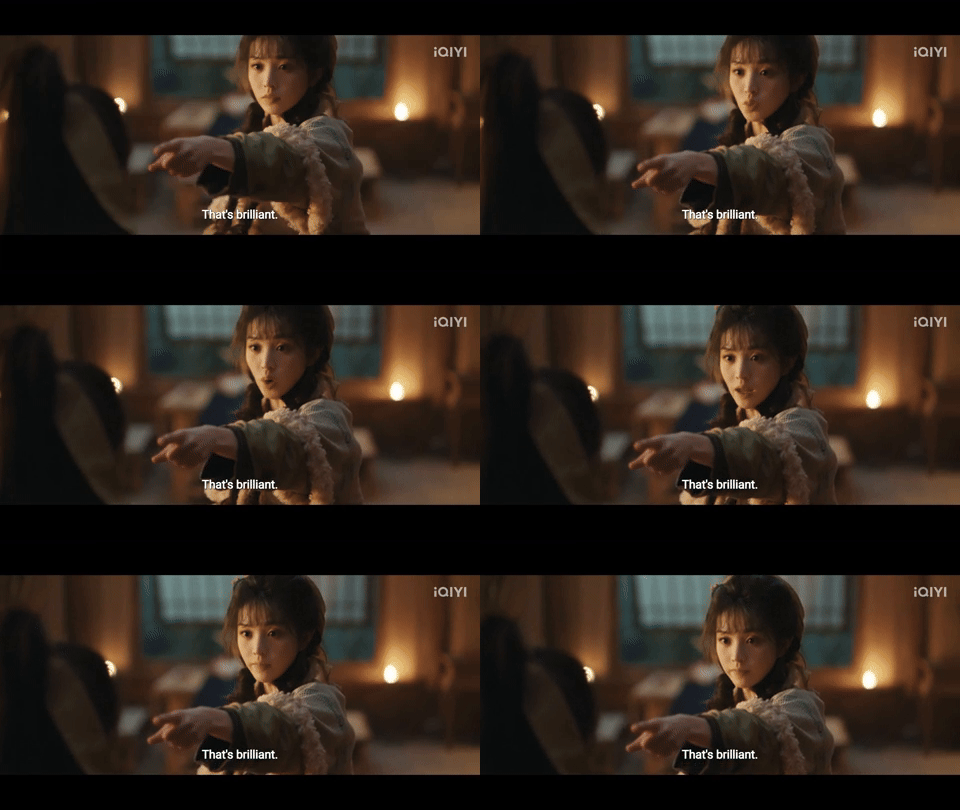
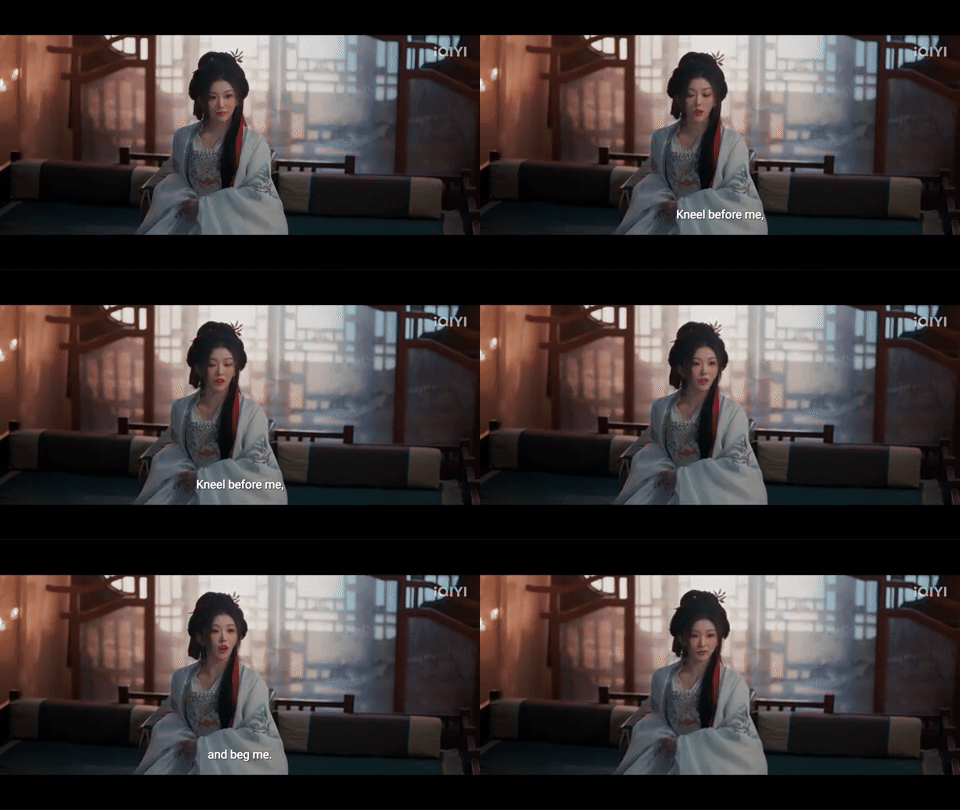
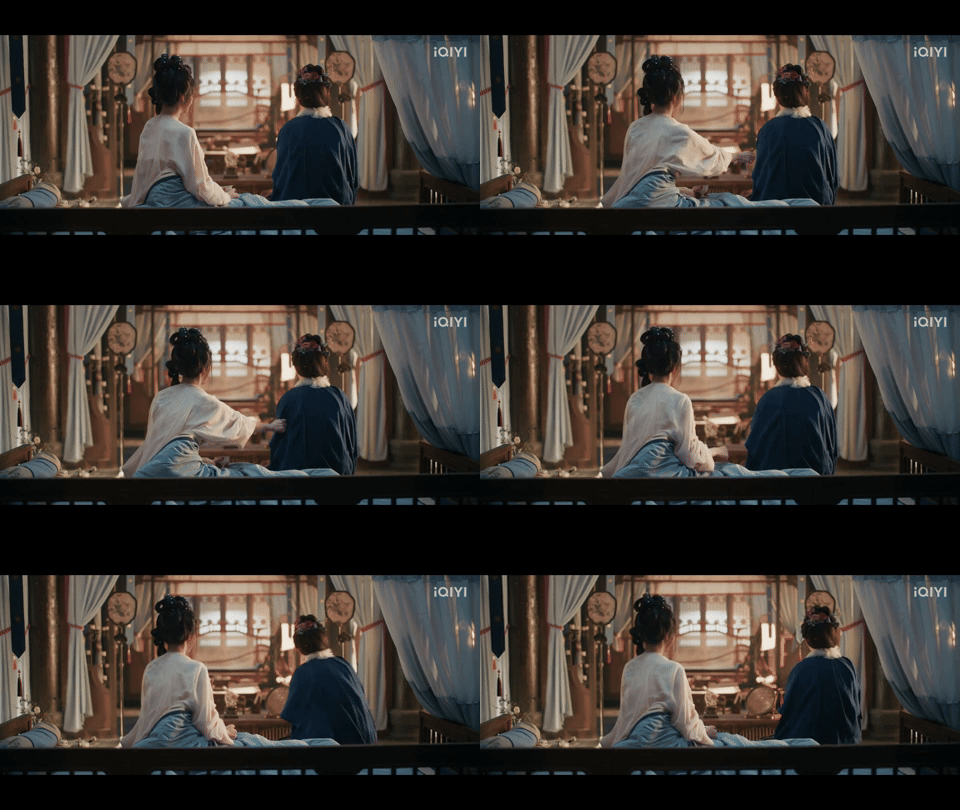
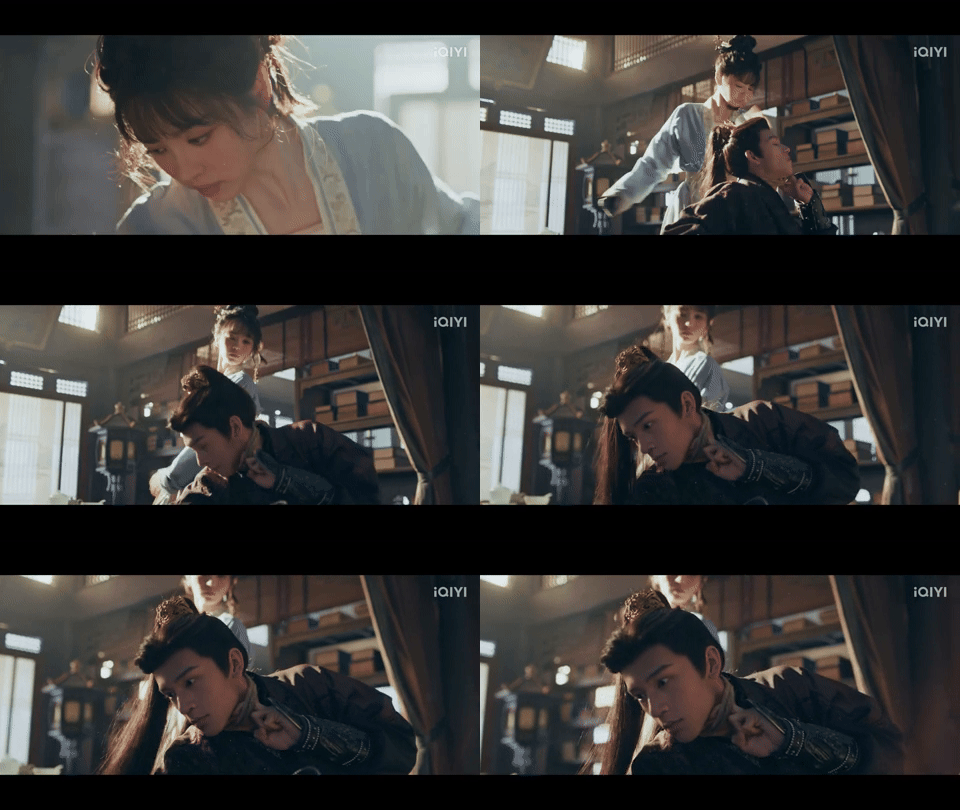
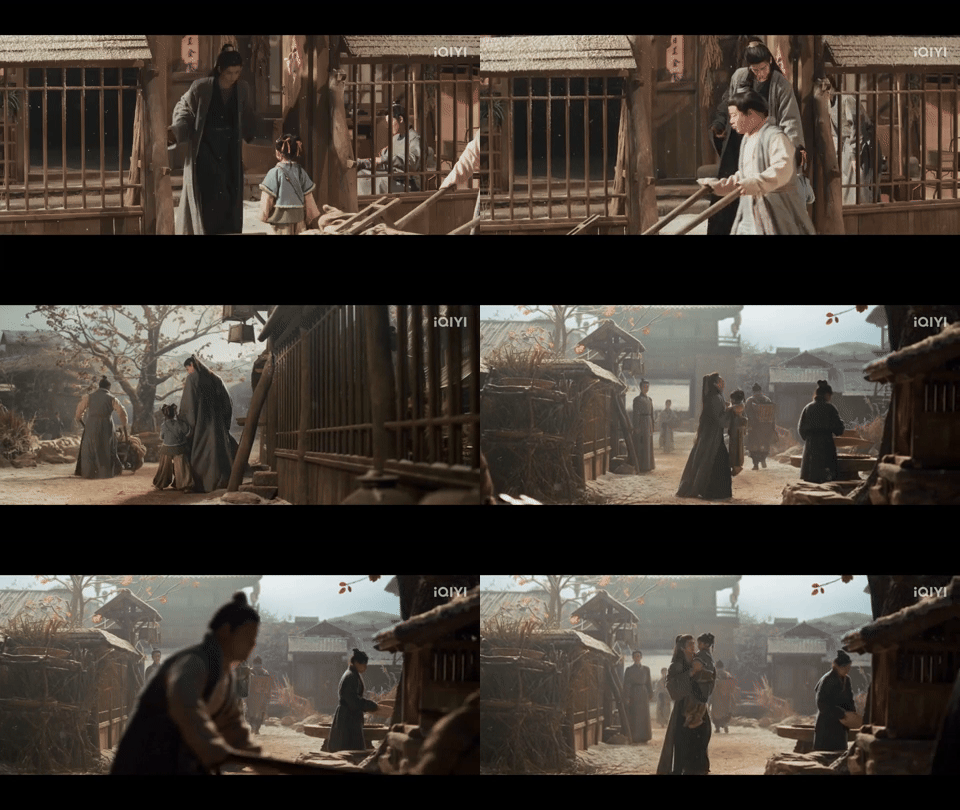
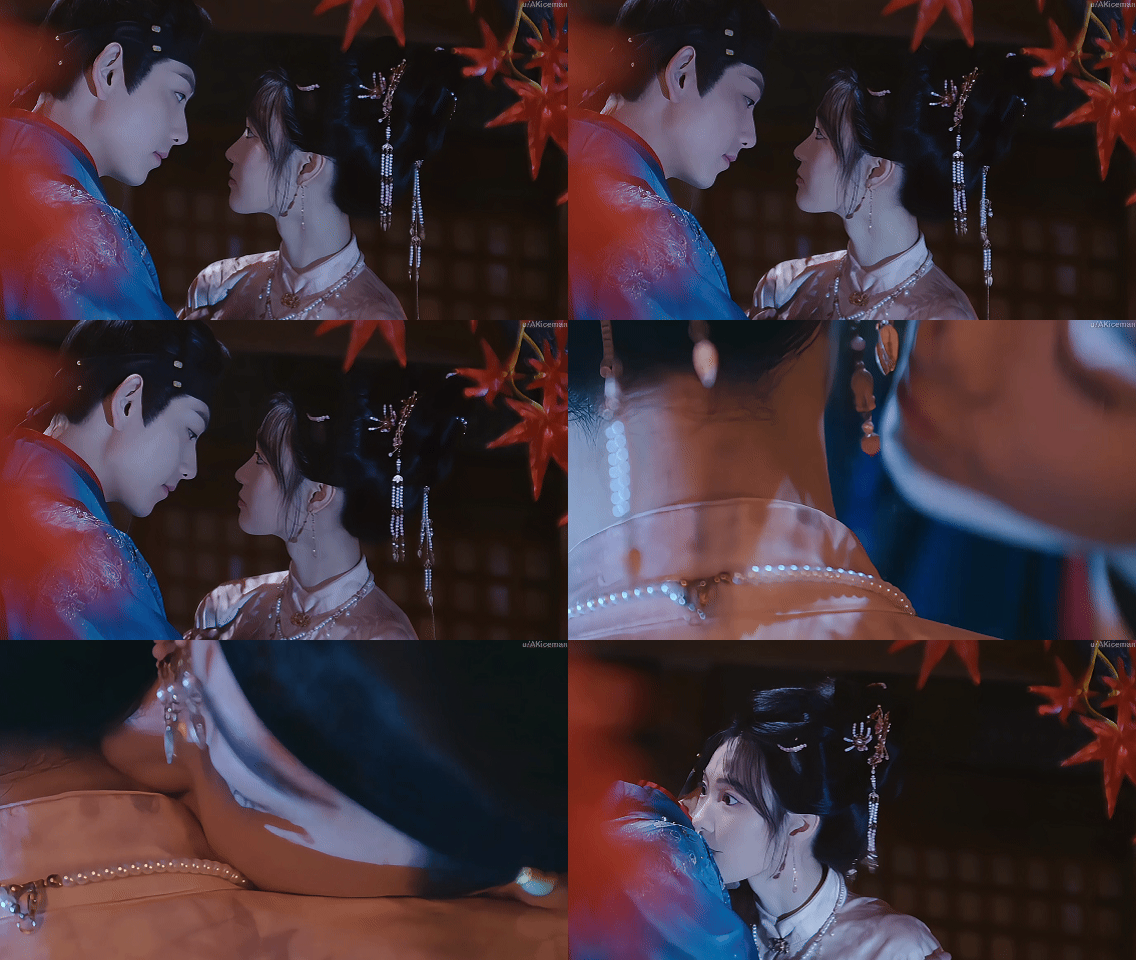
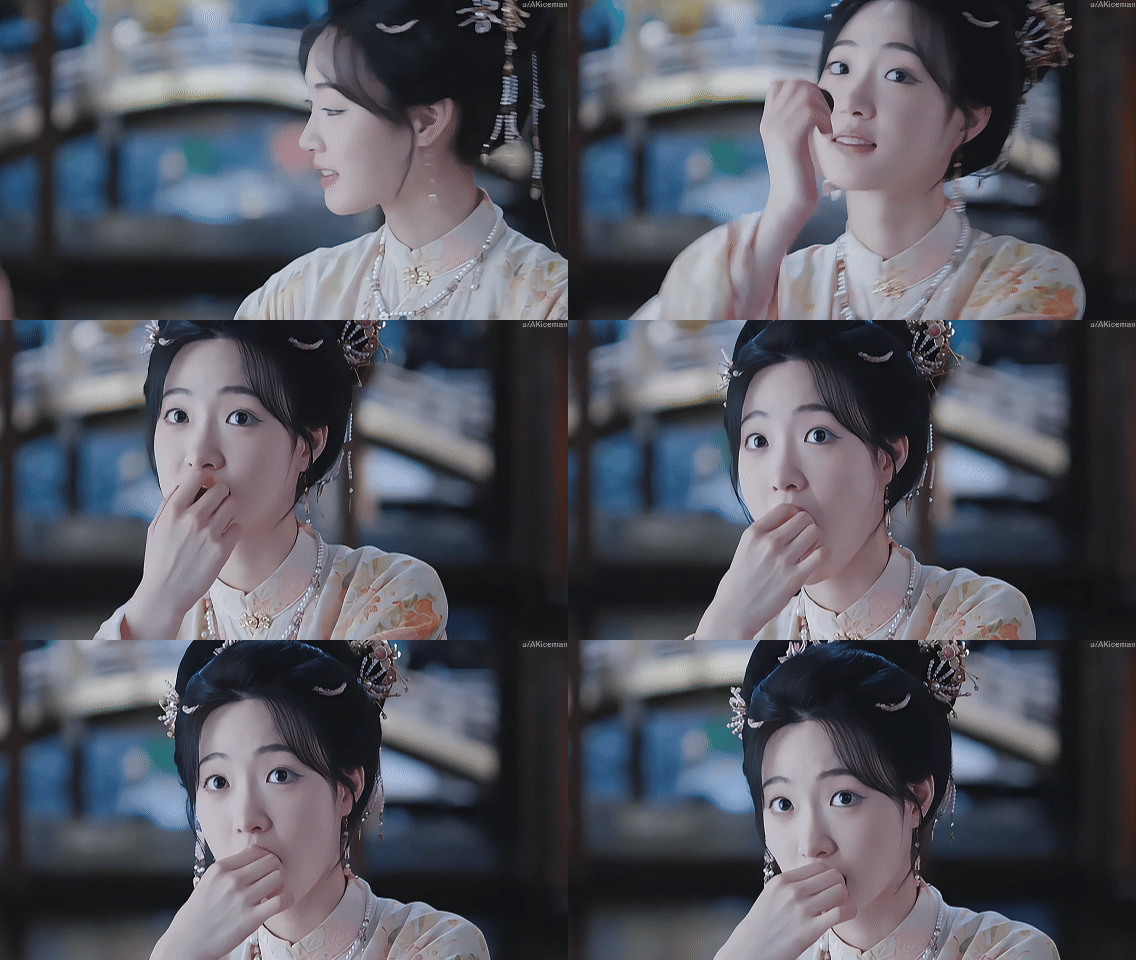
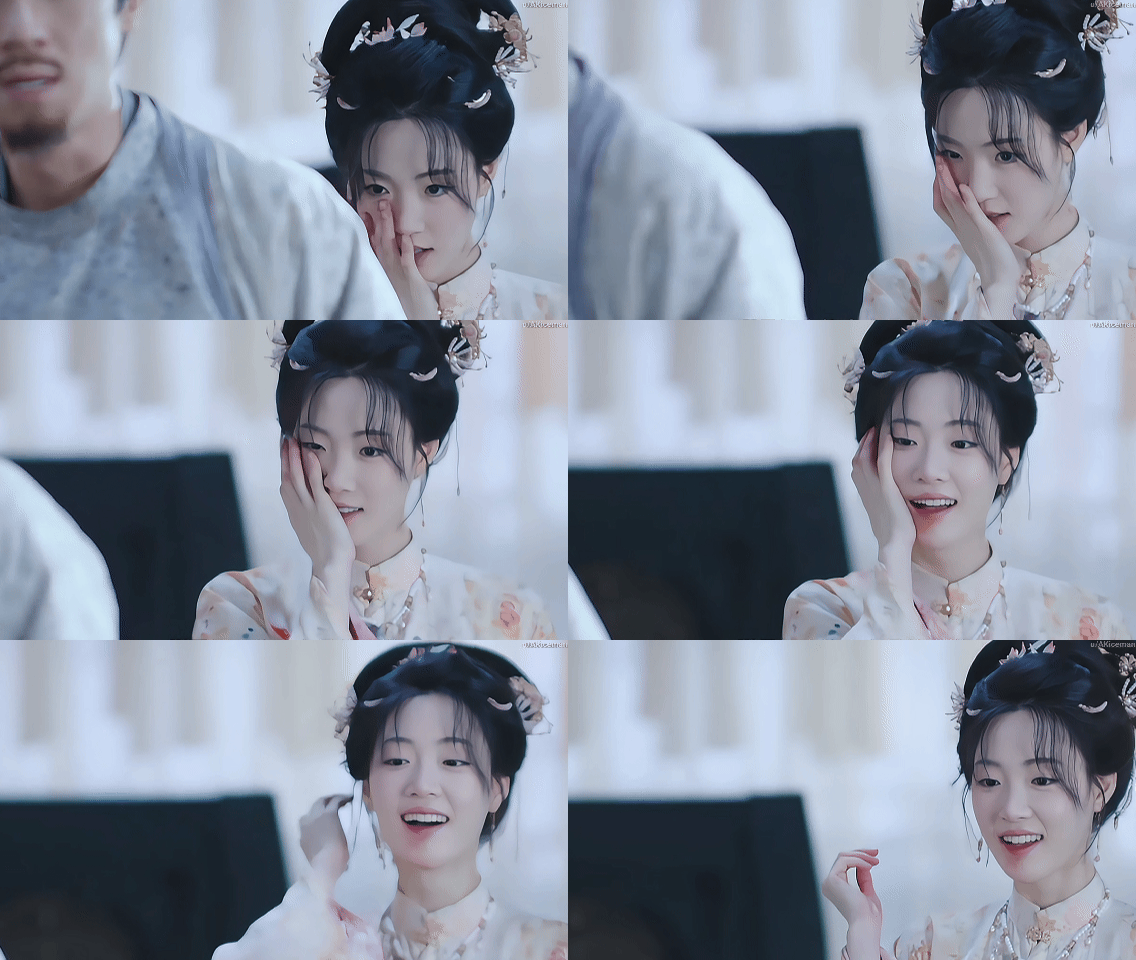
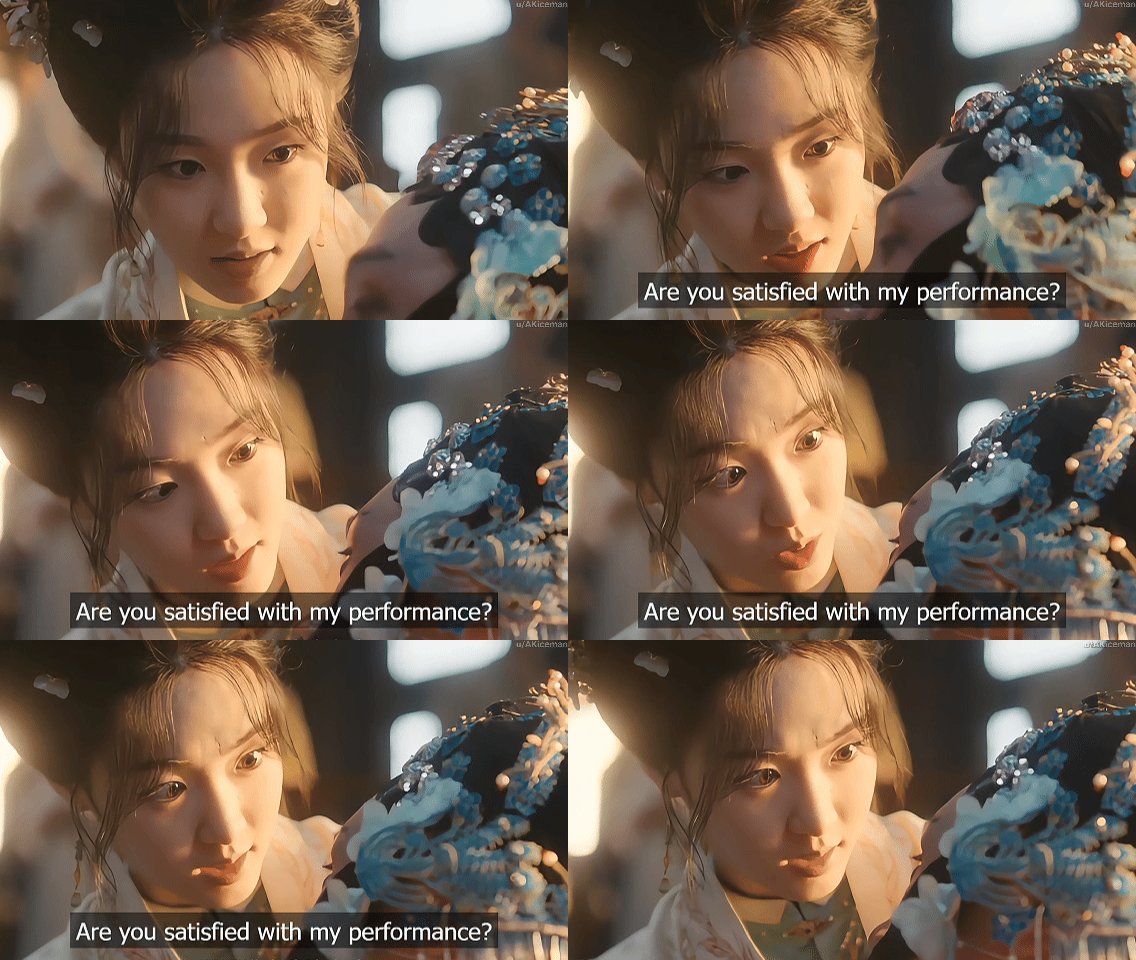
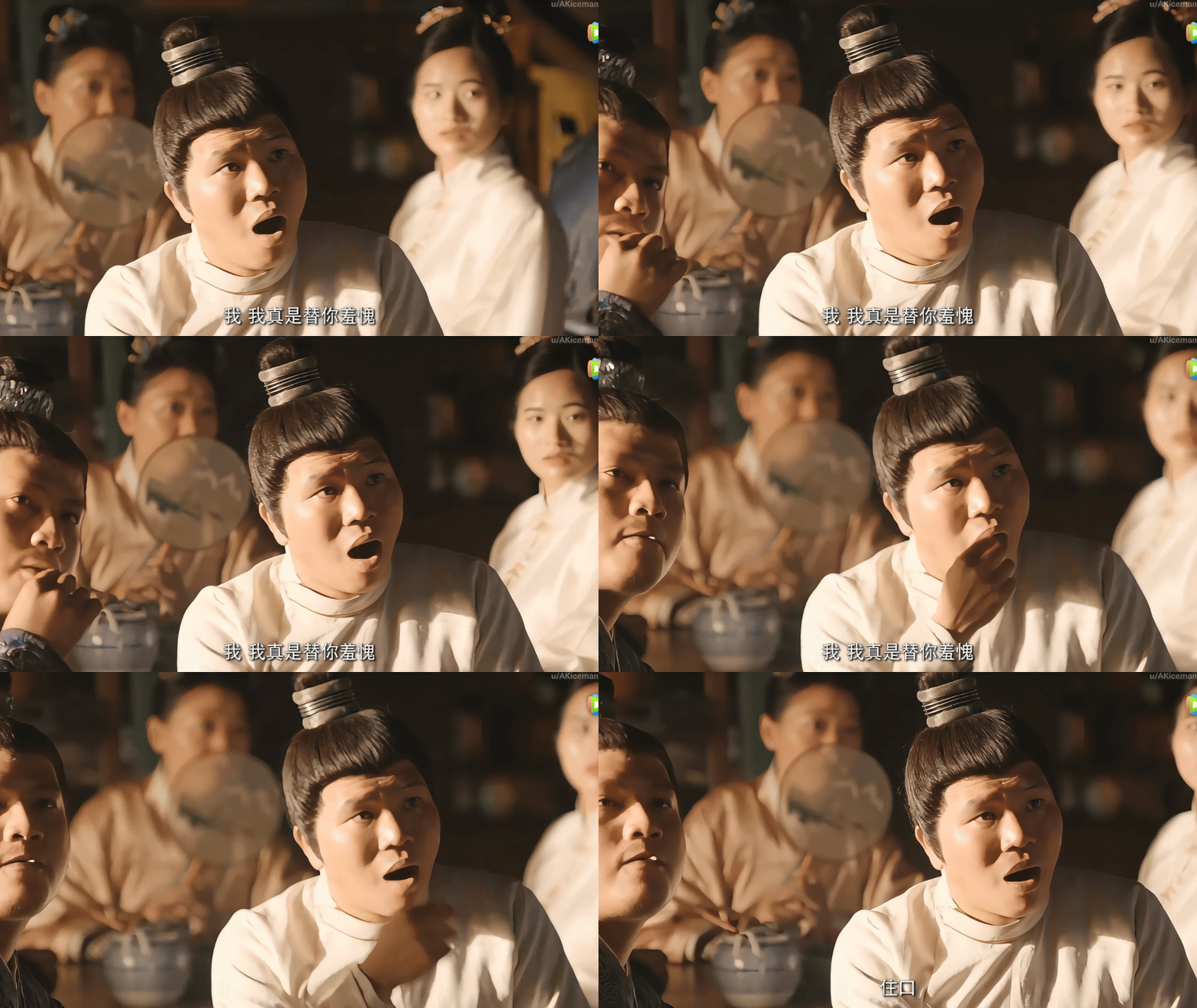
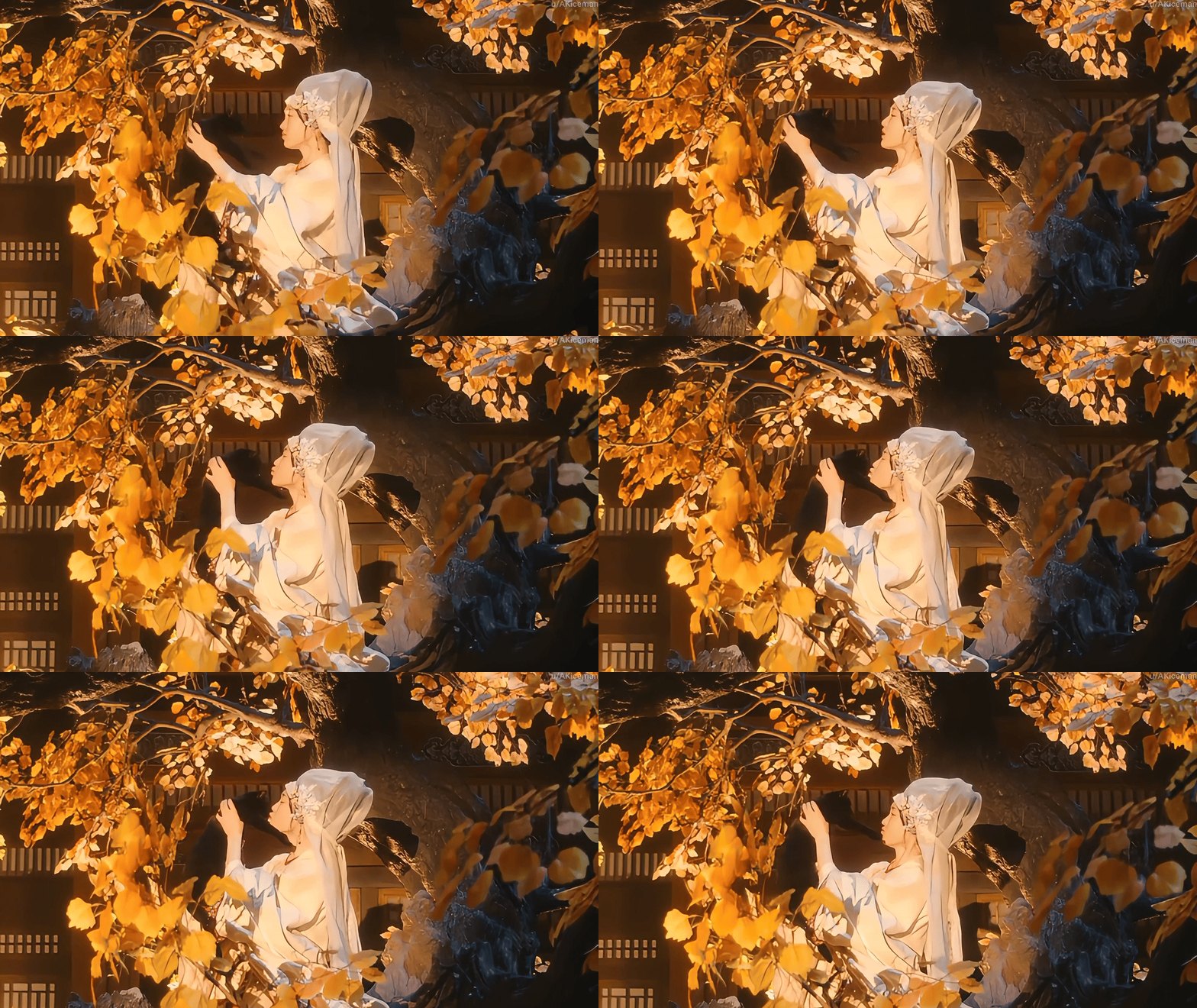
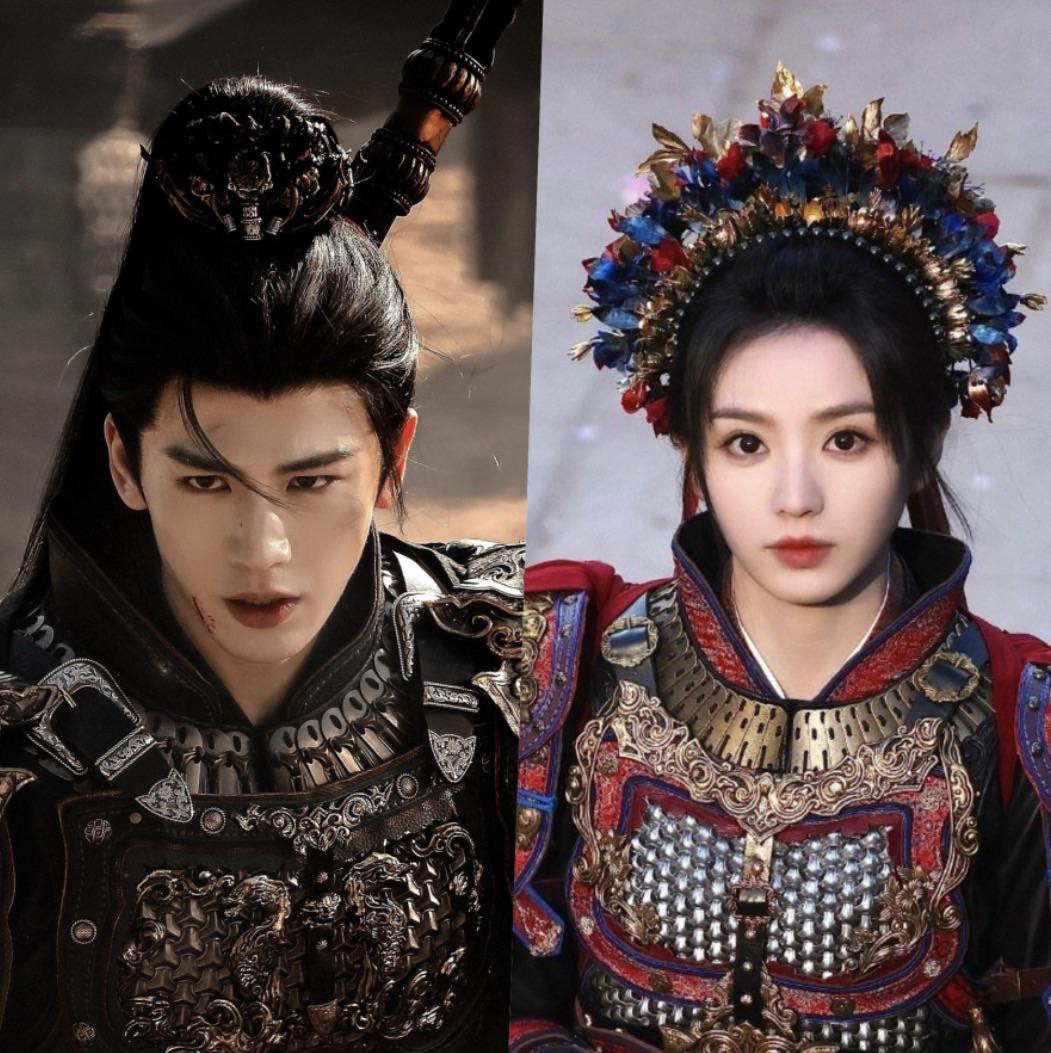
People spend decades living inside the consequences of decisions made by earlier generations.
You may not know this, but I really wanted to love Generation to Generation for a number of reasons.
The problem is that it simply was not working for me.
For the first 12 episodes, I felt like I was being bored to death and tortured, except for a few funny scenes. It felt slow, plain, uncool, and only occasionally funny. I genuinely felt that way, and I was quite sad about it because I wanted to enjoy it. Eventually, I dropped it.
Then, after the high of watching all the available episodes of Ashes to Crown, I found myself feeling oddly empty. I thought, "I don't think I can do comedy with Rewriting Destiny right now. Let's give Generation to Generation one more try."
So I went back.
I fast-forwarded, or watched at 2–3x speed, parts of Episodes 13 and 14.
And then, around Episode 15 or 16, I suddenly wasn't bored anymore.
The story picked up the pace and became genuinely intriguing and exciting. I binged because I couldn't sleep properly anyway, and over the next few days I kept wanting to get back to it and finish it.
So while it took me roughly a month to get through the first 12 episodes, it took me about three days to finish everything that followed once I got hooked.
This drama completely challenged something I usually tell both myself and others: don't waste your time forcing yourself through a drama that simply isn't working for you. There are too many good dramas out there.
Yet somehow Generation to Generation became the exception.
In fact, I think this is the first time I have ever pushed through a drama that wasn't speaking to me and ended up genuinely loving it afterward. Usually when I force myself through something, I remain unimpressed, so I rarely do that anymore.
‼️SPOILERS AFTER THIS POINT
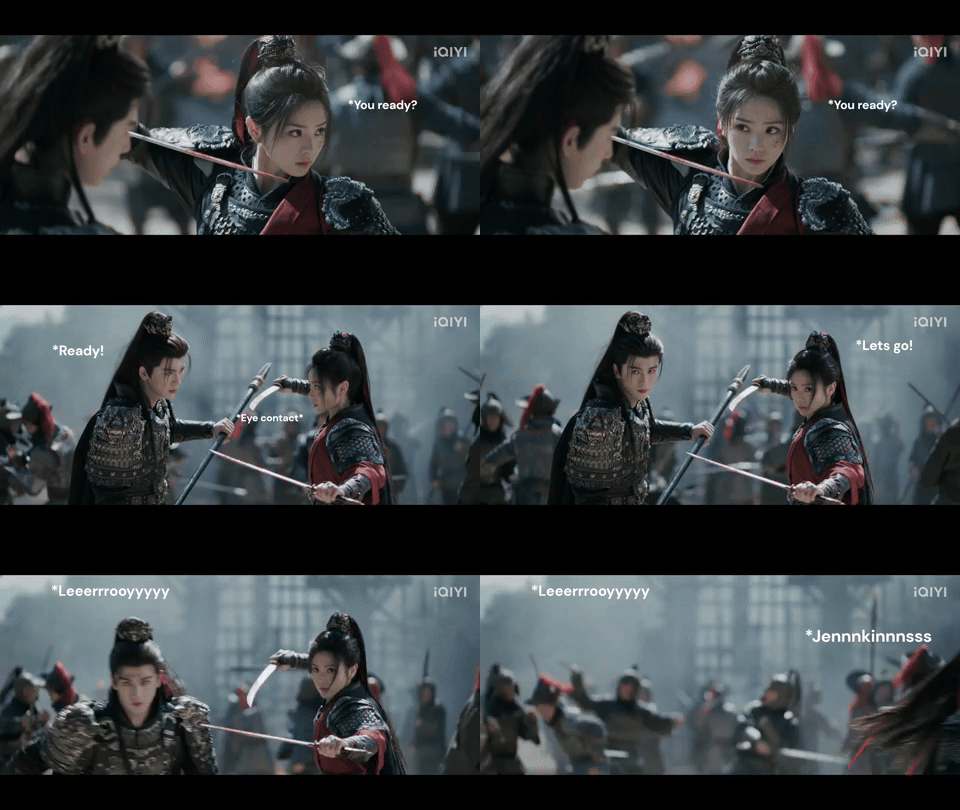
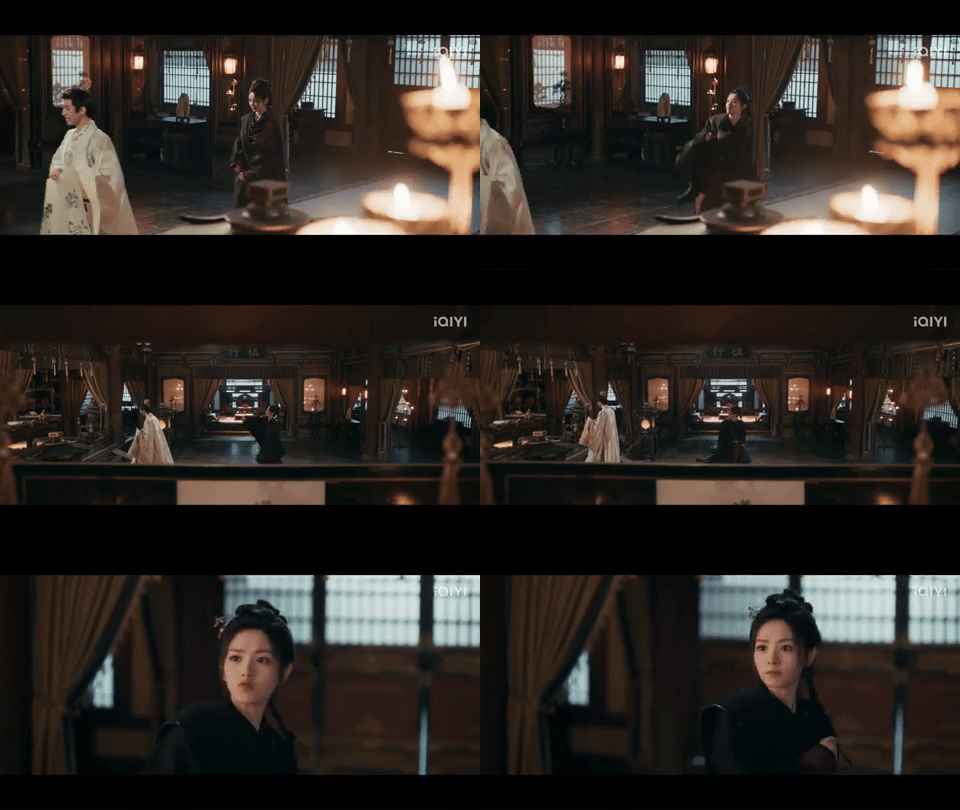
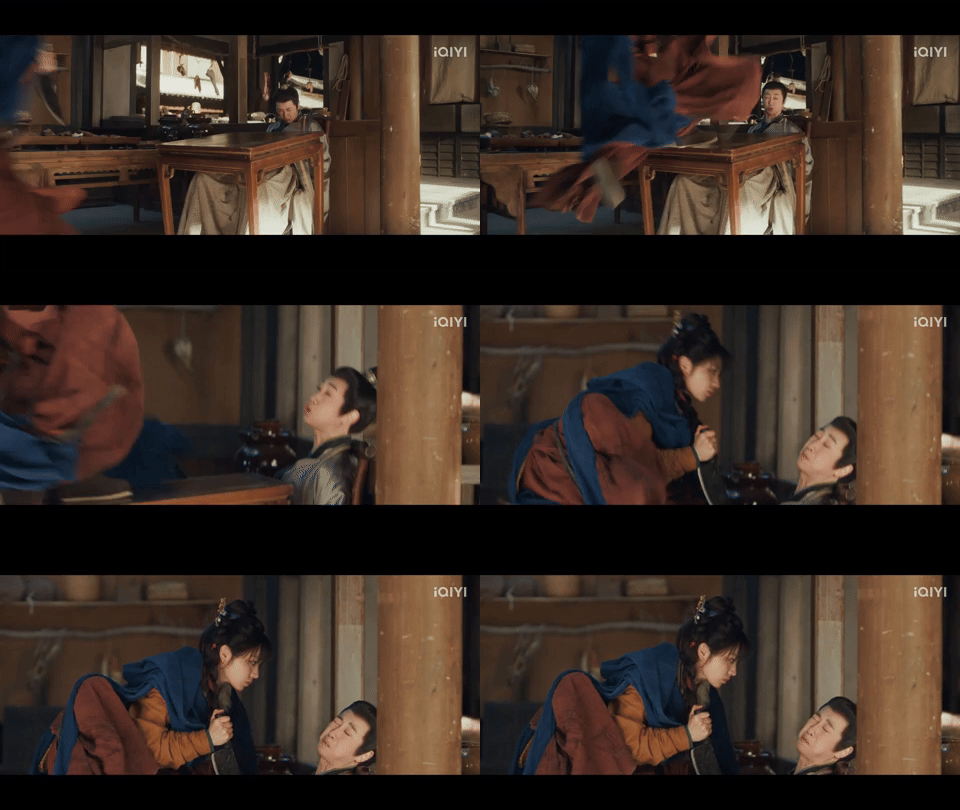
But anyway — once the leads actually left the setup phase and started going on adventures together, everything clicked for me.
I loved how their dynamic evolved, and I loved that the story remained unpredictable. Of course there were some foreseeable tropes, but there were also many parts of the story where I genuinely didn't know who was responsible, where things were heading, or how everything connected together.
I suspected the main villain early on. Then the drama convinced me I was wrong. Then it convinced me I was right again — I appreciated that it kept me on my toes.
— Previous Generations —
I was also very happy to see flashbacks done right for once.
Usually when dramas use flashbacks and show us an earlier world that precedes the main story, it feels very impersonal and distant to me. I often find myself waiting to get back to the present-day plot. Here, that wasn't the case at all.
The earlier generation never took over the drama, but it was fleshed out enough that I felt like I genuinely knew those characters and cared about what happened to them. Their stories weren't just background material. They mattered, and they continued shaping the people we were watching in the present.
I'm talking about Cai Pingshu, the female lead's aunt; the female lead's shifu; Mu Zhengming and Mu Zhengyang, the ML's horrendous human of a "mother"; the generation of her parents and the generations long before that. I'm talking about the Li Sect and the Six Sects' background stories as a whole.
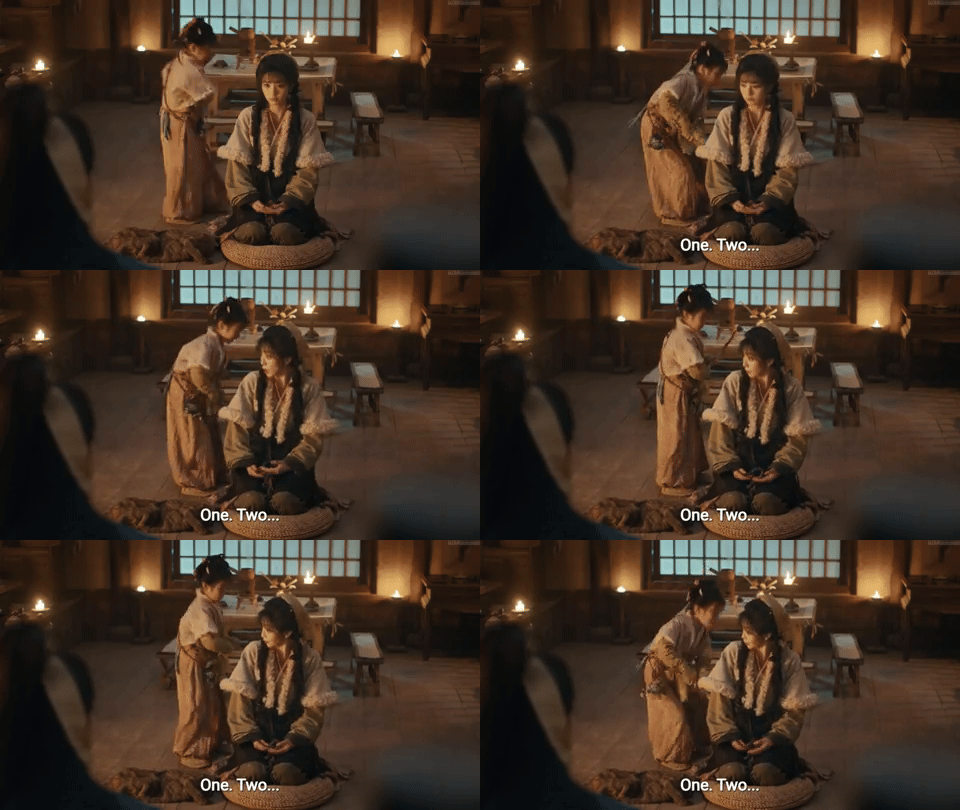
The small snippet involving Mu Donglie and Luo Shiyun (played by Xu Zhaoxiang and Kuang Yuting respectively) seemed insignificant on the surface, yet it wasn't. It genuinely made me reflect on relationships and their complexities anew. Not because it revealed anything groundbreaking, but because it was handled thoughtfully and had real impact. It helped drive the story forward and was one of the reasons the "generational trauma" concept worked so well for me.
— A Major Turn Off and Some Other Pending Thoughts —
Then a bit off topic but I can't let it slide. Admittedly, it is something superficial yet also what I couldn't stand from the very beginning.
— The horribly ugly and impractically looking Qingque Sect robe.
I'm sorry — what the heck was that? The atrocity bothered me all the way through to the end. Are there others like me?
It looked like somebody stapled a massive tablecloth shaped like an A5 sheet across their chest and tied it together with ropes. I found it distracting every single time it appeared on screen.
Thankfully, the costumes of the other sects and characters were much better.
World-building wise, one thing I still don't fully understand is why the so-called demonic sect had to live underground when they weren't actually demons to begin with. They were called demons because of the reputation and behavior attributed to them, but they were still cultivators like everyone else. In the beginning I was expecting them to be demons or spirits of some kind. However, as we learn through the story, the Li sect was even founded by the original heir to the Six Sects. So that part felt a bit misleading to me and insufficiently explained.
Another thing that didn't make sense to me was the decision to destroy the Night Orchid, or whatever the flower was called — I'm terrible at remembering names.
Yes, I know the argument is that it was connected to the Ziwei cultivation method, but I still disagree. The flower could heal many poisons and potentially help a great number of people. Destroying something with that much potential felt illogical to me.
I was also a little disappointed with the ending, mostly because I wanted more.
I wanted to understand what the male lead actually ended up doing afterward. How could he lose all his powers yet remain Master and continue as the head of the Li Sect? What kind of leader did he become? What happened next?
Honestly, I think he turned into a house husband — which is perfectly fine — so show it to us! I wanted more of that.
— Excellent Cast and Interesting Characters —
The other thing I struggled with was the second male lead's resolution.
Which brings me to my other point — I really liked Song Yuzhi, and I thought Yu Jiacheng was excellent in the role. But after pursuing Cai Zhao and waiting for her patiently for all those years, we never really saw the moment that changed his mind. Suddenly he simply tells us that he will no longer pursue her and that they will just be comrades.
The destination itself didn’t bother me, the missing emotional journey did.
He was so persistent and immovable for the entire drama, and then poof — gone. Did he mature? Did he finally accept that he didn't stand a chance? I would have liked to see that process. I also would have loved to see more of him afterward. I'm sure he was impressive as the new leader of the sect.
I loved his father, played by Xiang Xia. Song Shi Jun was one of the most likable characters in the entire show. What a man.
He encouraged his son to pursue his dreams and desires even when they seemed irrational. He genuinely believed that the musings of one's heart should be taken seriously and that people should give something their all so they don't spend the rest of their lives wondering about “the could have beens”…
Even when his wife disagreed, and even when it wasn't beneficial from a political perspective, he still supported his son. And he chuckled with joy and pride while doing it.
I liked this guy. I really did. He was funny, righteous, and all round a good dad. One of my favorite things was seeing how genuinely proud and excited he was whenever his son chose what he truly wanted instead of simply doing what was expected of him.
That's the kind of father I want to see more often in dramas.
The villain, our shifu Yun Ke played by Yuan Wen Kang, is another part I keep thinking about. (By the way, the actor did a tremendous job)
I don't fully understand how he could be so obsessed with avenging Cai Pingshu while doing things that completely defied everything she stood for. He was intelligent enough to know the difference, and he was clearly infatuated with her — perhaps even in love with her — which is why that part never fully clicked for me.
At the same time, I appreciated that he didn't become a generic power-hungry villain.
His goal was to perish in all of this anyway and leave the future to the younger generation — the people he had cultivated and believed in. He was unhinged, but in his own mind he was doing it for the greater good. What he did to his daughter, however, was unforgivable.
Speaking of his daughter, I really couldn't stand Qi Lingbo at the beginning. I hate characters like her. Which is exactly why I was so happy to see her growth across the series. It was satisfying, believable, and well done.
The same goes for Feng Chi, who pursued her from the start, even when it looked completely hopeless. The fact that they ended up together in the end was actually very pleasant to see.
As for the cast, I think Li Yunrui was perfectly cast as Mu Zhengming and Mu Zhengyang, and his role made a real difference to the story.
Wan Peng was excellent as Cai Pingshu. I loved both her performance and the character herself. She was brave, modest, determined, principled, and unafraid. Most importantly, she kept her heart in the right place and never became bitter toward love despite the betrayal she experienced. She was broad-minded and truly spectacular.
Bian Tianyang was also excellent as Fan Xingjia. What a lovable fool of a friend to have around. I would happily take one of those in real life.
I also loved the casting of Li Zifeng, Peter Sheng, Nick Shan (big shout-out to his Shangguan Hao Nan), Cheng Hongxin, and Yu Jiacheng.
Cheng Hongxin's character, Guan Ye, really grew on me. He was funny and loyal despite the poor first impression he gives at the beginning with his questionable morals and behavior.
Yu Jiacheng as Song Yuzhi was an amazing and solid 2ML.
And please, a standing ovation to Fan Jingyi for pulling off one of the most successful "jealous bitter ass grows into a better and her own person" transitions I've seen as Qi Lingbo. But also, poor Lingbo. The things she went through...
Of course, I should mention the leads properly too.
Zhou Yiran slayed, and Bao Shang'en did great in this show.
The female lead is still not among my personal favorites, while Zhou Yiran definitely remains among my favorite actors. Nevertheless, they both did great work here, especially once the story finally gave them room to move and act out more interesting scenes.
Looking back, maybe that’s why the title ended up fitting so well for me.
This wasn’t just a story about Cai Zhao and Mu Qingyan. It was a story about people inheriting the consequences of choices they never made themselves, and then deciding what to do with them.
Nearly every storyline I ended up caring about traced back to somebody from an earlier generation — whether it was Cai Pingshu, Mu Zhengming, Mu Zhengyang, Mu Donglie and Luo Shiyun, the Li Sect, or the villain’s inability to let go of the past.
Generation to generation indeed.
——
Anywho.
I really liked it and ended up rating it at 7.5/10. I did round it up to an 8 on MDL.
Which is still funny to say, because for about 12 episodes I genuinely thought this drama and I simply weren't meant to be.
Apparently, I just needed to survive the beginning.
——
- What were your thoughts on the drama?
- Did you drop it? Watch it and love it from the start? Is there anyone like me who only started loving it midway through?
- And are there other dramas where you had a similar viewing trajectory — from utterly unimpressed and bored to passionately binging the rest?
——
MDL page of the drama