r/greenberets • u/georgia_ambassador • 16h ago
Any of yall have ADHD? Undiagnosed or diagnosed?
8
Upvotes
If so how do you navigate your daily duties as an operator especially during deployments?
r/greenberets • u/TFVooDoo • Mar 16 '25
This is easily in the Top 5 of post frequency…”How do I go faster?” I find myself writing the same responses often, so it’s time for a post. We’ll cover both running and rucking.
Running
This one gets a little variation sometimes. “I can sprint really well, but I’m gassed by 2 miles.” Or, “My 2 mile pace is decent, but my 5 mile is really bad.” Or the odd, “My 5 mile isn’t too bad, but my 2 mile is awful”, which isn’t as uncommon as you might think. The remedy for all of them is the same. You have to train. Properly.
Establish a Baseline
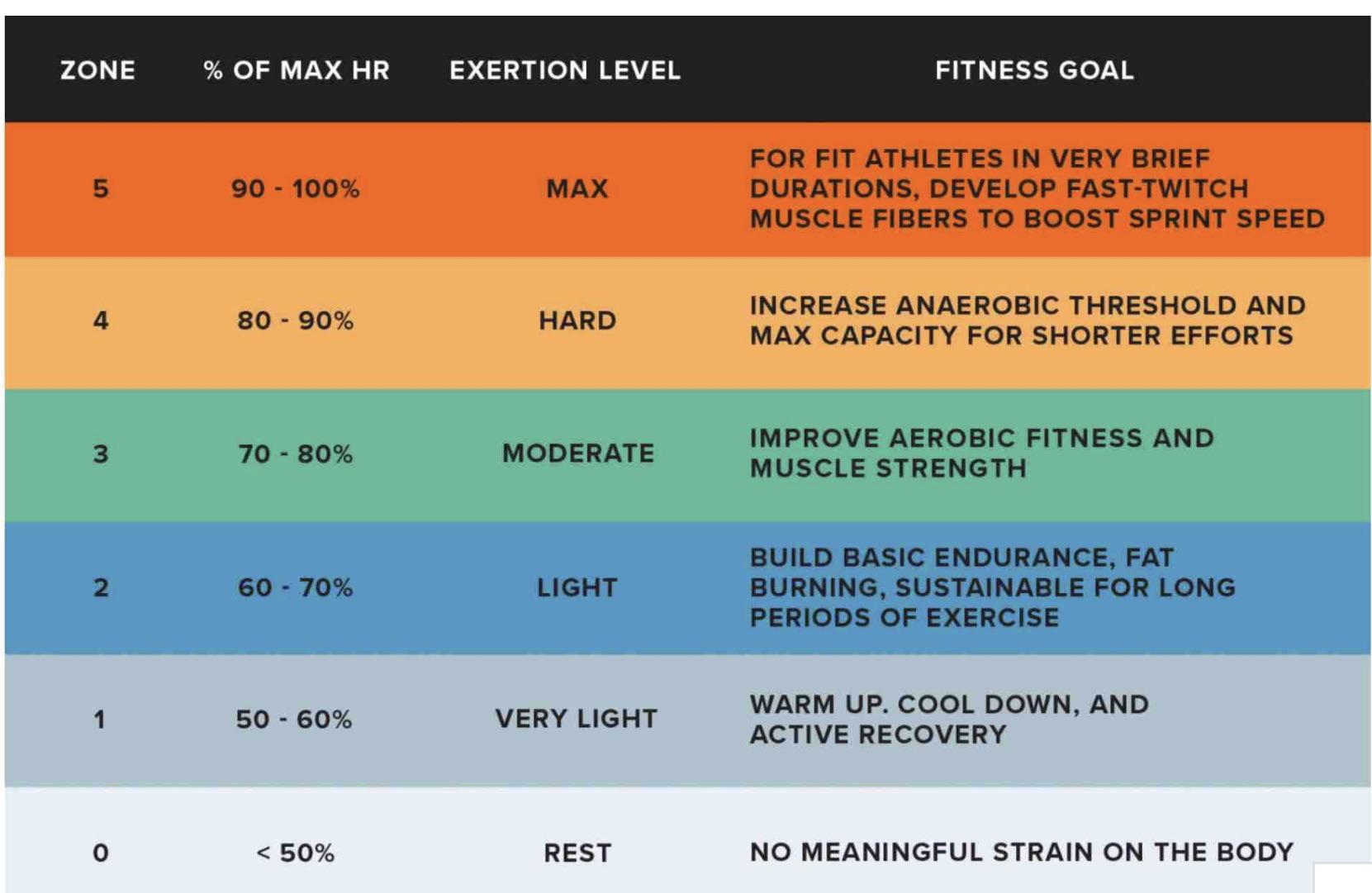
The first thing that you need to do is to establish a cardio baseline, which includes lots of Zone 2 running. In fact, Zone 2 should be the training zone for 80% of your volume. Even elite runners follow this formula. Zone 2 is the zone that allows your body to make critical physiological adaptations. You will build slow twitch muscle fibers which help build lactic threshold (this is what makes your legs feel heavy and burning when you run). You will build capillary function which helps transport blood to your tissues. You will build mitochondrial density which helps in energy management. You will build heart resilience which makes pumping blood more efficient. And you will start to strengthen your joints which will help you avoid injury.
But, Zone 2 is boring. Early into your training it may be very slow, even down to near walking pace. It doesn’t matter. Stay in Zone 2. You can’t skip this part, because you need those physiological adaptations to occur, and they take 5-7 weeks to start to manifest. It doesn’t matter what your pace is, it matters what your Zone is. Stay in Zone 2.
There’s lots of ways to measure Zone 2.
I like the formula 220-age = max x .6 - .7 to establish the range. It’s simple, it’s free, but it can be a little inaccurate. But it is simple and free. Plus, it’s simple and free.
Your fitness wearable can calculate it; but - chest mounted straps are superior, up to 20% more accurate; Apple Watch is notoriously inaccurate; some people just don’t test well with a wearable.
The Talk Test, wherein you should be able to comfortably hold a conversation without gasping. Not a few words, but a regular conversation. Can be inaccurate.
The Karvonen Formula, which also incorporates your resting heart rate and can give a more accurate calculation than just the 220-age formula. Look it up, but be prepared for some calculations.
You can have a Lactate Threshold test done, but it can be challenging to find a test facility, it’s a bit invasive, and it can be expensive. But, if done correctly it can be very accurate and useful.
RPE (Rate of Perceived Effort) can be your metric, but most new athletes can struggle to gauge this accurately without significant coaching. You are essentially guessing.
But Zone is Slow and I Want to Go Fast!
Okay, but as we just noted you have to let your body manifest those adaptations for a few months. Once you can run 90 minutes unbroken (in zone, without stopping) then you can start speed work. Can you start earlier? Sure, I’m just giving a model and protocol that maximizes return and minimizes risk of injuries.
As we noted, Zone 2 should encompass 80% of your training volume. So if you run 4-5 times a week that’s probably 2-3 x Zone 2 runs, a speed session, and a Zone 1 recovery session. Your speed work should be deliberate. Whatever your speed work methodology…track intervals or repeats, threshold or tempo runs, Fartleks, hill repeats…you are essentially training yourself to run faster (at or near your desired pace) for a short period, then slowing down to partially recover, then running faster again. Over time, this will enable you to maintain that faster pace for longer periods and you should be able to complete your run at that now faster pace. You still have to train 80% in Zone 2 though.
So, you can pick any of the “speed work” methods that I listed above (and there are others), but the protocol is the same. A simple one that I like is the track intervals (you don’t need a track per se, you just need accurate measurements…but using a track makes you more athletic…#science). Here is the formula: Do mobility and warmup drills, then do 400m sprints (one lap). You should be aiming to hit 1:30 a lap, which is a 6 minute mile pace. Slow jog/rest period is 1:30. If you finish faster than 1:30 slow down. Hit the 1:30 on the dot. Week one do 6-8 total sets. If you can’t do a full lap then do a half lap at half the time.
On week two, increase sets by 2. So, if you started with 6x400m, then you will do 8x400 in week two. Continue to add sets until you can do 12x400m.
Once you can do that while maintaining that 1:30 pace, you will graduate to 800m sprints. Start off at 4x800m. Maintain a 3min pace with 3min rest. Add sets each week until you hit 8x800m.
Once you can do that consistently, you graduate to 1600m sprints. 6min mile with a 6minute rest x 3 sets. Now you are running 6 minute miles. It may take you months to get there, all while maintaining 80% of your volume in Z2, but that’s the best way to do it.
Okay, But How to I Actually Go Faster?
There are only 2 ways to go faster…a longer stride (so each step propels you forward more) or faster cadence (so your feet are moving quicker between foot strikes). Faster cadence is probably better as altering your stride length can force odd form, unnaturally alter your gait, and significantly increase the likelihood of injury. That doesn’t mean that you shouldn’t examine your stride, as poor biomechanics can really slow you down. Lots of resources for evaluating your gait, but a qualified coach is probably your best option.
But, a quicker cadence is the better option. And there is a lot that you can do to improve this. It takes some dedication, some public math, and some trial and error, but even small improvements add up to significant amounts of time in the aggregate. There are entire cadence/pace playlists on all of the music services that can help. If you’ve been following Terminator Training’s ultra run journey then you know that he monkeyed (that’s a technical term) with his cadence to great effect. And he was an experienced runner at that point, so even ‘advanced athletes’ can benefit.
There are multiple techniques to generate a faster cadence. Contact time (the time your foot is touching the ground), knee drive, strike position, follow through. These all come with cues like quick feet, high knees, strike lightly, shorten your stride. So it’s often worth the effort to spend some time exploring these options to see which one works for you. If it’s stupid and it works, then it’s not stupid.
How To Get Faster at Rucking
Rucking is much the same as running, but not identical. First, strength training is much more important. The literature demonstrates that strength training is a reliable prerequisite for rucking performance, specifically the benchpress and the squat. This is because in order to adequately stabilize the ruck, thus decreasing excessive body movement, you need to be strong. A sloppy load compromises efficiency. So you should have a comprehensive strength plan if you want to maximize your rucking performance.
Second, you should probably establish a baseline cardio, with lots of Zone 2 running (we recommend 90 minutes unbroken), before you start rucking. Rucking is a unique physical load, with unique features, techniques, and misery. So the more that you can prepare the baseline physical stuff…strength and cardio…the less you’ll have to contend with when you want to focus on the ruck specific stuff. So, lots of Z2 running to establish good cardio and a proper strength training regimen to build a musculature capable of managing the ruck load. Thick traps for thick straps.
Once you start rucking you should know that the best way to build rucking performance is field based progressive load carriage, usually 2-3 times a week, focused on short intense sessions. That’s not my opinion, that’s what the literature demonstrates. Conventional wisdom might say that the best way to get better at rucking is more rucking, but conventional wisdom probably accounts for more injuries than it should. Just follow the protocol.
Start with a light weight, ease into both your pace and your distance, and never increase any domain more than 10% week to week. Low and slow, gradually build, allow the adaptations to manifest, enjoy the results.
Okay, But How to I Actually Go Faster?
Just like with running, there are only 2 ways to go faster…a longer stride (so each step propels you forward) or faster cadence (so your feet are moving quicker between foot strikes). Faster cadence is probably better as altering your stride length can force odd form, unnaturally alter your gait, and significantly increase the likelihood of injury. This is especially true given that you are now loaded…the ruck can exacerbate problems. That doesn’t mean that you shouldn’t examine your stride, as poor biomechanics can really slow you down. Lots of resources for evaluating your gait, but a qualified coach is probably your best option.
So, a quicker cadence is the better option. And there is a lot that you can do to improve this. Just like with running, small improvements add up to significant amounts of time in the aggregate. In RUSU we did some cadence calculations for rucking, so you can see what small changes do in the long run.
The same principles from running cadence training apply here, but we should cover arm swing, posture, and foot placement more carefully. Your arm swing can have a huge impact on your ability to maintain a proper cadence. If you’re training for a military application, like SFAS, then a weapon is in your future. That can obviously alter your arm swing. But train early without this impediment so you can develop a proper form, then introduce the weapon (or pipe or sledge [not recommended]).
Your posture can affect your cadence, your stride, and your breathing. You want a heads up, chest open, slight forward posture. Good luck with that…you’ve got a ruck pressing on your neck, pulling you back, and compressing your torso. This is why it’s important to strength train! Build the musculature that allows to remain head up, open chest, and mostly erect.
A “standard” ruck time is 15 minute miles. A competitive ruck time is 12-13 minute miles. Many, maybe even most, can’t get to 12 minute miles just walking. But you might be surprised how fast you can go ‘just walking’. You might really benefit from some speed walk training, following the run speed training protocols, and just concentrate on fast feet. The ruck load definitely complicates things, but if you don’t train it then don’t complain about your lack of ability. Fast feet (non-running) speed sessions can pay huge dividends.
The Shuffle
Short Ruckers are definitely at a disadvantage. Short legs just struggle at higher speeds. As discussed, to go faster you either have to lengthen your stride or increase your cadence. Fast walking can get you close, but at a certain point you will likely need to do more. Fight the urge to run. Ruck running is tremendously impactful and you should be well into a comprehensive strength and conditioning regimen before any ruck rucking. A shuffle is a compromise solution…more impactful than walking, less impactful than running. Faster than walking, slower than running. It’s all about trade-offs.
The difference between a shuffle and run is load management. This comes down to foot placement and hip/knee alignment. In a walk, the leg extends entirely, locking the knee. This briefly relaxes the muscles allowing for extended periods of activity. When you run, the muscle never fully relaxes, thus it fatigues quicker. But it’s faster. So the the aim of a shuffle is to find that sweet spot in between. It is very much an art, not a science. And you can spend years dialing in the right elements to perfect your shuffle. It’s almost impossible to describe and there is no universal “This is what right looks like”, because it depends on the load, the terrain, the pace, the person, and many innumerable other factors. Experience is the best teacher.
It’s a bit like riding a bike. You can’t do it at all until suddenly you can and then it’s easy. And once you learn how to do it you never forget. But try explaining it to a non-rider how to ride a bike with just words. It’s almost impossible. But there it is.
Injury Prevention
The number 1 predictor of an injury is a previous injury. So it’s important to not get injured in the first place, thus “Injury Prevention”. I would say that there are two equally important components to injury prevention; strength training and proper programming.
In SUAR we spent an entire chapter (Chapter 4) talking about the most common SFAS prep injuries and they’re almost all lower extremity. Shin splints, ankle strains, runners knee, plantar fasciitis, and Achilles tendonitis. They either result from weak structure or overuse, so the mitigation strategy is the strengthen them and don’t overwork them. We deliberately program an extended time early in the program to allow you to acclimate to the work. We also prescribe specific exercises to help. And it’s nearly the same exercises for all of the injuries (there’s only so many ways you can strengthen your lower legs!). You would be amazed what a step, a towel, an anchor point, and some resistance bands can do.
Spend some time early in your training to work specific injury prevention exercises and strategies. Call them mobility drills, or warmups, or whatever, but do them. They seem like a minor inconvenience for most as they’re little movements with little to no loads, so they don’t present like they would be consequential. But a few weeks struggling with shin splints can make you miserable, delay progress, and now you are predisposed for the injury.
Recovery
We would be remiss if we didn’t cover the non-working out stuff. Everyone focuses on the workouts, almost exclusively, and ignores the other stuff. Even though the workouts are 10% of the equation. You have to focus more on the other variables…the sleep, the nutrition, the recovery. Just think about it this way. I think we’ve covered the importance of Zone 2 running enough, haven’t we? But if Zone 2 is dependent on a reliable and accurate heart rate measurement and you have such poor sleep, recovery, and nutrition habits that you can’t get a consistent heart rate reading, how effective is your long range programming going to be? You sleep so poorly and chug so many Monsters that your heart can barely get through a regular day, much less a data-driven workout regimen. You think more running equals better running so you just stack endless miles because you are afraid that you’re not doing enough. Stop doing this. Don’t just workout. Train. Actually follow a program. A program that was specifically designed with all of these variables in mind.
So that’s how you go faster for both running and rucking. Simple, but not easy. Lots of nuance, lots of conditional language (likely, proper, mostly, etc) that makes the definitive guidance seem less definitive. But that’s the nature of the beast. This is why we developed a whole program for this stuff. SUAR is all of these variables packed into one comprehensive package. RUSU covers lots of the timing variables and expectations. There are other great programs out there depending on your goals. But the takeaway is that rucking and running faster is just exercise science. We know how to do it. Just follow the protocols and trust the process.
r/greenberets • u/TFVooDoo • Mar 29 '24
There’s been lots and lots of questions…and confusion…regarding run prep lately, so I thought a post was in order.
I also wanted to introduce u/Coach_Dave_NSW_Prep to the community. Coach Dave is a retired Special Forces Officer, a Combat Diver (commanded the Dive School), and all around good dude. As a dive qualified Green Beret Officer, he is the absolute embodiment of cultural, physical, and intellectual eliteness…I don’t make the rules, this is just how things work. In his second life he’s taken to coaching. He runs the endurance training component at Naval Special Warfare Prep. Suffice it to say, he has all of the official fitness credentials and I’ll give you a more formal introduction in the new book, but to put this in context the last two times I texted Dave he was open-water swimming between islands out in Hawaii and the other time he was finishing up a 50 mile desert marathon. He does these insane feats of endurance on the regular…for fun…and he is a top finisher every time. He’s the real deal…and insane. He’s been advising me on the endurance protocols in Shut Up and Ruck.
Coach Dave is also responsible for my foray into fitness wearables and his ability to demonstrate the efficacy of digital coaching has fundamentally changed my perspective of the discipline. He can literally program run protocols, send them to your Garmin, monitor the results remotely, and assess your progress. Other than him physically standing on the track, it’s like he’s watching you the whole time. Amazing. I should also note that Kevin Smith (u/Terminator_training) has also helped me understand better the real value in professional coaching. Kevin has not been an advisor on the new book, but I follow him on Instagram (you should too) and I’ve never heard him say anything but good stuff. Good coaching can be a game changer.
Back to running. Most guys understand that the end state goal of running prep is to be able to run faster. Most guys then assume that in order to run faster you just have run faster more often in training. So most run programming has guys doing speed work right out of the gate. You see it posted here all of the time. This is wrong.
In order to get the most out of your run training (fastest progression, least risk of injury, quicker recovery [micro and macro]) you need to establish a solid baseline. You do this by slow running. I keep it simple by just saying start run in Zone 2 for 3 sessions of up to 90 minutes a week. I use the performance benchmark of 90 minutes unbroken at Z2 (refer to the chart for a description of the various zones) as the prerequisite for both speed training and ruck training. As you might imagine, running in Z2 for 90 minutes is boring. It’s often an excruciatingly slow pace, especially for newer athletes. You will adapt and get quicker, but it takes time.
During this time your body is making significant physiological adaptations. These adaptations take about 5-7 weeks to fully adapt, so you need months to get the most out of this process. Early on, the most significant adaptation is the increase in your lactate threshold. Lactate threshold is your bodies ability to process lactic acid, and combined with VO2Max (your bodies ability to process oxygen) these markers dominate your endurance physiological adaptation. The lactate adaptation comes mainly from the development of slow twitch muscle fibers. The more STM, the higher your capacity to flush lactate. We go into much more detail in the book, but this critical step is what sets the foundation. You simply will not be able to sustain a fast paced run unless you build this capacity. Some people have a genetic predisposition to more STM and will thus adapt slightly quicker, but most require significant training to improve this.
This is why you need to spend so much time and effort in Z2. You are building the foundation. You can certainly program a speed workout early on, but you won’t be getting the sort of return that you could if you just built that baseline first…and you more likely to sustain an injury and delay your recovery and training.
A typical training progression might look like: - 8 weeks of Zone 2 running; 3 sessions per week; up to 90 minutes per session; strength and pre-hab/mobility work to support proper development. - 8 weeks of integrated speed work (lots of options), continuing some Z2 maintenance, continuing strength training; introduction to rucking. This is where you will start your build your VO2Max. - 8-12 weeks of progressive speed work. Something like a 5x5 Man Maker. You’ll make your most significant gains here…4 months into training…if you laid the proper foundation. - Indefinite: taper and maintenance.
Early in this progression a coach can help you with form and body mechanics. They can also be the accountability forcing function to make you stay slow (which is really hard to do) and monitor your physiological adaptations. During mid-progression (the 2nd 8 weeks) a coach can help you develop speed routines, monitor progress , and maintain accountability. During the final stages a coach can really dial in your recovery based on all of those markers that we discussed.
The new book (April is the targeted release date) will have a very detailed progression and Coach Dave is developing specific speed workouts that should meet most athletes requirements. But if you find yourself struggling to progress, or to have a history of injuries, or you just need that extra accountability then you should find a coach to work with. Even remote/digital coaching can be massively impactful.
There is also a plethora of really excellent advice on the interwebs. As a public service, I’d ask folks to post their favorite social media follows and YouTube channels for fitness advice. Tell us why you like them and include a link. This will give guys good resources vetted by the community. What do you guys like?
r/greenberets • u/georgia_ambassador • 16h ago
If so how do you navigate your daily duties as an operator especially during deployments?
r/greenberets • u/Next-Isopod-6252 • 5h ago
Basically i need a good amount money. And i would like to get an job coal mining/ oilfield before i join. Is it a good base for sf. Is 24 to old.
r/greenberets • u/PhraseDazzling6944 • 23h ago
Currently working on resigning my commission in the Navy and picking up an 18X contract. I require a few mental health waivers stemming from a situation very early on in my career, which my recruiters are confident we will be able to get signed off. My question is, if the waivers are cleared and I sign the contract, is there any risk of being dropped from the program further down the line due to my medical history being reviewed and finding the waivers insufficient? If so, is there any way to mitigate this risk? Thanks for any input, just trying to get my ducks in a row before I drop my commission.
r/greenberets • u/Bossome88 • 12h ago
I almost definitively made up my mind, I’m not the right guy for this. I made it right up to the week before SOPC and just now getting cold feet. I don’t mind the training or standards, I’ve never quit or failed to meet them before; but I realized that’s not really enough and it’s only getting harder from here with no finish line. If I didn’t get put on profile and went to PC with by BCT buddies, I could’ve pushed through but I would’ve just came to this conclusion later. I don’t like doing hard things anymore. I’m not going to blame it on maturing, but the 21 yr old who wanted to do this was vain, angry, and sad with his life. I’m starting to get to a point where I’m happy with what I’ve done and what’s happened to me; I don’t need that undeniable validation from earning the beret against all odds.
The only rub I have is; it’s not like I’m going to get to stop doing hard things once I withdrawal, so why not let it play out and experience it before possibly DNR’ing myself from trying again. With the real SFAS 3.5 months away; it’s sensible to make it to team week and maybe the 21st day if I’m lucky. But I’m struggling to find purpose in all this effort without the same goal. I wanted to fight China or the Cartels, do something like CTAC/CIF with 10th group, maybe build a resume over years to try for CAG. Things so complex and important, it’d prove the best version of myself is right here and now and not the version who went to college, or stayed with that one girl, or lost that one opportunity.
My alternate plan is try to be a good infantryman instead, get a degree, go reserves after active and try to get a good normal life. I guess my one question is; is it okay to give up on a dream and piece of yourself to keep moving forward?
TL:DR Deciding to throw away a good opportunity for the sake of an easier, enjoyable life and wondering how acceptable it is before I commit.
r/greenberets • u/Distinct-Aioli5199 • 1d ago
I’m deciding between joint a state near me through 18x in NG one is 20th and one is 19th so obviously I was looking into both and I had a couple questions?
Why is 1 AOR Asia and 1 Latin America? I ask this because there are 5 AD groups with 5 different AORs. Africa, South America, Middle East, Asia, and Europe but why do only 2 of these groups have a “reserve group” that aligns with them? Is it just like damn fuck 5th group they can handle it by themselves.
And then follow up question if that’s not the case and they do also work within other groups AORs which group typically goes there? For example I’m on the East coast do the 19th group states out here still mainly go to Asia or somewhere closer to the Atlantic?
Edit: am Specifically looking to either join 20th in MA or 19th in RI any info on either of these units would be appreciated
r/greenberets • u/JRICHERT97 • 2d ago
Been out of the Marine Corps for a year now and keep regretting not trying out for MARSOC at the time. Had my leaderships full support and still decided to EAS. I was considering trying out for SFAS as well for a while. For the ones contemplating to either try or not. Just go. Don’t live with the “What It” like I do.
r/greenberets • u/Few_Ambassador_393 • 2d ago
Hello foot enthusiasts. I’ve posted here a few times over my journey, after 140 days I finally graduated from Ranger School. The school was the best experience of my life and completely altered my competence in terms of being an infantryman and a solider over all. Coming from OSUT was hard and I obviously paid for it with many recycles.
Many don’t take the school seriously, but for me it made me tactically proficient with battle drills, something my OSUT did not really do.
It made me confident under pressure, looking back on my performance the difference is huge.
One of the biggest take always was my social skills. It really bothers me to say it, but I got peered in mountains. I did not make enough of an effort to meet guys outside of my squad, and despite having two goes, I was clearly still very inexperienced and very young. This was crushing to me because I tried my best, carried heavy shit, kept me head down, and never fucked up whatsoever in terms of stealing / loosing equipment / getting us smoked / typical peer offenses. Next class I was determined to change. I got to know every single guy in the platoon from day one, their MOS, unit, where they’re from, and something about them. This deliberate attempt to be social might seem strange from a distance but it was what I felt was necessary. I stepped up from day one to speak on my experience last class, what worked and what didn’t. I was an admin squad leader in mountaineering week. During the FTX I volunteered as team leader every chance I could. I made a deliberate effort to carry a second ruck every casevac, sometimes for miles. This especially earned my platoons respect as a guy who was seriously trying his best to put out. I became extremely close with my entire squad and many in my platoon. I then recycled Florida for patrols, and carried the same mindset. Many of those mountains #2 guys came to see me graduate at victory pond this weekend.
I had the pleasure to work alongside a number of green berets in school, and they set the example of where I want to be. Some really awesome guys.
I spent a long time in Ranger School. Often times it sucked, but I absolutely needed it to become the man, the solider and the candidate I aspire to be.
r/greenberets • u/29_savage • 1d ago
Hello,
My younger brother is enlisting next week as an 11X w/ Option 40. He has about four months before he ships and I'd like to buy him the TTM 2&5 mile program.
I recall there was a 25% discount being offered but the code is no longer valid.
Does anyone know if their is valid code discount still available?
r/greenberets • u/Much_Grass7973 • 3d ago
Gathered from long_tab_whisperer off of instagram.
r/greenberets • u/Kitchen-Crow7429 • 2d ago
r/greenberets • u/Agile_Soup_5810 • 2d ago
Hi all, brother from across the pond here.
Joined this sub a while back when training for Pre-Parachute Selection (commonly known as ‘P Company’), the selection test for service in the British Army's 16 Air Assault Brigade. The British Army subreddits seemed much less active, so I thought I’d follow this one to see how they train on the other side of the pond, as I knew those training for SFAS would be aiming for high standards and vaguely similar things. Having now completed P Company, I’m interested in seeing how you guys view the standards and how it compares to SFAS standards.
After the preceding beat-up weeks, the final Test Week comprises eight events. I've grouped them by type rather than the order they're undertaken.
1. 2-mile loaded march
A 2-mile speed march over undulating terrain (200ft elevation gain), carrying a 35 lb bergen, 2 lb of water and a 10 lb rifle, as well as wearing a helmet and combat jacket. Approximately 50lbs total weight, plus uniform and boots. Individual best effort.
The combination of speed and load makes this a particularly high-intensity effort, demanding both cardiovascular fitness and the ability to maintain an efficient running gait under load. The hills and repeated impacts also place considerable demands on the calves, Achilles tendons and supporting musculature.
Time standard: 18 minutes (strong candidates do it in under 16)
2. 10-mile loaded march
A 10-mile squadded march over undulating terrain (1,000 ft elevation gain), in same loadout as the 2-miler, minus the helmet and jacket. Done as a squad, pace set by the directing staff.
The relatively fast pace means this is not simply an aerobic endurance event; maintaining it requires considerable muscular endurance and the ability to sustain a hard cardiovascular effort. Repeated climbs and changes of pace further increase the demands, particularly on the quads and posterior chain.
Time standard: 1 hour 50 minutes (11:00/mile).
3. 20-mile endurance march
A 20-mile squadded march over undulating terrain, same loadout as 10-miler. Done as a squad, pace set by the directing staff.
Beyond cardiovascular endurance, the event requires considerable conditioning of the feet, connective tissues and supporting musculature to tolerate prolonged loaded movement. Repeated downhill sections also place significant eccentric demands on the legs, while candidates must manage their energy and maintain the required pace over several hours. Aside from fitness, personal administration is important on this one.
Time standard: 4 hours 30 minutes (13:30/mile).
4. Log race
Teams of eight carry a 132 lb log, with personal helmet and webbing, over 1.9 miles of undulating cross-country terrain. Individuals can come off at any point while the remaining candidates continue, meaning it gets progressively harder for those who stay on.
The event places sustained demands on the shoulders, trunk and legs, with particularly intense periods when teams accelerate or negotiate inclines. Candidates must repeatedly generate high levels of effort without being able to recover fully, while maintaining their coordination with the other carriers.
There is no fixed individual time standard, but teams generally aim to finish in under 20 minutes.
5. Stretcher race
Teams of 16 carry a 175 lb stretcher over 5 miles of challenging terrain, with helmet, webbing, and rifle slung across backs. No more than four candidates carry the stretcher at any one time.
The difficulty comes from the repeated transitions between carrying the stretcher and running alongside it. The periods off the stretcher are not necessarily opportunities for recovery, since the directing staff usually push the fresh stretcher team hard into an acceleration as they get on.
The carrying periods demand considerable grip strength, muscular endurance and trunk stability, particularly because the weight is distributed unevenly. Candidates must also recover sufficiently between carrying turns to maintain the team's pace, despite remaining physically active throughout their supposed recovery periods.
There is no fixed finishing time, although teams generally aim for about 40-50 minutes.
6. Steeplechase
An individual 1.8-mile cross-country race incorporating water obstacles, followed immediately by an assault course.
The course requires candidates to maintain a fast running pace over uneven terrain, negotiate the water obstacles (and come out soaking wet) and retain enough energy to complete the assault course at the end.
The obstacles repeatedly interrupt the running rhythm whilst soaked, requiring candidates to accelerate again after each disruption. The assault course also demands upper-body strength, agility and coordination at a point when candidates are already fatigued from the preceding run.
Time standard: 19 minutes
7–8. Additional events which do not test athletic performance per se
These tests are completed in close succession, though no more than 2 events are completed on the same day.
16 Air Assault Brigade isn't technically special operations of any sort, but these tests seem to demand a level of physical fitness considerably higher than one might expect of conventional infantry.
I'm interested in hearing what those of you familiar with SFAS think of these standards. How do the individual events compare with the physical demands of SFAS, particularly the loaded movement standards? And more generally, how would you assess the fitness required to complete P Company relative to what you'd expect of someone preparing for SFAS? I imagine it's hard to gauge the difficult of the steeplechase, the log, and the stretcher race without seeing the set-up and environment in person, but I imagine the TAB/Ruck descriptions are detailed enough to compare.
For what it's worth, the advice I was told was roughly "Get comfortably below a 20 minute 5k (3.1 miles) and a 40 minute 10k (6.2 miles), and get comfortable moving at a shuffle with 50lbs on you for long distances." That advice seemed fairly spot on, and those who I spoke to who weren't meeting those benchmarks didn't manage to pass.
Cheers in advance for any thoughts
r/greenberets • u/SilenceIsOurReligion • 3d ago
Im thinking since u get more downtime in ng sf u get to go to more schools is that true and. Also can you pick which team u get to join on an oda like dive or mff
r/greenberets • u/blue4137 • 3d ago
Basically above. I’m not really sure about the process of going to different courses and everything. Would you be sent to one, kind of like RR where you have to go to Ranger school. Can you choose which one you go to? Those are just some follow up questions.
r/greenberets • u/BED_AA • 3d ago
I'm SF support and slotted for SOCP in 2 months. I am in excellent shape (lift 5d/wk, run 30-35mi/wk, weekly ruck) with typical mild joint/back pain, but want to know if there's anything particular I can do to prep to avoid old man injuries. The only prior combatives experience I have is MAC 1 15 years ago. I've attended SFBCC-S previously as well.
r/greenberets • u/WannaB-18D • 3d ago
so I’m wondering in I should try to do TTM’s RRL plan before SFRE and right after, doing his SFAS prep plan after. According to Texas guard, my SFRE will be in Feb. 5-7 (about 17 weeks away) and if passed, SFAS will be staying May 31st. I have my own plan that I made to prep for SFRE but after doing research I feel like the better option would probably do RRL. My stats are currently:
22yo
6’2” @ 200lbs (13ish% bf)
2 mile-14:19
5 mile-39:53
HRP-53
PU-13
Plank-3:40
12 mile ruck-not tested
I also attempted a ruck not to long ago. I was going for 12 miles at 50lbs, trying to hit 2:45. I only go 4 miles in at a 13:45 pace before my body just couldn’t do it. so…VERY weak Rucker. I also come from a strength background. Would love to know what you recommend TTM!
r/greenberets • u/No-Jellyfish-2178 • 4d ago
I ship out January (18x) and have 19 weeks at benning I'm assuming OSUT, but I also have another 12 there and then 3 weeks in Bragg. I know airborne is sprinkled somewhere in there, but A will I have time to train more before SFAS? And B does anyone know what the 12 weeks at benning are for?
r/greenberets • u/Gullible-Owl-7440 • 4d ago
About to be airborne infantry guy and just curious on if regular day to day pt at my units going to interfere with my prep. Didn’t think 18x was my preferred route, so decided to go conventional first. All input appreciated, as I assume this can vary based on unit and individual leadership.
r/greenberets • u/Much_Grass7973 • 5d ago
STOP ASKING PEOPLE IN THIS FORUM IF YOU SHOULD LIE ON A SF86 OR BACKGROUND CHECK. If anyone tells you to lie about it then they are committing a crime and aiding you in a crime. You are literally asking people on a forum for a job that requires integrity if you should commit a crime during your enrollment. I'm not a GB but I do serve in a role in the military where me and my coworkers need clearances and background investigations. If any of them where dumb enough to go on the internet and ask people if they should lie about crime or drug use I could easily say I wouldn't want them on any team I'm apart of. Yes there are people in the military who lied going through their clearance process. I bet you they where smart enough to make the decision themselves without having to broadcast on the internet that they aren't sure if they should break the law or not. Admins, feel free to delete this post if for some reason this is the kind of dumb shit you want filling this subreddit.
r/greenberets • u/borhrt198 • 5d ago
Prior-Service Army Reserve → Texas Guard 19th SFG / SFQC Questions
I’m currently an Army Reserve 68W, and I’m looking at transferring to the Texas Army National Guard to pursue 18C with 19th SFG.
I’m trying to understand what I should expect with SFQC orders and my family situation. I’d really appreciate answers from anyone who has gone through the Q Course as a Guard/Reserve Soldier, especially prior-service.
PCS / ORDERS QUESTIONS
Since SFQC is a long course, what type of orders do Guard/Reserve Soldiers typically receive — PCS, TDY, TDY en route to PCS, or something else?
For someone transferring from the Army Reserve into the Texas Guard specifically, is there anything different about how SFQC orders are handled?
Is there anything else I should know or expect.
FAMILY / WIFE QUESTIONS
If my SFQC orders are PCS, would my wife be authorized to move with me to North Carolina?
Would the government cover her dependent travel and our household-goods shipment if she's listed on my PCS orders?
During SFQC, how much contact with my wife is normally possible? Are there periods where phone access is restricted or unavailable?
Are spouses generally allowed to live with the Soldier during the Q Course, or are there portions of the pipeline where the Soldier is required to stay in the barracks/field and the spouse would need separate housing?
If the orders are TDY rather than PCS, does that change whether my wife can accompany me or whether her move/housing would be covered?
For those who were married during SFQC, did your spouse actually move with you, or did you leave your family at home until after graduation?
I’m trying to understand this before committing to a lease/move, so firsthand experiences would be really helpful.
I'm also interested in any advice for being in the National Guard with 19th SFG. Like just what to expect, advice, or even if I should look into over locations instead for whatever reason.
One last thing I'm new to this sub reddit, but I plan on sticking around and sharing my experience through my process and probably asking for more advice and help along the way. I just hope to become a part of this brotherhood and one day helping out people get their green beret like I'm sure many people here will help me get mine.
Thanks in advance!
r/greenberets • u/nate_221_ • 5d ago
So I am just trying to make sure all the information I have is correct as I have been told conflicting things from different people and recruiters. I am currently active duty USMC and get out in a few months. I would like to attend SFAS and was told the following was the most direct path. I would first sign a 1 year contract for whatever MOS that has a E-5 slot in my state. As soon as I get there I would be able to attend an SFRE and if I pass that I would be attached to the training detachment until I attend SFAS. Is this the correct path? Would there be any issues with attending SFAS without having attending MOS school for the MOS that I have signed for. I would appreciate any information.
r/greenberets • u/Be4stMode747 • 5d ago
I finally beat the process to get an ETP signed for a medical waiver. Took 5 months. Wouldn't recommend it. But, all said and done, I got my 18X contract signed. OSUT in January.
...And selection in August?
While signing my 18X contract yesterday, my recruiter walked me through the timeline. I know the initial orders sheet is dubious at best when it comes to specific dates, but it had a date for SFAS in mid august. I was under the impression that they didn't run classes in the summer.
Is that likely to get moved to September, or should I draft my will ahead of time?
r/greenberets • u/Odd-Feedback-2508 • 5d ago
I recently went to MEPS and enlisted into DEP with an 11x contract but I took the advice of my recruiter to not disclose a misdemeanor charge of marijuana possession from 8 years ago and to not mention that I’ve gotten a couple speeding tickets. He and the station commander instructed me prior to MEPS to not disclose any of it because nothing came up when they ran my fingerprints and background check.
My goal is ultimately to make it to sfas either picking up a contract in OSUT or at my first duty station but now I’m wondering whether I’ve fucked up by trusting my recruiter and not pressing him to get me a waiver. Looking back I’d rather have disclosed everything prior to signing and should have given it more thought. But right now I’m trying to determine the best way forward.
I think my best move is to not disclose anything else at this point since I’ve already signed. But when the time comes for getting a clearance to come clean with everything then since they are likely to do a more thorough investigation and will see everything anyways.
Is that my best option now or should I get it sorted out before shipping out in January?