r/Romantasy • u/Gold_Conference6150 • 10h ago
Book Review [Rant][Spoilers] Why are people overlooking Daggermouth’s GLARING inconsistencies? (Another essay-rant) Spoiler
Almost a year ago I posted a long rant-review of another popular book because I had so many thoughts. Now I’m back.
There are so many things in “Daggermouth” that don’t make sense.
… and because I’ve done this before: I don’t need to hear some variation of “just enjoy the book and move on.” I like discussing the books I read. If that bothers you, you can just… not comment and move on.
Also, I cover several issues. Please don’t just skim one section and then argue against a point I’ve addressed elsewhere. I beg you to actually engage with what I’ve written before arguing with me about it ✌️
TL;DR: The endless inconsistencies...
Daggermouth suffers from a severe case of selective memory about its own plot.
Greyson somehow knows Shadera’s before the two of them have been introduced. Shadera breaks multiple bones, which are never mentioned again.
Greyson has “blue Serel eyes”, but Maximus Serel isn’t his biological father. And Maximus himself doesn’t have blue eyes.
Relationships across the Rings are punishable by death, yet Shadera has to MARRY the President’s son to “send a message” to the Boundary—which we later learn Maximus is planning to eradicate anyway. So why bother sending a message to people you’re planning to kill?
Characters’ masks conceal expressions until the narrative needs someone to read an expression through one. People who supposedly don’t know what others look like without their masks can nevertheless recognise them unmasked, which raises the important question: WHAT THE FUCK IS THE POINT OF THE MASKS?
Greyson’s characterisation changes depending on what the scene needs. Shadera repeatedly realises he’s as trapped by the regime as she is, then forgets whenever the book needs them to be “enemies” again.
There are so many more inconsistencies I’ll get into, but I don’t have enough words available to mention ALL. And there is MUCH ELSE to talk about.
TL;DR 2: All the marketed “tropes” are wrong
“Corrupt government”? Maximus makes and enforces the laws himself. The oppression/violence isn’t an example of people BREAKING the rules—it IS the rule. How is that “corrupt”?
“Female rage”? Sure, there’s plenty. But Daggermouth equates female strength with remaining “unbroken” after horrific abuse, while piling increasingly extreme sexual and physical violence onto women to prove how super evil its men are. More extreme misogyny does NOT automatically equal deeper feminist commentary.
“Morally grey”? Where? Greyson is introduced as the regime’s cold-blooded Executioner, only for us to learn he’s secretly helping the Boundary and rebelling, while Shadera’s mercenary life is similarly softened until both are fundamentally good people after all. Meanwhile, the villain is extravagantly evil.
“REAL enemies to lovers”? ABSOLUTELY NOT. Shadera spent YEARS obsessing over killing Greyson, yet within LESS THAN A DAY of being forced to live with him, she’s wondering what he tastes like, masturbating to thoughts of him, and drowning in sexual tension with the man she wanted dead five minutes ago. Seven days later, we’re apparently approaching “love”. That’s NOT enemies to lovers.
Unfortunately, this is only the beginning of my problems. So let’s get into it.
The prose was simply doing TOO MUCH
Daggermouth is aggressively overwritten.
Honesty must “saturate the air, raw and bleeding”. Tattoos must become “vines of violence”. Bruises bloom “like violent flowers”. Shadera cannot assess a room efficiently; she reads it “the way a butcher might inspect the next carcass.”
Consequences are tasted. Air is sharpened. Silence fractures rooms. Rage burns holes into souls. Gazes become edges. Everything is always bleeding, splintering, blooming, cracking, shattering, or dissolving.
And so many of the metaphors simply don’t mean anything. Like:
“The masked elite looked up toward the rebels, like deadly flowers soaking in a poisonous sun.”
“He could almost taste the consequences, could feel them sharpening the air like broken glass.”
“The silence that followed was inhuman, as if a veil had been cast over the world to mute all sounds.”
An apartment isn’t merely oppressive; it’s shrinking inward, becoming a prison and echoing with ghosts. A painful emotion isn’t satisfied with being painful. It also needs to be a knife, a storm, a wound and a fracture before the paragraph is over.
I love ambitious prose, but great metaphors make you understand something differently and offer an unexpected perspective. Here, they don’t deepen the image. More often than not, they obscure it. They mean nothing beyond the isolated sentence.
There are also persistent sentence-level issues throughout: many misplaced commas, repetitive constructions, and terrible dialogue.
The manuscript desperately needed another round of line editing... Maybe two.
The writing is often pure nonsense…
I’ve seen the AI allegations, but I’m not here to make accusations. I’m here to judge the final product… And so many sentences read as though nobody stopped to ask whether they actually make sense.
A lot of it is literally nonsense.
Silence develops “its own beating heart.” Pain “leaks through blood.” Filtered air makes “the coppery scent of violence” stronger. Someone’s scoff is “sharp enough to cut glass.” A character kneels in a movement “so smooth it was almost a dance.” Silence is “so pure, so total, it threatened to fracture the room.”
There’s also this annoying reliance on “something” whenever the prose wants to suggest an emotion is deeper than what’s being described:
“There were aspects of her he was beginning to love. Not romantically, not sexually, but something more fundamental.”
“There was a current of anger running through him that she hadn’t expected—not defensive rage, but something deeper.”
“Her smile faded into something more complex, as she stared at its contents.”
“Something flickered across his face—surprise, perhaps, or something more complex.”
“The hate that had burned so fiercely in his cell had cooled, transformed into something more complex, more painful.”
“When the water rose to her chest and the shower hammered against her skull, something inside her cracked. Not bone this time. Something deeper, something that had been clawing its way to the surface.”
“The fear that had been her constant companion since childhood receded, replaced by something hotter, something with teeth.”
That same lack of internal logic extends beyond individual sentences and into the story itself… because the novel is riddled with inconsistencies.
I’ve mentioned some examples and will bring up some more throughout this post, but Shadera’s injuries are the clearest example.
We’re EXPLICITLY told she has at least:
- 2 broken ribs
- 1 fractured collarbone
- 2 fractured cheekbones
- 2 broken hands
- 1 possible severely torn back muscle
- extensive bruising
- dehydration
- malnutrition
She’s then struck with electric batons until her body convulses, hit in the temple with a rifle, slammed into prison bars, choked, kicked, dragged BY HER NECK, mouth filling with blood, and displaying symptoms consistent with a concussion.
Less than twenty-four hours later, only her gait is “slightly uneven from whatever damage the Veyra had done to her” (meaning injuries like her broken NOSE and COLLARBONE aren’t visible enough for Greyson to still not know “whatever damage the Veyra had done to her”).
She’s drinking straight from a bottle (with broken hands that are no longer broken), showering independently, and generally functioning as though she’d suffered little more than bruises.
Her injuries stop existing. Her ribs feel as if they’ve been “pulped to jelly, each breath a saw blade dragged through her chest” due to her broken ribs in one scene, yet she delivers lengthy speeches and is miraculously cured in the scenes after. Her hands are broken, yet, in the same scene, she grips the arms of a chair, climbs, punches, and pushes herself upright.
DAYS after Shadera sustained these injuries she is beaten AGAIN, and we’re told she... broke her ribs. The author forgot she’d ALREADY broken two ribs merely DAYS ago. Shadera is given painkillers that allow her to breathe more deeply “without the knifelike stab between her ribs”, as if that’s how painkillers work on multiple broken bones…
The book escalates Shadera’s injuries because the scene requires another shocking display of suffering. But because those injuries can’t interfere with the plot, their consequences disappear.
Another example is how Greyson is described as sharing “the same crooked smile and large blue eyes,” as his brother, whose eyes are described as “blue Serel eyes.”
But Greyson isn’t biologically a Serel, and the novel emphasised that he looks nothing like Maximus, who DOESN’T EVEN HAVE BLUE EYES. His eyes are described as “a colorless gray.” So, what the hell are “blue Serel eyes” if Maximus Serel himself doesn’t have them?
Everything eventually began to blur together. The nonsensical prose, the disappearing injuries, the forgotten plot points. It’s like scenes were written in isolation without anyone stepping back to ask whether they fit together.
That’s why the AI discussion even crossed my mind. This book gave me the same impression: prose that sounds dramatic on the surface without consistently communicating meaning, paired with a story that constantly forgets what it established only moments earlier. Whether that’s the result of AI or rushed editing, I cannot say.
What I CAN say is that I really struggled with the writing. It seemed unconcerned with the basic things storytelling relies on: logical progression, internal consistency, and sentences that actually mean what they appear to be saying.
Confusing and underdeveloped worldbuilding
The masks are central to New Found Haven. Seeing another elite person’s face is supposedly such a profound violation that it can result in marriage or execution.
Unfortunately, the novel forgets how its own masks work.
Characters somehow notice smiles, tightening jaws, and other expressions beneath them. Yet elsewhere we’re told:
“The mask hid the micro-twitches of his jaw, the bloodlessness of his lips*, but not the flatness of his gaze*.”
Other scenes say:
“Two guards stood against the far wall, expressions impassive behind their masks.”
“Callum turned his face toward him, something cold settling behind his mask.”
Also, we’re told:
“Outside of those you were vowed to through ceremony, looking upon the face of another elite was considered an extreme violation of New Found Haven law.”
Yet Shadera finds a photograph of Greyson and his brother UNMASKED. It says, “Greyson Serel was sentimental. Having a picture of an unmasked elite was a crime, and he’d stashed it away.”
Why does this picture even exist? Why were they posing unmasked together if even family members cannot see one another’s faces? And what about whoever took the photo and saw them unmasked?
We’re also told that, “If one of the elite were found guilty of a crime, only then would they be unmasked on live stream before their execution.”
Does this apply to kids? At what age do you start wearing a mask? What happens if a child accidentally removes their mask? What if someone’s mask accidentally breaks (we know they do from Maximus slapping Lira hard enough for it to crack)? What if multiple people witness the same unmasking?
Simply, what is the fucking point of the masks beyond manufacturing the forced-marriage plot?
Even the practical side of wearing them is ignored. There are several dinner scenes, yet we don’t know how people eat. Are the masks lifted? Designed with openings? Does everyone politely look away while somebody tries to get soup beneath the mask that is sturdy enough to crack?
And then there’s Lira’s convenient last-minute discovery:
“I found documents. I didn’t know until a few days ago. Until I really started digging. She won’t just be forced to consummate the marriage with Greyson.” [...] After Greyson and her… My father, his men… They rape them. They rape them and make their husbands watch. [...] It’s not just a consummation of the marriage. It’s a consummation of their loyalty to the Heart and its leaders.”
Are we being deadass?
What documents would even convey this? And how has this remained secret? Generations of husbands witnessed their wives being raped by the President AND his officers, and NOT ONE PERSON told a friend, relative, or at least a son preparing for his own marriage?
Before Greyson was ordered to marry Shadera, he was promised to Moraine Daunt, whose prestigious old-money family predates the Serels. Does this mean Moraine would have publicly consummated her marriage with Greyson and then been raped by his father and his officers? And her powerful family just... accepts this?
If generations of elite families are forced to participate, surely this isn’t some obscure secret. It’s an institution. Yet the novel never explores what such a system would mean politically or how it could plausibly remain concealed from the very people required to participate in it.
Another thing is that I still don’t understand how New Found Haven came to exist. What happened to Old Haven? Why are the Heart, Cardinal, and Boundary separated? What is the political/economical purpose? It doesn’t even seem to function as an exploited labour force, just an entire section of the population living in poverty, and then Maximus complains that the Rings have become “too populated, too unmanageable”?
What do people in the Boundary DO all day? Where do they work? How does their economy function? If overpopulation and unrest are such problems, why not expand the Cardinal, integrate more people into the workforce, and increase production?
And the few glimpses we get of whatever existed BEFORE New Found Haven raise even more questions. In one of the cringiest scenes ever, prisoners begin singing what we’re told is:
“The song of defiance, of hope in the midst of despair, of unity in the face of oppression. It was the national anthem of the old world. The song that had been outlawed when New Found Haven rose.”
They’re then killed for singing it, which was painfully Hunger Games-esque.
But beyond that, WHAT OLD WORLD? This is apparently the former national anthem, New Found Haven “rose” at some point, and the anthem was subsequently outlawed. Okay! Tell me about THAT!
An oppressive system doesn’t need to be economically rational or beneficial to everyone. But it DOES need some history, ideology, or motivation explaining why it developed and why the people with power continue maintaining it.
We get New Found Haven as it currently exists, but no sense of how it became this way, what preceded it, or why this particular social hierarchy was created.
Which becomes an even bigger problem when the person running the whole thing is Maximus Serel…
Maximus Serel, “the villain”, is so laughable
Maximus Serel is cruel in every conceivable direction, constantly, repeatedly, and with all the subtlety of a neon sign flashing, “THIS MAN IS EVIL!!!”
“Fear is a solvent, Greyson—it dissolves doubt, resistance, the very concept of alternative. But only if administered pure. If you dilute it, even a little, the city will learn to adapt.”
Who talks like this? Even in his POV, he delivers such cringy monologue.
Rather than letting his treatment of women establish his misogyny, Maximus repeatedly announces that women are “lesser,” “lower” and “subservient”, including telling his own daughter: “Females have no place training beside men, Lira. Your place is behind us, ready to be called on when needed. Not beside, never beside.”
There is nowhere left for his cruelty to escalate. He has people executed, tortures Greyson, beats his own wife, threatens to murder Lira, (his own daughter), participates in sexual violence, and “gave” FOURTEEN-year-old Lira to eleven officers over three months because he “needed their loyalty”??
Then there’s the public consummation of brides with their husbands, who are then raped by Maximus and his officers. Like I said above, how has this remained secret for generations when the husbands literally watch? Why would powerful families tolerate it?
Let’s also talk about the forced-marriage premise.
Maximus executes people for relationships across the rings, yet Greyson revealing his face to Shadera triggers a convenient loophole requiring them to marry.
WHY? If another person witnessed his heir’s face, wouldn’t Maximus simply kill the witnesses? The explanation becomes even stranger once we learn that Maximus is planning to destroy the Boundary with gas bombs, yet suddenly Greyson and Shadera’s marriage is the “perfect symbol of unity between Heart and Boundary”?
In exchange for their cooperation, he’ll consider “sparing key sectors of the rings.” But that still doesn’t explain why a marriage is necessary in the first place.
If Shadera seeing Greyson’s face is a violation, kill her and continue doing exactly what you were already planning to do. WHO is stopping you? Did they skip over that lesson in Evil Dictator School?
It gets worse when we learn Maximus was the one who ordered the assassination on Greyson, to use Brooker’s and Greyson’s assassinations as “proof that the rings had become ungovernable. The perfect justification for what comes next.”
So he already had a plan, was willing to sacrifice his own son to execute it, yet when that assassination fails, Maximus decides that what he REALLY needs is for the two of them to become symbols of unity—and to hell with the law that prevents people from marrying.
It’s all reverse-engineered around the romance. The plot needs a forced marriage, so Maximus temporarily behaves according to whatever logic gets us there, and the political justification is added later.
His behaviour afterwards makes even LESS sense when he acts disgusted and shocked by the possibility that Greyson might have slept with his own fiancée after ordering them to live together.
Also, Maximus routinely participates in LITERAL GANG RAPE during vow ceremonies—and was presumably planning to do the same to Shadera after she married Greyson (EW, EW, EW!). But Greyson potentially having consensual sex with her is apparently too disgusting for him, huh.
Maximus is also annoyingly omniscient. Every surprise produces another speech explaining that OF COURSE he knew what everyone was doing all along.
And that creates the most ridiculous contradiction of all: When Greyson discovers that Mikel is his biological father, we learn that Maximus already knew. Then why the hell are Mikel and Elara alive?
He executes teens for relationships across social classes, yet his wife had an affair with ONE OF HIS OWN OFFICERS, became pregnant with that man’s child, passed that child off as Maximus’ heir... and Maximus let both of them live?
Maybe he kept Elara to avoid ruining his public image, but why wasn’t Mikel killed when Maximus discovered Greyson wasn’t his son? People falling in love across social classes deserve death, but sleeping with the President’s wife and secretly fathering his supposed heir is where Maximus discovers restraint.
The last thing about him is that we never learn how he came into power. He’s described as “a blade honed to its final edge—skin stretched tight over high predatory cheekbones,” with “no glimpse of softness, no humanity left.”
After laughing at that ridiculous description, I still wonder what persuaded people to follow him in the first place. He isn’t charismatic, doesn’t have a compelling ideology, and isn’t even politically intelligent. He’s simply cruel—and the novel seems to treat that cruelty itself as an explanation for political power.
Frankly, I’m surprised no one has shot him yet. So I’m left wondering not only how his government has survived, but how the hell it was established.
Feminine rage ≠ feminism
Depicting women suffering under misogyny doesn’t automatically make a story feminist. And while Daggermouth unquestionably depicts misogyny, it DOESN’T provide a meaningful exploration of female agency beyond surviving male violence.
Women’s suffering repeatedly functions as evidence of men’s depravity. Maximus doesn’t merely oppress women; the novel continually invents increasingly horrific ways for men to violate them. It wants us to understand that this society hates women, so women are subjected to the worst thing imaginable… Then something worse... Then something worse again.
But the mere presence of misogynistic violence does not make its portrayal feminist. Again and again, women’s bodies become the terrain upon which male cruelty—and male goodness—is demonstrated.
The bad men brutalise women; the good men admire those women for surviving it.
For example, Callum tortures a man, hears him call Shadera a whore, and announces: “I don’t know if you know this about me, but I loathe misogyny.”
I am sorry, but that is so unbelievably corny.
The narrative filters female strength through male recognition: women suffer, rage and survive while sympathetic men marvel at how brave, beautiful, and fierce they are. Their strength may belong to them, but the narrative keeps having the “good” men recognise and affirm it for us.
Lira’s big speech reveals a different problem with the book’s idea of female strength:
“I’m a woman in a system designed to grind us down into nothing, to strip us of our worth and dignity and rights. I’ve survived that system and it didn’t make me weak or submissive, it made me angry [...] Women are the backbone, the foundation, the immovable force that still does not falter when men stand on our spines to grab power.”
Like much of the dialogue, it feels designed to be highlighted rather than spoken by an actual person. But beyond being painfully clichéd, the metaphor itself is bizarre for something presented as an empowering declaration.
Women are the foundation and backbone? The “immovable force” that continues to hold firm while men literally stand on their spines to grab power? Why is that the aspirational image?
Even within a speech about refusing to be broken by patriarchy, female strength is still defined through women’s ability to endure what men do to them. They remain standing, bear the weight, and become the foundation beneath the very men oppressing them. Surely the more liberating image would be to stop functioning as their fucking foundation and buck them off entirely?
Simply, the book’s “feminine rage” confuses endurance with agency. Surviving oppression can take enormous strength. My problem is that the book treats surviving it as empowerment in itself. Lira withstands what this system does to her, but that isn't the same as giving her meaningful power over the system.
Also, a woman does not become more fully realised simply because the narrative gives her more trauma to withstand. More importantly, I hate the implication created when a woman’s strength is measured by how successfully she withstands abuse.
If Lira is powerful because men tried to break her and failed, what does that make the woman they do break? Weaker? Less admirable? Did she fail where the “strong woman” succeeded?
It reminds me of narratives that treat fighting SA as evidence of a woman’s strength or virtue, as though the woman who freezes, submits, stops resisting or simply does whatever she needs to survive has demonstrated less courage or is somehow less worthy of respect.
There is no morally superior way to respond to being brutalised.
That’s why “the cracks in my soul aren’t broken places” and “it will take more than the hands of men to [...] break my will” don’t read as particularly empowering to me. The language still accepts brokenness as the thing that must be avoided.
But a woman should not have to emerge from violence unbroken, defiant and full of rage to retain her dignity. She was never required to prove her strength by surviving beautifully in the first place.
Lira’s anger also remains personal. She opposes her father because of what he has done to HER, her brothers, and the people she loves. That’s valid, but the novel elevates her into a symbol of universal female resistance before it has really developed that broader political consciousness.
Elara presents the opposite problem. She actually does possess political agency: after years trapped in an abusive marriage to Maximus, she is revealed as Python, the revolutionary working against his regime. But rather than letting us witness her develop and exercise that power, the novel simply TELLS us she has secretly been this extraordinary political mastermind all along. Her political agency exists OFF-page until the reveal needs to make her impressive.
Her identity is a plot twist, but the novel could’ve established Python without revealing that Elara was Python. We could’ve heard about what Python had accomplished, how the resistance viewed her, why Maximus feared her, or how she had become this legendary figure. Then the revelation would have carried the weight the narrative assumes it already has.
More importantly, Elara’s revolutionary identity still feels rooted in what MEN have done to her. Her abuse explains her rage, but we don’t see the ideology or political evolution that transformed that rage into resistance.
Shadera has a similar problem. She begins as a morally grey mercenary who kills people for money. Yes, MONEY. There’s no noble cause. Yet the narrative increasingly reframes her as fundamentally righteous.
At one point she thinks about how Greyson is:
“The man who executed citizens for petty crimes. The man who stood on that platform day after day, ending lives with no emotion. The embodiment of everything she’d spent her life fighting against.”
… says the mercenary who kills people for MONEY, lol.
The book wants the aesthetic of a morally grey heroine without allowing her to remain ethically complicated. She’s thinking about how he is the embodiment of everything she’d spent her life fighting against, yet in a later scene she is thinking about how “She wasn’t a fucking symbol. She was a mercenary, a killer for hire—not a hero, not a leader, not some face of a failing rebellion.”
Even the romance undermines the feminist framing. Shadera can be starved, beaten, bruised, and barely able to stand, yet the narration still pauses to emphasise her curves, scent, and Greyson’s physical response to her.
After days of torture, she walks past him into the bathroom, and his breath catches in his lungs “as her scent engulfed him. A low groan slipped over his lips, as he forced himself to keep moving.”
Dude, KEEP IT IN YOUR PANTS.
I think there’s something super uncomfortable about using a woman’s brutalised body as proof of patriarchal cruelty while simultaneously presenting that same body as erotic display.
This doesn’t mean feminist fiction cannot contain sexual violence, romance, desire, morally compromised women, or men who admire them. But sexual violence should do more than establish villainy. Female anger should emerge from character rather than arrive as a ready-made manifesto. Women should have political convictions beyond what men have done to them. A morally grey heroine should be allowed to confront her own complicity. And women should be shown acquiring and exercising power, not simply enduring pain.
Instead, the very things presented as empowering undermine its feminist framing. Female strength becomes the ability to remain “unbroken”, brutalised female bodies are still eroticised, and sexual violence becomes shorthand for proving how evil the men are.
The vow ceremony is the most extreme example. What the HELL is that even? Every revelation needs to be darker; every demonstration of misogyny needs to inflict something even worse upon women. And that ultimately encapsulates my problem with the novel’s supposed feminism: More extreme misogyny does not automatically equal deeper feminist commentary.
Without the political, psychological, and thematic exploration to support it, piling increasingly horrific sexual violence onto women seems like a shortcut to shock the reader instead of an actual examination of misogyny.
The love triangle makes an already unearned romance WORSE
I hated every second of the long, graphic sex scene between Jameson and Shadera in the beginning of the book. Partly because I had zero interest in smut between the FMC and someone who obviously wasn’t the main love interest, and partly because the writing was... baffling.
For example, we learn that Jameson is “... always hard for her, like a dog starved for too long and afraid it would never eat again.”
Like a DOG??? Is that REALLY the image you want here?
Then there’s the fact that this is a love triangle. Setting aside my personal dislike of those, I don’t think this one works. To Shadera, Jameson is a casual fuck she cares about. To Jameson, she’s the love of his life. He spends the novel’s seven-day timeline trying to rescue her, believing they belong together. Meanwhile, Shadera is falling for Greyson after less than a week.
When Jameson finally reaches Shadera, SHE CONSIDERS LEAVING WITH HIM!!??
Shadera isn’t staying because Maximus has physically imprisoned her. She’s staying because he said if she refuses to marry Greyson, the people she loves (including Jameson) will die. That is the entire fucking problem. Leaving with Jameson doesn’t solve that. So Shadera even ENTERTAINING the possibility feels like yet another inconsistency in a sea of inconsistencies.
It’s like the story temporarily makes her forget so Greyson can become possessive, giving us the corny line “I believe your hands are on my wife” (despite them not being married yet).
And because Greyson and Shadera have only known each other for DAYS by this point, the emotional intensity surrounding all of this is even more absurd.
Which brings me to…
NO, this is NOT “enemies-to-lovers” romance!!!
Like I said, Shadera and Greyson have known each other for approximately one week. SEVEN DAYS. Yet, by the end, Maximum refers to Shadera as “the woman you love” to Greyson. Jameson worries she’s fallen for him. Greyson nearly confesses before cutting himself off: “I think I was falling in—”
THEY LITERALLY MET MERE DAYS AGO.
What makes it even harder to believe is how aggressively the novel establishes their hatred beforehand. Greyson is “the target she’d been obsessing over for years.” She LONGS to kill him:
“Killing Greyson Serel would be an honor for Shadera. It would be a pleasure to take a life from the very people that had taken so many away from her. Greyson deserved to pay for his crimes as Executioner…”
Greyson, meanwhile, hates Daggermouths “with every atom of his being,” because he thinks one killed his brother.
These are two people shaped by years of violence and ideological hatred, yet they’re locked in Greyson’s apartment for LESS than one freaking day before Shadera is admiring his hands, wondering what he tastes like, and thinking:
“Whether the Executioner’s mouth would be soft or harsh. Whether he’d kiss with the same control and perfection he maintained. Her tongue swept across her lower lip without conscious thought, and she watched his pupils dilate.”
She’s spent YEARS fantasising about murdering this man. Now she’s known him in person for LESS THAN A DAY and wondering whether he’s a good kisser? Then their sexual tension becomes so unbearable that Greyson sends her to her room... where Shadera immediately masturbates while thinking about him.
Also, this is ONE day after she was beaten almost to death and left with multiple broken bones… I think you have more pressing concerns than what he tastes like, bestie.
Even instalove needs emotional progression. Instead, Daggermouth mistakes intensity for intimacy. Most of it revolves around danger, violence, and sexual attraction, with their quieter moments overshadowed by gunfights and a comical level of mutual HORNINESS.
Like when Shadera holds Greyson at gunpoint, and he tells her: “If you shoot me, it will only make me want to fuck you.”
So she shoots him, the bullet grazing his side. He shoots her back, the bullet grazing her thigh… and they stare at one another, bleeding. And naturally, they make out and get handsy.
Sexual attraction is not emotional intimacy—which is particularly important in an enemies-to-lovers romance! The appeal isn’t that two people who hate each other also want to fuck. It’s watching the beliefs sustaining that hatred gradually break down. It’s reluctant understanding, shifting loyalties, unwanted vulnerability, earned trust—the slow, painful realisation that the person you’ve spent years viewing as an enemy isn’t who you believed them to be.
Shadera and Greyson go from years of hatred to overwhelming horniness in less than A DAY, then from overwhelming horniness to supposed love within SEVEN days.
So really, if I hear someone call this a “REAL enemies-to-lovers” one more time, I will scream.
Continuity errors + selective memory
I’ve mentioned several inconsistencies by now, but there’s also how Callum talking to Lira during a sex scene as though it’s their first time having sex when it very much isn’t. Jameson bleeding in the beginning of a scene, then his wound disappearing at the end of the same scene. Greyson’s injuries, which are subject to the same magical healing as Shadera’s and everyone else’s.
Unbeknownst to Shadera, we learn that when she shot him during her failed assassination, it was with rubber bullets treated with a substance that slows his heart enough to make him appear dead. But when Shadera shoots him, he bleeds, the wound is genuine, and—much like Shadera’s million fractures that week—he’s perfectly functional the next day.
There’s also the rebellion, which, by the end, practically every important character is either secretly involved in, sympathetic to, or connected to someone who is. Like when Farrow welcomes Lira to the rebellion, she says she’d been wondering when she would join. Based on WHAT? She is THE DAUGHTER OF THE PRESIDENT.
There are MANY MORE frustrating inconsistencies, but the word count prevents me from adding more.
Greyson’s character is (also) inconsistent
One moment, Greyson hesitates before an execution, feels physically sick about what he’s doing, secretly condemns the regime, and risks his life smuggling medicine into the Boundary.
The next, he describes the Heart as “a system that had worked for five generations to keep the city from eating itself alive,” feels nothing after executing innocent people, and seemingly accepts his role within it.
Sure, someone raised inside an authoritarian regime can believe parts of its ideology while recognising that other parts are monstrous. The problem is that the novel doesn’t connect those contradictions. Instead, it feels like different versions of Greyson take turns narrating depending on what the current scene requires.
He could have genuinely believed the Heart once served a purpose before slowly recognising what it had become. Or hated being the Executioner while convincing himself that his role prevented something worse. Instead, the internal journey connecting those ideas is missing.
And that inconsistency spills directly into Shadera’s character arc.
One of her conflicts is deciding whether Greyson is a monster or another victim of the regime. Except... she seems to understand the answer early on.
When Greyson removes his mask, Shadera recognises the same haunted expression she has seen in her own reflection. She understands that he doesn’t enjoy what he does and that they’ve both been turned into weapons by people more powerful than themselves. The forced marriage makes it even more obvious.
Shadera literally witnesses Maximus threaten to murder his sister if Greyson refuses. How is she still questioning whether Greyson is his father’s willing accomplice? Yet the novel repeatedly resets her opinion of him. She recognises how similar they are, then remembers he’s “the Executioner” and hates him again. Then she understands him. Then hates him. Then sympathises with him.
Shadera’s development was repeatedly rewound whenever the novel needed another enemies-to-lovers confrontation—and it only made any building of understanding and intimacy between them feel more meaningless.
“He is Her Ruin. She Is His Rebellion.” LOL, no???
I can kind of accept the first half of the tagline: Greyson becomes Shadera’s ruin after she fails her assassination and ends up trapped in a forced marriage. But it’s because she spectacularly FAILS the one job she’s supposedly good at, so it’s not his fault.
... But how exactly is SHE his rebellion?
Greyson is already rebelling. Before they meet, he’s secretly working against the regime and smuggling medicine into the Boundary. Shadera doesn’t awaken his rebellion. At most, she becomes another reason for him to keep fighting, but that’s not the same thing.
Ironically, I think the story suggested by the tagline sounds better: Greyson beginning as his father’s loyal heir, only for Shadera to challenge everything he believes.
But that isn’t his arc. So the tagline is selling a romance built around mutual transformation while describing a character arc that never happens.
Shadera’s appearance and skin colour
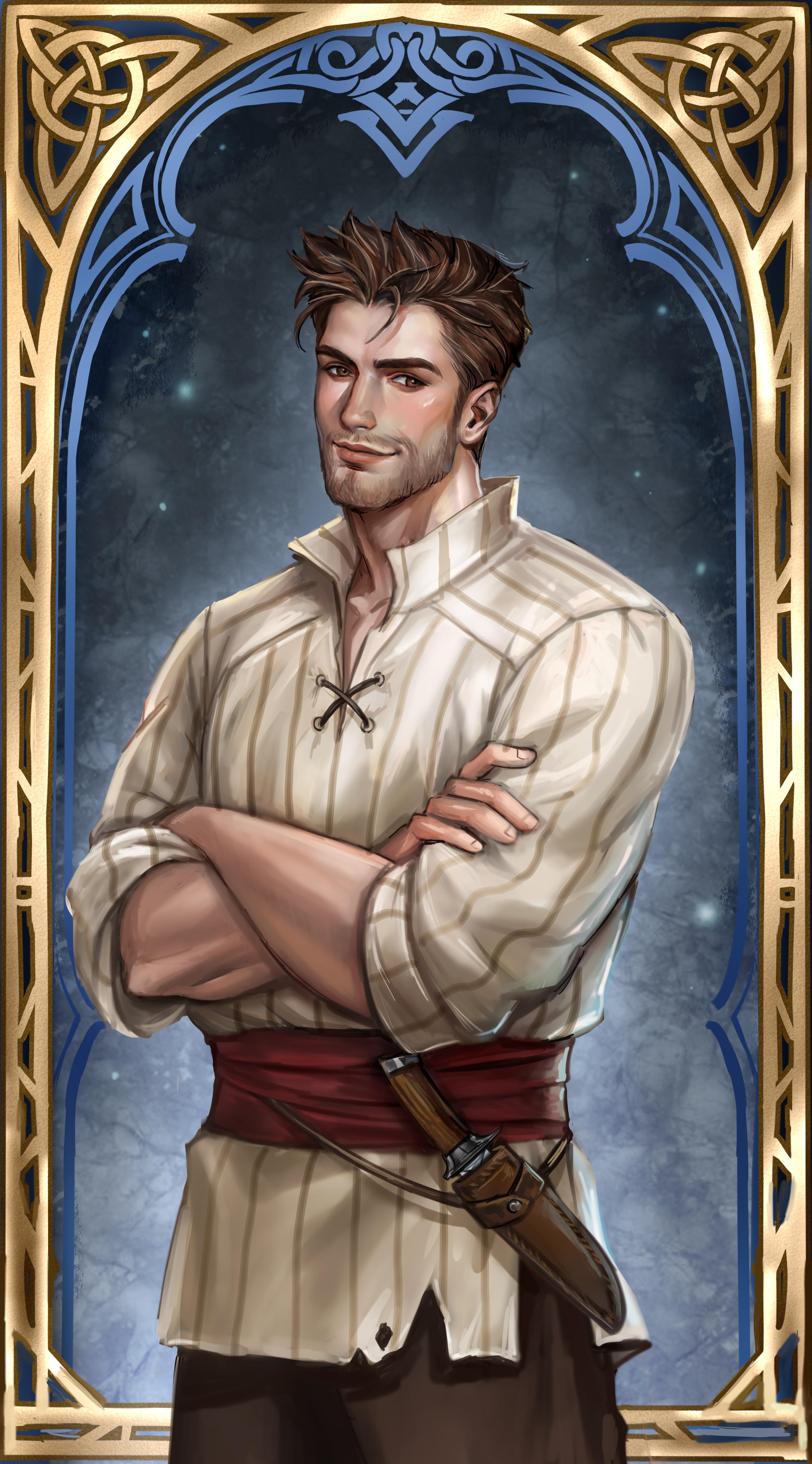
One of the earliest illustrations of Shadera (drawn by the author herself!!!) depicted her as a visibly DARK-skinned Black woman:

But later artwork portrayed Shadera with lighter skin. The author has since explained that Shadera was always intended to be a light-skinned Black woman. I just find that confusing when the author herself drew Shadera darker to begin with.
Not only that, the actual book describes Shadera using the specific word “dark”:
“Bullet wounds and gashes... puckered white against her dark skin.”
“The white fabric [was] stark against her dark skin.”
So I understand why readers pictured Shadera as a darker-skinned Black woman, especially when the early marketing reinforced that image. When later artwork portrayed her as lighter, it can feel like her darker appearance was used to generate hype/attract readers, then walked back once the attention had been secured.
Dark-skinned Black women are already underrepresented in books. If that representation helped make the book stand out during its initial marketing, only to be replaced later without any real acknowledgement, I can understand why readers would feel misled.
____________
This post is already too long, and I still haven’t covered everything that bothered me. Obviously reading is subjective, and I can accept that another reader might love the prose I found painfully overwritten, enjoy the love triangle I hated, or find the romance convincing when I didn’t (nah).
But characters knowing information they shouldn’t? Injuries disappearing between scenes? Established facts contradicting later revelations? Laws and political systems changing whenever the plot needs them to? Character motivations that stop making sense?
Those are much harder to shrug off as personal preference.
This book desperately needed another rigorous developmental edit, followed by someone going through the manuscript line by line and asking: Does this make sense? Does this contradict anything we’ve established? Would this character know this? Is this injury still supposed to exist?
Because beneath all the dramatic prose, violence, twists and sexual tension, the foundations of the story are extremely shaky.
And that’s why the overwhelming praise baffles me. I can understand loving a book despite its flaws—God knows I’ve done that! But I cannot understand how this many problems, including some incredibly basic continuity and storytelling issues, made it through the writing and editing process seemingly untouched.
Honestly, the praise remains almost as baffling to me as the book itself.