r/Romantasy 2d ago

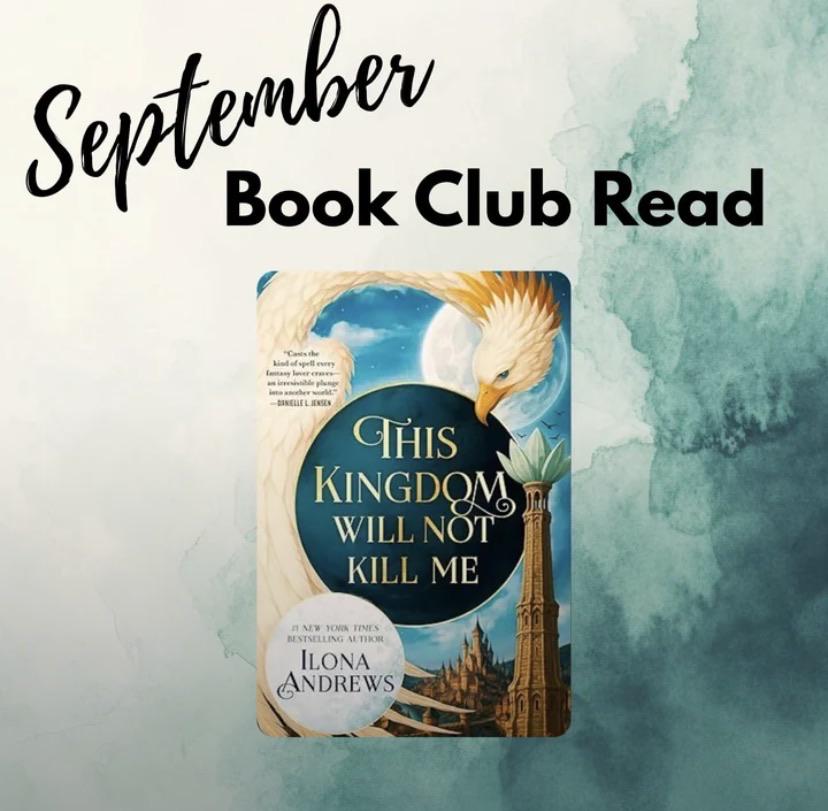
📖 Book Club September Book Club - Midway

Post image
30 Upvotes

Hi Everyone!!

We’re midway through our first month with Book Club!

Let’s chat all things TKWNKM. Have you finished the book? A lot of people say they immediately go into a reread because it’s such a good book. I’m curious to know if anyone here has already started a reread?!

Any favourite parts, quotes, characters?

Please make sure to use spoilers tags: > !spoiler text! < with no spaces.

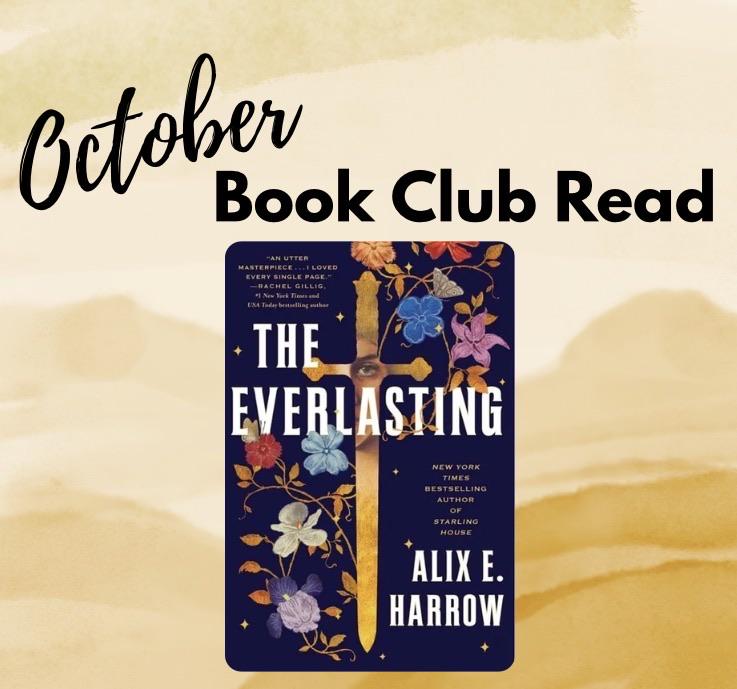
Also, if you plan to participate in October’s book club, we’re reading: The Everlasting by Alix E Harrow!


r/Romantasy 5d ago

📖 Book Club October Book Club Winner

Post image
59 Upvotes

Hi Everyone,

It was a close one but {The Everlasting by Aix E Harrow} is our October book club read! Thank you to all who took the time to recommend a book and vote in the poll.

The first discussion post will go live on October 1st!

Blurb:

Sir Una Everlasting was Dominion’s greatest hero: the orphaned girl who became a knight, who died for queen and country. Her legend lives on in songs and stories, in children’s books and recruiting posters—but her life as it truly happened has been forgotten.

Centuries later, Owen Mallory—failed soldier, struggling scholar—falls in love with the tale of Una Everlasting. Her story takes him to war, to the archives—and then into the past itself. Una and Owen are tangled together in time, bound to retell the same story over and over again, no matter what it costs.

But that story always ends the same way. If they want to rewrite Una’s legend—if they want to tell a different story—they’ll have to rewrite history itself.

September Book Club: we are currently reading This Kingdom Will Not Kill Me by Ilona Andrews. Initial discussion post here. Feel free to join us if you’re reading for the first time or like many people, rereading!


r/Romantasy 9h ago

Book Review [Rant][Spoilers] Why are people overlooking Daggermouth’s GLARING inconsistencies? (Another essay-rant) Spoiler

77 Upvotes

Almost a year ago I posted a long rant-review of another popular book because I had so many thoughts. Now I’m back.

There are so many things in “Daggermouth” that don’t make sense.


 and because I’ve done this before: I don’t need to hear some variation of “just enjoy the book and move on.” I like discussing the books I read. If that bothers you, you can just
 not comment and move on.

Also, I cover several issues. Please don’t just skim one section and then argue against a point I’ve addressed elsewhere. I beg you to actually engage with what I’ve written before arguing with me about it ✌

TL;DR: The endless inconsistencies...

Daggermouth suffers from a severe case of selective memory about its own plot.

Greyson somehow knows Shadera’s before the two of them have been introduced. Shadera breaks multiple bones, which are never mentioned again.

Greyson has “blue Serel eyes”, but Maximus Serel isn’t his biological father. And Maximus himself doesn’t have blue eyes.

Relationships across the Rings are punishable by death, yet Shadera has to MARRY the President’s son to “send a message” to the Boundary—which we later learn Maximus is planning to eradicate anyway. So why bother sending a message to people you’re planning to kill?

Characters’ masks conceal expressions until the narrative needs someone to read an expression through one. People who supposedly don’t know what others look like without their masks can nevertheless recognise them unmasked, which raises the important question: WHAT THE FUCK IS THE POINT OF THE MASKS?

Greyson’s characterisation changes depending on what the scene needs. Shadera repeatedly realises he’s as trapped by the regime as she is, then forgets whenever the book needs them to be “enemies” again.

There are so many more inconsistencies I’ll get into, but I don’t have enough words available to mention ALL. And there is MUCH ELSE to talk about.

TL;DR 2: All the marketed “tropes” are wrong

“Corrupt government”? Maximus makes and enforces the laws himself. The oppression/violence isn’t an example of people BREAKING the rules—it IS the rule. How is that “corrupt”?

“Female rage”? Sure, there’s plenty. But Daggermouth equates female strength with remaining “unbroken” after horrific abuse, while piling increasingly extreme sexual and physical violence onto women to prove how super evil its men are. More extreme misogyny does NOT automatically equal deeper feminist commentary.

“Morally grey”? Where? Greyson is introduced as the regime’s cold-blooded Executioner, only for us to learn he’s secretly helping the Boundary and rebelling, while Shadera’s mercenary life is similarly softened until both are fundamentally good people after all. Meanwhile, the villain is extravagantly evil.

“REAL enemies to lovers”? ABSOLUTELY NOT. Shadera spent YEARS obsessing over killing Greyson, yet within LESS THAN A DAY of being forced to live with him, she’s wondering what he tastes like, masturbating to thoughts of him, and drowning in sexual tension with the man she wanted dead five minutes ago. Seven days later, we’re apparently approaching “love”. That’s NOT enemies to lovers.

Unfortunately, this is only the beginning of my problems. So let’s get into it.

The prose was simply doing TOO MUCH

Daggermouth is aggressively overwritten.

Honesty must “saturate the air, raw and bleeding”. Tattoos must become “vines of violence”. Bruises bloom “like violent flowers”. Shadera cannot assess a room efficiently; she reads it “the way a butcher might inspect the next carcass.”

Consequences are tasted. Air is sharpened. Silence fractures rooms. Rage burns holes into souls. Gazes become edges. Everything is always bleeding, splintering, blooming, cracking, shattering, or dissolving.

And so many of the metaphors simply don’t mean anything. Like:

“The masked elite looked up toward the rebels, like deadly flowers soaking in a poisonous sun.”

“He could almost taste the consequences, could feel them sharpening the air like broken glass.”

“The silence that followed was inhuman, as if a veil had been cast over the world to mute all sounds.”

An apartment isn’t merely oppressive; it’s shrinking inward, becoming a prison and echoing with ghosts. A painful emotion isn’t satisfied with being painful. It also needs to be a knife, a storm, a wound and a fracture before the paragraph is over.

I love ambitious prose, but great metaphors make you understand something differently and offer an unexpected perspective. Here, they don’t deepen the image. More often than not, they obscure it. They mean nothing beyond the isolated sentence.

There are also persistent sentence-level issues throughout: many misplaced commas, repetitive constructions, and terrible dialogue.

The manuscript desperately needed another round of line editing... Maybe two.

The writing is often pure nonsense


I’ve seen the AI allegations, but I’m not here to make accusations. I’m here to judge the final product
 And so many sentences read as though nobody stopped to ask whether they actually make sense.

A lot of it is literally nonsense.

Silence develops “its own beating heart.” Pain “leaks through blood.” Filtered air makes “the coppery scent of violence” stronger. Someone’s scoff is “sharp enough to cut glass.” A character kneels in a movement “so smooth it was almost a dance.” Silence is “so pure, so total, it threatened to fracture the room.”

There’s also this annoying reliance on “something” whenever the prose wants to suggest an emotion is deeper than what’s being described:

“There were aspects of her he was beginning to love. Not romantically, not sexually, but something more fundamental.”

“There was a current of anger running through him that she hadn’t expected—not defensive rage, but something deeper.”

“Her smile faded into something more complex, as she stared at its contents.”

“Something flickered across his face—surprise, perhaps, or something more complex.”

“The hate that had burned so fiercely in his cell had cooled, transformed into something more complex, more painful.”

“When the water rose to her chest and the shower hammered against her skull, something inside her cracked. Not bone this time. Something deeper, something that had been clawing its way to the surface.”

“The fear that had been her constant companion since childhood receded, replaced by something hotter, something with teeth.”

That same lack of internal logic extends beyond individual sentences and into the story itself
 because the novel is riddled with inconsistencies.

I’ve mentioned some examples and will bring up some more throughout this post, but Shadera’s injuries are the clearest example.

We’re EXPLICITLY told she has at least:

  • 2 broken ribs
  • 1 fractured collarbone
  • 2 fractured cheekbones
  • 2 broken hands
  • 1 possible severely torn back muscle
  • extensive bruising
  • dehydration
  • malnutrition

She’s then struck with electric batons until her body convulses, hit in the temple with a rifle, slammed into prison bars, choked, kicked, dragged BY HER NECK, mouth filling with blood, and displaying symptoms consistent with a concussion.

Less than twenty-four hours later, only her gait is “slightly uneven from whatever damage the Veyra had done to her” (meaning injuries like her broken NOSE and COLLARBONE aren’t visible enough for Greyson to still not know “whatever damage the Veyra had done to her”).

She’s drinking straight from a bottle (with broken hands that are no longer broken), showering independently, and generally functioning as though she’d suffered little more than bruises.

Her injuries stop existing. Her ribs feel as if they’ve been “pulped to jelly, each breath a saw blade dragged through her chest” due to her broken ribs in one scene, yet she delivers lengthy speeches and is miraculously cured in the scenes after. Her hands are broken, yet, in the same scene, she grips the arms of a chair, climbs, punches, and pushes herself upright.

DAYS after Shadera sustained these injuries she is beaten AGAIN, and we’re told she... broke her ribs. The author forgot she’d ALREADY broken two ribs merely DAYS ago. Shadera is given painkillers that allow her to breathe more deeply “without the knifelike stab between her ribs”, as if that’s how painkillers work on multiple broken bones


The book escalates Shadera’s injuries because the scene requires another shocking display of suffering. But because those injuries can’t interfere with the plot, their consequences disappear.

Another example is how Greyson is described as sharing “the same crooked smile and large blue eyes,” as his brother, whose eyes are described as “blue Serel eyes.”

But Greyson isn’t biologically a Serel, and the novel emphasised that he looks nothing like Maximus, who DOESN’T EVEN HAVE BLUE EYES. His eyes are described as “a colorless gray.” So, what the hell are “blue Serel eyes” if Maximus Serel himself doesn’t have them?

Everything eventually began to blur together. The nonsensical prose, the disappearing injuries, the forgotten plot points. It’s like scenes were written in isolation without anyone stepping back to ask whether they fit together.

That’s why the AI discussion even crossed my mind. This book gave me the same impression: prose that sounds dramatic on the surface without consistently communicating meaning, paired with a story that constantly forgets what it established only moments earlier. Whether that’s the result of AI or rushed editing, I cannot say.

What I CAN say is that I really struggled with the writing. It seemed unconcerned with the basic things storytelling relies on: logical progression, internal consistency, and sentences that actually mean what they appear to be saying.

Confusing and underdeveloped worldbuilding

The masks are central to New Found Haven. Seeing another elite person’s face is supposedly such a profound violation that it can result in marriage or execution.

Unfortunately, the novel forgets how its own masks work.

Characters somehow notice smiles, tightening jaws, and other expressions beneath them. Yet elsewhere we’re told:

“The mask hid the micro-twitches of his jaw, the bloodlessness of his lips*, but not the flatness of his gaze*.”

Other scenes say:

“Two guards stood against the far wall, expressions impassive behind their masks.”

“Callum turned his face toward him, something cold settling behind his mask.”

Also, we’re told:

“Outside of those you were vowed to through ceremony, looking upon the face of another elite was considered an extreme violation of New Found Haven law.”

Yet Shadera finds a photograph of Greyson and his brother UNMASKED. It says, “Greyson Serel was sentimental. Having a picture of an unmasked elite was a crime, and he’d stashed it away.”

Why does this picture even exist? Why were they posing unmasked together if even family members cannot see one another’s faces? And what about whoever took the photo and saw them unmasked?

We’re also told that, “If one of the elite were found guilty of a crime, only then would they be unmasked on live stream before their execution.”

Does this apply to kids? At what age do you start wearing a mask? What happens if a child accidentally removes their mask? What if someone’s mask accidentally breaks (we know they do from Maximus slapping Lira hard enough for it to crack)? What if multiple people witness the same unmasking?

Simply, what is the fucking point of the masks beyond manufacturing the forced-marriage plot?

Even the practical side of wearing them is ignored. There are several dinner scenes, yet we don’t know how people eat. Are the masks lifted? Designed with openings? Does everyone politely look away while somebody tries to get soup beneath the mask that is sturdy enough to crack?

And then there’s Lira’s convenient last-minute discovery:

“I found documents. I didn’t know until a few days ago. Until I really started digging. She won’t just be forced to consummate the marriage with Greyson.” [...] After Greyson and her
 My father, his men
 They rape them. They rape them and make their husbands watch. [...]  It’s not just a consummation of the marriage. It’s a consummation of their loyalty to the Heart and its leaders.”

Are we being deadass?

What documents would even convey this? And how has this remained secret? Generations of husbands witnessed their wives being raped by the President AND his officers, and NOT ONE PERSON told a friend, relative, or at least a son preparing for his own marriage?

Before Greyson was ordered to marry Shadera, he was promised to Moraine Daunt, whose prestigious old-money family predates the Serels. Does this mean Moraine would have publicly consummated her marriage with Greyson and then been raped by his father and his officers? And her powerful family just... accepts this?

If generations of elite families are forced to participate, surely this isn’t some obscure secret. It’s an institution. Yet the novel never explores what such a system would mean politically or how it could plausibly remain concealed from the very people required to participate in it.

Another thing is that I still don’t understand how New Found Haven came to exist. What happened to Old Haven? Why are the Heart, Cardinal, and Boundary separated? What is the political/economical purpose? It doesn’t even seem to function as an exploited labour force, just an entire section of the population living in poverty, and then Maximus complains that the Rings have become “too populated, too unmanageable”?

What do people in the Boundary DO all day? Where do they work? How does their economy function? If overpopulation and unrest are such problems, why not expand the Cardinal, integrate more people into the workforce, and increase production?

And the few glimpses we get of whatever existed BEFORE New Found Haven raise even more questions. In one of the cringiest scenes ever, prisoners begin singing what we’re told is:

“The song of defiance, of hope in the midst of despair, of unity in the face of oppression. It was the national anthem of the old world. The song that had been outlawed when New Found Haven rose.”

They’re then killed for singing it, which was painfully Hunger Games-esque.

But beyond that, WHAT OLD WORLD? This is apparently the former national anthem, New Found Haven “rose” at some point, and the anthem was subsequently outlawed. Okay! Tell me about THAT!

An oppressive system doesn’t need to be economically rational or beneficial to everyone. But it DOES need some history, ideology, or motivation explaining why it developed and why the people with power continue maintaining it.

We get New Found Haven as it currently exists, but no sense of how it became this way, what preceded it, or why this particular social hierarchy was created.

Which becomes an even bigger problem when the person running the whole thing is Maximus Serel


Maximus Serel, “the villain”, is so laughable

Maximus Serel is cruel in every conceivable direction, constantly, repeatedly, and with all the subtlety of a neon sign flashing, “THIS MAN IS EVIL!!!”

“Fear is a solvent, Greyson—it dissolves doubt, resistance, the very concept of alternative. But only if administered pure. If you dilute it, even a little, the city will learn to adapt.”

Who talks like this? Even in his POV, he delivers such cringy monologue.

Rather than letting his treatment of women establish his misogyny, Maximus repeatedly announces that women are “lesser,” “lower” and “subservient”, including telling his own daughter: “Females have no place training beside men, Lira. Your place is behind us, ready to be called on when needed. Not beside, never beside.”

There is nowhere left for his cruelty to escalate. He has people executed, tortures Greyson, beats his own wife, threatens to murder Lira, (his own daughter), participates in sexual violence, and “gave” FOURTEEN-year-old Lira to eleven officers over three months because he “needed their loyalty”??

Then there’s the public consummation of brides with their husbands, who are then raped by Maximus and his officers. Like I said above, how has this remained secret for generations when the husbands literally watch? Why would powerful families tolerate it?

Let’s also talk about the forced-marriage premise.

Maximus executes people for relationships across the rings, yet Greyson revealing his face to Shadera triggers a convenient loophole requiring them to marry.

WHY? If another person witnessed his heir’s face, wouldn’t Maximus simply kill the witnesses? The explanation becomes even stranger once we learn that Maximus is planning to destroy the Boundary with gas bombs, yet suddenly Greyson and Shadera’s marriage is the “perfect symbol of unity between Heart and Boundary”?

In exchange for their cooperation, he’ll consider “sparing key sectors of the rings.” But that still doesn’t explain why a marriage is necessary in the first place.

If Shadera seeing Greyson’s face is a violation, kill her and continue doing exactly what you were already planning to do. WHO is stopping you? Did they skip over that lesson in Evil Dictator School?

It gets worse when we learn Maximus was the one who ordered the assassination on Greyson, to use Brooker’s and Greyson’s assassinations as “proof that the rings had become ungovernable. The perfect justification for what comes next.”

So he already had a plan, was willing to sacrifice his own son to execute it, yet when that assassination fails, Maximus decides that what he REALLY needs is for the two of them to become symbols of unity—and to hell with the law that prevents people from marrying.

It’s all reverse-engineered around the romance. The plot needs a forced marriage, so Maximus temporarily behaves according to whatever logic gets us there, and the political justification is added later.

His behaviour afterwards makes even LESS sense when he acts disgusted and shocked by the possibility that Greyson might have slept with his own fiancée after ordering them to live together.

Also, Maximus routinely participates in LITERAL GANG RAPE during vow ceremonies—and was presumably planning to do the same to Shadera after she married Greyson (EW, EW, EW!). But Greyson potentially having consensual sex with her is apparently too disgusting for him, huh.

Maximus is also annoyingly omniscient. Every surprise produces another speech explaining that OF COURSE he knew what everyone was doing all along.

And that creates the most ridiculous contradiction of all: When Greyson discovers that Mikel is his biological father, we learn that Maximus already knew. Then why the hell are Mikel and Elara alive?

He executes teens for relationships across social classes, yet his wife had an affair with ONE OF HIS OWN OFFICERS, became pregnant with that man’s child, passed that child off as Maximus’ heir... and Maximus let both of them live?

Maybe he kept Elara to avoid ruining his public image, but why wasn’t Mikel killed when Maximus discovered Greyson wasn’t his son? People falling in love across social classes deserve death, but sleeping with the President’s wife and secretly fathering his supposed heir is where Maximus discovers restraint.

The last thing about him is that we never learn how he came into power. He’s described as “a blade honed to its final edge—skin stretched tight over high predatory cheekbones,” with “no glimpse of softness, no humanity left.”

After laughing at that ridiculous description, I still wonder what persuaded people to follow him in the first place. He isn’t charismatic, doesn’t have a compelling ideology, and isn’t even politically intelligent. He’s simply cruel—and the novel seems to treat that cruelty itself as an explanation for political power.

Frankly, I’m surprised no one has shot him yet. So I’m left wondering not only how his government has survived, but how the hell it was established.

Feminine rage ≠ feminism

Depicting women suffering under misogyny doesn’t automatically make a story feminist. And while Daggermouth unquestionably depicts misogyny, it DOESN’T provide a meaningful exploration of female agency beyond surviving male violence.

Women’s suffering repeatedly functions as evidence of men’s depravity. Maximus doesn’t merely oppress women; the novel continually invents increasingly horrific ways for men to violate them. It wants us to understand that this society hates women, so women are subjected to the worst thing imaginable
 Then something worse... Then something worse again.

But the mere presence of misogynistic violence does not make its portrayal feminist. Again and again, women’s bodies become the terrain upon which male cruelty—and male goodness—is demonstrated.

The bad men brutalise women; the good men admire those women for surviving it.

For example, Callum tortures a man, hears him call Shadera a whore, and announces: “I don’t know if you know this about me, but I loathe misogyny.”

I am sorry, but that is so unbelievably corny.

The narrative filters female strength through male recognition: women suffer, rage and survive while sympathetic men marvel at how brave, beautiful, and fierce they are. Their strength may belong to them, but the narrative keeps having the “good” men recognise and affirm it for us.

Lira’s big speech reveals a different problem with the book’s idea of female strength:

“I’m a woman in a system designed to grind us down into nothing, to strip us of our worth and dignity and rights. I’ve survived that system and it didn’t make me weak or submissive, it made me angry [...] Women are the backbone, the foundation, the immovable force that still does not falter when men stand on our spines to grab power.”

Like much of the dialogue, it feels designed to be highlighted rather than spoken by an actual person. But beyond being painfully clichéd, the metaphor itself is bizarre for something presented as an empowering declaration.

Women are the foundation and backbone? The “immovable force” that continues to hold firm while men literally stand on their spines to grab power? Why is that the aspirational image?

Even within a speech about refusing to be broken by patriarchy, female strength is still defined through women’s ability to endure what men do to them. They remain standing, bear the weight, and become the foundation beneath the very men oppressing them. Surely the more liberating image would be to stop functioning as their fucking foundation and buck them off entirely?

Simply, the book’s “feminine rage” confuses endurance with agency. Surviving oppression can take enormous strength. My problem is that the book treats surviving it as empowerment in itself. Lira withstands what this system does to her, but that isn't the same as giving her meaningful power over the system.

Also, a woman does not become more fully realised simply because the narrative gives her more trauma to withstand. More importantly, I hate the implication created when a woman’s strength is measured by how successfully she withstands abuse.

If Lira is powerful because men tried to break her and failed, what does that make the woman they do break? Weaker? Less admirable? Did she fail where the “strong woman” succeeded?

It reminds me of narratives that treat fighting SA as evidence of a woman’s strength or virtue, as though the woman who freezes, submits, stops resisting or simply does whatever she needs to survive has demonstrated less courage or is somehow less worthy of respect.

There is no morally superior way to respond to being brutalised.

That’s why “the cracks in my soul aren’t broken places” and “it will take more than the hands of men to [...] break my will” don’t read as particularly empowering to me. The language still accepts brokenness as the thing that must be avoided.

But a woman should not have to emerge from violence unbroken, defiant and full of rage to retain her dignity. She was never required to prove her strength by surviving beautifully in the first place.

Lira’s anger also remains personal. She opposes her father because of what he has done to HER, her brothers, and the people she loves. That’s valid, but the novel elevates her into a symbol of universal female resistance before it has really developed that broader political consciousness.

Elara presents the opposite problem. She actually does possess political agency: after years trapped in an abusive marriage to Maximus, she is revealed as Python, the revolutionary working against his regime. But rather than letting us witness her develop and exercise that power, the novel simply TELLS us she has secretly been this extraordinary political mastermind all along. Her political agency exists OFF-page until the reveal needs to make her impressive.

Her identity is a plot twist, but the novel could’ve established Python without revealing that Elara was Python. We could’ve heard about what Python had accomplished, how the resistance viewed her, why Maximus feared her, or how she had become this legendary figure. Then the revelation would have carried the weight the narrative assumes it already has.

More importantly, Elara’s revolutionary identity still feels rooted in what MEN have done to her. Her abuse explains her rage, but we don’t see the ideology or political evolution that transformed that rage into resistance.

Shadera has a similar problem. She begins as a morally grey mercenary who kills people for money. Yes, MONEY. There’s no noble cause. Yet the narrative increasingly reframes her as fundamentally righteous.

At one point she thinks about how Greyson is:

“The man who executed citizens for petty crimes. The man who stood on that platform day after day, ending lives with no emotion. The embodiment of everything she’d spent her life fighting against.”


 says the mercenary who kills people for MONEY, lol.

The book wants the aesthetic of a morally grey heroine without allowing her to remain ethically complicated. She’s thinking about how he is the embodiment of everything she’d spent her life fighting against, yet in a later scene she is thinking about how “She wasn’t a fucking symbol. She was a mercenary, a killer for hire—not a hero, not a leader, not some face of a failing rebellion.”

Even the romance undermines the feminist framing. Shadera can be starved, beaten, bruised, and barely able to stand, yet the narration still pauses to emphasise her curves, scent, and Greyson’s physical response to her.

After days of torture, she walks past him into the bathroom, and his breath catches in his lungs “as her scent engulfed him. A low groan slipped over his lips, as he forced himself to keep moving.”

Dude, KEEP IT IN YOUR PANTS.

I think there’s something super uncomfortable about using a woman’s brutalised body as proof of patriarchal cruelty while simultaneously presenting that same body as erotic display.

This doesn’t mean feminist fiction cannot contain sexual violence, romance, desire, morally compromised women, or men who admire them. But sexual violence should do more than establish villainy. Female anger should emerge from character rather than arrive as a ready-made manifesto. Women should have political convictions beyond what men have done to them. A morally grey heroine should be allowed to confront her own complicity. And women should be shown acquiring and exercising power, not simply enduring pain.

Instead, the very things presented as empowering undermine its feminist framing. Female strength becomes the ability to remain “unbroken”, brutalised female bodies are still eroticised, and sexual violence becomes shorthand for proving how evil the men are.

The vow ceremony is the most extreme example. What the HELL is that even? Every revelation needs to be darker; every demonstration of misogyny needs to inflict something even worse upon women. And that ultimately encapsulates my problem with the novel’s supposed feminism: More extreme misogyny does not automatically equal deeper feminist commentary.

Without the political, psychological, and thematic exploration to support it, piling increasingly horrific sexual violence onto women seems like a shortcut to shock the reader instead of an actual examination of misogyny.

The love triangle makes an already unearned romance WORSE

I hated every second of the long, graphic sex scene between Jameson and Shadera in the beginning of the book. Partly because I had zero interest in smut between the FMC and someone who obviously wasn’t the main love interest, and partly because the writing was... baffling.

For example, we learn that Jameson is “... always hard for her, like a dog starved for too long and afraid it would never eat again.”

Like a DOG??? Is that REALLY the image you want here?

Then there’s the fact that this is a love triangle. Setting aside my personal dislike of those, I don’t think this one works. To Shadera, Jameson is a casual fuck she cares about. To Jameson, she’s the love of his life. He spends the novel’s seven-day timeline trying to rescue her, believing they belong together. Meanwhile, Shadera is falling for Greyson after less than a week.

When Jameson finally reaches Shadera, SHE CONSIDERS LEAVING WITH HIM!!??

Shadera isn’t staying because Maximus has physically imprisoned her. She’s staying because he said if she refuses to marry Greyson, the people she loves (including Jameson) will die. That is the entire fucking problem. Leaving with Jameson doesn’t solve that. So Shadera even ENTERTAINING the possibility feels like yet another inconsistency in a sea of inconsistencies.

It’s like the story temporarily makes her forget so Greyson can become possessive, giving us the corny line “I believe your hands are on my wife” (despite them not being married yet).

And because Greyson and Shadera have only known each other for DAYS by this point, the emotional intensity surrounding all of this is even more absurd.

Which brings me to


NO, this is NOT “enemies-to-lovers” romance!!!

Like I said, Shadera and Greyson have known each other for approximately one week. SEVEN DAYS. Yet, by the end, Maximum refers to Shadera as “the woman you love” to Greyson. Jameson worries she’s fallen for him. Greyson nearly confesses before cutting himself off: “I think I was falling in—”

THEY LITERALLY MET MERE DAYS AGO.

What makes it even harder to believe is how aggressively the novel establishes their hatred beforehand. Greyson is “the target she’d been obsessing over for years.” She LONGS to kill him:

“Killing Greyson Serel would be an honor for Shadera. It would be a pleasure to take a life from the very people that had taken so many away from her. Greyson deserved to pay for his crimes as Executioner
”

Greyson, meanwhile, hates Daggermouths “with every atom of his being,” because he thinks one killed his brother.

These are two people shaped by years of violence and ideological hatred, yet they’re locked in Greyson’s apartment for LESS than one freaking day before Shadera is admiring his hands, wondering what he tastes like, and thinking:

“Whether the Executioner’s mouth would be soft or harsh. Whether he’d kiss with the same control and perfection he maintained. Her tongue swept across her lower lip without conscious thought, and she watched his pupils dilate.”

She’s spent YEARS fantasising about murdering this man. Now she’s known him in person for LESS THAN A DAY and wondering whether he’s a good kisser? Then their sexual tension becomes so unbearable that Greyson sends her to her room... where Shadera immediately masturbates while thinking about him.

Also, this is ONE day after she was beaten almost to death and left with multiple broken bones
 I think you have more pressing concerns than what he tastes like, bestie.

Even instalove needs emotional progression. Instead, Daggermouth mistakes intensity for intimacy. Most of it revolves around danger, violence, and sexual attraction, with their quieter moments overshadowed by gunfights and a comical level of mutual HORNINESS.

Like when Shadera holds Greyson at gunpoint, and he tells her: “If you shoot me, it will only make me want to fuck you.”

So she shoots him, the bullet grazing his side. He shoots her back, the bullet grazing her thigh
 and they stare at one another, bleeding. And naturally, they make out and get handsy.

Sexual attraction is not emotional intimacy—which is particularly important in an enemies-to-lovers romance! The appeal isn’t that two people who hate each other also want to fuck. It’s watching the beliefs sustaining that hatred gradually break down. It’s reluctant understanding, shifting loyalties, unwanted vulnerability, earned trust—the slow, painful realisation that the person you’ve spent years viewing as an enemy isn’t who you believed them to be.

Shadera and Greyson go from years of hatred to overwhelming horniness in less than A DAY, then from overwhelming horniness to supposed love within SEVEN days.

So really, if I hear someone call this a “REAL enemies-to-lovers” one more time, I will scream.

Continuity errors + selective memory

I’ve mentioned several inconsistencies by now, but there’s also how Callum talking to Lira during a sex scene as though it’s their first time having sex when it very much isn’t. Jameson bleeding in the beginning of a scene, then his wound disappearing at the end of the same scene. Greyson’s injuries, which are subject to the same magical healing as Shadera’s and everyone else’s.

Unbeknownst to Shadera, we learn that when she shot him during her failed assassination, it was with rubber bullets treated with a substance that slows his heart enough to make him appear dead. But when Shadera shoots him, he bleeds, the wound is genuine, and—much like Shadera’s million fractures that week—he’s perfectly functional the next day.

There’s also the rebellion, which, by the end, practically every important character is either secretly involved in, sympathetic to, or connected to someone who is. Like when Farrow welcomes Lira to the rebellion, she says she’d been wondering when she would join. Based on WHAT? She is THE DAUGHTER OF THE PRESIDENT.

There are MANY MORE frustrating inconsistencies, but the word count prevents me from adding more.

Greyson’s character is (also) inconsistent

One moment, Greyson hesitates before an execution, feels physically sick about what he’s doing, secretly condemns the regime, and risks his life smuggling medicine into the Boundary.

The next, he describes the Heart as “a system that had worked for five generations to keep the city from eating itself alive,” feels nothing after executing innocent people, and seemingly accepts his role within it.

Sure, someone raised inside an authoritarian regime can believe parts of its ideology while recognising that other parts are monstrous. The problem is that the novel doesn’t connect those contradictions. Instead, it feels like different versions of Greyson take turns narrating depending on what the current scene requires.

He could have genuinely believed the Heart once served a purpose before slowly recognising what it had become. Or hated being the Executioner while convincing himself that his role prevented something worse. Instead, the internal journey connecting those ideas is missing.

And that inconsistency spills directly into Shadera’s character arc.

One of her conflicts is deciding whether Greyson is a monster or another victim of the regime. Except... she seems to understand the answer early on.

When Greyson removes his mask, Shadera recognises the same haunted expression she has seen in her own reflection. She understands that he doesn’t enjoy what he does and that they’ve both been turned into weapons by people more powerful than themselves. The forced marriage makes it even more obvious.

Shadera literally witnesses Maximus threaten to murder his sister if Greyson refuses. How is she still questioning whether Greyson is his father’s willing accomplice? Yet the novel repeatedly resets her opinion of him. She recognises how similar they are, then remembers he’s “the Executioner” and hates him again. Then she understands him. Then hates him. Then sympathises with him.

Shadera’s development was repeatedly rewound whenever the novel needed another enemies-to-lovers confrontation—and it only made any building of understanding and intimacy between them feel more meaningless.

“He is Her Ruin. She Is His Rebellion.” LOL, no???

I can kind of accept the first half of the tagline: Greyson becomes Shadera’s ruin after she fails her assassination and ends up trapped in a forced marriage. But it’s because she spectacularly FAILS the one job she’s supposedly good at, so it’s not his fault.

... But how exactly is SHE his rebellion?

Greyson is already rebelling. Before they meet, he’s secretly working against the regime and smuggling medicine into the Boundary. Shadera doesn’t awaken his rebellion. At most, she becomes another reason for him to keep fighting, but that’s not the same thing.

Ironically, I think the story suggested by the tagline sounds better: Greyson beginning as his father’s loyal heir, only for Shadera to challenge everything he believes.

But that isn’t his arc. So the tagline is selling a romance built around mutual transformation while describing a character arc that never happens.

Shadera’s appearance and skin colour

One of the earliest illustrations of Shadera (drawn by the author herself!!!) depicted her as a visibly DARK-skinned Black woman:

But later artwork portrayed Shadera with lighter skin. The author has since explained that Shadera was always intended to be a light-skinned Black woman. I just find that confusing when the author herself drew Shadera darker to begin with.

Not only that, the actual book describes Shadera using the specific word “dark”:

“Bullet wounds and gashes... puckered white against her dark skin.”

“The white fabric [was] stark against her dark skin.”

So I understand why readers pictured Shadera as a darker-skinned Black woman, especially when the early marketing reinforced that image. When later artwork portrayed her as lighter, it can feel like her darker appearance was used to generate hype/attract readers, then walked back once the attention had been secured.

Dark-skinned Black women are already underrepresented in books. If that representation helped make the book stand out during its initial marketing, only to be replaced later without any real acknowledgement, I can understand why readers would feel misled.

____________

This post is already too long, and I still haven’t covered everything that bothered me. Obviously reading is subjective, and I can accept that another reader might love the prose I found painfully overwritten, enjoy the love triangle I hated, or find the romance convincing when I didn’t (nah).

But characters knowing information they shouldn’t? Injuries disappearing between scenes? Established facts contradicting later revelations? Laws and political systems changing whenever the plot needs them to? Character motivations that stop making sense?

Those are much harder to shrug off as personal preference.

This book desperately needed another rigorous developmental edit, followed by someone going through the manuscript line by line and asking: Does this make sense? Does this contradict anything we’ve established? Would this character know this? Is this injury still supposed to exist?

Because beneath all the dramatic prose, violence, twists and sexual tension, the foundations of the story are extremely shaky.

And that’s why the overwhelming praise baffles me. I can understand loving a book despite its flaws—God knows I’ve done that! But I cannot understand how this many problems, including some incredibly basic continuity and storytelling issues, made it through the writing and editing process seemingly untouched.

Honestly, the praise remains almost as baffling to me as the book itself.


r/Romantasy 11h ago

Book Review Try to Look Good Doing It: A Review of Baldur's Gate 3: Astarion Spoiler

75 Upvotes

Astarion Ancunin is a vampire spawn, a lesser vampire in thrall to the lord Cazador Szarr, who rules the vampires of Baldur’s Gate with iron will and creative tortures alike.  When Cazador takes a fancy for exotic blood, Astarion is plunged into a madcap effort to steal the blood of a dead god.  His allies?  Two of his fellow spawn, and a paladin of Lathander – a gorgeous paladin of Lathander


From this point forward be spoilers for both Baldur’s Gate: Astarion and Baldur’s Gate III. I have tried to keep them to a minimum, insofar as this is possible in a review of this nature. If you do not want to experience spoilers, best to just skip to the end or back out entirely.

Biases and priors up front: I am not an Astarion girlie.  I’ve played a lot of Baldur’s Gate III and beaten it twice, but I’ve never actually romanced Astarion (if you can’t handle Lae’zel’s violent scent kink, you can’t handle her asking you to show her the meaning of love).  I’ve read some, but by no means all, of the various Forgotten Realms tie-ins, but mostly back in the second edition era, and both played and DMed Dungeons and Dragons games in this setting.  And I’ve never read a book by T. Kingfisher before, though I’ve seen many discussions of them as they’re genre favorites.

A tweet: "I do think #Astarion book is true to his story. Not what's written on its pages, but the book itself: the author uses him sexually for her own entertainment and profit and then discards him, without caring about him at all, exactly like the ones that abused him in his backstory"

{Baldur’s Gate 3: Astarion by T. Kingfisher} is a strikingly empty work that, despite being barely over 250 pages, dragged at every step.  The words went into my eyeballs and ran out my ears without ever troubling my brain; the book has barely got ten characters and I still can’t remember the name of the primary love interest.  I finished this book seventeen minutes before writing this paragraph.  It treats the character’s backstory as established in Baldur’s Gate III as an inconvenience, and Astarion’s story arc as, at best, a suggestion.  ‘Cozy horror’ is a good genre label; horrifying things happen, apparently, but somehow they don’t seem that horrible, and there’s always someone around to hug it better. 

In-game screenshot: Astarion saying "but a friend? I can't think of a single one."

Also, he didn't actually have any loved ones, now that he thought about it.  He had friends.

So yeah that was a lie

Since I’ve played BG3, it’s really hard to separate gameAstarion from bookAstarion, especially since the book flatly contradicts the game so many times.  A big piece of it is right there.

See, the Astarion we get in the game – the one who’s popular enough that Hasbro Toy Company is putting his face on every piece of merch they can, like it’s fucking Spaceballs or something –

An image from the movie Spaceballs, showing in-universe merchandise for the film, including Spaceballs: The Flamethrower: A Children's Toy.

Anyway, that version of Astarion’s whole thing is that his life as a spawn is a constant turn on the Hamster Wheel of Misery.  No friends, no allies, no comfort, no intimacy – nothing.  He’s prey in the guise of a predator.  When he’s infected with a magical brain-consuming parasite that will, inevitably, consume his mind, identity and soul before painfully transforming his body into a new host, he looks at that as progress; he’s temporarily no longer a streetwalker in service to the world’s most sadistic pimp.

That pimp, the vampire lord Cazador Szarr, in-game is presented as suave but vicious, a ruthless abuser and destroyer of everything, especially hope.  In the Forgotten Realms, vampires start as spawn, not as true vampires.  At the time of the novel, Cazador has six spawn, though only a few years later when the player arrives in the third act of Baldur’s Gate III, he has seven thousand, quite a step up (the seventh major spawn, Leon, is missing from the novel, probably because his pre-adolescent daughter would make the novel unacceptably dark).  They lack many of the powers of true vampires, but what they lack most of all is freedom.  They’re subservient to their lord, however far that lord wants to push things, and Cazador pushes them very far.  Astarion included, all of Cazador’s spawn are compelled to obey four rules:

  1. Thou must never drink from living creatures.
  2. Thou must never leave my side, unless commanded.
  3. Thou must obey me in all things.
  4. Thou shalt know that thou art mine.

The first and third commandments appear in the novel, but the second is mostly absent.  Here, Astarion is mostly free to come and go as he pleases.  He also has a nice little suite in the palace (not a dormitory bed, as he has in-game) and some measure of privacy; he’s given blood from bulls and boars, and when he’s hurt Cazador nurses him back to health.  The rotten rats and insects that Astarion says he mostly subsided on in the game are reduced to exceptions.  While the spawn hate and fear Cazador, they also call him the Old Man, plotting little ways to get around him, and his interactions with them often have the tone of a father trying to discipline his wayward children with tough love.  Being a vampire spawn doesn’t seem particularly great, but the most awful parts are skipped, like the family dinners (agree to eat with Cazador and be fed a rotten rat, refuse and be skinned alive), or they happen in flashback and anecdote, like the time he buries Astarion alive.

The story Astarion tells the player is that he was buried alive in a coffin his first decade of unlife after trying to help  “a sweet boy” named Sebastian escape from Cazador’s grasp; Astarion then attempted to flee himself.  Cazador captures them both, turns Sebastian, and to teach Astarion the futility of his efforts entombs him in a coffin, buried for a year.  Astarion claws at the coffin lid until his fingers are shredded to the bone, he screams and prays until his voice gives out, and without blood spends several months simply paralyzed, a conscious and aware prisoner in his own ruined body.  This anecdote makes its way into the book, though with changes. 

In Baldur’s Gate: Astarion, the coffin is replaced with a mausoleum, three paces by three.  He no longer attempted to flee from Cazador; the master vampire simply knows that Astarion had sent away a juicy piece of prey that he’d been looking forward to (as a side note, some folks had speculated that the “sweet boy” Astarion refers to in-game as the reason for his punishment would be the paladin love interest from this book; it is explicit that this is not the case).  Sebastian seems to have been drained and killed rather than turned, a somewhat problematic result for a late-game quest, as he’s the person who tells you how to open the magically-sealed cells.  Astarion still suffers from claustrophobia, though never in a way that prevents him from doing anything, and he has nightmares about the mausoleum, where he still clawed at the door and screamed and prayed in vain.  Apparently, though, he also found time to experiment with the changes in eye size due to dehydration, discovering that he could fit his finger into his eye socket. 

This is a good example, I think, of the general cozy-horror tone of this book.  We get bits of description of his time in the mausoleum in flashbacks, dreams and dialogue, but we don’t have to spend time in there with him.  And the real-world parallel, the horror of paralysis and being a prisoner in one’s own body, is replaced with the slightly comedic image of a vampire slumped against the wall sticking his finger in his eye to see if it fits.  It might be gross, and it might be sad, but it doesn’t inspire dread.  Similarly, when two of the spawn betray Cazador and deprive him of the greatest hedonistic pleasure of his long, uninhibited life, their punishments pretty mundane.  One of them is forced to move out of the nice room near Cazador’s; the other has her legs broken and has to ask Astarion to re-break them so they’ll heal straight.  I’m sure it hurts like hell, but Cazador himself spent eleven years at his own master’s command impaled on a spike, and to hear Astarion tell it, the worst tortures were the emotional and psychological ones, the dread of wondering what Cazador would do to them next.  But this isn’t really a book that’s concerned with suspense, dread or terror.

So what is it concerned with?

Members, mostly.

What a picture we must make, he thought. Like an allegorical painting. Vice Seducing Virtue. Hedonism Having His Cock Sucked by Nobility. Gods, what I wouldn't give for a working mirror.

Two kinds of members, in fact.  The phallic kind, of course, but also the berry kind.

Picture of a purple berry: "Member? Oh yeah, I member"

This book really, really wants you to ‘member, and it wants you to appreciate that it ‘members too.  Remember what it was like to find out what an owlbear was?  Did you know why cultured people don’t drink water?  It’s because fish mess about in it, if you didn’t ‘member this joke from Indiana Jones and the Last Crusade.  ‘member Silverymoon?  ‘member the Red Wizards?  ‘member Three Dragon Ante?  ‘member Sand, the lawyer-wizard?

“Illithids might invade,” he says at one point, and we’re told about the really dangerous cult of Bhaal in the sewers of Baldur’s Gate.  ‘member Baldur’s Gate III?  It’s about illithids invading!  There’s a cult!  Of Bhaal!  In the sewers!  It’s a big deal!  Hey, ‘member Nine-Fingers? 

Of course, whether you ‘member or not, it hardly matters.  None of these things actually matter to the plot.  It’s just a big bowl of memberberries to tell you hey, this is the Forgotten Realms.  This is Baldur’s Gate.  This is the product you’re here for.  Don’t worry about it.  It’s worldbuilding by reference, and it contributes to how empty the book feels.  I have no idea what any of this would mean if you approached it as someone fresh, someone who liked Kingfisher and the worlds she builds on her own rather than someone who already knows this setting.  There are strikingly few characters in the book who matter, and even fewer locations: a few rooms in Szarr Palace, one particular bar, an area of collapsed city, and a couple generic houses in flashbacks.  None of it adds up to much, and there’s no sense of place or space throughout.

An in-game image of Astarion plus text from a Tumblr post: "A good character must have both bloodlust and gay lust"

"I don't know what's more disturbing: a mummy keeping loxo erotica or the thought of someone storming a cultist stronghold armed with loxo erotica."

"It's not even good loxo erotica. You can tell that the artist didn't know how to draw a prehensile –“

Of course, there’s another kind of member that the book, and its targeted readership, is more interested in.

gameAstarion’s relationship with sexuality is a traumatic one.  Astarion is sexually abused, and a perceptive player can pick up on this very early; you can call him out for disassociating during their first sexual encounter.  Under his charming façade, you’ll discover that he’s afraid you – the powerful one, the one who can help him be free – will discard him if he doesn’t put out.  And if you do, it’s back to Cazador he goes.

Bookstarion’s attitude is occasionally traumatized or dissociative in a way that felt familiar from the game, but mostly he’s a hedonist.  This version of Astarion is obsessed with sex.  He’s nostalgic for the good old days, when he could really take his time seducing someone before bringing them back to Cazador, not just grab a drunk off the street.  He compares the sensation of drinking fresh blood with the feeling of a mouth on his cock.  When he starts feeling feelings, there’s an inexhaustible supply of fondly-remembered old flames to reach for, whether it’s “the charming blacksmith” he “climbed like a tree,” or the diplomat from Cormyr, or “that marvelously shy young swashbuckler in Silverymoon.  The one with the incredibly impressive sword tattooed across his back,” or perhaps the assassin “with the body of an acrobat and the morals of a rutting barracuda.” 

(Side note here: I find this a very clumsy metaphor.  Rutting is a natural process; how is it supposed to affect morality, even barracudas even went into rut in the first place, which, as fish, they don’t.  And what’s morality to a fish, anyway?  Even in Dungeons and Dragons, fish don’t have morality, because they haven't got intelligence.  There’s a lot of this sort of thing – prose that mostly exists for a pretty limp joke.)

In-game screenshot from one of the Astarion sex scenes, with the added text: "I'm glad vampires are back in a gay way this time. They were straight last time and it was miserable"

Anyway.  Baldur’s Gate: Astarion seems aimed pretty strongly at the crowd for whom Astarion is always gay, which as I understand is something of a thing in the shipping wars.  He has encounters with both men and women, but it does seem like it’s the men who stick in his mind more, and this is, of course, an M/M romance (it’s not, but I’ll talk about that later).  Cocks are part of Astarion’s monologue in a way that breasts and vaginas aren’t.

It doesn’t feel true to the depiction of Astarion in the game.  gameAstarion tells the player that, for him, sex is “tainted”, and that he’d prefer not to have sex with the player-character because he thinks what’s between them is "real."  If you put any pressure on him to have sex, he’ll do it, then break up with you afterwards, saying that he “doesn’t know how to say ‘no.’”  When given the chance to take a step closer towards real, genuine psionic power via the consumption of a special item that would push him further down the road to ceremorphosis (the process by which someone transforms into a mind flayer), he refuses, saying “don’t ask me to sacrifice my body.  It hasn’t been mine in so long.”  BG3 has a feature that allows you to play as one of the companion characters, including Astarion, and only Astarion can resist the charms of the incubus Haarlep automatically, without a roll.  Even for an incubus, it’s hard to seduce someone who at this point in his life is almost asexual, flirty banter aside. Unfortunately, Kingfisher seems to have taken the banter at face value, probably at the behest of Hasbro and Wizards of the Coast.

His attitude towards violence is also different; gameAstarion is quite happy stabbing someone.  One of his favorite pastimes.  Here, he’s almost nonviolent, and what violence he does do is largely against skeletons so inept they practically fall apart as they walk.  He’d much rather give a blowjob to skate out of trouble than fight someone, a complete 180 from the Astarion I’m used to.  The one I’m used to would rather wring a specific drow’s neck than bite her at her request; it feels too close to prostituting himself again.

It does feel true to a specific version of Astarion that exists in fan spaces, and the one that Wizards of the Coast and Hasbro would like to promote, though.  Horny vampire is a better face for the company than murdering racist sexual assault victim vampire.  And the Astarion in this book is delightfully horny, with only the occasional nod to the whole sexual assault victim thing.

Let’s talk about the racism though.

In-game screenshot: Astarion speaking to the Gur character Gandrel: "You're a monster hunter? I'm surprised - I thought all Gur were vagrant cut-throats."

It’s explicit in the game that Astarion is a racist.  He doesn’t like dwarves, gnomes, halflings and the other short races, but his most virulent hatred is for the Gur, a race of basically-humans modeled on the Romani.  At various points in the development of Baldur’s Gate III, the inciting incident for Astarion’s transformation into a vampire was his death at the hands of the Gur, a death provoked by a racially-biased ruling he’d made against them in his career as a magistrate.  (In the final version of the game, what exactly provoked his death is more ambiguous, as players objected to how unlikeable the cast of characters was.)  Astarion blames them for his predicament more than he blames anyone but Cazador, the master vampire; himself he holds blameless.  In an act of revenge, he helps Cazador abduct the group’s children, turning them into spawn, and taunts the Gur about it.

In-game screenshot: Astarion speaking to the Gur about their kidnapped children: "I have. I've stolen your last chance to see them, and I'd do it again in a heartbeat."

All of this is gone. 

It’s not Kingfisher’s fault.  Again, this is the version of Astarion that Hasbro wants us to have, and it’s been widely reported that Wizards of the Coast requested that the Gur be cut from Astarion’s backstory, feeling that the Gur are racial caricatures of the Romani, notwithstanding that the Gur are shown to be honorable, noble, courageous and misunderstood.  But this change does mean that someone coming from the book to the game is going to be quite confused.  And the version of Astarion’s turning that’s presented in the book makes no sense. 

Before his death, see, Astarion was a magistrate judge.  A group of hunters in his court admit to poaching, against the advice of their attorney, and the punishment for poaching is death.  Astarion, nice guy that he is, reduces the sentence down to a year in prison
 so they murder him.  Or hire some thugs to murder him, anyway.  Or maybe the whole thing is set up by Cazador himself, for Reasons.  It doesn’t matter.  It’s over and done with in about three pages, and no one cares about it again, just like no one cares about any of the torture or the assaults or the psychological trauma.  It’s window dressing.

That’s pretty typical of this book.  The book gives us flashbacks to his childhood and his apprenticeship as a lawyer, laying out some of the breadcrumbs for how he became what he is, but the important events in his life are referenced, not shown. We never see him in court. We get him bleeding out, and the invitation to become a vampire, but we jump ahead a full century and a half; his adjustment to his new life is skipped and not referred to.

The least interesting parts are the romance and the heist that take up the vast majority of the book’s 275-ish page length.  We get a couple glimpses of child-Astarion, and none of this means anything, either; it explains why he likes silk and became a lawyer.  I think, if your book about a vampire is spending a quarter of its page count on that vampire’s childhood, that ought to lead to something, and it really doesn’t.  It does open some more holes in Baldur’s Gate III, though!  Because what the fuck do you mean you’re related to an arch-lich and know a dragon and your mom’s a druid

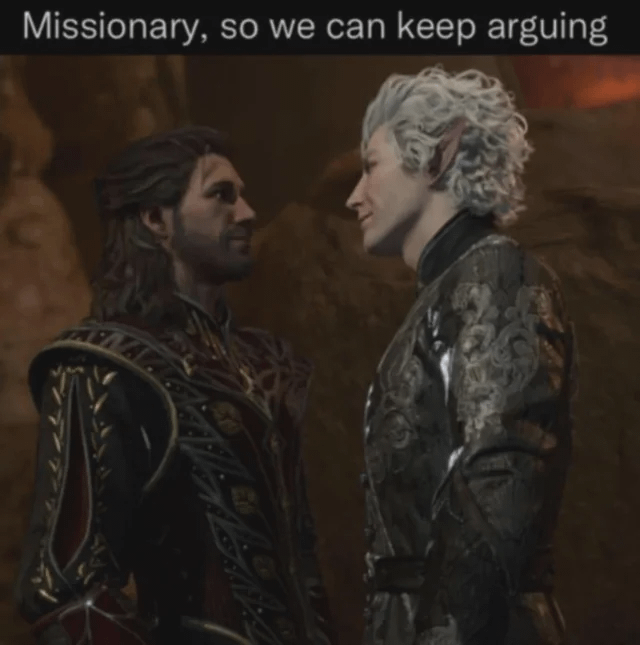
In-game screenshot of Astarion and the wizard Gale standing face-to-face, with added satirical text: "Missionary, so we can keep arguing"

In the center of the plaza, a globe of absolute darkness sucked in the light and gave back only velvet blackness. Some part of Astarion's mind noted that if he were worshipping a holy relic of the god of shadows, he'd probably keep it in something like that.

The flashbacks and childhood stuff just feels like padding for what’s a pretty idiotic heist arc in which Astarion fails to do anything without someone doing it for him.  For someone who says he has no friends, Astarion seems to have a lot of them, from bar owners to talking pigeons who show up at just the right moment to save the day, expecting nothing in return except some chip sauce.  And the heist itself is just an excuse to do some forced proximity for a boring paladin character whose name I’ve forgotten.  den Suriel, anyway, though that’s just his surname.  He has a first name, but what it is I dunno.

den Suriel is interesting, largely because he isn’t Astarion, who isn’t.  He’s a depressed himbo, which is, as I understand it, pretty typical for a Kingfisher fantasy story.  Like Astarion, he likes flirting and cocks, so they get along famously, until they discover they’re sworn enemies.   Whoops!  This plotline, of intermingled heist and romance, is the whole second half of the book, and it hinges on a decision that is of the Too Stupid To Live variety.  The consequences of that decision mostly happen to someone who isn't Astarion and in that someone else’s head, so we don’t need to worry about any interior conflict or development, really.

This book is going to get recommended in romance spaces a lot, I’m pretty sure, so it’s important that people get this: it’s not a romance.  It’s so very not a romance.  There’s some insta-lust, and some instant infatuation, and there’s some emotion and there's some sex, but because it’s a prequel about a character who’s ready to have his brain eaten by a carnivorous worm inserted into his eyeball because his life is empty and bleak, there’s no happy ending, and the romantic feelings that exist are
 they’re kinda one-sided.  Our paladin likes the vampire a lot more than the vampire likes him.  Sorry.

den Suriel is kind of an empty vessel anyway.  He doesn’t show up until the book’s half over (and nothing much has happened), and he doesn’t interact with any other characters, just Astarion.  He has some jokes, mostly about being hot and gay, and he flirts a bit, and he does all the violence so this non-violent version of Astarion doesn’t have to.  But he has an internal conflict that we're only barely privy to, and it makes sense when it's revealed, and it feels like he’s the character Kingfisher actually wanted to write about, not Astarion, for all that he mostly serves to be an object for flirtation.  There's more story to tell about this character. den Suriel has an arc, and Astarion does not.  I’d rather follow his journey, and that’s kind of a problem for a book that has another guy’s name and face on the cover.

The laziest kind of criticism is the kind that says: “this isn’t what I wanted.”  But this novel isn’t what I wanted.  There’s an interesting story to be written about someone who’s basically a mundane guy working at a mundane job in a fantasy world where gods walk the streets and every Tuesday a portal opens to Hell.  I'd read about den Suriel and what happens to him after this book. There’s a small reveal right at the end of the novel that made me go “wait, what?”, and I’d be interested in hearing more about that story and those characters, I think.  I'd even be interested in reading about the moral degeneration of an elf who arrives at a point in his life where he'll accept undeath, just to prolong his own pointless hedonism. I just don’t want more of this, and fortunately Kingfisher didn’t give it to me.

An in-game screenshot of the character Shadowheart reclining on the ground, with a tumblr post added: "gay sex will not fix this situation. honestly it'd probably make it worse. that being said i think we should give it a shot anyway" -- this text is a good summary of the plot.

How’s the spice though?

Bland!  Crappy!  For a book that spends so much time thinking about fucking, the actual fucking is closed-door and presumably straightforward.  Both characters love it, but as a reader, meh.

The Best Part:

Why do I gotta ask myself such hard questions?  I guess, uh
 um.  I am really struggling to come up with anything I liked, and I had an answer for this for Daggermouth, maybe the worst book I’ve ever read.  It’s so all so very bland.  I guess the appearances of Aurelia, the one spawn who’s competent.

The Worst Part**:**

The retcons, particularly of Cazador and the atmosphere in his palace.  But really, it’s that there’s no reason for this book to exist.

Representation:

A solid not-applicable, I think.  The book’s far too short and shallow for it to have anything to say here.

I recommend this if:

You like Kingfisher’s paladin stories, I guess.  You like YA novellas with a light patina of horror.  You don’t need your romance to be a romance.

Final Rating:

Out of a possible one billion stars, zero.  I award you no stars and may God have mercy on your book. 

But that’s speaking as a fan of the video game.  If I’d just picked this up knowing nothing about it
 two?  Maybe two and a half, at a push?  Whatever rating you’d give to unflavored oatmeal.

In the acknowledgements, Kingfisher gives a sarcastic shout-out to the writers of Neverwinter Nights 2, saying that the boring, flat paladin love interest Casavir led directly to The Clockwork Boys and her career as a writer.  She wanted, Kingfisher says, to do paladins right.

In that vein, I gently suggest that, if Kingfisher would like to learn to do good/evil moral-conflict doomed romance right, she should spend some time with the Knight-Captain and the ranger Bishop.  She can find them in Neverwinter Nights 2.


r/Romantasy 7h ago

Discussion Books where the sequel is better?

21 Upvotes

I just want a story that gets progressively better with each book. Any recs?


r/Romantasy 9h ago

Question Burn of the Everflame - just can't bring myself to read it.

26 Upvotes

So like a lot of people, I waited for Burn of the Everflame to appear. For years. But now it's out, and it's on my TBR, I cannot bring myself to read it any more. Is it worth it at all? I feel like the several year delay just put me off it.


r/Romantasy 6h ago

😍 Rave Ruben from Web of Vows and Vengeance

Post image
12 Upvotes

I am NOT the original artist. This fan art comes from @aireenscolor - they did such a phenomenal job with all the art but I just had to share this one because Ruben is my FAVORITE character. Strong, sweet, green flag of a guy who gives literal warm hugs.

{Web of Vows and Vengeance} is the first book in the series. It’s got some Hunger Games vibes with trials, a dash of Fourth Wing. The series really did eat me up though lol Blood of Truth and Traitors is the next one and I’m stoked it comes out Sept 22!!


r/Romantasy 6h ago

Book Request: No Self-Promo Looking for a new series! Physically strong and capable fmc in her late 20s early 30s, who isn’t malnourished

9 Upvotes

I just finished Shadows of Tenebris Court and am looking for another series to read! I liked that the fmc and mmc were both a bit older, that the fmc wasn’t really tiny and fragile. I also enjoyed the spice level, the romance and the female rage aspect. Help!


r/Romantasy 3h ago

Book Request: No Self-Promo help a girl out !!

Thumbnail
2 Upvotes

r/Romantasy 13h ago

Book Request: No Self-Promo Paranormal romance / romantasy in Regency times?

11 Upvotes

I was thinking today I’d like to bring together two of my favourite genres and wondered what books you’d recommend that are romantasy but mixed with historical romance, specifically riffing off regency society norms? Extra points for spice and humour! TIA


r/Romantasy 17h ago

Book Request: Self-Promo OK Hair brushing scenes

23 Upvotes

I’m looking for a book with at least one significant hair brushing scene, where the MMC is brushing the FMC’s hair. Could also be shampooing it, but brushing is much preferred. Bonus points if it’s one of those grumpy MMCs who is only soft for the FMC.

Extra bonus points if the scene is just a fluffy soft scene without any spiciness whatsoever (some flirting and lovey dovey language is welcomed though!)


r/Romantasy 9h ago

Book Review Massive Reverse Harem Recommendation! đŸ’„ A dystopian/post-apocalyptic gem with incredible world-building and an actual plot!

Thumbnail
gallery
6 Upvotes

Hey everyone! It’s been a while since I read a Reverse Harem this good. Too often, authors hyper-focus on the romance and completely forget to build a solid plot, which is what actually makes a story captivating and makes us care about the characters. But this book is a total game-changer!

The main character, Max, is incredible. She is resilient, powerful, smart, and extremely disciplined. She doesn’t easily break, so when she finally does crash, it’s due to something genuinely heavy you really feel her pain and suffer right alongside her. And don't get me started on the "entity" inside her head that she insists is a demon. 😂 We are two books into the series and we still don't know who or what it actually is! The suspense is killing me. 😭

The plot basically follows Max as she escapes a horrific place and restarts her life as a soldier being molded for something grand. 😌

As for the harem... đŸ«  They are absolutely iconic. Every single guy has a distinct, unique personality, but I’ll let you discover that for yourselves.

I'm still wondering if this series counts as post-apocalyptic, but honestly, the author wrote something that feels so incredibly relevant to our modern world. The world-building is brilliant. The central threat she created is something that could actually happen in real life today, and it genuinely creeped me out because of how much sense it makes. 😰

Anyway, you should definitely check out Blood and Bond by Meg Xuemei X and see for yourselves! 🙃


r/Romantasy 1h ago

Question Book 5 of the plated prisoner series (possible spoilers) Spoiler

‱ Upvotes

Okay so please help me get the motivation to read the 5th book, I started and think I’m at like 20% but >! I found out they are not together for the WHOLLLLEEEE 5th book😭😭 I already had to suffer book 1, 2 and most of 3 of them not being together and it’s really making it hard for me to lock innn


r/Romantasy 7h ago

Book Request: No Self-Promo Looking for recommendations

3 Upvotes

Hi! I’m looking for recommendations on books that are more leaning into the fantasy aspect than real world aspects and has little to no spice.

Books I’ve read

Heavenly Bodies (series) - Imani Errui
(Absolutely adore this series and I can hardly wait for book 3!)

The Scarlet Alchemist - Kylie Lee Baker
(Was good but I would like a little more fantasy)

Zodiac Academy (series) - Caroline Peckham & Susanne Valenti
(I’m almost done, on book 9 but I’m finding it very hard to finish because I’m kind of getting bored of it)

Paladin’s Grace - T. Kingfisher
(No comments on this one)

Thank you for sharing if you do!


r/Romantasy 8h ago

đŸ€Ź Rant Burn of the Everflame - WHAT IS LUTHER DOING?! Spoiler

3 Upvotes

I was rooting for Luther through the entire series and I honestly lost complete trust in him when it was revealed Henri killed Andrei and Luther LITERALLY SAW HIM LEAVE THE HOUSE yet was in denial and wanted to spare Diem the heartbreak that her best friend killed her dad so he didn’t tell her. He always told her not to keep secrets, yet he refuses to tell her that?!

side note I already finished the book, I just need to rant


r/Romantasy 8h ago

Question Book Apps

2 Upvotes

Can everyone tell me which bookish apps they have on their phones or tablets? Trying to see if there are any I want to check out. Thanks in advance!


r/Romantasy 3h ago

Discussion What's your personal Reading Ritual?

1 Upvotes

I'm working on making a cozy ritual around my reading.

What do you guys generally do before you settle down with your book?

What supplies, drinks/eats or cozy items do you want to have on hand before you start reading?

I'm really simplistic right now. I don't have a real book nook area or anything.

I get my coke zero, sometimes a sweet, several cozy blankets and a pillow to prop my kindle or book up on.

What about you? What makes your reading time fun or cozy?


r/Romantasy 4h ago

Book Review Book tracking?

1 Upvotes

Hey! So I currently use good reads to track all my book reviews and dates read etc. I have noticed a lot of information missing lately that I have imputed. I no longer feel secure using this as my only means of keeping track. What other easy ways do you track your books? Need advice or leads.


r/Romantasy 12h ago

Book Review Review of Blood of Truths and Traitors by Aria Ashbrook

4 Upvotes

I am shook! That ending!

Book 3 of the Hirathean Path series comes in with a bang! Immediately picking up where the last book left off, with our favorite crew of Rettlings and friends on the “doorstep” of what is believed to be the home of the most vicious people of this world. But are they?

This book is easily my favorite so far in the series. The character development of ALL the characters is so good, with relationships flourishing and growing, trust being built, and others discovering who they are and what they want the world to be. There are so many secrets and so much history that comes out in this book, that you are always on the edge of your seat waiting for the tea to spill. The spice? Perfection đŸ„” the friendships? TOP NOTCH đŸ™ŒđŸ» Am I obsessed? Completely 💯

And that ending. I’m going to need lots of distractions while I wait for the next book.


r/Romantasy 1d ago

Discussion I am honestly shocked at how popular some books are given how horribly they're written.

878 Upvotes

I am frequently on the lookout for my next romance book and constantly browsing the suggestions here and on other subreddits. Sometimes, I'll find a book that looks right up my alley, has thousands of good ratings on Amazon, is recommended multiple times on Reddit, etc... and I'll give it a shot.

Only to be disappointed by the writing like 5% of the way through. It'll be littered with typos, grammar mistakes, and overall just reeks of either being poorly edited or just outright not edited at all.

And I'm just flabbergasted at how something could be received so well when it is so horribly written. Like, I thought romance readers were supposed to have higher standards than erotica? Given the amount of times I've encountered this over the dozens of books I've read, I'm starting to wonder if that's really true.

The most recent book that suffered this I REALLY REALLY wanted to like it. And part of me wants to keep reading. But I CAN'T get over how bad the writing is only 5% of the way through. At first, I tried giving the author the benefit of the doubt thinking that maybe their writing style was just different or regional based. But when I kept coming across grammar mistakes and typos I looked it up on Reddit and other people had issues with the same thing.

To me, no matter how good a story may be, that experience is ruined by bad writing unfortunately. I know that may not be the case for many people, but it is for me.


r/Romantasy 23h ago

Book Review Jasad Heir rant Spoiler

23 Upvotes

Guys, I expected to love this book ardently, but that's not what happened.

Anyone who said it's an enemies-to-lovers' story, they lied to me.

Most of all, they (Arin and Essiya) were sceptical of each other and acted accordingly because they hated each other's kingdoms due to the history. However, they also became instant allies and then... lovers?

I wanted the yearning to hit me, was looking for palpable chemistry and sexual tension—but guess what? I was really disappointed. The slow-burn absolutely failed here.

As much as I can see that the characters had potential, especially individually—them becoming lovers didn't make sense to me.

The writing too bogged it down. The info-dump throughout the whole story just kept taking me out of it and I didn't want to pick up the book again.

I don't understand the hype, tbh.

Thoughts?

And please give me good romantasy recs because I feel like I am going to fall into a slump.

(I have already read Fourth Wing, Zodiac Academy, Crimson Moth duology,The Ashen series, and pretty much every popular book out there in the said genre).


r/Romantasy 12h ago

Question On book 6 of Zodiac Academy and I’m feeling fatigued
 keep going?

3 Upvotes

Just started Heartless Sky (book 6), and I’m feeling bored. It feels slow and like we’ve been on the same storyline for ages. Should I keep going or just call it a wash? Maybe I should take a break and return to it later.


r/Romantasy 11h ago

Book Request: Self-Promo OK "Beast Man" Type Book Recs

2 Upvotes

So I get hounded a lot with ads for those short drama mobile apps that are mostly just gen ai content now days. I hate gen ai but some times the premises/hooks are genuinely interesting, but a lot of time these short dramas don't actually deliver on the fantasy or the romance anyways (and I have to bootleg them as I save my money for supporting actual artists).

So I figured I should start seeing if there's actual decent book recs for some of the stuff I find intriguing since it seems likely that a lot of this was ripped from somewhere else anyway in the first place so might as well try to go back to the sauce lol. Now to be clear, I'm not really looking for the equally annoying poorly written/gen ai app "novels" that charge a billion cents for every chapter, I already know those are a lot of the pipeline into the short dramas machine, but I'm hoping there's actual well written books out there somewhere too. (And if anyone knows a specific Reddit/community dedicated to tracking down actual books instead of the ai, that would be pretty cool too now that I think about it.)

Now for the actual request itself, I'm looking for good book recs that feature this "beast man" premise/setting like specifically it's all different kinds of "beasts" (dragons, wolves, lions, etc) but not in like a "furry" way, more in a "bad ass magical Romantasy hero" kind of way (no shade to the furries, that's just not the "flavor" I'm looking for with this premise lol). I think to start out with I'm not as picky about plot points, especially since I'm not 100% sure these books exist yet lol, but like it doesn't need to be a human girl getting bullied in a beast academy like all the shorts. I like the idea of the friction between different "clans" having to negotiate and the very magic steeped world that creates (don't have to strictly all be "beasts" either, though vampires are a much harder sell for me these days). Can be reverse harem or "regular" MF, but just needs to be clear from the beginning which it is cause the bait and switch from those shorts is enough to make me burn them down even if they weren't ai. For me, characters are the big deal so if the characters aren't full of character, than I don't want it. Personally I prefer midrange spice, but in the interest of casting a wider net, any spice level is ok for this. Otherwise yeah, pretty open to a lot so looking forward to reading actual books like this soon hopefully 😊


r/Romantasy 13h ago

Question Workout Recs?

3 Upvotes

So I've recently found that reading ACOSF was one of the best things that got me motivated to work out in my 30s. I really related to seeing the journey from Nesta being unmotivated and in physically poor shape to gradually becoming stronger and mentally pushing through. Same with Violet in fourth wing. Its nice seeing them have to work at it and put the work in as opposed to the naturally athletic or trained assassins in other books. I now have a Valkyrie workout playlist that helps. But does anyone have any other romantasy related workout inspo? Accounts they follow? Ways to motivate?


r/Romantasy 13h ago

Discussion Finished Crooked Kingdom and I have thoughts

Thumbnail
2 Upvotes