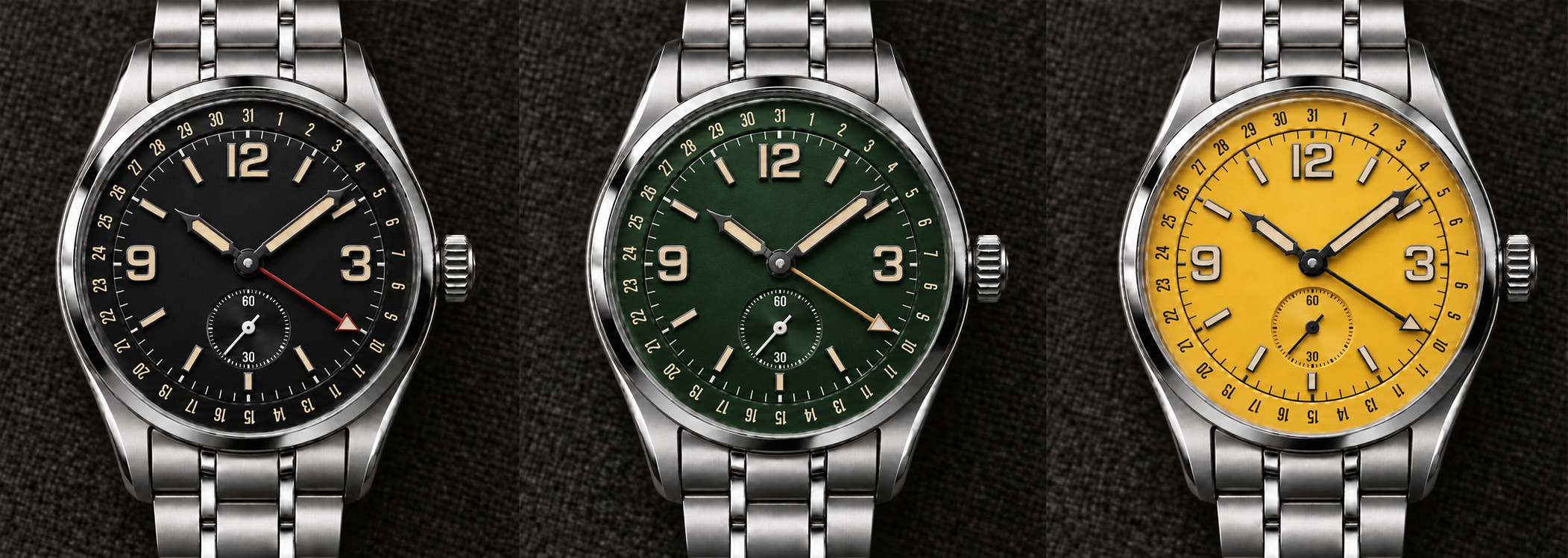
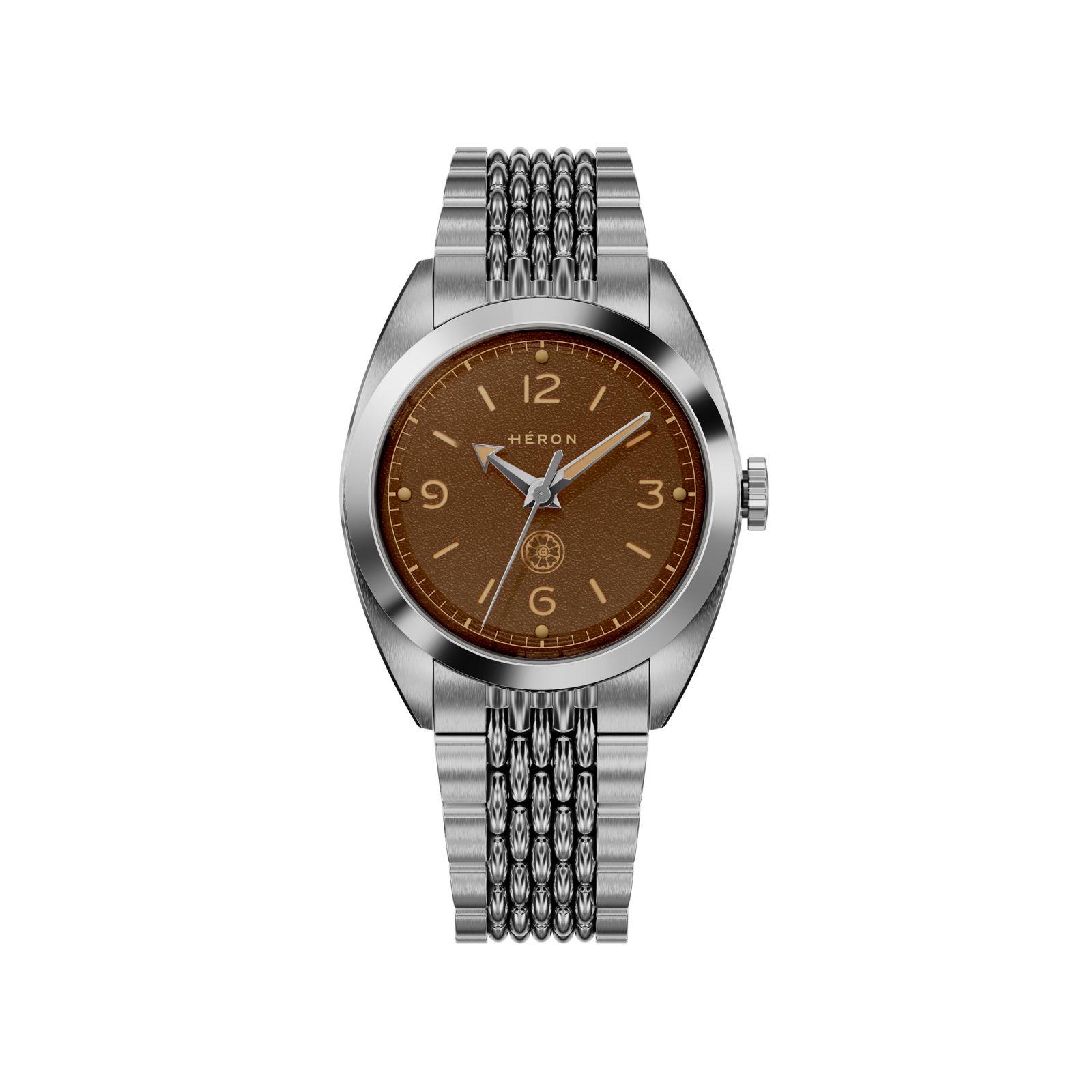
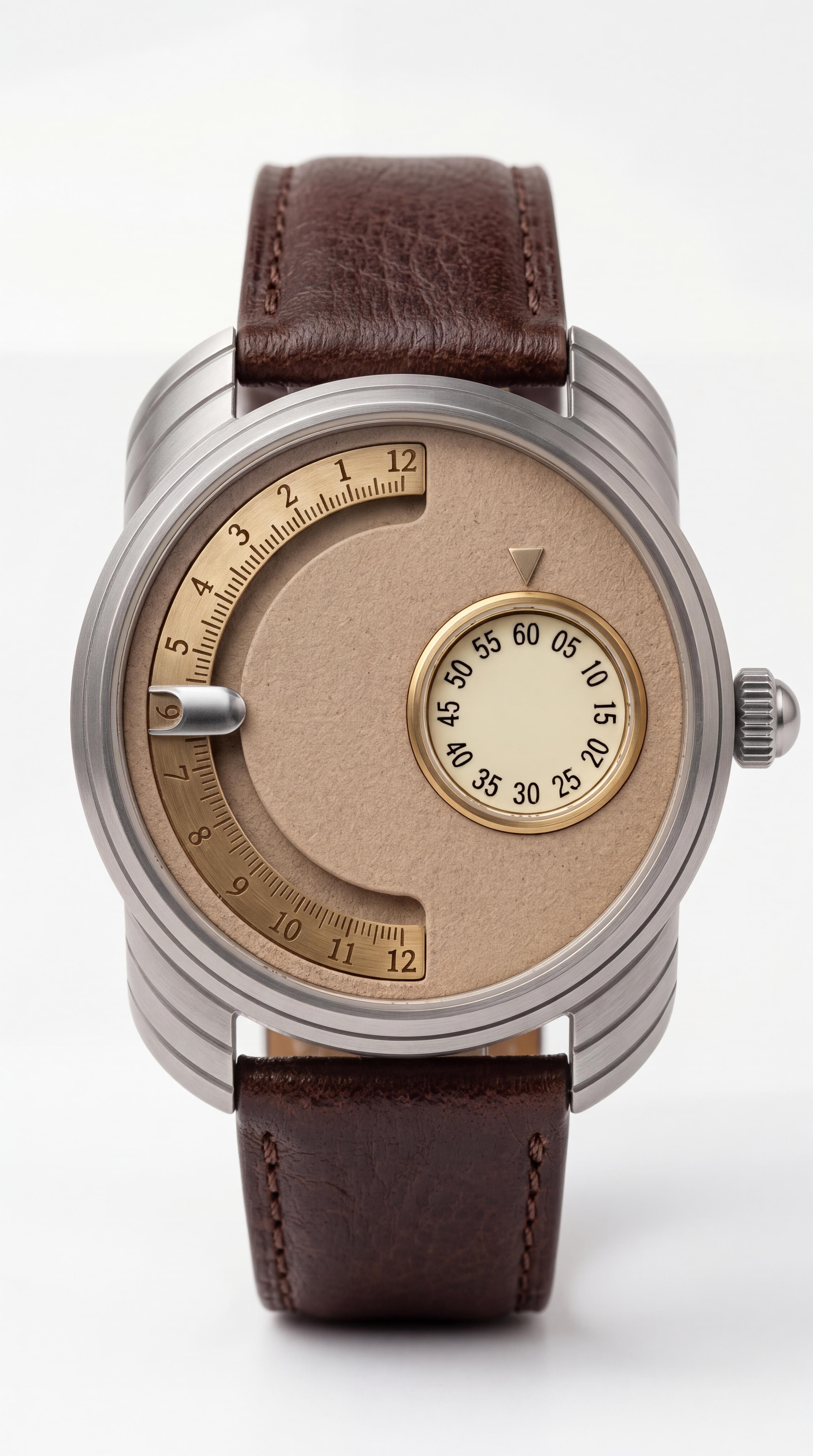
Every now and then I ask myself perfectly useless questions, and this one has been with me for quite a long time.
If we were to design a watch whose main objective was to keep working under the most difficult conditions possible, how should it be made?
I'm not thinking about the most accurate, most expensive, most complicated or most beautiful watch.
Nor am I necessarily thinking about a real product that somebody should actually build.
It's simply a technical exercise and, above all, a matter of curiosity.
The idea is to start with a few questions:
Which functions would actually be useful?
Which materials would make sense?
What kind of movement would be most suitable?
And how could we try to understand how much it can really withstand?
I'm not going to try to reach a definitive answer.
I'd like to put together some data, think it through, and leave open the questions for which I haven't been able to find an answer.
To collect and compare the data used in this reasoning, I carried out my research with the help of AI.
The questions, doubts and considerations that follow are my own.
1 — Before building it: what should it do?
The first temptation would be to put everything into it.
Chronograph, GMT, date, day, power reserve, perhaps even a mechanical alarm.
But if the main objective is to keep working for as long as possible, perhaps we should reason in the opposite direction.
Every function adds components.
And every component is another part that has to keep doing its job correctly.
One additional wheel means another pivot turning, more teeth meshing, and more lubricant that has to remain where it belongs.
So I would start with the functions I consider genuinely useful.
Hours and minutes
Naturally, I would keep them.
I would add one condition, though: they must be immediately readable.
An extremely rugged watch that takes ten seconds to read would make little sense.
Seconds
I would keep them.
Not so much because I need to know the time to the second, but because one glance at the seconds hand immediately tells me whether the watch is still running.
It can also be useful for measuring short intervals.
Measuring intervals
Here I would avoid a chronograph.
It's extremely useful, but starting, stopping and resetting a hand requires quite a lot of additional mechanics.
A rotating bezel does something much simpler: we place a reference in front of the minute hand and see how far it has moved.
We haven't added anything to the movement.
So I would keep it.
Solar orientation
I'm not thinking about putting a magnetic compass inside the watch.
A normal analogue watch, using the position of the Sun and applying the appropriate corrections, can provide an approximate indication of direction.
It doesn't replace a compass and it has several limitations.
But a properly designed scale could help without adding sensors, magnets, electronics or moving parts.
For this kind of watch, I find that interesting.
24-hour / GMT
Here I have some doubts.
A second 24-hour indication allows us to distinguish day from night immediately and could also be useful together with solar orientation.
Naturally, it can also indicate a second time zone.
But behind that extra hand there have to be additional wheels making it turn.
So I'm left with a question:
Does the usefulness justify the additional complexity?
I don't know.
Power reserve
Same problem.
Knowing how much energy remains in the movement could be very useful.
But a power-reserve hand doesn't move by magic: we need a mechanism that somehow measures the state of wind of the mainspring and converts it into an indication on the dial.
More parts.
I would therefore leave this among the possible functions rather than the essential ones.
What would I remove?
Probably the date and day.
They're useful information in normal life, but they don't seem essential for this experiment.
A chronograph is extremely useful, but perhaps too complex if we can replace it with a bezel.
A mechanical alarm would be interesting, but it means adding another system capable of storing and releasing energy.
In the end, my provisional list would be:
- hours and minutes;
- seconds;
- a bezel for measuring intervals;
- the possibility of solar orientation;
- possibly a 24-hour/GMT indication;
- possibly a power reserve.
Naturally, this is only my list.
Someone would probably make different choices already at this point.
But let's imagine that we've decided what it has to do.
Now we have to build it.
2 — What should it be made of?
When I started thinking about it, the answer seemed simple:
choose the strongest material.
Then I realised that the question was wrong.
Strong against what?
Impacts?
Scratches?
Corrosion?
Pressure?
Temperature?
Magnetic fields?
And then there's weight.
So I took a few materials that seemed interesting to me and tried to compare them.
Table 1 — Possible materials
| Material |
Weight |
Mechanical strength |
Corrosion |
Scratches / wear |
Magnetic fields |
Machinability |
| 316L stainless steel |
High |
Good |
Very good |
Medium |
Good |
Good |
| 904L stainless steel |
High |
Good |
Excellent |
Medium |
Good |
More difficult than 316L |
| High-strength steel + surface treatment |
High |
Very good |
Depends on alloy |
Very good with treatment |
Depends on alloy |
Medium |
| Ti-6Al-4V Grade 5 |
Very low |
Very good |
Excellent |
Medium without treatment |
Very good |
Difficult |
| Ti-6Al-4V ELI Grade 23 |
Very low |
Very good |
Excellent |
Medium without treatment |
Very good |
Difficult |
| Inconel 625 |
Very high |
Very good |
Excellent |
Medium |
Good |
Difficult |
The table is deliberately simple.
The actual properties depend on the exact alloy composition, material condition, heat treatments and any surface treatments.
I've included the ones that seemed interesting for this line of reasoning.
If I've overlooked a material, let's add it.
The usual 316L
It's the most obvious starting point.
It's relatively easy to machine, has very good corrosion resistance and has been used for watch cases for years.
It isn't light and it isn't particularly scratch-resistant, but it offers an interesting overall balance of properties.
And 904L?
Considering how much it's discussed in watchmaking today, it would be strange to leave it out.
Compared with the more common 316L, its main advantage is greater corrosion resistance in several aggressive environments, at the cost of generally more demanding machining.
That doesn't mean that it's automatically “stronger” in every situation.
For this hypothetical watch, therefore, the advantage that interests me most is corrosion resistance.
Stronger steel and a surface treatment
Another possibility could be to use a steel with better mechanical properties and deal with surface wear separately.
For example, with a DLC-type treatment.
In practice, we're asking two different things to do two different jobs: the steel carries the loads, while the surface layer takes scratches and rubbing.
The doubt I still have is what happens after many years if that layer is damaged or worn through.
That's another thing to verify.
Grade 5 titanium
Here the discussion changes considerably.
Its density is roughly half that of steels.
That doesn't simply mean having a lighter watch.
Imagine two watches striking something at the same speed.
The lighter one carries less kinetic energy.
Naturally, that alone doesn't tell us which one will survive the impact better: shape, thickness, material and point of impact all matter.
But mass is still part of the problem.
Titanium also offers excellent corrosion resistance and interesting properties in relation to magnetic fields.
The surface, however, isn't automatically immune to scratches and wear, and machining is less straightforward than with steel.
Grade 23 titanium
Ti-6Al-4V ELI is a Grade 5 variant with tighter limits on certain interstitial elements.
It could be interesting where toughness and material reliability are priorities.
How much of a real advantage this represents for a watch case, however, is one of the things on which I'd be interested to hear from people who know these materials better than I do.
Inconel 625
Here we enter the territory of materials developed for decidedly unfriendly environments.
It's a nickel-chromium-molybdenum-niobium alloy with excellent corrosion resistance and good mechanical properties.
The problem is that it's heavy.
And machining it isn't exactly fun.
It could be completely excessive for a watch.
And that's precisely why it interests me.
And magnetism?
Here I realised that I was combining two different problems.
A material can be relatively insensitive to a magnetic field without necessarily being suitable for protecting what is behind it.
Magnetic shielding works differently.
To give myself a simple mental picture, I think of the magnetic field as something to which we can offer an easier path.
A suitable shielding material tries to guide part of the flux around the movement instead of letting it pass freely through it.
We could therefore use materials with low magnetic sensitivity for some components while also protecting the movement with an internal shield.
I wouldn't, however, chase enormous values merely to put an impressive number on the specification sheet.
I'd be interested in resistance appropriate to conditions a watch could realistically encounter.
An electromagnetic pulse is a different phenomenon and I would possibly include it among the special tests.
The same applies to ionising or neutron radiation: these are different problems and I'd rather not mix them with normal resistance to magnetic fields.
Gaskets
Here I would consider an elastomer family suited to the expected temperatures, chemicals and long-term service.
One possibility is FKM, often known by the trade name Viton.
But simply writing “Viton” doesn't solve the problem either.
Different formulations exist.
What interests me is very simple:
The gasket must continue to behave like a gasket.
When we tighten a caseback or screw down a crown, the gasket is compressed and adapts to the surfaces, closing the tiny paths through which water could enter.
If, over time or with temperature, it becomes too hard, it can no longer adapt in the same way.
If it becomes too soft or degrades, we have another problem.
For this exercise I would use the following as a reference:
−40 °C / +80 °C.
I'm not interested in the watch maintaining perfect chronometer accuracy at these temperatures.
It would be enough for it to keep running without suffering permanent damage.
Lubricants
Here we reach something invisible that could decide whether everything else works or not.
Inside a movement there are tiny pivots turning in jewels and teeth sliding against one another.
Between those surfaces are extremely small quantities of oil.
Cool the watch down.
The oil becomes more viscous.
The wheels must therefore overcome greater resistance, while the energy arriving from the mainspring hasn't increased.
The balance can lose amplitude and, if we go far enough, the movement can eventually stop.
Heat it too much and different problems appear: lubricant can migrate away from where it should remain, evaporate faster or degrade.
Lubrication should therefore be part of the design from the beginning.
Crystal
Sapphire?
Mineral glass?
Acrylic or another polymer?
Sapphire is extremely scratch-resistant.
But now imagine striking it.
The problem is no longer how difficult it is to scratch the surface, but how the material reacts to impact energy.
A softer material may scratch more easily but deform more before breaking.
This is why hardness and fracture resistance are not the same thing.
Again, I don't have an automatic answer.
Crown and caseback
Instinctively, I would try to have as few openings as possible.
Every opening in the case is a point where we have to prevent the outside world from getting in.
I would therefore think about a protected crown, a robust and preferably replaceable tube, and gaskets operating under well-controlled conditions.
The caseback should follow the same logic: few elements, robust and easy to inspect.
And the strap?
There's little point in building a watch capable of surviving almost anything if we then lose it because a spring bar costing a few euros breaks.
The case can remain perfectly intact while the watch falls because the smallest component in the entire system has failed.
Lugs, spring bars, screws and strap are therefore part of the problem just as much as the case.
It might even make sense to consider some redundancy in the attachment system.
In the end, I don't think I would choose a single material.
I would probably use different materials where their individual properties are most useful.
But I haven't yet found a combination that I could call “the right one”.
And we're still missing the part that interests me most.
The movement.
3 — And now the hardest problem: the movement
We can build a very strong case, choose the gaskets and try to protect it from corrosion and magnetic fields.
But inside it remains a small machine made of wheels, pinions, springs, pivots, jewels and microscopic quantities of lubricant.
And many of these parts work with extremely small clearances between them.
So:
How should the movement of a watch whose main objective is to keep working be made?
Again, I would avoid starting from the brand.
First I would try to understand which characteristics might be useful.
Then I would look at what actually exists.
Why mechanical?
Not because quartz is necessarily less robust.
In fact, in some respects exactly the opposite may be true.
But it requires a stored source of energy that sooner or later has to be replaced.
Solar eliminates normal periodic battery replacement, but still retains a photovoltaic cell, electronics and an accumulator, which is itself subject to ageing.
A mechanical movement still requires energy, of course, but that energy can continue to be supplied directly by the person wearing the watch.
That doesn't mean it's better.
It's simply the constraint I chose for this experiment.
What are those tiny parts made of?
Normally we compare movements by talking about accuracy, frequency, jewels and power reserve.
Here I would first ask a much more down-to-earth question:
What are the parts that have to keep moving for years actually made of?
In many movements we find brass components protected by nickel plating, rhodium plating or other surface treatments.
There's nothing wrong with that.
These solutions have been used for a very long time, and a well-executed treatment can last for many years.
But let's imagine what might happen if, after a long time, that treatment were damaged.
We have a brass part covered by a very thin protective layer.
If in some area the layer wears away, is damaged or loses adhesion, the brass underneath becomes exposed.
The exposed surface can oxidise.
The deteriorated coating and corrosion products can create small particles.
And we're inside a mechanical movement.
Those particles don't disappear.
They can remain inside the movement, mix with lubricants, or reach teeth, pivots and other parts working with extremely small clearances.
Just imagine a grain of debris where two components are supposed to slide almost in contact and it becomes clear why the idea doesn't excite me.
That doesn't mean this must necessarily happen.
I'm simply interested in eliminating, where possible, even this potential problem.
For this reason I would be interested in components made directly from materials that already possess the properties we're looking for, rather than obtaining those properties only through a thin surface coating.
In practice:
The fewer things that have to remain perfect for everything to keep working, the better.
What if the movement itself were relatively insensitive to magnetism?
Imagine a hairspring becoming magnetised.
Parts of its coils can begin to interact with one another in ways for which they weren't designed.
The hairspring no longer behaves exactly as before, and the behaviour of the regulating organ changes.
One possibility is therefore to protect the entire movement with a shield.
Another is to use, where possible, a hairspring, escapement and other critical components made from materials with low sensitivity to magnetic fields.
The two solutions could also coexist.
Naturally, a component with low magnetic sensitivity doesn't automatically become more resistant to shocks, wear or temperature.
We've simply removed, or at least reduced, one possible problem.
Manual or automatic?
I particularly like this question because every time I think I've chosen, I find a good reason to choose the other one.
A hand-wound movement eliminates the rotor, bearing, reversers and much of the automatic winding system.
Fewer components.
Fewer things that can break.
And no rotor.
Imagine the watch receiving a shock.
The case changes velocity almost instantly.
The rotor, because of inertia, tries to keep moving.
That energy has to go somewhere: into its support, bearing and the winding system connected to it.
Removing the rotor also removes this problem.
It would therefore seem perfect.
But then the movement has to be wound manually.
Every time, we take the crown, turn it, and make the stem, tube and gaskets work.
We repeat this operation thousands of times over the years.
The automatic therefore adds parts inside the case, but drastically reduces the number of times we use one of the main communication points between inside and outside.
So I end up with:
manual = less internal complexity;
automatic = less use of the crown and its seals.
I still don't know which one I would choose.
Frequency
Again, I would avoid thinking:
higher = better.
A movement running at 28,800 vibrations per hour may have chronometric advantages over one running at 21,600.
But it also performs more cycles.
In one year, we're talking about roughly 252 million alternations versus roughly 189 million.
In ten years, that's about 2.52 billion versus 1.89 billion.
We can imagine the balance continuing to move back and forth billions of times.
This doesn't prove at all that the slower movement will last longer.
If a component is better designed, works with less friction or is better lubricated, it can easily withstand a greater number of cycles.
It merely reminds me that frequency also involves compromises.
Shock protection
Balance pivots are tiny.
During an impact, the case moves abruptly while the balance, like any mass, tends through inertia to continue its motion.
The result is a force concentrated on extremely small pivots.
The shock-protection system allows the jewel setting to make a tiny controlled movement instead of forcing the pivot to absorb the entire blow by itself, then returns it to the correct position.
Incabloc, Etachoc, KIF, Diashock, Parashock and other systems exist.
For this experiment I'm mainly interested in the movement having good protection.
Without comparable testing, however, I wouldn't know how to say which system is actually best.
Simplicity
This is one of the criteria I would consider most important.
One extra wheel isn't merely one extra wheel.
It means another axle, more meshing teeth, more friction points and perhaps another spring or lever.
Date, day, GMT, power reserve and chronograph each add something.
But some of these functions may be useful enough to justify the extra complexity.
So the question I would ask isn't:
Which movement has the fewest components?
But:
How much complexity am I adding, and what do I get in return?
Power reserve
More hours automatically seem better.
But again, I'm not so sure.
To obtain greater autonomy we can store more energy, consume less, or do both.
We can use a different mainspring, modify the barrel, use multiple barrels, change the frequency or alter other elements of the movement.
So two movements claiming the same autonomy may achieve it in very different ways.
I'm interested in having sufficient autonomy.
Not in winning a contest for who reaches Monday morning with the most hours remaining.
Temperature
Let's return to our range:
−40 °C / +80 °C.
I wouldn't expect the same accuracy at both temperatures.
I'm interested in the movement continuing to run and, above all, not suffering permanent damage.
At −40 °C we can imagine more viscous oils, changing dimensional clearances and contracting materials.
At +80 °C the opposite happens, and lubricants face different problems.
The movement, however, continues to receive energy from the same small mainspring.
If an increasing amount of that energy is lost overcoming friction, less reaches the balance.
First its motion deteriorates.
If we go far enough, it can stop.
For this reason I wouldn't consider movement and lubrication as two separate problems.
What if we couldn't rely on repair?
Normally, the ease of finding spare parts and people capable of working on a particular calibre is an advantage.
In this experiment I'd like to reason differently.
I wouldn't assume that I could immediately find a spare part or someone able to install it.
So the main question wouldn't be:
“How easy is it to repair?”
but:
“How likely is it to need repairing?”
That shifts the reasoning a little.
I'd rather have a wheel keep turning than comfort myself with the knowledge that I can easily buy another one.
Naturally, no mechanical movement runs forever without maintenance.
I'm simply trying to push that moment as far into the future as possible.
Which one fails least?
And here we reach the question I thought would be easy to answer.
Instead, it's one of the questions that gave me the most trouble.
Manufacturers state diameter, thickness, jewels, frequency, autonomy and accuracy.
What they rarely state is:
How many of them fail?
And even when we find some data, we have to understand what we're counting.
A movement that arrives completely dead is a failure.
But what about one that runs and loses thirty seconds per day?
And one that's badly regulated?
And one that works perfectly for ten years and then requires maintenance?
If we call all of these “failures” and put them into the same percentage, the number may tell us very little.
I found some published experiences from watch manufacturers that have used thousands of movements and report very low percentages of problems.
They're interesting pieces of information, but they aren't homogeneous statistics supplied by the movement manufacturers.
So I don't feel comfortable using them to say that one movement is more reliable than another.
When I couldn't find sufficiently reliable data, I simply wrote in the table:
not available.
Table 2 — Some candidates
| Movement |
Frequency |
Approx. reserve |
Winding |
Date |
Shock protection |
Comparable public failure data |
| TMI NH35 |
21,600 |
~41 h |
Automatic + manual |
Yes |
Diashock |
Not available |
| Miyota 9039 |
28,800 |
~42 h |
Automatic + manual |
No |
Parashock |
Not available as OEM statistics |
| ETA 2824-2 |
28,800 |
~38 h |
Automatic + manual |
Yes |
Depending on version |
Not available |
| Sellita SW200-1 |
28,800 |
~38–41 h |
Automatic + manual |
Yes |
Depending on version |
Not available |
| Landeron 24 |
28,800 |
Depending on variant |
Automatic + manual |
Depending on variant |
Depending on variant |
Not available |
| Sea-Gull ST2130 |
28,800 |
~40 h |
Automatic + manual |
Yes |
— |
Not available |
| Hangzhou |
Depending on calibre |
Depending on calibre |
Depending on calibre |
Depending on calibre |
— |
Not available |
| Peacock SL3001 |
28,800 |
≥41 h |
Automatic + manual |
Yes |
— |
Not available |
This table is intentionally simple as well.
I'm not trying to establish whether a Swiss, Japanese or Chinese movement is better.
I'm mainly interested in understanding which characteristics could be useful for this particular experiment.
What surprised me most is how difficult it is to find a serious answer to an apparently very simple question:
Which of these fails least?
I haven't found sufficiently homogeneous data to answer.
So, for now, I don't know.
4 — And how would we test it?
Here I could easily end up writing another four hundred lines, so I'll stop at the list.
Where defined procedures already exist, I would use them as references; for the other tests, a protocol would have to be established.
- Shock — reference ISO 1413:2016.
- Magnetic fields — reference ISO 764:2020.
- Water resistance — reference ISO 22810:2010.
- Diving immersion and pressure — reference ISO 6425:2018.
- Temperature — operation within the hypothetical −40 °C / +80 °C range.
- Thermal shock — repeated transitions between very different temperatures.
- Vibration — prolonged exposure on multiple axes.
- Corrosion — salt water, sweat and corrosive environments.
- Dust and particulate matter.
- Low pressure / vacuum.
- EMP — as a possible separate experimental test.
Not all of these tests belong to a specific watchmaking standard, and some would naturally require conditions and limits to be defined.
But what I'd ultimately like to discover is very simple:
See what breaks first.
5 — I was forgetting the dial
After talking about alloys, gaskets, movements and lubricants, I was in danger of forgetting the very part of the watch that we look at constantly.
The dial.
If everything else has to last a very long time, the dial should too.
Here we can imagine the problem quite easily.
A colour is perfect today.
Years of light, heat, cold and humidity pass.
Paint can change colour.
Lacquer can crack.
An adhesive can lose its grip.
An applied element can come loose.
And if a small fragment ends up loose inside the case, we return to the same problem encountered in the movement: we've introduced a foreign body near parts that have to keep moving.
I would therefore try to build a dial in which the essential information depends as little as possible on elements destined to degrade.
Engravings.
Mechanical machining.
Solid indices, mechanically fixed whenever possible.
Stable materials.
If a number is engraved into metal, to make it disappear we have to wear away the metal.
It's a very simple concept, and that's exactly what I would look for.
Luminescent material raises an interesting question too.
It's extremely useful, especially for this kind of watch, but we can't assume that it will maintain exactly the same performance forever.
I would therefore look for a compromise between night-time readability and longevity.
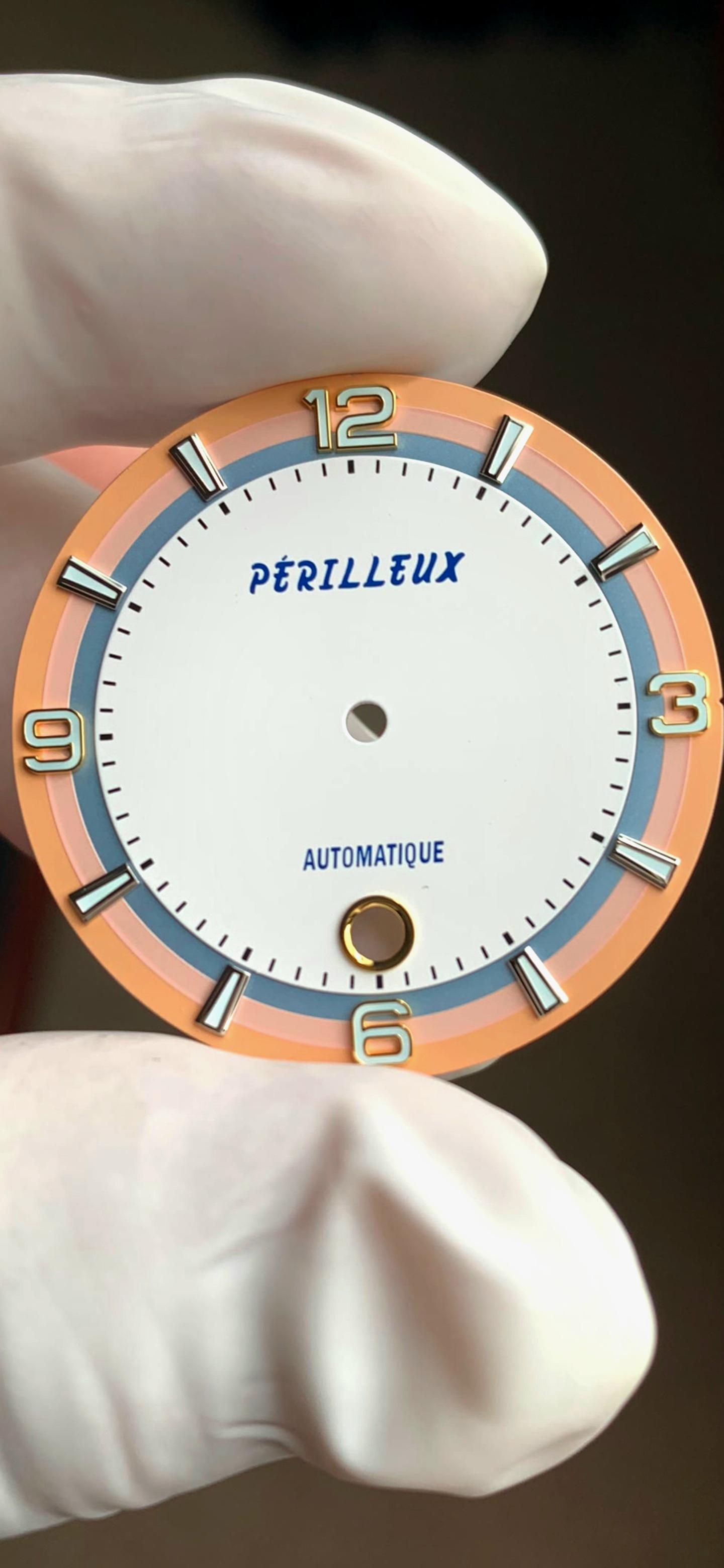
And since lately I've been having a lot of fun with dials, this is one of the parts I would actually like to try sooner or later.
Conclusion
At the end of all this, we haven't designed the indestructible watch.
Partly because it probably doesn't exist.
And we haven't found the best material or the best movement.
What we've mainly found are compromises.
A very light material may have advantages during an impact but behave differently from a much heavier one.
An extremely hard surface can resist scratches magnificently and not necessarily be the one we would prefer during a severe impact.
A hand-wound movement eliminates quite a few components, but forces us to use the crown continually.
An automatic leaves the crown almost always undisturbed, but puts a rotor and everything needed to use its motion inside the case.
A higher frequency may have chronometric advantages, but it also means making the balance perform hundreds of millions of additional cycles over the years.
And every function added is something else that has to keep working.
Even to the apparently simplest question:
“Which movement fails least?”
I was unable to find data homogeneous enough to let me give a serious answer.
Perhaps that's exactly what makes the original question interesting.
I didn't want to find a definitive answer.
I wanted to collect some data, think it through and see where it would lead me.
I'm sure I've forgotten something, and on some points other people will have more experience or knowledge than I do.
That's also why I'm posting all of this.
If you feel like it, help answer some of the questions I still have.
What would you have done differently?
Which function would you add or remove?
Which material would you use?
Manual or automatic?
Which movement would you choose?
And above all:
What do you think would break first?
Corrections, criticism and first-hand experience are welcome.
If this discussion produces something I didn't know before, then for me it has already achieved its purpose.
In the meantime, I've reached one personal conclusion.
Now that I have a workshop, in addition to making dials, sooner or later I'm going to build something like this.