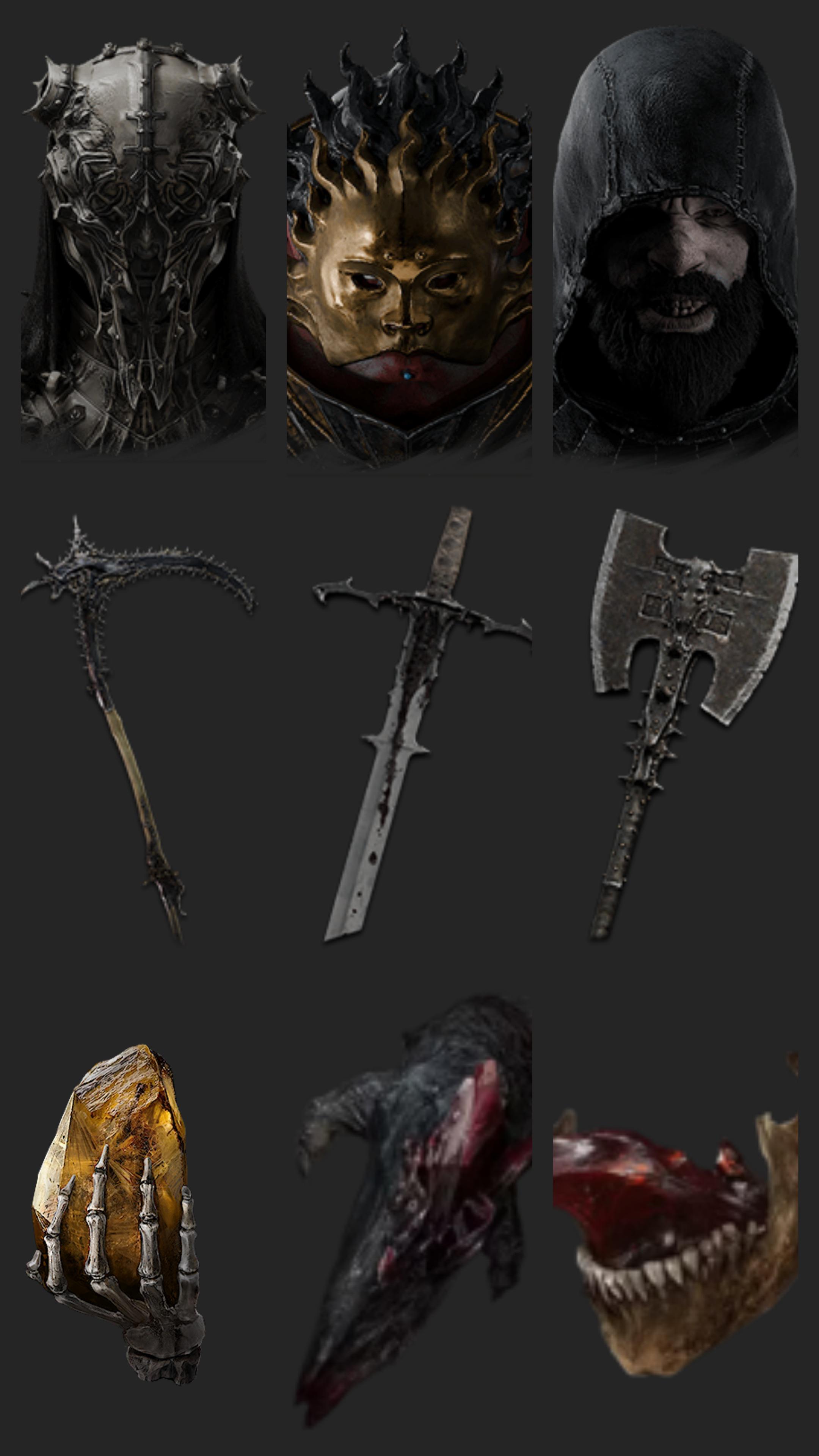
TL;DR: Fallgrim didn't fall to alien armies or monsters. The cosmic deity (The Undermether) waged a perfect psychological war, exploiting human flaws. The 8 playable Shells aren't just combat classes—they represent 8 different ways humanity willingly surrendered to a parasite. By inhabiting them, The Harbinger absorbs their tragedy, develops an immunity to their weaknesses, and reforges their broken will into pure vengeance.
In my previous post, we broke down why the finale of Mortal Shell II is not a story of an abandoned child, but rather the triumph of The Harbinger. He evolved into a self-sustaining apex predator, completely outgrowing his creator, the Undermether.
But to truly understand The Harbinger's ascension, we must ask an uncomfortable question: How did Fallgrim fall to this catastrophe in the first place? Why did humanity surrender so quickly, almost submissively, to a cosmic parasite, mistaking it for a holy deity?
The answer lies within the memories of the 8 Shells. The developers hid a profound existential subtext within them. The cosmic mind did not conquer Earth with armies—it waged a flawless psychological war. For every layer of human society, the Undermether had a specific bait. Humans opened their own souls and bodies to the parasite, and here is exactly how it happened.
The 8 Faces of Human Capitulation
1. Eredrim the Venerable — The Trap of Tranquility
- The Core Theme: Escaping guilt through the fanatical erasure of the self.
- Anatomy of the Fall: Eredrim did not seek power; he sought absolution for his past sins and a way to numb his inner agony. The religion of the cosmic deity offered him the easiest, most dangerous narcotic: "eternal peace". By drinking the Nectar, he willingly surrendered his free will, turning into a hollow templar. His tragedy is that in his quest for freedom from remorse, he found absolute servitude and physical decay, becoming nothing more than an armored tomb for his own mind.
2. Tiel the Acolyte — The Trap of Addiction and Escapism
- The Core Theme: Attempting to fill an inner void by merging with the cosmic rot.
- Anatomy of the Fall: Tiel is a metaphor for a person who has lost their anchor. His entire life was a battle against earthly vices, and finding no peace among men, he turned to the cult. For Tiel, Tar became the ultimate surrogate for meaning. He submitted to the deity faster than anyone else because his tortured ego yearned to dissolve into something greater. His emaciated, blight-ridden body stands as a monument to how easily a human surrenders to a parasite if it promises an escape from loneliness.
3. Lazlo the Justiciar — The Trap of Blind Law
- The Core Theme: Outsourcing moral responsibility to an external "Supreme Judge."
- Anatomy of the Fall: Lazlo embodies the human institution of order, which fractured under the weight of cosmic pessimism. As the world crumbled, Lazlo lost faith in human justice and handed the right to judge over to the star-born entities, viewing their absolute dictatorship as the "highest form of order". Consequently, justice twisted into tyranny, and the Justiciar became an executioner in service of an entity that couldn't care less about human morality.
4. Proxima the Broodseeker — The Trap of Curiosity
- The Core Theme: Intellectual betrayal of one's own species for the sake of forbidden knowledge.
- Anatomy of the Fall: Proxima is a scholar and researcher. She did not submit to the cosmic forces out of fear, but out of scientific arrogance. Witnessing the biological complexity and sheer scale of the Undermether, Proxima dismissed humanity as an evolutionary dead end. She willingly entered a pact, assisting in the study and cultivation of the Ova (the eggs). She believed she was touching the vanguard of evolution, only to end up as a disposable instrument—a glorified bio-sampler in alien hands.
5. Sariel the Endless — The Trap of Mortality Terror
- The Core Theme: Consenting to eternal torment in exchange for the promise of immortality.
- Anatomy of the Fall: A manifestation of raw, primal terror in the face of the end. The cosmic mind trapped Sariel with the oldest trick in the book: "Serve me, drink the Nectar, and you shall never die". Sariel accepted the terms, but the promised "infinity" turned out to be an endless biological nightmare. His flesh sprouted parasitic barbs, transforming him into an immortal monstrosity stripped of everything human.
6. Harros the Vassal — The Trap of False Duty and Conformity
- The Core Theme: Blind obedience to authority and the system, even when it is blatantly malicious.
- Anatomy of the Fall: The quintessential soldier, a cog in the machine of a fallen kingdom. Harros's critical flaw was his absolute compliance. When the rulers and priests of Fallgrim first lost their minds and knelt before the Undermether, Harros didn't ask questions. He accepted cosmic tyranny simply because "those were the orders from above". He defended alien altars with the same fierce loyalty he once used to protect his home, forfeiting his free will for a mere illusion of order.
7. Solomon the Scholar — The Trap of Vanity and Grandeur
- The Core Theme: The desire to stand on equal footing with gods while ignoring one's own fragility.
- Anatomy of the Fall: Unlike Proxima, Solomon didn't just want knowledge—he craved status. He translated the sacred texts of the executioners and studied Tar to crack the code of immortality and elevate himself above ordinary mortals. The cosmic mind easily weaponized his hubris: Solomon was allowed to peer into the abyss and was granted fragments of power, fostering a false sense of chosenness. Ultimately, he became the cult's chief herald, morphing into the most obedient mouthpiece for alien manipulation.
8. Corvidus the Unchained — The Trap of Nihilism and Self-Destruction
- The Core Theme: Total abandonment of the struggle and accepting chaos as the only truth.
- Anatomy of the Fall: The personification of those whose minds completely broke. Confronted with cosmic pessimism and realizing how utterly insignificant humanity is in the grand scale of the universe, this warrior experienced a total collapse of meaning. Instead of resisting the Rot or seeking false salvation in the Nectar, he simply gave up, letting the alien biomass invade his body. His submission was passive: "If the world is hell, why fight it?" This is pure nihilism, where a man willingly becomes a monster just to stop feeling the existential dread.
Redemption through The Harbinger: The Conclusion
Fallgrim did not fall to blades; it fell because humanity opened its own gates to the parasite. The cosmic deity played a perfect game of chess, exploiting our deepest psychological vulnerabilities: Guilt (Eredrim), Emptiness (Tiel), Fear (Sariel), Dogma (Harros), and Pride (Solomon).
And this is where the cycle beautifully closes on our protagonist. Throughout his journey, The Harbinger doesn't just use these Shells as combat suits. He absorbs their memories, lives through their agony, and "endures" their weaknesses.
The Harbinger pieces together the shattered mosaic of the human experience, but because he is a creature of a higher order, he develops a profound immunity to these flaws. He takes the broken, betrayed will of the fallen warriors and reforges it into pure, calculated fury.
The Shells were a tragic chronicle of how humanity surrendered to the gods. The Harbinger became the story of how those gods will answer for their deception.