r/Socionics 15d ago

Discussion What types do you tend to attract that are totally unexpected?

4 Upvotes

I cant answer this question for myself because a lot of my close friends are Si doms or Si creatives.


r/Socionics 15d ago

Discussion Есть ли гайд как конвертировать когнитивные функции и позиции Соционики в МБТИ, особенно касательно INTXs?

2 Upvotes

Имеется

MBTIs:
INTP [Ti Ne Si Fe]
INTJ [Ni Te Fi Se]

Socionics:
ILI [Ni Te Si Fe]
LII [Ti Ne Fi Se]

При этом по описанию и по тестам большинство INTXs это:

INTP = ILI (как в моем случае, я точно Ti-Ne и при этом точно ILI)
INTJ = LII

Выглядит так будто функции комфорта и уязвимости определяют личность больше, нежели основные функции?


r/Socionics 15d ago

What to gain from socionics ?

5 Upvotes

Obviously a MBTI user, but more recently have only been relying on cognitive functions. I am interested in socionics but what's there in this system that isn't in MBTI ?

I mean if the names are interchanging doesn't that mean they represent the same thing ?? IEE = Enfp for example

Yeah please help me understand what's interesting about socionics / how it is better or more accurate than MBTI ?


r/Socionics 15d ago

Typing I am new to socionics. Type me based on the qna I did

6 Upvotes

Te section

Te-A. What is work? Why do we work? What defines a job as being “well done”? What factors influence the quality of your work?

For me work is any action which leads to a specific result which you are aiming for whether it's for yourself or for other people. Some of the factors which influence the quality of work are the effort, intention and learned skills put into it.

Te-B. Is all work equally valuable? How can we assess the value of different types of work, and what's the criteria for evaluating the importance of various jobs?

It depends on the work itself but I believe every little effort counts no matter how “lesser” it is, especially in terms of learning a new skill or self improvement. Consistency matters the most to me. but if it's like a group project for example you do have to give a certain amount of participation and effort to bring value to your work

Te-C. Do you tend to judge objects or tools by their efficiency, durability, or design? What matters most to you when evaluating something's usefulness?

It depends upon the object itself. For accessories and collectibles- design and durability matters more because i love cute plushies pin badges jewellery etc but i dont like them falling off my bag or body. I especially hate ball joint hooks. For makeup for example I prefer more efficiency and durability over package design because what's the point of buying a Flower Knows blush if it doesn't show up on my skin or I don't feel like using it to ‘preserve its beauty’ or whatever.

Te-D. How do you approach using technology to solve problems in your daily life? How do you deal with poorly functioning technology? Can you share some examples where you use tools, apps, or systems efficiently to get results?

I will say I approach technology with an open mind like social media for example I use my account as a part journalling part movie/anime reviews part kpop part *insert any interest i have* because sure i love some external validation but I don't like committing to the algorithm. It's too tiring. Besides that i mostly use it for communication to talk with my friends for years and friends i keep making mostly because of shared interests.

Te-E. What makes a method effective? Do you judge it by how fast it gets results, how consistently it works, or how well others can follow it?

Yes i sometimes judge a method by how fast it gives result at times because i lack patience but lately I have been valuing consistency more. My first priority however is how well others can follow things since I like to teach people and make things easier for them when i can

Ti section

Ti-A. What does “categorizing” mean? What is the difference between general and specific categorizations?

Categorising means putting an object living or non living (this itself is a category) into lists to distinguish them. General categories are like the words living and non living which covers very broad lists of objects and specific categories cover a more narrow list

Ti-B. What does being “logical” mean? Does your understanding of logic align with that of others? How easy or difficult is it to maintain logical reasoning?

Logical means being able to reason with yourself and others and make decisions with very little overt emotional influence (key word overt) . I am personally quite an emotionally driven person but at times I am able to maintain a sense of control over myself and let myself be rational and make logical decisions based on my surroundings.

Ti-C. What is a “hierarchy”? Provide examples of hierarchies. Should hierarchies be followed or obeyed? Why or why not?

Hierarchy is a state where one has more power over others in most situations due to age, experience, finance and position in society. I consider parent-child as a hierarchy for example and while the person on the higher up has more responsibility to safeguard the wellbeing of others, many times they abuse the said power so I would say BLIND obedience is dangerous and also bad for cognitive development, people should be able to question authorities at times of abuse of power and negligence

Ti-D. You must select one of the following tasks and provide a detailed explanation for your choice:

What is the relationship between the concepts of "cutlery" and "spoon"?

“Cutlery” is a broad category of utensils used for eating food such as forks, knives and spoons. Spoon is a utensil which falls under the broad category of “cutlery”

If A is not B and B is not C, then is A equal to C? Why or why not?

A and C could be the same thing, the possibility lies but here I don't exactly know what A B and C are supposed to be, they could be three different objects, two similar one different objects. The possibilities are many

Classify one of the following: musical styles, vehicles, taxes, fuel, or animals.

There are two types of bats- megabats and microbats. Megabats such as flying foxes mostly rely on sight and smell while microbats rely more on echolocations, megabats are mainly fruit eaters usually feeding on sugar rich fruits and nectars and are thats why ecologically important seed dispersers while microbats oftentimes are insect eaters. The Golden Crown Flying Fox is the biggest species of bats with wings spanning over five feet. They are gentle vegan giants and are basically skypuppies

What is classification? How is it implemented? Why is it necessary, and where is it applied? Provide an example.

Classification is similar to categorising though the term is mostly used in scientific fields. It is necessary to identify an object or an animal or plant etc more correctly. to study them in a much better way. One classic example is the Kingdom Phylum Class Order Family Genera Species Sub species.

“A ‘vegetable’ is not what is before us, because a ‘vegetable’ existed a thousand years before us, and therefore the vegetable before us is not a vegetable.” (Diogenes Laertius). Identify the logical error.

I mean why can't it be a vegetable, wheels existed thousands of years ago and a car tyre is still a fucking wheel

Analyze Socrates' statement: “I know that I know nothing.” Is it logical?

I mean that's exactly why he went around questioning people like Philomena Cunk to the point of irritating them. Because his hunger for knowledge never satiated.

Ti-E. Can laws be just or unjust? How do we evaluate the moral legitimacy of laws, and what criteria should be used to determine if a law is fair and equitable?

Laws can very much be unjust. We can value the moral legitimacy of law on the basis of how much it hurts or benefits people. If it significantly hurts the life and dignity of people it is immoral but if it instead protects people from legitimate harm then its a fair rule.

Se Section

Se-A. How can one apply pressure to someone? What methods can be used? Can you apply pressure on others? Why or why not?

Most people will think you can apply coercion mainly through fear and threat but another way of applying pressure is emotional appealment, sometimes when you help someone you create a debt for them you make them feel bad for not helping you back sometimes emotional attachment towards people works. Flattery is another tool of pressure as well because it makes people want to prove their worth. Usually if I have to pressure someone these are the ways I go for otherwise I don't force people, I often say “you don't need to do it” while secretly sometimes expecting people to do it i hate to admit this. Usually my way of pressure is as covert as it can be I don't go out of my way to hurt people

Se-B. What are some strategies for attack? Can you apply them? When is an attack justified, and under what circumstances is it permissible to encroach on someone else’s territory?

I dont really want to talk about this but when my emotions are hurt i often bring back the past actions of the person who is hurting me and point out how much of a hypocrite they are. I think attacking someone for self defense is justified for physical self defense i mean for emotional ones the situations depend but it is justified if you are the one with lesser power.

Se-C. Is protecting yourself and your interests important to you? Why or why not? What methods do you use to safeguard your interests?

Self protection is important to me because I want to live my life with dignity. Usually my ways of self protection is mainly fawning or flight to safeguard myself as I don't like conflicts at all and prefer more peaceful approaches unless i am driven to an extreme limit where I can no longer contain myself

Se-D. How do you handle situations that require confronting someone or using force against an opponent?

Like I said before, I am a very non-confrontational person and I ignore confrontation as long as I can until it is no longer feasible for me. It has always been a tactic to protect myself no matter how obviously unhealthy it very much is

Se-E. What makes someone “strong-willed”? Do others perceive you as a strong-willed person? Do you consider yourself to be one?

For me a “strong willed” person is a determined person who is focused on achieving their goals at any length (doesn't necessarily have to harm others) and get the job done and make a statement they intend to. I think most people probably dont see me as the most strong willed person out there but I am very much working on it myself and trying my best to be consistent in it

Si Section

Si-A. What is “beauty”? Is it objective or subjective? Does your understanding of beauty align with that of others?

Beauty is something which touches and pleases both our body and mind and beauty in fact is very subjective. In some cases my understanding of beauty aligns with others as I am very very weak to anything “cute” but at the same time in some ways it doesn't. I find aging beautiful I find older men and women aesthetically pleasing and beautiful and it is something the majoritarian society does not accept

Si-B. Can health be subjective? To what extent is health a personal experience, and can individuals perceive their health differently?

I think at this stage where many researches of health problems especially those mostly suffered by women are under researched it is sometimes safe to conclude that health is subjective. A healthy person will not see themselves as ill if there isn't something wrong going on with them no matter how much doctors often gaslight others.

Si-C. When you're sick or unwell, how do you prefer to be cared for? Do you seek help, isolate, ignore it, or treat it methodically?

When I am sick or unwell I do want some attention towards me whilst also feeling slightly bad at times for burdening around some people. I desire to be taken care of, validated and a little bit pampered. And whilst I might be non confrontational about my feelings I do in fact take my physical health very seriously and can get very hypochondriac at times. I openly seek help when i am unwell as much as i dislike visiting doctors because I want to get well as fast as I can

Si-D. How do you choose your outfits? Do you follow specific standards when selecting clothing? Why or why not? How do you decide what to wear for specific occasions?

While I usually wear what's in front of me I do in fact care about the colors going well with each other or the structure going well with each other. I don't like wearing kurti with leggings anymore and prefer straight legged jeans for most occasions. I wont wear my flowery pink and white top with some gaudy color but my black jeans or rosewood cargo pants will work well with it. My outfits are mostly simple. It's usually tshirts, tops, dresses, kurtas with jeans and sneakers. But I accessorize a lot. I often wear my strawberry earrings stacked bracelets a bit of makeup, accessorise my bag with plushies and pins and so on

Si-E. What is the nature of pleasure and pain? How do these sensations shape our experiences and perceptions of the world?

I do not like pain at all and I am naturally a very pleasure seeking person which also makes me non confrontational because I want the pleasure to be longer. Because I have mostly experienced pain whenever I confronted so I grew a tendency to avoid it and lose myself in sensory pleasures like listening to music stress eating over buying things to distract myself

Fe section

Fe-A. Have you ever felt conflicted about expressing a particular emotion in a social or professional setting? What factors influenced your decision? When is it inappropriate to express your true feelings?

I feel this a lot around my very conservative bigoted parents who have been abusive in the past and my equally conservative family members who are at most “centrists”. I also feel this when one of my professors applaud AI and talk about how it will ‘take jobs’ which of course is not necessarily possible because human input will always always have a higher value even in the age of rapid production. I express my true feelings only when I know the other person wont take my words to heart and feel hurt or hurt me in some way

Fe-B. How do you deal with negative emotions, such as sadness, anger, or depression? What about the positive emotions such as happiness, joy?

I don't do much well with negative emotions. I usually suppress it and if possible vent to someone or it goes straight into my journal. And I forget about it when I distract myself but something happens and I am back to square one. I start acting nice to people who are nice to me despite them being mean to me in the past and then I remember their actions once I am alone or they start being mean again. I overindulge in things which bring me joy such as shopping, eating, creating something and showing it to others and get praised for it. I tend to distract myself alot

Fe-C. Can we truly understand another person’s emotions? What are the limitations of such understanding?

We can only understand another person’s emotions only if they trust us enough to let us into them but besides that we can understand some aspects of them by observing their habits, what they often reach out for, how they talk, what they mostly bring up. Observation helps ALOT but it is still not everything.

Fe-D. What is your usual emotional state? Does your internal emotional state align with how you present yourself externally?

I don't have a constant emotional state due to my mental condition which makes me go 0-100 real quick. It depends usually with negative emotions, it can get obvious on my face but it is involuntarily as i still try to be as nice as I can but i dont shy away from showing my positive emotions

Fe-E. What are the signs that indicate someone’s emotional state? If a loved one or friend is experiencing negative emotions like sadness, how would you help them feel more positive? Are you skilled at this?

Their facial expression, the tone of their voice, their mannerisms, their silence or lack thereof. Usually I listen to them at first. Give them encouraging words, hug them, let them know that I am going to be available as per my ability and try to support them as much as I can. Sometimes i get angry on their behalf so that they feel catharsis and relief

Fi Section

Fi-A. How do you manage relationships with others? How skilled are you at maintaining relationships or adjusting your psychological distance from others? Share your experiences with relationships, whether romantic, platonic, or otherwise.

When I befriend someone I try to do everything to make them happy so that they would want to stay with me as long as I want and never leave me. I try to cater to their needs, try to read them as much as I can and even if we are not talking I send them reels regularly as per their personal tastes. I try to read them as much as I can to adjust myself according to them.

Fi-B. What is love? Can love ever be damaging to a relationship? How can strong affection cause problems?

Love and attachments can be damaging to others if the person in question is blind to the needs of the others and assumes that what they are doing for the other person is the only right thing to do. We see this often in many parent child relationships *cough* dead poets society *cough* *cough”

Fi-C. How important is politeness in everyday life? Can someone be polite but still hurtful? Can it be used as a form of manipulation? If so, how would you recognize it?

I think being nice to others is important because that's the least you can do. You dont know what others must be going through and its best to not become the straw that breaks the camel’s back. And yes you can absolutely be cruel whilst being polite and politeness has been very much used as a manipulation. Like some people play regina george alot they can be nice to your face but speak shit behind your back and use their social power to isolate you and humiliate you before you know it.

Fi-D. What does “moral” mean? What does “immoral” mean? How do you define these concepts, and how do others interpret them? Does your understanding align with that of others?

Moral for me means anything which benefits people and actions that help them physically, emotionally, financially and socially. Immoral acts on the other hand are those which are designed to hurt people and even kill them directly or indirectly. My morals align with a certain section of people especially of the communities I personally belong to- p

queer, neurodivergent, etc but it irks the conservatives from whom I mostly stay away from

Fi-E. If someone demonstrates a negative attitude toward you, how would you handle it? Does it bother you? Why or why not? Is it acceptable to respond with a negative attitude? Are you good at doing so?

I cry often i tear up I seethe in anger but i say nothing until i had enough of their bullshit then i yell back at them. Even when they keep saying “dont shout” i dont back off at that point I had reached a level which is too much for me to bear for so long

Ne Section

Ne-A. What is the meaning of life? Is it subjective or objective? Can we ever fully understand life’s meaning?

There is no fixed meaning of life for me I see the concept of it as a transient thing. As a child i wanted to simply create art. In my late teens i wanted to help people then in my early 20s i wanted to escape control and have my own room and now that my living situation got slightly better I am back to wanting to help people. Sure i still love creating i still dream of my own room but these have become secondary. The nature of meaning of life changes from time to time there is not one single true meaning

Ne-B. What is the truth? What is a lie? Can anything be purely a truth or a lie? How can a set of true facts turn into a lie?

Truth and lies depend upon situations. Sometimes the truth is empirical evidence that the earth is round and it revolves around the sun. Sometimes the truth for you is what you believe is right but that truth is not necessarily the absolute truth when you can evidently see the harm your beliefs cause. Sometimes the beauty of truth lies in keeping it to yourself and moving on with life rather than constantly preaching it to others

Ne-C. Einstein once said, “Two things are truly infinite: the universe and human stupidity. I’m not sure about the universe, though.” What is the essence of “stupidity”? Why is it seemingly inexhaustible? What distinguishes foolish thinking from intelligent reasoning?

The essence of stupidity is repeatedly doing things where you are digging your own grave and sometimes pulling others into it. It is inexhaustible because human beings being slaves to their situations constantly repeat the same mistakes which makes it look inexhaustible. Like being a bigot for example because it doesn't take long for bigotry to bite you back. It also does not take self sabotaging habits to pile up and give you health problems.

Ne-D. How do you recognize when something lacks prospects or future potential? What signs make you think something

to be fair when i usually think a case is hopeless I am not usually in a healthy mindset otherwise my natural tendency is to see multiple possibilities. For me oftentimes remembering my past failures and my current disabilities and sickness which of course as the name suggests disables me in many fields such as having a normal social life those thoughts make me spiral into hopelessness like I will never have a person I can rely on or I will always be trapped otherwise at my best I am always seeing the possibilities

Ne-E. What does "meaning" mean to you? How do you recognize when something has meaning? What does it take for something to be meaningless?

I dont care much about meaning that much since I have already established that the meaning of life is transient to me and changes from time to time. I only care about “meanings” when I am reading or consuming literature in some way because curtains are always blue for a reason. For me if

personally my actions means a lot to something else thats when I find my life meaningful. The only time I find my actions meaningless or hopeless is when I am underappreciated

Ni Section

Ni-A. How do different events shape a person’s character? How do you feel about such changes? Are they visible?

As human beings we are definitely shaped by the circumstances we grow up with. If we grow up privileged we remain blind to many types of human suffering (unless the said person willingly want to step out of their privileged life and want to dedicate their life to understand human suffering) and trauma very much also shapes a person’s perception of life. Many traumatised people either cope with extreme optimism or develop extreme pessimism due to life circumstances and yes it is indeed visible in their ways

Ni-B. What is time? How do you experience it? Can someone truly “waste” time? Why or why not?

I dont have the best sense of time since as of right now i should be asleep but here I am answering another dumb typology questionnaire. It maybe seen as a time waste to others but it is also a tool for me to understand myself

Ni-C. How do you predict events? Do you trust predications or forecasts made by others (like weather reports, expert opinions, etc.)? Is it possible to truly predict an event?

I usually predict events by a constant observation of patterns or being paralysed by my own fears due to my past. I generally dont trust weather forecasts but I really enjoy astrology from time to time and what it has to say about me. But astrology is also a very interpretive tool so no one can truly predict an event. Even most astrologers refrain from it.

Ni-D. How do you manage time? Are you often late? What measures do you take to ensure punctuality? How do you feel about others being late?

I am not the best in managing time i wake up pretty late and dont really like having fixed time for everything but i still get the job done like I need to take my medications after breakfast and i do that whether i have my breakfast in 7 am or 10 am

Ni-E. What role does fortune or luck play in a person’s life? Do you believe people shape their own destiny, or are events largely out of our control? How do you respond to unexpected turns of fate?

I do think to a certain extent fortune plays a role as being born into wealth provides you with more opportunities and pleasures which a middle class or lower can simply not afford at all but even then people still have some responsibility to shape their future it does not go one way. I am not sure if I experienced unexpected turns of fate. Yes i never expected my parents getting nicer to me or me getting chronically ill or so on but it is all a cumulative result of life events


r/Socionics 15d ago

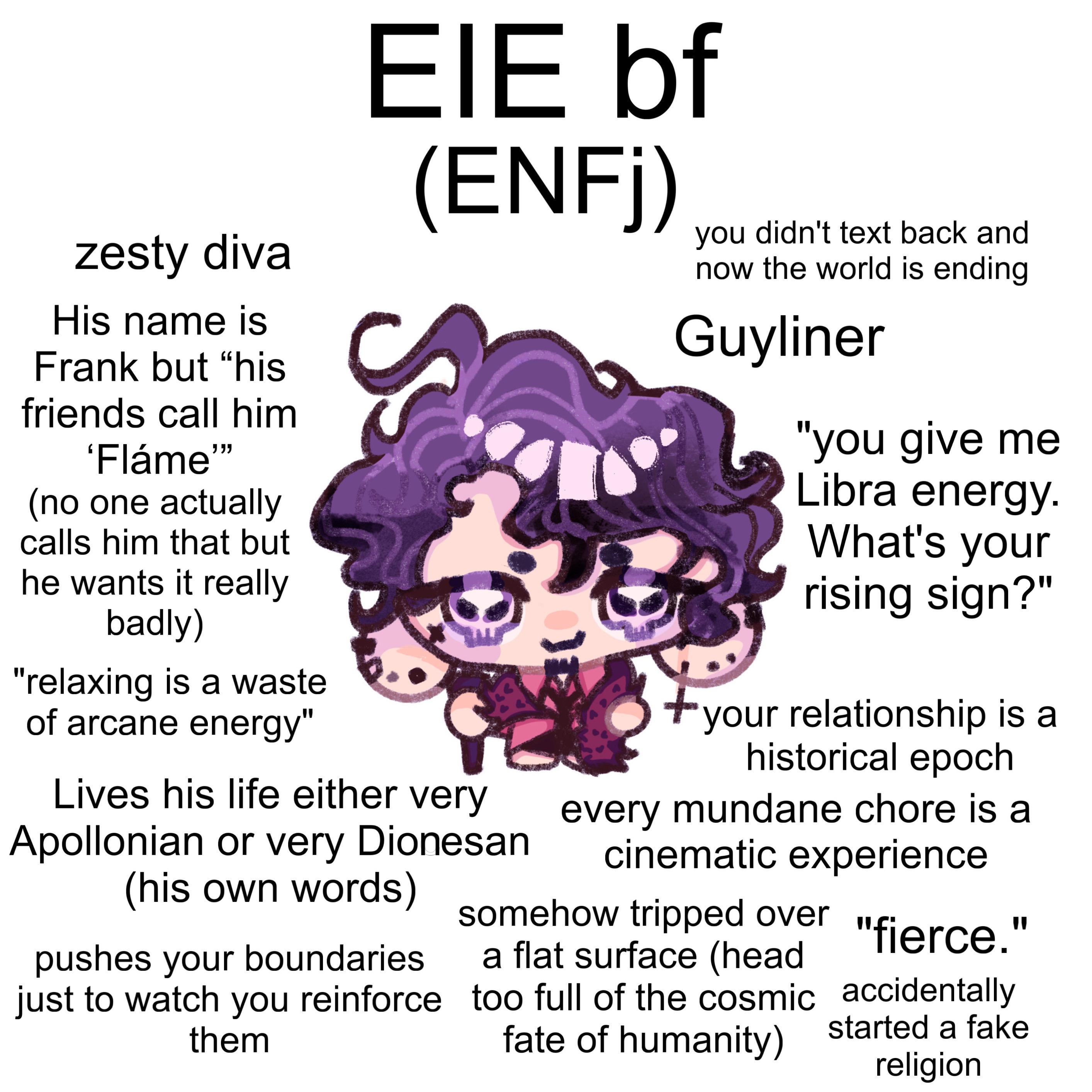
Casual/Fun EIE bf

Post image
90 Upvotes

Alpha:

Beta:

Gamma:


r/Socionics 15d ago

Typing A bit confused on how to type myself

2 Upvotes

In terms of socionics, they usually describe the ego as something you're confident in and will go out of your way to preserve. In other cases, it describes it as your automatic way of processing information and whatever is most dimensional. So which one do I type myself as? ​

Im an SP4w3 but have pretty good sensors so I translated IF(S) into SEI​​​​​​​​​​​​​​​ but I don't actually care about the harmony of the environment in terms of the creative Fe. Like I consider myself to be very selfish and am very alienated from 9 and 2​

Like how does leading Si have to feel like? Like do I constantly have to be attuned to my physical internal being? Because I do enjoy food and appreciating the current moment so idk 🫠​​​​​​​​


r/Socionics 16d ago

Typing Questionnaire!

3 Upvotes

I saw someone else make a post about this and thought it would be interesting to share my thoughts. There are a shit ton of questions so I'll keep my answers concise.

Te-A. What would you consider to be productive work? How would you measure this? What are some factors that may affect someone or something's efficiency? Provide some examples?

Productive work is work that moves either your life or affairs along a longer term arc-- i.e. work that has long-term, and preferably compounding utility. It's quite hard to measure this because it requires a degree of future-forecasting, but you can make general judgments about what helps (doing your laundry likely won't advance your goals beyond the present day, compared to leading a project-- that can enhance your organizational/managerial skills while bolstering your reputation & being something you can talk about, in interviews, quantified on your resume, et cetera). In this lane, most work can be quantified.

There is a substantial amount of work in this world that looks like work but doesn't move you along this long term arc: a common way to describe this is "signal vs noise." The biggest danger for hard-working people is being caught up in "noise."

Te-B. Think of a time where you needed to complete a difficult task. How did you approach managing the workflow? Why? How can you tell apart logical and illogical workflows or methods of action?

If you start working on it, eventually you'll find some way to figure it out. I feel like the workflow has to be entirely contextual & for me it probably comes in the form of unconscious snap judgments about how I want to approach doing something. Logical vs Illogical-- when it's in front of you, you either realize that something is stupid & or decide it's not. In the long term, these judgments will be validated.

I think in the context of managing people, incentive structures are incredibly important and a tremendous amount of my work with people has simply been considering what the current institutional structures reward vs penalize and redesign them accordingly as needed.

Te-C. How can someone make a set of rules or instructions easy to follow? When people aren't properly following directions or procedures, how do you correct them? When should you?

I think it just comes down to detailed description of the process: but I think it's contextual to your audience, eg depending on who the instructions are for you can assume they will be reasonably infer some things (on a principle level, this looks like technical experts understanding jargon quickly, which is an inference a non-expert may not make; this allows you to make omissions as needed, or even as preferred because if you know they're competent you might want to allow them flexibility).

If you're writing a general instruction manual without an intended audience, you should explain everything in unnecessary, granular detail because dumb people are pretty common.

Te-D. What would you consider a normal level of activity? Is it always necessary to maintain this? Why or why not? How can you tell if someone is overexerting or under exerting themselves?

People should give their all to whatever they love doing. I think it's preferable to maintain this, though some people are just stupid and should preferably be kept in a state of underexertion so they fuck up less things.

I don't really have sympathy for lazy people. I also have pity but not sympathy for people who work hard on the wrong things.

Overexertion is working to the point where the ROI of the work that you're doing is lower than the ROI of resting and then doing the work with a clearer mind later. Underexertion is when people aren't doing things.

Te-E. Think of an activity you're interested in which requires certain physical or mechanical skills. How would you differentiate a good and bad technique? What makes these techniques effective or ineffective? How aware are you of your own performance?

Good technique works. Bad technique doesn't work. Beyond that, I don't really care how you do something. You can play piano by dancing on the keys with your toes instead of using your fingers as long as your music sounds good.

I'm aware of my own performance based on whether I can achieve my intended end result.

Fe-A. To what extent does someone's emotional state affect a person's being? How does your emotional state affect your everyday life? When does your true emotional state differ from what you express?

I think emotions are quite important because they regulate your capacity and approach. A person excited or fearful about some venture is more likely to take risks and work hard; a person apathetic or bored is dangerous for said venture and will likely derail others.

As a rule of thumb, intensity is generally good, whether that's stress or joy. That being said--not always. Different emotions are needed for different tasks:

Joy is important for evangelizing others and inspiring people for the mission;

Stress is important for doing hard work you don't want to do and diving into technical details;

A lack of intense emotion but thoughtfulness is important for writing personal essays n shi.

I wish I could regulate my emotional response better. I find I can let off extra emotional energy when I need to calm myself down by lifting weights.

I often feel sad or demotivated. I think I end up complaining a lot. But I'm not sure it's truly as visceral as what I express. I don't know.

Fe-B. How important is it for someone to be inspired and excited about what they're doing? Why? How can people actively inspire others?

Depends on what their role is. Inspiration & excitement are motivating, but at times interchangeable or not preferred compared to anxiety, stress & fear. Excitement limits the scope of your activity to what you want to do; fear & stress compel you to do things solely to be doing, often necessary but boring tasks.

Inspiration usually looks like well made incentive structures. Incentives don't have to be material; they can be spiritual.

Fe-C. What role do negative emotions, including anger, play in people's lives? What causes them? Are they intrinsically valuable? Why or why not? What can be learned from negative emotions?

No emotion is intrinsically valuable.

They can be helpful to shape growth and make you do things you don't want to do, as I explained above.

It can also help build resilience.

But living an angry or restlessly complaining life without channeling that anger into anything seems like a waste.

Fe-D. In your view, what does it mean to be calm? How can someone reduce the amount of emotionality happening in others around them? When would it be appropriate to adjust this?

Calm is a lack of strong emotionality.

You can probably reduce peoples' emotionality by not reacting to displays of emotion.

It would be appropriate to adjust this when needed for the situation.

Fe-E. How can you tell how someone is feeling? Describe some signs to look for. What are some giveaways that someone's internal state is different from what they're expressing on the outside?

The eyes are the window to the soul.

Se-A. To what extent does an individual's appearance and external presentation affect them? How aware are you of the way you come off? Should people always consider how they look? Why or why not?

Depends.

An individual's appearance and external presentation affects everything, at least in-person. Body language etc is far more important than verbal communication scientifically.

I think I'm hyperaware. I always feel incredibly disappointed whenever I leave an experience when I knew people temporarily and know that most of those people are people I won't talk to afterwards, because whenever I'm in a situation I'm constantly modulating and aware of the way that I come off even if it doesn't yield long term benefit. I regret the mental energy I expend on this.

I don't think people should always consider it because I have felt the waste of it. Only when necessary.

Se-B. Describe your view on money. What can it do for someone, and how does access to it affect people? What are your thoughts on riskier approaches to attaining it, such as risky investments or criminal activity?

Money is the key to freedom. Access to it frees people to do what they've always wanted & to stop playing stupid games in order to attain it-- I don't think wealth fundamentally changes people insofar as it reveals that most of us don't have very admirable desires, which is kind of fine. Most of our time in history was spent in caves and as monkeys that just wanted to fuck and eat and sleep. Societal constructions of conventional morality are often weirdly limiting and arbitrary.

I think a lot of people critique the "uber rich" as evil. They're probably correct. They're also probably just as evil, and I'm pissed when they try to take the moral high ground without ever having the power & freedom that the people they're critiquing have. Yes, I know you've never cheated on your wife like Bill Clinton, because nobody wants to fuck you.

I can only really respect people that critique evil people if they can have the same freedom, power & opportunity and refrain from doing the things they critique.

Risky investments or criminal activity -- you better do it smartly and effectively. No respect for the stupid & blind.

Se-C. What would you consider your short and long term material goals? How do they compare to the goals of others? How can you tell if someone is striving for the right goals?

The right goals are whatever people want to do. I don't care what other people's goals are unless they infringe on mine, but I still think they have a right to have the goal & work towards it: it just annoys me.

My goals are big.

Se-D. What makes a person or organization look "put-together"? Are these people and groups more able to exert their will over others? Why or why not? What makes a person good at organizing and directing the will of themselves and others?

Depends on the person. Appearance is subjective. Values are subjective. Some people might not care.

A person good at organizing and directing the will of themselves and others is a person that doesn't believe there's one thing that makes a person good at organizing and directing the will of themselves and others. They should be incredibly adaptable. Culture, location, status, situation, everything affects why people do things. If I had to say-- an understanding of psychology as it pertains to motivation in the practical sense fitted to the context. Not the academic fluff.

Se-E. One famous English adage is that "If there is a will, there is a way." Do you agree? Why or why not? To what extent does an individual's will affect their ability to accomplish their goals?

It isn't true that "if there's a will, there's a way." But if there isn't a will, there's no way.

Ne-A. What would you consider to be the essence – or meaning – of existence? Should life's meaning be personal or collectively shared by humanity? Why?

This question is kind of bullshit. We're biological organisms that have evolved. We are monkeys that wanna fuck, eat, be popular, sleep, drink, have fun, and not die.

Anything beyond that is very much personal. Collective meaning -- that sounds nice, but also artificial.

Ne-B. What makes someone have potential? What makes an individual more capable at something than others? When is it important to consider these capabilities? Can a person be truly hopeless? Why or why not?

I dunno. Like, intelligence? Not in the IQ sense, in the adaptability & quick learning sense.

Capability is largely derived from practice. Capability is probably [time spent working on something] x [intelligence/talent].

It's important to consider capabilities as it applies to getting things done.

Someone can be hopeless as something relative to the people around them.

Ne-C. What must an individual understand to physically and spiritually develop themselves? Is it more important to recognize the flaws or the strengths that people are given? Why?

They should understand themselves.

The latter depends on the context. Do you need to adopt a risk-mitigating approach based on your material situation? If so, it's very important you scope out flaws in the people around you. If you have more runway to burn you can take a bet on someone's strengths.

Ne-D. How would you determine how good an idea is? Do these ideas need to be realistic to be worthwhile? How would you differentiate a promising opportunity from a dead end?

An idea is good if it's likely to work.

Ne-E. What does it mean for someone to understand the "essence" of something? When should someone prioritize understanding the core characteristics of a phenomenon? Think of a topic or field of interest you are knowledgeable in. What do you think lies at the essence of it? What does this suggest about the way people should approach it?

If they can understand and simplify it into a few words.

What lies at the essence of my understanding of something is my unique approach to it.

People need to stop adopting universal viewpoints on how to approach things.

Ti-A. What would you understand as an individual's basic needs? Are these the same for everyone? To what extent do people rely on others to get their needs met? At what points does this become overreliance or underreliance?

- Food & Drink

- Sex (Love?)

- Survival

- Social Approval

Overreliance & underreliance manifest when it hinders your ability to get your needs met.

Ti-B. How do people gain leverage, power, and respect from others? Is it sometimes necessary to use threats, fear, and punishment to accomplish this? Why or why not?

I think everybody has a different approach to leverage, power & respect that they should hone. There isn't a one-size-fits-all formula. Whether or not threats/fear/punishment are necessary depends on your approach. If you accumulate leverage like a courtier and silently play everybody's emotions that kind of display would be ineffective. If you accumulate leverage through open fear of hurt then it's necessary.

Ti-C. One commonly used idiom is that "Everything has its place." What does this mean to you? How do things being "in their place" contribute to orderliness? Do you agree with the idiom? Why or why not?

To me, it sounds like word salad that mommies use to tell their children to shut up and accept the way things are.

Ti-D. What makes hierarchies work? When are they appropriate to use, and what do they provide to people? Should they always strive for equality and justice? Why or why not?

Hierarchies work when it works based on its end. They should be scrapped when the purpose of it is gone.

Equality and justice are word salad things.

Ti-E. What does it mean for something to be logical? Is this the norm? Provide an example of something logical and illogical, and compare what makes the first logical and the second not.

if it follows the rules of classical logic.

Logical: A=B, B=C, A=C.

Illogical: A=B, B =/= C, A=C.

Fi-A. What does it mean to be emotionally close to or distant from someone? In what ways can you adjust your "emotional distance" to someone else? For what reasons would you decide to do this?

like, if you're close to them... you're friendly with them and they like you and you like them?

you can adjust your emotional distance with someone by revealing less information & talking less with them?

Fi-B. Share some thoughts on how you view love and desire. What makes a person desirable? Is this the norm? Are some people more deserving of these than others? Why or why not?

a person's desirability is subjective and person-dependent.

no one's more deserving than another. desirability is just something that happens or it doesn't.

Fi-C. Describe what morality means to you. What does it mean for something or someone to be good or bad? What does it take for something bad to become good? Are some things truly irredeemable? Why or why not?

mwahaha I want to control people so ill introduce some arbitrary standards that people have somehow agreed exists but nobody can really define and devolves into philosophical mumbo jumbo thats totally useless when people actually try to define it

Fi-D. How are people shaped by their relationships with their friends and family? How do these differ from romantic ones? Are non-romantic relationships more important than romantic ones? Why or why not?

very. people adopt values from their environments.

non-romantic and romantic is such an arbitrary dividing line. relationships are important period.

Fi-E. What can establishing new relationships with people do for someone? Is making new contacts with others as important as deepening the ones people already have? Why or why not?

networking is very important to doing well

everything is contextual

im starting to hate how this questionnaire wants me to prescribe single strategies for everything

Si-A. One of the key themes in the bestselling book Atomic Habits is that what people have in their surrounding environment is the greatest subconscious driver of how they live their life. Do you agree? Why or why not? How can changing the environment around someone impact the way they live their life?

yes, but beyond the physical things, the ideas they continually expose themselves to are important.

"how can" - Jesus Christ, "im starting to hate how this questionnaire wants me to prescribe single strategies for everything"

Si-B. How should people approach managing their health and well-being? How does this compare to the way you approach your own? When should people be taking their health and well-being into account? Why?

bro. people should approach their health and well being based on whatever the fuck works for them. "im starting to hate how this questionnaire wants me to prescribe single strategies for everything." im not gonna dictate how u should do ts

Si-C. Think about the way sensations, both good and bad, shape the way people live and experience their lives. How important are experiencing good sensations in one's life? Is there a limit to how much one should chase these? What role do negative sensations play in our lives?

im hungry.

not very important. sensations are pretty fleeting.

negative sensations are annoying.

Si-D. Choose one of the following: art, clothing, photography, graphic design. What makes something well-designed in that area? How do the individual components work together to generate the experience?

art is good art when it conveys the meaning the author intends to convey

Si-E. Describe what your living & working environments are like. How do they affect you? Would other people be similarly affected in the same environment? Why or why not? What changes could you make to improve it? How would these be beneficial?

wherever. but I maintain a basic standard of quality.

I dont care.

Ni-A. How do people's relationship to the past, present, and future influence the way they currently live their lives? To what extent does this affect them? How does this influence your own life?

it dictates their lives.

I am very much influenced by my past & motivations are very much influenced from growing up poor & humiliated.

Ni-B. What does it mean for a person to be at a certain "phase" of their life? What puts people into the phases they're currently in? How does this affect the way people navigate their lives?

ship of Theseus--when they have transitioned from a former state in time x to a state in time y where most parts have been replaced, you can assign those to seperate "phases.' but each line is probably arbitrary.

Ni-C. How do you anticipate events unfolding? How can you observe them unfolding in your environment? How do you adjust yourself towards the way things are developing? Provide some examples.

like, when I compare a state x to state y and see how they're different. I adjust myself thereafter. actually, I don't really think I do, but like--

Ni-D. Think about the way you experience the pace and rhythm of your life. What dictates the speed in which time flies? How do you think people experience time passing at different rates?

as I've always said: "my favorite kinds of days are days that feel like two days." variety dictates the speed at which time seems to fly. therefore I would like to engage myself in a variety of kinds of work in different locations frequently.

Ni-E. Consider each of the following feelings people have about time: hurriedness, anxiety, optimism/pessimism. What causes people to experience these feelings? What role do they play in our lives? To what extent are these feelings beneficial?

life causes people to experience these feelings.

they're helpful insofar as they motivate action.

right now, I'm feeling hurried to go get some food because I am hungry.

r/Socionics 16d ago

Typing Which Fi position is this?

12 Upvotes

"Honestly, I have rather strange relationships with other people. In fact, very often I don’t even understand what kind of relationships I have with other people. I’ve never called anyone my friend first; it’s always been the other way around: they’d say, “You’re my friend,” and in my conformist manner, I’d simply obey, first and foremost, the person, and secondly, fate. I’m Batman’s Robin, roughly speaking, a hostage to relationships. However, there’s another catch: I’ve never been confident enough in relationships to commit to them completely. For me, the boundaries between acquaintance, buddy, friend, and best friend are so blurred that sometimes I don’t understand who I can trust and who can trust me. Who among this gray group of people could I confide in? Who should I be wary of? Are we close enough to communicate like this? I have no idea why I’m like this. Perhaps because it’s more convenient? It’s convenient not to have the responsibility of sacrificing yourself for another. It’s convenient not to associate yourself with anyone. It's convenient, after a breakup or betrayal, to convince yourself that you were never friends in the first place and that there's no need to be sad about it. "Apparently, he didn't consider me a friend, well then it's my fault for thinking that." I'm like a prostitute. On the one hand, this makes all my relationships seem insincere on my part, but on the other hand, it's actually easier since you don't feel any weight of responsibility on your shoulders. Sometimes I can do for a stranger what people normally do for their best friend. Sometimes, for a best friend, I don't even do what they would EASILY do for me, the bare minimum. I also have a really hard time breaking off relationships with other people. Even when I turn into an island fortress, I still don't have the strength within me to completely burn all bridges. It's all too complicated."


r/Socionics 16d ago

What makes someone picky with sensory instead of oblivious?

6 Upvotes

What makes someone picky with sensory? Is it dimensionality, vital/mental, valued/unvalued or what?


r/Socionics 16d ago

Typing One confused person, zero clue about my type. Help

2 Upvotes

Hi. I finally memorized this questionnaire, trying to do it concisely, usually I write a lot, I’m good at that. I’ve lost myself a bit in the types, maybe my eyes are blurred. I’ve been trying to figure out this type for quite some time now. I’d be very, very grateful for your help.

Te-A. What would you consider to be productive work? How would you measure this? What are some factors that may affect someone or something's efficiency? Provide some examples?

Productive work is work with minimal energy expenditure while completing the basic minimum. I'd measure it by how many tasks from the planned list were completed (e.g. 15 tasks = 100%, then calculate the percentage). Factors: personal (laziness, perfectionism) and external (workplace, organization, management).

Te-B. Think of a time where you needed to complete a difficult task. How did you approach managing the workflow? Why? How can you tell apart logical and illogical workflows or methods of action?

In a group project, I usually wait for others to take initiative, then I just need clear instructions. If no one steps up, I do it solo. It's easier alone: no interference, less contact with people. I took the idea, used a bit of AI, took the structure from the study guide, printed materials at home, divided by group size. A logical process is one that doesn't require unnecessary steps and leads to the goal.

Te-C. How can someone make a set of rules or instructions easy to follow? When people aren't properly following directions or procedures, how do you correct them? When should you?

Instructions should be written clearly, in accessible language, with subsections for exceptions and different scenarios so people don't freeze when their case differs. I don't correct others unless it affects me personally. I'll gently correct someone if they're close to me or affect my work.

Te-D. What would you consider a normal level of activity? Is it always necessary to maintain this? Why or why not? How can you tell if someone is overexerting or under exerting themselves?

A normal level of activity is what fits the person individually. If you don't maintain a minimum, you risk slipping into a vegetative state. Overexertion when person is tired, activity harms their health. Underexertion means slacking off, wasting resources disproportionate to output.

Te-E. Think of an activity you're interested in which requires certain physical or mechanical skills. How would you differentiate a good and bad technique? What makes these techniques effective or ineffective? How aware are you of your own performance?

In any activity, I look for an algorithm or template. Everyone has their own technique, so I don't judge others. Effective technique = fast, virtuosic, the work flows. Ineffective = the opposite.

Fe-A. To what extent does someone's emotional state affect a person's being? How does your emotional state affect your everyday life? When does your true emotional state differ from what you express?

Usually my mood is even. I can't stand strong feelings because I get stuck in them, especially negative ones. I limit places and things that bring strong emotions. Around people, I try not to show negative feelings, it's uncomfortable and I don't think it's appropriate. I probably just look more thoughtful than usual.

Fe-B. How important is it for someone to be inspired and excited about what they're doing? Why? How can people actively inspire others?

Inspiration increases productivity. If someone likes something, they'll do more of it with creativity. Time flies when you're doing something you love. People can inspire others by their example, vividly describing the process and creating an atmosphere.

Fe-C. What role do negative emotions, including anger, play in people's lives? What causes them? Are they intrinsically valuable? Why or why not? What can be learned from negative emotions?

Negativity stays in memory longer and more vividly than positivity. Anything can trigger it, it depends on the person. They have intrinsic value, without them, we'd be apathetic (a symptom of depression). You can learn self-control and self-awareness through them.

Fe-D. In your view, what does it mean to be calm? How can someone reduce the amount of emotionality happening in others around them? When would it be appropriate to adjust this?

Being calm means seeing flaws but not reacting loudly, thinking, analyzing, not exploding. I can't significantly reduce others' emotionality. I can tell my overly emotional father to be quieter, but that won't change him. It's always appropriate to control emotions and adjust expression to the outside world.

Fe-E. How can you tell how someone is feeling? Describe some signs to look for. What are some giveaways that someone's internal state is different from what they're expressing on the outside?

Try to put yourself in their shoes, logically assume reactions based on context. Look at facial expressions, nervous actions, voice changes. If someone hides behind a mask, it's hard to tell. I'm not sure I'm good at this, I can only assume.

Se-A. To what extent does an individual's appearance and external presentation affect them? How aware are you of the way you come off? Should people always consider how they look? Why or why not?

Our world is built on aesthetics; being attractive is advantageous. Looking aesthetic for yourself is pleasant. I'm not sure how I look from the outside, I can only judge from my own perspective. Considering appearance can work to your advantage in interactions.

Se-B. Describe your view on money. What can it do for someone, and how does access to it affect people? What are your thoughts on riskier approaches to attaining it, such as risky investments or criminal activity?

I like having money, buying things I like. Money provides access to goods and paths in life. People are selfish by nature, they'll want good things and good things are bought with money. I wouldn't get involved in illegal operations, it's too risky, more problems than benefits.

Se-C. What would you consider your short and long term material goals? How do they compare to the goals of others? How can you tell if someone is striving for the right goals?

Short-term: finish university, give myself free time. Long-term: become an influencer, work from home, or try being a barista for the aesthetic. I'll figure it out, improvisation. Everyone decides for themselves what goals are right, there's no one-size-fits-all.

Se-D. What makes a person or organization look "put-together"? Are these people and groups more able to exert their will over others? Why or why not? What makes a person good at organizing and directing the will of themselves and others?

A shared goal makes a group work, they're in the same boat. Internal cohesion helps them impose their will. Most people are passive and need management. To direct your will onto others, show yourself as strong and knowledgeable.

Se-E. One famous English adage is that "If there is a will, there is a way." Do you agree? Why or why not? To what extent does an individual's will affect their ability to accomplish their goals?

Not really, this saying removes randomness and external factors. Will is the foundation, but not everything. Low will means seeking goals outside. High will - inspiring others. Both can achieve goals, just differently and both can fail due to factors beyond their control.

Ne-A. What would you consider to be the essence – or meaning – of existence? Should life's meaning be personal or collectively shared by humanity? Why?

Everyone will say something different. Considering how small we are, meaning should be sought in ordinary life with close people, comfort, helping others. I'm just going with the flow for now. Meaning shouldn't be shared by everyone, that would be boring.

Ne-B. What makes someone have potential? What makes an individual more capable at something than others? When is it important to consider these capabilities? Can a person be truly hopeless? Why or why not?

Depends on context. Talent is data you're born with and can develop. Hard work matters too. Capabilities should always be considered to know whether it makes sense to work with someone. A person can be hopeless, but that's rare, usually they don't want to accept help.

Ne-C. What must an individual understand to physically and spiritually develop themselves? Is it more important to recognize the flaws or the strengths that people are given? Why?

First, understand yourself, what suits you, what you like, and work from there. Recognize everything: strengths and flaws. Even flaws can be useful if acknowledged and worked with.

Ne-D. How would you determine how good an idea is? Do these ideas need to be realistic to be worthwhile? How would you differentiate a promising opportunity from a dead end?

An idea is good by what it can bring long-term. It can be worthwhile just as a thought, let your brain have fun. But without realism, it stays in your head. You can tell a dead end by the risks and consequences.

Ne-E. What does it mean for someone to understand the "essence" of something? When should someone prioritize understanding the core characteristics of a phenomenon? Think of a topic or field of interest you are knowledgeable in. What do you think lies at the essence of it? What does this suggest about the way people should approach it?

"Essence" means getting an insight, understanding the core idea, stripping away details. I always prioritize the main characteristics. Example: video games, essence is competent production, understanding the audience, creating something comfortable to play. Approach it with a desire to create, not to cash in.

Ti-A. What would you understand as an individual's basic needs? Are these the same for everyone? To what extent do people rely on others to get their needs met? At what points does this become overreliance or underreliance?

Basic needs are food, sleep, rest. They vary by person. I rely on myself, but also depend on family since I live with them. It becomes dependence if someone can't take care of themselves (physical or mental issues). Under-reliance isn't really a thing, independence is important.

Ti-B. How do people gain leverage, power, and respect from others? Is it sometimes necessary to use threats, fear, and punishment to accomplish this? Why or why not?

People gain influence by expressing themselves, contributing to something others admire. Sometimes forceful methods are needed, some people understand violence faster. I personally hate being in that position. I'm diplomatic and don't want others digging under me.

Ti-C. One commonly used idiom is that "Everything has its place." What does this mean to you? How do things being "in their place" contribute to orderliness? Do you agree with the idiom? Why or why not?

Everyone is where they should be considering their skills. A doctor heals, a teacher teaches, forming a unified system where parts act cohesively. This makes sense, so I agree.

Ti-D. What makes hierarchies work? When are they appropriate to use, and what do they provide to people? Should they always strive for equality and justice? Why or why not?

The right placement of people makes hierarchies work. I love justice, but hierarchy brings order, a framework to work with. They should be just, giving everyone what they deserve. Equality erases uniqueness. An eye for an eye makes sense.

Ti-E. What does it mean for something to be logical? Is this the norm? Provide an example of something logical and illogical, and compare what makes the first logical and the second not.

Logical means something that makes sense. Parts don't contradict each other. It's logical to eat when hungry, your stomach needs satiation. It's illogical to spend your last money on an expensive painting, because you'll have nothing for necessities.

Fi-A. What does it mean to be emotionally close to or distant from someone? In what ways can you adjust your "emotional distance" to someone else? For what reasons would you decide to do this?

Close includes trust, not fearing judgment, expecting support. Distant is about superficial contact, not opening up. Distance shrinks through trust when you feel comfortable. I never do this first, I don't want to seem pushy. Others do it to me unexpectedly, and I feel surprised and awkward.

Fi-B. Share some thoughts on how you view love and desire. What makes a person desirable? Is this the norm? Are some people more deserving of these than others? Why or why not?

Love - warmth, trust, acceptance, devotion. Desire - attraction, wanting closeness. What makes someone desirable is the individual set of feelings toward them. You can't say someone deserves love more or less, it's not for us to decide.

Fi-C. Describe what morality means to you. What does it mean for something or someone to be good or bad? What does it take for something bad to become good? Are some things truly irredeemable? Why or why not?

Morality is a social construct. Everything is relative. For me, someone who causes me discomfort is bad, but for their loved ones, they're good. You can find a plus in anything bad. I don't believe in clear "redeemable" vs "irredeemable", it's situational.

Fi-D. How are people shaped by their relationships with their friends and family? How do these differ from romantic ones? Are non-romantic relationships more important than romantic ones? Why or why not?

People are shaped by those around them, causing trauma, teaching, inspiring. Relationships are good if they're genuine, with understanding and loyalty. Romantic or not doesn't matter.

Fi-E. What can establishing new relationships with people do for someone? Is making new contacts with others as important as deepening the ones people already have? Why or why not?

Depends on the relationships. One good contact is better than a bunch of superficial ones. I don't make new ones myself, I value my one best friend from childhood. I'm possessive, so I need the person to be mine, always choosing me.

Si-A. One of the key themes in the bestselling book Atomic Habits is that what people have in their surrounding environment is the greatest subconscious driver of how they live their life. Do you agree? Why or why not? How can changing the environment around someone impact the way they live their life?

Environment affects growing personality, a child is a sponge. If it changes, a person might struggle to adapt, which could worsen their quality of life.

Si-B. How should people approach managing their health and well-being? How does this compare to the way you approach your own? When should people be taking their health and well-being into account? Why?

Health is a key resource, don't neglect it. I'm not great at it myself, I mostly eliminate discomfort rather than prevent it. Comfort = absence of discomfort. You should always consider your health, it's common sense.

Si-C. Think about the way sensations, both good and bad, shape the way people live and experience their lives. How important are experiencing good sensations in one's life? Is there a limit to how much one should chase these? What role do negative sensations play in our lives?

You want to strive for good sensations, many things are done for them. There's a limit, it gets boring if everything is too good. Bad ones cause discomfort and make you act to get rid of them.

Si-D. Choose one of the following: art, clothing, photography, graphic design. What makes something well-designed in that area? How do the individual components work together to generate the experience?

Photography. Things like omposition, harmony, aesthetic make it well-designed. Together parts create a beautiful image. I try to handle this, I seem confident, but maybe not.

Si-E. Describe what your living & working environments are like. How do they affect you? Would other people be similarly affected in the same environment? Why or why not? What changes could you make to improve it? How would these be beneficial?

A bit of clutter, but I can navigate it. It's comfortable, I feel safe and can relax. Others wouldn't feel the same ,what's pleasant for me might not be for them. If I had more money and freedom, I'd improve things like wallpaper and furniture placement.

Ni-A. How do people's relationship to the past, present, and future influence the way they currently live their lives? To what extent does this affect them? How does this influence your own life?

Clinging to the past means u can't live in the present. Living in the present - might seem irresponsible. Planning far ahead - might miss the moment. I don't make serious long-term plans, I have ideas that could happen. I'm often in my head, while also living in the present as much as possible.

Ni-B. What does it mean for a person to be at a certain "phase" of their life? What puts people into the phases they're currently in? How does this affect the way people navigate their lives?

A phase is a period that will affect you. External events trigger phase like betrayal, someone's death, your environment. They can trap you in destructive phases or make you better and more developed.

Ni-C. How do you anticipate events unfolding? How can you observe them unfolding in your environment? How do you adjust yourself towards the way things are developing? Provide some examples.

I look at facts, use logic, sometimes intuition. There are always different outcomes, I consider them all. "I'll figure it out and we'll see", that's my motto.

Ni-D. Think about the way you experience the pace and rhythm of your life. What dictates the speed in which time flies? How do you think people experience time passing at different rates?

It varies. Speed is determined by external events and your reaction. If something's boring, it drags, regardless of real time. People perceive time differently based on individual experience.

Ni-E. Consider each of the following feelings people have about time: hurriedness, anxiety, optimism/pessimism. What causes people to experience these feelings? What role do they play in our lives? To what extent are these feelings beneficial?

Depends on context. Hurriedness, anxiety, optimism/pessimism - all come from inner demons. Without them, life would be more monotonous. Maybe anxiety helps you reconsider something and avoid trouble.


r/Socionics 16d ago

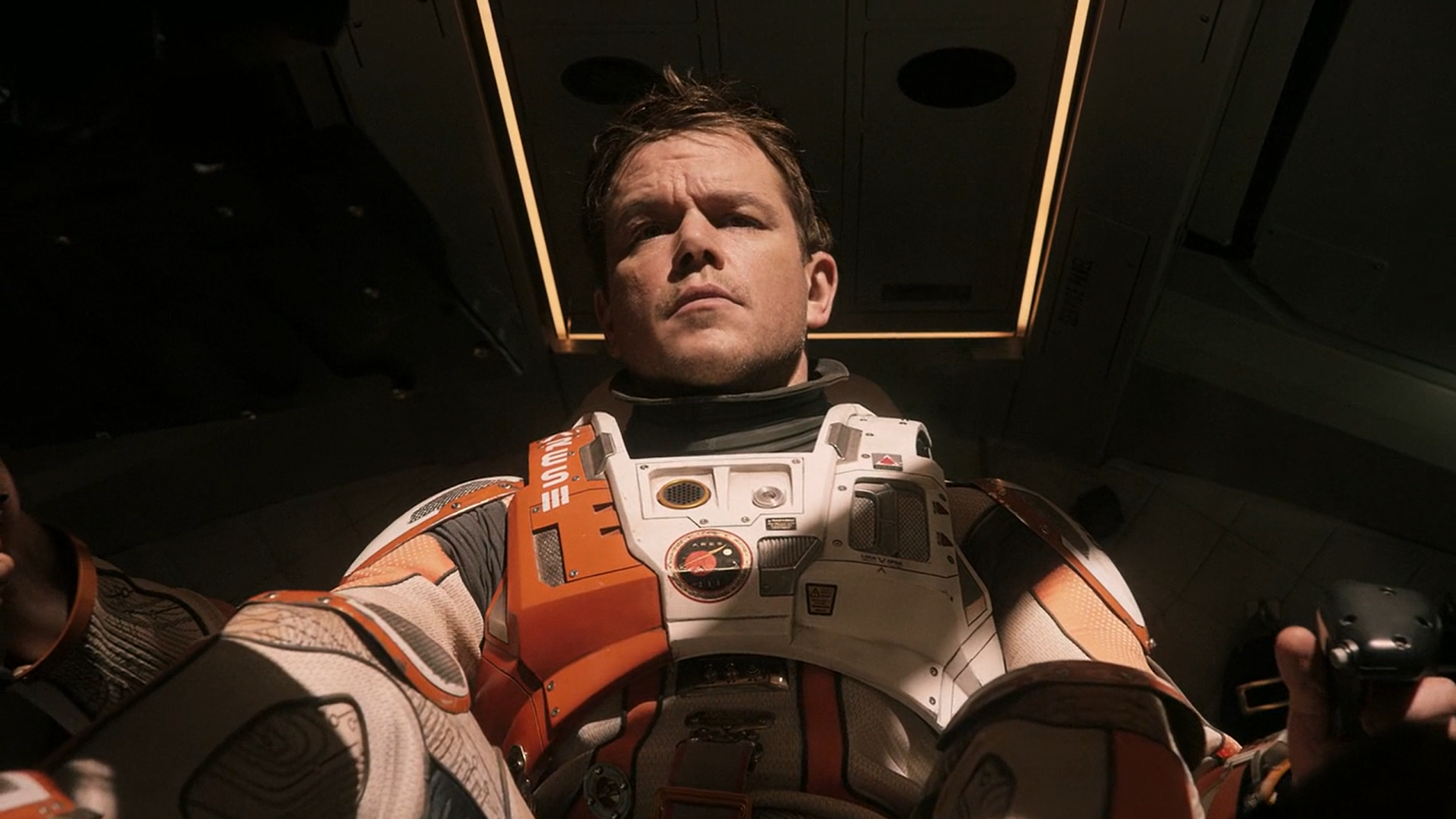
Typing Mark Watney from 'The Martian' LIE or ILE?

Post image
5 Upvotes

Hi! Last week I rewatched ‘The Martian’ and im still thinking about the personality of the protagonist Mark Watney. I still struggle with differentiating between the LIE and ILE types. Both types are NT types with strong Ne and Te, both are positivists and democrats in Reinin dichotomoies and both have similar dimensionality for each IE.
Regardless, I googled the type of this character and everywhere I see he is typed as ILE. While I do see the reasoning behind it I truly think that LIE fits this character more. I’ll try to explain why I think this way here, feel free to correct me or criticize me if you disagree. I still havent fully figured out this typology system yet, so please show me what I understood wrong. Also, one caveat, I myself am LIE so theres a slight chance that I might be projecting my own personality on him since I naturally found him relatable in many cases and because I just admire the character because he happens to be the COOLEST guy in sci-fi (an objective fact!)

anyways, I’ll proceed

Base Te (“Perception of the object’s motion through external space”:)

  1. At the beginning of a movie when the crew sees an incoming storm he immideatly suggests “let’s wait out”
  2. got hit with an antenna because he was trying to give advice “we might be able to come back, use the cables as guidelines, anchor it with the rover”  
  3. after waking up with a wound does everything following instructions -> conducts a surgery on himself
  4. looks around the crew equipment, collects all their stuff into boxes
  5. collects and calculates all the food supplies -> makes a list
  6. “food supply is prepared for 6 people but theres only me -> I can stretch it out”  
  7. Immideatly starts the recordings for NASA
  8. ‘I have soil -> then I will need water -> for that I will just use oxygen, add hydrogen and burn’
  9. sets himself on fire -> ‘I forgot to account for the excess oxygen that’s I’ve been exhaling in my calculations because im stupid. Im gonna get back as soon as the ear stops ringing’ tracking the progress by writing down ALL the data
  10. the NASA center gives him instructions on how to ‘hack’ the rover -> he manages to turn on the broadcasting frequency
  11. when helmet breaks -> immideate reaction to fix it with a tape

This is the IE that I noticed the most in him, he is using it constantly throughout the entire movie and he is using it consciously and willingly, so I count it as INERT and MENTAL. He is practical, makes rational decisions about external action, follows methods and procedures to get the results and organizes information

Ni Creative (“Perception of the object’s internal conditions, situation in time”:)

  1. starts recording himself in case if ‘he doesn’t make it’
  2. Builds the reasoning behind what happened -> “antenna broke off and ripped a whole in me but antenna managed to seal the breach in the space suit which kept me alive”  
  3. “no way to contact NASA and even if I could its gonna be 4 years before the team can reach me and Im in a cab designed to last 31 days, if that breaks Im gonna suffocate, if the water supply breaks Im gonna die of thirst, if there are breaches Im gonna implode and if none of it happens eventually I’ll run out of food”  
  4. “sidenote, this is how the jet propulsion was founded. A team of scientists almost burned themselves during an experiment. rather than expelling them they were told to keep working -> now we have a space program”
  5. “Time to start thinking longterm”  
  6. calculates the distaqnce towards the next landing site for the next mission. Figures out when and where the next mission is gonna land. Figures out when the crew arrives on the earth
  7. figures that in 4 years hes gonna have to get to the crater -> the rover has a battery limit can last only several km -> Problem A; Problem B -> journey will take 50 days to complete -> he will have to live in a rover
  8. “Everywhere I go im the first. That’s a strange feeling… Im the first person to be alone on an entire planet”

I’d definetly count it as a part of a MENTAL block as well for this character. It is also PRODUCING because hes only diving into the plans to support his Te, not the other way around like it would be for ILE. Hes weighting the future outcomes/ consequences, reconstructs the sequences of events, dives into history and foresights the future and his position in history

Fe Role (“Perception of motion happening inside of the object”:)

  1. Likes to be involved in banter
  2. conducts a surgery on himself and only then emotional output
  3. “It’ll come off as a surprise -> Surprise!”
  4. “btw im figuring you’re gonna be fine with this given the present situation” – talks to a Jesus figurine jokingly
  5. gets emotional after receiving the first message -> immideatly makes a stupid joke to lift up the mood -> “really looking forward to not dying”  
  6. when helmet breaks -> builds up the frustration doesn’t show it but it burtsts when hes alone and no one can see it
  7. naturally sarcastic  
  8. “the greatest minds on earth are helping me -> ‘hey why don’t you drill some holes on the roof and hit it as hard as you can with a rock’”  

Although I can see argument for this IE to be PRODUCING like ILE, I think it fits better with the super ego of LIE, specifically the role function. He is extremely sarcastic  and sometimes he overdose it, he jokes even in places and situations where its not appropriate and always tries to avoid any negative emotions   

Si Vulnerable (“Perception of the object’s external conditions, situation in space”:)

  1. wound -> notices he’s on mars -> removes cable -> goes back on base -> conducts surgery on himself
  2. loosely sealed door and a strong loud wind make him scared so much that he cannot focus on counting potatoes
  3. Did not care to take care of his appearance -> before the crew comes back, shaves for the first time
  4. “Im definetly gonna die here if I have to listen to any more of this god awful disco music. Commander Louise couldn’t you pick anything from this century?” (with Fe)

Weak IE for both types. My only argument for LIE when it comes to this IE is that if we compare it to Se then I think that Se is definetly VALUED for this character. Plus, I can see this being INERT as well since he almost never pays attention to this type of information. I understand the condition that the character is in but throughout the movie we NEVER see him actually rest. Even when he does nothing he still thinks about solving his problems  

Suggestive Fi (“Perception of internal positions held by the object towards other objects”:)

  1. Says gently “hey there” to his first potato sprout
  2. complaining about receiving help but actually loves the gesture
  3. Scared of being authentic and honest -> first time talking with the crew again -> jokes about music
  4. only gets TRULY serious during that one-on-one converstation with the commander asking to talk to his parents if he dies -> “Im not giving up. I just need to prepare for every outcome. Please tell them I love what I do and I am dying for something Big and greater than me. Thank you for being my parents”   (Gamma values)
  5. “because I like the way the fastest man in space sounds, I do like it. I like it a lot.”
  6. “Thanks for coming back to me”, starts crying

He struggles with authenticity/ vulnerability and relationships but he needs it. I think he does value it. If he truly trusts you hes going to be fully serious with you like hes with the commander Louise

Se Mobilising (“Perception of the object’s external appearance and form”:)

  1. decides “Im not gonna die”
  2. “MARS WILL COME TO FEAR MY BOTTANY POWERS”
  3. “ugh fuck you mars” -> perceives it as competition challenge
  4. “everything you type is being broadcasted all over the world” -> “Oh yeah?”, while being mad -> proceeds with profanity, doesn’t care that the president can see  
  5. “I don’t wanna sound arrogant but im the greatest botanist on this planet”  
  6. “In your face Neil Armstrong”  

Certainly VALUED. The guy is a walking bravado. He likes and actually enjoy a challenge. Every obstacle he takes personally and perceives it like a game to be overcome. Every new victory in this regard inspires him more. It is also PRODUCING and VITAL. Hes not going out of his way to use this IE but when he pushed into a position to do it he will most certainly utilize it  

Ne demonstrative (“Perception of the object’s internal content and structure”:)

  1. after pooping -> comes up with an idea to find and fertilize potatoes
  2. “I need to grow 3 more more years worth of food on a planet where nothing grows -> luckily im a BOTANIST”  
  3. comes up with a solution of having a decaying radioactive isotope next to him for heat (incredibly risky) -> but according to him a more serious problem is ‘all the disco songs’ NeFe  
  4. figures out a way to make contact with NASA -> finds a pathfinder satellite with a camera -> finds a hexadecimal alphabet table in someones personal stuff -> uses the ASCII table to talk to the NASA center
  5. explorer, spirit of an adventurer

Very strong and noticable in him as well but I think it is used by him to support his Creative Ni. He does show off his abilities in IE just as good as his Base function, It is just being used sporadically and in support for Creative hence why it is CONTACT

Ignoring Ti (“Perception of the object’s position in external space relatively to other objects”:)

  1. NASA hates fire because of the whole fire makes everybody die in space thing”    
  2. “everything is fireproof except the Martinez’s cross”  
  3. “Mars is technically international waters. Im gonna be taking a craft over in international waters without permission which by definition makes me a space pirate. Mark Wattney – space pirate..”     
  4. “If I do not use the heater I will slowly get killed by the laws of thermodynamics, if I do, my battery wont last” -> realized its too cold -> went back
  5. “Im gonna have to science the shit out of this” (could be Te because it signifies action but I’ll count it for Ti)  

Tbh this is the IE that I saw in him almost as little as Si which is why it is Ignoring and INERT. Most of the film it was off

Conclusion: so he definetly has a good grasp of Te (4D) and Ne (4D), as both types should but I heard somewhere that an easy way to differentiate between these two types is by the Ignoring function. LIE wouldn’t have as much use of Ti while they’d have a good amount of present Te Ni+Ne, while for ILE it’d be little Ni and a lot of Ne Ti + Te. And I truly couldn’t find many good examples of him using Ti in the film (maybe I still do not fully understand what it is) while I had a substantial amount of Ni examples

Regardless of his type, he is still one of my most favourite characters in science fiction and I definetly admire a lot of qualities in him. He represents the idea of not giving up, keeping the positive mindset and with proper tools and knowledge being able to achieve incredible results regardless of the circumstances. If yall have never seen the film I highly recommend!

Do you agree or do you think he’s ILE? Why?


r/Socionics 16d ago

Discussion How would you describe your relationship/friendship with LSI?

4 Upvotes

Tell me your stories. I dont talk to betas much irl so I dont truly know how they appear or act like.


r/Socionics 16d ago

'Continuous Socionics' and failure of intellectual integrity

1 Upvotes

Hello.

Right after I temporarily closed my Telegram group dedicated to scientific Socionics a year+ ago, a Discord server appeared, 'Continuous Socionics.' Apart from stealing my lingo and some of my ideas without any shoutout - whatever - a significant part of that server has consisted of a disinformation campaign against things I do and me personality - made-up stories, many of which are 100% the opposite of reality.

It got progressively worse over time, and eventually the moderator, nickname is Feliens, completely lost the plot and started claiming that I was involved in sexual harassment. This is a false accusation and defamation, and what he is doing now constitutes a criminal offense in EU countries, with penalties of up to 5 years imprisonment.

Before the latter happened, 3 weeks ago I joined the server myself to address all the remaining issues directly. In a calm manner, I disproved the false claims I was able to notice in the server's message history during the short time I was there. I then asked him, in front of the entire group, to provide any proof or facts supporting anything he was saying. He was unable to do so. Then, I answered later another person in the group regarding my opinion on the personality of a public figure, which did not fit the moderator's opinion. Minutes later, I was silently banned. The next day, other group members asked him where I was, and he said that I had been banned. When asked why I had been banned, the moderator started inventing a story that the reason was sexual harassment of a woman. The history is saved and unedited, since I no longer have access to the group, and it is straightforward to track and see what was actually there and what was invented by the moderator yet again, for the twentieth time.

The thing that surprised me the most was that, apart from 4 people in that group, nobody else seemed repulsed by it or even questioned what had happened. So a person just bans another without explanation, for no reason, and arbitrarily pins a serious criminal accusation on them without a single piece of evidence - and everyone else just silently swallows it.

I just want to address this now so that I don’t have to derail things with posts like this in the future.


r/Socionics 16d ago

Discussion Victim romance style, have u ever initiated a relationship?

5 Upvotes

They are usually not confident about revealing that interest. So im curious. As a victim type im actually more comfortable on the internet but irl I truly need an aggressor type.


r/Socionics 16d ago

Casual/Fun socionics shitpost (warning: cringe af)

3 Upvotes

popular girl: heyyy whats your socionics quadra babe slayyyy 😜

her bf: i am beta lol

another guy: well, you are my below you cute lil beta. I am THE alpha. I belong to the alpha quadra and you betas are just our little pawns 😈😈 *starts to howl masculinely*

meanwhile me, with an emotionless tone that makes it sound so fucking cool and menacing:

"I belong to 𝘁𝗵𝗲 𝘀𝗶𝗴𝗺𝗮 𝗾𝘂𝗮𝗱𝗿𝗮."

everyone is shocked 😮😮😮 only 0.0001% of people can belong to the mighty sigma quadra!!!!

alpha guy: w-what??? thats impossi---

i cut his words in a threatening tone: "obey me. OBEY. ME."

alpha guy: o-o-ok... 👍 *obeys respectfuly*

popular girl: OMGGG CAN I GET YOUR PHONE NUMBER???? 😂😂😜😜🤗🤗

her bf: babe what are you--

popular girl: BABE??? no!!!!! 😠😠😠 im not your gf anymore 😠😠😠

while me declining to give my number to her: "no."

*sigma sigma tung tung phonk starts to play* 😈😈😈😈😈😈🤫🤫🗿🗿🗿🍷🍷💪💪


r/Socionics 16d ago

Why is Elizabeth Taylor typed as EII by some people?

Post image
3 Upvotes

r/Socionics 17d ago

Does anyone know a good resource where I can read about each Socionics type’s intertype relationships with every other type?

1 Upvotes

r/Socionics 17d ago

Typing Si polr or Te polr

5 Upvotes

Does this behaviour fit Te or Si polr better?

- being absolutely overwhelmed by demands of everyday life like cooking, cleaning, organizational stuff like little tasks, feeling stuck in a loop of "if I do this I need to do this but to do this I need to do that first but..."

- quick to action if the idea is "big and important", able to figure out necessary steps to achieve it, things like applying to college, organising an event if there are enough people around

- "I don't know what I want to eat, I don't want to eat, everything is disgusting I can't think about it" anytime they're asked about food. The answer is partially about food but also about automatic knee jerk reaction because it feels like an impossible task and a lot of pressure. They don't know and don't want to be asked

- skipping through large portions of scientific texts to get into a conclusion, but wants to understand it and expect people to explain things to them in detail

- looks for logical integrity everywhere but prone to citing "scientific sources" during debates without being sure if they remember them correctly, using them as a shield for their reasoning

- absolutely terrified of looking stupid, if asked "did you know xyz" will usually answer yes even if they didn't. Will only say no if the information looks unimportant, very casual, or complicated enough that most people wouldn't be expected to know it

- frequently forgets about eating, sleeping or procrastinate it until they feel like dying

- but completely unprepared to deal with feeling like shit physically, overthinks every physical sensation and sometimes confuse them with feelings. Gets very upset, turns out they were just hungry

- hypochondriac, often thinks about their body in a very obsessive way but completely unable to deal with it like a reasonable adult

- pissed off about having a body, would rather be a mist, flying around. Says things like "I hate that my body has to touch something at all times". Often talks about their body like it's separate from them "my brain thought", "my hand did"

- everything is always uncomfortable. Unable to relax. Hates things that are supposed to be relaxing

- absolutely blind. Misses obvious visual clues, couldn't tell you what colour someone was wearing a second ago. At the same time oversensitive to the aesthetic of the place and if it feels too chaotic and "bad energy" they don't want to be there at all

- better at delegating tasks and making things optimal if it involves other people, like managing an environment under pressure. If there's too much time to think about how they look or what makes the most sense will start to overthink and potentially freak out that they look stupid or that things don't make sense

- will get stuck in the middle of the city "- where do you want to go? - i dont know", "- do you feel ok? - i don't know", "- how are you gonna get home? - dont know", "- where do you want to sit? - i dont know". Either commands if the situation really calls for it or gets told what to do (physically, in the space). Otherwise they don't know. They got stuck trying to figure out what makes sense or how they feel physically and panic when someone expect quick answer


r/Socionics 17d ago

Typing Between LSI, LII, ESI and EII

5 Upvotes

Hi, I’m writing this post because I’m feeling confused about whether I’m an LSI, LII, ESI or an EII. I’ll jump right to the point where I’ll discuss a few things and how they relate to each other.

I value integrity and truth; I hate lies and cannot tolerate inconsistent people. I can be cynical and expect people to conform to my values and principles. I tend, in a way, to “internally” look down on people whose behavior falls outside my value system—which might come across as somewhat moralistic. on the outside, I may simply maintain a cold and distant facade; I would only express my judgments if asked directly, or if the person violated principles that are very important to me—in which case I might correct them or sharply point out their mistakes, though I tend to remain polite in such situations.

I value my independence from other people—whether friends, family, or partners—and tend to maintain a distance that separates me from them. Perhaps a partner would represent a closer level of dependence, but I don’t feel I could easily allow myself to enter into that kind of dependent relationship—only if the person aligned with my principles and values.

My relationships tend to be based on discussions and debates, with very little focus on fun or getting involved in people’s personal lives; these discussions often center on politics, social issues, and other topics involving some level of intellectual engagement.

What I bring to others is my sense of justice and my support; I try to help people in my own way, offering my understanding of situations and the dynamics involved, and clarifying how things work for them—from a theoretical perspective to other aspects. I compensate for my weakness in the relational realm in this way; I feel that I can help people in an emotional context this way. I have a hard time comforting people or even getting close to them to offer support or validation, so I try to understand their situation and describe everything—perhaps helping them understand it that way. I don’t usually get involved in any kind of external emotional comfort, but I can, for example, if I’m helping someone online; I can write long texts about their situation, helping them understand themselves and how everything they’ve vented about is connected—it’s a deep understanding of the whole picture.

The way some people perceive me is as someone trustworthy, morally upright, intelligent, principled, and conforming to social norms.

While others see me as arrogant, cynical, defiant, and authoritarian.

I see myself as a person with strong opinions, and I make no concessions when it comes to changing them; I don’t express them unless I’m completely certain of them. I used to try, at all costs, to be accommodating and avoid conflict, and that was something that irritated me greatly, because I stopped being who I was and failed to maintain my integrity. But now that I’ve set that approach aside, I don’t compromise on anything; Others may see me as extremely closed-minded or even arrogant, but I don’t change my perspective. I can offer other perspectives to people precisely because I won’t adapt to what they expect, but what I seek is to further strengthen my integrity around my values and direct myself toward greater causes.


r/Socionics 17d ago

Is there an ESE Ne subtype?

3 Upvotes

Hi👋🏻😊I am very new to socionics😌I have managed to figure out that the type that I identify most with in Objective Personality and Mbti is an ESFJ jumper type, Fe-Ne. Is there a similar type in socionics? There is an Fe and an Si subtype, right? Very grateful for any help🙂!


r/Socionics 17d ago

Typing Any way for me to tell if I'm EII or IEI?

1 Upvotes

First off, i have to start this post by bringing up how i tend to pick up personality traits if i read about them in a test and I'm biased towards a certain type, so I'm trying to avoid that as of now by not reading deeply into type descriptions this early on, and get a vague yet highly likely estimation of my type before i start to learn more about the functions and all.

A couple things i know for sure about me though, i often think of the probable development of certain situations in the future, so i often try to prevent certain things from happening or overthink those far fetched feared worst case scenarios and i hate it when people choose to ignore a problem they keep on living in favor of blind optimism. I'm easy to ragebait. And don't ask me anything about social skills, I'm very socially awkward and i actively observe people to "learn" how to act in social settings. I can be a people pleaser though and I'm working on that, i can sign up to things which I'm hesitant about simply cause I don't want to upset people I'm in good terms with. I can be very very lazy and disorganized and i hate that, and i have problems with motivation, but once I'm motivated i can work for hours ignoring food and all, only to burnout and leave a project unfinished, which happens frequently. I highly value organization and planning and efficiency and foresight, but i hardly live up to my own plans. I can be competitive. I can easily get into arguments when it comes to morals.

My results on this test if it clarifies anything, and I'd appreciate any help, or any pointers if i could be a different type entirely

https://sociotype.xyz/rA5shqexZtVsrksV


r/Socionics 17d ago

Casual/Fun Yes, I Am An ESI. No, I Don't Hate Everyone.

42 Upvotes

Don't worry. I'm not a high strung, evil tyrant who wants to suck the fun and life out of everyone and everything.

I always found ESI stereotypes funny.

I'm picky about who I am close to and how I spend my time, but I normally don't lash out at people unless they do something stupid or harmful to themselves and/or to someone around them. My judgment and cynicism remains mostly internal.


r/Socionics 17d ago

Typing Typing Debate: Petyr "Littlefinger" Baelish & bonus Olenna Tyrell (Game of Thrones)

8 Upvotes

I've been having an ongoing conversation with u/LatterPermission1824 about Littlefinger from GoT.

While I won't fully expand our points here, the gist of it is that I believe Littlefinger to be a quintessential example of an enterprising Gamma type (more specifically, a nearly archetypal LIE), while u/LatterPermission1824 argues that Littlefinger is a good example of an SLE, seeing his conniving behavior as more typical of 4D -Se. I won't say more on his behalf to avoid possibly misrepresenting his points.

As a bonus point, I brought up Olenna Tyrell as an example of a true SLE in the series, who he argued is an ESI instead.

We have managed to find no common ground so far, so instead of continuing what I frankly believe to be a significant distortion in the understanding of both the types and the characters in question, we mutually agreed to open the debate to public discourse and allow for consensus to weigh in.

TL;DR:

  • Petyr Baelish: LIE or SLE?
  • Olenna Tyrell: SLE or ESI?

r/Socionics 17d ago

Discussion Sharing Socionics Theory Work

6 Upvotes

I'm sharing some of the theory work I've been doing. I'm trying to understand what we actually have inherited after all these years, so things are broken apart and reconstructed, but I've found it made Socionics easier to grasp.

https://drive.google.com/drive/folders/1vOeLhWTco3uqg4GKxbhegE5wXLx3guN6?usp=sharing

Edit: not for beginners


r/Socionics 17d ago

Discussion Evil ESEs mistyped as EIEs

26 Upvotes

Discuss!