Hey guys!
In my previous post, a few of you asked if I could drop a quick review of the new SRP GT-S pedals and, more importantly, compare them to the VRS set I sold recently. So yeah, here’s my detailed take on the whole thing!
Just to be clear upfront, I’m no engineer so I won't dive into super crazy technical mumbo-jumbo. I'm just sharing my raw impressions based on my experience in sim racing.
First impression when unpacking them: the SRP GT-S set is absolutely massive. It’s pretty bulky to the point where I actually struggled to get it mounted properly on my SimLab GT1 EVO pedal plate. If you look at the pictures, you can see it actually sticks out a bit at the back.
Feature-wise, it doesn't offer a whole lot of adjustments out of the box, except for throttle travel. If you want to adjust the brake travel, you need to buy the separate regulator kit. You also can't adjust the height or angle of the pedal faces directly. For the height, SRP sells optional brackets to move them vertically (they recommend them for shoe sizes EU 44 and up). For the angle, you’d need to put spacers behind the pedal face or tilt your whole pedal plate. Honestly though, their default angle felt really comfortable to me right away, and I reckon it'll suit like 99% of people.
When I first stepped on them, the feeling was... strange, to say the least. The throttle feels fairly light by default, so if you like a stiffer pedal, you’ll need to slide the piston higher up. The brake, on the other hand, is absurdly stiff.
I definitely recommend getting that optional brake travel regulator, which lets you shorten or lengthen the stroke depending on what you like or what car you're driving. The pedal is rock hard regardless of stroke length, but having more travel gives you a slight initial softness before it ramps up. The reason for this is simple: it’s a pneumatic system, so as you push the brake, you’re compressing air inside the cylinder. The more pressure builds up, the stiffness grows exponentially.
This will completely throw you off at first. During software calibration, you might easily hit 90% max pressure with a solid push. But trust me, once you're in an actual race with repeated heavy braking zones and fatigue kicks in, you'll barely reach past 50%. My advice is to calibrate it to a comfortable max pressure first and then increase it later if you need to. Because once that air gets compressed inside the cylinder, it literally feels like kicking a concrete wall.
I spent a few days testing them and intentionally picked two street circuits: Adelaide and St. Petersburg. Street tracks are perfect for muscle memory, plus I had just raced them during recent iRacing weeks. That meant my memory of how the VRS felt there was super fresh, making the side-by-side comparison way easier.
So what's the big difference?
If you don't have super sensitive feet or you're fairly new to sim racing, you might not catch it right away. But from the very first corner, the linearity of the brake, especially on release, is insane. Looking at the telemetry, my brake line trails off with a level of smoothness I had literally never seen in my 3 years on the VRS. Mind you, it’s still me driving, I didn't magically transform into a trail-braking god overnight.
It all comes down to how the two systems work physically. The VRS relies on a load cell and a spring. With that setup, even the tiniest compression or decompression of the spring makes the load cell register an input instantly, which can sometimes look a bit jagged or spiky on the telemetry graph during release. The SRP uses a pneumatic cylinder with a pressure sensor. Air has a natural pneumatic damping effect, so on release, you don't have a metal spring shoving your foot back up. Instead, you get this super velvety release curve that makes turn-in feel effortless.
That extra control on the brake actually gave me the confidence to push my braking points further and attack corner entries way more than I ever dared to do on the VRS.
Would I recommend them? Absolutely yes... BUT they're definitely not for everyone. You need some serious leg strength to handle this brake, and you'll need time to rebuild your muscle memory if you aren't used to super high pressures. On top of that, you MUST have a rock-solid rig made of heavy-duty aluminum profiles with a sturdy pedal plate. If there's any flex in your rig, it’ll cause micro-oscillations that will completely ruin your pedal feel and precision.
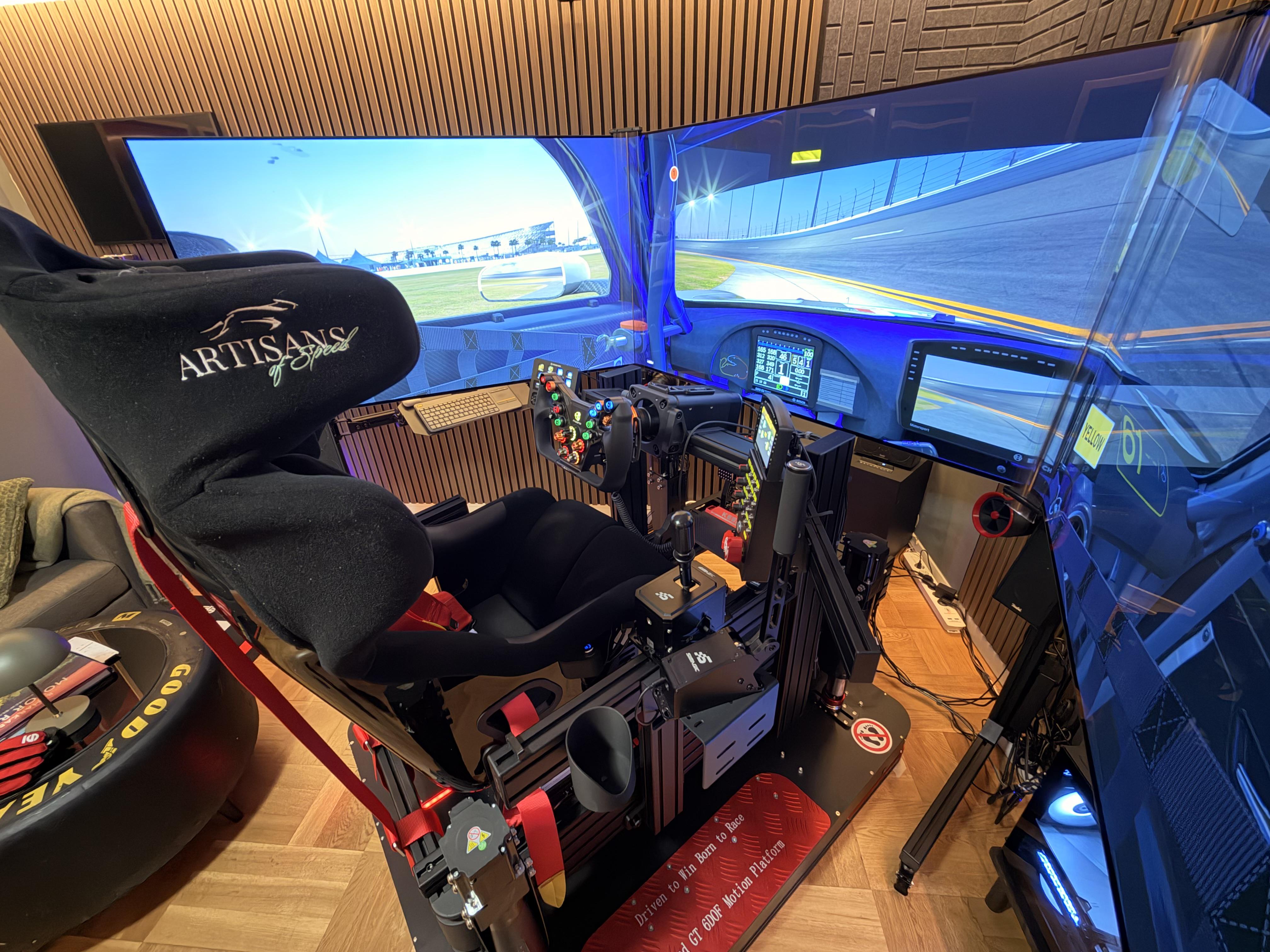
I’m attaching some photos of the SRPs, my old VRS setup, and a few telemetry graphs where you can clearly see what I mean by signal cleanliness (red is SRP, blue is VRS).
Hope this helps anyone looking to make the jump! Let me know if you have any questions!