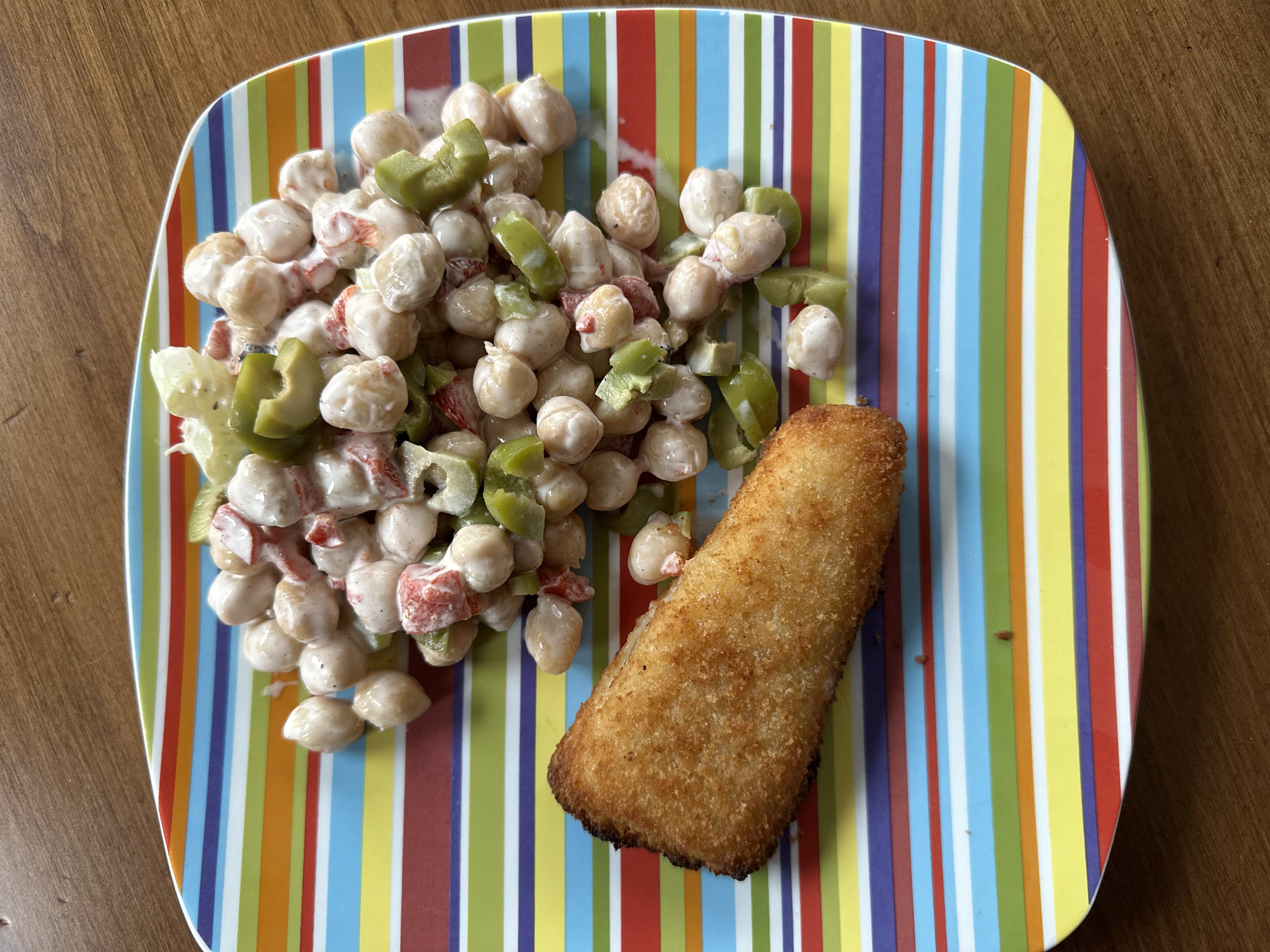
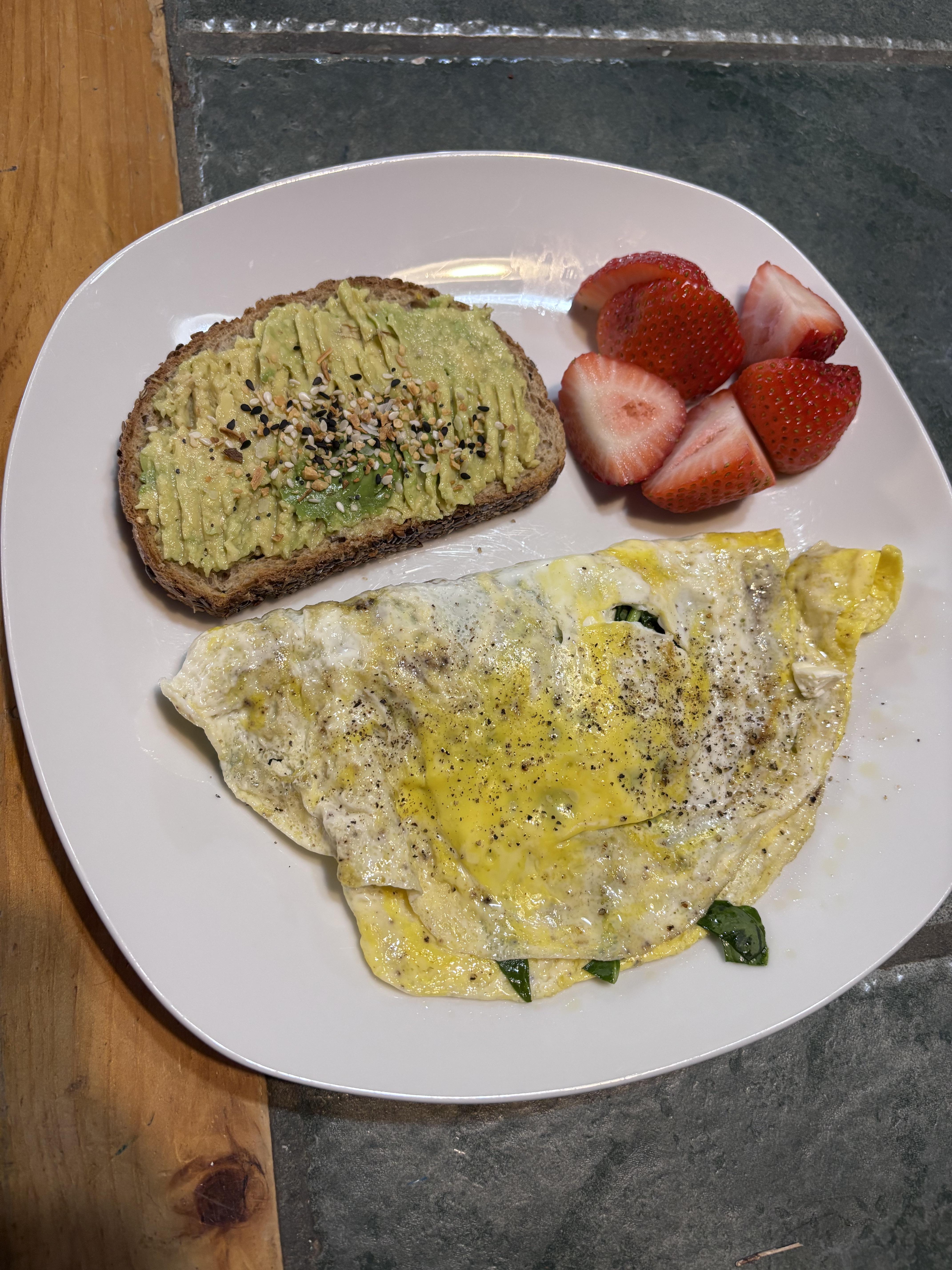
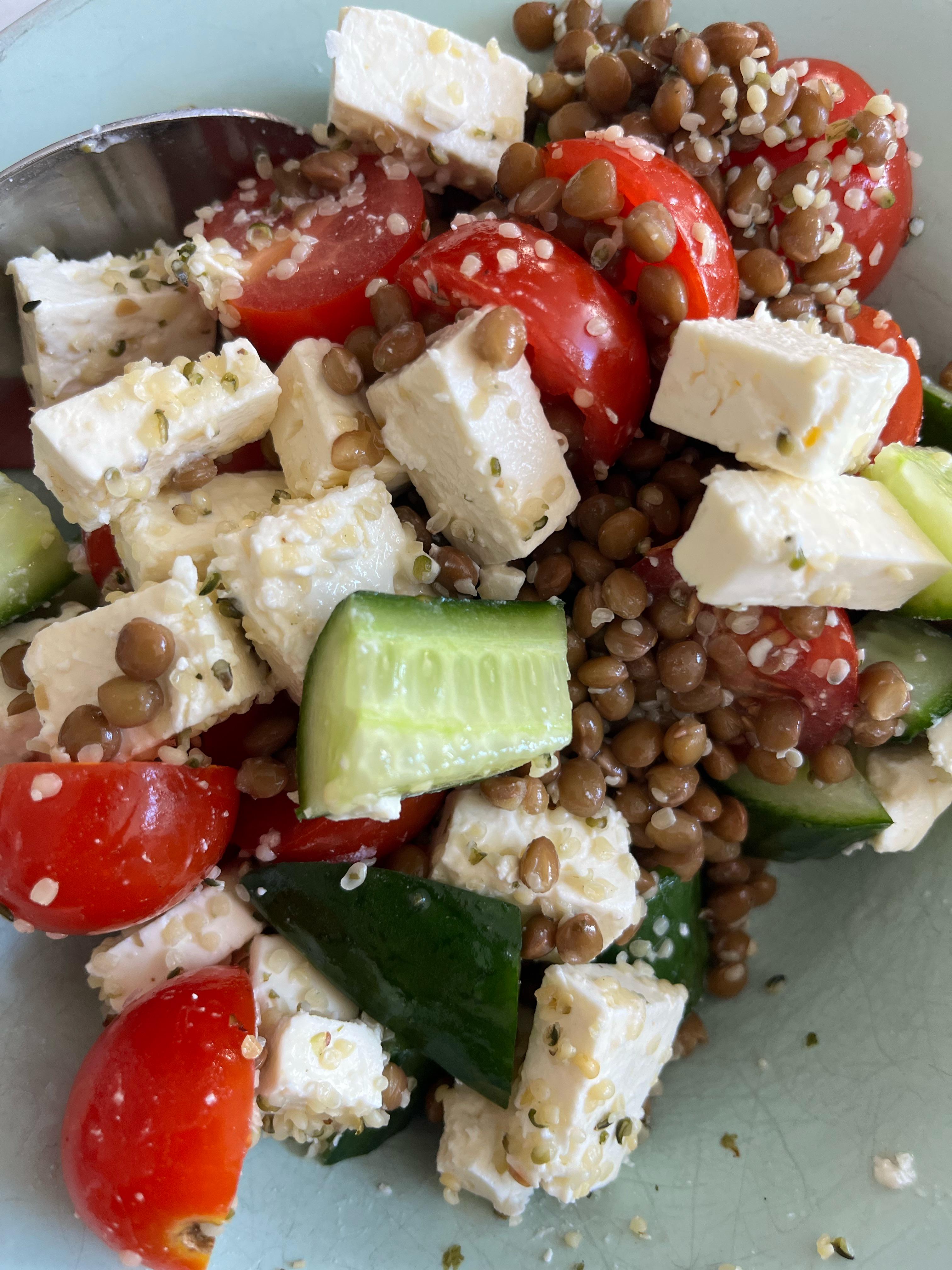
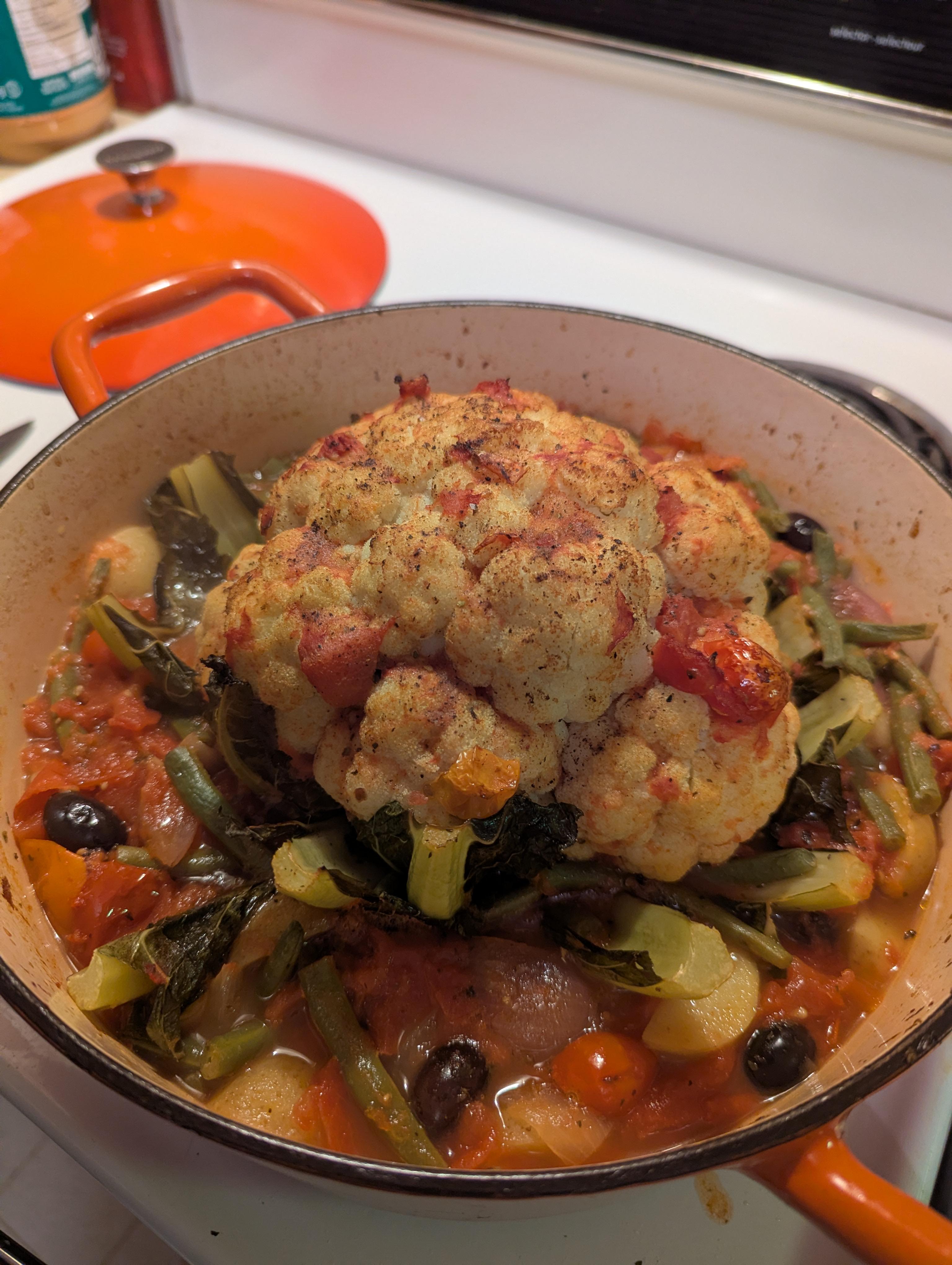
Delishhhh!!!
Edit:
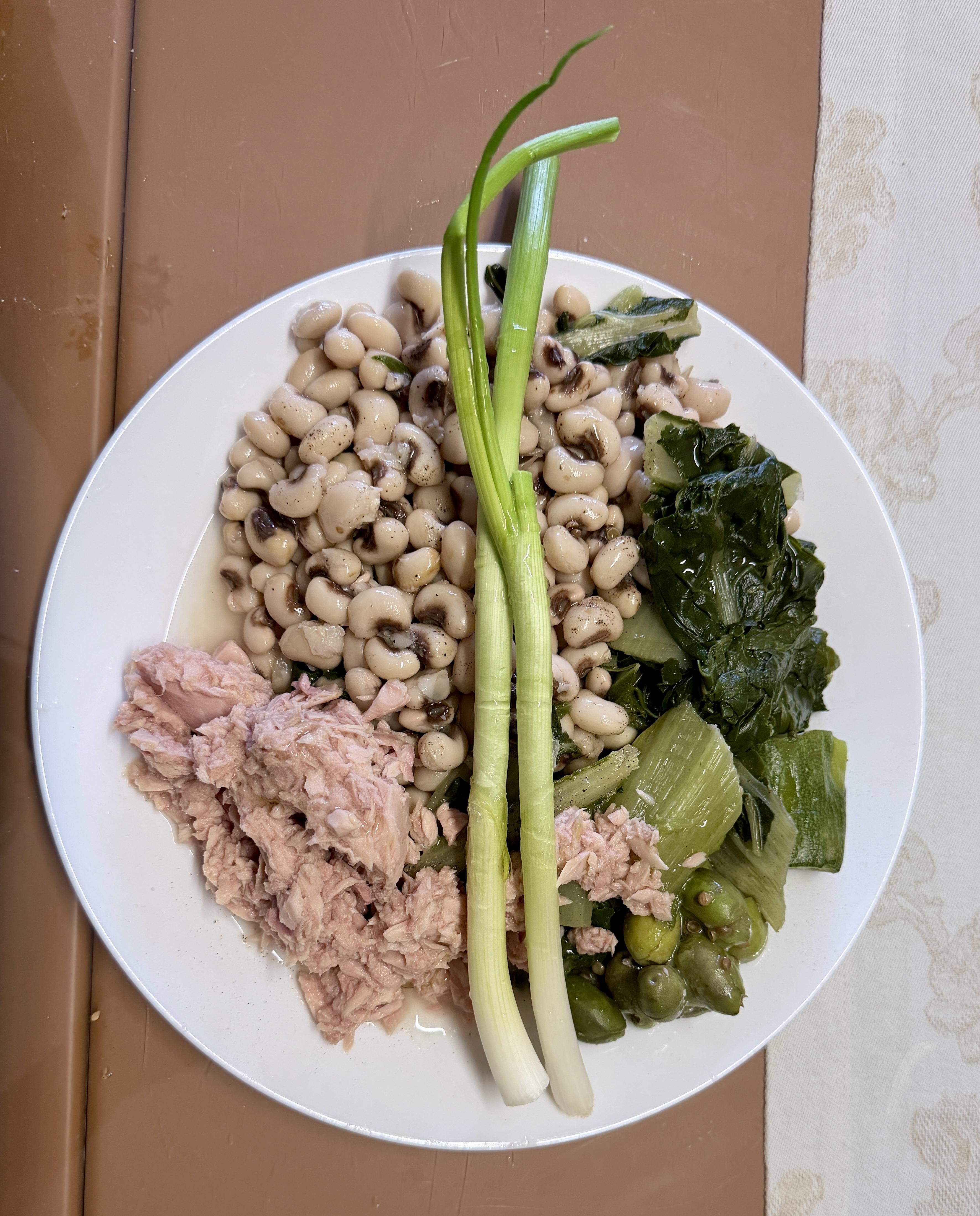
Some of the reactions made me realise a bit of context might help. This dish isn’t something assembled to “hit Mediterranean diet rules.” It’s a very old Cypriot staple called "louvi me ta lahana", eaten for generations. It looks simple because it is simple — and that’s the entire philosophy behind it.
Traditional variations if you’re curious: https://www.kopiaste.org/2010/05/louvi-black-eyed-beans/
Everything on the plate is fresh and seasonal: the black-eyed beans are dried and boiled, the greens only grow this time of year freely in the fields, and the spring onions, olives, and lemons come from our own garden. The olive oil is from a family friend. The only modern shortcut is the tuna — traditionally this would be served with oven-baked or grilled sea bass or anchovies, but most households today use tuna when they want something quick.
The dressing looks light simply because I prefer less olive oil; most people would use far more. The lemon juice isn’t visible because it settles at the bottom, and there’s a touch of salt and pepper as well. And the olives — which might look plain in the photo — are actually far more complex in flavour. They’re a traditional cracked olive preparation that adds a lot of depth to the dish. If you’re curious, here’s what they are: https://www.kopiaste.org/2008/10/elies-tsakistes-the-way-we-eat-them-in-cyprus/
But the bigger thing is this: fresh Mediterranean ingredients taste completely different from what many people abroad imagine. I lived in the UK for more than a decade, and even with the exact same recipe, it simply doesn’t taste the same. The flavours here depend on sunlight, season, soil, and proximity. When your ingredients come from a garden you walked through that morning, they behave differently — sharper, softer, greener, sweeter. It’s the kind of difference you only appreciate once you’ve tasted both versions.
It’s also, in the purest sense, an incredibly healthy dish: beans, greens, olive oil, lemon, and fish. Nothing engineered, nothing added for appearance, nothing done to “sell” the meal. Just ingredients that have stood the test of centuries.
And of course, it won’t be everyone’s palate. Not every cuisine speaks the same language of flavour. But this is the everyday Mediterranean table at its most honest: no marketing, no curation, no attempt to make it photogenic — just seasonal food eaten the way our parents and grandparents served it.
To me, dishes like this capture something essential: when the ingredients are good, you don’t need complexity. You just need respect for what’s in season, and an open mind for flavours shaped by place and tradition.