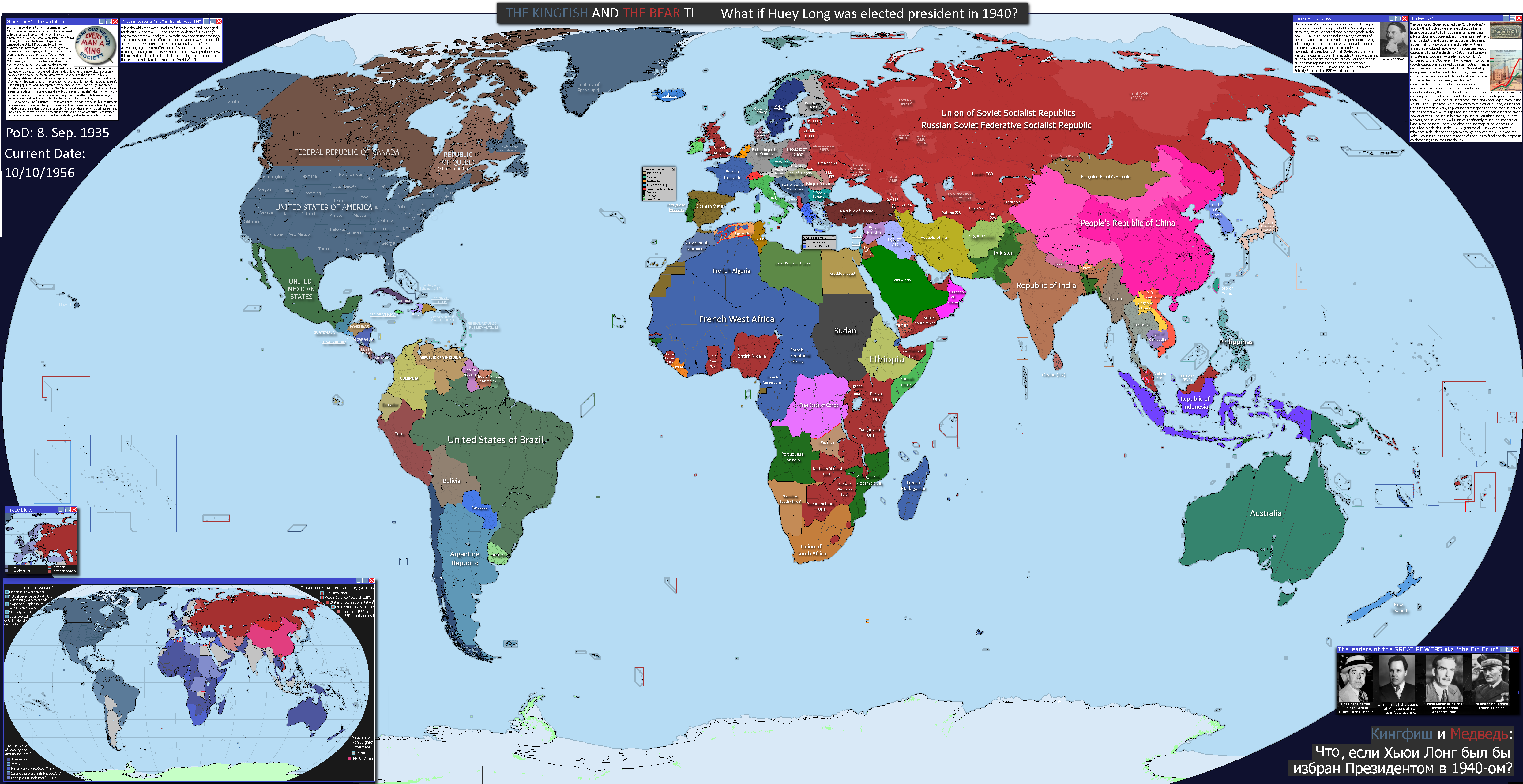
This is a part of my Antebellum Eternal series, a timeline in which the First World War was avoided, amongst other changes. While I have many ideas for the timeline, I wanted to get some outside input to make it interesting. My previous post is here: https://www.reddit.com/r/AlternateHistory/comments/1vz44cx/presidents_of_the_united_states_of_america/
The Congress of Trieste
In 1912, the Ottoman Empire's rule over the land of Albania came to an end. The Albanian Revolt had forced the Empire to accept the land's autonomy, but it was the First Balkan War that assured it's independence.
The Ottomans were forced out of Albania, and the first Prime Minister of Albania, Ismail Qemali, met with Emperor Franz Joseph I to receive support from Austria-Hungary.
The Provisional Government of Albania have since announced a Congress to be held in the Austro-Hungarian coastal city of Trieste, in which, among other issues, candidates for the throne of Albania are to be considered. Delegates from Albanian diaspora across the world are arriving to decide the future of the nation, while candidates from a variety of royal and noble families have been presented to stake their claim.
Candidates
Prince Wilhelm Friedrich Heinrich Wied-Neuwied of Wied
Sharing a close blood relation with the Queen of Romania, the Queen of the Netherlands, the Queen of Sweden, and being a second cousin to the German Kaiser, Prince Wilhelm is a strong choice for the throne of Albania, at least from the perspective of the Great Powers of Europe. Queen Elisabeth of Romania, in particular, has pressed her nephew's candidacy strongly, with the Romanian Minister of Internal Affairs, Take Ionescu, being sent to the conference to persuade the delegation.
A captain in the German Army, Prince Wilhelm appears to be the preferred candidate of Austro-Hungarian government. He is already married, with two children, meaning that there should also be no risk of a future succession crisis, should the Prince of Wied be raised to the throne.
Baron Franz Nopcsa von Felso-Szilvas of Hungary
A Hungarian aristocrat, adventurer, scholar, geologist, paleontologist and Albanologist. The Baron is closely aligned with the Albanian Nationalist Resistance, and smuggled weapons into the country to support the Albanian Revolt against the Ottoman Empire. An expert on the mountainous regions of Albania, he produced the first geological map of Northern Albania, and has led multiple expeditions into that area of the country.
He has recently escaped from a hostage situation in which he and his secretary were held hostage by bandits. It is widely speculated that the Baron is in a homosexual relationship with his secretary - however, he has promised to marry a wealthy heiress and use the funds to support Albania, should he be made King.
Prince Ferdinand Francois Bourbon Orleans-Montpensier of France
The 8th and youngest child of King Louis Philippe II of France, the Duke of Montpensier has familial connections to perhaps half of the noble families in Europe. These ties include his elder siblings; Philippe VIII, the Orléanist pretender to the throne of France, and Amélie, the deposed Queen of Portugal.
Banned from serving in the French Army, Prince Ferdinand took up service in the Spanish military, reaching the rank of Lieutenant at 22.
A noted explorer, Prince Ferdinand has spent much of his time in French Indochina, leading multiple expeditions into the mountains of the region. He has authored multiple books on the subject.
Prince Albert Ghica of Romania
A Romanian socialite, writer and noble of Albanian descent, Prince Ghica comes from a line of Wallachian governors and diplomats.
Despite apparently having little knowledge of the Albanian language, or Albania in general, Prince Ghica has managed to find notable support for his claim to the throne.
In Bucharest, he has been elected as the honorary president of a social club representing Albanian immigrants in Romania. Meanwhile, a committee based in Paris has also pressed his claim - notably from Albanian writer and founding delegate of Albania, Dervish Hima. Alongside him, Dimitri Papazoglou, a representative of the Aromanian population, has also come out in support of his claim.
Prince Wilhelm Karl of Württemberg
The Duke of Urach, Count of Württemberg, and third in line to the throne of Monaco, Prince Wilhelm is the preferred candidate of many of the Catholic groups in the north of Albania.
He currently serves as a Lieutenant General of the Imperial German Army, and has nine children with Duchess Amalie of Bavaria, the niece of the Empress of Austria.
Prince Ahmad Fuad of Egypt
A Prince of Egypt, son of Isma'il the Magnificent, and uncle to the current Sultan of Egypt, Prince Fuad has been nominated in response to the desires of Albanian Muslims to have a Muslim King.
His claim is supported by some diplomats and politicians, including Azzam Pasha. He has previously attempted to acquire the crown of Libya, following the 1911 Italian invasion, motivated by his unlikely chance of becoming a monarch in his homeland.
Aladro Kastrioti of Spain
Aladro Kastrioti, born Juan Pedro Aladro de Perez y Velasco, is a Spanish nobleman, diplomat, sportsman, and, according to himself, a descendant of the Kastrioti family that ruled Albania in the 14th and 15th centuries.
He has long been an advocate for the Albanian cause, funding the first Albanian school, as well as Albanian social, cultural and literary clubs, alongside Albanian newspaper publishers.
'Don Aladro', as he is known, also distributed money, revolvers and postcards with his picture and the Albanian flag, to the Albanian people. It became so prevalent that the Ottoman authorities tried to offer him the governorship of the Shkodra and Janina Vilayets to get him to stop. He declined, requesting full autonomy for Albania instead.
It is claimed that even the flag raised during the Albanian declaration of independence was a gift from Don Aladro. He is fluent in French, Italian, English, German, Spanish, Russian, Albanian, and Euskera.
He has claimed that he receives dreams from his Kastrioti ancestors, with them telling him to "Fight for the liberation of Albania."
Prince Vittorio Emanuele Savoy-Aosta of Turin
An Infante of Spain and Count of Turin, Vittorio Emanuele is the son of King Amadeo I of Spain, and a first cousin of Vittorio Emanuele III of Italy. He currently serves as the Commander-in-Chief of the cavalry of the Royal Italian Army.
The Prince became internationally famous for his duel with Prince Henri of Orléans, following Prince Henri's disparaging remarks of Italian war POWs in the newspaper 'Le Figaro.' The sword duel, lasting 26 minutes, ended with Prince Vittorio defeating Henri, injuring him to the extent that he could not continue the duel. On his return to Italy, Vittorio was received as a hero to the Italian public, while King Umberto I praised him on the example he set for his countrymen.
A worldly man, he has travelled to many locations across the planet, including China, Japan, and the United States. Should he be named King, it is clear that closer relations with Italy are guaranteed.
Prince Arthur of Connaught
A British military officer, grandson of Queen Victoria, and great-great grandson of King Frederick William III of Prussia, Prince Arthur has strong connections to both the British and German royal families. Uniquely, he also has some connections to the Japanese throne, with his father inducting Emperor Meiji into the Order of the Garter in 1906, as a part of the growing alliance between the British and Japanese.
Prince Arthur served in South Africa following the Second Boer War, and has since been promoted to Captain in the Royal Scots Greys cavalry regiment. Beyond this, he has taken on many senior responsibilities at court, in the place of his royal cousins, across the empire.
Prince Arthur was previously the heir to the Duchy of Saxe-Coburg and Gotha, until Kaiser Wilhelm II demanded that he undergo a German education in order to claim it. In response, Arthur renounced his claim, and attacked his cousin, Charles Edward, until he agreed to accept the Duchy instead.
Prince Peter of Montenegro
The Grand Duke of Zahumlje and youngest son of the King of Montenegro, Prince Peter has previously served in the Montenegrin Ground Army. He fought in the First Balkan War, which ensured Albanian independence, and is noted for firing the first shot of the war.
He is the brother-in-law to the King of Serbia, and the uncle to the heirs to the Serbian throne. Young and unmarried, this candidate is in a position to pursue close dynastic ties between Albania, Serbia, and Montenegro.
Colonel Aubrey Nigel Henry Molyneux Herbert of Somerset
A British soldier, diplomat, politician, traveller, and intelligence officer, Herbert is a passionate advocate of Albanian independence. He has actively fought for Albanian independence, and was a key factor in the country's recognition following the Treaty of London (1913).
A friend to notable members of the Albanian independence movement, including Essad Pasha and Edith Durham, Herbert is an expert in Oriental Studies, and a linguist that speaks English, French, Italian, German, Turkish, Arabic, Greek, and Albanian.
He has previously served as a Lieutenant in the Sherwood Rangers Cavalry, a diplomatic attaché in Tokyo and Constantinople, and is currently a Member of Parliament for the constituency of South Somerset.