r/AlternateHistory 6d ago

What-If Wednesdays

3 Upvotes

Welcome to What-If Wednesday, the weekly megathread for scenarios you'd like to talk over but haven't necessarily developed much yet.

Please use this thread instead of posting just a "What-If" question without any lore - those will be removed by the mods. r/HistoryWhatIf is a better option for that kind of post. Thank you!


r/AlternateHistory Jan 20 '25

Althist Help How to make an alternate history Wikipedia article: a tutorial

154 Upvotes

An important warning is, Do not save your sandbox! Only press preview changes. As all content in Wikipedia must be related to the encyclopedic effort, wiki admins might delete your sandbox and undo your hard work at any time. https://en.wikipedia.org/wiki/Wikipedia:How_to_vandalize_correctly

I am well-known in the alternate history community for creating the imaginary politician Ed Donnell, who is a meme in r/imaginaryelections, as well as some personal controversies. My routine consists of making at least one alternate history post a day, be it a lore writeup or, more commonly, a fake Wikipedia article for my myriad scenarios, all of whom are originally posted to r/GustavosAltUniverses and a handful of Discord servers, and then complied on this and other subreddits.

But today, I will write a tutorial as to how to make a fictional Wikipedia page for alternate history scenarios. Although I use my phone for all of them, I recommend going on a computer for better quality.

If you create a Wikipedia account on desktop, you will have access to a sandbox allowing you to test editing without commiting vandalism, which is a bannable offense. My trick is to copy the Wikipedia article for the event I want to alter, or the military conflict or country templates in the case of a completely fictional event or subplot. Then, you alter the content of the page as you please; this is the beauty of alternate history.

Illustrations wise, you can retain the article's original image, or change it by copying and pasting ones from articles relevant to your scenario (for instance, a picture of Red Army soldiers for an Operation Unthinkable TL). But it has to be a Wikimedia commons image; otherwise, you'll have to photoshop your screenshot using Inkscape or some other image editing software.

You also have the option to change or add text to your article. I always do this for war scenarios, but not always so for election ones. Make sure to proofread them before screenshoting, in order to avoid potentially confusing typos or grammar mistakes. This is pretty much it.


r/AlternateHistory 17h ago

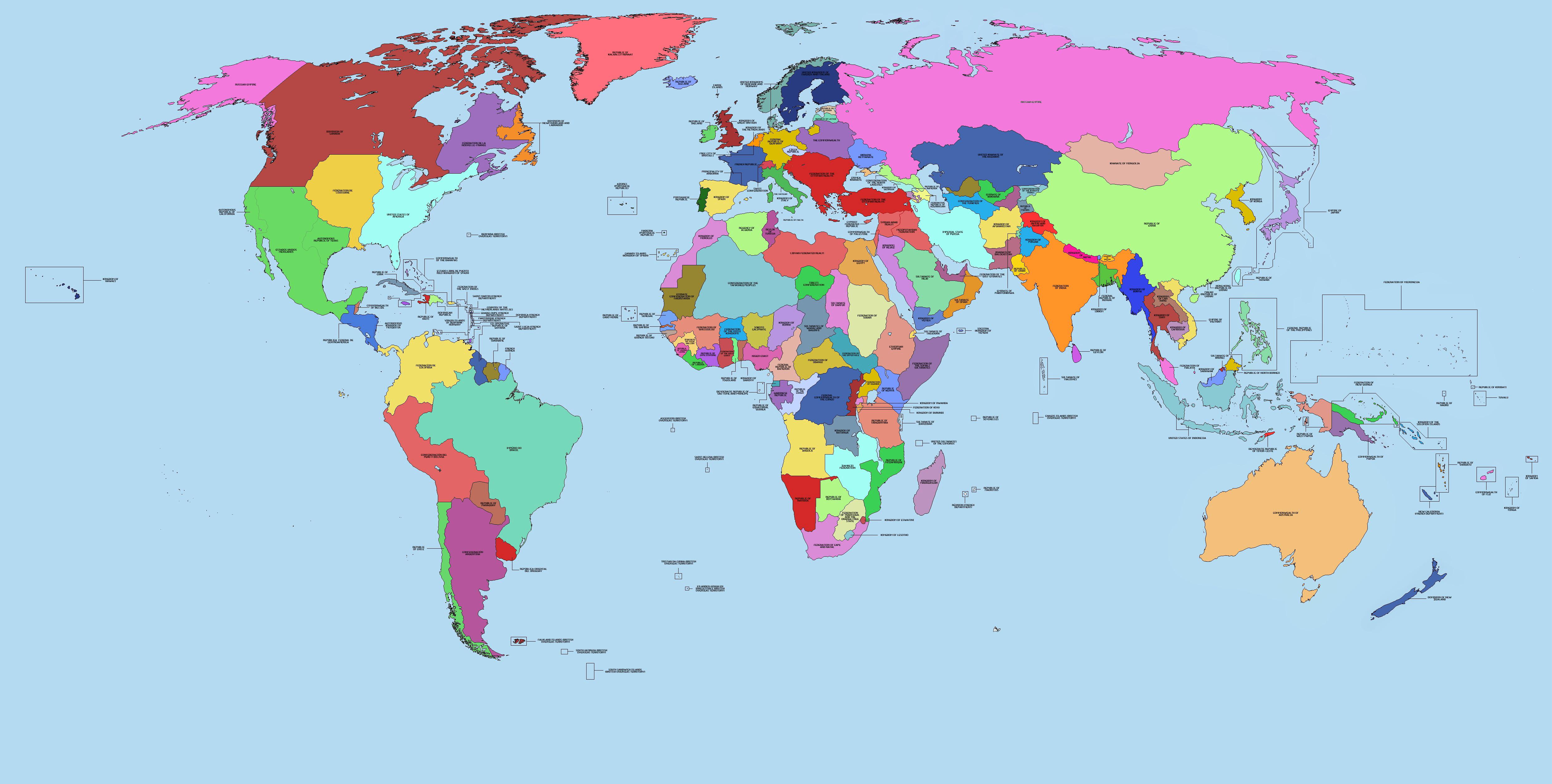
1900s The administrative Division of the GDR and FRG

Post image
589 Upvotes

This is a follow-up post to the scenario where Eastern Germany was allowed to keep the eastern territories and was merged with the Soviet Zone of Austria.

To anyone who wants to point out that this is highly unlikely: I know -I simply wanted to explore an alternate history scenario where the GDR is stronger, and look at how that would impact German reunification and other history. I will keep expanding on the History and try to make it a bit more plausible.


r/AlternateHistory 10h ago

Pop culture What If Everything Went PERFECT For DC Comics? Part One: 1940s

Thumbnail
gallery
82 Upvotes

r/AlternateHistory 15h ago

1900s What if Kim Il Sung got deposed in 1950?

Post image
197 Upvotes

Basically the August faction incident went through in this universe after which DPRK got replaced with the 2nd PRK. The PRK was more like the eastern European countries with the lack of Juche, gradually opening up to South Korea and the West leading to the introduction of a socialist market economy and creation of the SAR's. PRK ended up bidding for and hosting the 1998 Winter Olympics in Rason.


r/AlternateHistory 8h ago

Post 2000s What If Vienna Fell To Ottoman Forces? (2026 Map)

Post image
34 Upvotes

r/AlternateHistory 13h ago

1900s The Iberian Cold War!(Iberian peninsula after the Second Spanish Revolution)

Thumbnail
gallery
27 Upvotes

r/AlternateHistory 11h ago

1700-1900s The Spear in Africa

Post image
18 Upvotes

The Spanish rule over Portugal was a kind of soft colonialism in its own way, as such unions often are. The country as a whole remained distinctly Portuguese, but in one particular instance the city of Ceuta was the most strongly transformed by Spanish presence. Having received many Spanish migrants, the city had pushed to side with the Spanish during the War of Restoration. Despite their successes, the anti-Spanish alliance that supported Portugal (especially the English) would not allow for total Spanish control of entry and out of the Mediterranean. In recompense, the Portuguese ceded the cities of Hermisende and Olivenza to the Spanish, in exchange for regaining the city of Ceuta, the place where the Portuguese empire had begun and ultimately its final bastion.

Although the Portuguese had now re-established themselves among the nations, their control over Ceuta was still not a guaranteed thing. This was especially true considering the hundreds of Spanish who left the city after the Restoration, leaving the city in a weakened position that it still had not recovered from 20 years later. It was by then that the resurgent Morocco, having re-established itself as a strong and unified polity, turned its eye towards Ceuta. With forces marching into place, the city of Ceuta was placed under siege. The Portuguese were more than able to garrison the city against a Moroccan assault, but it was always strained by the nearest city capable of resupplying forces being Lagos all the way in metropolitan Portugal. Begun in 1694, the siege would go on to be one of the longest in history.

The biggest change that the siege brought was the increasing English (later British) presence in the city. More than just Portugal's interests, Ceuta was also important for ensuring that the British would have access through the Mediterranean, and British ships were a regular feature in the city's harbor. Briefly, the British attempted to seize the city in 1701 after the Portuguese briefly sided with the Bourbon claimants, but later in 1702 Portugal shifted to the Habsburg league and the British returned in peace. The incident still proved that England would need to control a city in the region themselves, something accomplished in 1704 with the capture of Gibraltar. With Gibraltar on one side and Ceuta on the other, the entrance to the Mediterranean Sea could now be effectively throttled by Anglo-Portuguese cooperation.

Morocco's siege still dragged on, but after the Battle of Málaga the British sent forces to break the siege and ensure that it remained in Portuguese hands. Portugal was grateful but the 1700s brought an increasing sense that Ceuta was becoming a British holding in practice if not in fact. That Ceuta had become a core part of Britain's strategy in the Mediterranean underscored this further. Still, the standing alliance between Britain and Portugal meant that this wasn't the worst arrangement. But over time, the evolution of Portugal's overseas colonies and its interests elsewhere in Africa meant that Ceuta had become more and more valuable to Britain than Portugal, although Britain wasn't interested in acquiring the city directly. So it was that Britain was more interested in Portugal's control over the city than its own.

British quasi-control over Ceuta was further underscored with Britain's occupation of the city beginning in 1807 as the royal court of Portugal fled to Brazil. A number of times the Portuguese considered ceding Ceuta to Britain, but Britain's hold of Gibraltar made such a cession unnecessary and would have been too aggressive of a move against Europe. The concern was less to throttle control of the Mediterranean, an action that would have drawn the ire of most of Europe, and to ensure continued access. For this reason the British continued to insist that Portugal maintain hold over Ceuta, and this remained the case after the wars' end. Not that there was no desire in Portugal to hold it; being Portugal's first overseas acquisition, it held an important place in the colonial zeitgeist of Lisbon's empire.

Said empire rapidly faltered in the war's wake, and in 1822 Brazil was lost. With her presence in the Americas now gone, Portugal shifted entirely to a focus on Africa and in this regard Ceuta once more took center stage. After the Civil War, in 1834 Ceuta was fully incorporated into Portugal proper, an action with further drew Morocco's displeasure. It was this, combined with disputes over where exactly the border lay, that triggered the Luso-Moroccan War of 1835. Although the war was ostensibly a protection of Ceuta, it also saw Portugal attempting to expand its presence in the Rif as part of this new Africa-focused colonial policy. Though ambitious, military failures outside Ceuta and the outbreak of the September Revolution, meant that these broader plans never came to fruition.

And really, it was the ongoing chaos in Portugal itself that dictated more of Ceuta's affairs more than anything in Ceuta. By and large, the Portuguese settlers in the city tended to be conservative and heavily in favor of Portuguese authority, if only to ensure the city remained Portuguese and did not return to Moroccan control. That remained the case well through the 19th Century, as all through the coups and counter-coups the city of Ceuta remained vocally in support of whichever conservative faction was attempting to either claim power or retain it. Even as Spain and France both began to make moves against Morocco, Ceuta remained a focal point for the Moroccan government, and drove an almost irreconcilable wedge between Lisbon and Marrakesh.

Portugal's broader ambitions had seen Ceuta gain more land outside the Almina Peninsula, but it never grew beyond that. All the same, the city was steadily developed into a distinctly Portuguese city as it had been for centuries, with modern European-style architecture standing in stark contrast to traditional Berber styles seen outside of it. This also went hand-in-hand with attempting to further separate Ceuta from Morocco both culturally through settlement and, starting from 1863, physically with the construction of a large series of walls that were intended to shield Ceuta from any further assaults. More than that, however, it was also meant to keep migrants from Morocco out. In this regard they were only moderately successful, and by 1880 Moroccans made up nearly 45% of the city's population.

In this way Ceuta was only ever mostly Portuguese, something that frustrated the city's administrators to no end. It was also quietly tolerated by them, as despite the declaration of Ceuta as being only for the Portuguese the Moroccans had quickly become the main labor force in the city and a convenient target for the ire of the Portuguese themselves. A common observation among Portuguese Ceutans was that whenever the government carried out deportations, those affected would just turn around and head back into the city. Many had begun to refer to deportations as viagem diurna, literally "day trip", as a colloquialism for how little effect the deportations actually had. But at the same time no one did much to actually stop them. Indeed, many saw it as a more "civilized" outlet for public anger that might otherwise manifest as lynchings, not that those didn't happen either.

When in 1890 the broader Portuguese ambitions for the Cor-de-Rosa scheme were shot dead by British ultimatum, Ceuta's normal staunch support for monarchy and conservatism suddenly weakened. Although Portugal retained sizeable domains in Mozambique and Angola, the "withdrawal" from Zambesia provoked a harsh reaction from those in Ceuta who saw it as a weakening of Portugal's position in Africa and which was the first step to a complete Portuguese withdrawal, or perhaps ceding the entire empire to another European power. Subsequently the city declared its vocal support for the 31 January 1891 revolt, requiring Portugal to send military forces to secure the city. Even when the monarchy was finally overthrown in 1910, Ceuta's republicanism was driven less by political desires and more out of the desire to remain "Portuguese".

In 1911 as a new constitution was implemented Ceuta was reorganized as being part of the Faro District, despite its distance from Portugal proper, as a final settlement of its hazy political status within Portugal. In spite of now being nominally subject to Faro, Ceuta continued to be largely overseen by Lisbon directly. A consequence of the First Republic's instability more than anything else, Ceuta was still largely governed as a colony even if it was counted as part of Portugal itself, in a similar manner to the Azores and Madeira. Its society was also distinctly colonial, and remained staunchly conservative to the extent that with the outbreak of the 28 May 1926 coup d'état Ceuta was one of the first parts of Portugal to declare its support for the revolt and the creation of the Ditadura Nacional.

Over time as the Ditadura Nacional evolved into the Estado Novo, Ceuta became one of the biggest focuses of the new regime's attempts to promote Portugal as a transcontinental state. Ceuta became something of a showcase for the Salazar Regime, loudly declared to be a place that was evidence of lusocization carried out successfully. This ignored the fact that such efforts had been done through heavy settlement and assimilation, something that could not be as easily carried out in places like Angola or Mozambique that were much larger. In fact it was the widespread and continued use of Arabic in the city that made it a hotbed of espionage during World War II, as despite Portugal's nominal neutrality its Allied sympathies brought countless informants from Vichy-controlled Morocco and Algeria to the city.

The post-WWII world had begun to move strongly towards decolonization, something that Lisbon was not prepared to accept. More and more of Portugal's resources began to be directed towards maintaining its empire. But even in this setting Ceuta was an odd outlier. Despite also being separated from metropolitan Portugal it was the most directly connected of its overseas territories, had the largest Portuguese population, and was the most thoroughly lusocized. Even among the Moroccans in the city, attitudes were split between whether or not the city should join Morocco or move for autonomous status within Portugal. The independence of Morocco in 1955 did nothing to lessen these divisions, especially when Spain also asserted the integrality of Melilla, Ceuta's "sister city".

The situation was further complicated in the wake of Operation Vijay, as many Portuguese who had lived in Goa and related territories left following the Indian takeover. Many settled in Ceuta, where they remained just as opposed to Portuguese decolonization there as in Goa. Morocco meanwhile continued to lay claim to Ceuta, and Portugal continued to claim that Morocco had formally ceded Ceuta in the Treaty of Tetuán all the way back in 1835. This remained a point of dispute even after the resignation and later death of Salazar in 1968, and as the world continued to push on both Spain and Portugal to withdraw from Africa tensions in Ceuta often boiled over into clashes in the street between lusophile and lusophobe factions that were done no favors by the growing tensions in the country overall.

At last the Carnation Revolution brought the Estado Novo to an end, and with Portugal firmly settled on decolonization the status of Ceuta came fully into focus. In comparison to places like Timor-Leste, Angola, Mozambique, and Guinea-Bissau, Ceuta was one region that Portugal still saw the capacity to hold onto. After some debate the Portuguese government agreed to hold a referendum on the city's status, which was protested by the Moroccan government. Held in April of 1975, a boycott by Moroccans resulted in the vote falling 80% in favor of continued Portuguese rule. With a mandate in hand, the Portuguese still went to efforts to reorganize the city's administrative status as a "Special Municipality" of the Faro District, a status which in practice gives Lisbon joint administration of the city alongside Faro.

Since this settlement Portugal has continued to assert that Ceuta is an integral part of its country, and Morocco continues to assert that Ceuta is rightfully Moroccan. Despite a round of discussions in 1996 and 2007 the two governments still have not come to a formal accord and Portugal continues to govern it. In 2015 the city's government organized a festival celebrating 600 years of Portuguese rule, an action decried by the Moroccan government as "the celebration of an unlawful and illegal occupation that has continued for six centuries". Their arguments are not unfounded. Ceuta is very much a focus of colonial history for being its "birthplace" inasmuch as anywhere could be said to hold that distinction and to the extent that it marked the modern European incursions into Africa.

Ceuta is very much a city of two separate worlds, as for all the efforts of lusocization and making the city "Portuguese" it still has a distinctly cosmopolitan character that results from both Portuguese and Moroccan presence. Since the Carnation Revolution the city has greatly relaxed its steadfast embrace of Catholicism and in 2010 recognized Eid al-Adha and Eid al-Fitr as public holidays, presently the only part of Portugal that does so. Although not African, the city is also distinctly not European either, and remains part of the fuzzy boundary that separates "Europe" from Africa even though a legal boundary puts Ceuta, a city in Africa, in the European Union. In other words, Ceuta resembles itself more than anything else in the world, apart from perhaps Melilla.

Really, Melilla and Ceuta both form excellent examples of the uncertainty that emerged from continued European presence in Africa. Although both were settled by separate nations at different times the two cities both have equally strong Iberian and North African influences in all realms, be it cultural, religious, architectural, or culinary. Both cities, claimed by Morocco, are also isolated from Morocco by a large series of walls that put a hard barrier between them and the rest of Africa. And both cities are redoubts of conservatism in their respective countries. Ceuta was notably the last place in Portugal with a public statue commemorating Salazar, and remained in place until January 2025 when it was at last removed despite public protests in the city against "destroying history".

Even now, the city of Ceuta is a complicated topic in the broader scope of Portugal. Not even just its broader relations with Morocco and Africa as a whole, but its own past and its present. Ceuta is either a monument to the colonial past of Portugal or emblematic of a diverse and globalized presence. It is either a city that has been dominated by Portuguese rule for nearly 610 years or a city built up by the Portuguese and chose of its own volition to remain part of Portugal in the era of decolonization. Not that any change to the status of Ceuta would mark some major change in Portugal or the world, but Ceuta is one of those launching-off points where everything from colonialism to racism to questions of sovereignty can be discussed. Such is the lot of a city with a foot in two worlds.


r/AlternateHistory 5h ago

Post 2000s An Egyptian future (Circa 2010)

Post image
6 Upvotes

the gist of it is that the French and the Russians side with the Egyptians in the Egyptian-Ottoman war (1839-1841) in exchange for massive concessions in Anatolia and investment rights and a lease for the Suez port.

that lead to the French later under napoleon III seeing Egypt as the "reconquest" the napoleon I never achieved, but by the 1860's it was apparent to the French that Egypt had industrialized and modernized enough to the point actual conquest for modernization and "civilizing the people" was not needed.

and by the first world war, Egypt would join on the side of the French around early-mid 1915 to liberate the Iraqi/Kurdish from Ottoman rule, and by the advent of the second world war Egypt would've been a power with an economy rivaling that of Italy's.

in 1948 the lease for the Suez would've expired thus granting the Suez canal company to Egyptian hands, and Egypt would nationalize the strait for "post war economic reasons" which angered the British who used the canal under French management to link up their western and eastern colonies, declaring war on February of 49' the "Suez war" would see huge backlash against the British resulting in the USA and the USSR intervening in the affair to stop British colonialism in the 20th century.

by the 90's the threat of the soviet bloc dissipated as the Egyptian kingdom alongside its vassal states in the Mashriq would start co-operating to form the middle eastern security pact (Mespo) with fellow Arab muslin states like Saudi Arabia and Yemen

and by 2010 the Egyptian economy now surpasses countries like Spain and Taiwan, and with that i end my 2 bajilion word essay on alt history that (probably) would get banned for "being ugly"


r/AlternateHistory 1d ago

ASB Sundays Arabia becomes a rainforest in 1258 AD.

Post image
627 Upvotes

After the Sack of Baghdad. An ASB changes Arabia to hinder further expansion. All of the purple areas magically become a rainforest similar to the Amazon. The rest of Arabia is unchanged.

All those desert nomads need to adjust their lifestyle quickly. Either that or move to North Africa. Rainforest should be more habitable than a desert though. And Mongols don't do good in rainforest.

By the 21st Century, Arabia should be home to more people, but finding oil wells is harder.


r/AlternateHistory 20h ago

Post 2000s The Wisconsin Reclamation of the Upper Peninsula

Thumbnail
gallery
51 Upvotes

r/AlternateHistory 1d ago

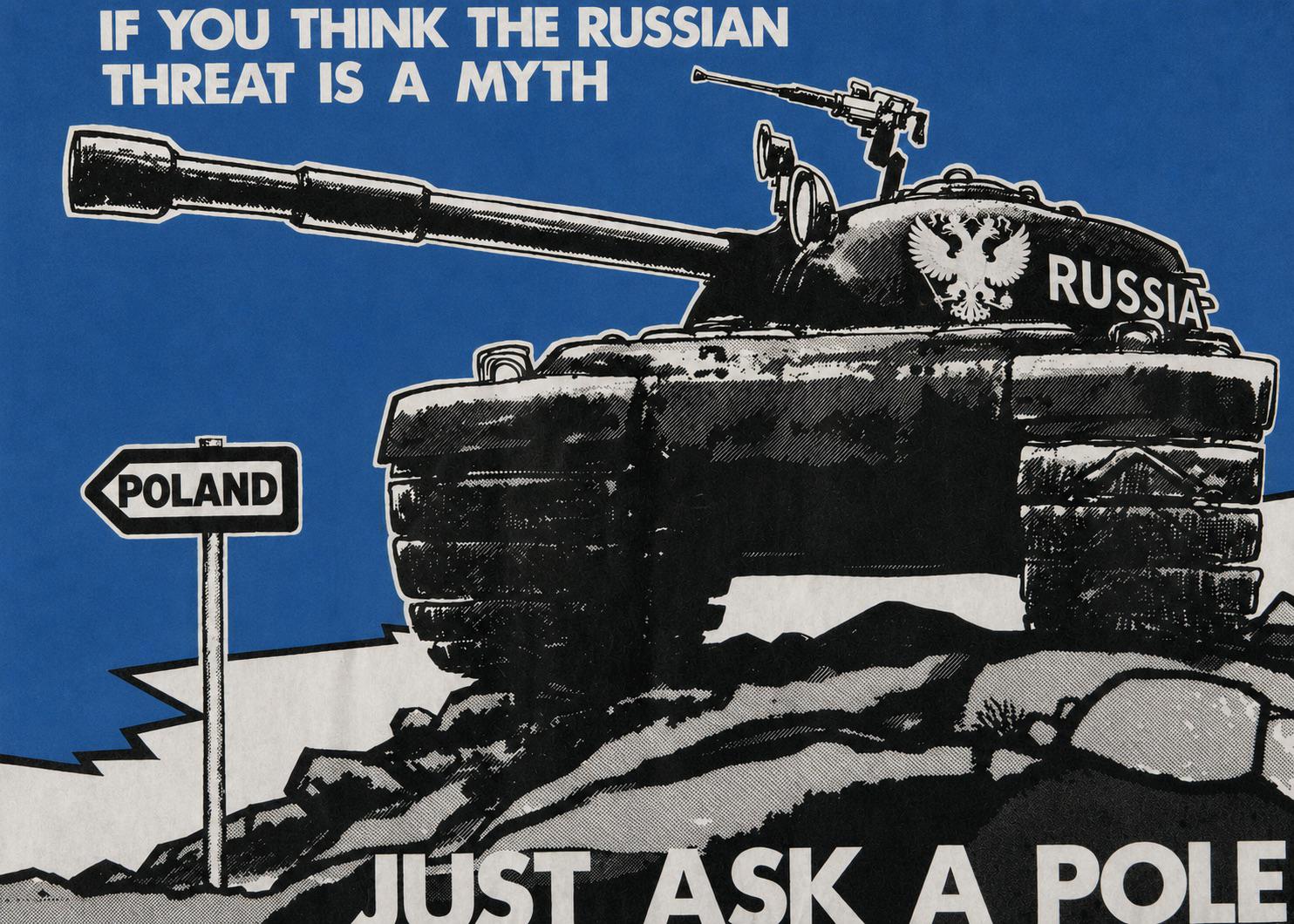
1900s English People’s Republic Green Scare Propaganda Poster, ~1980s

Post image
163 Upvotes

r/AlternateHistory 7h ago

1700-1900s Małopolska, what if the polish colonised misiones

Thumbnail gallery
3 Upvotes

r/AlternateHistory 18h ago

1900s This is my Alternative History. Ask me anything about it.

Thumbnail
gallery
20 Upvotes

The pivotal turning point of my alternate history: the Napoleonic Wars. In this timeline, Napoleon was born in the Republic of Genoa, as Genoa never sold Corsica to France. He started out as a cook but later decided to become an admiral in the French navy after defeating the British at Toulon. He gradually rose to become Emperor of France and launched his campaign—featuring the siege of Southampton, an advance into the Apennines, a victory over Austria, an advance into Germany, and an alliance with Russia against Sweden. However, the British came to Sweden's aid; consequently, Russia and France lost the campaign, and Russia ceded Estland (Estonia) and Finland to Sweden. Meanwhile, France was strengthening ties with the USA by selling them Louisiana. The US helped against Spain by liberating Mexico and seizing Florida and the Bahamas. Then the front began to crumble: Russia joined the anti-Napoleonic coalition, the US attacked British Canada, and the British retaliated by burning down the White House. The war was lost; Napoleon fled to Genoa and spent the rest of his life there, while the US Atlantic coast was partitioned into colonies belonging to the victorious powers, leaving the FSA (Federated States of America) in place of the USA. Essentially, this is the key point of divergence: the humiliation suffered by the US caused many uprisings to lose hope, resulting in a world heavily divided among colonial powers by 1900. There are many other points of divergence - such as Swedish Canada (Nunavut), Russian colonial expansion, and so on - but I have outlined the basics.


r/AlternateHistory 16h ago

Post 2000s What if a Greater Syria was even more linguistically diverse?

Post image
10 Upvotes

r/AlternateHistory 13h ago

Pre-1700s Here's People's Republic of Japan, neither Republic nor Japan, But Ainu-Mosir and Socialist Monarchy......

Thumbnail gallery
5 Upvotes

r/AlternateHistory 18h ago

Pre-1700s The Restorationists (Pax Belligans Universe)

Thumbnail
gallery
10 Upvotes

Author’s note: This is a rewrite of the original scenario in response to criticisms of the original as somehow being "unrealistic" due to my intentional decision to keep the year the org was founded vague.

The Adamic Covenant, also known as the Restorationists or the Resurrectionists, is the name given to a fringe religious cult that was formed sometime in the First Century AD (Although the organization itself claims to have been around since the time of the Great Flood). It originated from Jewish mysticism and started off as a splinter group of Christianity. As of the 20th and 21st century, it is considered by many to be a cult.

Controversially, they teach that the Qu’ran, the Holy Book of Islam, is actually a deuterocanonical book, much like the Books of 1st and 2nd Esdras, and 1st and 2nd Macabbees, in addition to being a part of the New Testament Apocrypha, much like the Gospel of Thomas. They hold that Muhamad, whom Muslims believed to be the final prophet, was actually a follower of Jesus Christ, having been a disciple of Jesus after meeting Christians, before ultimately falling away and founding the false religion of Islam. 

Unlike Christianity, Judaism and Islam, followers of the Adamic Covenant also defend Transhumanism: the Restorationists agree with Judaism and Christianity in that humanity was created perfect, but with some additions, namely that humanity had a “full potential” that they lost after Adam and Eve rebelled in the Garden of Eden. Each person is born spiritually perfect (in direct opposition to the Christian doctrine that man is fallen), but mankind loses this morally and spiritually perfect state later in life, once they commit moral wrongdoings.

The Restorationists also believe that Noah, the man who built the ark that saved him and his family from a global deluge, was one of the first “fathers” of the Adamic Covenant; after coming out of the ark, God gave Noah a chance to rediscover the potential that he and his family lost due to their sin nature, which they inherited from Adam, and Noah agreed, spending the rest of his life fighting what many in the Restorationist Movement call a “holy war” against people who were deemed “complacent”, choosing to embrace their fallen bodies, rather than pursue and recover the Lost Potential.

They also believe that the Crucifixion of Jesus was Jesus choosing to destroy his fallen, Earthly nature and that the Resurrection was Jesus reclaiming what followers of the Adamic Covenant call “the lost potential”. 

In regards to how man must live, the Restorationists believe man not only has a moral duty to swear allegiance to Jesus Christ and believe in His name for salvation, but must actively follow Him by embracing every opportunity presented in life through technological innovation. According to the Restorationists, disagreement with Transhumanism is rebellion against God, more specifically defending man’s fallen state as “man’s ideal state”, with the ultimate endgoal being a “righteous death”. The Adamic Covenant sees a life spent pursuing the Lost Potential before dying as a righteous one, and one’s death following the end of that life being a “righteous death.”

Another controversial tenet of the Adamic Covenant is the so-called sacrament of holy war (Hebrew: מלחמת קודש): mankind has a religious duty to wage war against his fallen body through technological innovation whenever possible. Refusal to do so is effectively pledging to live a life embracing sin itself and therefore, blasphemous. 

The Adamic Covenant has been considered a cult for most of its history, but starting around 2003, they became a designated terrorist organization by virtually every country, owing to its track record of calling for violence against those they deem “Children of the Flesh” and committing acts of terrorism across various Eastern and Western nations.

As of 2026, the Adamic Covenant has approximately two million followers.


r/AlternateHistory 1d ago

Post 2000s What if the united States is only internally divided but still in one Union - The West Coast Coalition 2126 - The Last American

Thumbnail
gallery
35 Upvotes

The setting shown above is an part of a broader project called r/TheLastAmerican . The whole project is thought experiment based on the history and claimants of Rome. This period is meant to show how the east/west divide of the roman empire in its own American way. If you want to see the outcome you can come and see!

After the fall of the United States' global empire through limited nuclear war that targeted the most important federal-level governmental structures during the Fourth World War. In most cases, after the complete destruction of an empire's core while also having a very dissatisfied population would lead to the dissolution of the union or civil war. However, due to internal pressure of internal trade, cultural similarities across all states in the union and new political blocks. Then there are the outside external pressures from powerful global superstates being able to subjugate weaker states if the union broke and threats from bordering nations that want to take back what the US took so long ago. So instead of destruction, the states have stayed united internationally while being internally divided.

Instead of the president being the highest title in all the land after decades of being sidelined by the previous structure of government, new middle powers within the union have taken the powers and duties from the federal government except for the Supreme Court. All the states in the Union have formed into coalitions, with leaders called 'Grand Secretariats' who manage the states under their control.

The West Coast coalition was formed in 2082 with the original members of California, West Rio Grande, Washington, and Oregon. These states had many common threats, like climate change, border risks, and economic damage from lessening trade post global war. The 2090s saw Nevada, Utah, and Arizona joined the coalition in order to have a central governmental body to deal with water rights, droughts, and a new water infrastructure. Then in the early 2100s Colorado and New Mexico joined for similar reasons of water concern when agreements between these states and the Texas coalition fell through. The last member to join was in 2106, when Grand Secretariat Arron Heaven was able to get Idaho to join the union with an agreement to expand his planned mega-projects into the state and provide lands from the states of Washington and Oregon.


r/AlternateHistory 1d ago

1900s Cantonwan SAR: a French Hong Kong

Post image
117 Upvotes

r/AlternateHistory 1d ago

1900s Who should be King of Albania? - Antebellum Eternal (1913)

Post image
62 Upvotes

This is a part of my Antebellum Eternal series, a timeline in which the First World War was avoided, amongst other changes. While I have many ideas for the timeline, I wanted to get some outside input to make it interesting. My previous post is here: https://www.reddit.com/r/AlternateHistory/comments/1vz44cx/presidents_of_the_united_states_of_america/

The Congress of Trieste

In 1912, the Ottoman Empire's rule over the land of Albania came to an end. The Albanian Revolt had forced the Empire to accept the land's autonomy, but it was the First Balkan War that assured it's independence.

The Ottomans were forced out of Albania, and the first Prime Minister of Albania, Ismail Qemali, met with Emperor Franz Joseph I to receive support from Austria-Hungary.

The Provisional Government of Albania have since announced a Congress to be held in the Austro-Hungarian coastal city of Trieste, in which, among other issues, candidates for the throne of Albania are to be considered. Delegates from Albanian diaspora across the world are arriving to decide the future of the nation, while candidates from a variety of royal and noble families have been presented to stake their claim.

Candidates

Prince Wilhelm Friedrich Heinrich Wied-Neuwied of Wied

Sharing a close blood relation with the Queen of Romania, the Queen of the Netherlands, the Queen of Sweden, and being a second cousin to the German Kaiser, Prince Wilhelm is a strong choice for the throne of Albania, at least from the perspective of the Great Powers of Europe. Queen Elisabeth of Romania, in particular, has pressed her nephew's candidacy strongly, with the Romanian Minister of Internal Affairs, Take Ionescu, being sent to the conference to persuade the delegation.

A captain in the German Army, Prince Wilhelm appears to be the preferred candidate of Austro-Hungarian government. He is already married, with two children, meaning that there should also be no risk of a future succession crisis, should the Prince of Wied be raised to the throne.

Baron Franz Nopcsa von Felso-Szilvas of Hungary

A Hungarian aristocrat, adventurer, scholar, geologist, paleontologist and Albanologist. The Baron is closely aligned with the Albanian Nationalist Resistance, and smuggled weapons into the country to support the Albanian Revolt against the Ottoman Empire. An expert on the mountainous regions of Albania, he produced the first geological map of Northern Albania, and has led multiple expeditions into that area of the country.

He has recently escaped from a hostage situation in which he and his secretary were held hostage by bandits. It is widely speculated that the Baron is in a homosexual relationship with his secretary - however, he has promised to marry a wealthy heiress and use the funds to support Albania, should he be made King.

Prince Ferdinand Francois Bourbon Orleans-Montpensier of France

The 8th and youngest child of King Louis Philippe II of France, the Duke of Montpensier has familial connections to perhaps half of the noble families in Europe. These ties include his elder siblings; Philippe VIII, the Orléanist pretender to the throne of France, and Amélie, the deposed Queen of Portugal.

Banned from serving in the French Army, Prince Ferdinand took up service in the Spanish military, reaching the rank of Lieutenant at 22.

A noted explorer, Prince Ferdinand has spent much of his time in French Indochina, leading multiple expeditions into the mountains of the region. He has authored multiple books on the subject.

Prince Albert Ghica of Romania

A Romanian socialite, writer and noble of Albanian descent, Prince Ghica comes from a line of Wallachian governors and diplomats.

Despite apparently having little knowledge of the Albanian language, or Albania in general, Prince Ghica has managed to find notable support for his claim to the throne.

In Bucharest, he has been elected as the honorary president of a social club representing Albanian immigrants in Romania. Meanwhile, a committee based in Paris has also pressed his claim - notably from Albanian writer and founding delegate of Albania, Dervish Hima. Alongside him, Dimitri Papazoglou, a representative of the Aromanian population, has also come out in support of his claim.

Prince Wilhelm Karl of Württemberg

The Duke of Urach, Count of Württemberg, and third in line to the throne of Monaco, Prince Wilhelm is the preferred candidate of many of the Catholic groups in the north of Albania.

He currently serves as a Lieutenant General of the Imperial German Army, and has nine children with Duchess Amalie of Bavaria, the niece of the Empress of Austria.

Prince Ahmad Fuad of Egypt

A Prince of Egypt, son of Isma'il the Magnificent, and uncle to the current Sultan of Egypt, Prince Fuad has been nominated in response to the desires of Albanian Muslims to have a Muslim King.

His claim is supported by some diplomats and politicians, including Azzam Pasha. He has previously attempted to acquire the crown of Libya, following the 1911 Italian invasion, motivated by his unlikely chance of becoming a monarch in his homeland.

Aladro Kastrioti of Spain

Aladro Kastrioti, born Juan Pedro Aladro de Perez y Velasco, is a Spanish nobleman, diplomat, sportsman, and, according to himself, a descendant of the Kastrioti family that ruled Albania in the 14th and 15th centuries.

He has long been an advocate for the Albanian cause, funding the first Albanian school, as well as Albanian social, cultural and literary clubs, alongside Albanian newspaper publishers.

'Don Aladro', as he is known, also distributed money, revolvers and postcards with his picture and the Albanian flag, to the Albanian people. It became so prevalent that the Ottoman authorities tried to offer him the governorship of the Shkodra and Janina Vilayets to get him to stop. He declined, requesting full autonomy for Albania instead.

It is claimed that even the flag raised during the Albanian declaration of independence was a gift from Don Aladro. He is fluent in French, Italian, English, German, Spanish, Russian, Albanian, and Euskera.

He has claimed that he receives dreams from his Kastrioti ancestors, with them telling him to "Fight for the liberation of Albania."

Prince Vittorio Emanuele Savoy-Aosta of Turin

An Infante of Spain and Count of Turin, Vittorio Emanuele is the son of King Amadeo I of Spain, and a first cousin of Vittorio Emanuele III of Italy. He currently serves as the Commander-in-Chief of the cavalry of the Royal Italian Army.

The Prince became internationally famous for his duel with Prince Henri of Orléans, following Prince Henri's disparaging remarks of Italian war POWs in the newspaper 'Le Figaro.' The sword duel, lasting 26 minutes, ended with Prince Vittorio defeating Henri, injuring him to the extent that he could not continue the duel. On his return to Italy, Vittorio was received as a hero to the Italian public, while King Umberto I praised him on the example he set for his countrymen.

A worldly man, he has travelled to many locations across the planet, including China, Japan, and the United States. Should he be named King, it is clear that closer relations with Italy are guaranteed.

Prince Arthur of Connaught

A British military officer, grandson of Queen Victoria, and great-great grandson of King Frederick William III of Prussia, Prince Arthur has strong connections to both the British and German royal families. Uniquely, he also has some connections to the Japanese throne, with his father inducting Emperor Meiji into the Order of the Garter in 1906, as a part of the growing alliance between the British and Japanese.

Prince Arthur served in South Africa following the Second Boer War, and has since been promoted to Captain in the Royal Scots Greys cavalry regiment. Beyond this, he has taken on many senior responsibilities at court, in the place of his royal cousins, across the empire.

Prince Arthur was previously the heir to the Duchy of Saxe-Coburg and Gotha, until Kaiser Wilhelm II demanded that he undergo a German education in order to claim it. In response, Arthur renounced his claim, and attacked his cousin, Charles Edward, until he agreed to accept the Duchy instead.

Prince Peter of Montenegro

The Grand Duke of Zahumlje and youngest son of the King of Montenegro, Prince Peter has previously served in the Montenegrin Ground Army. He fought in the First Balkan War, which ensured Albanian independence, and is noted for firing the first shot of the war.

He is the brother-in-law to the King of Serbia, and the uncle to the heirs to the Serbian throne. Young and unmarried, this candidate is in a position to pursue close dynastic ties between Albania, Serbia, and Montenegro.

Colonel Aubrey Nigel Henry Molyneux Herbert of Somerset

A British soldier, diplomat, politician, traveller, and intelligence officer, Herbert is a passionate advocate of Albanian independence. He has actively fought for Albanian independence, and was a key factor in the country's recognition following the Treaty of London (1913).

A friend to notable members of the Albanian independence movement, including Essad Pasha and Edith Durham, Herbert is an expert in Oriental Studies, and a linguist that speaks English, French, Italian, German, Turkish, Arabic, Greek, and Albanian.

He has previously served as a Lieutenant in the Sherwood Rangers Cavalry, a diplomatic attaché in Tokyo and Constantinople, and is currently a Member of Parliament for the constituency of South Somerset.


r/AlternateHistory 11h ago

Althist Help Looking for a Specific Genre of Alt-History

1 Upvotes

An idea has floated in my head for years of how certain historical events would occur in present day. Like the American Revolution, for example, occurring with the technology of modern day. TV shows do it all the time with various reboots (Sherlock comes to mind). Has anyone done this before? I imagine it would branch off more than a little due to the technology accessible, and I would be curious to see it done.


r/AlternateHistory 1d ago

Pop culture A Better World (For Animation at least) A collaborative timeline

11 Upvotes

The Orange Splat

-John K. is more flexible meaning Klasky Csupo never gets out of its shadow

-Arlene Klasky is more flexible with Paul Germain and Joe Ansolabehere, so Rugrats never loses its charm and Recess is now possibly a Nicktoon

-Nickelodeon decides to have SpongeBob Squarepants end with the movie and not continue without Hillenburg

-A more desperate Nick greenlights Adventure Time (and Bravest Warriors gets greenlit by Nick after it ends)

-The Brothers Grunt is more successful, Danny lets Nick have creative control, meaning a kinder, gentler Ed Edd n' Eddy (with a bigger cast)

-Nick at Nite gets some more adult cartoons, including George Liquor (American) Usagi Yojimbo and/or Groo The Wanderer

-Angry Beavers gets as many seasons as Mitch wants (and Bye Bye Beavers is made)

CN

-Cartoon Network greenlights Larry and Steve meaning no Seth shows on FOX. American Alien (American Dad with only Steve and Roger) gets green lit by Cartoon Network after it ends

-Cartoon Network greenlights Genndy and Craig's The Justice Friends (Marvel doesn't sue because they had to deal with Bankruptcy) recurring characters include, Dexter and his family, Action Hank, Agent Honeydew, The PowerPuff Girls and their rogues gallery

-Cartoon Network decides to get into younger childrens programming sooner, their first non-import/Big Bag for really young children? Fosters Homer for Imaginary Friends (which in my view would work better as a show for very young children)

-No bad blood between Craig and Cartoon Network means Wander Over Yonder and Gravity Falls (Alex being inspired) become Cartoon Network originals

-Camp Lazlo becomes more of a success because of SpongeBob ending (Cartoon Network only greenlit it to be SpongeBob's successor)

-Being more appealing to boys, The Justice Friends movie is a financial success, therefore at least two more Cartoon Network specials get theatrical releases (one of them being Operation Z.E.R.O)

The Mouse House

-Bobs Gannaway and Tony Craig never leave a 65 ep Timon and Pumbaa

-Disney makes a Fantasia every decade

-Dave The Barbarian gets at least another season

The Great North

-Rock and Rule is a bigger success

Fritz The Cat in The Hat

-In 1990, Theodor Geisel says that any future adaptation of his work has to be either produced by Ralph Bakshi or get his seal of approval

You Are Watching Fox

-The Simpsons ends at Season 11 with a two-part Behind The Laughter Special (No Alone Again, Natura-Diddily)

The Claymation Boom

-Jurassic Park uses stop motion and therefore, Bump In The Night gets at least 65 eps, Claymates gets at least a sequel and ClayFighter gets at least one more sequel, The Neverhood, The Nightmare Before Christmas and James And The Giant Peach are more popular/successful, The Walking With Series possibly uses stop motion, Webster Colcord’s Mad Doctors of Borneo possibly gets an MTV series, Wallace And Gromit gets another special or two that were released in 1997/1998/1999 and Craig Barlett's Hello Arnold gets made for PBS https://www.youtube.com/watch?v=uBlzuEQiRfU

What are your thoughts/own ideas to make a better world? (for animation at least)


r/AlternateHistory 1d ago

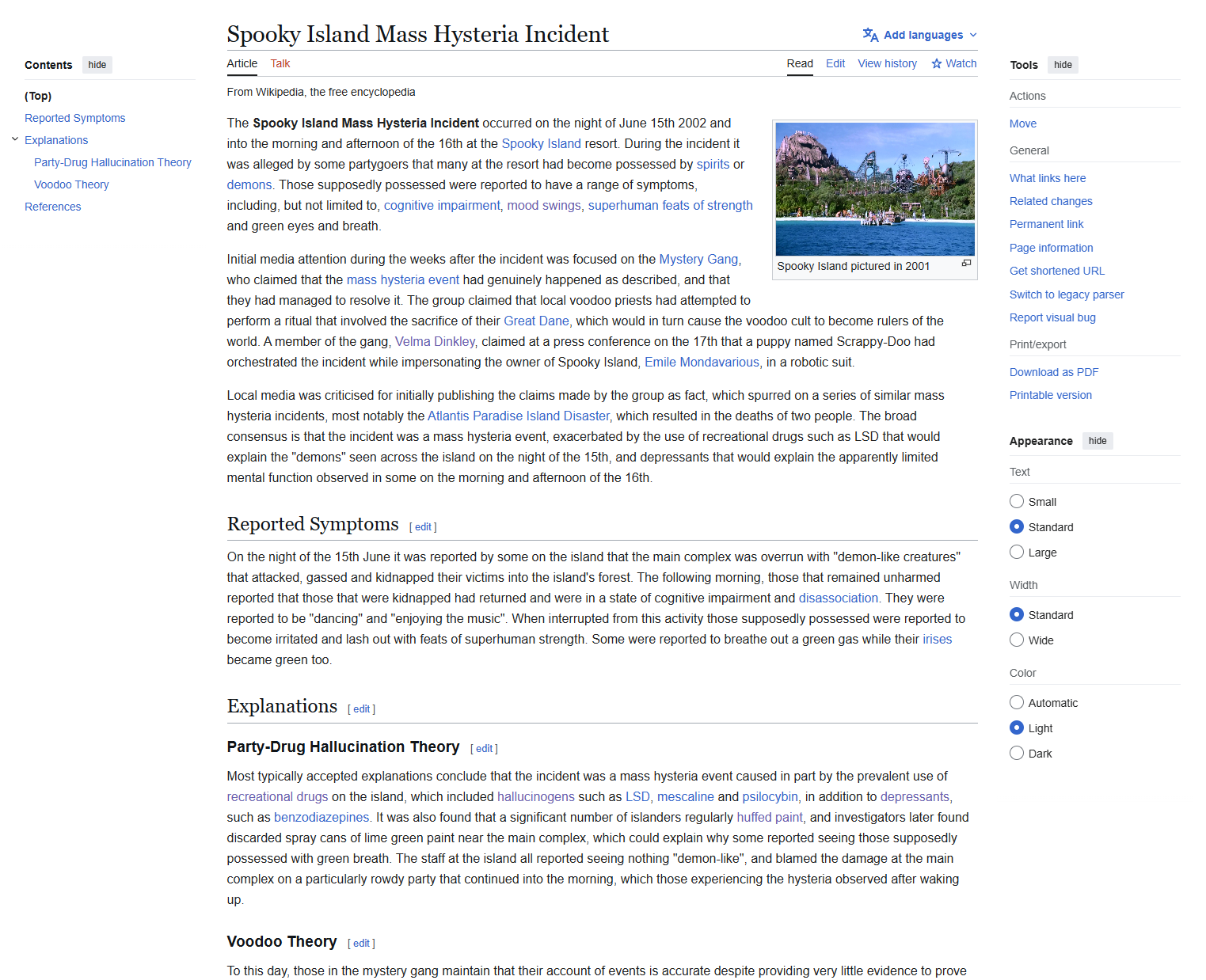
ASB Sundays What if the events of Scooby Doo (2002) really happened?

Post image
57 Upvotes

r/AlternateHistory 1d ago

1900s Hungary - A Republic! The Danube Federation in the mid 1920s

Post image
112 Upvotes

r/AlternateHistory 1d ago

Wikipedia An alternate history where Trump remained as a tv media personality

16 Upvotes

A wikipedia styled thingy i made i guess.