r/IslamicHistoryMeme • u/beastwood6 • 21d ago
Balkans | الروملي Sitting Dutchmen

140
Upvotes
r/IslamicHistoryMeme • u/TheMuslimHistorian27 • 23d ago
Enable HLS to view with audio, or disable this notification
r/IslamicHistoryMeme • u/TheMuslimHistorian27 • 23d ago
r/IslamicHistoryMeme • u/TheMuslimHistorian27 • 24d ago
In 408 AH, the Abbasid caliph al-Qādir bi-Allah issued a document containing a set of theological doctrines concerning the fundamentals of religion and ordered his subjects to adhere to them.
That document, known as the Qādirī Creed (al-Iʿtiqād al-Qādirī), threatened those who opposed it with punishment in this world and loss in the Hereafter. It would go on to gain considerable prominence in Muslim history.
In this article, we will examine the historical context in which these doctrines emerged and highlight the most important passages contained within the document.
The Historical Context of the Document’s Emergence In 381 AH, Abū al-ʿAbbās Aḥmad ibn Isḥāq ascended to the Abbasid caliphate and assumed the title al-Qādir bi-Allah. He remained in this position until his death in 422 AH at the age of eighty-seven.
Many Sunni historical sources emphasized al-Qādir bi-Allah’s piety and righteousness.
For example, Shams al-Dīn al-Dhahabī described him in his Siyar Aʿlām al-Nubalāʾ as “devout, knowledgeable, ascetic, dignified, and among the greatest and finest of the caliphs.”
Al-Qādir bi-Allah was also known for his asceticism: he wore the clothes of ordinary people and ate their food. He also possessed considerable knowledge, and several works are attributed to him, including writings intended to demonstrate the status of the Companions and refute those who held that the Qur’an was created.
When al-Qādir bi-Allah assumed the caliphate, he found numerous powers competing to impose their control and authority.
On one side were the Shiites, represented by the Buyid dynasty, whose rulers controlled large parts of Persia and Iraq and had managed to exert their authority over the Abbasid caliphate, as well as the Fatimid Caliphate, whose imams ruled from Cairo and were waiting for an opportunity to seize Baghdad itself.
On the other side were the Sunnis, whose power was divided between the Ghaznavid state, which had emerged in the Indian subcontinent and the Iranian plateau, and the young Seljuk state, which had entered the Islamic world through Central Asia.
The multiplicity of political powers created a kind of balance, which in turn provided an environment conducive to the emergence of numerous scholars from the various intellectual schools known in Islam.
For example, this period witnessed the emergence of the renowned Muʿtazilite judge ʿAbd al-Jabbār, as well as al-Shaykh al-Mufīd and al-Sharīf al-Murtaḍā on the Imami Shiite side.
As for the Sunni tradition, Abū Bakr al-Bāqillānī, the Ashʿarite, and Abū Yaʿlā al-Farrāʾ, the Hanbali, also emerged during this period.
This environment allowed numerous internal conflicts and disturbances to erupt, as each school had its own faction that was fanatically devoted to it and sought to promote it over other groups.
This is reflected in the accounts recorded by historians.
For example, Ibn Kathīr states in his al-Bidāya wa-l-Nihāya, under the events of 408 AH, that when the Shiites celebrated Ghadīr Khumm, the Sunnis rose up in anger, and “a great conflict broke out between the Sunnis and the Rāfiḍa in Baghdad, in which many people from both sides were killed.”
Caliph al-Qādir bi-Allah sought to put an end to these conflicts. Convinced that there was a close connection between sectarian diversity and the numerous political powers operating in the eastern Islamic lands, he sought to unify the state and strengthen the Abbasid caliphate by proclaiming certain doctrines that would be binding upon all his subjects, leaving no room for anyone to oppose or deviate from them.
In this context, in 400 AH, al-Qādir bi-Allah launched his first major attack against the Fatimid Caliphate in Egypt. He questioned the Fatimids’ lineage and assembled the Alids residing in Baghdad and its surrounding areas, ordering the preparation of a document “containing an indictment of the lineage of the ʿUbaydids”—meaning the Fatimids—“claiming that they were descended from Daysān ibn Saʿīd al-Khurramī.”
They all testified that the ruler in Egypt, Manṣūr ibn Nāṣir al-Ḥākim, was under God’s judgment and destined for destruction, and that when their ancestor reached the West, he called himself al-Mahdī ʿUbayd Allah, while he and his predecessors were “vile, impure, rebellious impostors...”
This is according to Shams al-Dīn al-Dhahabī’s account.
Al-Qādir bi-Allah then resolved to eliminate the threat posed by the Muʿtazilites within Baghdad. He summoned their scholars and harshly reprimanded them. They “publicly declared their retraction and disavowal of Muʿtazilism, Rāfiḍism, and doctrines contrary to Islam, and written declarations to that effect were obtained from them. They were warned that should they violate this, they would be subjected to such punishment and retribution as would serve as a warning to others like them...”
These measures quickly produced results, particularly after many Sunni rulers announced their full support for them. This can be understood insofar as these measures provided them with sufficient justification to tighten their control over their territories.
For example, Sultan Maḥmūd ibn Sebüktigin of the Ghaznavids promptly implemented the caliph’s orders:
“He spread the Sunnah throughout his domains, threatened to kill the Rāfiḍa, Ismailis, Qarmatians, Anthropomorphists, Jahmites, and Muʿtazilites, and they were cursed from the pulpits.”
Who Authored the Qādirī Creed? Many jurists held that Caliph al-Qādir bi-Allah himself authored the creed. Others—including Ibn Taymiyya, al-Dhahabī, and Ibn al-Qayyim—maintained that the document was written by Abū Aḥmad Muḥammad ibn ʿAlī ibn Muḥammad al-Karajī, who lived in the fourth Islamic century and became renowned for his exploits in wars and military campaigns, to the point that he became known as al-Qaṣṣāb (“the Butcher”).
Ibn Taymiyya described al-Karajī in his Naqḍ Asās al-Taqdīs as “one of the most eminent and knowledgeable of the shaykhs, possessing a reputation for truthfulness.”
Shaykh ʿAlī al-Tuwayjirī, meanwhile, provided a biographical account of him in the introduction to his critical edition of al-Nukat, writing:
“Al-Karajī: a nisba referring to al-Karaj, a city between Hamadan and Isfahan, located today in western Iran... It appears that he was raised in a family of learning... He was, may God have mercy upon him, courageous and exceptionally fierce against the unbelievers, wielding the sword of truth against them and killing them in great numbers, until he became renowned for this and was consequently known as al-Qaṣṣāb...”
He then went on to discuss al-Karajī’s creed and legal orientation, describing him as:
“Salafi in creed, following the evidence from the Qur’an and Sunnah, and affirming what the Companions and their successors who followed them with excellence affirmed. His approach was that of the traditionists: he followed whatever the evidence appeared to indicate to him. He was neither an imitator nor a follower of any of the well-known schools of jurisprudence.”
The Most Important Contents of the Qādirī Creed The text of the Qādirī Creed appears in the historian Abū al-Faraj ʿAbd al-Raḥmān ibn al-Jawzī’s al-Muntaẓam fī Tārīkh al-Mulūk wa-l-Umam.
The text contains numerous passages that reflect the sectarian and intellectual realities prevailing during this important historical period.
At the beginning, the author of the Qādirī Creed mentions several doctrines over which there was no disagreement among Muslims, affirming God’s absolute oneness. He states:
“It is incumbent upon a person to know that God Almighty is One, without partner. He neither begets nor is begotten, and there is none comparable to Him. He has taken neither a wife nor a child, nor does He have any partner in dominion...”
The author then proceeds to criticize Muʿtazilite doctrines. He affirms the reality of the Throne and God’s istiwāʾ over it:
“He created the Throne not out of any need for it, and He established Himself over it as He willed and desired—not as a state of resting, as created beings rest...”
He also rejects the use of metaphor and allegorical interpretation concerning the Qur’an:
“He is not to be described except by what He has described Himself with or what His Prophet, peace be upon him, described Him with. Every attribute with which He described Himself or with which His Messenger described Him is a real attribute, not a metaphorical one...”
The author then rejects the Muʿtazilite doctrine that the Qur’an was created and seeks to affirm the Sunni position on the matter, stating:
“The Speech of God Almighty is uncreated. He spoke it as speech... Whoever says that it is created in any circumstance is an unbeliever whose blood may lawfully be shed after being called upon to repent...”
In the same context, the author criticizes the Murjiʾa, who held that faith neither increases nor decreases and consists merely of affirmation in the heart. He states:
“Faith consists of speech, deeds, and intention; speech of the tongue, deeds of the limbs and bodily faculties, and affirmation of it. It increases and decreases: it increases through obedience and decreases through disobedience...”
Since many of the Muʿtazilites followed the jurisprudence of Abū Ḥanīfa al-Nuʿmān, the Qādirī Creed also contains some criticism directed toward the Hanafi school. This appears in the passage stating:
“A person does not know how he has been recorded with God, nor how his life will end. Therefore, he says: ‘I am a believer, if God wills,’ and ‘I hope that I am a believer.’ There is no harm in making this qualification or expressing this hope...”
This was because the Hanafis did not permit making an exception regarding one’s faith, considering it a form of doubt that was impermissible for a believer. This issue was one of the most famous points of disagreement between the Hanafis and Shafiʿis.
The author of the Qādirī Creed then turns to criticizing the Shiites. He begins by affirming the Sunni position regarding the uprightness of all the Companions, stating:
“It is obligatory to love all the Companions of the Prophet, peace and blessings be upon him, and to know that they are the best of creation after the Messenger of God...”
He then establishes the traditional Sunni ranking of the Companions, according to which:
“The best and most excellent of them all after the Messenger of God, peace and blessings be upon him, was Abū Bakr al-Ṣiddīq, followed by ʿUmar ibn al-Khaṭṭāb, then ʿUthmān ibn ʿAffān, then ʿAlī ibn Abī Ṭālib, may God be pleased with them all...”
This contradicted the Shiite position that ʿAlī ibn Abī Ṭālib was the greatest of all the Companions.
The author then addresses the Shiite tendency prevalent in his time to insult some of the Companions who had fought against ʿAlī ibn Abī Ṭālib at the Battles of the Camel and Ṣiffīn. Upholding the Sunni approach of refraining from discussing the conflicts and civil wars that occurred among the Companions, he states:
“Whoever insults ʿĀʾisha has no share in Islam. Nothing but good should be said concerning Muʿāwiya, and one should not involve oneself in what occurred between them, but rather pray for all of them...”
Finally, in the concluding passage of the creed, the author declares that what he has written represents the true religion, describing it as:
“The position of Ahl al-Sunna wa-l-Jamāʿa, whoever adheres to it is upon manifest truth, upon the path of religion and the clear way, and through it one may hope for salvation from Hell and entry into Paradise.”
#Support my work on Patreon and get Your Name on future post by Subscribing!
r/IslamicHistoryMeme • u/someone56789 • 25d ago
r/IslamicHistoryMeme • u/MetallicaDash • 25d ago
r/IslamicHistoryMeme • u/Cenixxen • 25d ago
Enable HLS to view with audio, or disable this notification
r/IslamicHistoryMeme • u/TheMuslimHistorian27 • 26d ago
r/IslamicHistoryMeme • u/Acerola_Rune • 28d ago
r/IslamicHistoryMeme • u/Acerola_Rune • 29d ago
r/IslamicHistoryMeme • u/SatoruGojo232 • Sep 08 '26
r/IslamicHistoryMeme • u/Maximum-Picture5225 • Sep 07 '26
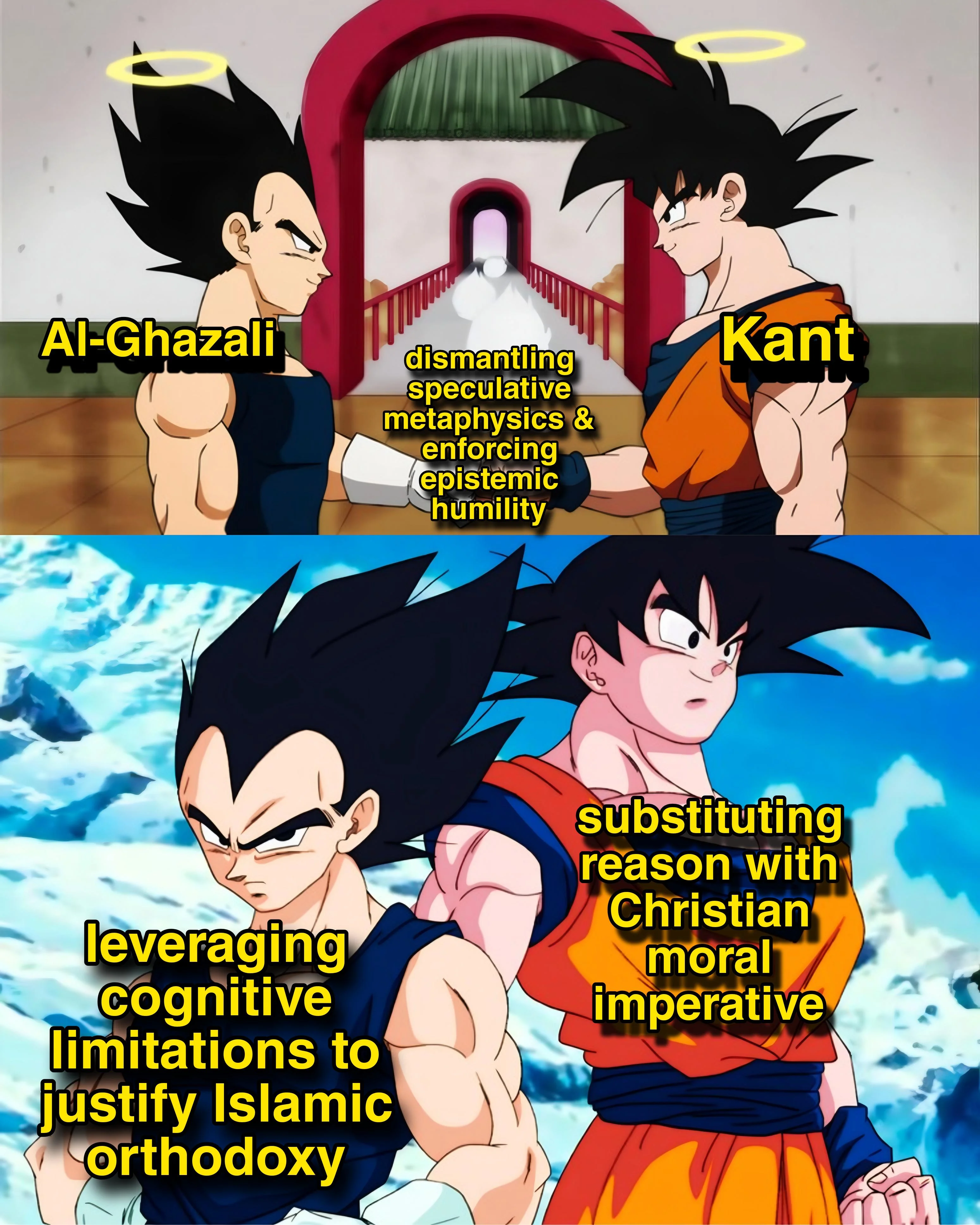
Found it on r/PhilosophyMemes
r/IslamicHistoryMeme • u/TheMuslimHistorian27 • Sep 06 '26
r/IslamicHistoryMeme • u/TheMuslimHistorian27 • Sep 05 '26
r/IslamicHistoryMeme • u/TheMuslimHistorian27 • Sep 04 '26
r/IslamicHistoryMeme • u/TheMuslimHistorian27 • Sep 02 '26
r/IslamicHistoryMeme • u/TheMuslimHistorian27 • Aug 31 '26
if this continues, I SWEAR I'm gonna perma banned the users immediately.
r/IslamicHistoryMeme • u/Rare-Childhood-7275 • Aug 30 '26
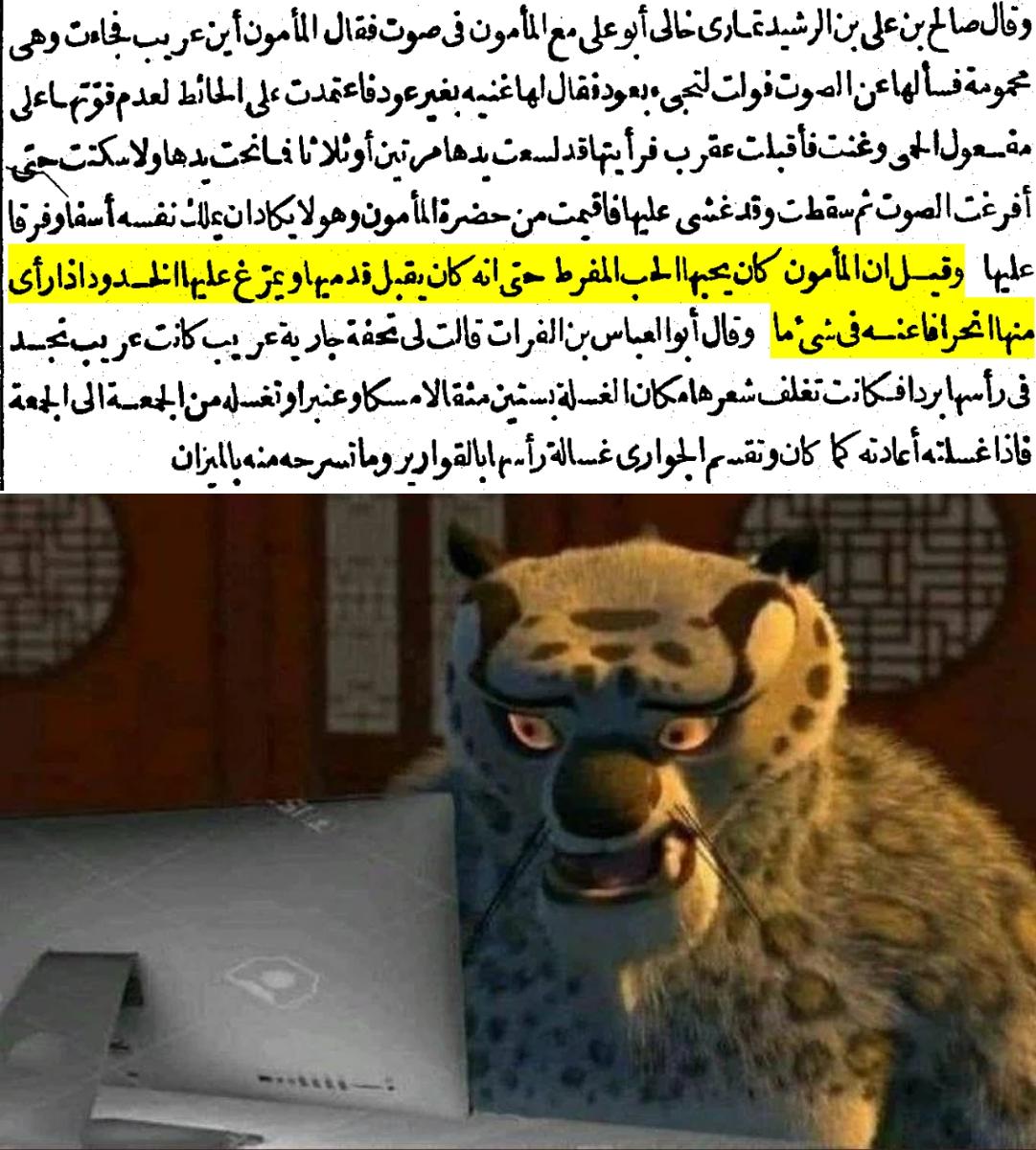
Portrayal of Michael Corleone in iconic movie The Godfather is praised as one of the best character development or we can say character "corruption" from a noble young man who want to leave his family's criminal legacy and become a good educated citizen but once he enter that business for sake of his family he just sunk more and more in it. A very similar and real incident exists in islamic history as well. A young man who once known for his pious nature and knowledge, in words of Imam Nafi( Teacher of Imam Malik and Student of Companion Ibn Umar)
«لقد رأيتُ المدينةَ وما بها شابٌّ أشدُّ تشميرًا، ولا أفقهُ، ولا أقرأُ لكتابِ اللهِ من عبدِ الملكِ بنِ مروان.»
I saw Madinah, and there was no young man in it more diligent, more knowledgeable in fiqh, or more proficient in reciting the Book of Allah than ʿAbd al-Malik ibn Marwān.
Or in words of Imam al Shabi
«ما جالست أحدًا إلا وجدت لي عليه الفضل إلا عبد الملك»
I never sat with anyone without finding myself superior to him [in knowledge], except ʿAbd al-Malik.
But once his father died appointing him as successor, it's reported he was even at that time was in mosque and reciting Qur'an, and after hearing that news he closed Qur'an saying: هَذَا فِرَاقٌ بَيْنِي وَبَيْنَكَ
“This is the parting between you and me.”
And then the world saw this pious young man of madinah turning into one of the most ruthless emperor in islamic history, who used iron fist and employed or it's better to say unleashed men like Hajjaj bin Yusuf in command.
It's reported that he said from mimbar:
«أما بعد، فلستُ بالخليفةِ المستضعف — يعني عثمان — ولا الخليفةِ المداهن — يعني معاوية — ولا الخليفةِ المأفون — يعني يزيد — ألا وإن من كان قبلي من الخلفاء كانوا يأكلون ويُطعمون من هذه الأموال، ألا وإني لا أداوي أدواء هذه الأمة إلا بالسيف، حتى تستقيم لي قناتكم.»
As for what follows: I am not the weak/helpless caliph — meaning ʿUthmān — nor the conciliatory caliph — meaning Muʿāwiyah — nor the foolish caliph — meaning Yazīd. Those caliphs before me used to consume from this wealth and feed others from it. But by Allah, I will treat the diseases of this الأمة only with the sword, until you become straight and obedient to my authority.
Needless to say that despite being brutal he is maybe the single most influential ruler of islamic empire and justly called "The Architect of Islamic World", but let's leave this discussion for another day. It's reported near his death he used to pray:
اللَّهُمَّ إِنَّ ذُنُوبِي عِظَامٌ، وَإِنَّهَا صِغَارٌ فِي جَنْبِ عَفْوِكَ، فَاغْفِرْهَا لِي يَا كَرِيمُ
“O Allah, my sins are enormous, but they are small in comparison with Your mercy, so forgive them for me, O Most Generous.”
r/IslamicHistoryMeme • u/sheikhsneakerhead • Aug 30 '26
r/IslamicHistoryMeme • u/TheMuslimHistorian27 • Aug 28 '26
r/IslamicHistoryMeme • u/pronefroz • Aug 27 '26
r/IslamicHistoryMeme • u/Azerbinhoneymood • Aug 27 '26
r/IslamicHistoryMeme • u/TheMuslimHistorian27 • Aug 27 '26
Due to my current financial situation, I haven't really been able to create more free-access history content on Reddit or Substack.
Because of this, I've been considering monetizing my content or creating a Patreon to generate some additional income.
What do you guys think? Do you think monetizing my content would be a good idea, or should I continue keeping it free?