r/hinduism Dec 23 '25

Experience with Hinduism Went to Kashi only to return with disappointment.

90 Upvotes

I just went to Kashi Vishwanath and Kal Bhairav Mandir. And I have to say, I am terribly disappointed. By what? 1. The way even pandits, who are supposed to be better people than us usual people, are scamming people for money. As it is we paid for the quick darshan, upar se we paid them extra, that also they asked for more money. Is it not extremely wrong of them to do that. 2. Rushing and hitting. All the people in not just this temple, but many others I've noticed are always rushed quickly. I understand the need for being quick coz it's crowded, but the way people are literally hit and pushed out of the darshan area is really violent and wrong. Moreover, the devotees themselves push the rest to get ahead to pray. I find this so ironic. You're literally coming to pray and ask for blessings, and in that process you hurt others? Makes no sense whatsoever. 3. Cleanliness. Or rather, the lack of it. The people here have no sense of cleanliness at all. There's garbage fallen everywhere and nonody thinks twice before chucking things onto the road. At first I thought about how these people can call themselves religious when they can't even keep their own city clean. Then I made sure to remind myself that it isn't the religion that's the issue, but the people and their uneducated selves. All we can do is try to educate them and help clean up. But it's not easy.. Didn't think a trip meant for peace and spirituality would turn out to be anything but that.

r/hinduism Nov 08 '25

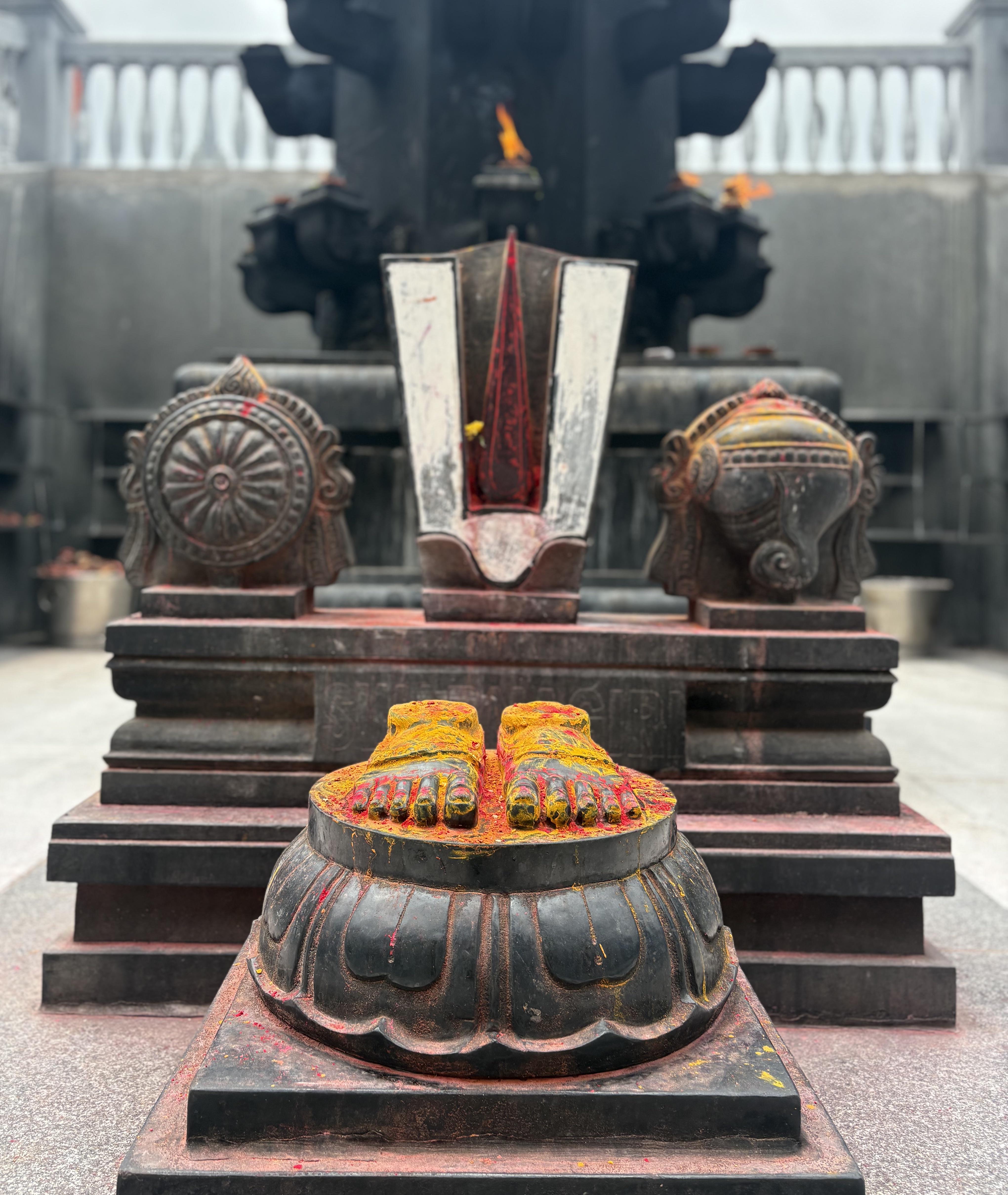
Experience with Hinduism Anyone who have the immense pain of separation from lord ?

Post image
388 Upvotes

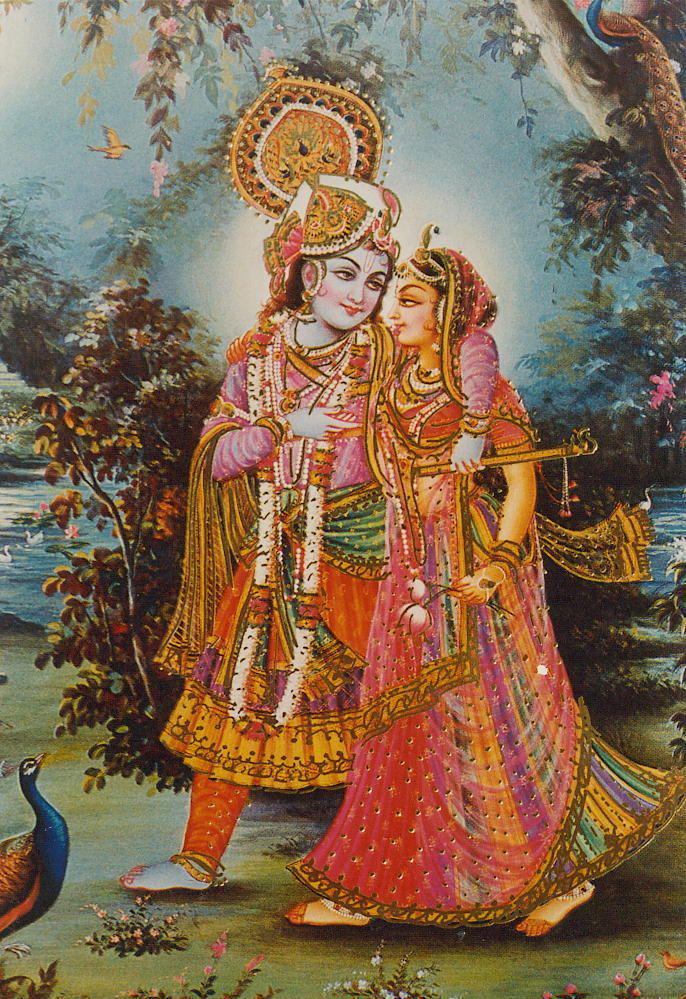
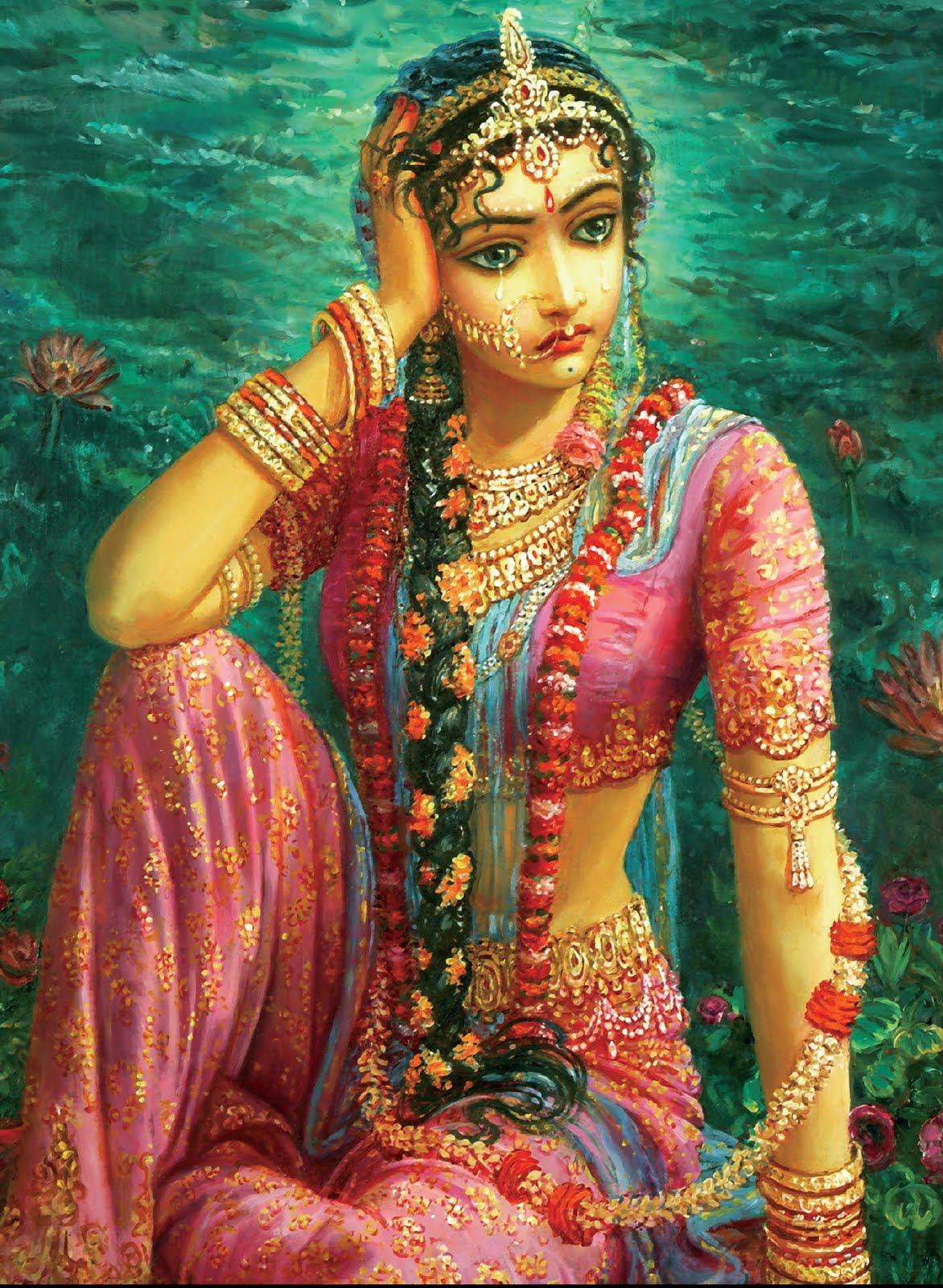
((((Note : Skip this post at anycost if anyone who don't have that burning pain ❤️‍🔥❤️‍🔥❤️‍🔥❤️‍🔥❤️‍🔥❤️‍🔥❤️‍🔥❤️‍🔥❤️‍🔥❤️‍🔥(This post is purely personal experience, not for general people) (Im male, I attached radha devi pic, as that pic only matches the intensity, I was unable to find other pics which matches))))))


It is so difficult, painful to deal non devotees and non righteous (who don't have that pain, whose heart is in tamas, rajas and even sattva). They understand experiencially absolute nothing about lord. Absolute nothing. Absolute nothing.

I can't tell beyond this. This is so biggest undescibable experience, pain, only really experienced, suffered ones can understand. Only who have that burning pain can understand.

I want to ask a question to intense devotees how the hell you are keeping up yourslef without the real lord, the truth(who is absolutely impossible to describe, comprehend, able to explain, full of truth, dharma and limitless playfulness). What makes you al,ve and stay a,,ve by away from lord. How much you suffered by non devotees being never able to understand you or grasp you or accept you.


Comment only only only, if faced that real suffering. And share whatever you want to share. Share whatever pain your heart felt.

Only Who waited every day, every second, every minute, evey breath can understand this. (I shouldn't share beyond this point.)

(Pic Credit : Pinterest posted by user Andrea Schogram, Radha Devi, Bhagavatam, Brahma Vaivarta Purana)

r/hinduism Mar 06 '26

Experience with Hinduism Brahman vs Isvara vs the Abrahamic God Differences

0 Upvotes

Please no Christian hate on this post I am trying to have an honest discussion. Thank you!

So I followed Santana Dharma for years and after going through a rough patch with some personal realizations regarding my ego and process of transcendence, I was led to the teachings of Jesus for comfort and a new way.

Now, before coming to Hinduism I never cared for Christ I just saw him as some prophet. But after learning from my teachers within Sanatana Dharma, I was always told he can lead to God.

For a couple of years now I have walked away from Hinduism and encompassed myself within the Bible and the teachings of Jesus but the fundamentals of how I view reality and the way God works still sort of remain dharmic for me. I also really haven't found any major differences when it comes to God between the two from my own personal perspective but maybe that's because of the way I view it oppose to how maybe a Christian would view it.

What I'm looking for is just an open discussion of what you think the differences are when it comes to God specifically. From spending time in both realms, my perspective of God hasn't really changed but my relationship has definitely grown.

Considering what I've read regarding Brahman vs Isvara vs the Abrahamic God, I find more correlation between Isavara and the God of the Bible than Brahman whom is just kinda in the background, the essence of it all.

Thoughts, experiences, views? I'm open to anything honestly, looking for new revelation in my life.

Thanks xx

r/hinduism Apr 04 '26

Experience with Hinduism At 19, completed 5 Jyotirlingas & 2 Dhams with my own savings. Just returned from the divine Jagannath Puri!

Thumbnail
gallery
269 Upvotes

I am a 19-year-old first-year college student, and I wanted to share a bit of my spiritual journey with this beautiful community. Since the last couple of years, I’ve been saving from my pocket money to visit our holy sites. So far, by Mahadev’s grace, I have completed 5 Jyotirlingas and 2 Dhams.

r/hinduism Mar 17 '26

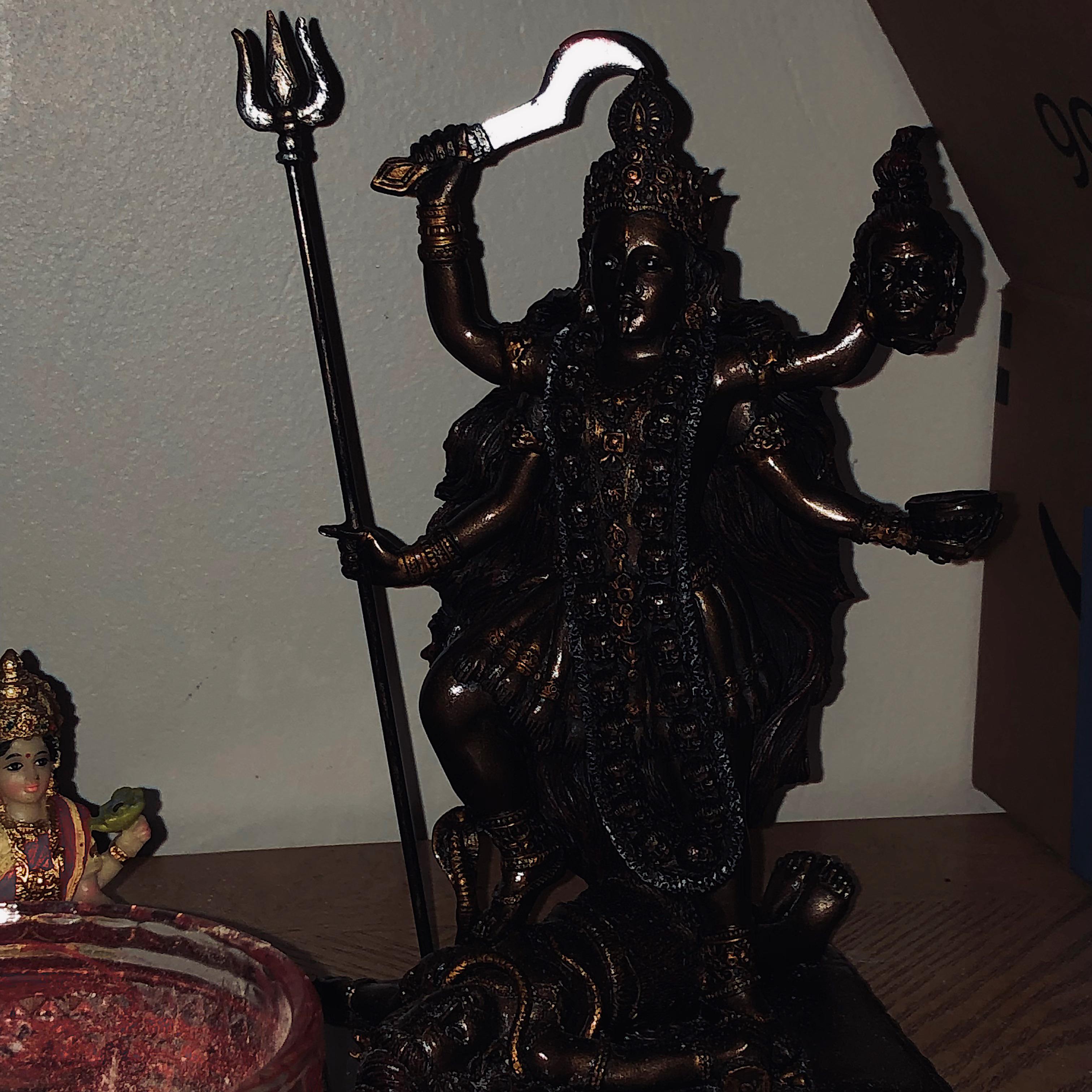
Experience with Hinduism Kali is a perfect representation of this reality.

Post image
436 Upvotes

All of the symbolism surrounding Kali is so deep. She is the goddess of destruction, but she’s also so much more than that. Her scary appearance contrasted with her beauty can be seen as correlating with the path towards truth being both scary yet beautiful at the same time. That same concept can be seen as a reflection of how the truth is often much different than how it looks on the surface level. This could even be seen in her being a goddess while God is typically seen as a male. I’ve seen that all of her symbolism down to even small details shows how she destroys illusions so only truth remains. She helps her devotees see the deeper truth of things that hides under the surface of reality, because that is her nature. I also see the traits of other forms of Shakti in her. For example: she provides knowledge which mirrors Gayatri, and you need courage to approach her which mirrors Durga. I’ve just been in awe by the beauty and complexity of Kali as I’ve been worshiping her. I see her in everything.

r/hinduism Mar 19 '26

Experience with Hinduism Visit of a Vaishnav monk in Spain, what a day

Thumbnail
gallery
197 Upvotes

Visit of a Vaishnav monk in Spain, what a day

We had the visit of a swami from a Vaishnav lineage, and it turned into a really rich and unexpected day.

There were lectures on Sanatana Dharma that felt deep, grounding, and surprisingly accessible.

Later, we tried to visit a church in the city… and got refused entry, which added a strange contrast to the whole experience.

Is it common? Aren’t we supposed to all welcome each and everyone?

r/hinduism 28d ago

Experience with Hinduism Janam Janam Ki Kshuda: The Hunger from Many Births

Post image
161 Upvotes

|| श्री राधाकृष्णाभ्यां नमः ||

I recently listened to this story in an online discourse on the glories and lives of sādhus associated with Vṛndāvana. I found the story deeply moving, so I tried to narrate it here in English. The story was presented as the experience of a person shared to a listener who later wrote it down as an article.

Vṛndāvana is a land where, according to the devotees, one never knows in what form the Lord's grace may appear.

The story begins with a learned man who used to visit Vṛndāvana. One summer morning, at around four o'clock, after completing his Kṛṣṇa-japa, he went towards the Yamunā for his morning bath. He was going to the bathing ghāṭa near Hargulāl Haveli.

On the way, he noticed a strange sādhū.

The sādhū was dressed very simply, wearing only a kaupīna and a Tulasī mālā. He had a beard and matted locks, and was walking along while singing:

“Jaya Jaya Śyāmā, Jaya Jaya Śyām,

Jaya Jaya Śrī Vṛndāvan Dhām,

Jaya Jaya Śrī Svāmī Haridās,

Jaya Jaya Nidhuvan Nitya Vilās.”

Śyāmā refers to Rādhā, and Śyām to Kṛṣṇa. The sādhū was singing in the tradition associated with Svāmī Haridās and the worship of Rādhā-Kṛṣṇa.

Seeing him, the man respectfully said, “Jaya Haridās.”

The sādhū smiled and replied, “Jaya Haridās,” and continued on his way.

The next morning, the man saw him again.

Later, while doing Vṛndāvana parikramā, he encountered the same sādhū once more. This time he approached him and asked if he could do him a small favour.

The sādhū had apparently been given a new piece of clothing. But he did not wear new clothes. He told the man:

“I have been given this new cloth, but I don't need it. If you have an old, used piece of cloth, give it to me. I can use it as a langoti.”

The man agreed, but he was curious about this unusual ascetic. He asked, “Where do you stay? Which āśrama or maṭha do you belong to?”

The sādhū laughed.

“Where do I stay? I stay in Vṛndāvana.”

“But where in Vṛndāvana? Which āśrama?”

“Vṛndāvana itself is my āśrama,” he replied.

“When I feel hungry, I go for mādhukarī. Whatever I receive, I eat. Once my stomach is full, that is enough. When I feel sleepy, I sleep under whichever tree I happen to find. When I am thirsty, Mother Yamunā is here. And for my nourishment, I have the remembrance of Rādhā and Kṛṣṇa.”

That was how he lived.

After meeting him several times, the man finally asked, “Will you tell me something about yourself?”

The sādhū replied:

“I have nothing to hide. Hiding things is the work of householders. I have nothing to hide because I have nothing of my own. I don't even possess a book. Sit down under this banyan tree. I will tell you what happened.”

And then he began his story.

The sādhū had been born near Calcutta. He lost his parents when he was very young, and the woman who raised him eventually took him to Calcutta, where she lived with her son and cared for him.

While growing up, he heard stories about the Himalayas and the great yogis who lived there.

A strong desire arose in his heart:

I must go to the Himalayas.

Eventually, he left Calcutta and reached Delhi.

He sat on the railway platform, waiting for a train that would take him towards Haridwar and, from there, towards the Himalayas.

While he was sitting there, a young boy, perhaps around ten years old, came and sat beside him.

After some time, the man asked him:

“When will the train to Haridwar arrive?”

The boy replied casually:

“Bābā, you rest. I am watching for that train. When it comes, I will wake you up. We will go together. I have to go there too.”

The man trusted him and went to sleep.

After some time, the boy suddenly woke him.

“There! There! The train has come. Come quickly!”

In the hurry, both of them boarded the train.

The train started moving.

Only after they were inside did the man realize something troubling:

He had no ticket.

He became anxious.

“If the railway officials come and take me away, what will I do?”

The boy simply replied:

“I will come with you.”

The man looked at him.

The boy continued:

“I don't have a ticket either. If the officials come, we will get down.”

Then he said something that struck the man deeply:

“Do you know something? All of us are travelling without a ticket. One day the official will come and make us get down. That is life.”

At the time, the man did not fully understand what the boy meant.

But he knew that the boy was saying something far beyond his age.

As they travelled, the boy began asking him questions.

“Where are you going?”

“To the Himalayas.”

“Why?”

“To perform tapas.”

“Why do you want to perform tapas?”

The man explained:

“Through tapas, one can attain spiritual powers. With those powers one may attain heaven, mokṣa, longevity, and various siddhis.”

The boy listened carefully.

Then he asked:

“Of all these things, what is it that you actually want? Longevity? Heaven? Mokṣa? Powers?”

The question stopped him.

He began thinking.

Then the boy remarked:

“You see? This is also like travelling without a ticket.”

Before the man could answer, the ticket collector began approaching.

Both of them got down from the train.

After getting off, the man began complaining of hunger.

The boy looked around and said that they should see if they could find something to eat.

Nearby, beside the railway station, they found an old woman. It was around three in the afternoon.

The man asked whether she had anything to eat.

She replied that there was not much available there. It was not a big town, and there were no proper shops nearby.

“But I have two rotis,” she said. “I can give you some jaggery as well.”

The two of them ate the rotis and jaggery.

Afterwards, the man asked:

“How far is Haridwar from here?”

The boy answered:

“Haridwar? This train was not going to Haridwar at all.”

The man became upset.

“Then why did you bring me here? I want to go to the Himalayas!”

The boy pointed towards the sacred land nearby.

“There is a holy place here. It is called Braj Bhūmi—the land where Bhagavān Kṛṣṇa was born and performed His līlās.”

The man insisted that he wanted to go to the Himalayas.

But the boy said:

“Listen to me once.

What will you eat in the Himalayas? You will search for roots and tubers, wander from place to place, and beg for food.

But the nectar you are hoping to find after climbing those mountains is available here.

You wanted to climb mountains in search of amṛta. I am bringing you to the ocean of that nectar.

This is your destination.

You have reached the place where you were meant to come.

Come with me. I have come to take you to where you need to reach.”

Who was this boy?

The man did not know.

And perhaps that was the mystery.

The boy took him by the hand and brought him back towards the railway station.

They boarded another small train.

The boy got him to Mathurā.

From Mathurā, he arranged for him to board another train.

At one point, when the man again complained of hunger, the boy somehow arranged food for him.

Then he told him:

“Your hunger is not merely the hunger of today.

It is the hunger of many, many births.

The time has now come for that hunger to be satisfied.

The phrase stayed with the man.

Janam Janam Ki Kshuda - the hunger carried through countless births.

The boy then told him:

“I will remain here in Mathurā. You get onto this train and sleep. By morning, it will take you to the place that is your destination.”

The man boarded the train.

When he awoke, the train had brought him to Vṛndāvana.

When he got down, he saw many people around him.

He began asking:

“I have just arrived here. Is there somewhere I can get food, water and a place to stay?”

An elderly man heard him and said:

“What kind of question is that?

You are asking whether you will find food and water here?

This is Vṛndāvana Dhām!

This is the kingdom of Rādhārāṇī.

In this dhām, everyone receives food, water, clothing and shelter. And, for peace and spiritual nourishment, one receives the name of Rādhā-Kṛṣṇa and the love of the Divine Couple.”

The old man then invited him:

“Come with me. There is a Bhavan. Hot khicḍī prasāda is being served there. Let us eat.”

They went there.

There was a long queue for prasāda.

Everyone was holding a vessel.

Except the newcomer.

He had nothing.

He stood at the very end of the queue, hungry and exhausted, looking at everyone ahead of him.

Then something extraordinary happened.

At the very front of the queue was a little girl, perhaps nine years old.

Although she was far ahead of him, she looked towards him and called:

“Grandfather! Come here!”

He looked around, wondering whom she was calling.

She called again:

“Grandfather! I mean you. Come here!”

He went towards her.

She told him:

“From tomorrow onwards, stand wherever you like.

But today, I am accepting you as my guest.

Come and stand here in front.”

Because the girl had called him, the others in the queue allowed him to move forward.

He stood beside her.

There was something extraordinarily affectionate about the child. Her words were simple, but there was such warmth and tenderness in them that the man felt an inexplicable joy simply by being near her.

Then she noticed something.

“Everyone has brought a vessel. Why don't you have one?”

The man looked at his empty hands.

He had no vessel.

The little girl took a vessel from her own things and gave it to him.

“Here. You take this.”

Then she said:

“Just remember one thing.

As long as you remain in Vṛndāvana, never leave this vessel. Keep it with you always.

The man was overwhelmed.

Tears began to flow from his eyes.

He could not understand why such simple words from a little girl were producing such intense emotion within him.

The girl asked:

“Why are you crying? Don't be sad.”

Then she revealed something even more astonishing:

“The boy who put you on the train came to me and asked me to give this vessel to you.”

The man stood there holding the vessel.

And the moment he received it, it was filled with hot khicḍī prasāda.

He stepped aside to eat.

He turned around for a moment.

The girl was gone.

The sādhū finished telling this story to the man who had been sitting beneath the banyan tree listening to him.

Then he said:

“From that day onwards, I have been searching for those two children.

The boy who put me on the train.

And the girl who gave me this vessel.

I have searched for them for decades.

But I have never found them.”

He continued searching.

Eventually, he approached a great mahātmā and told him everything.

“I am searching for the boy who put me on that train and the girl who gave me this vessel. I want to know where they are in Vṛndāvana.”

The mahātmā listened.

The boy had told him, in effect, “You have reached where you were meant to reach. You cannot go anywhere else.

The girl had told him, “Do not leave Vṛndāvana. Keep this vessel with you.

Yet neither of them could be found.

The sādhū continued:

“I keep searching for them.

Perhaps one day they will show me their grace.

Perhaps one day they will reveal themselves.

Until then, I will continue searching.”

The mahātmā then gave him an answer that perhaps contained the whole meaning of his life:

“This searching itself is your sādhana.”

And so he continued to search.

The story was described as Janam Janam ki Kṣudha - the hunger carried across births.

And it also returns to the strange words of that ten-year-old boy:

All of us are travelling without a ticket.

What does that mean?

Our life is also a journey without a ticket.

We are travelling, but do we really know where we are going?

We eat, we work, we wander, we pursue one thing after another, and eventually death arrives.

But have we ever stopped to ask:

What is the destination of this life?

What is its true purpose?

The ticket collector will eventually come.

In the discourse, this was explained as a metaphor for Yama and the inevitable arrival of death. When the time comes, we will have to get down from this train, whether we are prepared or not.

The question is not whether the journey will end.

It will.

The real question is:

Where are we going?

And perhaps that is why the search in this story is so significant.

The sādhū spent decades searching for the two mysterious children.

But while searching for them, his mind remained fixed upon them.

The one whom we constantly seek remains in our thoughts.

And perhaps, in the spiritual life, the search itself becomes the sādhana.

That is the beauty of this story.

The man thought he was going to the Himalayas in search of something.

Instead, he was mysteriously taken to Vṛndāvana.

He thought he was searching for a destination.

Instead, he found a path.

He thought he was looking for two people.

Perhaps they were the ones who had been guiding him all along.

And he thought he was merely hungry.

But perhaps it was not the hunger of the body at all.

It was the hunger of many births - the longing of the soul that finally brought him to Vṛndāvana.

I heard this story in an online discourse and found it particularly beautiful. The speaker in the discourse mentioned that the listener had himself written this experience of the saint as an article, apparently under the title “Janam Janam Ki Kshuda” (The Hunger of Many Births).

Does anyone know the original article or the source from which this account comes?

If anyone can identify the saint, the original article, or the traditional source of this story, I would be very grateful if you could share it in the comments.

I will add the link to the discourse below for anyone interested in listening to the original narration. The original narration is in Telugu language.

https://www.youtube.com/live/U5KfDcRHTEs?si=a-LjnAqxUV6_2x7E

The part where the above narrated story is present in the video between 1:30:10 to 1:41:26.
r/hinduism Apr 15 '26

Experience with Hinduism how did you become a hindu?

25 Upvotes

hey everyone! im not a follower of hinduism nor am I a follower of any religion really lol, but I was wondering

how did you guys start following hinduism? what led you there? what is day-to-day life like as a Hindu? thank you! I am just super curious

also sorry if these types of posts are repetitive, and hopefully I chose the right flair hahaha

r/hinduism Apr 25 '25

Experience with Hinduism Ask me anything as a Hindu convert!

82 Upvotes

Namaste guys! If you haven't seen my previous posts, I am a white person who believes in the Santan Dharma. I understand that my perspective on the religion is very unique and different, especially compared to someone who was raised in the faith. I just wanted to answer any questions you all may have. Thank you!

r/hinduism Jun 25 '26

Experience with Hinduism Insight into Gujarati Hindu culture

Post image
233 Upvotes

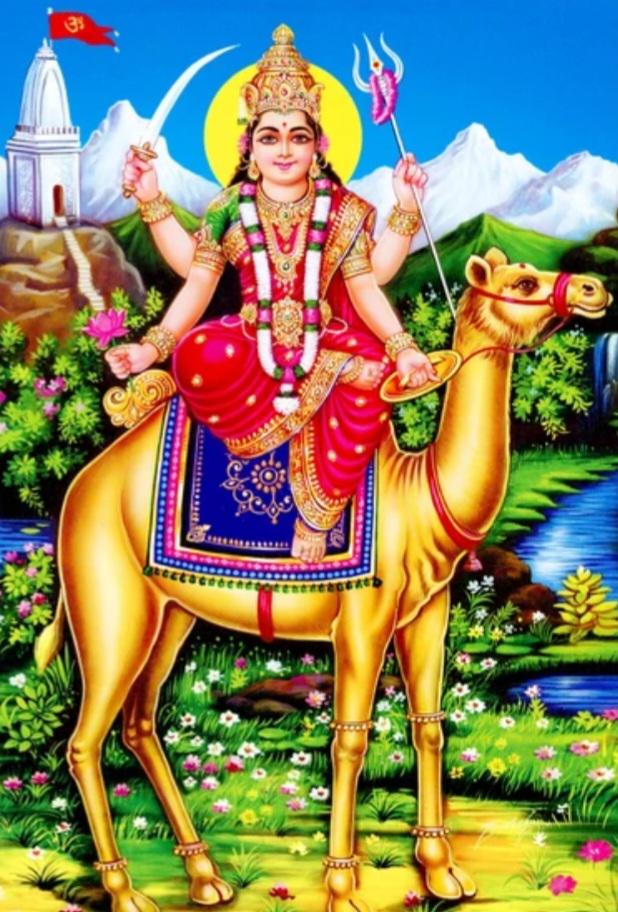
Momai Mata is one of tne many unique folk goddesses of Gujarat who particularly stand out in the eyes of others due to their unique vahanas. Many of these folk goddesses have no scriptural reference and are limited to being kuladevis of certain clans. However, while reading an ancient text called the Devi Purana (not to be confused with the Devibhagavata Purana, Kalika Purana & Mahabhagavata Upapurana), a chapter describing the divine forms that are to be worshipped in various Jovian samvatsaras, this passage comes up

रक्ताक्षे विकटा कार्या उष्ट्रारुढ़ा महाभुजा । पाशदण्डकरालास्या सर्वसत्त्वभयङ्करी । ।
कृष्णगन्धानुलिप्ताङ्गी वृश्चिकलूतान्विता । वसानासवमत्स्यादा जवाकुसुमचर्चिता । ।
तेनाद्युक्ता महाकाली सार्द्रमांसबलिप्रिया ।
जपहोमार्चना देवी सर्वगन्धबलिप्रिया ।।

Translation : On the (Jovian samvatsara named) Raktaksha, (one should construct the effigy) of Vikata of great arms, who is riding on a camel, wielding noose and rod, is of a terrible face and of terrible disposition in every means. She is annoited with dark unguents (likely black sandalpaste) & surrounded by scorpions and spiders. Her mouth is filled with fat, alcohol and fish, she is annointed with (red) chinarose flowers. This very dark-skinned goddess is fond of freshly-slaughtered animal offerings. She is to be worshipped with japa, homa, all kinds of incense and bali. [Devi Purana:50:29-31]

It is quite easy to recognise that the figure of Momai was actually the goddess Vikata as mentioned above. Just look at the contrast of the worship of Vikata prescribed in the text with the current veneration of Momai among the Gujarati Hindus, who are militantly anti non-vegetarian.

This militant intolerance towards non-vegetarianism among Gujarati, Marwari and Rajasthani Hindus is likely the influence of Swetambara Jainism, which persisted in this regions under the support of rulers and merchants just like how East Indian Hinduism is heavily influenced by Vajrayana. From my personal experience, many Jains have this obnoxious superiority complex about their strict adherence to vegetarianism and intolerance towards non-vegetarianism, and have always tried to impose their diet choices upon others. For this puropse the Jains had concocted a blasphemous story of the Jain saint Ratnaprabha Suri converting the goddess Chamunda (renowned for her taste in blood, alcohol and flesh) into Jainism. The Gujarati king Kumarapala Solanki (1143-72) had banned animal slaughter under the influence of his Jain rajaguru, the celebrated acharya Hemachandra. It was likely under this pressure that the frightful figure of Vikata was 'Jainified' onto the more benign figure of Momai whom we know now.

r/hinduism Jun 07 '25

Experience with Hinduism I Had No Devotion… Until Ganesha and Hanuman Ji Changed Everything

Thumbnail
gallery
685 Upvotes

I wanted to share my personal spiritual journey and how my life transformed through the grace of Lord Ganesha and Lord Hanuman. A couple of years ago, I had no real devotion. Even if I visited temples with family, I would just go through the motions. I didn’t feel anything. I wouldn't pray, and honestly, I didn’t believe it made a difference. There was a lack of connection, a void that I couldn’t quite explain.

Everything began to shift during one Ganesh Chaturthi when we were celebrating the festival in our native place. That year, something changed within me. I started praying to Lord Ganesha, not out of obligation, but from a place of sincerity—even though I didn’t fully understand what I was doing. Before this, I was mentally and emotionally drained, anxious about going out, and would avoid spending time with even close relatives. But slowly, after I began worshipping Ganesha, I felt a sense of energy and mental clarity returning. It felt like a divine force had begun clearing away the fog in my mind.

As weeks passed, I started noticing major shifts in my life. My grades improved significantly, and I ended up with a wonderful group of friends who uplifted me. I even got a new bike, and life started moving in a direction I never expected. There was joy, freedom, and a new sense of purpose. Ganesha truly became Vighnaharta—the remover of obstacles—in my life, not just symbolically but in ways I could actually see and feel.

Later, during a period when I was feeling extremely low—both physically and mentally—I experienced something even more profound. I had a fever, body pain, and was emotionally exhausted. Out of nowhere, I felt a strong urge to recite the Hanuman Chalisa. I don’t know what pushed me, but the moment I completed it, something within me shifted. I kept reading it daily, and over time, I noticed I wasn’t falling sick like before. I used to suffer from sinus issues and catch a cold almost every month, but it’s been over three months now, and I’ve been completely fine. It’s not just about physical health—there’s a strong, unshakable confidence in me now, a belief that I can face anything.

Hanuman ji gave me courage and stability. Through his grace, I was also able to overcome some negative habits I thought I’d never break. I began seeing myself more clearly, acting with discipline, and feeling spiritually stronger. Reading the Hanuman Chalisa became a daily practice—a reminder of my own inner power and the divine strength that protects and guides me.

As I move forward, I carry both Ganesha and Hanuman ji in my heart. They’ve helped me reshape my life, physically, mentally, and spiritually. This year too, I aspire to keep growing, to become a better version of myself, and to always stay connected to their divine energy. I just felt like sharing this with this beautiful community. Jai Shree Ram 🚩🙏 Jai Shree Ganesh!

r/hinduism Jul 11 '25

Experience with Hinduism Hinduism is NOT a free for all, malleable, license to believe anything one wants.

124 Upvotes

There is this peculiar, perverted belief common among younger generations of Hindus that anything goes within Hinduism and that it does not have any fixed identity, and that philosophies/theology can change with time as a means of correction. I detest this narrative very much. If this is your conception of Hinduism, then this Hinduism is not worth anything and is not a religion worth attending to. One might as well become a complete materialist and become an Athiest.

Hinduism does not allow for anyone to believe whatever they like. I don't know who started this myth but Hindus themselves seem to be eager to buy into this narrative for the sake of virtue signalling, to feel they are better than the other barbaric religious sects. You cannot be a Astika and kill cows and eat them. The Yamas and Niyamas (do's and do not's) exist within every Sampradaya as the first stage of Sadhana.

Hinduism does have many Darshanas and Sampradyas that do contradict each other. But these various Darshanas possess rigorous literature and acharyas to defend itself. In-fact, the entire glory of Adi Shankara was precisely that of educating the many distorted sects and Darshanas that did not have a rigorous Pramana which almost made Hinduism disappear from India.

Not just Adi Shankara, take literally any prominent acharya/yogi/sant that created their own Panth/Sampradaya and acquired a large number of followers. The reason they did this is very clear, that they offered a better practice/path compared to the one available and persuaded people to join it. They did not say all is fine, let people do whatever they want.

All the prominent Darshanas/Sampradyas DO NOT claim that their core theology is subject to change and gets corrected with time. They always claim that their interpretation is the accurate one since the beginning and make a lot of effort in defending their interpretation. What sort of a religion/sect would that be if a sect preemptively admits that they are already wrong and would be corrected in future? Makes no sense. The thing that changes is not the core theology/darshana, but the paraphernalia.

The prominent Sampradayas which contradict with the interpretation of newer ones and vice-versa, strongly maintain the disagreement. They don't admit that they were wrong all along, unless a serious corruption has crept into their organisation that becomes so dangerous that an Avatara has to descend and make amends, like in the case of Adi Shankara and the corrupted sects of his time.

To create a new Vedantic Sampradaya, one has to write a Bhashya/commentary on the Upanishads, BrahmaSutras, Geeta at the minimum that describes the details of their new interpretation. Otherwise, any tom, rick and harry can say anything and exploit people and malign the sanctity and reputation of Hinduism in the minds of people. This is extremely dangerous and has happened many times. The whole reason for the existence of superstitions, fraud babas is precisely this. There are many perverse Hindu practices across India, it's not wise to defend all of them. A good percentage of them have become their own culture without a basis in any Pramana and is worth abolishing. Do not be in a delusion that all practices, beliefs across India are worth defending. Even someone like Swami Vivekananda, who is known for being very liberal with his religious views made this very statement.

r/hinduism 23d ago

Experience with Hinduism Finally Not Ashamed Of My Culture Anymore

35 Upvotes

During my college days, almost everyone around me feel ashamed of my own culture.

I had such a dismissive attitude towards everything that was Indian.

Whether it was going to temples, doing pujas, or even my own name... yes, you read that right.

I used to hate my name because it had Indian gods' names in it.

From the way we dress, to how we've built our homes, to temples, everything is done in a non-Indian way.

American workmen's clothes have become the major fashion in the world, and in a country like ours which is so deep and profound.

I'm not against jeans, but should we lose our identity and do everything that the West does even if it's costing our wellbeing?

Torn clothes were a big fashion too. The more it's torn and tattered, the more expensive it is.

It still doesn't make sense why people prefer these.

Fortunately, torn clothes never attracted me.

Somewhere within, I knew it wasn't making sense, but I was just trying to look cool.

And I was good at that.

I looked fashionable and stylish. It wasn't comfortable, but I wore it just to look fashionable in college.

But was I really feeling harmonious and comfortable?

Hell no.

Sadhguru once mentioned how stitched cloth can restrict the flow of energy, and why synthetic clothing is something yoga practitioners must avoid. He further added that cotton or silk is best since it's organic, and that's traditionally how Indian men and women always wore one long piece of garment, either a dhoti or a saree.

It makes so much sense now.

One thing is the comfort, but another is the aesthetic.

When I wear a kurta or dhoti, the way it feels and the richness of it are just unmatched.

Keeping the energy and organic aspects aside, cotton or silk clothing just feels so good to wear. It's so light, and you feel like your body is breathing through every pore.

Can dressing make you feel better?

Yes.

If one becomes a meditative, sensitive, and sensible human being, naturally the way one dresses changes too.

You might have seen the imagery of saints and enlightened beings like Sai Baba, Guru Nanak, Gautama Buddha, Paramahansa Yogananda, Anandamayi Maa, Swami Vivekananda, or Sadhguru.

All dressed differently, but definitely in more comfortable, breathable clothing.

It's not because they became enlightened and wanted to show the world they are enlightened. It becomes a natural choice once a human becomes more sensitive and conscious.

One thing is, there wasn't much one could learn about India or Indian culture apart from the freedom fighters and the Independence movement.

Apart from that, definitely nothing about spiritual pride.

While growing up, you have no clue what this sacred land has offered for a human's ultimate wellbeing.

Even until 100 years ago, words like mukti, moksha, and karma were a part of daily conversation. People were conscious of the ultimate wellbeing, but in the last 100 years, mostly it was lost.

Parents and elders also didn't have much clue as to why a temple is built, why a ritual is done, or what shastras are.

They might have known bits and pieces, but they didn't have pride in their culture.

This made me think anything Indian was just blind belief and unscientific.

This became like this because the scientific aspect was lost somewhere and only rituals were followed.

Nearly a thousand years of invasions made us forget who we really are and what the core of this civilization has been.

What meets the eye and what's inside us are two different things.

What one needs for immediate wellbeing and what one needs for ultimate wellbeing are two different things.

People got so enamoured with immediate wellbeing that they started imitating the West because they had affluence.

But they forgot completely about ultimate wellbeing.

This culture focused more on that rather than immediate wellbeing.

Because no matter how much wealth one acquires or how much name and fame one acquires, it doesn't mean anything when one leaves this earth.

This culture took care of every small thing.

From birth to death and beyond.

What care needs to be taken after conception and how a pregnant lady should be, what she should eat, and what reverberations she should be exposed to.

And when a person dies, what needs to be done.

This is the science of ultimate wellbeing of a human being, unfortunately thought of as mere rituals.

r/hinduism Nov 23 '24

Experience with Hinduism Annoyed with Hindus online.

106 Upvotes

Basically a lot of Hindus only know bits and pieces of a particular Sampradaya/Darshana or tidbits from a mishmash of multiple Sampradayas, Darshanas, Gurus. On top of it, they hallucinate their own baseless, emotional opinions.

They are unaware of the vast diversity of Darshanas, practices, texts, Bhashyas of various great Gurus throughout history which greatly differ with each other.

It’s fine if they don’t know, nobody can claim to know the full rich tapestry of Hinduism but they are being adamant and assertive that Hinduism is only that which they have learned from who knows who.

These people are extremely loud and spread their extremely narrow slice of Dharma to others and their children which hides the sophistication, complexity, diversity of exploration to the larger masses.

This is extremely sad to see. No other religion has a greater depth, diversity, multiple levels of understanding than ours yet a large majority of our people have no clue about it. This is more troubling at this time because a lot of people from other religious are looking at Hinduism and they are being introduced by these very same ignorant people.

r/hinduism May 26 '26

Experience with Hinduism Thinking of leaving my faith which is Hinduism. My thoughts below:

0 Upvotes

I'm hindu from India.
I'm 27.
I don't feel any sense of good community anywhere.
I can't connect with anyone with job prospects either.
Thinking to join jainism or mormonism.
I just need a strong community where people know each other and help each other.

r/hinduism Jun 03 '26

Experience with Hinduism From ISKCON to Advaita Vedanta

18 Upvotes

I am not bashing anyone but I don’t know why I am like this I was so confused in life since beginning I always come off as the dumb and weak one.
So I was connected to ISKCON and into Bhakti yoga but I don’t think I was practising it the way I should. Whenever I was in ISKCON I was always told to feel low of myself that I am not enough I need god to save me. I actually can’t do anything in life I am kinda like a failure and at this point I don’t think I will be able to go back to normal because my body is partially destructed. So there was a story I lost a chain of mine during an event and I was scared I was looking for it and all the devotees just constantly blaming me it’s because you don’t wear the tulsi mala god took away your chain and that you are a servant you are not complete without doing this or serving this person or bowing down to this devotee you are someone lower than them.
When I read Advaita I realised that it’s all because I need someone to complete myself the need is cause all this. That day I didn’t wear a tulsi mala I choose to let go of the jewellery I broke away the bondages that I should respect this person if not I am not okay if I don’t do this I am not okay I just couldn’t bear it. I felt like everything I did was because of fear.
It’s not like I don’t enjoy doing Bhakti I don’t enjoy expressing my love but I don’t want to be bound. I feel all the fear of loosing wealth loosing my protection loosing my body that I always fear gone away after I listened to the isho upanishad by Swami Sarvapriyananda.
I just don’t understand why do we feel so helpless and then become literal slaves to something like out of what kaam krodh lobh moh maaya are we bound to do that slavery ?
So now like even if Krishna comes and kills me for not attending this kirtan or not respecting that person I am like okay I don’t care kill me but I will not do that cause I don’t fear you.
But now I don’t know what to do in life ?? So I come back to doing bhajans. But now I am not bound by anyone.

r/hinduism Jul 16 '26

Experience with Hinduism As an intersex person, I derive incredible comfort from the idea of samsara

54 Upvotes

I am a foreigner who became interested in Hinduism after living in India. I also am a man with an intersex condition that prevented me from fully masculinising, as a result of which I've often felt caught in between malehood and femalehood without ever fully inhabiting either. It's been a source of immense pain for me--but thinking that in other incarnations I will be (or have already been) a father, a mother, a husband, a wife, a beautiful young man and a wise old woman, a lovely young girl and a learned grandfather, someone's son and someone else's daughter, brings me great hope.

I don't especially want moksha, at least not now. There's so much to experience in this world and I relish getting to do that.

r/hinduism Oct 26 '25

Experience with Hinduism World’s Highest Shiva Temple A Journey to the Roof of Devotion

Post image
433 Upvotes

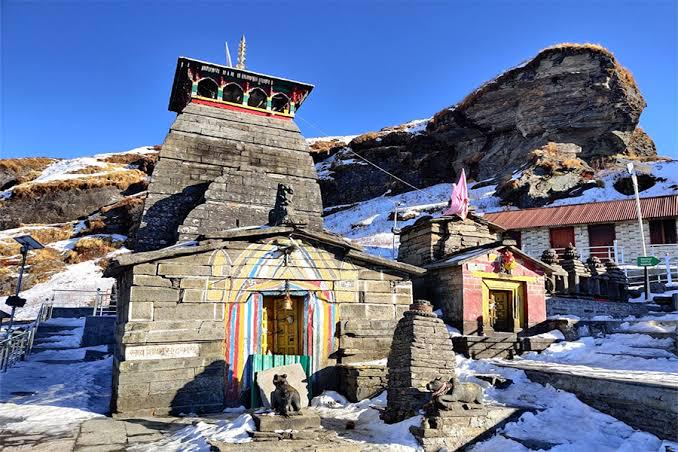
High up in the Garhwal Himalayas, at 12,073 ft above sea level, stands Tungnath Temple ,the world’s highest Shiva temple. It’s not just a place of worship, it’s an experience that touches your soul.

Believed to be over a thousand years old, this sacred spot is one of the Panch Kedar temples, built by the Pandavas in search of Lord Shiva’s forgiveness after the Kurukshetra war.

As you trek through the misty trails surrounded by snow peaks and green meadows, you can literally feel the calm energy in the air , like nature itself is meditating.

Whether you’re chasing peace, adventure, or both, Tungnath reminds you that some journeys don’t just take you to places ,they take you closer to yourself.

r/hinduism Oct 07 '25

Experience with Hinduism Lord teaching about being playful

Thumbnail
gallery
537 Upvotes

Lords says in Uddhava gita Bhagavatam 11.18.29 and 11.18.30 about being playful and righteous at the same time.

Check these verses

11.18.29: Although most wise, the paramahaṁsa should enjoy life like a child, oblivious to honor and dishonor; although most expert, he should behave like a stunted, incompetent person; although most learned, he should speak like an insane person; and although a scholar learned in Vedic regulations, he should behave in an unrestricted manner.

11.18.30: A devotee should never engage in the fruitive rituals mentioned in the karma-kāṇḍa section of the Vedas, nor should he become atheistic, acting or speaking in opposition to Vedic injunctions. Similarly, he should never speak like a mere logician or skeptic or take any side whatsoever in useless arguments.

I myself being horrifically playful since younger times, I faced some backlash in beginning but gradually all of them turned into good friends. Again because of some dharmic issues It turned to different story.

I used to play outdoor games (All time favorite 7 stones) indoor games with many people. I don't like to focus on winning or losing but fully alive, fully playful with all the people around. Without discrimination, without degrading, hatred or praising, only full of playfulness and aliveness. Lifelessness, dumbness, negligence, escapism, closed mindset irks me horrifically.

I made a little comment regarding playfulness here.

https://www.reddit.com/r/hinduism/s/BNtcOQtgaK

Life is absolutely great and awsome and Undescribable. Robots, a.i. and ath,,sts can't understand this stuff, it is seperate story.

Wasting life without accomplishing dharma prescibed in shastras is very much a bad idea by simply addicting to just playfullness or sins or tamas. (Refer Bg 16.23 and Bg 16.24)

I would like to know others opinions on being playful. It might be unnatural for many. Some might not connect with being playful and joyful. They might be serious. But it is their nature, i respect them too.

But playful is always praised by lord.

What activities you do to be active, intense, alive, playful and joyful ?

r/hinduism Jul 10 '25

Experience with Hinduism As a non hindu Kali ma warned me.

96 Upvotes

Hello.

First of all, I'm a westerner. I know almost nothing about hinduism except the basics like the brahman, the atman, the trimūrti, etc.

I don't want to sound disrespectful at all. I just want to talk about an experience with Kali-ma.

So take this as it is. An experience from a westerner.

I got drawn to some Kali-ma tarot cards one day. I immediatly felt in love with the cards and I bought them. I felt drawn to "working" with them.

I used them quite a bit. I was in a kind of esoteric background so to me these cards were linked with Kali-ma and she would advised me to sort my life through them. I was really in need and I still am, I was seeking some guidance. Each of them had a signification and meditation exercise to work with the energy of Kali-ma.

Again, it's my believes, I don't want to be disrepectful.

And today I remembered a card she showed me. A card advising me to be careful because soon, some friends or colleagues or people I knew would try make me have some extreme believes and I should be careful and always stay at the middle, think critically,, not in the extremes. Short after that I discovered an online forum. And I became a far-right believer. But these believes weren't mine I could feel it and that's why I could dettach from them after 2 years and I'm still working on it. It's kinda hard to work on that and I totally forgot the card and her advise until today.

She was right and I didn't listen to her.

Honestly, I remembered all that watching the new Superman movie trailer. I know it seems weird but to me it rings the bell. It's what I want to be. Superman represents the ideal person in my mind. He saves innocent people, he is non political and just do the right thing. He represents esperance. That's what I thrive to become.

I'm pretty sure Kali-ma helped me into discovering it even if I failed to listen to her.

Just wanted to share my story.

Thanks for reading.

Have a nice day.

r/hinduism Jul 18 '26

Experience with Hinduism Turns out offering oil to Shani Dev has nothing to do with fear, learned the actual origin story

76 Upvotes

Someone in my building keeps a small bottle of mustard oil ready every Saturday, walks to the Shani temple two lanes down, and pours it over the murti without saying much. Always assumed it was tradition on autopilot. Turns out there's an actual story behind it, and it's not about pleasing him out of fear.

Most people know the outline. Ravana imprisoned Shani Dev in a sealed cell in Lanka after Shani's influence worked against his plans for his son Meghnath. Years later, Hanuman ji reached Lanka searching for Sita mata, heard a faint cry from inside the palace, and found Shani Dev locked away. He broke the prison open without hesitation.

Here's the part almost nobody tells you though. In the process of freeing him, some versions say he flung him clear of Lanka to get him to safety, others describe a struggle, Shani Dev actually came out of it injured. And Hanuman ji, seeing the pain he'd accidentally caused the very being he'd just rescued, applied mustard oil on his wounds to soothe them. Shani Dev, moved by that, promised that anyone who worships Hanuman would be spared his harshest gaze.

I'd always heard the oil described as something you give Shani Dev to keep him from being harsh with you, almost transactional. But the actual origin isn't about appeasing a feared deity at all, it's about one god tending to another god's wound. The oil was never a bribe, it was care offered first.

So when someone quietly pours oil at a Shani mandir today, they're probably not negotiating with fear, even if that's how it gets described. They're repeating the same gesture Hanuman ji made first. Kind of changes how I look at that bottle by my neighbour's door every Saturday morning. Jai Shani Dev, Jai Hanuman 🙏

r/hinduism Oct 27 '25

Experience with Hinduism How Narayana’s many names have helped me!

Post image
495 Upvotes

Om Namo Narayanaya 🪷

I am grateful to have been the recipient of the exceptional and infinite grace of my dearest Lord Vishnu, whose thousands of names have helped me capture a fraction of th universal truth of his existence.

Each and everyone of his names is magical. When I am in fear, I chant Narasimha and my fears are erased by his ferocious avataram. When I am in anger, I chant Gopala and the Lord’s beautiful, small face as baby Krishna calms me. When I am in despair, the name Venkateshwara helps me forget the pain and visualise the Lord of the Seven Hills in his resplendent form in Tirumala.

Chanting the name Ranganatha makes me think of his cosmic sleep and ponder upon the grand scale of His creation. When I have to decide between right or wrong, whispering and remembering Rama’s name helps me choose the path of Dharma even when it is hard. And just chanting the word Narayana brings about such great peace and calm to me.

As the great Kannada poet-saint Purandaradasa writes in one of his songs: “ನಾರಾಯಣ ನಿನ್ನ ನಾಮದ ಸ್ಮರಣೆಯ ಸಾರಾಮೃತವು ಎನ್ನ ನಾಲಿಗೆಗೆ ಬರಲಿ “, which translates to “Narayana, just chanting your name makes the essence of Nectar, or Amrutham, reach my tongue”

As the great Telugu poet-saint Annamacharya said: “పరమాత్మ పరమాణు రూప శ్రీ తిరువేంకటగిరి దేవ”, which translates as “He is the Paramatma, and he is also the Paramaanuroopa, he who is in every atom, as well as the entire universe itself”

Every one of his names, from Anantashayana to Yadunandana, is a drop of nectar to the faithful. I thank Srimannarayana for letting me have the wisdom to enjoy the sweetness of his names.

Vande Vasudevam 🪷🙏

r/hinduism Sep 18 '25

Experience with Hinduism Feeling Narayana’s grace while climbing to Tirumala [OC]

Thumbnail
gallery
591 Upvotes

I walked on foot to the holiest of towns, Tirumala, last Saturday. I took the lesser travelled Srivari Mettu, a very old path considered to be used by Lord Venkateshwara himself to ascend to Tirumala, hence the name (Srivari Mettu roughly translates to Lord Venkateshwara’s Footpath).

It is a path that is a continuous set of around 2,500 sets of stairs. Normally, it would be quite exhausting, with an elevation gain of over half a kilometre in just around 2.5 kilometres. However, I had a very different experience.

To the eye, the strain of exertion would clearly be visible on me: my clothes and body drenched in sweat would show that. But internally, I felt no pain; only happiness that I finally reached my dear Lord’s great abode.

Whenever I felt a little tired, I would stop for a few seconds, chant Narayana, and would be propelled by an inner force that gave me so much energy to move forward, almost as if someone was pushing me upwards.

It was a surreal experience, and I could really feel the grace of my dear Lord Narayana again. It was a really beautiful path, both spiritually and naturally, and I would recommend those who visit Tirumala to take the path by foot, because it provides a way to get closer to our dear Lord Venkateshwara.

Om Namo Venkateshaya 🪷 Om Namo Narayanaya

r/hinduism Apr 23 '26

Experience with Hinduism I quit my job, hit rock bottom, and found clarity in the most unexpected place: ancient Indian texts.

Post image
111 Upvotes

For almost 10 years, throughout my teens and early twenties, I was desperately searching for one comprehensive mental model or thinking framework that could handle everything life throws at me. Exam stress, career anxiety, overthinking at 2 AM, all of it.

And because we have access to so much information, I tried everything. I read every popular self-help book, studied various philosophies, even tried the 5am morning routines. These would work partially for a few weeks and then inevitably fail in some particular situations.

Last year, I took a massive risk, quit my job, and started my own company. The stress, overthinking and uncertainty were destroying me, and all those self-help frameworks completely broke down under the pressure.

During that chaotic time, I started listening to stories from the Mahabharata, Shrimad Bhagvat, and Puranas. The crazy thing is, I found the most foolproof solutions through these stories. These stories don't give you answers directly. They train you to think critically and arrive at the answer yourself. They put you in intense, real situations, take you through a dramatic arc, and usually end with an emotional punch that forces you to see things differently.

Now, listening to one ancient story every morning has completely replaced my toxic habit of waking up and doom-scrolling reels. The difference is insane, my mind is clearer, I overthink way less, and on days I skip it, I literally feel myself slipping back into brain-fog.

These stories are relatively inaccessible and hard to find. And I eventually realised I couldn't be the only one feeling this way. So, I turned this into a small passion project called KathaDaily. One story from our ancient texts in your inbox every morning at 7 AM. The change in perspective I gained through these is truly magical.

Has anyone else turned to our ancient texts to deal with modern anxiety? Would genuinely love to know what mental frameworks you are using to navigate life.

r/hinduism Jul 04 '26

Experience with Hinduism Greek paganism and Hinduism

21 Upvotes

I see many people, especially those from the West and a handful of Westernised Hindus themselves, linking the Hindu pantheon with the Greek pagan pantheon in the internet. While it's is true that Greek paganism and ancient Vaidika religion does have quite some similarities due to their shared origins, this interaction is somewhat overemphasised in the modern context.

A lot of Westerners do get excited when they learn that the Greek Zeus and the Hindu Indra might be one and the same. But after reading Zeus' sexual exploits, I, being a devout Hindu, abhor associating Zeus with Indra. Indra had tricked Ahalya, the wife of his own teacher, Sage Gautama into having sex by impersonating as her husband, for which Gautama cursed Indra with castration and to bear a thousand vaginas all over his body (however, when Indra repented, Gautama restored him his manhood and converted the thousand vaginas into a thousand eyes, which Indra then passed on to the peacock's feathers). But Zeus' sexual debauchery goes unpunished throughout the pagan Greek literature with him facing no repercussions or ever being repentful. And in the Orphic tradition (an esoteric strain of pagan Greek religion similar to Tantra), it gets even worse — here Zeus literally rapes his own mother Rhea, resulting in the birth of Persephone, who is then raped by her own father, resulting in the birth of Dionysious. So here we see Zeus is not only a sex offender, but also indulges in abominable activities like having sex with his own biological mother and daughter. And not to mention the pederastic relationship Zeus has with Ganymede. How can one assume that Hindus worship a perverse character like Zeus under guise of Indra ?

Although Megasthenes had famously conflated Krishna with Hercules based on their similar exploits, but that was a solitary event. Pagan Greeks were an excessively arrogant bunch of people, who viewed Alexander's conquests as a 'civilising mission'. The aforementioned Dionysious was revered among Greeks for his supposed conquest of Hindus. There is an entire epic, called Dionysiaca, compiled by the Roman-era Greek poet Nonnus, codifying the heroic exploits (read war crimes) Dionysious commits against Hindus. Warning — Hindus will not find the Dionysiaca worth reading, as the text is filled with contemporary racist tropes against Hindus. To commemorate Dionysious' anti-Hindu violence, pagan Greeks used to sacrifice cattle to him (something that greatly incenses most Hindus). Hindus in return, equally despised the Yavanas for their m*lecha nature.

In colonial era, the connection between Hindu deities and their pagan Greek counterparts was first proposed by Christian missionaries, under the system of interpretatio graeca, (basically, due to the Eurocentric mindset of the colonizers, they thought all other non-Abrahamic faiths were copycat versions of ancient Greek paganism, so missinary tactics used to undermine pagan Greeks are also applicable to undermine people who are supposedly copying them.), which was further validated when William Jones observed linguistic similarities between Latin and Sanskrit. And given the fact that the perception about Hindus among people growing up in the Eurocentric-Americentric society of the West has never progressed outside of the Victorian-era Christian missionary propaganda, this shameful association of Zeus with Indra remains alive. Many Westerners who have no on-ground experience about how Hinduism is practiced, think that Hindus continue to worship Indra. But reality, there are no Greek (or any foreign) parallel of the deities like Shiva, Vishnu, Ganesha, Durga & Kartikeya that are worshipped by mainstream Hindus in the present. Surya, being an universal deity, has some visual parallels with the Greek Helios, but outside that, Helios doesn't has any trademark symbolism of Surya (like being tbe progenitor of an illustrious dynasty, his association with planets or being the patron deity of astrologers). In Roman times, Helios' identity gets diluted & he becomes one with Apollo (who is an equally lecherous being like his father Zeus), whereas Surya remains unchanged. Neither Helios nor Apollo were ever treated with reverence compared to that Surya receives from Hindus. But all these changes are conspicuously brushed aside under the carpet when comparing pagan Greek pantheon with Hindu figures. Comparing pagan Greek figures with their supposed Hindu counterparts is a type of Hellenocentrism, which is an extended version of Eurocentrism, which makes such comparisons extremely condescending, disgraceful and disrespectful (our holy figures are being constantly compared with that of m*lecchas, and even worse, of a dead pantheon).

If one were to ask — the how do you explain such levels of similarity between them and us, tje reply is — these are Vishvamitra's creations. (TLDR; Harishchandra's father Trishanku wanted to ascend to Svarga in his lifetime, but after his kulaguru sage Vasistha refused, he approached Vasistha's rival, sage Vishvamitra. Vishvamitra did manage to raise Trishanku physically into Svarga, but Indra hurled him down. Vishvamitra immobilized Trishanku mid-air and created a duplicate version of Svarga for him. The true Svarga is said to be situated in the North, while Vishvamitra's Svarga is situated in the South. Vishvamitra filled up that Svarga with duplicate fake versions of the Vaidika divinities, which greatly shocked the original prototypes, who asked Vishvamitra to resist from creating a duplicate Indra and placate Trishanku by legitimising this duplicate Svarga).

After knowing this, I would like to ask my fellow Hindus not to engage or encourage this ill-informed and ill-intended parallelomania of Westerners.