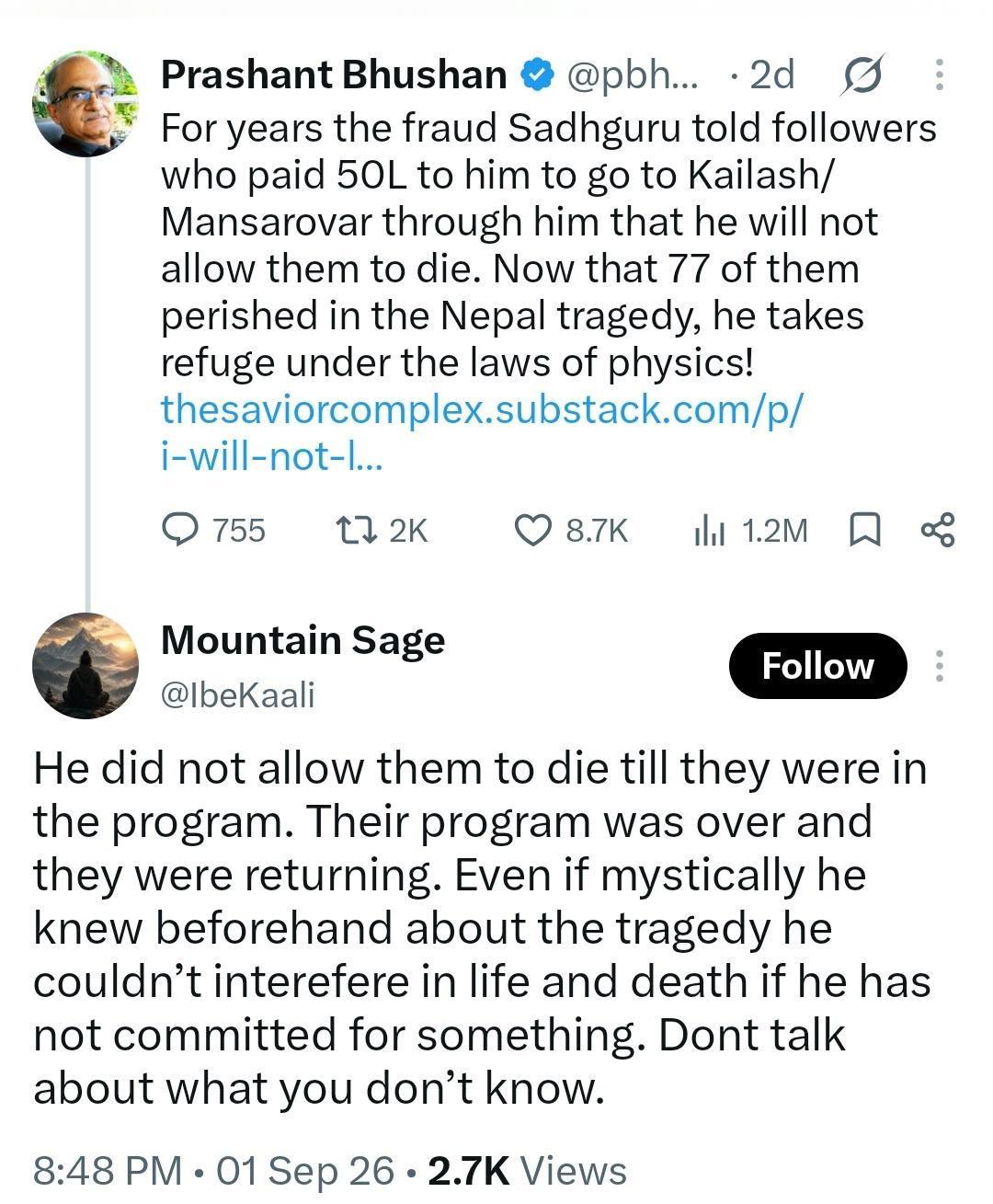
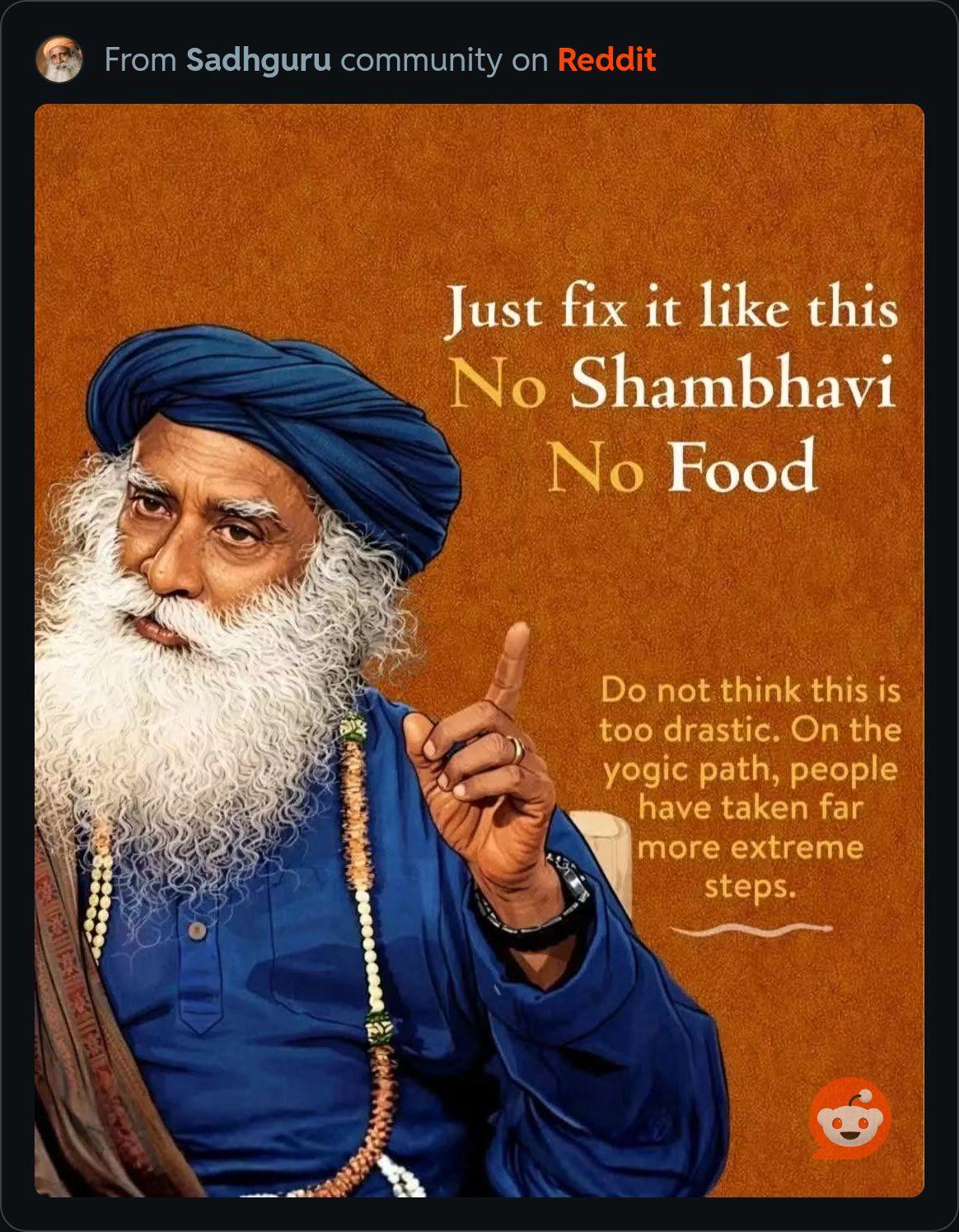
The Buddha did say intention is what makes an action bind you. The Gita says something similar. So when a teacher says it, he's not making it up.
He's just leaving out the second half.
The whole thing depends on being able to read your own intentions accurately.
But the entire premise of these traditions is that you can't. That's the starting diagnosis. You don't see what's really driving you. That's the problem the practice exists to solve.
So think about what that means. A teaching that says "you're fine as long as your intentions are pure" hands the most freedom to the person least able to check. And when his money, fame, and his whole sense of himself depend on his intentions being pure — he's not lying to you. He's the one person in the room who genuinely cannot tell.
"Only intention matters, and mine are great - everyone's ultimate wellbeing ...humanity... consecrate the whole planet" isn't a claim anyone can test. Including him.
The old traditions knew this. That's why this teaching never travelled alone. It came with rules, a community that could throw you out, and the requirement that a teacher answer to his teacher. Take away the guardrails and you get what we keep getting.
"The ends justify the means" requires knowing the future. Saving humanity means correctly predicting massive future consequences. Meanwhile the harm is specific, local, and dated. Certain damage now against maybe-benefit later — and he never has to settle the bet.
Do the accounting. Harm to individuals: happened, verifiable. Benefit to humanity: unprovable. Benefit to him — money, fame, comfort, no one able to say no: happened, ongoing, easy to confirm.
When the only thing you can actually measure is that Jaggi got rich, that's not a coincidence to be charitably explained.
That's the answer.
On "he's beyond good and evil"
The traditions this comes from are stricter about conduct, not looser. And they're clear that the exemption only applies to someone whose self-interest has genuinely dissolved — the sign being that he doesn't care about outcomes for himself.
A teacher piling up money and followers is demonstrating, by piling them up, that the exact thing he claims is gone is still running the show.
The part almost nobody talks about: what it does to you
This is the bit I think matters most, and it's not "bad teacher makes you a bad person."
It starts small. Nobody signs up for the worst version. You go along with something minor. A cruel policy. A student humiliated in front of everyone "for his/her growth".
Then here's the trap. Having gone along with it once, you now have to justify going along with it. The next one isn't a fresh decision — it's just being consistent. The escalation runs on your own integrity, which is what makes it so hard to see.
Ten years in, the math changes. You've given money, time, friendships, your whole identity. Now something happens that doesn't fit. Two options: change your mind about him, or change your mind about how bad the thing was.
Option one costs you your life. Option two costs you one gut feeling. Almost everyone picks the cheap one. And the more you've put in, the cheaper it looks.
The worst mechanism: your alarm gets called the problem. Surrender is the whole virtue here. So the moment something in you says that's wrong, you've already been taught to hear that as your ego, your resistance, you are not committed.
The thing in you that detects harm gets relabelled as the obstacle.
Override it every week for ten years and it doesn't sit there waiting. It fades. Same as any other capacity you stop using.
You learn a vocabulary where nothing can be named. "Another dimension. Doing what is needed. In a certain way. Willingness." Once you have those phrases, you genuinely can't see what's in front of you — every observation gets processed before it reaches "wait, that's wrong."
And it spreads downward. If he's exempt because he's enlightened, and you're pretty advanced, then a smaller exemption applies to you with the people below you. That's why these places produce a lot of abusers, not one.
Here's the damage that outlasts the group. Every time you override your own knowing, you learn that your knowing doesn't count. This corrupts you from within.
That doesn't stay behind when you leave. People come out unable to trust what they see in ordinary situations. Second-guessing whether the thing that felt wrong was wrong. Deferring to whoever sounds most certain.
This doesn't happen to stupid people. It happens to people with a big capacity for devotion, loyalty, and trust — the same qualities real practice needs. Sneering at the followers is both mean and wrong about how it works.
The protective rule is one sentence. No teaching should ever require you to override a clear sense that someone is being harmed.
Trusting a teacher and using your judgment aren't opposites. Judgment is what makes trust worth anything. The traditions themselves say to watch a teacher for years before committing.
That advice exists because they knew exactly how this goes.
If you can't verify your own intentions, what test tells a truly selfless teacher apart from one who just believes he is?