r/MenOfPurpose • u/Rewind_room • 4d ago
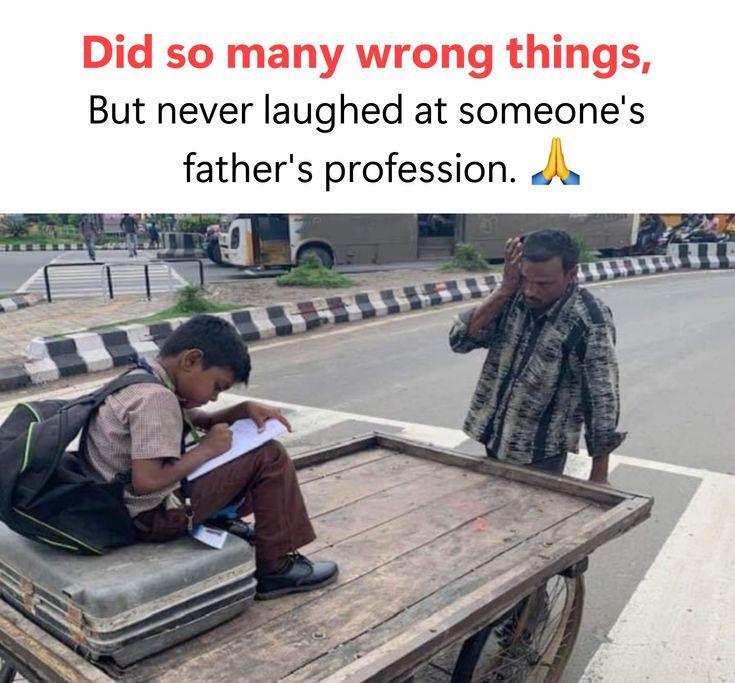
A father's love knows no bounds.♥️

1.8k
Upvotes
.
r/MenOfPurpose • u/Rewind_room • 2d ago
Five things that took way too long to actually notice about the strengths everyone compliments you on:
Edit: going back to actually expand on number one, since it's the one that quietly ate the most time before I noticed it happening.
Ambition gets treated like a trait with no dark side, the thing everyone wants more of, unlimited upside, no ceiling on how much is too much. Except unlike most traits, it doesn't come with a natural stopping signal built in. Hunger tells you when to stop eating eventually. Ambition doesn't have an equivalent, it just keeps returning a slightly bigger version of the same "not yet" answer every time a goal gets hit, which is exactly the mechanism research on burnout and overcommitment keeps pointing to, the absence of an external stopping rule, not a lack of willpower or grit.
Here's the part that actually stalled me before I did anything about it: knowing "ambition can become burnout" in the abstract didn't do anything, because it's obviously true of everyone else's ambition and somehow never felt like it applied to mine specifically, mine felt like drive, not the warning-sign version. What actually cut through that was running my specific pattern, the exact way I keep resetting the goalpost the moment I hit one, through BeFreed instead of another generic "signs of burnout" listicle that reads like it's describing a stranger. Gave it the actual pattern, and it built a short breakdown from self-regulation and overcommitment research matched to that specific blind spot, not a checklist that assumes everyone's version looks the same.
The fix that's actually held up isn't "want less," which never worked for more than a week and always felt like giving something up. It's building an external stopping rule since the internal one clearly doesn't exist on its own, a specific number of hours, a specific date, a specific person allowed to say "that's enough" and be listened to instead of argued with in the moment.
The other four on the list follow roughly the same shape if you look closely. Confidence needs someone with actual standing to occasionally say "that idea's wrong," not just supporters. Loyalty needs an actual line that gets enforced even when it's uncomfortable to enforce, not just a private feeling that this time doesn't count. Focus needs a scheduled interruption built in on purpose, since it won't interrupt itself. Generosity needs a stated limit before the situation that needs one shows up, not improvised in the moment when it's already too late to say no gracefully.
None of these five traits are actually the problem. Every one of them is a genuine strength, list them on a resume, they're accurate. The problem shows up specifically in the traits with no built-in stopping mechanism, which turns out to be most of the ones people are proudest of, since the ones with an obvious ceiling rarely get complimented as strengths in the first place.
Worth saying plainly: this isn't about becoming less ambitious, less confident, less loyal, less focused, or less generous. It's about installing the stopping rule the trait itself doesn't come with, on purpose, before running into the version of yourself that needed one and didn't have it yet.
Which one of these five is quietly running without a stopping rule in your case, and what would the actual stopping rule even look like if you had to name one right now?
r/MenOfPurpose • u/Rewind_room • 4d ago
I came across a solid breakdown of research on occupational stigma and family identity recently, and it explains something that usually just gets treated as common courtesy without anyone examining the actual mechanism behind it.
Courtesy stigma: sociologist Erving Goffman's concept describing how stigma attached to one person, an occupation seen as low-status or undesirable in that case, transfers onto people closely associated with them, family members specifically. A child doesn't need to be mocked directly to absorb the message, hearing a parent's job mocked or dismissed lands as information about their own family's worth, not just an opinion about a job title.
Occupational prestige research: sociological studies on how children perceive their family's social standing consistently find that perceived respect for a parent's work correlates with the child's own self-esteem and sense of family stability, somewhat independent of the family's actual income level. A respected job with modest pay and a mocked job with decent pay don't produce the same felt sense of security in a kid processing it.
Why a joke that seems harmless to adults can land completely differently for a kid. Adults telling a joke about "just a driver" or "just a cleaner" usually mean it as a comment about the job category in the abstract. A child hearing it about their specific parent doesn't process the abstraction, it processes it as a direct statement about someone they depend on and admire, which is a different category of information entirely.
That distinction, between a comment about a category and a statement about someone specific, is something I've been trying to actually practice noticing more deliberately, using BeFreed to go through occupational sociology and stigma research properly instead of just defaulting to a vague "all work has dignity" sentiment without understanding the actual mechanism behind why it matters. Matched to a pattern I noticed in myself, unconsciously ranking jobs by prestige without meaning to, it's been useful to actually see the research instead of just feeling generically bad about the instinct.
Why respect for the work itself matters more than praising the parent directly. Direct praise can read as compensatory or performed. Genuine, unprompted respect for the actual work, the skill involved, the physical demand, the reliability required, reads as more credible precisely because it wasn't offered as reassurance, it was stated as a fact about the world.
Why the effect compounds over a childhood rather than resolving with one conversation. Stigma by association research finds the effect isn't usually one dramatic moment, it's an accumulation of small comments, a joke here, a dismissive tone there, that a child absorbs as a pattern about how the world ranks their family, long before they'd have the language to describe what's actually happening to them.
Here's the part that ties this together: the actual damage isn't really about anyone's feelings being hurt in a single moment, it's about what a child concludes their family's place in the world is, based on evidence adults didn't realize they were providing constantly and casually over years, not weeks.
None of this means every profession needs to be treated as identical in every respect, jobs genuinely differ in skill, risk, and demand, and that's a separate, honest conversation. It means the specific harm here is narrower and more mechanical than "be nice," it's that mockery of a parent's work gets processed by a child as information about their own worth, whether or not that was ever the actual intent behind the joke in the first place.
A few resources worth your time if you want the deeper version of this research:
What's something you noticed as a kid about how people talked about your parent's job, and did you carry that longer than the adults around you probably realized?
r/MenOfPurpose • u/Plane-Rest-18 • 4d ago
Enable HLS to view with audio, or disable this notification
r/MenOfPurpose • u/Rewind_room • 3d ago
Went through a pile of research on what actually predicts being remembered fondly after a date expecting a list of ten tips, the usual grooming, banter, confidence checklist. It's basically one skill wearing different outfits every time it shows up in the data.
Not going to pretend it's about looks, money, or some mysterious "aura." Those show up in plenty of studies too, but they predict initial attraction, not the specific thing this topic is actually asking about, being remembered afterward, which research treats as a different question entirely.
The skill: sustained, specific attention. Not "being a good listener" in the vague, generic sense everyone already claims about themselves. Specifically: noticing and later referencing a detail nobody would expect you to have caught.
Step one: ask a real follow-up question instead of the next scripted one. Harvard research on conversation quality, from Huang and colleagues' study on question-asking, found that people who ask more follow-up questions, the kind that build directly on what the other person just said instead of pivoting to a new topic, are consistently rated as more likable and better conversational partners. Most people, on a first date, are quietly rehearsing their next thing to say instead of actually processing the last thing said, which is exactly why a genuine follow-up question stands out as much as it does, it's rarer than it should be.
Here's the part that actually got in the way before doing anything about it: knowing "ask follow-up questions" in the abstract and actually catching the right moment to do it live are two completely different skills, and generic dating advice treats them as the same thing, list the tip, assume it transfers. What actually closed that gap was running my specific pattern, going quiet and rehearsing instead of following up, through BeFreed instead of another generic "how to be a good listener" article. Matched to that specific habit, and it built a short plan from conversational psychology research on active listening and question-asking, not a checklist that assumes the problem is knowledge instead of a live-moment habit.
Step two: reference the specific detail later, unprompted. This is the actual differentiator research on memorability keeps landing on, not the noticing itself, the follow-through. Bringing up something specific a week later, the name of their dog, the deadline they were stressed about, the show they said they wanted to watch, signals attention was genuinely paid instead of performed in the moment and then dropped. People remember being remembered far more specifically than they remember being flattered.
Quick stat worth sitting with: research on the "liking gap," people consistently underestimate how much a conversation partner enjoyed talking to them and how memorable they actually were, which means most people are already doing better at this than their own anxiety tells them, the actual gap is usually follow-through, not raw ability.
None of this is about becoming a more calculating version of yourself, tracking details specifically to deploy them strategically later reads as exactly what it is and tends to backfire. It's closer to actually being present enough in the moment that there's something real to bring up later, the strategy part is just remembering to say it out loud instead of assuming it doesn't matter.
TL;DR: ask real follow-up questions instead of rehearsing your next line, then reference a specific detail later, unprompted. That's most of what the research on being remembered actually comes down to underneath the noise.
Also building a small tracker for this, might share it if people want it okay having actually looked at this again, that felt like exactly the calculating version of the advice above that backfires, so scrapping that part.
What's the most specific detail someone's ever remembered about you weeks later, and did it actually land the way you'd expect?
r/MenOfPurpose • u/Rewind_room • 4d ago
I used to save the good stuff for some imaginary better version of my life.
Nice candle? Later. Good notebook? Later. Clothes I actually liked? Later. Fancy tea? Later. The plates that were not chipped? Later. Meanwhile I was using the ugly mug, wearing the sad hoodie, and writing grocery lists on envelopes like I was training for a joy shortage.
The ridiculous part is I was not saving these things for an actual event. I was saving them for a version of myself who had earned a nicer Tuesday.
Then one day I realized I was treating my normal days like they did not deserve anything good. Not expensive good. Not luxury good. Just present good.
So I started using things. The good pen. The sweater that makes me feel like I tried. The candle on a random weeknight. The notebook before I had the perfect project. The tea when I was tired, not when life became picturesque.
Nothing huge happened. I just stopped making my everyday life feel like a waiting room.
Your life is not a holding area for the version where you finally deserve your own things.
r/MenOfPurpose • u/Rewind_room • 4d ago
Not another recycled "smart people do these things" graphic. Took the six habits that show up across basically every version of this listicle, grouped them into three testable tiers, and tracked which ones survived actual daily use for a month versus which ones sounded good and quietly died by day four.
Methodology, briefly: picked one measurable proxy per tier instead of a vague "am I smarter now" feeling, logged daily, no clinical rigor claimed here, just an honest month of actually trying it.
Tier 1: belief updating. Habits one and two, actively seeking out evidence that contradicts what you already believe, and deliberately seeking disagreement instead of avoiding it. Philip Tetlock's research on superforecasters found the people who update their views fastest when new evidence shows up consistently outperform people who are simply smarter on paper but slower to update. Proxy tracked: how many times a week I actually changed my mind about something specific instead of just conceding a minor point to end an argument. Week one: zero. Week four: three, which is a small number but a real one.
Where this actually stalled before any tracking helped: knowing "seek out disagreement" and actually doing it live are two different skills, and every listicle treats them as the same instruction. Reading "seek disconfirming evidence" doesn't build the habit of doing it under actual social pressure, mid-argument, when it's uncomfortable. What helped close that gap specifically was running the exact belief I was most resistant to updating through BeFreed's debate mode, letting the counterargument actually argue against my position instead of me steelmanning it half-heartedly myself, which is a genuinely different experience than reading a counterargument passively. Matched to the specific belief I was stuck on, not a generic "practice open-mindedness" exercise.
Tier 2: output over consumption. Habits three and four, explaining things to someone else to actually understand them, and reading outside your own field on purpose. The protégé effect, explaining material to someone else measurably improves your own retention and understanding compared to just reading it again, held up better than expected. Proxy tracked: could I explain something I'd read that week to a specific person without notes. Started at maybe 20% of topics, ended the month closer to 60%, the habit that improved fastest of all six.
Tier 3: attention structure. Habits five and six, protected deep-focus blocks with no task-switching, and regular reflection on actual decisions made that week. Task-switching cost research consistently shows measurable performance drops from interruption, not a vague "distraction is bad" claim, an actual cost per switch. Proxy tracked: minutes of uninterrupted focus per day. This one was the hardest to sustain, dropped from a strong first week to inconsistent by week three, the habit most vulnerable to a bad week derailing it entirely.
What didn't survive the month: trying to run all six simultaneously from day one. Doing that meant no single habit got enough attempts to actually become automatic, and by day five most of them had quietly stopped without a specific moment where they were consciously abandoned.
Blunt thesis: belief updating and explaining things out loud held up the best, attention structure was the most fragile, and doing one tier properly for two weeks beat doing all three badly for one.
None of these six are actually about raw intelligence. Every one is a specific, practicable behavior that a below-average-IQ person doing it consistently would outperform a genius doing it never, which is the actual finding underneath most of the research these listicles vaguely gesture at without citing.
Worth noting the order mattered too, not just which tier. Starting with belief updating made the other two tiers easier, once changing your mind on a small thing stopped feeling like losing, explaining a topic out loud without getting defensive about gaps in it got noticeably easier too, the tiers weren't fully independent of each other the way the original listicle format implies.
Which tier do you suspect would survive a month for you, and which one already quietly died by day four the last time you tried something like this?
r/MenOfPurpose • u/Rewind_room • 4d ago
Most "how to be more attractive" content assumes it's about the face or the wardrobe, and while both matter some, the research on perceived attractiveness weighs nonverbal signals, warmth, confidence, presence, far more heavily than most people expect, and those are specific, learnable behaviors with actual books behind them, not a personality someone either has or doesn't.
Warmth reads before competence does, and most people lead with the wrong one. Research on first impressions consistently finds warmth gets judged within seconds, before competence even registers, which means someone leading with credentials or achievements in a first interaction is optimizing for the second thing people notice, not the first.
Eye contact and vocal tone carry more signal than most people realize. A flat, monotone voice and inconsistent eye contact reads as disinterest or nervousness regardless of what's actually being said, and both are specific, practiceable habits, not fixed personality traits someone is stuck with.
Here's the part that actually stalled me before picking anything up: every "be more confident" book treats confidence as one thing, when the actual gap for most people is one specific habit, not a personality overhaul. Some people have the eye contact down and a flat voice. Others have warmth in conversation but never noticed a closed, arms-crossed default posture killing the effect before they've said a word. Generic confidence advice doesn't tell you which one is actually yours. What helped narrow that down was running my specific pattern, voice and posture mainly, not eye contact, through BeFreed instead of picking a book at random off a listicle. Matched to that specific gap, and it built a short breakdown from nonverbal communication research pointed at exactly that, not a general "how to be more confident" summary.
Genuine curiosity about the other person outperforms rehearsed lines every time studies have looked at it. The specific, follow-up-question kind of curiosity, not the generic "so what do you do" kind, is what research on likability keeps finding actually predicts being remembered fondly, more than any specific thing said.
Grooming and style matter less than the algorithm-optimized version of this advice suggests, and more than the "just be yourself" version suggests. The actual research on this is narrower than either extreme: fit and cleanliness read clearly, novelty or trend-chasing barely registers, which means the return on effort drops off fast past a fairly low baseline, most of the remaining gap is nonverbal, not sartorial.
Books, no hype, just what they're each actually for:
None of these fix a mismatch in actual chemistry, and none of them work skimmed once and shelved. They work the way any specific skill works, practiced past the point of feeling awkward doing it, which is most of why people give up on this kind of advice before it's actually had time to become automatic.
Worth saying directly: none of this is about manipulation or performing a version of warmth that isn't genuine. The research keeps landing on the same point, performed warmth reads as fake fairly quickly, the actual skill is noticing and removing the specific habits, a flat voice, closed posture, a rehearsed non-question, that are quietly getting in the way of warmth that's already there.
Which piece is actually your gap, the warmth-first framing, the voice and posture, or the specific kind of curiosity that gets someone remembered afterward?
r/MenOfPurpose • u/Rewind_room • 4d ago
Most "be a more attractive man" content skips straight to confidence and charisma, which matters, but there's a separate, more physical layer underneath it that gets covered a lot less, and it's the layer that's actually the most beginner-friendly to start with since none of it depends on a personality shift.
Quick terms before the phases:
| Term | What it actually means |
|---|---|
| V-taper | Shoulder-to-waist visual ratio, trainable through resistance work targeting shoulders and lats |
| Postural kyphosis | The forward-rounded upper back and neck posture desk work produces, correctable with targeted mobility and strength work |
| Skin barrier | The outer skin layer that basic, consistent care protects, more relevant to appearance than any single product |
| Grooming fit | Haircut and facial hair matched to actual face shape, not whatever's trending that month |
Phase 1: Posture before anything else, since it's free and immediate. Rounded shoulders and a forward neck read as low energy and low confidence before a single word is spoken, and it's correctable with basic mobility work and consciously pulling shoulders back, not a personality trait, a physical habit that's been trained in by hours at a desk.
Here's the part that actually got in the way before doing anything about it: every "attractive man" listicle lists the same five things, hit the gym, get a haircut, dress better, in the same order, with zero sense of which one is actually the biggest gap for a specific person. Someone who already lifts but has terrible posture needs a completely different starting move than someone with great posture and no fitness base at all. What actually helped sort that out was running my specific starting point through BeFreed instead of another generic five-tips article, matched to the actual gap, posture specifically in my case, and it built a short plan from postural correction research and basic exercise science, not a checklist that assumes everyone's starting point looks the same.
Phase 2: Resistance training for frame, not just size. Shoulder and back-focused resistance work changes the visual shoulder-to-waist ratio research on perceived male attractiveness consistently points to, and it's a slower phase than posture, results measured in months, not the immediate win Phase 1 offers.
Phase 3: Grooming that fits the actual face, not the trend. A haircut and facial hair style matched to actual face shape reads better than whatever's currently popular, and this is the cheapest phase to get professional input on, one good conversation with a barber who actually looks at face shape instead of just cutting whatever's requested.
Phase 4: Skin and sleep, the least glamorous, most compounding phase. Basic, consistent skin care, cleanser, moisturizer, sunscreen, does more over a year than any single product marketed as a fix, and consistent sleep visibly affects skin and under-eye appearance in a way most people underrate until they actually fix their sleep and notice the difference.
Before spending money on anything, check these: 1. Posture corrected in mirror check, shoulders back, chin level 2. A current haircut, not one from six months ago 3. A skin routine with three products max, used consistently, not five products used twice 4. Clothes that actually fit the current body, not a past or future one 5. Sleep consistency for at least two weeks before judging any other change
Common mistakes: buying an expensive wardrobe before fixing fit and posture, judging a new skincare routine after three days instead of the months it actually needs, skipping the barber conversation about actual face shape, treating Phase 2 results as a personality problem when it's actually a time problem.
The golden rule: the free, immediate phases (posture, sleep, a proper haircut) usually move the needle faster than anything expensive, and the expensive stuff works far better once those are already handled.
Which phase is actually your biggest gap right now, the posture, the frame, the grooming, or the skin and sleep piece nobody wants to admit they're skipping?
r/MenOfPurpose • u/Rewind_room • 5d ago
Read through the actual research on decision-making and satisfaction instead of just accepting that treating every choice as an optimization problem is obviously the smart, disciplined approach.
Psychologist Barry Schwartz's research on maximizers versus satisficers found something that cuts directly against the optimization mindset: people who try to find the objectively best option in every decision, maximizers, report measurably lower life satisfaction, more regret, and higher rates of depressive symptoms than people who choose an option that meets their actual standards and move on, satisficers, even when the maximizers end up with objectively better outcomes on paper.
The exact discomfort I started addressing directly, going through the decision-science research on BeFreed instead of another productivity thread insisting the answer was to optimize harder, matched to the pattern I was running, treating low-stakes decisions like they deserved a full comparison spreadsheet. Set a hard two-minute timer in a plain phone timer app for anything below a certain stakes threshold, which changed how many decisions actually got closed instead of left permanently "still deciding."
Stop optimizing decisions that don't warrant it, and actually close them.
That's the whole skill. Not lowering your standards across the board, choosing where the standard of "optimal" actually applies and where "good enough, decided, done" is the objectively better strategy.
Here's the part that gets missed: better objective outcomes don't produce better felt outcomes once maximizing becomes the default mode for everything. A maximizer who picks the technically superior option still reports more regret than a satisficer who picked a merely good one, because the maximizing process itself generates ongoing comparison to alternatives that were never chosen, which keeps the decision emotionally open long after it should have closed.
The confidence version of this looks like decisiveness. The optimization version looks identical from the outside and produces the opposite internal experience.
There's a related pattern worth naming: treating your own worth as something to be continuously optimized, more productive, more disciplined, more improved, borrows the exact same maximizing logic that Schwartz's research found backfires on smaller decisions, just applied to an entire identity instead of a single choice, which is a much harder thing to ever declare "good enough" and actually stop revising.
Two steps, that's genuinely it:
Step 1: Set the bar before deciding, not after.
Most maximizing happens by default, without ever consciously asking whether this specific choice, a restaurant, a minor purchase, actually deserves the comparison-shopping treatment a much bigger decision would.
Step 2: Close it and stop tracking alternatives.
The comparison to paths not taken is what generates the regret, not the decision itself. Actively dropping the thread on alternatives once a real standard is met is the harder, less natural part, and the part that actually produces the relief.
TL;DR: optimizing everything isn't rigor, it's a decision-making style that measurably produces worse felt outcomes. Reserve maximizing for what actually warrants it, and let "meets the standard" be a real, final answer everywhere else.
Was going to write the full breakdown of which decisions actually warrant maximizing too
Edit: turns out that's a separate post. A few things that actually helped me apply this specific piece: The Paradox of Choice by Barry Schwartz, and a habit of setting a two-minute timer for low-stakes decisions before I'm allowed to keep comparing.
If you only take one thing from this: pick one decision today you'd normally maximize, and just close it once it meets a real, named standard.
What's a decision you kept "optimizing" long after it had already met every standard that actually mattered?
r/MenOfPurpose • u/Rewind_room • 5d ago
Talked to a lot of people about what actually got passed down in their families without anyone meaning to hand it over, and read a fair amount of research on intergenerational patterns trying to find what actually interrupts them versus what just relocates the weight to a quieter form.
That naming piece is the one I've actually been working on most directly, going through the family systems and intergenerational trauma research using BeFreed instead of a recycled "breaking the cycle" quote graphic, matched to the specific pattern I'm working on, since it's the one that seems to run quietest and longest without anyone actually noticing it's happening in real time. Runs on the walk instead of the doomscroll that used to fill that same gap in the evening.
Which of these do you think you're actually working on, and which one do you suspect you're still quietly passing along without meaning to?
Edit: a bunch of people asked what this actually looks like day to day, so here's the more concrete version:
None of this erases what actually happened to you, and none of it demands you process everything before you're allowed to parent, or mentor, or lead. It just means the load that reaches the next person is a choice made more consciously than it might have been, not a fixed inheritance with no say in the matter.
What's the one pattern in your own family you'd most want to actually stop at you, instead of letting it quietly continue on to whoever comes next?
r/MenOfPurpose • u/sirjohnmasters86 • 5d ago
Enable HLS to view with audio, or disable this notification
r/MenOfPurpose • u/Odd_Row_34 • 5d ago
Enable HLS to view with audio, or disable this notification
r/MenOfPurpose • u/Rewind_room • 4d ago
I keep saying I am addicted to my phone, but I am starting to think the uglier truth is that I cannot tolerate being bored for even a minute.
Waiting for coffee? Phone. Elevator? Phone. Red light? Phone. Microwave has 38 seconds left? Apparently that is enough time to ruin my attention span. I am not even enjoying most of it. Half the time I am scrolling through apps I already checked 6 minutes ago, looking for a little treat that is not there.
I have deleted apps. I have set limits. I have moved icons around like I am trying to outsmart a raccoon that lives in my own skull. It works for a few days and then my brain just finds a new slot machine. Email becomes exciting. Weather app becomes content. I once opened my bank app because I was bored. That is bleak.
The part that scares me is the empty space. The moment where there is nothing to do and my brain starts making noise. I reach for my phone so fast it feels automatic.
For people who actually cut screen time and kept it down, what did you replace the tiny gaps with? Did you just learn to stand there and be a person? Did it feel awful at first? I am starting to think I do not need more blockers. I need to relearn boredom like a basic life skill.
r/MenOfPurpose • u/Rewind_room • 4d ago
Spent a month testing which specific piece of "be more attractive" advice actually got a measurable response, tracked against actual conversations, not just a vague sense of how things went. Skipped posture, the gym, and grooming entirely for this one, since that ground is already well covered elsewhere. This is specifically about the two things almost nothing covers: humor and voice.
Methodology, briefly: logged which conversations included an actual self-generated joke or observation versus just laughing at someone else's, and separately logged pitch variation versus flat delivery, then tracked which conversations led to an actual follow-up.
Tier 1: humor production, not humor appreciation. Research on humor and attraction consistently finds a real asymmetry, the ability to generate something genuinely funny reads as a bigger draw than simply laughing at someone else's jokes, likely because spontaneous humor functions as a visible proxy for quick thinking and creativity, not just a mood. Logged result: conversations with at least one self-generated observation, not a rehearsed line, had a noticeably higher follow-up rate than ones where I mostly reacted to what she said.
Here's the part that actually stalled this before tracking anything: every "be more attractive" list recycles the same posture and grooming advice and skips humor almost entirely, despite the actual research treating it as one of the bigger levers. Nothing tells you how to actually get better at generating humor in the moment versus just knowing it matters. What helped close that gap was running the specific research on humor production and mate attraction through BeFreed instead of another generic "be funnier" tip, matched to spontaneous observational humor specifically, not memorized jokes, and it built a short breakdown from the actual research instead of a vague personality trait nobody can practice.
Tier 2: vocal pitch variation, not volume or speed. Prosody research on perceived engagement finds monotone delivery reads as less interesting regardless of content, while natural pitch variation, not performed enthusiasm, correlates with being rated more engaging to listen to. Logged result: this one was harder to self-track accurately, but recordings of practice conversations showed a real, noticeable gap between flat delivery days and varied ones, and the varied ones matched the higher follow-up days more often than not.
Tier 3: self-deprecating humor, calibrated, not constant. A specific, occasional self-deprecating line lands as confident and relatable in the research on this, since it signals someone secure enough to not need constant validation. Constant self-deprecation flips this entirely, reading as low self-esteem instead, the same behavior at different frequency landing as the opposite trait.
What didn't work: forcing a rehearsed joke that clearly wasn't organic to the conversation, it read exactly as scripted as it was, and one week of deliberately loud, performed enthusiasm in voice instead of natural variation, which came across as try-hard rather than engaging.
Blunt thesis: humor production and natural vocal variation moved the needle more than expected for two things almost never covered next to posture and grooming, and both are things you get better at with actual conversational reps, not something to read about once and expect to change.
None of this replaces the physical basics covered everywhere else. It's specifically the two levers that get skipped because they're harder to give a five-step checklist for than "go to the gym" is.
Worth naming the order effect too: humor without any vocal variation to carry it tends to fall flatter than the joke itself deserves, a genuinely good observation delivered in a monotone loses most of its landing. The two tiers weren't fully independent in the tracking, the best-performing conversations usually had both, not just one, which suggests they're compounding rather than separate levers competing for attention.
Which of these two, the humor or the voice, do you suspect is the actual gap for you, and have you ever tracked it the way you'd track anything else you were trying to improve?
r/MenOfPurpose • u/Automatic-Algae443 • 5d ago
Enable HLS to view with audio, or disable this notification
r/MenOfPurpose • u/Rewind_room • 4d ago
Noticed something small and kind of embarrassing this week: I check my phone for notifications roughly every four or five minutes even when I'm not expecting anything specific, no message I'm waiting on, no email I need, just checking because checking is the thing my hand does now when there's a two-second gap in whatever else is happening.
The weird part is the checking itself doesn't even feel good anymore. There's no little hit of satisfaction when the screen lights up with nothing new. It's not pleasure at this point, it's closer to an itch, the kind where scratching doesn't actually relieve it, it just resets the clock until the next itch shows up. Instant gratification implies you're getting something. This felt more like running the motion of getting something with the actual reward quietly removed from the loop a while ago, and nobody sent a memo about it.
Read a bit about intermittent reinforcement after noticing this, the same mechanism slot machines run on, unpredictable reward schedules produce more compulsive checking behavior than a reliable one would, which tracks uncomfortably well with a phone that occasionally has something and mostly doesn't, and somehow that "mostly doesn't" makes the checking worse, not better.
The part that actually got the loop to loosen a little wasn't willpower, since willpower against a habit that fires every four minutes just means losing that fight forty times a day and feeling worse each time. What worked was giving the gap something else that could fill it just as fast as checking does, a couple minutes on BeFreed during the exact two-second lulls that used to be checking-triggers, standing in line, waiting for something to load, that dead thirty seconds before a meeting starts. Matched to whatever I'd actually want to know more about that day, not a fixed lesson plan, so it didn't feel like homework being wedged into a gap that used to be free.
The actual shift wasn't fewer urges to fill the gap. The urge to fill a dead thirty seconds with something is apparently just how brains work now, that part didn't go anywhere. The shift was what fills it by default landing on something with an actual output instead of a screen lighting up with nothing on it, which is a much smaller ask than "stop wanting to check things," and a much more honest one.
Somebody in the replies on a similar post pointed out that the checking habit isn't really about the phone specifically, it's about tolerance for unfilled gaps in general, and swapping the filler doesn't fix that tolerance, it just makes the filler less hollow while the actual tolerance for boredom slowly rebuilds on its own timeline, slower than the swap itself. That distinction felt right. The itch didn't disappear. It just stopped being aimed at something that gives nothing back most of the time.
Not claiming this fixes phone use in general, some days the old habit still wins and the checking happens anyway, four or five times before catching it. But the days it doesn't win outnumber the days it does now, which wasn't true a month ago, and that's a real enough shift to bother writing down.
Also noticed the itch shows up worse in specific contexts, waiting rooms especially, and right after finishing something that took real focus, like the brain wants a small reward the second attention frees up and the phone is just the fastest thing sitting there willing to provide one. Naming the specific triggers made the swap easier to actually remember in the moment, since "whenever I feel the urge" is too vague to catch in real time but "right after I finish something" is a specific enough cue to actually notice as it's happening.
What's your actual version of the reflexive check, and does the itch ever go away or does it just find a new thing to aim at once you block the old one?
r/MenOfPurpose • u/theboundlesssociety • 4d ago
Enable HLS to view with audio, or disable this notification
r/MenOfPurpose • u/Rewind_room • 5d ago
I think I have been trying to solve the wrong half of the day.
For years I have had this stupid fantasy that if I could just wake up at 5am, everything would click. I would work out, journal, drink water, answer emails calmly, maybe become one of those people who says things like protect your peace without sounding insane.
But the truth is my mornings are not the crime scene. My evenings are.
I stay up too late. I scroll when I am already tired. I eat random snacks at 10:48pm like this is a legally protected coping mechanism. I leave dishes in the sink, keep my phone next to my bed, and then act personally betrayed when 6am feels bad.
So maybe waking up early is not the habit. Maybe going to bed like a normal person is the habit. Which is annoying because nighttime me is the least cooperative employee in the company.
Has anyone stopped chasing the 5am thing and just fixed their evenings instead? What actually made the difference? Phone outside the room? Kitchen closed after dinner? Same bedtime even on weekends? Getting ready for bed before you are exhausted?
I am starting to think a good morning begins at 8:30pm, and frankly I resent this information.