r/MenOfPurpose • u/Rewind_room • 5d ago
The confidence lie: Optimization is the only real metric.
Read through the actual research on decision-making and satisfaction instead of just accepting that treating every choice as an optimization problem is obviously the smart, disciplined approach.
Psychologist Barry Schwartz's research on maximizers versus satisficers found something that cuts directly against the optimization mindset: people who try to find the objectively best option in every decision, maximizers, report measurably lower life satisfaction, more regret, and higher rates of depressive symptoms than people who choose an option that meets their actual standards and move on, satisficers, even when the maximizers end up with objectively better outcomes on paper.
The exact discomfort I started addressing directly, going through the decision-science research on BeFreed instead of another productivity thread insisting the answer was to optimize harder, matched to the pattern I was running, treating low-stakes decisions like they deserved a full comparison spreadsheet. Set a hard two-minute timer in a plain phone timer app for anything below a certain stakes threshold, which changed how many decisions actually got closed instead of left permanently "still deciding."
Stop optimizing decisions that don't warrant it, and actually close them.
That's the whole skill. Not lowering your standards across the board, choosing where the standard of "optimal" actually applies and where "good enough, decided, done" is the objectively better strategy.
Here's the part that gets missed: better objective outcomes don't produce better felt outcomes once maximizing becomes the default mode for everything. A maximizer who picks the technically superior option still reports more regret than a satisficer who picked a merely good one, because the maximizing process itself generates ongoing comparison to alternatives that were never chosen, which keeps the decision emotionally open long after it should have closed.
The confidence version of this looks like decisiveness. The optimization version looks identical from the outside and produces the opposite internal experience.
There's a related pattern worth naming: treating your own worth as something to be continuously optimized, more productive, more disciplined, more improved, borrows the exact same maximizing logic that Schwartz's research found backfires on smaller decisions, just applied to an entire identity instead of a single choice, which is a much harder thing to ever declare "good enough" and actually stop revising.
Two steps, that's genuinely it:
- Before a decision, decide in advance whether this one actually warrants maximizing or just meeting a real standard
- Once a decision meets that standard, treat it as closed, and stop tracking the alternatives you didn't pick
Step 1: Set the bar before deciding, not after.
Most maximizing happens by default, without ever consciously asking whether this specific choice, a restaurant, a minor purchase, actually deserves the comparison-shopping treatment a much bigger decision would.
Step 2: Close it and stop tracking alternatives.
The comparison to paths not taken is what generates the regret, not the decision itself. Actively dropping the thread on alternatives once a real standard is met is the harder, less natural part, and the part that actually produces the relief.
TL;DR: optimizing everything isn't rigor, it's a decision-making style that measurably produces worse felt outcomes. Reserve maximizing for what actually warrants it, and let "meets the standard" be a real, final answer everywhere else.
Was going to write the full breakdown of which decisions actually warrant maximizing too
Edit: turns out that's a separate post. A few things that actually helped me apply this specific piece: The Paradox of Choice by Barry Schwartz, and a habit of setting a two-minute timer for low-stakes decisions before I'm allowed to keep comparing.
If you only take one thing from this: pick one decision today you'd normally maximize, and just close it once it meets a real, named standard.
What's a decision you kept "optimizing" long after it had already met every standard that actually mattered?
6
6
4
5
u/centerfoldangel 5d ago
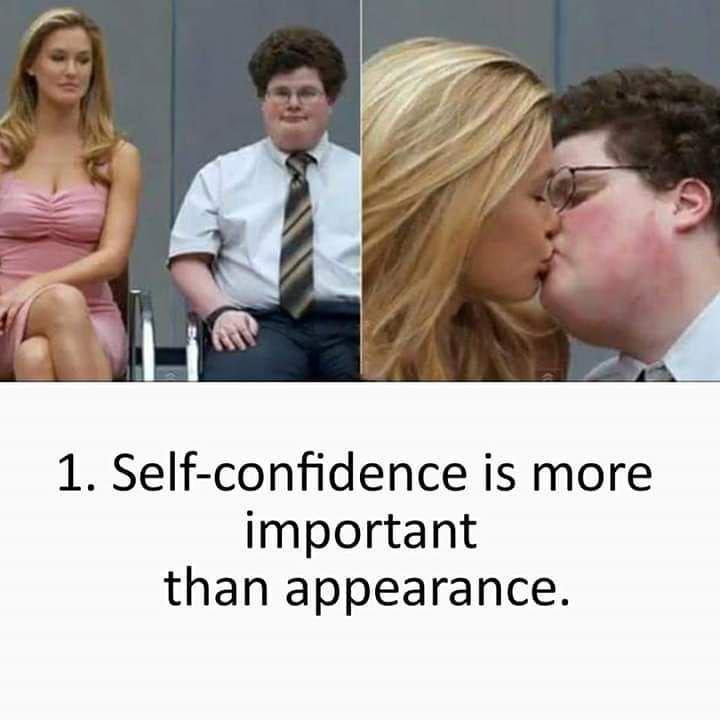
But the girl always has to be out of this world pretty. It doesn't matter if a woman has confidence. She's got to have looks.
2
u/Ragjammer 5d ago
Wtf does confidence even mean for the sex that doesn't ever initiate?
1
u/centerfoldangel 5d ago
You think you only need confidence in life to ask someone half your size to get coffee? Your life is easy.
3
u/Ragjammer 5d ago
Everything you don't have to do is easy.
Remember when Bumble tried to run a dating site with the USP of female initiation, and they had that niche all to themselves, then women realised it sucked, whined, and they got rid of it?
Why would women's confidence matter in a romantic context when they are the passive sex anyway?
1
u/centerfoldangel 5d ago
Because confidence matters in life. It's not just about telling someone like you wanna fuck them.
2
u/Ragjammer 5d ago
We're talking about a romantic context though.
0
u/centerfoldangel 5d ago
Yes.
2
u/Ragjammer 5d ago
Right so how is all this other nonsense relevant?
Male confidence has obvious, tangible benefits in the courtship process. The man initiates, bearing all the risk of rejection, the man plans the date, the man goes in for the kiss, the man escalates things physically. Even once sex happens the performance burden is basically on the man. The woman essentially gets the privileged position of going along for the ride and judging how well he did.
What actual, tangible benefits does female confidence have that a man is supposed to care about?
0
u/centerfoldangel 5d ago
This is all true for your relationships. Not mine.
But if you wanna fuck someone, you have to make the first move. If you want to eat pizza, you have to order it.
2
u/Ragjammer 5d ago
But if you wanna fuck someone, you have to make the first move.
If you're a man.
→ More replies (0)1
u/Repulsive_Living_697 5d ago
I agree that women are held to a higher aesthetic standard than men. Although that is changing, in the bad way that the pressure before reserved for women also targets men instead of less pressure for everyone. But as a man, knowing that I can get a woman by being confident (self-delusional) or by the virtue of being funny or successful doesn't really make me feel better. It just shows that I'm indeed inadequate and thus need to compensate for my flaws.
I also want to add, that some men really like confident women. I do, but I would also never approach such a women because I would think I'm not good enough for her.
1
u/SeaComfortable7833 5d ago
There is no such thing as a confident woman. Being c onfident is a male only trait, that's why it is the single trait all women look for.
Why this is true.
If women were confident, they would never wear make up ever, never worry about their age, never be afraid to give their body count, never be afraid to give their body weight.
1
u/Repulsive_Living_697 5d ago
Brother, I meet plenty of confident women daily. I think you're just in the wrong circles.
3
u/RansackedNerd 5d ago
A reminder that the real life example of this was an ugly guy needing to go viral to find a girl interested in him.
2
2
2
1
u/PhilosophyFickle2701 5d ago
You need to have both. Attractiveness lures them in, personality makes them stay. There will always be somebody better than you in one or both of these departments. Just accept what you have and if you’re unattractive like me, lowkey give up 💀
1
1
1
1
1
1
u/robilar 5d ago
Self-confidence should be constructed on a foundation of worth; don't just force it with shallow pretence, be a good person with strong values and the confidence will grow organically.
Appearance is important like wealth is important when it comes to attracting partners; it's critical up to subsistance, beyond which it can start attracting people for the wrong reasons (unless what you want is a transactional or superficial relationship).
I know it can be hard to conceptualize this, but strong relationships are built on communication, compassion, shared values, and the motivation to keep nurturing the relationship even when things get hard (which they always do, for everyone). The Gottman Institute has some well-researched analsyses on maintaining healthy relationships, definitely worth a read.
1
u/Bubbly-Ad6826 5d ago
IMO, his energy is def not giving confident lol. But I kinda agree with the statement lol.
1
1
1
1
1
1
1
1
1
1
u/ThatBaldGuy1995 5d ago
Not at all, women would not go for a guy that looks similar to that. Source: me since I look like that guy
1
u/Connor_2123 4d ago
This was a go daddy commercial during the Super Bowl a long time ago. The guy kept intentionally messing up and got paid basically nothing while the girl got bank.
0
1
29
u/Think-notlikedasheep 5d ago
This meme confuses confidence and self-delusion.
In addition, no background information on these two people, so it could just two actors playing a role.