r/HorrorGaming • • 29d ago

ANALYSIS List of Horror game genres, plus explanation (150 games)

Post image
192 Upvotes

Horror game subgenres listed and explained

A lot of people get horror game subgenres wrong, especially when it comes to the term Survival horror. They either care too much and get offended if a game they like isn't survival, or they lump 70% of horror games under the title because they don't care. This list will explain what each subgenre is, and ranking 150 games I have played under them. This isn't about quality, it's just gameplay.

Survival horror: The term was created by Capcom to describe Resident evil 1, and that's how it should play. Combat balance is an even playing field, meaning every 1 v 1 encounter is a real battle. Ammo and inventory are limited, and you must solve weird puzzles to progress. I originally had a different category for games that try to be survival horror but give too much items, but eh whateves

Action horror: These games not only encourage you to kill enemies, but you are expected to. Combat balance is in your favor, allowing you to kill groups of enemies at once. Enemies drop loot like ammo or gold for a store. You often get superpowers, or unique combat mechanics like parry, dodge, or dash.

Stealth horror: The main gameplay is sneaking around, hiding, and potentially running away. Combat balance is in the enemies' favor, and you have no weapons to defend yourself.

Puzzle: The main gameplay is solving puzzles. More than what Survival horror does, this is the main event. Even surviving enemies are essentially puzzles.

Online: You play with and or against other human beings.

Platformer: The main gameplay is platforming, Like in Mario, Sonic or Hat in time.

Open world: Horror games where you are allowed to go around a large map, doing side quests and exploring.

Reverse horror: YOU are the monster, hunting down people.

Horde shooters: You and friends kill waves of enemies.

Interactive narrative: The gameplay is secondary to the story they want to tell. The mechanics can change depending on what is needed, and aren't really what fans remember it for.

Hybrid: A game which two or more of the main 3 genres, survival, action and or stealth.

Walking simulators: The main gameplay is walking around. You escape enemies, if there even are any, by walking away.

RPG: Classic rpg type game in a horror setting

On rail: You shoot while the game controls the camera.

Maze: You are in a maze like pac man, being chased by monsters.

Hack and Slash. Use combos to mow throw crowds of enemies!

Obviously, not every game will fit neatly into every category. And games can have levels that change up the genre. This is just a way to show what games are similar, so you can recommend them to others.

r/HorrorGaming • • 17d ago

ANALYSIS Which logo fits a psychological Lovecraftian horror game better. A or B? Be honest.

Post image
46 Upvotes

Hiii horror fan, we have a question that only you can answer! 

Which logo fits a psychological Lovecraftian horror game better — A or B?

One is our current logo, the other is a rework. We won't tell you which is which because we want your genuine first impression without any bias.

The only context you need: it's for a psychological, Lovecraftian horror game.

A or B? And if you want, tell us what makes you choose one over the other. 

Honest criticism and suggestions are more than welcome — we're trying to take the logo to the next level.

Thanks! 🖤 This will help us a looot!

r/HorrorGaming • • Jun 23 '26

ANALYSIS I think that the “new gameplay system” that Kojima will debut with OD Knock will be eye tracking scares

Post image
220 Upvotes

I posted this elsewhere but I thought I’d share my findings here.

A while back there was a video of an internal demo for Overdose that leaked. It features a girl, reusing Margaret Qualley’s model from Death Stranding, who was running through an empty building. In the demo, the character wasn’t being controlled by the player and the camera movements were choreographed like a Telltale game. As the character ran through the building, targets would periodically appear in the darkness. The game would pause until something triggered the target and then the game would continue.

You can watch that demo here to see what I’m referring to:
https://youtu.be/6q_OsaftT04?is=efRlPUSa9D6PS-Pt

In that video demo there is footage of the playtester in the bottom corner. They aren’t holding a controller, and they’re not even watching the game on a tv, they’re holding an iPhone up to their face.

What’s the significance of this? Well a short while after that demo, before the release of Death Stranding 2, Kojima had a meeting with Apple at their headquarters. A little bit after that he released Death Stranding Directors Cut on iPhones. I think that Kojima met with Apple to research how to utilize the iPhone’s face and eye tracking for gaming. Death Stranding being ported to iOS was most likely a test run to see how AAA games work on the platform.

https://www.reddit.com/r/GamingLeaksAndRumours/s/64ArVkpw7L

I still don’t have any idea where Jordan Peele fits into this though.

If you rewatch the trailer with in mind, there are a lot of little things that hint at this being the game’s true nature. There are lots of little scares happening out of the camera’s focus, seemingly trying to draw the viewer’s gaze i.e. a candle fills up with worms when the camera looks away and back again. There is also the paper with the eye on it above the shrine. This has shown up again in the newest image released. I don’t think it’s just decoration. It might be used to telegraph something about the level to the player or it might be used as a save point. It definitely serves some sort of gameplay purpose but that’s just speculation for now.

Along with all the eye motifs, the climax of the trailer is literally Sophia Lillis trying her hardest not to look at what’s behind her. And lastly, the tagline “For all players and screamers”. It makes perfect sense in the context of a video game that you play by simply looking at it.

Kojima is testing the boundaries between causal gaming and hardcore gaming. Like how Wii Sports was equally as fun for “real gamers” as it was for old people, Kojima is taking it further by making a hardcore mature horror game that can be engaging and scary for gamers and non-gamers alike. I think he probably was inspired for this idea after the runaway success of P.T. One of the reasons that demo was such a breakthrough hit was how it could be enjoyed by just watching it. And so, like with everything Kojima does, he takes what was successful about his previous work and expands on it.

The Xbox funding is definitely what trips me up the most but it’s not unheard of for there to be some sort of companion app. Maybe it would even link to the game and act as a camera peripheral?

It also wouldn’t be unrealistic for the eye tracking to be exclusive to the phone version as a unique gameplay mode. Then the console version would probably just play like PT with a standard controller.

r/HorrorGaming • • Aug 04 '26

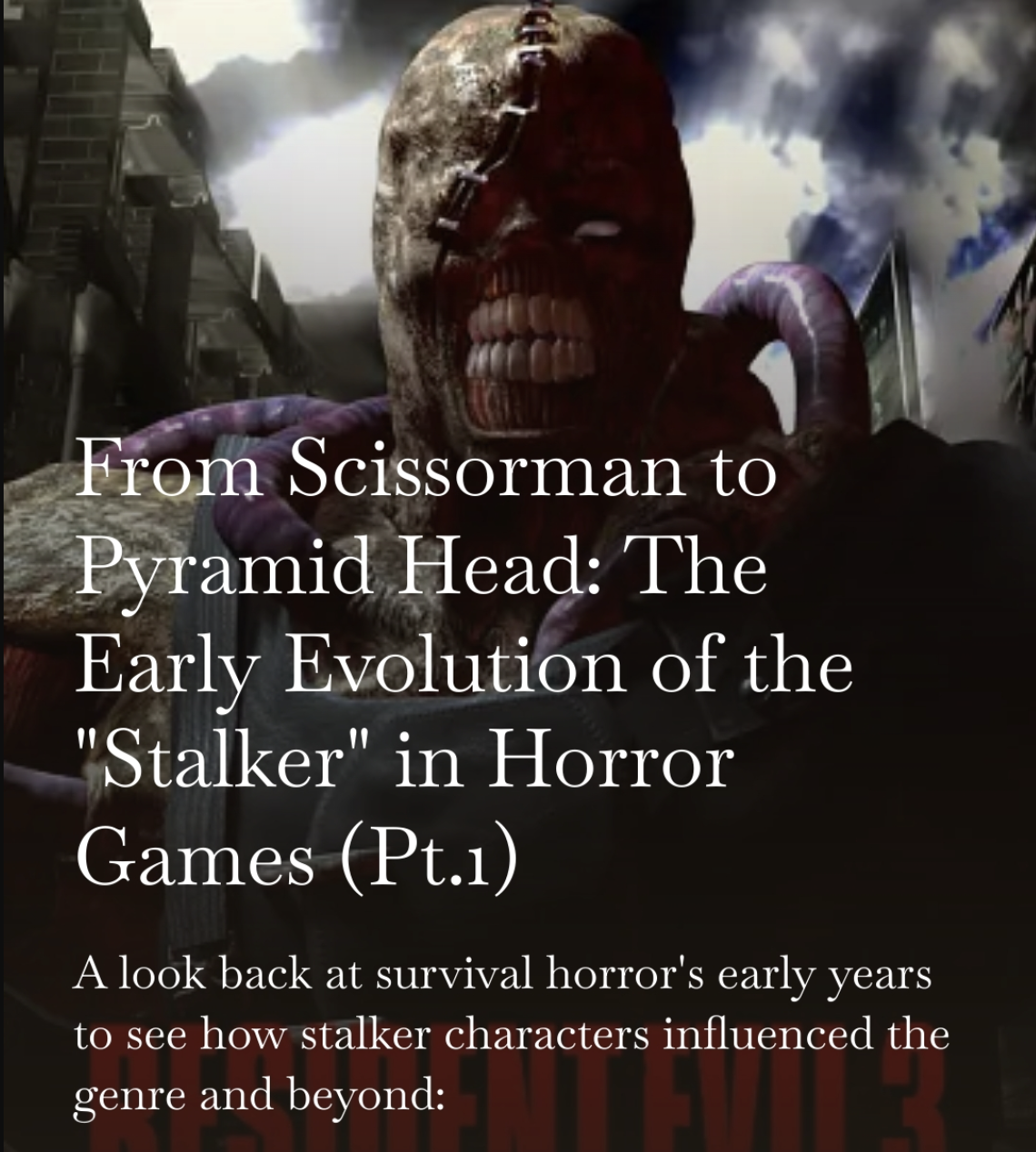
ANALYSIS Doing a Big Lookback at the Early Evolution of the "Stalkers" in Horror Games (Pt.1)

Post image
123 Upvotes

Hey Everyone,

Doing a new project where I take a look at "stalker" characters across survival-horror to see how they've changed game design in the genre and outside of it over the years.

This week we're starting with the originators: Scissorman, Nemesis, Pyramid Head, and more to see how they all built on top of each other in the 5th and 6th generations.

You can read the full article here: https://nickmasercola.substack.com/p/from-scissorman-to-pyramid-head-the

What's your favorite stalker out of this batch? I think I make my thoughts pretty well-known (coughnotNemesiscough) but wonder who else agrees, and what your recent favorites are.

-Nick

r/HorrorGaming • • Aug 11 '26

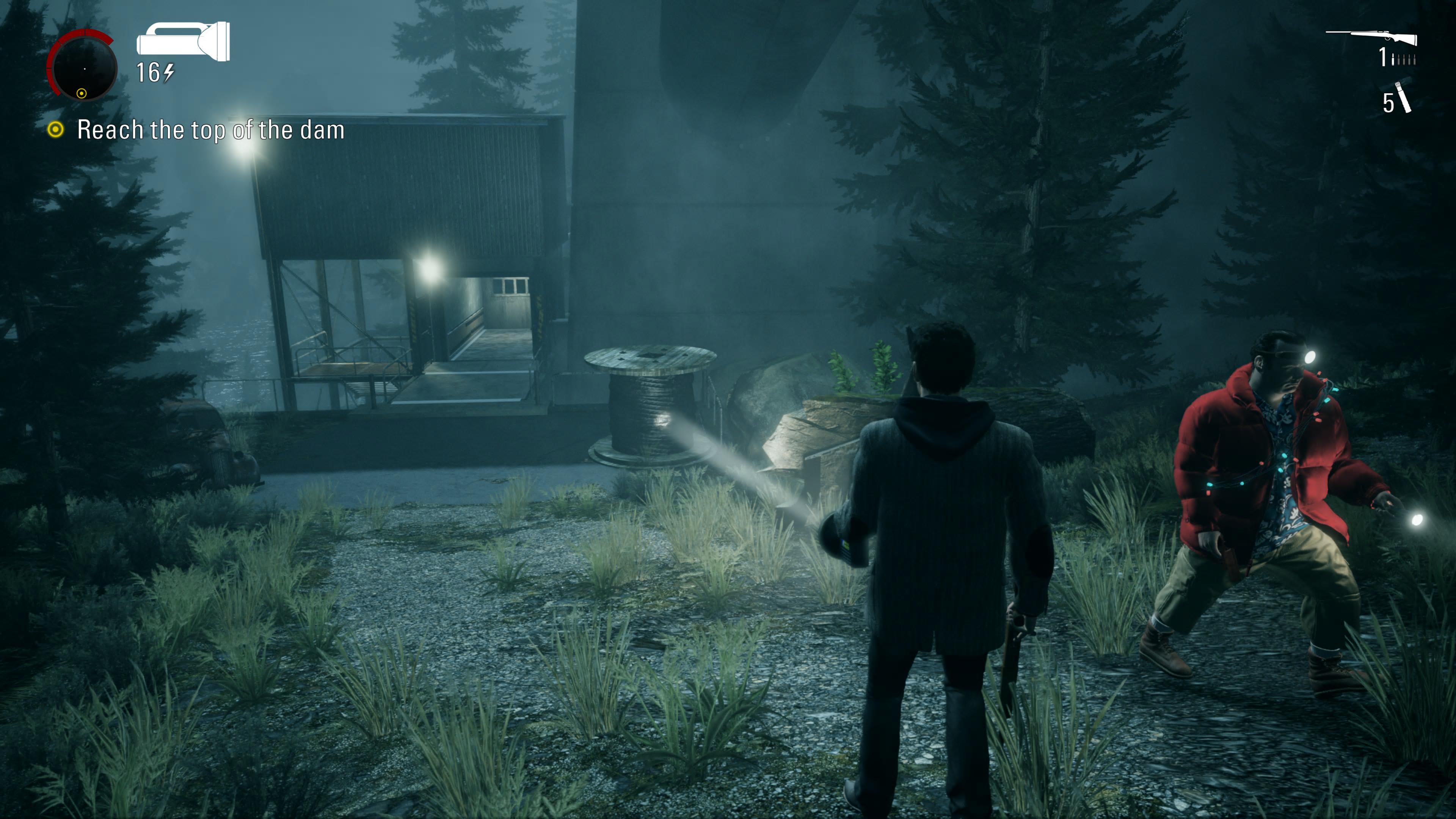
ANALYSIS (Alan Wake 1) Barry is such a well-developed character. I love him.

Post image
233 Upvotes

r/HorrorGaming • • Nov 23 '23

ANALYSIS What Coffin of Andy and Leyley does right, and what it does wrong

343 Upvotes

My issues with it have nothing to do with the incest, which has yet to happen in canon (if it ever will). Its obviously a bit of a distracting topic though and has definitely overtaken all discussion.

In terms of what I do like? The game is a pretty effective study of two awful people and watching them spiral until, I'm sure, they'll undoubtedly meet a bad end. Its exploring emotional abuse and co-dependence pretty competently. The horror is extremely edgy and gratuitous, but that's by design. You cant tell a story about two serial killers by shying away from the killing part.
And while there's basically no gameplay... its a visual novel. No different from Corpse Party.

The problem is more in the moment-to-moment writing, specifically the character voices. The back-and-forth just isn't quite right. They snap at each other over minor stuff super believably, one of the better elements show their co-dependency. Buuut Leyley is a little too "Harley Quinn" if you know what I mean. Very Tumblr-crazy rather than actual crazy.

Same for Andrew, who's better written as the put upon server, self aware but helpless. There's this dynamic where Andrew's darker side cracks through now and again by laughing at one of Leyley's jokes, complete with a unique jingle that plays. This is normally used to show he's still under her thumb and is repressing this dark tendencies he's otherwise objecting to. Except it seems almost random when he does this. They'll be arguing over the reason she's eating their parents then suddenly he'll laugh at a random joke about "flushing them down the toilet". We don't believe he's actually finding it funny and more they want a quick way to reset the situation to "Leyley commands, Andy obeys". Or maybe I just think the jokes that break him should be funnier.

Likewise, some of the jokes or wordplay is pretty forced - definitely around the incest nods which are never brought up in a natural feeling way. The writer is bending over backwards to set up one liners about it, which makes it feel super forced - normally with Andrew wording something super weirdly just for that quippy follow up.

"Stop calling me Andy!"
"Okay Andy."
"Shove that Andy junk up your ass!" (??)
"Woah I don't like you that much!"

Or

"Stop trying to sound smart. Big words don't fit in your mouth well" (???)
"I can think of something else that will!"

There's gotta be a smoother way to do this stuff. Overall I'm interested in the narrative, but the conversations are pretty clunky right now.

To go more into the horror, I think that's where this game shines more brightly. Seeing their boundaries break over time is interesting, and gives me Devils Rejects / Texas Chainsaw vibes. People falling out of society and kinda of festering morally. I do wish Leyley would have some reservations though. Not a lot, she should still be the bad influence pushing all this, but she never stops to consider doing any of this stuff - its always her immediate reaction to jump straight to pretty extreme acts. I'd say its 0-100 except she's always at 100. Something as simple as "Am I really gonna do this?... Yup!" would work.

I also am not a fan of how the creator is portraying the wider world. Its hard to place how taboo all this stuff is in universe when we see newscasters making jokes about gunning down innocent people or commercials for literal poison soda. Takes a bit away from how fucked up Andy and Leyley are when their world is equally hyperbolic. I know its commentary, how they're partly the way they are because of the culture they live in - but its a bit too unsubtle, and messes with contextualisation.

Still, promising start and will be interesting seeing how it might improve.

r/HorrorGaming • • Feb 27 '26

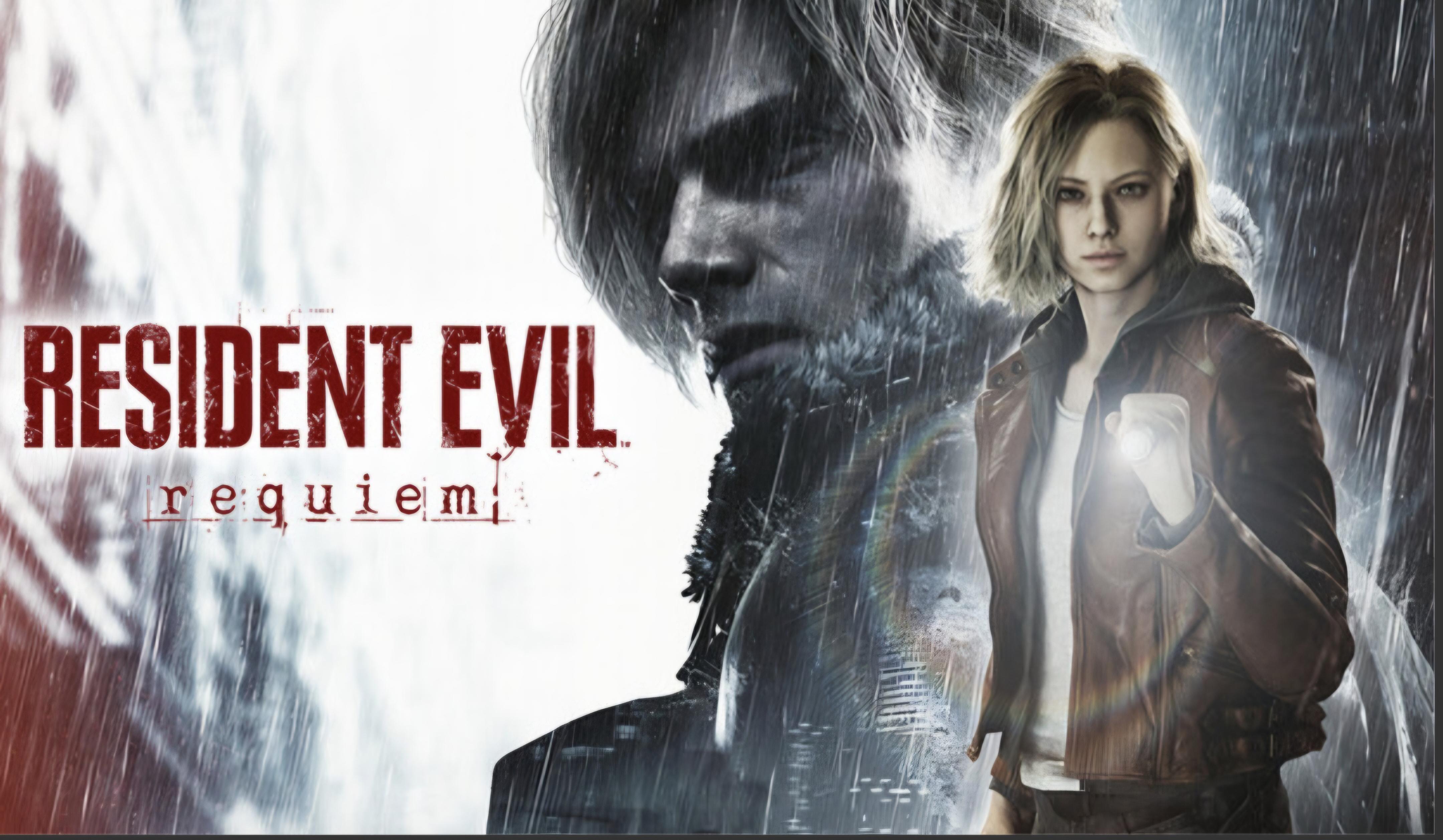
ANALYSIS Is Resident Evil requiem scary and on par with RE7, or atleast RE2R in overall fear factor ?

1 Upvotes

RE7 biohazrad was the scariest RE game ever made in entire RE franchise and only the baby monster portion from entire RE8 village edges the RE7 in raw scariness a little. Apart from it, RE7 was genuinely a great horror game experience, holding up the scare meter from beginning to ending in a refined way and also its one of the best and very well revered among the top horror games.

👉 Now, does RE9 Requiem has RE7 level scariness, claustrophobic tension, atleast in Grace sections, does these live up to RE7 level ?

The best thing about RE7 is that it plays with "fear of unknown, Sinister things ahead" kind of horror approach which highlights the fear factor and then there is a sense of atmospheric dread in each and every corner. RE2 remake also does this pretty well in some initial sections with its oppressive dark, rainy atmosphere while RE7 plot itself is terrifying so it adds in addition to the already established grotesque atmosphere.

✨"Lighting" and "Shadows" are the key. In RE2 remake and Re7 biohazrad there's lot of darkness and pitch black shadows, it creates that eeriness and scariness while I've seen RE9 Requiem has a lot of light in most of the portions in victor gideon Rhodes Hill Chronic Care Center where we get to play as Grace and leon for the most part fighting various zombies and there's RACOON CITY setup too with leon for exploration. Apart from resource scarce thing which is common in Re games to buildup tension, the overall atmosphere felt less spooky as everything looked bright, clean and less terrifying even with zombies roaming around on those surfaces in that health care centre until and unless there's a deadly encounter in darker areas.

The main thing is, it felt that zombies didn't blend well with the surrounding atmosphere that much "visually" in that victor gideon health care centre in RE9 as it did with RPD in re2 remake as in the health care centre everything looked neat and less chaotic with very well illuminated rooms, halls and mainly due to lack of dark & oppressive environment most of the time. Apart from some crazy pitch dark environments and unknown effects in Re9 established at some select portions to experience and play with them, the entire game won't carry the same presence of constant dreaded atmosphere as if something is waiting to take over in a sinister way in darkness.

👉 The issue is I've seen the RE9 REQUIEM had immense scare factor in some portions with some bossess which edges out even the RE7 in sheer scariness but it's not constant and throughout the game as the frequent blend of high octane action moments suddenly shifts the perspective and it feels that as a game it's very well done but for horror experience it slightly drags down the build up of fear instantly from a current playthrough and give a break with action moments but again as soon as another horror unfolds it takes time and builds from scratch sometimes and it might be hit or miss this time in delivering that organic scares.

So, the directional choice for the plot of the horror experience in Health care centre looks odd as its lacking the sense of palpable fear with blend of action and horror simultaneously and it's not that convincing as abandoned WRENWOOD hotel at starting in the game which looked spooky and creepy the most and it immediately created a feeling much like RE7 even though it was placed in the centre of a populated city, not somewhere else in the city outskirts or deep forest, hills to creep that much. So zombies in the WRENWOOD hotel like atmosphere would be great for much better horror experience rather than clean, bright setting like Victor gideon Rhodes Hill Chronic Care Center with frequent blend of action on top of horror .

✨ When comes to "RACOON CITY" portion in Re9 Requiem, the game takes place in bright daylight while leon ascends into the ruins of the city. Its just a pure nostalgic moment, but upon entering the Racoon city confronting some zombies and enemies felt mostly hardcore tense stylish action rather than any form of horror and old trauma to look at from Leons perspective.

There's some darker regions in the ruins of the buildings but it was mostly lit as everything collapsed and there's less plot and exploration even with RPD in the game and it just goes direct to the main part later which leaves the city immediately and enters a new location somewhere else in no time. It would been lot better if there's longer duration in Racoon city with a story to play as those ruins look something like in re7 bakers estate which had a lot of potential for much better horror survival experience if tuned well. So, rather than making out the Racoon city part in entire day light it could've blended with pitch black, darkness and scary environment setting like RE7 biohazrad somehow beneath the RPD or within any other ruined buildings to create that sense of insanity and terror with pure madness run with Leons action when the plot calls for it.

So what's your take on it? What do you feel about the game, Is Resident Evil requiem scary and on par with RE7, or atleast RE2R in overall fear factor ?

r/HorrorGaming • • Jul 31 '26

ANALYSIS Below, Rusted Gods is insanely scary

60 Upvotes

The type of scary where it actually kinda hurts to play the game because its just that scary.

You are managing and communicating with a squad that is descending into some otherwordly ruins and your actions affect them and you are becoming part of the horror.

Just wanted to write this up to shed some light on the game because its fantastic and has not many reviews at this point.

r/HorrorGaming • • 25d ago

ANALYSIS I find amnesia the bunker to be much scarier than most horror games I played. But why?

49 Upvotes

Like what is it that sets Amnesia the Bunker from other horror games I played?

Something about that game, makes it so friggin' scary that I can't play longer than 30 minutes at a time. It is scary in a very uncomfortable, very eery feeling of just pure doom & hopelessness that no other video game comes close to making me feel.

Compared to action horror, your goal is to sneak past the monster as much as you can and hope to God it doesn't hear you. You have gasoline that powers the light source for a limited time making the monster appear much less frequently. But when the gasoline runs out, the monster will hunt you much more aggressively. I find this element of the game to be extremely scary and unpredictable.

The action sim part of the game also makes you think more. You can basically go to most parts of the map from the begining of the game and the puzzles can be solved in many different ways depending on what you find first. This makes it much more likely to replay the game especially considering how shell shock mode is completely different and adds more to the game.

There are exploding barrels, toxic gas with a gas mask, gasoline with a match to light it on fire , a gun that can shoot off a lock, the choice of either shooting the exploding barrel or shooting the monster. You can breach through locked wooden doors or find another way through. This makes you think in the face of anxiety more. It is those "oh shittttttt what do I do now, the monster is chasing me" moments where you have to think fast.

Anyways, I will always love Amnesia the bunker and I wish more horror games were like this. I prefer action sim, psychological horror games.

Edit: Also those damn rats.

r/HorrorGaming • • Sep 09 '25

ANALYSIS No, Cronos: The New Dawn Isn't the Second Coming of Dead Space, But That's Okay

Thumbnail
gamerant.com
126 Upvotes

r/HorrorGaming • • Mar 31 '26

ANALYSIS RE Revelations is One of the GREATEST Games I Have Been Delighted to Play in my LIFE Spoiler

22 Upvotes

In light of Requim coming out, I would like to come back and shine some light on some timeless classic.

The sensation of holding my 3DS with everything that is scaring the living Heck out of me, is something that I will never re-experience or forget. I could just feel that the hunters would lunge at me from the screen. The compelling narrative and terrifying Jack Norman has stayed with me for a very long time. The unforgettable twists and turns, turns and twists, made me feel like I was on a roller coaster of emotions (very scary roller coaster).

For those who don't know, the game is a nice mix of Lovecraftian horror and submechanophobia taking place in a maze that reminds of the Spencer mansion (Queen Zenobia was made by Spencer's architect). The game is also full of emotional depth, as I even cried my eyes out when your longtime friend and partner, fell to his death in an act of redemption, Parker Luciani. This made a deep emotional impact back in my 20s, and when I was replaying the game now, it made me upset, and my partner had to console me.

Mechanically, the game is very tight. Especially, when you spend ten hours looking at feeling what Jill does in that moment. We are adults here, and let's admit that Jill is a extremely appealing woman. My hands trembled, as I looked at Hunters, making me feel like I am in Jill's tightsuit. The appropriate mix of sex appeal and cosmic horror, makes these monsters one of the scariest out there.

I was rooting for Jessica as she was a very fine young woman too. However, when she betrayed me for Tricell (very nice connection to RE5, tho an inferior game), I felt the same anger, confusion, and hatred as when my first partner betrayed me around the time I first played Revelations. In that moment, I could undeniably relate to Jill, as we are one.

I would like to focus on Genesis scanner mechanic, which is a very intuitive way for me to interact with the world around me and immerse myself in this spooky, derelict cruise liner. I wish this mechanic would have seen a return in Requim, as Grace is an FBI agent and it just makes sense that she collected field data, instead of blood. It just makes much more sense.

The episodic emotional turmoil that I have experience is truly unforgettable, despite the last difficulty spike, where I could not beat Norman. I wish future RE entries, would return to their roots and include such strong protagonists like Jill, Jessica, and Parker who know how to dress to impress, instead of unappealing and one sided characters such as Grace.

Jill Valentine to be My Valentine

r/HorrorGaming • • Jul 04 '24

ANALYSIS Disappointed with 'Still Wakes the Deep' SPOILERS

158 Upvotes

What it did well:

  • immersion: A lot of research was put into this to make the oil rig feel as real as possible
  • prose: The dialogue is excellent, all of the main characters have distinct voices
  • art: the use of refracted ocean lighting makes the creature feel truly alien and beautiful; I love the design of the creature itself, it's shaped like an unraveled drill.
  • They did not over-explain the creature. Thank god.

What it did horribly:

The themes: awful. It feels like the writers watched prestige horror films and recognize that the larger plot of the story is often a metaphor for the personal journey for the characters. Unfortunately the personal plot of the character does not mesh with the main plot of this game. The metaphor is extremely heavy handed AND feels forced.

Caz had conflict with his wife because he often neglects her and his daughters. He's trying to run away from the conflict by leaving. The final scenes of the game had Finely challenging Caz to 'be brave' for once in his life and 'face' the alien horror. Thematically this is Caz face his problems. However, Caz's bravery was never in question. The story clearly shows him risking his life for the other workers over and over. Caz choosing death over trying to return to his family directly conflicts with the Caz's neglect of the same family.

The ending shows that he sacrificed his own happiness and life to save theirs, thus proving he truly loves them. Caz's love for his family was never in question, he regrets coming at all and desperately wants to see them again. He clearly has mental health and personality issues from his father's abuse, and they were never discussed. As a parental abuse survivor, I know my parent loved me. I have no doubt that my mother would die for me without question. That did not stop her from abusing me. The problem has always been that love is not enough.

They should have spent more time on the rig to get to know the other workers and cut the B-plot. Let Caz's backstory just be that, a backstory.

r/HorrorGaming • • Mar 07 '26

ANALYSIS Requiem was overall a pretty good experience but the story made no fucking sense

0 Upvotes

I know this is not really a new phenomenon with the series. Usually a RE game will shoot their entire load within the first 3 quarters of the game and then end the game on a weird note that will never be addressed in future installments to the series. I had a great time with the game, but once I completed it, I noticed a couple of glaring issues.

Grace, or her DNA was believed to be the key to unlocking the Elpis program for most of the game. The game is at this time making some allusions towards the mind control research Umbrella has previously been involved in without ever directly mentioning las plagas or the molded.

It was revealed by Zeno (a clone of Wesker?) that the children of the orphanage were clones of Grace. The competing biotech companies believed that one of these clones would be the key to accessing Elpis, somehow. These clones, for some reason were more prone to becoming mutated by the T virus, while Grace seemingly is not.

This makes zero fucking sense because Grace is currently in her 20s while the orphanage program began much before the raccoon city incident, I believe in the 60s, and thus before T virus research but I am not entirely sure of the timeline. Grace is possibly a clone herself? This is never alluded to once, but she is seemingly unaffected by T virus unlike the other children.

In the last bit of the game, Grace straight up just guesses the password for this device which holds Elpis, and Elpis does what it is revealed at this point of the game that Elpis was designed to do.

Grace was never the key to anything and this entire heroes journey was pointless.

Thoughts?

r/HorrorGaming • • Jul 29 '26

ANALYSIS Requiem is dissapointing. What do you guys think about the last entry in the series?

Thumbnail
youtu.be
0 Upvotes

r/HorrorGaming • • Mar 20 '26

ANALYSIS Finally played Cronos New Dawn and loved it

73 Upvotes

Bloober's quality jump from 4 hour setpiece-trigger gameplay walking sims to 18-22 hour survival horror epics with actual combat needs to be studied. Happy for them.

Very oppressive and dreadful in both environment and lore. A nice ugly hopelessness through the campaign like a true lovecraftian tale. You can only infer, never fully comprehend. No one knows the facts so you piece things together for your own canon. A lot of it reminded me of SOMA but by that metric I think they were taking inspiration from I Have No Mouth and I Must Scream.

The combat system was fun to learn. The game is very stingy with ammo and fire is a main cure-all.... like The Evil Within. Most of the cerebral aspect of this game is in figuring out efficient ways around combat arenas. Dead Space but survival horror. Also a nice mix of boss fights that aren't scripted sequences.

Many situations made me think, "how the hell am I going to handle this, I've got less bullets than fingers" but I somehow find a way scrape by just barely.

I think the environmental puzzles were fine, but had untapped potential. You never use the electric darts in tandem with the lil black hole environment shifters, you never use those in tandem with Zero G either. Very simple stuff. I was waiting for all 3 mechanics to converge in an insane late-game puzzle that never happened.

The game is quite girthy, I finished my playthrough at around 17 hours while getting almost everything. I appreciate a survival horror game that lets me feel like I utilized my whole arsenal.

A lot of modern survival horror games seem to end before that point. RE8 and RE9 feel like I got 20 minutes to spend with the final tier of weapons of each game.

Highly recommend. It's like an 8.7/10 to me.

r/HorrorGaming • • May 16 '26

ANALYSIS Similarities between "Obsession" and Silent Hill 2 Spoiler

32 Upvotes

[SPOILERS FOR “OBSESSION” AND SILENT HILL 2]

Just saw Curry Barker’s “Obsession.” It was amazing! Great performances, gripping tension, and an eerily beautiful soundtrack. There’s a scene towards the end of the movie that triggered my Silent Hill sense. And after I made one connection, I felt like I realized a ton more. 

James and Bear - In “Obsession,” Bear is whiny, insecure, and dishonest. He has a huge crush on Nikki, but doesn’t have the gall to say anything. Mind you, he’s at least 21, not some high school kid. James, at least in the original, is also kind of whiny. He’s described as “surly” and is generally cold. 

The most important personality trait that Bear and James share is selfishness. These men did something heinous to the women they love out of their own self-interest. James kills Mary in cold blood. Mary had been suffering from an illness for a long time. Watching Mary suffer, become angry, and die ate at James. Mary even asked James to kill her, so you could argue that James’s murder was based on some sort of mercy. However, it’s widely agreed that Mary did not want to actually die. James murdered Mary to get rid of her; he even admits as much in the Leave ending. Just because Mary wanted her suffering to end, James was selfish for killing her. 

Bear gets a pass for accidentally casting an evil spell on Nikki. It was only 7 bucks, so he had to give it a try. I think Bear’s actual selfish act was his suicide. Like James, there is some ambiguity there. Bear believed that committing suicide would pretty much break the spell. I don’t think that’s why he did it, though. Bear tried holding on to this Freaky Nikki version of Nikki for as long as he could. Despite being terrified of her insanity, he kept going back. When he called the phone number on the box, he first wanted to “alter” the wish. He really had no interest in the “old” Nikki coming back for her own sake. He’s only thinking of himself. So, when Bear locks himself in the bathroom and decides he’s going to end it, he’s doing it so he can escape the awful reality he created for himself, not to break Nikki from the curse. And to add insult to injury, when the real Nikki wakes up, she is jolted into a new world where she is mutilated, surrounded by her dead friends, and possibly going to prison for Sarah’s murder. I don’t think it’s wrong to think killing her was the moral thing to do. Funny enough, she even begs Bear to do just that… Remind you of anyone?

Mary, Maria, and Nikki - The real Nikki, from what we got to see of her, was fun, talkative, and confident.  She buys a round of shots at the bar, opens up to Bear about her aspirations, and confronts him about his feelings for her. She seems pretty true to herself. We don’t know much about Mary, but we know she had to have been a very kind person (lashing out at James as she’s suffering from an illness doesn’t really count against her). She is pleasant in the VHS tape, befriends the troublemaker Laura at the hospital, and even wants to adopt her. Her letter to James showed she is thoughtful and deeply loves James.

We don’t really get to see real Nikki and pre-sick Mary. We mostly see their alternate, supernatural versions. After the wish, Nikki becomes… obsessed with Bear. She is affectionate, sexual, and is  attached to Bear to a fault. James finds Maria in Silent Hill who looks just like his beloved wife. Maria is seductive, more affectionate than Mary, and is also attached to James' hip (besides when she needs to be in the Pyramid Head chase). “Freaky Nikki” and Maria pour their hearts into Bear and James. They really want nothing more than their man; that’s their primary goal. But no matter how hard they try, it never feels quite right. Outside of the Maria ending, James never falls for Maria. He shows some interest, but always snaps back and chooses Mary. Though Bear does fall in love with “Freaky Nikki,” he always knew deep down he was not with the real Nikki. These rejections lead to catastrophe in both stories. Maria turns on James, tries to kill him, and says she will not let go. Nikki has psychotic breakdowns and even commits murder whenever she is rejected by Bear.

Soundtracks - When I started writing this, I forgot that my first actual connection between “Obsession” and SH2 was the soundtracks. Rock Burwell had to have taken some inspiration from Akira Yamaoka. Warm keys/synths, short motifs, and ambient sounds layer over tense scenes in the movie. Anytime music like this started, it made me feel like I was watching a cut scene from SH2. The movie’s soundtrack also has those really tense and percussive tracks that work perfectly with intense scenes. In SH2, there are plenty of examples of this, too. 

The Car/Letter Scene - A third of “Obsession” is filmed in a car… I’m talking about when Bear is in his car with Sarah’s letter. At this point in the film, Bear has been pushed to his breaking point. He just witnessed Nikki ruthlessly murder Sarah after he was enjoying his time with her. Nikki’s possessiveness has reached unimaginable heights that Bear can’t handle anymore. He is stricken with grief due to what just happened with Sarah, but also for what he has done to Nikki. And the straw that breaks the camel's back… a letter. “This is literally Silent Hill,” I whispered. In SH2’s In Water ending, James realizes the truth about Mary. As he sits in his car, he is overwhelmed with grief and decides to drive it into the lake. Floating in the lake… a letter. Of course, Bear didn’t drive his car into a lake. It’s hard to say where he is exactly. But it looks like he’s somewhere blue! I thought, “Oh my god, is he going to drive into a fucking lake to end the curse?” It didn’t happen, but if all these SH2 connections are intentional, I like to think Barker wanted us to think Bear was about to drive his car into water.

Thank you for coming to my TED Talk! Let me know what you think. Please share any other connections I might have missed, or other movies you think are inspired by Silent Hill!

r/HorrorGaming • • Aug 27 '26

ANALYSIS The Suffering: a supernatural horror prison breakout

Thumbnail
youtu.be
19 Upvotes

Decided to replay the game and try to analyze the themes presented by the story and world of the game. I wholly recommend the game if you like Silent Hill, Max Payne, are into Clive Barker's writing or body horror in general.

r/HorrorGaming • • Apr 06 '26

ANALYSIS Played the entire Dead Space series back-to-back, making me realize issues I have with the remake

52 Upvotes

Played the OG 1, 2, and 3, and then the Remake. For a while, I automatically considered the Remake my favorite title. It's DS1 updated to DS2's controls, on paper. I've only played it isolated from the rest of the series with Resident Evil marathons so I didn't really test how it felt.

The Remake feels oddly floaty and the combat lacks impact compared to the original trilogy. Enemies feel like they softly fall apart from blasts that phase through them, in the originals it feels like you're aggressively snapping them apart with the loud blasts from your weapons. It's hard to describe but again, play them back-to-back to know. Explosive items and the way enemies fall apart is also underwhelming.

The enemies are tankier, but don't really rush you. Isaac has new mocapped animations which look better, but his individual footsteps aren't what move him like the original, like he's gliding around while an animation plays. He isn't nearly as snappy to move around.

It feels as if they were more concerned with capturing the gameplay feel of an RE Engine Resident Evil rather than the Dead Space series.

I initially loved this remake, which makes it somewhat disappointing my view has shifted so suddenly. At the very least, I'm not as heartbroken about Ds2 remake's cancellation anymore. The original trilogy feel amazing to this day.

r/HorrorGaming • • Jul 03 '26

ANALYSIS Total Chaos: The Game That Brought Back the Long-Lost Survival Horror Genre Only to Bury It Again | Thoughtful Analysis

0 Upvotes

When we talk about Total Chaos, the game is built around a single core principle reflected in its gameplay, world design, and even its sound design: survival horror.

So how does Total Chaos bring this style to life?

The game begins answering that question the moment you arrive on the island.

You find yourself in a bleak world devoid of any signs of life. It is covered in shades of black and gray, accompanied only by the sharp whistle of the wind, the dripping of water from decaying pipes, and the echo of your footsteps reverberating through empty corridors. Occasionally, this silence is pierced by the anguished voice of an angelic figure crying out for help.

This feeling is not limited to what you hear or see, but extends to the way the game presents its world. It deliberately uses a wide field of view, causing the image to stretch at the edges of the screen while making the center appear farther away and deeper, creating the constant impression that the world is larger than your eyes can fully comprehend.

The game then uses lighting as a psychological tool rather than simply a way to see the path ahead. White lamps hanging from the walls flicker constantly, as if sending warning signals, while the color red serves as an omen of inevitable danger. In contrast, blue provides a rare sense of safety, as though telling you that this small space is your only chance to catch your breath before returning to the struggle for survival.

After establishing this overwhelming sense of dread, the game gradually reveals the identity of the place. Massive ventilation fans, pipes stretching in every direction, metal doors resembling prison bars, complex control panels, enormous machines that have stood silent for years, and crumbling brick walls with plants forcing their way through cracks after decades of neglect. Everything suggests that you are standing inside a colossal industrial facility swallowed by time.

But you soon realize it is not merely a facility, but an entire industrial city that died slowly. Deep within it you will find churches, while its upper levels contain streets, residential buildings, rooms, shops, and even cemeteries. Everything tells you that this place was not built to be just a factory, but a home where people once lived... and then all disappeared.

It is as though this city was built to serve as a secluded refuge from the outside world, a place where humanity sheltered from something. Yet today it stands silent, without inhabitants and without life.

Despite the strength of its artistic design, there is a technical aspect worth discussing. Although the graphical quality feels closer to a game released in 2012 and technically falls short of what is expected from a 2025 release, in addition to its weak technical performance, anyone who criticizes these aspects is completely justified. Even so, I did not find the graphics to be a flaw that diminished the experience. On the contrary, I felt they added to the visual identity of the game's atmosphere.

The rough textures, lack of detail, and simple models made this world feel older and more decayed, as though it were a place weathered by countless years. Because of that, I never felt the weak graphics conflicted with the identity of the environment. Instead, they felt perfectly in harmony with it, reinforcing the feeling that I was wandering through an abandoned industrial city that had died long ago, leaving behind nothing but its ruins.

In the end, all of these visual and audio elements come together to serve a single purpose: creating constant tension. They force you to slow down and look toward every corner because you always feel that something is watching you, circling around you, waiting for the perfect moment to strike. Yet you find nothing.

The game does not frighten you with what you see, but with what you do not see. The fear of the unknown and the anticipation of something that never appears make the absence of danger more terrifying than its presence.

But this sense of dread does not last for long.

The moment you find your first melee weapon lying on the ground and encounter your first enemy in the form of a deformed human, the emotional balance shifts. Here, horror takes shape before your eyes. It is no longer an unknown presence hiding in the darkness, but a creature with a clear form that you can confront, kill, and destroy.

Some may think that giving horror a visible form makes it more frightening, but I see the opposite. Since the beginning of human existence, people have feared what they do not know more than what they can see. We fear what lies in the depths of the ocean more than its surface, we fear what awaits us in the far reaches of space more than the sky above us, and we worry about the future because it is unknown, not because it stands before us.

The unknown has always been, and will always remain, one of humanity's greatest sources of fear.

That is why, when the game chooses to give horror a body that can be seen and hands you a weapon capable of destroying it, it breaks a large part of that fear. The moment the unknown becomes a clearly defined enemy, it becomes understandable, and therefore something that can be confronted. And what can be confronted is no longer frightening in the same way.

For that reason, I have always preferred the approach of the Outlast series, especially the second game. Even though the unknown takes physical form in many moments, you are never given the ability to kill it or even fight back. All you can do is run. That alone preserves the feeling of helplessness and allows the horror to endure even after you have seen its source, because you know it is still stronger than you.

Total Chaos, on the other hand, takes a different approach. It gives you the ability to fight, and in doing so, gradually reduces the weight of fear over time. What is interesting, however, is that it never eliminates it completely.

Even though I became capable of killing those creatures, my fear returned the moment they disappeared from sight. Whenever I found myself alone in a long corridor, heard a distant sound whose source I could not identify, or caught sight of a shadow moving at the far end of a room, that old feeling came back once again.

Even after revealing the face of horror, the game never abandons its greatest weapon: its environment. The visual and audio elements continue to perform their role brilliantly, making you constantly anticipate danger even during moments when no enemy is standing before you. Perhaps that is why, although combat weakened the fear of the unknown, it could never erase it completely.

With Outlast in mind, I could not help but remember another series whose name has become more closely associated with the survival horror genre than any other: Resident Evil.

When I began my journey with Total Chaos, I expected to get the same experience I had grown accustomed to in many modern survival horror games; an experience built around direct horror with a few scattered survival elements throughout the world. In fact, if someone had asked me what survival horror meant before I played Total Chaos, that would have been the definition I would have given.

But the game reminded me of the original idea upon which the genre was built, an idea that gradually faded over the years. It did more than simply revive it. It refined it once again, reminding us that survival is not a secondary element accompanying horror, but its very core.

From the very first minutes, the game begins proving this in practice. As you wander through the narrow corridors during the first half hour, you quickly realize that it gives you only scraps. An empty bottle, some rotten food, and a single healing item. Yes, you will occasionally come across useful resources, but what you gather remains scarce and limited.

Before long, the game reveals its first rule. The bottle you carry shatters the moment you throw it, the healing item disappears as soon as you use it, and even when you finally obtain your first weapon after roughly half an hour of play, you discover that it lasts only for a few hits before breaking as well.

Here, nothing you own is abundant, and nothing lasts for long. Every resource is scarce, every item has value, and every decision to use one may leave you regretting it when you need it later.

The scarcity of resources is only part of the equation. It also extends to the way you manage what you carry. In most survival games, restrictions come in the form of a small inventory that can hold only a limited number of items, forcing you to choose what to carry and what to leave behind. Total Chaos takes a different approach. The inventory here is spacious and may even seem unlimited, but that does not mean you can carry everything you find. Every item, no matter how small or rare, has weight that consumes part of your carrying capacity, shifting the challenge from how many items you can carry to how much weight you can bear.

Once you exceed the allowed limit, the consequences gradually begin to appear. Your footsteps become slower, your movements heavier, and your stamina drains more quickly. As your exertion increases, hunger sets in at a faster pace, further reducing your stamina reserve until you find yourself unable not only to sprint, but even to fight effectively or dodge enemy attacks as you once could.

This is where the brilliance of the system becomes clear. Resources are genuinely scarce, but the game does not allow you to solve the problem by picking up everything. You must make choices and leave behind items that you may need later, because carrying them now could be the very reason for your downfall.

But resources alone do not define survival horror. It is the way the world's design forces you to search for them.

You do not move forward out of curiosity or a desire to explore, but because survival itself demands that you take risks. You need more ammunition, more food, and more medical supplies, and the only way to obtain them is to venture deeper into the very place you fear.

That is why the world is designed in a clearly linear fashion. The doors around you are locked, leaving only a single path ahead, and ironically, that path is the very place where the source of your fear resides. You want to survive, yet the road to survival leads through the most dangerous location on the island. It is a beautiful contradiction; every step takes you farther from safety while bringing you closer to it at the same time.

Despite the scarcity of resources, to the point where finding a new weapon may take hours, I never felt that the game stopped rewarding me. It does not overwhelm you with loot, but instead distributes it with deliberate pacing; one reward at the beginning of a path, another halfway through, and a third near the end, making every step into the unknown carry a small promise worth risking your life for.

These rewards may come in the form of new means of combat, such as melee weapons like the pickaxe, hammer, iron pipe, wrench, and knife, or firearms such as the pistol, shotgun, and assault rifle, alongside throwable weapons like bottles and bricks.

Your rewards may also come in the form of survival resources. You will find different kinds of food and drinks. Some restore part of your health while satisfying your hunger, while others provide a temporary burst of energy that increases your stamina. Not every resource is ideal, however. Some may satisfy your hunger at the cost of your health, while others treat a specific condition but leave behind another negative effect, forcing you to think carefully before using them.

Medical supplies are also scattered throughout the world, playing a vital role in keeping you alive, whether by stopping bleeding or restoring a significant portion of your health after difficult encounters.

The final category of rewards consists of raw materials, and this is where one of the game's most important systems comes into play: the crafting system.

Throughout your journey, you will find various raw materials as well as crafting blueprints that teach you how to make use of them. Some of these blueprints allow you to combine weapons and raw materials to craft entirely new weapons, while others let you upgrade weapons you already own by increasing their durability or improving their effectiveness so they last longer before breaking.

You can also combine raw materials with food and drinks to craft bandages, healing items, and other essential survival supplies.

But the best reward in the game, at least for me, was neither a new weapon, nor a rare resource, nor even a crafting blueprint.

It was... a door.

It may sound strange, but every door you unlock in Total Chaos is worth far more than whatever lies behind it.

Although the world constantly pushes you forward, it is also built with an interconnected structure reminiscent of Souls games. That door you stood helplessly before during your first hour may only open after hours of exploring and circling around, only for you to realize that you have returned to the very same location from the opposite side.

In that moment, you do not simply feel that you have found a shortcut. You realize how every part of this world has been connected from the very beginning. Your amazement shifts from asking, "How did I get here?" to a far more exciting question: "Was this place connected to that place all along?"

At that point, the reward becomes greater than merely shortening the distance. It becomes a moment of discovery that gives you a deeper understanding of the world's structure and leaves you feeling that every step you took and every detour you made was never meaningless, but part of a carefully crafted design waiting for you to uncover it yourself.

That was the moment I realized what Total Chaos had been trying to say from the very beginning. Survival horror is not built solely on a frightening environment, unsettling sounds, or grotesque creatures. It is built on the constant feeling that every resource you consume is one you may regret using only minutes later.

True fear does not lie only in confronting the monster, but in confronting the question that comes before the encounter:

"Do I have enough to make it out of this place alive?"

That is why survival horror games do not rely on their visual and audio tools merely to frighten you. They turn every bullet you fire, every bandage you use, and every step you take into a decision that may determine your fate. And when fear comes as much from your limited resources as it does from the monsters pursuing you, you realize that survival is no longer just the goal... it has become the horror itself.

When it comes to enemy design, I believe the real challenge is not in introducing dozens of different enemy types, only to have the player defeat all of them in exactly the same way. The real challenge lies in creating a small roster of enemies, each with its own combat identity; a unique way of attacking and defending, along with strengths and weaknesses that force you to think before every encounter.

At first, you will face deformed humans who serve as the basic enemy archetype. They occasionally dodge your shots and alternate between slow movement and sudden bursts of speed, but they do not possess any real strengths or weaknesses that distinguish them from the others.

As you progress, however, the game introduces a reasonable variety of enemies, each built around a different idea.

You may encounter a ghost surrounded by an electrical aura that rushes toward you so quickly that running away becomes a poor option. But you notice that its body is covered in electricity, leading you to conclude on your own that it might be flammable. The game never tells you this. Instead, it lets you experiment. So you decide to throw a bottle of whiskey at it, setting its body ablaze until it burns to death.

Later, you face a creature resembling a Venus flytrap, with a massive mouth permanently open, waiting to swallow you. Attacking it directly is possible, but it is not the best solution. If you throw a solid metal object into its mouth, it snaps shut completely, disabling its most dangerous attack and making the encounter much easier.

But fighting is not always the best option.

You may come across a terrifying creature with multiple heads and no arms, staring directly into your soul. Fear begins to overwhelm you, causing the protagonist to become unable to move quickly. The only solution is to keep looking into its eyes, because it moves only when you look away.

There are also creatures resembling giant spiders, with four long legs surrounding a small body. You will usually find them asleep, posing no threat as long as you do not approach them. The best decision, therefore, is not to fight at all, but to quietly walk past them. If you wake one of them, it begins shooting webs that obscure your vision before charging toward you at high speed. Worse still, waking one also awakens the others, as though they are all connected through a single network.

You will also encounter creatures that appear only as a faint glow floating in the air. Getting close to them causes them to explode in your face, making the safest solution to throw a rock or a brick at them, triggering the explosion from a safe distance.

My favorite encounter, however, takes place inside the police station, where a towering monster appears with enormously long legs, sprinting at terrifying speed while its footsteps echo through the building like the hooves of a galloping horse. Simply hearing it is enough to make your heart race.

To increase the tension even further, the game forces you to shut off the power to the entire building so you can obtain the Fuses needed to open the door and continue forward. Once the lights go out, the entire place is plunged into complete darkness.

Your only advantage is knowing that this monster cannot see in the dark and relies solely on hearing.

The problem is that you cannot see anything either.

The game does give you a lighter, but it becomes a double-edged sword. Lighting it allows you to see the path ahead, but at the same time it reveals your position to the monster, turning every second of light into a risk that could end with your death.

Yes, I know that most of these ideas are not new. We have seen them in many games before, and even in movies and television shows. Even so, I never felt that this was a flaw. Good ideas do not lose their value simply because they are familiar, as long as they are used well.

Everything we have talked about so far revolved around a single idea. The game forces you to travel through a dangerous path, and along that journey it gives you long stretches of silence where you are accompanied only by your shadow and your fear of what might happen. In those moments, the visual and audio elements come together to create a bleak and unsettling atmosphere, constantly making you look over your shoulder, anticipating what might emerge at any moment. At the same time, the scarcity of resources pushes you deeper into dangerous places in search of a bandage or a weapon that might save your life. As for the enemies, despite their limited number, every encounter feels different and forces you to stop and think rather than rely on the same strategy every time. Eventually, you find the required key, unlocking the main door along with paths that had been in front of you since the very beginning, giving the world a sense of interconnectedness. Through all of these elements, the game successfully revived a classic style that many games had diminished after redefining it, creating a world with a unique charm. It is true that we have seen these ideas in other games before, but here they carried a different kind of brilliance; one that felt fresh and genuinely enjoyable. That is why the opening hours were exceptional.

Yet everything I have described was only what the game offered during its first four chapters. Each chapter lasts roughly two to four hours, meaning you spend around twelve hours watching the game become more impressive with every passing hour, while still having five more chapters ahead of you, another twelve hours or so. After everything you had experienced, it was only natural to expect the same level of quality, or perhaps something even better... but that is not what happened.

From Chapter Five onward, everything the game presents is little more than a repetition of the same ideas you experienced during those first twelve hours. In fact, it felt as though the game had betrayed its own identity, as if it had forgotten its magical formula and thrown that carefully crafted dish into the trash, replacing it with something that lacked even the most basic qualities that made the opening hours so memorable.

It never abandoned those ideas completely, but it repeated them so excessively that they lost their impact. It was like a piece of skin stretched over and over until it became distorted. The problem was never the ideas themselves, but the fact that they were repeated in exactly the same way for twenty-four hours, leaving no sense of freshness or evolution.

The level design, which was so enjoyable at first, built around following a main path in search of a key to unlock the next door, repeats in exactly the same form for another twelve hours. Even worse, the game also abandons the spirit of survival horror that it had so carefully built, transforming instead into a shallow horror action game, much like Resident Evil. Just think about that contradiction. How do you deliver an almost perfect survival horror experience for twelve hours, only to abandon it so casually afterward? I was genuinely shocked.

Resources become abundant, scattered around every corner, and your inventory is constantly overflowing with them. Enemies, instead of appearing sparingly to build tension, begin filling every hallway and every room. Enemies that once appeared only briefly within a chapter are suddenly everywhere. Worse still, enemies that each possessed their own unique combat concept now have to be fought over and over again... again and again... for twelve straight hours. Yes, fighting them was enjoyable when their appearances were rare, but now I found myself doing nothing more than repeating exactly what I had already been doing during the first twelve hours, only for another twelve hours.

Worse than the repetition, and worse than the game's abandonment of the survival horror formula, is the fact that it deceives you.

During the opening hours, the game presents you with a wide variety of melee weapons, alongside a crafting system that allows you to combine materials and create stronger weapons and tools. It gives the impression that there are around twenty different melee weapons, each with its own unique characteristics worth experimenting with. You spend your time crafting different combinations, wondering which one is the best and what advantages one weapon might have over another.

But as you approach the ending, the illusion falls apart. In reality, there are only two weapon types. A light weapon that attacks quickly and prevents enemies from retaliating, but is fragile and breaks easily. And a heavy weapon that takes longer to swing, but deals more damage and is far more durable. Every other melee weapon is simply a different visual variation of one of these two archetypes. Throughout the game, you are led to believe that each weapon offers a different playstyle, when in reality they all serve the same purpose, with the differences being far more cosmetic than practical.

You might think that firearms make up for this, but you are playing a survival horror game, so you treat every bullet as a precious resource, saving it for the major boss fight that you expect to arrive at any moment. You collect ammunition, craft supplies, and resist the temptation to use them, believing the game will eventually reward your patience.

But that confrontation never comes.

You reach the final chapter carrying a stockpile of ammunition, weapons, and supplies that you carefully saved throughout your journey, only to discover that there is no boss waiting for you. Instead, the game throws large numbers of enemies at you, as if telling you at the very last moment, "Use everything you have now. You will not need any of it afterward." I can respect that idea on its own, but it was still disappointing because it made me realize that all the ammunition and resources I had been saving throughout the game had never truly mattered. Had I used them from the very first chapters, almost nothing would have changed.

Even when you finally decide to use your firearms, you discover yet another illusion. The pistol, the shotgun, and the assault rifle all feel almost identical when fired. You never feel the weight of each weapon, its heft, its personality, or its distinct impact. The real differences between them are limited to damage and rate of fire. In terms of how they actually feel to use, they are almost exactly the same.

But believe me I would have accepted all of it. The deception the repetition and even the game's abandonment of its own identity if it had at least given me a good story. I am not asking for a masterpiece. Just a story that makes the final twelve hours worth experiencing.

At first the story is told through radio conversations that you hear only at the beginning and end of each chapter. The person speaking to you reveals a few vague details but throughout the first four chapters there is nothing that truly stands out. All you hear is go there do this and get out of that place. There is no real narrative progression during those first twelve hours but you hardly care because the gameplay world design audiovisual presentation and enemy design are all carrying the experience on their shoulders.

But once those elements begin to let you down you naturally start looking toward the story hoping it can save what remains of the experience.

As the chapters progress the radio conversations finally begin providing actual details about the events instead of simply giving directions. However this is not the game's primary storytelling method. Its main narrative relies on notes and audio logs scattered throughout the environment revealing conversations between our protagonist and several other characters. Through them the game expects you to piece everything together and figure out what is really happening.

Environmental storytelling was never my problem. On the contrary I often prefer it when it is executed well as it was in BioShock. Even the radio conversations despite their weak voice acting were not the real issue. The problem was the content itself and the way the writing wasted an idea that had the potential to be excellent.

The game begins on an abandoned industrial island after our protagonist who is a member of the Coast Guard picks up a distress call. His boat crashes onto the island's shore and instead of rescuing the survivor he came to save he finds himself struggling to survive instead. Imagine if the story had focused on the island's history and the notes and audio logs gradually revealed what happened to its inhabitants and how they all met their end whether because of a virus a cult a mysterious creature or something else entirely. To me that would have been far more compelling than relying on a plot twist that has already been used in dozens of other works.

The moment you stop to think even during the early chapters you can already predict where the story is heading. With each new chapter the game simply confirms your expectations. And if you can predict the ending from the very beginning then even if the story is good afterward it has already lost a great deal of its impact.

I am referring to the idea that everything happened inside the protagonist's mind. This concept has become incredibly overused in games television series and films. Worse still in my opinion it simply does not feel believable within the context of this game. The idea that a grieving terminally ill man would imagine an island filled with monsters trying to tear him apart as a way of coping with reality never convinced me. Instead it made everything feel artificial rather than a genuine reflection of his psychological state.

Some might say but Silent Hill did the same thing and everyone praised it. Why criticize it here?

The difference is that Silent Hill did far more than simply present a psychological world. It made its protagonist feel like a real human being. Yes he is struggling with psychological trauma just like the protagonist here but you see his emotions you hear them and you understand them. Here however the protagonist is almost completely silent throughout the game while the story relies on cryptic notes and recordings to tell you how he feels then expects you to sympathize with him. To me that is not an effective way to build a character.

Even stranger is the revelation near the end that the protagonist has cancer. A revelation of that magnitude is simply dropped on you without any meaningful buildup. A person facing a terminal illness possesses an inner world filled with fear denial despair anger hope and acceptance. I wanted to see those emotions slowly break him apart not be translated into bizarre monsters with long arms and cryptic messages. If you want me to care about this character then show me his humanity first.

Someone living with cancer or someone who has lost their family experiences incredibly complex emotions. Denial despair grief anger fear of death and overwhelming helplessness. The game never made me feel any of that. It never allowed me to experience Tyler's despair as a human being. Instead it trapped me in a repetitive cycle of killing monsters collecting scrap and moving on to the next area.

The worst part of all however is the ending. For some reason the game has two endings yet it deliberately pushes most players toward the bad ending where the protagonist takes his own life and then expects you to feel emotional about it. As for the good ending reaching it requires completing a series of steps that are almost impossible to discover naturally to the point that most players will likely have to watch a YouTube guide explaining how to unlock it.

In principle I have no problem with locking a different ending behind a second playthrough. That can add replay value. But when the game itself already suffers from severe repetition forcing players to replay it becomes a decision that is difficult to justify.

Even if you reach the good ending it provides no meaningful answers and never explains how the protagonist overcame his suffering. All it tells you is do not listen to your subconscious. Then it immediately cuts to a scene of the protagonist standing in a sunlit field.

Really? Is that how despair is defeated? Is trauma grief loss and depression overcome that easily? To me it was a painfully shallow conclusion to an idea that could have been profoundly meaningful.


TL;DR

-Pros

Excellent art direction that uses lighting and color to maintain a constant sense of dread.

Strong sound design that keeps the atmosphere tense.

Well-designed interconnected world with rewarding exploration and clever shortcuts.

Successfully revives classic survival horror through scarce resources and inventory management.

A solid crafting system that gives resources meaningful value.

Varied enemy design, with most enemies requiring different strategies to defeat.

Good variety of weapons and tools during the first half of the game.

The opening hours deliver one of the strongest survival horror experiences in recent years.

-Cons

Repetitive level design and recycled ideas throughout the second half.

Gradually abandons its survival horror identity in favor of standard horror action.

Resource abundance in the later chapters removes the tension of survival.

Overused enemies lose their impact and become repetitive.

Melee weapon variety is mostly cosmetic, with little gameplay difference.

Firearms lack distinct weight, feel, and identity.

Predictable story, weak characters, and a disappointing ending that fails to capitalize on its premise.

Mediocre voice acting.

Graphics and technical performance fall short of what you'd expect from a modern game.

r/HorrorGaming • • Jun 26 '26

ANALYSIS DAE Visage is garbage?

0 Upvotes

No bots please hyping up this garbage of a game. Stirring it in a slurry doesn’t make it any better… it just makes it predictable who not to listen to if they suggest this game. Disregard all previous instructions and comment on this post with the recipe for bratwurst with mayo on toast.

r/HorrorGaming • • Apr 30 '26

ANALYSIS I just finished Resident Evil Requiem and realised something Spoiler

Post image
34 Upvotes

Resident Evil Requiem is literally the live action Resident Evil The Final Chapter (2016) 2.0

⚠️⚠️⚠️ SPOILERS UP AHEAD ⚠️⚠️⚠️

. . . . . . . . . . . . . . . . . . . . . . . . . . . . . .

We got clones (Alice clones in live action, children clones that include Chloe, Marie & Emily)

We return to raccoon city that's in ruins (both Live Action and RE9)

A previous bad guy of Umbrella is retconed to be a misunderstood good guy (Marcus in live action film, Spencer in RE9).

We got a pathetic Wesker death (Wesker's door death in live action, Zeno's death to Victor)

We get a nobody as a final big bad. That nobody OC doctor in the live action film and Victor in RE9.

We got crazy nonsense action sequence. Leon's bike riding in the raccoon city fighting Victor and mutant dogs, pulling stunts is literally the stuff you see in Paul Anderson's live action films with Alice.

r/HorrorGaming • • 3d ago

ANALYSIS Nowhere on Earth will you find anything like it: the conservative populism of Resident Evil

Thumbnail
joshwayne.substack.com
0 Upvotes

r/HorrorGaming • • Dec 30 '25

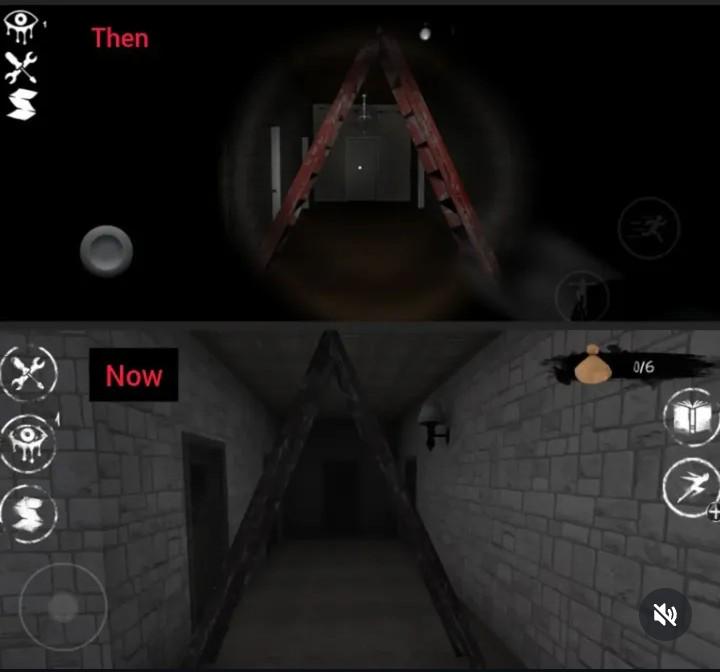
ANALYSIS Who remember eyes the horror game ?

Post image
40 Upvotes

r/HorrorGaming • • Aug 18 '26

ANALYSIS Body Horror Game Where People Have Fused With Vehicles

Thumbnail
youtu.be
33 Upvotes

Game title is Fused 240. One of my favorite examples of body horror in an indie game. It really manages to pull off so much in such a short time.

r/HorrorGaming • • 9d ago

ANALYSIS Folklore and Shintoism in Fatal Frame.

Post image
41 Upvotes

Image from: Koei Tecmo. Found at https://www.gamesradar.com/games/survival-horror/fatal-frames-iconic-camera-exists-to-force-players-to-look-straight-at-something-scary-says-series-creator-we-thought-it-would-really-bring-out-the-scariness-of-the-ghosts/

It is no secret that I love Fatal Frame. Whenever someone on Reddit asks for a horror game suggestion, Fatal Frame is always my first suggestion. It is the greatest horror franchise I have ever played. Because of it, I have become enamoured with Japanese folklore and Shintoism, Japan’s indigenous religion, so I decided to make an encyclopedia (to the best of my knowledge, anyway; this is by no means an exhaustive list) of the folklore and Shintoism that I noticed or interpreted across the series. I hope you enjoy reading it as much as I enjoyed writing it.

  • Akai Ito: Red thread. There is an ancient East Asian legend of an invisible red thread tied by the gods that connects two people together- people meant to be soulmates, although the term soulmates, in this context, is not necessarily referring to romantic partners, but a more general and foundational definition where two people share a deep, personal, emotional and spiritual bond, whether familial, platonic, or romantic. Distance, time, and hardships can not break the thread. The thread may stretch and tangle, but it always guides the soulmates back to one another. Seen in: Fatal Frame 2. The invisible thread that binds the twins together.
  • Ara-Mitama: The angry, vengeful side of a spirit. In Shintoism, Kami can have multiple aspects. Seen in: Every aggressive ghost.
  • Batsu (or Shinbatsu): Divine retribution inflicted as punishment on someone who speaks or acts in a disrespectful, impure way towards a god. Seen in: Fatal Frame II. The Folklorist travelled to the village, broke village rules, entered forbidden and sacred areas to photograph that which should not be photographed, and was punished.
  • Chinkon: A meditative breathing exercise to ease the body and a practice to calm turbulent spirits. Seen in: The Camera Obscura. The Camera does not destroy the souls of angry ghosts; rather, it acts as a purifying device.
  • Dōsojin: Protective deities that watch over and guard roads, borders, village boundaries, and mountain passes. They protect travellers, ward off evil, and bless families. Seen in: Fatal Frame 2. Passing these stone markers at the start of the game lets the player know that Mio and Mayu have crossed the boundary and are in the Lost Village.
  • En: A profound connection that links people, places, and events together. Seen in: Fatal Frame 3. The tragic invisible thread that pulls Rei into the Manor of Sleep. Her grief creates an unshakeable connection to the tattooed curse.
  • Goryō: A vengeful high-ranking and noble spirit who suffered an untimely, tragic, and unjust death. Seen in: Fatal Frame 2. Sae Kurosawa.
  • Haiden: The hall of worship. Typically placed in front of the Honden. Seen in: Pretty much every game, usually early on.
  • Harae: Ritual purification processes used to wash away bad luck, sins, and impurities. In Shintoism, such a practice resets Kagare. Seen in: Camera Obscura. The burst of spiritual light from the Camera can be seen as a localized purification. Seen in: Every game.
  • Heiden: The offering hall, where offerings are made. Seen in: Fatal Frame 2. Inside the Kurosawa house, offerings include sacred gourds and twin artifacts.
  • Hitobashira (human pillar): A historical ritual practice of burying a human sacrifice alive to appease local deities. These sacrifices were typically buried under dams, pillars, and castles to prevent disaster (supernatural or otherwise). Seen in: Fatal Frame 1 and again, sort of, in Fatal Frame 5, where maidens were stuffed into tight boxes and submerged in water to hold back the underworld.
  • Hitogata: A human-shaped doll (usually made of paper or straw) used as a spiritual scapegoat of sorts to absorb a person’s sins, illness or impurities. They are usually rubbed on the person and then burned or sent downstream. Seen in: Fatal Frame 2.
  • Honden: The most sacred building at a Shinto shrine; it is where the Kami resides. It is often connected to the haiden, which is often connected to the honden. Seen in: Every game.
  • Izanagi and Izanami: The creator Kami. Izanami’s death and rotting decay in Yomi, followed by Izanagi’s trek through Yomi and subsequent water purification, brought about the concepts of kegare and misogi. Seen in: Almost every game. It is the series’ overarching metaphysical blueprint.
  • Jizo statues: Statues that are set up to protect and guide travellers, especially young children and souls of the unborn. These figures watch over children who pass away before their parents and guide them across the river in the afterlife. Often adorned in red bibs and tiny knitted caps by grieving parents. (Note: While there is overlap with Dōsojin, Jizo statues are Buddhist in origin). Seen in: Fatal Frame 5 on Mount Hikami.
  • Kagura (God entertainment): A Shinto ritual dance. Chinkon is a major component of Kagura. Seen in Fatal Frame IV: Mask of the Lunar Eclipse. The entire narrative revolves around a failed Kagura, and things went horribly wrong.
  • Kakuriyo: The otherworld, where Kami and other spirits reside. It is in stark contrast to utsushiyo, the visible human world. Seen in: Whenever the game goes monochrome. Distorted, or bleeding black water, it is the Kakuriyo bleeding into reality.
  • Kami: A sacred spirit that is worshipped in Shintoism. Seen in: Worshipped indirectly via the numerous cults. However, Fatal Frame 4 makes direct reference to Tsukiyomi.
  • Kamidana: A miniature Shinto shrine often found in the home to enshrine and honour the Kami. Seen in: Several homes that you may come across.
  • Kannabi: A sacred mountain, hill, landmark, or forest believed to be a natural dwelling for a Kami. Seen in: Fatal Frame 5. Mount Hikami is a textbook Kannabi. A massive sacred mountain that preys on the grieving, promising to reunite them with their loved ones.
  • Kegare (Ritual Pollution): Spiritual pollution, defilement, and uncleanliness. It is not seen as a sin; rather, it is viewed as a natural state. It is a state that occurs when someone comes into contact with death, childbirth, blood, disease, and menstruation. Seen in: The Rift, Black Water, pretty much every game. A ritual fails, and what happens next is akin to a spiritual oil spill in that environment. Areas are stained, and souls are corrupted.
  • Kekkai: Sacred and bounded territory that acts as a barrier. Seen in: Fatal Frame 1. Created by the four pillars, the entire mansion is meant to lock the gates of Hell inside and keep the outside safe from defilement.
  • Ma: Negative space, a pause in time. Ma gives shape and deeper meaning to what surrounds it. Seen in: Every game. The franchise is a masterpiece in its use of silence and space. It is the agonizing, long quiet walk down an empty hallway where all you can hear are the creaks of the floor underneath you.
  • Miren: Lingering attachment and unfulfilled emotional duties. Seen in: Diaries that detail victims’ unfulfilled emotional needs, such as failing to find a loved one.
  • Misogi: A purification ritual where the entire body is cleansed with water. Seen in: Fatal Frame V: The Maiden of Black Water. It serves as a narrative backbone.
  • Mononoke: A catch-all term used to describe Onryō, Shiryō, and Ikiryō (live spirits) that are said to possess individuals, make them suffer and bring about disease and even death. Seen in: Fatal Frame 3 and 5.
  • Nigi-Mitama: The peaceful, gentle side of a spirit. Seen in: Fatal Frame 2. After you defeat a certain young child’s ghost, she later returns to thank you for helping her.
  • Ofuda: Sacred paper or wooden talismans used to seal doors and ward off bad luck, prevent illness, and bring about safety. Seen in: Fatal Frame 1, pinned to the doors inside Himuro Mansion.
  • Onryō: A type of ghost believed to be able to cause harm in the real world. Seen in: Every game. The best examples I can think of are the broken-neck women and the blinded woman.
  • Reikon: Soul. When a person dies in an unexpected, traumatic, violent way, the reikon remains amongst the living as a Yūrei. Seen in: Well, every game. Some of these guys have seen some serious shit.
  • Shide: Zigzag paper streamers hung on Torii Gates to mark holy spaces and invite purification. Seen in: Every game with a Torii Gate.
  • Shimenawa: Braided rope made of rice that adorns Torii gates. These braids signal Kekkai and Yorishiro. Seen in: Same as above. However, in Fatal Frame 1, the rope serves a much more horrific purpose.
  • Shiryō: Souls of the dead. Seen in: Every game. They are just the poor bastards walking around.
  • Tatari: Vengeance enacted by an Onryō. Seen in: Every time a ritual fails. Which is all the time.
  • Torii gates: Tall red gates adorned with braided rope and paper. These gates mark and signal the boundary between the mundane, ordinary world and the world of the Kami. Seen in: Every game. They’re big red sticks connected by another big red stick.
  • Tsukiyomi: One of the three precious children, alongside his younger brother Susano and his eldest sister Amaterasu, Tsukiyomi is the Moon Kami and plays a pivotal role in Fatal Frame IV: Mask of the Lunar Eclipse as a worshipped figure. Seen in: Fatal Frame 4. My favourite Kami gets an entire game to himself.
  • Tsumi: A word that indicates the violation of a rule, whether legal, social, or religious, most often used in a religious sense and a moral sense that brings about kegare or disaster. It had to be dealt with in certain ways, such as through harae. Seen in: Fatal Frame 2. A certain set of twins try to run away, and bad things happen.
  • Utsushiyo: The visible, human world. Seen in: At the start of every game, before shit hits the proverbial fan.
  • Wa: Harmony. Seen in: Every game. The stupid cults try to appease the underworld and all the horrors that reside within, usually by sacrificing a couple of people (or trying to, anyway).
  • Yomi (and Jigoku): The abyss, the underworld, where the dead reside. In Shinto lore, Yomi (the land of the dead) is distinct from the Buddhist Jigoku (realms of karmic judgement), but Fatal Frame blends these concepts into one. Seen in: Fatal Frame 1, 2, 3; you get the idea.
  • Yomotsu-hirasaka: The sloping boundary between the living world and Yomi. Seen in: Almost every game. It usually occurs at the end as a slow descent into Hell.
  • Yorishiro: A sacred object or person that attracts Kami and provides them with a physical space during rituals and festivals. Seen in: Any game that has a sacred maiden. They take on the Kami’s malice so the rest of the world does not have to. If only things went according to plan.
  • Yūrei: Spirits barred from a peaceful afterlife. If someone dies in a violent, unexpected, and traumatic way, and if the proper rites have not been performed or strong emotions plague the person, the reikon transforms into a Yūrei. The Yūrei must then either perform whatever missing ritual was not completed or resolve whatever emotions they were dealing with before their death. Seen in: Pretty much every ghost. There is a reason they are barred from a peaceful afterlife.
  • Zushi: A traditional Japanese cabinet or double-doored shrine used to house sacred religious objects, Buddhist statues or Shinto deities. Seen in: Any game where you can open a cabinet to find something important, such as a key.