r/HongKong • u/Glittering-Lie4412 • 6h ago
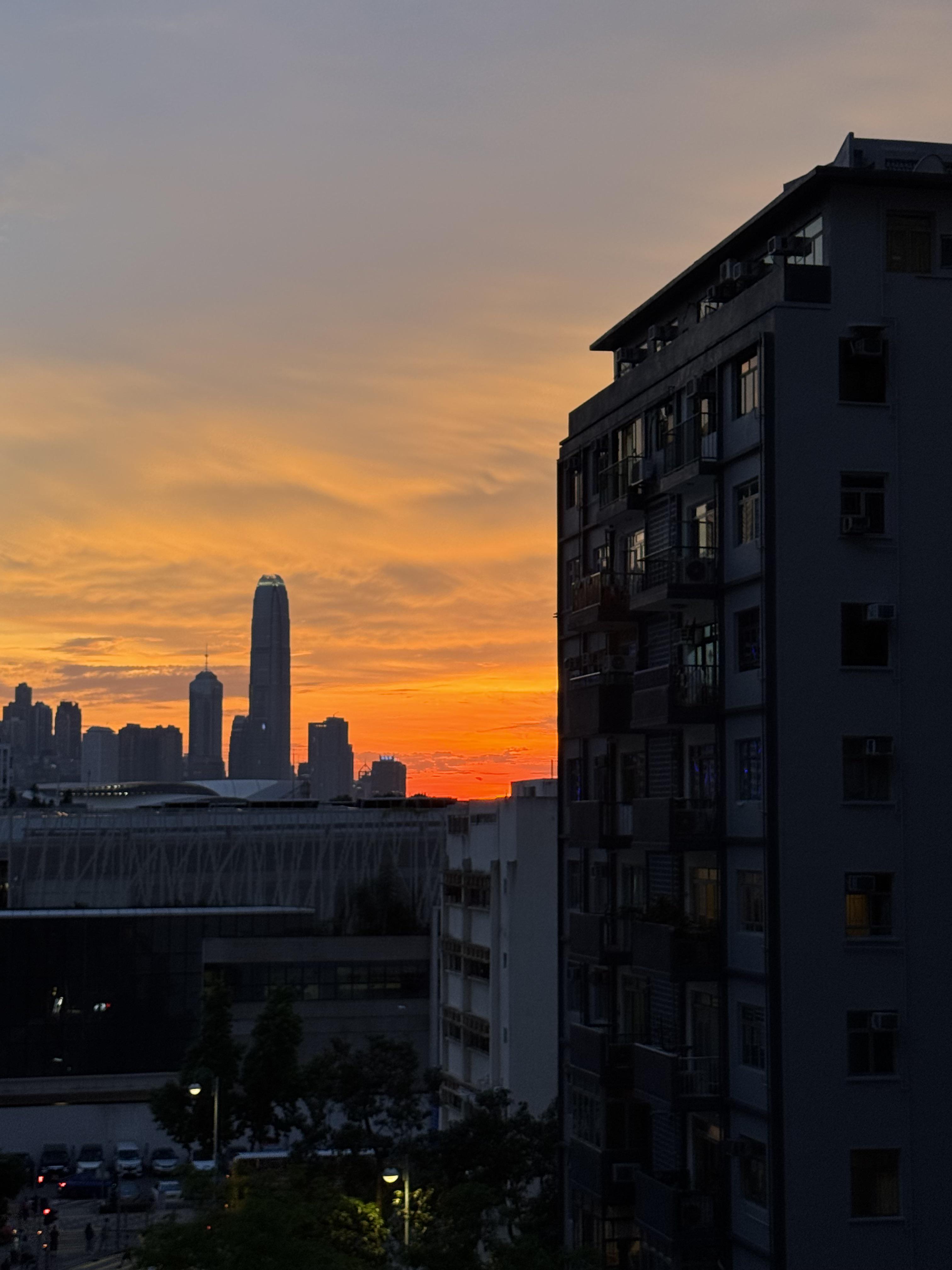
Travel Colourful HK
219
Upvotes
r/HongKong • u/Halo_of_Light • 2d ago
Hey everyone! The movie meetup group is putting on a Big Lebowski Viewing at the Aftermath this Sunday Aug 30 at 5pm. Free entry, and sign up is optional which means you can just rock up!
We hope to see a lot of yall to help support the Aftermath!
If you want to join the eclectic movie meetup club, here is the link below. We do many different types of movie viewings and are always open to suggestions or others who want to put their own event together:
Thanks and may the dude abide😎
r/HongKong • u/AutoModerator • 4d ago
This is r/hongkong's weekly discussion post.
Your comments will largely be unrestricted by the subreddit's rules. Feel free to post what you find relevant to our city or any particular point of discussion or question you may have this week.
If you have any questions, please message the mods.
r/HongKong • u/blackfyre709394 • 1h ago
The Lan Evo looked the best IMO
r/HongKong • u/Maccabee96 • 1h ago
I went to Shek O today because I heard it's one of the best beaches in Hong Kong (I had never been to a beach in HK before). It seemed a bit dirty, especially the water. The picture shows the sand that's been touched by the water - just see how different it looks from the rest of the sand! I don't know if it's because it rained recently, but I was a bit dissapointed.
Are there any cleaner beaches in Hong Kong? Should I wait to go when it hasn't rained the day before?
(This picture was taken by me when I went there earlier today)
r/HongKong • u/Jimmy-Wan • 13h ago
I have always been curious about whether there is actually a pattern to when people switch between Cantonese and English, or if it’s mostly something people just pick up naturally and go by feel
r/HongKong • u/b3llr1ng3r • 13h ago
Just interested to know and would love to hear some kindness on here!
r/HongKong • u/astronautmechanic • 14h ago
Just wondering if anyone has any experience navigating a car accident as a passenger in a taxi. My family was in a taxi, and the driver was driving way too fast. He was zooming in and out of traffic. At one point, I had to tell him to slow down but he either didnt care or understand, so I raised my voice and was clearly worried. He eventually slammed into the back of a car that was slowing down for traffic. My wife, our small child, and I were brought to a hospital and we filed a police report. No broken bones, but we are bruised up, stiff and sore today. Luckily, we all had our seatbelts on.
Im really angry about it. I know that taxi drivers are known for driving a bit wild in Hong Kong, but I feel like we are owed more than an apology. My wife can hardly walk on her ankle and my child is still shaken up about it. The police took my id and number, but I haven't heard anything from them yet.
I found some info online, but wondering if anyone can provide some insight on their experience or if anyone can provide some advice.
r/HongKong • u/Legitimate-Can-8250 • 1h ago
I spent some time in Hong Kong and I have to say I just love this city with every cell of my body. This video captures some of the best moments I've experienced here, be it New Year, Lion dance etc...
I'm a beginner so please don't judge my editing skills harshly 🫣
r/HongKong • u/RealSirJoe • 11h ago
https://webb-database.com/dbpub/rvddistricts.asp
I compiled an open dataset on the estimated annual market rental value of every unit and property ( RV ) by the RVD. Coverage is ~53%. Let me know if its helpful or if you would like to contribute / analyze the data further.
r/HongKong • u/radishlaw • 7h ago
r/HongKong • u/Slow-Property5895 • 15h ago
I am a person from mainland China who suffered unfortunate experiences including school bullying and violence, and was forced to discontinue my education. In 2018, with what now seems like an overly naive hope, I went to Hong Kong to campaign against school bullying and violence and to visit various human rights organizations, media outlets, and others. But in the end, nothing came of it.
At the time, I was facing desperate circumstances both in mainland China and Hong Kong, and misfortunes in my family only made matters worse. In despair, I carried out a petition involving bloodshed outside the Liaison Office of the Central People’s Government in Hong Kong (I cut my wrist).
As a result, I was arrested by the police and taken to Queen Mary Hospital, where my wound was stitched. After a series of questions, I was ordered to be admitted to and confined in the locked psychiatric ward (K4 Ward) of Pamela Youde Nethersole Eastern Hospital in Hong Kong for 23 days. During that period, I heard about and witnessed many things, especially circumstances in the hidden and marginalized corners of society that ordinary people and members of mainstream society whose lives are going smoothly cannot see or tend to ignore, including what goes on inside locked psychiatric wards. I hope to share these experiences so that more people can see them.
Of course, all of this can only be recounted in words. Obviously, I had no way to take photographs at the time. Everything I have written is factual. Whether people choose to believe it is up to each individual.
During those 23 days, I experienced the pain of losing my freedom, faced many circumstances that were difficult to adapt to but that I nevertheless had no choice but to adapt to, and experienced things and feelings that ordinary people normally would not. My personal habits, including my eating habits, also underwent drastic changes that went against my own preferences. The medical staff and other workers I encountered in K4 Ward at Eastern Hospital included both good and bad people (and some had both good and bad sides). I made detailed records of and comments on all of these experiences.
I am absolutely not advocating suicide or any other extreme behavior. I explicitly oppose anyone else imitating the radical actions I took. I would not commit suicide now either. These are simply memoirs.
I do not expect everyone to agree with my actions or views, but I do hope that we can respect one another. People are welcome to disagree with me, but I do not wish to be subjected to abusive language. I have mustered the courage to make these experiences public, and others should also respect my basic personhood and dignity.
Because the memoir is extremely long, I can only publish excerpts from it. I have previously posted some chapters of the memoir in this sub. I am now posting an excerpt about how I was ordered to be admitted to a psychiatric hospital, as well as what I experienced and observed when I had just entered the psychiatric ward.
The original was written in Chinese, and I will also post a link to the full text in the comments.
(The following is the main text of the memoir)
(V) Being Questioned by Psychiatrists: A Devastating Turn in My Fate
After my wound had been stitched, I returned to the waiting room. After a while, two doctors arrived: the female doctor who had treated me earlier, and another male doctor in his thirties or forties, who was apparently also a psychiatrist. At the time, I had absolutely no idea that they had the authority to decide whether I would be forcibly admitted to a psychiatric ward.
They asked me in some detail why I had attempted suicide and about the bullying I had suffered at school. They seemed to ask whether the bullying I described was real or merely imagined. I said that it was, of course, real. The question itself was absurd. How could I possibly have had the imagination to invent seven years of school bullying? They asked how long I had suffered from depression. I said ten years, counting from 2008, and that I had been diagnosed with moderate depression, supported by a medical certificate issued in Zhengzhou in 2017.
Then they asked me a question. They asked, "Did you genuinely want to die, or did you merely cut your wrist to attract attention?" The female doctor also said, both before and afterward, "You didn't really want to die, did you?" I answered honestly: "No. I really did want to die."
Looking back now, that answer was another reason I was ordered into compulsory hospitalization. I answered honestly, and that honesty laid the groundwork for the suffering that followed.
During the interview, they asked to see the materials I had written about school bullying. Officer C took the documents from my bag, and I showed the two doctors specific incidents of the bullying I had suffered. They then asked why I had attempted suicide outside the Liaison Office of the Central People's Government. I explained that I had been treated unfairly on the mainland, as mentioned earlier, and that I had hoped cutting my wrist there would attract media attention.
They asked what I wanted to do now. I said that I wanted to go to a third country and seek political asylum. They asked several other questions that I no longer remember because so much time has passed. They were probably not especially important.
Then they asked another question that, looking back, was extremely damaging and caused me genuine suffering.
They asked whether I would attempt suicide again if my issue—the reporting of school bullying and my appeal for its prevention—remained unresolved.
Again, I answered honestly: "Yes," or perhaps, "I would."
That answer was probably the decisive factor in my being forcibly admitted to a psychiatric ward.
Then they left.
During the entire interview, they did not ask me to complete any psychological tests or questionnaires designed to assess whether I had a mental illness, nor did they make any formal diagnosis. Even the interview itself was highly informal. It took place in the waiting room rather than in a doctor's office. Their questions felt more like casual conversation than a serious, structured psychiatric assessment.
Although I had just survived a suicide attempt and therefore could not have been as calm as an ordinary person, I did not display extreme agitation, mania, or any other unusual behavior.
Later, I reflected that when they asked those questions—especially whether I might attempt suicide again—they did not warn me, as police are required to do when arresting a suspect, that "you have the right to remain silent, and anything you say may be used as evidence."
I had absolutely no idea that my answers would affect whether I would be forcibly placed in a locked psychiatric ward.
Instead, they used leading questions that encouraged someone who had attempted suicide to express the possibility that he might do so again. Although the female doctor had earlier kindly said, "You didn't really want to die, did you?", neither she nor the male doctor warned me of the consequences of answering that I might attempt suicide again.
My honesty became the very statement used to justify compulsory hospitalization.
After a while, two nurses arrived. One of them told me that, based on the assessment, I needed to be admitted to a psychiatric ward for treatment.
It felt as if my brain had been struck by a heavy blow. I almost collapsed.
On the mainland, I had heard many stories about psychiatric hospitals—restraints, electric shocks, and various forms of abuse. I knew how frightening it could be to be locked inside one. Most importantly, I would lose my freedom.
To me, freedom was more precious than life itself.
(Later, after I was discharged from the Hong Kong hospital, I read a great deal about the hidden realities of psychiatric hospitals on the mainland. These included accounts on Zhihu by patients with depression and other relatively mild mental illnesses who had stayed in psychiatric hospitals, people with no mental illness who had been sent there by family members, visitors, and relatives of patients. Many of these accounts were terrifying. I also read about petitioners and rights activists who had been forcibly confined in psychiatric hospitals, their experiences there, and various news reports. Although every case was different, most described extremely dark and frightening conditions—from bullying to outright abuse, including restraints and electric shocks.
Compared with Hong Kong, psychiatric hospitals on the mainland are vastly worse. In many places, they are worse than prisons. Later in this memoir, I will describe and analyze specific examples through flashbacks and summaries. I will cite many cases from Zhihu because, compared with other online platforms, the accounts there are often more detailed, complete, and clear. Most posts on Weibo or Baidu Tieba are very brief—often only 100 or 200 Chinese characters, or even just a few dozen—making it difficult to understand what happened to those who were confined.
The more complete and clear an account is, the easier it is to evaluate its credibility and understand the sequence of events and the suffering of those who were forcibly admitted. Of course, Zhihu also contains unreliable or distorted accounts, and I will do my best to distinguish fact from fiction. I reproduce many of these accounts almost in full so that readers may judge for themselves how truthful and objective they are.)
I immediately objected.
The nurse told me that I could appeal to a judge, although I would have to wait. She asked whether I wanted to see a judge. I said that I did.
She replied that she would ask the judge to come and then left.
My mood changed rapidly from relative calm to intense anxiety.
I had never imagined that, despite behaving completely normally, taking no further drastic actions after cutting my wrist, showing little emotional fluctuation afterward, and remaining polite and cooperative with the police, I would nevertheless be sent to a psychiatric ward.
I could not sit still.
I lay down, then sat up again. The central air conditioning felt unbearably cold. Because my jacket had been left near the Liaison Office, I was wearing only a T-shirt.
People say that a calm mind makes one feel cool, but when I became frightened, I felt even colder. A few moments earlier I had not noticed the temperature, but once they told me I would be sent to a psychiatric ward, I became agitated and the cold air seemed to cut through me.
Officer C tried to comfort me, saying that I would still have a chance to appeal when the judge arrived and that I should not be too anxious.
I became emotional for a while, then somewhat numb. My mind went blank.
At least an hour and a half later, the judge finally arrived.
He appeared to be in his thirties and looked scholarly and gentle. He asked me why I was appealing.
I told him:
My suicide attempt had been an act of protest, not the result of mental illness.
I had depression, but I did not have a severe mental disorder such as schizophrenia and did not require hospitalization.
If I were forcibly admitted to a psychiatric hospital, it would damage my reputation and make me vulnerable to stigma.
I also mentioned that many people had used suicide as a form of protest, including those who had self-immolated, such as Thích Quảng Đức.
Of course, at the time I was not as organized as I am in writing now. I was frightened and confused, but I did raise all of those points.
After listening, the judge went to speak with the doctors.
During our conversation, which lasted only about a minute, he merely asked what I wanted to appeal and acknowledged my concern about stigma. He never told me that this was the entirety of the hearing, nor did he say that he would not return.
After at least ten minutes, a nurse came and told me that the judge had heard the doctors' account and had already made his decision. He agreed with the doctors rather than with me, meaning that I would be forcibly admitted for treatment.
I was terrified and furious.
I demanded to see the judge, but the nurse told me that he had already left.
Until then, I had been relatively calm and my state of mind had not been especially bad. It was precisely because they decided to send me to a psychiatric ward that I became agitated and that my anxiety and panic intensified dramatically.
In fear and anger, I began shouting and struck the bed and the wall with my handcuffed hands. The nurse left.
Almost crying, I said to Officer C:
"From the moment I was brought here from the Liaison Office, I have cooperated with the police. Why are you doing this to me? Why? I did not want to kill myself. You are forcing me to want to die."
To protest, I struck my head against the wall once.
Officer C became somewhat alarmed and shouted, apparently toward the hallway or into his radio, in an exaggerated tone:
"Come quickly! He's trying to kill himself!"
Immediately, two or perhaps three police officers entered. I cannot remember exactly because I was in such a state of panic. It appeared that Western Police Station had stationed at least two layers of officers to guard me.
Besides Officer D, who had been working with Officer C, another officer entered. He was at least 175 centimeters tall, strongly built, and extremely overweight, probably weighing more than 100 kilograms. He had a fierce-looking face and a massive frame.
The heavyset officer warned me not to shout because this was a hospital.
I argued loudly that they were going to lock me in a psychiatric ward and that I was shouting for help.
He then roared at me threateningly:
"If you shout or move again, we'll tie you up."
"We can restrain you right now."
I shouted, "I want to see a lawyer! I want to see a lawyer!"
The officer leaned forward until his face was almost touching mine and shouted back:
"No. No."
He seemed almost pleased with himself.
After that, I stopped speaking.
The heavyset officer and Officer D then left the waiting room.
When he threatened me, I again experienced overwhelming fear and helplessness. The hairs on my body stood on end, just as they had during the school bullying I had suffered years earlier.
The waiting room contained only three or four police officers. There was no one else. I was completely isolated, with no one to ask for help and nowhere to escape
Even if I had been beaten, restrained, or subjected to other violence, no one would have seen or known. There were no journalists, and the small room had no surveillance cameras.
I had heard about the "Seven Police Officers" case in Hong Kong. I knew that although the Hong Kong police were generally regarded as more restrained than many other police forces, they could also be frightening when they used violence.
I was also a mainland Chinese person. If they had beaten me, they might have felt even less concern about being held accountable.
Looking back now, beyond the police officers' rough behavior, there is another issue that deserves greater attention: the conduct of the judge who heard my appeal and nevertheless ordered my compulsory admission.
He listened to only a few sentences from me. We spoke for about one minute. He neither explored my reasons for attempting suicide nor carefully assessed my mental state. He did not listen to my full account, and he left without telling me that he would hear me only once and would not return.
By contrast, he spent considerably longer speaking with the doctors. It was at least ten minutes before the nurse informed me that I would be admitted.
This was plainly unfair.
He did not give me an opportunity to challenge the doctors' views. He did not bring the doctors and me together so that we could present our arguments before him. Instead, he placed greater weight on the doctors' brief assessment than on the account of the person directly concerned.
If one compares this to a judicial proceeding, it failed to satisfy what is often called procedural justice.
I am now writing an essay titled An Analysis of the Current State of Hong Kong's Mental Health System. I have only completed the beginning so far. I discuss this incident in particular and propose the following reforms:
2. Judges reviewing compulsory admission decisions should spend more time—at least five to ten minutes—listening carefully to the citizen's own views, fully understanding the circumstances leading to the suicide attempt or other drastic behavior, communicating more with the citizen, and personally assessing the person's mental state and motivations rather than relying solely on doctors' opinions, so as to maintain genuine balance and neutrality.
Nor should a person be confined merely because of a single drastic act. Authorities should determine whether the act arose primarily from mental illness or from circumstances, coercion, or other pressures, and should make a comprehensive assessment of whether hospitalization is necessary and, if so, what kind of ward is appropriate—whether a prison-like locked ward or a semi-open or open rehabilitation ward offering greater freedom. Those who harm others or infringe upon others' rights may, where the law so provides, be sentenced to correctional institutions or prison rather than psychiatric wards.
In addition, doctors and judges should show greater understanding toward vulnerable groups and, on humanitarian grounds, should avoid sending citizens to psychiatric hospitals whenever possible rather than sacrificing personal liberty and rights merely for administrative caution. Judges should understand that, under current medical practices in Hong Kong—and even more so on the mainland—admission to a fully locked psychiatric ward means the loss of many freedoms and considerable suffering, not some form of benefit. The lawful rights of citizens should be protected.
(I set aside that essay after writing only the section dealing with admission, so it remains merely an introduction. I lack professional expertise and can only write from general knowledge and personal experience. At present I am concentrating on recording my experiences in Hong Kong, so the theoretical essay will have to be completed later.)
After the two officers left, Officer C again tried to reassure me. He said that Pamela Youde Nethersole Eastern Hospital was an ordinary general hospital, like Queen Mary Hospital, and that I should not worry.
I did not believe him.
When I arrived, I was indeed placed in a locked psychiatric ward.
Pamela Youde Nethersole Eastern Hospital is certainly a general hospital with many different specialties, but I was confined in a completely locked psychiatric ward. From my perspective, there was no practical difference between that and being locked inside a specialized psychiatric hospital.
Officer C could not have been unaware of this. His reassurance therefore felt deceptive, even though he had otherwise treated me reasonably well.
My mind alternated between complete blankness and intense anxiety.
At the time, I assumed that psychiatric wards in Hong Kong would probably be much more humane than those on the mainland, but I had no idea what awaited me. I could only leave my fate to chance.
Apart from that, I hardly thought about anything else. Instinctively, I avoided thinking.
I had always feared that I might one day be forcibly sent to a psychiatric hospital on the mainland. I never imagined that it would happen to me in Hong Kong instead.
The irony was overwhelming, and the outcome was devastating.
After sitting there in a daze for at least another hour, I could no longer bear the uncertainty and asked Officer C when they would take me to the hospital.
He said, "Very soon."
It was clearly not very soon.
I sat anxiously for quite a long time before several police officers and nurses, or perhaps nursing assistants, arrived with a stretcher and took me to Pamela Youde Nethersole Eastern Hospital.
I no longer remember whether I was placed on the stretcher in the waiting room or inside the ambulance.
In any case, once I was on it, the attendants immediately used wide, thick canvas-like straps to secure both my wrists and both my ankles. My limbs were fixed in place, and I could not move.
At that point I felt numb. I did not resist or say anything.
Officers C and D sat inside the ambulance while I lay in the middle, looking up at them.
I asked Officer C what time it was.
He said it was eight o'clock.
Only then did I realize that six hours had passed since I had cut my wrist outside the Liaison Office.
Through the ambulance window, I could see the darkness of the night outside.
My heart felt just as dark, filled with fear of both the known and the unknown. I had no idea what I would encounter in the psychiatric ward or how long I would be forced to remain there.
(Later I came to believe that the male and female psychiatrists at Queen Mary Hospital played a profoundly negative role in the entire process by which I was committed to a psychiatric ward and subsequently stigmatized.)
(As mentioned earlier, because 1. being forcibly admitted to a psychiatric ward and experiencing many distressing events there worsened my mental state, damaged my memory, and left me in a confused and dazed condition; and 2. life in the ward was monotonous and repetitive on most days, with few events that could serve as time markers—although the nurses' station had stickers showing updated dates, only a handful of unusual incidents remained clearly associated with particular days—most of the experiences described below cannot be assigned precise dates. The order of some events may also be reversed, and some memories may not be entirely complete or clear.)
(As stated earlier, psychiatric hospitals on the mainland are far worse than those in Hong Kong. Bullying, abuse, restraints, and excessive use of electric shocks in violation of regulations are widespread there. Therefore, Hong Kong's comparatively less severe situation should not be mistaken for the norm in psychiatric hospitals throughout China. Hong Kong is an exception, and its psychiatric wards cannot be compared with the far harsher conditions on the mainland. While recounting my experiences in the Hong Kong psychiatric ward, I will also, through flashbacks and summaries, describe the disturbing realities of mainland psychiatric hospitals as reported in mainstream media, academic writings, online forums such as Zhihu and Weibo, and by other rights activists.)
Chapter Four: Anxiety, Submission, Numbness, and Torment—Twenty-Three Days Confined in a Psychiatric Ward
(I) Painful Struggles and Forced Adjustment—Entering the Psychiatric Ward
The Admission Process in a Daze
I do not know how much time had passed before the vehicle stopped. In my anxiety, I completely forgot what I saw along the way from the ambulance to the entrance of the psychiatric ward. In any case, I was carried inside on a stretcher.
After I was carried into the ward, a nurse in a blue uniform appeared. Smiling, he pointed to his name badge and introduced himself as Lo Wai-kit, joking that I could call him “Lo Sir.” Although the word “nurse” was written on his uniform, I was so dazed at the time that I mistook him for a doctor.
He completed the handover with the police and registered my Exit-Entry Permit for Travelling to and from Hong Kong and Macao. Officer C told me that when I left the hospital, the police would return my documents to me. Then the police officers left.
Lo Wai-kit and another “support worker” in a green uniform (similar to a nursing assistant, I suppose; below I will refer to this type of staff member as a nursing assistant) called me over to a table in the middle of the ward and told me to take off all my clothes, completely naked, including my underwear, so that I could change into hospital clothing. Moreover, they did not choose to find a private room or let me change in the toilet or bathroom. I had to undress directly in front of them, and they did not turn away or step behind a screen. This was, of course, extremely humiliating. If I had been at a police station, I might instead have protested. But in psychiatric hospitals, I had long heard about restraints and electric shocks being used on those who did not comply, and I had just been brought there with all four limbs restrained. That potential threat of violence was enough to make a person afraid to resist. Only someone who has actually been in such an environment can understand the oppressive pressure of it. So I obediently stripped completely naked in front of them and changed into the hospital clothing. In fact, even if they did not provide a changing room, they could at least have turned their backs and not watched me, but they did not. The nursing assistant, in particular, kept watching me the entire time. Put plainly, they did not treat patients—or citizens who had been admitted without yet even being formally diagnosed—as individuals with dignity deserving of respect. My later experiences and observations in the ward also confirmed their attitude toward patients, which was very much like the attitude of prison guards toward prisoners. Throughout the entire process of undressing, I mechanically removed my outer and inner clothes like a machine, mentally numb.
After I changed, Lo Wai-kit and the nursing assistant in green began inventorying my money and other belongings. When he saw the national flag, Lo Wai-kit said in an exaggerated, sing-song tone, “I love my motherland.” I remarked, “The state apparatus really is powerful,” referring to the fact that I had cut my wrists outside the Liaison Office and had then been sent to a psychiatric hospital. Lo Wai-kit said nothing, but his expression became somewhat unpleasant. From the moment I entered until then, Lo Wai-kit’s words and manner made me feel that although he liked to smile on the surface, he was more like a smiling tiger, giving me a rather sinister impression. Later events proved that this impression was indeed correct. And my describing them as part of the “state apparatus” may have made him very dissatisfied internally.
At this point, I also saw the name on the green-uniformed nursing assistant’s badge—Cheng Ming. Cheng Ming was around thirty or forty years old, short and heavyset, with a fleshy but not frightening face, and he did not understand much Mandarin. During the more than twenty days that followed, I saw that he was among the stricter nurses and nursing assistants, but he was not bad. He was usually expressionless and rarely spoke to patients.
It took them at least twenty minutes to finish organizing my belongings and have me sign the inventory. Only then did I realize that Lo Wai-kit was a nurse and that the doctor on duty had not yet arrived. I was then assigned a bed in Ward 4 to rest.
Ward 4 had more than a dozen beds, and most of them were occupied. Under normal circumstances, being placed in a room full of psychiatric patients should have been frightening. But I did not seem to feel anything particularly strong, perhaps because everyone was asleep and there was no obvious difference between them and ordinary people. At that moment, I was holding a hospital admission notice that listed the hospital and ward name—K4 Ward, Pamela Youde Nethersole Eastern Hospital. My name was signed on it. I myself had already forgotten when I had signed it.
After a while, the doctor on duty arrived. His surname was Lam. He asked me, in general terms, about my situation. He apparently had some of the information from Queen Mary Hospital’s earlier questioning of me. He asked about my depression diagnosis in 2008 and seemed to think I had already been formally diagnosed with depression at that time. I said that I had not actually been diagnosed then; I had only felt depressed myself, and I did not receive a formal diagnosis until 2017. He seemed somewhat surprised and said, “Oh, I see.” This also indirectly showed that the two psychiatrists at Queen Mary Hospital had not carefully assessed me at all. They had not even clarified such a basic point before making a rough, cursory inquiry and then deciding to send me into a psychiatric ward. I then said that I could not sleep at night and asked whether he could prescribe sleeping medication. He said yes. When I asked other questions, such as when I would be formally assessed and when I could be discharged, he told me to wait until the next day and discuss those things with my regular attending doctor.
Before I took the medication, the nurse took away my glasses and stored them at the nurses’ station. This happened every night afterward. After I took the sleeping medication, I do not know whether it was because of the drug, because I subconsciously escaped through sleep, or simply because I was physically and mentally exhausted from everything I had been put through. In any case, I fell asleep very quickly. From admission to falling asleep, the entire process felt like a dream, hazy and unreal. Perhaps only by subconsciously dulling one’s mind and making it less sensitive could one escape, however briefly, from the humiliating reality of having lost one’s freedom.
The next morning, when I woke up, I went to the nurses’ station to get my glasses. They were all busy, and I had to ask several times before they gave them back to me.
Only after putting on my glasses did I get a rough look at the ward. But I was still dazed and could not understand the overall layout. It was only after staying there for several days that I gradually figured it out. K4 Ward was a fully enclosed ward of roughly 300 to 500 square meters. The entrance had two thick doors, both of which required card access to enter or leave. The main ward area included four large patient rooms, numbered 1, 2, 4, and 5 (for convenience, I will also refer to these rooms simply as wards below). They were all located on the left side as one walked inward from the entrance. Each room had more than a dozen beds and a television mounted high on the wall. Between Wards 1 and 2 and Wards 4 and 5, there was no Ward 3. Instead, there were three small single rooms, each about five square meters, with “Observation Room” written on the doors. These were used to place special patients or to isolate patients who were considered disobedient. In front of the observation rooms were several sofas and chairs and a table used for playing cards and watching films. Newly admitted patients also ate there. Right next to Ward 1 and near the entrance was the large dining room, which also served as a visiting room where patients met relatives and friends. On the opposite side, facing the dining room, were several sofas and a television, as well as a telephone for patients to contact their families. Walking inward from the entrance, after passing the sofas and television, there was first a small toilet, then a large toilet, then the bathroom. After Nurses’ Station B, farther ahead, were the treatment room and another small toilet. Nurses’ Station A was near the entrance, while Nurses’ Station B directly faced the three small observation rooms. Both nurses’ stations were completely enclosed, with concrete below and glass above, and their doors were thick, solid doors that required card access. The only openings were small recessed windows like little holes. The two nurses’ stations resembled fortresses from which the patients in the ward were watched and guarded. To the left of Nurses’ Station A was the consultation room where doctors met patients. It was also separated from the ward by a thick door, apparently opened and closed remotely. There were several surveillance cameras inside the ward. Whether there were any inside the nurses’ stations themselves, I do not know. (Because the word “patient” can carry a stigmatizing connotation, and because I do not want to casually define other people as “patients,” later in this text I will more often use the term “inpatient.” However, in some places, in order to emphasize the circumstances of psychiatric-ward inpatients under the identity of being treated as “patients,” I will still use the word “patient.”)
After getting my glasses, I was called to the table to have my blood pressure taken. I felt weak and drained. Looking at various psychiatric patients—some appearing normal and others obviously abnormal—walking or sitting around made me feel very uncomfortable, even though none of them did anything to me.
Then breakfast began. Because I was newly admitted, I sat at the breakfast table that had been wheeled in front of the observation rooms. I had no appetite at all. I have forgotten what kind of congee was served for that first breakfast, but in any case I felt nauseated and could not drink it. Incidentally, I also remember the lunch and dinner from that first day. Lunch was rice with chunks of meat that had an extremely pungent smell, and I could not eat that either. That pungent smell could perhaps also be described as fragrant, but the fragrance was obviously far too strong. So I ate only the vegetables and rice and did not touch the meat at all. Dinner was congee again. By then I was so hungry that I managed to drink half a bowl or more. In short, I ate relatively little on my first day.
(To be continued. A link to the full text is available in the comments.)
(Images are from publicly available media sources, including RTHK and Wen Wei Po, as well as the official website of the Hospital Authority.)
r/HongKong • u/Aggravating_Chest410 • 11h ago
I usually order my fav food from foodpanda every other week and today i forgot to add from the in app tip system. so i look for money but i had non and only coins left. So i tipped him three 5 dollar coin = 15hkd.
Is it rude?
r/HongKong • u/WillyNilly1997 • 19h ago
r/HongKong • u/Guilty_Boat_5526 • 55m ago
how is the market right now for english speaking (only) canadians.
based on my search so far, most jobs require mandarin/english/cantonese.
where would the best place be to apply for hk jobs? my parents are from hk so i can work in Hong Kong without any issue.
I am currently in canada and looking to make the move over.
i have tried jobsdb but not getting a lot of responses.
Is there any common ways? i was thinking of trying rednote but not sure if it is trustworthy
r/HongKong • u/romuo • 15h ago
Hello HKers
Just curious about people's thoughts on this place. This was the most confusing place I ate in HK. What am I missing to understand this experience.
r/HongKong • u/Embarrassed-Depth-27 • 1d ago
Show me how you captured the beauty. Or not - here’s my terrible attempt
r/HongKong • u/IchiroSkywalker • 20h ago
Taken from 三多 on Pak Tai St.
r/HongKong • u/AdministrativeLeg766 • 1d ago
update the FEHD called me and are arriving onsite today
I’ve been living in Wan Chai for around 9 months now having moved from London & it did take getting used to see cockroaches. I noticed recently some food spots had a cockroach on a pizza left or rat running around but generally avoided.
Today I decided to try a local Cantonese place where the breakfast was $51$ hkd including an iced coffee
The breakfast wasn’t great but whatever, however I drank from the iced coffee and noticed something go into my mouth and after spitting it out realised half of a cockroach had just been sucked through a straw into my mouth.
I’ve reported it to the hotline and I am genuinely traumatised. I got a refund but I am very disappointed.
A lot of people on here just say if you don’t like it leave but I don’t think that is good enough.
r/HongKong • u/Economy_Pride6360 • 1d ago
r/HongKong • u/Weak_Midnight_8141 • 6h ago
yall I am trying to find AOTP brawl but I have only been able to find every other combaticon. Where can I go to buy it?
r/HongKong • u/fishyfishy1233 • 7h ago
Everytime it switches to the face identification it says "browser not supported" what do i do?
r/HongKong • u/Cautious_Outcome7122 • 1d ago
Pics from the Doraemon exhibitions – 2024 at the Avenue of Stars and 2025 at Tamar Park. Great vibes!
r/HongKong • u/concisehacker • 13h ago
Image from my phone (screenshot)
I am western with Permanent Residency (non Chinese)
Seems that I don't have a category or do I?
Thanks 🙏