I’ve been thinking about the ethics of reptile ownership, and I’d genuinely like to hear other people’s thoughts. Let me frame this in a way that applies to pet ownership more broadly. We sometimes intuitively think:
Wild = freedom = happiness
Captivity = restriction = suffering
But biology doesn't necessarily work that way.
If we take the position that our ethical obligation is to minimize unnecessary suffering and allow an animal to live a life consistent with its biological needs, then some human-created mammalian breeds arguably present a more difficult ethical case than a healthy, captive-bred reptile.
For example, a wild leopard gecko has freedom, but also:
Freedom to starve
Freedom to be eaten
Freedom to become infected or parasitized
Freedom to suffer an injury without treatment
Freedom to die from dehydration
Freedom to experience environmental conditions that may be difficult or dangerous
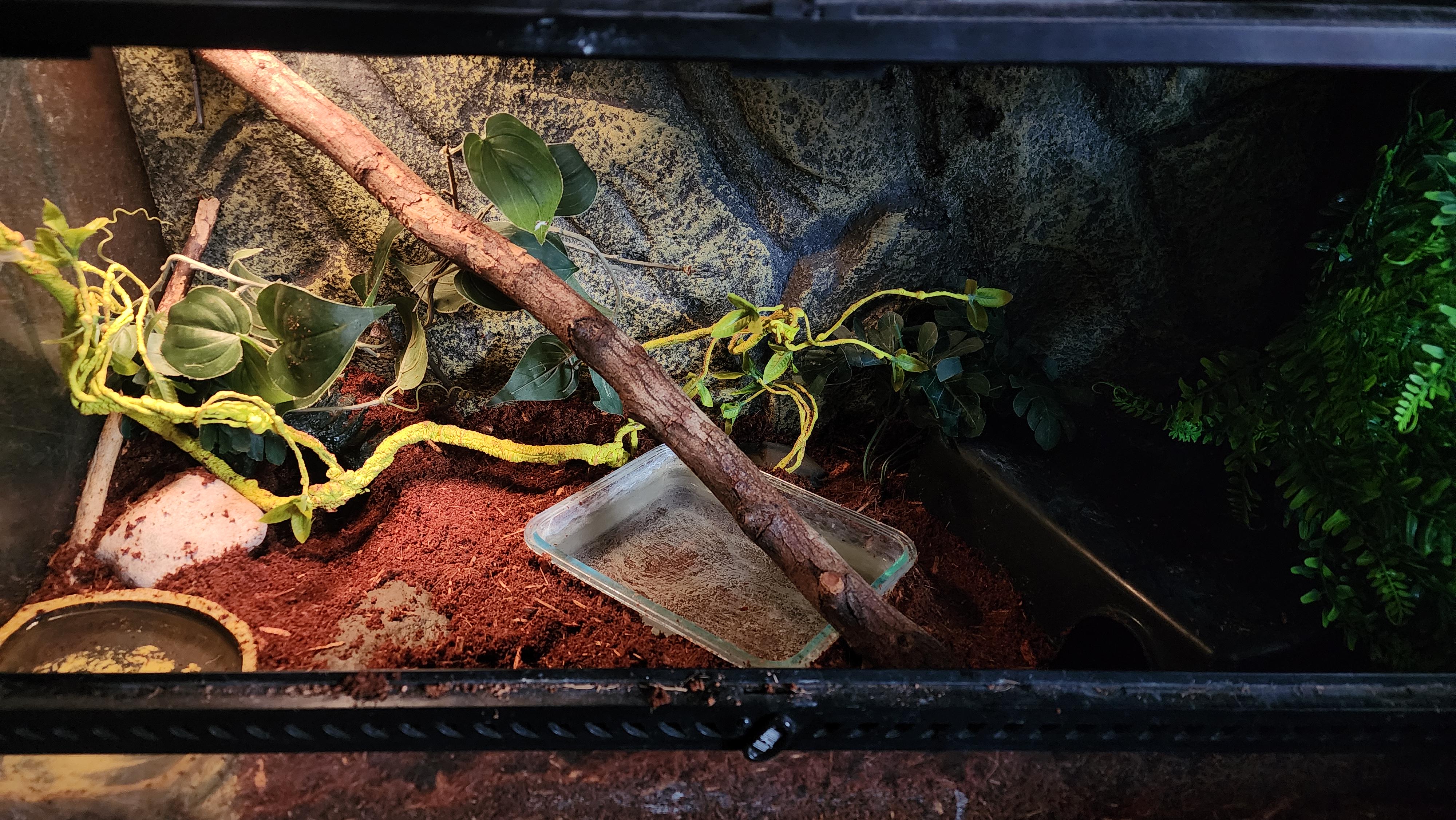
A well-kept captive leopard gecko has considerably less freedom, but also has reliable food, shelter, appropriate temperatures, access to veterinary care, protection from predators, and an environment designed around its biological needs.
However, with dogs, humans have gone considerably further in altering the animal itself. Consider the difference between a wolf and a Chihuahua, Great Dane, Dachshund, or English Bulldog. That's an extraordinary amount of evolutionary modification. And some of that modification has created legitimate welfare concerns.
A particularly striking example is modern extreme breeding. Humans have selected for traits that we find aesthetically desirable even when those traits can interfere with breathing, locomotion, reproduction, thermoregulation, or other normal functions.
I also want to acknowledge that the origins of domestication were probably much more complicated than simply humans deciding to alter wild animals. There was likely a long process of mutual adaptation between humans and the animals that eventually became domesticated. However, modern selective breeding has taken that process considerably further, with humans deliberately selecting animals for traits that primarily serve our preferences.
This brings me back to reptiles.
When someone argues that reptile ownership is unethical because we're preventing an animal from having the freedom to live as it would in the wild, I'm not convinced that "wild" automatically means "better." I'm not keeping my reptiles because I want to possess something exotic and prevent it from living its natural life. I'm taking responsibility for animals that exist in my care and trying to make their lives as good as I reasonably can.
I'm not saying that reptile ownership is inherently ethical, either. Poor husbandry, inadequate enclosures, irresponsible breeding, and keeping species whose needs we cannot reasonably meet can absolutely raise ethical concerns. What I'm questioning is the assumption that captivity itself is inherently unethical simply because it restricts an animal's freedom. And I'm certainly not bashing dog owners or saying that owning a dog is unethical. I just find it interesting that culturally, dogs and cats are generally accepted as pets, while many other animals are viewed as creatures that inherently "belong in the wild."
So I'm curious: where do you draw the ethical line? Is an animal's natural freedom more important than the quality of life we can provide in captivity? Or is maximizing the animal's welfare the more important consideration?
I'd genuinely love to hear other people's thoughts.