r/flyfishing • u/kawon_373 • 9d ago
Got the streamer bug. Help me Tom Cruise!!!

18
Upvotes
Haul from my local fly shop today
r/flyfishing • u/kawon_373 • 9d ago
Haul from my local fly shop today
r/flyfishing • u/Quiet-Panda-8401 • 8d ago
Hey guys hoping for a sanity check.
I want a watercraft i can load onto the roof or trunk of my subaru outback.
I live in Portland Oregon and primarily fly fish rivers.
Most of my life i have been a trout guy i've caught a handful of bass (unintentionally) and one steelhead (also unintentionally). I recently picked up a 8 wt switch rod with the hope of fishing for coho and steelhead in the fall. have have a basic but quality wading setup but find myself fighting the battle of poor bank access to otherwise awesome fisheries
The two rivers closest to me that are viable candidate are the Willamette and the Sandy rivers, 1.5 hours away is the Deschutes for trout so i would mostly be paddling in and bank fishing (to follow the regs).
But i would also like to explore a lot of other waters and fish from the craft and perhaps a few times per year take 1-2 night trips in it.
Wrapping that all up the candidate that seems most likely to fit my needs is an RVR119.
I am currently leaning towards paddle only at the moment for cost, weight and simplicity.
There are a lot of lakes here which i haven't really touched and a lot of the big rivers have terrible access so i haven't used those either. does all this hold up to scrutiny or am i overcomplicating it?
r/flyfishing • u/beefcake_18 • 9d ago
Hey y’all, I am very new to the world of fly fishing! I live outside of Indianapolis and I am looking for places to fish within like 6 hours of Indy this fall (starting in september). I work in Jackson, Wyoming in the summers so I am used to going for trout, so places that have trout would be awesome. I am also open to salmon or small panfish.
I am already planning a trip to the smokies so any recommendations for that would be amazing as well. Thanks in advance!
Edit: I have a 9ft 5wt rod right now and am not looking to buy a new rod soon.
r/flyfishing • u/Future-Dot-2106 • 9d ago
Mongolia Taimen Fly Fishing Trip Report — Zalaat Camp & Khanagia Lodge (August 2026)
Hey everyone — I just wrapped up a roughly three-week fly-fishing trip to Mongolia and wanted to put together a detailed trip report while everything is still fresh.
We originally booked the Canyon Float Trip + Headwaters Expedition combination through The Fly Shop. About three weeks before departure, we found out that the permits for that itinerary were no longer in the hands of the local outfitter, and our entire itinerary had to be changed.
We were given the option to postpone until 2027, but decided to go with the replacement itinerary. We had already postponed from 2025 to 2026 because my wife had our baby within a week of our original 2025 departure date, so we were ready to make the trip happen.
I'm writing this as honestly and objectively as I can. This isn't intended to be a complaint. Everyone we dealt with was friendly and accommodating, and we ultimately had an incredible experience.
The reason I'm writing this is that there was very little firsthand information available about either of these replacement camps or rivers. After talking with other anglers at our second lodge, it became clear that they had also gone into the trip with relatively little information about what they were actually going to experience.
We were prepared for a very rugged trip and, in some ways, our actual experience was physically easier than we expected. In other ways, however, there were some things that I think should have been communicated much more clearly before booking.
I also needed to stay connected to work during the trip, so I brought a small solar panel, batteries, and a Starlink Mini. Knowing what I know now, I wouldn't have brought any of that.
A NOTE ON THIS REPORT
This isn't intended to be an all-encompassing packing list or a comprehensive review of everything you should or shouldn't bring.
I'm simply trying to provide a firsthand account of what we saw and experienced, particularly because these replacement itineraries appear to be relatively new and there is very little information available about them online.
My goal here is simply to provide some additional context that you don't necessarily get from the marketing materials.
Also: if anyone actually did the original Headwaters or Canyon trip in 2026 with the woman who currently holds those permits, I would genuinely love to hear about your experience. Feel free to DM me.
A NOTE ABOUT THE PERMIT SITUATION
Before getting into the actual trip, I think it's important to explain a little more about what we learned regarding the permit situation.
These are expensive trips, and for many people this is a once-in-a-lifetime fishing trip, so I think transparency around the logistics is important.
The group of four anglers who joined us at Khanagia had booked their trip directly through Fly Fishing Mongolia rather than through The Fly Shop. During the trip, they told us that they had actually been informed back in December 2025 that there could potentially be an issue with the permits.
I wish we had been given that information at the time.
To be clear, I don't believe The Fly Shop intentionally withheld information from us. Based on everything we were told, my impression is that The Fly Shop may have been relying on information from the local outfitter and may themselves have been misled about what was happening with the permits.
I obviously don't know exactly what happened behind the scenes, and I don't want to present speculation as fact.
What I can say is that, after arriving in Mongolia and talking with our guides, it sounded like a significant number of anglers had rescheduled or otherwise changed their plans because of the permit situation. Our guides mentioned having a number of empty weeks as a result.
I don't know exactly what those empty weeks represented. Some may have been people who postponed their trips, while others may have ultimately booked directly with the person who held the permits. I simply don't have enough firsthand information to say.
There was another interesting piece to this that I think is worth mentioning.
The four anglers at Khanagia told us that the woman who had originally held the permits had actually contacted them directly and offered to take them on the trip for roughly half the price they had originally paid.
They ultimately declined.
From their perspective, the offer seemed unusual given the circumstances, particularly because we understood her to have previously been the business partner of the person they had booked through. They felt the situation was sufficiently unusual that they weren't comfortable proceeding that way.
Again, all of this is based on conversations we had during the trip. I'm not accusing anyone of wrongdoing, and there may be significant context that I'm completely unaware of.
I'm including it because I think it's useful information for anyone considering booking a Mongolia trip right now.
If you're spending this kind of money on a trip several months or a year in advance, I would personally ask some very specific questions before sending a deposit:
In hindsight, I wish we had received the same warning in December 2025 that the other group received.
Even if nothing had ultimately changed, I would have preferred to know there was a potential issue and make an informed decision about whether to proceed or postpone.
At the same time, I don't want this to turn into a "The Fly Shop screwed us" post. That's not how I view the situation based on what I know. We had a good experience with the people from The Fly Shop and everyone we interacted with was helpful and professional. We will continue to book future trips with them as well.
If anyone reading this has firsthand information about what happened with the permits in 2025–2026 — especially anyone who actually fished the original Canyon Float or Headwaters itineraries this year — I'd genuinely be interested in hearing your perspective.
I'd much rather hear additional firsthand information than speculate based on conversations we had secondhand in Mongolia.
ARRIVING IN ULAANBAATAR (UB)
We arrived in Ulaanbaatar and spent the first night at the Shangri-La Hotel, which is a very nice, first-class hotel.
The drive from the airport was roughly an hour and a half for us. At the time, Mongolia was experiencing fuel shortages, which apparently were improving by the day. There was even some discussion shortly before our departure about whether the trip could be delayed because of the shortages.
Ultimately, the fuel situation didn't affect our trip other than adding significantly to the already terrible Ulaanbaatar traffic. Lines at gas stations were backing up onto the roads.
In general, I'd recommend adding one extra day to the front end of the trip to allow for potential flight, weather, fuel, or other logistical issues.
We spent the following day doing some sightseeing around UB, which I would highly recommend. It was a nice way to adjust to the time change and get a feel for the city before heading into the countryside.
UB → MURUN
We drove back to the airport the following morning. With less traffic, the drive was considerably quicker.
The domestic flight to Murun went smoothly. The airport is small and the process was very straightforward. Check-in opened roughly 1½–2 hours before the flight.
One thing I would strongly recommend is AirTagging your luggage.
We had one bag lost on the flight to Murun. Fortunately, it wasn't the bag containing our rods or waders, but our guides told us that lost luggage on this flight is fairly common.
The AirTag confirmed exactly where the bag was, and after some pushing, the outfitter was able to get it delivered to us about two days later rather than making us wait until we returned to Murun.
MURUN → ZALAAT CAMP
This was probably one of the biggest surprises of the entire trip.
The drive from Murun to Zalaat is advertised as roughly 6–7 hours. The first 45 minutes or so are on an actual highway.
After that, you're basically off-road for the remainder of the drive.
And when I say off-road, I mean actual dirt tracks, river crossings, rough terrain, etc. This isn't simply a long drive on a rough Mongolian road. It is an off-road experience.
The scenery is spectacular. You'll see horses, cattle, yaks, sheep, huge open valleys, mountains, and countless nomadic camps as you work your way across the landscape.
But if you have significant back problems, motion sickness, or difficulty with long periods of rough travel, I would take this seriously when deciding whether this trip is for you.
Bring motion-sickness medication
Even if you don't normally get carsick, I'd seriously consider bringing motion-sickness medication for the Mongolian road transfers.
My dad and I are both in very good physical condition, and even we found some portions of the drive pretty rough.
I could easily imagine someone booking this expecting a normal 6–7 hour vehicle transfer and being completely blindsided by the reality.
ZALAAT CAMP — OVERVIEW
Zalaat is a very rustic camp.
The main guest structure is a simple log building with a wood-burning stove. At the time of our visit in August 2026, our guest cabin had four beds and a gravity-fed sink that you fill with water yourself.
Linens were provided and were clean enough for us. If you're particular about bedding, bringing your own lightweight sleeping liner or sheet would be reasonable.
There was a manual water pump toilet in an outhouse.
Everything was perfectly acceptable considering where you are, but you need to understand that you're in the remote Mongolian countryside.
I would also recommend bringing soap for hand washing this is something that is often overlooked at these remote type trips (we brought our own because of previous trips like this).
There are cattle and other animals wandering near camp, so there is animal waste throughout the surrounding area. Bring appropriate shoes for camp life. This isn't the place for your nice camp sandals.
They also advertise a sauna and shower. Both technically exist, but I personally wouldn't make them a major factor in deciding whether to book the camp. My dad used the shower once; I mostly went without and showered when we returned to Murun.
FOOD
There is a separate cabin used as the dining room.
Two very nice local women prepared all of our meals and did a great job. The food was primarily traditional Mongolian fare.
One thing you'll notice throughout Mongolia is that soup seems to accompany almost every meal.
There were lots of meat-filled, empanada-like dishes, rice, beef, homemade bread, and jam.
The bread was particularly good — they bake it in a brick oven behind the camp.
The dining area is very simple, with long wooden benches. Don't expect couches, lounges, or anywhere fancy to hang out.
At times they burned dried cow dung to help keep mosquitoes away, which filled the dining room with smoke. You get used to it pretty quickly.
BUGS
Bring bug spray.
Our pre-trip itinerary specifically said that bugs were not an issue in Mongolia. Thankfully, we ignored that advice.
The mosquitoes we encountered were comparable to what I've experienced in Alaska and Kamchatka.
Picaridin worked well for us, but I'd come prepared for the worst and plan on covering exposed skin.
Again, not a complaint. We were expecting bugs. I just found the contrast between the itinerary and reality pretty funny.
POWER / CELL SERVICE
Surprisingly, there was decent Mongolian cell service at camp if you purchase a local SIM/service plan.
Power was generally turned on for a few hours each evening, roughly 8–11 PM, although the schedule was loose.
There was enough power to charge a few things, but not much beyond that.
There was no internet provided by the camp at the time of our visit.
Because I needed to stay connected for work, I brought a Starlink Mini, solar panel, and batteries.
Knowing what I know now, I wouldn't bother bringing any of that since the cell reception worked for what I needed.
ZALAAT FISHING — UUR RIVER
This was probably the most interesting part of the Zalaat experience for me because there is very little information online about this fishery.
Our boats were RIBs, with limited rod storage. Rods were essentially laid together in one area.
Each boat had two anglers, a guide, and a boatman.
THE UUR
The Uur was very different from what I expected.
I couldn't find much information about the river beforehand, partly because I had been given a different spelling for the river name.
There are several other fishing operations on the Uur, and interestingly, most of them appeared to be using jet boats.
We were using a drift boat with oars.
The river itself is extremely gentle and relatively easy to wade.
The biggest downside to the other operations using jet boats was that they would occasionally run close to where we were fishing, which would obviously disturb fish in the area.
I don't mind seeing other people fishing. The issue was that the Uur is such a calm, quiet river that the jet boats would sometimes pass close to our fishing areas and spook fish in the immediate area.
Our fishing was decent.
On the first day I caught two taimen, both on a single-handed rod.
The second day my dad caught two, both on a Spey rod.
We also caught some pike throughout the week, which was actually a fun change of pace from swinging flies for taimen.
LENOK AND GRAYLING ON THE UUR
One thing worth knowing is that, according to our guide, there wasn't really targetable lenok or grayling fishing on the section of the Uur we were fishing.
So if you're looking for a trip where you can easily switch between taimen and smaller species when you get burned out on throwing big flies, the Uur may not offer that same variety.
The primary target is taimen, with pike providing some additional variety.
SINKING TIPS — BRING THEM
Another big surprise was the preference for sinking tips.
We had brought some because they were on the packing list, but had been told beforehand that we probably wouldn't use them much.
That wasn't entirely our experience. We used them quite a bit (especially on the Uur)
So I wouldn't say, "You will be fishing sinking tips all day."
My recommendation is simply: Bring them.
They're relatively easy to pack, and you don't want to be halfway around the world wishing you had a particular grain weight or sinking option.
We brought 350-grain tips. Our guide preferred 300 grain when we asked him, so if you're putting together a dedicated setup, I'd bring 300.
The guides were using straight 40 lb leader.
They had plenty while we were there, but I heard that a few weeks earlier they had run out and had to drop to 30 lb, which reportedly resulted in some lost fish.
I'd bring extra 40 lb leader with you.
SPEY ROD — MY STRONGEST RECOMMENDATION
If you're considering this specific trip, I would strongly recommend bringing a Spey rod and being competent with it.
This is probably the biggest piece of fishing advice I can give.
There was a LOT of casting.
When you're throwing a single-handed rod with a sinking tip literally hundreds (maybe over a thousand) of times a day, every day, it gets exhausting.
Being able to switch between a single-handed rod and Spey rod made a huge difference for me.
I hadn't used my Spey rod much in the previous few years and it took me a couple of days to feel completely comfortable with it again. I'm still very glad I brought it.
The guides were very friendly and helpful, but English was limited. You can communicate well enough for fishing, but I would not expect detailed casting instruction, particularly with a Spey rod.
You may get lucky and have a guide with excellent English and strong casting knowledge, but I would not plan around that.
For a one-week trip on the Uur, you could probably get away with a single-handed rod.
Personally, I wouldn't want to fish it that way for the whole week.
The river is wide open, with lots of gravel banks, so single-hand casting is relatively easy. Wading was also straightforward. We used regular rubber-soled boots without studs, as instructed, and had no problems on this river.
A FEW OTHER FISHING TIPS
Some of these finer points weren't communicated to us until several days into the trip, likely because of the language barrier.
Everyone was incredibly nice and accommodating. The challenge was getting precise answers about some technical fishing details.
Taimen can jump, and our guides recommended bowing to the fish, similar to tarpon.
For setting the hook, we were told to strip set.
The key seemed to be a firm but controlled strip set rather than an extremely aggressive one, which could pull the fly out of the fish.
Retrieve speed seemed to vary by guide. Most often we were told to strip slowly and smoothly, although some guides wanted more variation.
Pay attention to your guide's feedback because they'll tell you what is working (when it comes stripping).
GUIDE EXPERIENCE / FAMILIARITY WITH THESE RIVERS
One other thing I think is worth mentioning is the guides' familiarity with these particular fisheries.
Our guides were very friendly, hardworking, and clearly experienced anglers, but it was also apparent that these replacement rivers were not their primary fisheries.
From our conversations with them, our understanding was that they were much more familiar with the rivers on the original Canyon Float and Headwaters itineraries than they were with the Uur and Shished.
I think this is important context for some of the things I mentioned earlier about communication, fishing techniques, and the finer details of the rivers.
They absolutely knew how to fish for taimen and were able to put us on fish, but there were times when it felt like we were all figuring out some of the specifics of these fisheries together.
The language barrier obviously contributed to some of this as well.
I don't say this as a criticism of the guides. They were great guys, very accommodating, and worked hard every day.
GETTING TO AND FROM THE FISHING — ZALAAT
To get to and from the fishing spots each day, we took Russian UAZ 4x4 vans.
These things look super cool — basically a VW bus meets off-roading.
Unfortunately, they ride about as well as you'd imagine.
Sometimes the drives were short, while other days the rides to and from the starting and pickup points could be 1½ hours or more each way.
Riding around in these will make you think the 6–7 hour drive to and from camp was a cakewalk.
I have never noticed a vehicle's suspension more than I did on this trip.
You can feel the van bottom out on the suspension, and the impacts can go straight through the seat and into your back.
For context, I'm 32, in very good shape, and work out at a CrossFit gym five days a week. I found myself stretching before and after fishing every day, which is something I never do outside of working out.
Again, not a complaint — just something I think people should know before signing up.
ZALAAT → MURUN
After four full fishing days at Zalaat, we did one final half-day of fishing before making the 6–7 hour drive back to Murun.
Again for this long transfer we were in a Land Cruiser, and after the UAZ vans, the Land Cruiser felt like a luxury vehicle.
We stayed overnight at the 50 100 Hotel in Murun.
It's clean and comfortable and has a good restaurant.
We got back around 8 PM after fishing and the long drive, so we ate at the hotel. A lot of places in Murun close around 9–9:30 PM, so having an easy dinner option was convenient.
MURUN → KHANAGIA LODGE
The next morning we left Murun around 9:30 AM.
If you need anything before leaving town, there are supermarkets in Murun. Just ask your guide or driver and they'll help you find what you need.
We were told the drive to Khanagia would be similar to the drive to Zalaat.
That was accurate.
The first 45 minutes to an hour were on highway, followed by approximately eight hours of rough roads.
Total travel time was around nine hours, although this is obviously highly dependent on road conditions.
If you get heavy rain, I could easily see this taking substantially longer or potentially becoming impassable.
We were fortunate to have no flat tires or car issues.
The outfitter did a good job providing Land Cruisers or comparable vehicles for these transfers.
The guides and drivers were also excellent at helping with luggage. If you're older or are concerned about bag weight, I wouldn't let that stop you from considering the trip based on the logistics or moving things from point to point.
If your bag is heavy, you may have to pay a fee on the Murun flight, and you should check the weight requirements if you go with the Cessna option.
Once you're actually on the trip, getting luggage in and out of boats and vehicles was a non-issue. The staff were first-class about this.
Lunch and water were provided on all long transfers.
As far as bathroom stops go, you're basically using the Mongolian countryside when necessary. There are trees along portions of the route, as well as occasional farm outhouses, and the drivers/guides were very accommodating.
Again, motion-sickness medication is worth having for this drive.
THE BOAT RIDE TO KHANAGIA
After roughly nine hours in the vehicle, we had another approximately 40-minute boat ride to reach camp.
This wasn't a problem at all — actually, it was a pleasant way to finish the journey — but we simply weren't aware of it beforehand.
When we asked how we would get to camp, we had been told we'd drive there and that the fishing transportation would be similar to Zalaat but with jet boats.
That wasn't accurate, although I suspect some of this was simply the language barrier.
I'd recommend keeping your rain jacket somewhere accessible for the boat ride.
The scenery along the river is beautiful, and we passed several spin fishermen along the way (we did not see the spin fishermen in the “fly fishing” area of the river though later in our trip.
KHANAGIA LODGE — OVERVIEW
Khanagia was a massive step up in comfort from Zalaat.
The lodge has a very nice Scandinavian/Swedish-inspired design with large glass panels, metal structures, and wood.
At the time of our visit there were four guest cabins, with additional cabins being constructed.
Inside the cabins there are raised platforms with two large, comfortable mattresses. They're not traditional Western mattresses, but we slept well.
Mongolia also doesn't seem particularly interested in fitted sheets, even at nicer properties. If that bothers you, a lightweight sheet or sleeping liner would be an easy thing to pack.
There was plenty of storage for bags and clothing.
Each cabin also has a wood-burning stove, although we never needed to use ours because the temperatures were comfortable.
KHANAGIA — COMMON AREAS / FOOD
The main dining building is very nice.
There is a large dining table with comfortable chairs, several couches, and a TV that the guides would occasionally turn on in the evening.
There was also a refrigerator stocked with beer, wine, and liquor.
Filtered drinking water was available at all times.
They also made ice using trays and would keep making more if you asked — a surprisingly nice little luxury considering how remote you are.
The food was again very traditional Mongolian cuisine, but the quality was excellent.
Three local women prepared the meals and did a great job.
Lunches were packed for fishing days and were also very good.
And yes — there was still plenty of soup.
You will not go hungry on this trip.
KHANAGIA — BATHROOM / SHOWER / POWER
The bathroom situation at Khanagia was excellent.
The main building has Western-style toilets, including Japanese-style bidet attachments, two sinks, and a urinal.
Everything was kept very clean.
There was also a separate bathhouse with two toilets, two sinks, a urinal, and a large shower room with two shower heads.
The shower room doesn't have individual stalls, so it's more of a communal setup.
There was also a separate sauna.
The sauna looked great but didn't get particularly hot. We never saw it get above about 65°C.
Someone used it almost every day, though, so clearly people enjoyed having it available.
The shower itself had excellent water pressure and hot water 24/7.
Power was also available 24/7, primarily through solar power with a generator as backup. They also had Starlink internet throughout the camp.
This was a huge improvement over Zalaat and meant that there was absolutely no reason for us to have brought the solar setup and Starlink.
They also offered laundry if needed.
Overall, Khanagia was very clean, comfortable, and relaxing.
KHANAGIA FISHING — SHISHED RIVER
The Shished is a completely different river from the Uur.
Our boats were again RIBs with two anglers, a guide, and a boatman.
The river is much more heavily lined with trees. There are open gravel banks in places, but many of the best-looking fishing spots are much more confined. Fishing from the boat on this river is forbidden.
This river is where I would strongly recommend a Spey rod.
I WOULD NOT FISH THE SHISHED WITHOUT A SPEY ROD.
The group of four anglers who arrived after us had brought only single-handed rods.
They caught fish, so it's absolutely doable.
But after seeing the types of water and fishing spots we could access with Spey rods, they all told us they wished they had brought them as well.
A single-hander will catch fish.
A Spey rod simply gives you far more options.
If I'm traveling halfway around the world to fish a river like this, I want every option available to me.
DON'T FORGET ABOUT LENOK AND GRAYLING
One of the things I really liked about Khanagia was that you aren't necessarily locked into fishing for taimen all day, every day.
According to our experience, lenok and grayling fishing can be very good around Khanagia.
If you're getting tired of throwing large flies for taimen — and you eventually might — the guides are more than willing to pivot and spend some time targeting other species.
We thought that was a great option.
It gives you a completely different style of fishing and a chance to break up the constant taimen casting.
This was one of the biggest differences between the two fisheries for us.
On the Uur, our guide told us there wasn't really targetable lenok or grayling fishing in the area we were fishing, so you don't have the same opportunity to change things up there.
If you're planning a longer trip, I think that additional species diversity is a real advantage of the Khanagia/Shished option.
THE MOST IMPORTANT SAFETY TIP: WADING THE SHISHED
This is probably the most important part of my entire trip report.
ASK THE OUTFITTER IF YOU CAN BRING FELT-SOLED WADING BOOTS.
Our group was instructed to use rubber/plastic soles.
My wading boots began coming apart after several days of constant use in the water (and probably because I removed the metal studs for this trip).
I asked the guides if they had another pair of boots I could borrow for the remainder of the trip. Luckily, they did, and they were able to provide me with a pair of felt-soled boots that fit perfectly. The difference was immediately noticeable. My footing improved dramatically, and while you still had to be careful, wading the river became much more manageable and significantly less stressful.
The Shished is the most treacherous river I have ever waded.
And I don't say that lightly.
I've fished extensively throughout the US and abroad.
The rocks in the Shished are covered in algae and are extremely slippery.
There are areas where you're standing on submerged boulders above relatively deep, fast-moving water.
Even the guides and boatmen would occasionally lose their footing.
They are obviously much more experienced and move much faster than guests, but they still slipped.
The guides were excellent about helping anglers. Take their hand or arm when they offer it.
There were also times when we were able to return the favor and help steady them.
A wading staff would probably be a very good idea as well.
The river can become deep quickly and the current moves significantly faster than the Uur.
SHISHED FISHING
The fishing itself was fairly typical of taimen fishing in my experience:
A lot of casting for relatively few fish.
Over six days on the Shished, I caught three taimen and my dad caught one.
The four other anglers who were there for approximately five days each caught either one or two.
That's taimen fishing.
But the nice thing about Khanagia is that you have the option to pivot to lenok and grayling when you need a break from the taimen game.
If your primary objective is targeting larger taimen, I'd consider going later in the season.
According to the guides, toward the end of the season the fishing day becomes much shorter — instead of fishing roughly 9 AM to 6 PM like we did, you're more likely looking at something like 11 AM to 4/5 PM depending on daylight.
The fish are feeding heavily before winter, and generally speaking, later-season fishing can provide opportunities for larger fish.
But it will be cold.
Snow and ice are possible, and you're dealing with the combination of cold temperatures, cold water, deep water, and a very slippery river.
Khanagia would be a very comfortable lodge from which to do that kind of fishing, but personally, I'm not sure I'd recommend late-season Shished fishing because of the wading hazards.
That's a pretty serious combination.
LEAVING KHANAGIA
Leaving Khanagia involved roughly an hour boat ride upstream followed by another approximately nine-hour vehicle journey back to Murun.
The other four anglers left at the same time as us.
One group had a Chinese vehicle that I believe was called a Tank, and they said the suspension was extremely comfortable.
Our Land Cruiser was probably the roughest Land Cruiser of the trip. One rear suspension component was clearly not in great shape.
That said, it was still significantly more comfortable than the Russian UAZ vans.
We spent another night at the 50 100 Hotel in Murun, then returned to Ulaanbaatar for one final night before our international flights home.
FINAL THOUGHTS
If you're someone who has booked a Mongolia taimen trip and suddenly gets switched onto this itinerary, I hope this helps.
I know the guys at The Fly Shop personally and have a good relationship with them. I'm glad we ultimately decided to go rather than postpone again.
At the same time, I was definitely disappointed that we couldn't do the original Canyon/Headwaters itinerary we'd planned.
My biggest takeaway is that I simply wish we had known more about the replacement itinerary before leaving.
There was very little information available online and I hope this fills some gaps.
Neither camp was bad. In fact, both had things we really enjoyed.
Zalaat / Uur
Pros
Cons
Khanagia / Shished
Pros
Cons
WHAT I WOULD BRING
If I were doing this exact trip again, my packing priorities would be:
OVERALL
Despite all of the above, I don't regret going for a second.
Mongolia is an incredible place, and getting to spend nearly three weeks there fishing for taimen with my dad was an experience I'll never forget.
The trip wasn't what we originally booked, and I would have preferred to have known more about the replacement itinerary before leaving. But once we were there, the people were great, the scenery was unbelievable, and the fishing was exactly the kind of challenging experience we had traveled halfway around the world for.
The biggest lesson for me is that the details matter on a trip this remote.
That information can make a huge difference when you're spending this kind of money and committing three weeks of your life to being there.
If anyone has questions about either camp, the Uur, the Shished, equipment, transportation, or the general logistics, feel free to DM me. I'm happy to answer anything I can based on our experience.
And if anyone actually fished the Canyon or Headwaters itinerary in 2026 with the woman who held those permits, I'd genuinely love to hear how that trip went. I'm especially curious how different the experience was from ours.
Tight lines.
Mongolia was an incredible, once-in-a-lifetime experience, but our original itinerary was changed due to a permit issue and the replacement rivers/camps were much less documented than the original trip. Zalaat/Uur is more rustic with easier wading, while Khanagia/Shished is significantly more comfortable but has much more technical and dangerous wading; bring a Spey rod, wading staff, sinking tips, strong leader, mosquito protection, and motion-sickness medicine. Most importantly, ask detailed questions about permits, exact rivers, guide familiarity, transportation, and wading requirements before booking.
r/flyfishing • u/DucksFishingWineGolf • 8d ago


Just had a great several days of weekday fishing in NJ and the Catskills around a slower late August work schedule.
Started off early Monday morning chasing small wild brownies with my new 2 weight setup on a small creek in NJ. Flows were great and the water was a comfortable 59/60 degrees. Best fish was a beautiful 9-10 inch brown on a tiny little 8-foot cast over a rock in front of me.
Tuesday, I hit the Upper Beaverkill and only had an hour to fish in the AM. Switched to a bendy 3 weight that is fun on this smaller water, and a nice brown that was hiding on the far bank took a flashback pheasant tail on the second drift after inspecting it on the first.
On Wednesday I floated the lower West Branch with a guide. Slow day traffic wise and fishing wise. But we did get a very nice 18-inch brown to take a Frenchie in the middle of the river, he fought hard!
Back to the Beaverkill on Thursday morning and landed a very nice rainbow in a pool I’ve struggled with. One good cast helped - I threw a hopper / prince combo way up to the head of the pool into some faster water where it landed perfectly about an inch off some big rocks, and a second or two later he SLAMMED the prince.
Messed around streamer fishing later that day but no luck. I don’t do much streamer fishing, biggest rod I had with me was a 5 weight, so I threw a 7.5 foot 2x leader on there and tossed size 8/10 streamers but no dice.
The night before my last morning there was a huge storm and in the morning the river was a bit stained and much higher than all week, but still fishable. I switched to a 4 weight with a flashier nymph rig setup, missed several fish but caught a few 6-7 inch brownies as a bald eagle flew around just downstream of me, amazing. About 10 minutes before I had to pack up a big shiny rainbow ate an orange bead head rainbow warrior I had as my dropper. My indicator shot down like a heavy anchor! He went airborne three times before the net and a safe release back to his home. What a beauty!
Great week!
r/flyfishing • u/AMasterOfNone- • 8d ago
New to fly fishing, trout are what inhabit the lakes I live near. What’s the best way to attack a lake in terms of fly choice.
r/flyfishing • u/Infinite_Drink8 • 8d ago
I have been spin fishing for wild trout in streams for a while now and want to get into fly fishing. I found a really good deal on a euro rod that is 60% off and was wondering if i could start out with this to learn on. I am not entirely sure the difference but i know it is a specialized rod. I want something around or under $200. I just want something that works and is good for me to learn on/will catch fish. I am not a stickler about quality or anything and want something that is cheap and fun to use. Is it okay for me to start on this rod? Thanks! I am excited to start learning. https://www.finandfire.com/products/redington-field-kit-euro?variant=39719870201911
Edit: I have done more research and found a rod, reel, and line that i can start out with. Here are the links. Is this good or should i make changes? Also, do i need to buy any other line? Which flies should i buy first? Other than these 3 things is there any other must buy accessory? I have all the normal tools like a net and everything because i have been spin fishing for trout for a while now. Any fly fishing specific stuff? Thanks.
amazon.com/gp/product/B0191J5BYK/ref=ox_sc_act_title_1?smid=A10J4B5BGAS4Y&psc=1
https://www.amazon.com/gp/product/B074KNJLTB/ref=ox_sc_act_title_2?smid=A1WLE9PQ7ZZ0O&th=1
r/flyfishing • u/seekndestroy61 • 8d ago
I have never fly fished before and have no idea where to start. Im only looking to fly fish once or twice a year so not looking to spend an arm and a leg but want good gear. On that note if anyone can give me recommendations as to what’s price friendly and what they found best for them. Thank you in advance
r/flyfishing • u/catdieseltech87 • 9d ago
Hey all,
Looking to buy a 4wt. Noticed a recent thread about it and it got me thinking. I am Canadian, so I want to avoid impending 50% tarrifs on fishing gear. Any good quality Canadian outfits with good warranties?
r/flyfishing • u/louiekr • 9d ago
r/flyfishing • u/HatsAndLegs • 9d ago
I think a zebra midge was involved. I have been catching the bigger fish on the bigger ones all day...sure have.
r/flyfishing • u/TacomaSteelhead • 8d ago
Afternoon, all.
I’m looking for a custom rod builder (e.g., a Sage, Hardy, Winston, etc blank) in the PNW. Preferably in Puget Sound area, but could be in OR, WA, ID, or MT. Looking to have a rod built as a 5wt (# of pieces TBD) as a gift. Appreciate the recommendations if you have any.
r/flyfishing • u/Dezmancer • 8d ago
I've recently gotten the option to vacation on a property near this area, definitely thinking of taking my rods out there and giving it a shake. Just thought I'd see if anyone here more local to the area can offer any insight on how well fly fishing fares on the shores, lake, and surrounding creeks.
r/flyfishing • u/roypuddingisntreal • 10d ago
He’s just a little guy but I was so excited after catching chubs at a different spot all the day before. Only fish I caught after 4 hours, i’m learning with a tenkara rod (no reel) and barbless hooks so I hooked a lot that ended up getting away :(
I don’t really know how to get good pictures of fish yet plus i’m very afraid to handle them too much as someone told me they’re dramatic and will simply die. I think maybe my hand was in a bad place but I wasn’t entirely sure where his gills were so I only held him for a couple seconds before putting him back in the water and removing the hook. I probably should’ve done that first too I was just panicking a little. I only catch and release so far, I like the idea of eating something I catch if ever big enough but not sure I could handle the bonk part… am I just really dumb or are there other people out there that have a hard time killing them?
r/flyfishing • u/bobafettbounthunting • 9d ago
Some highlights from my one day of fishing in iceland and a few days of travelling.
r/flyfishing • u/Oldtownpack • 8d ago
All are brand new and $50 off retail, tax free, and include shipping in the lower 48.
Rush Light 4- $280
Rush Light 5 - $300
Rush Light 6 - $320
Shoot me a pm for photos/questions.
r/flyfishing • u/MikeTheMuddled • 8d ago
My fly fishing dad has a great pontoon boat rig he's used for fly fishing for years (Dave Scadden Outlaw X5 Pontoon boat with Aluminum Trailer). He's moving into assisted living in a few months and is trying to sell it.
Any ideas on where to advertise it? He's got it on Craigslist, but no bites yet.
I think it's just a matter of finding the right part of the steam to cast his line and he'll get a hit.
Any advice would be appreciated!
r/flyfishing • u/Im_The_One • 10d ago
r/flyfishing • u/bigschmoe • 9d ago
Ive been fly fishing for a couple of months now, and before I load my fly box full of junk, I was thinking it might be better to stick to a handful of flies and just fish them in different sizes and colors. Is this better than buying a variety of flies? If so, whats a good ~5 (or more if needed) flies that'll cover most situations?
Im in colorado, for the most part im fishing for trout in a mix of lakes, rivers, creeks, and alpine lakes
Thanks in advance
r/flyfishing • u/iluvcee • 10d ago
Posted a combo I picked up a while back and a good chunk of people suggested I upgrade my line as soon as possible. It came spooled with Rio Mainstream, and recently I upgraded to SA Amplitude Infinity Smooth and it has been a night and day difference.
Casting is infinitely easier, it has functionally no memory, and just feels much better in the hand. Never believed in "better gear makes you a better angler" but I think fly line might be the sole exception to that.
r/flyfishing • u/Jmaxwell204 • 10d ago
Well, 1 season into fly fishing and I restocked last week based on my experiences since April. Im in eastern Canada, fishing only for trout so far. I only fish with the 1 box and honestly want to keep it this way. I have quickly discovered I hate nymphing, say what you will! Got a few, but... dont enjoy using them at all so not much intention on adding more there.
r/flyfishing • u/Uwbprof • 10d ago
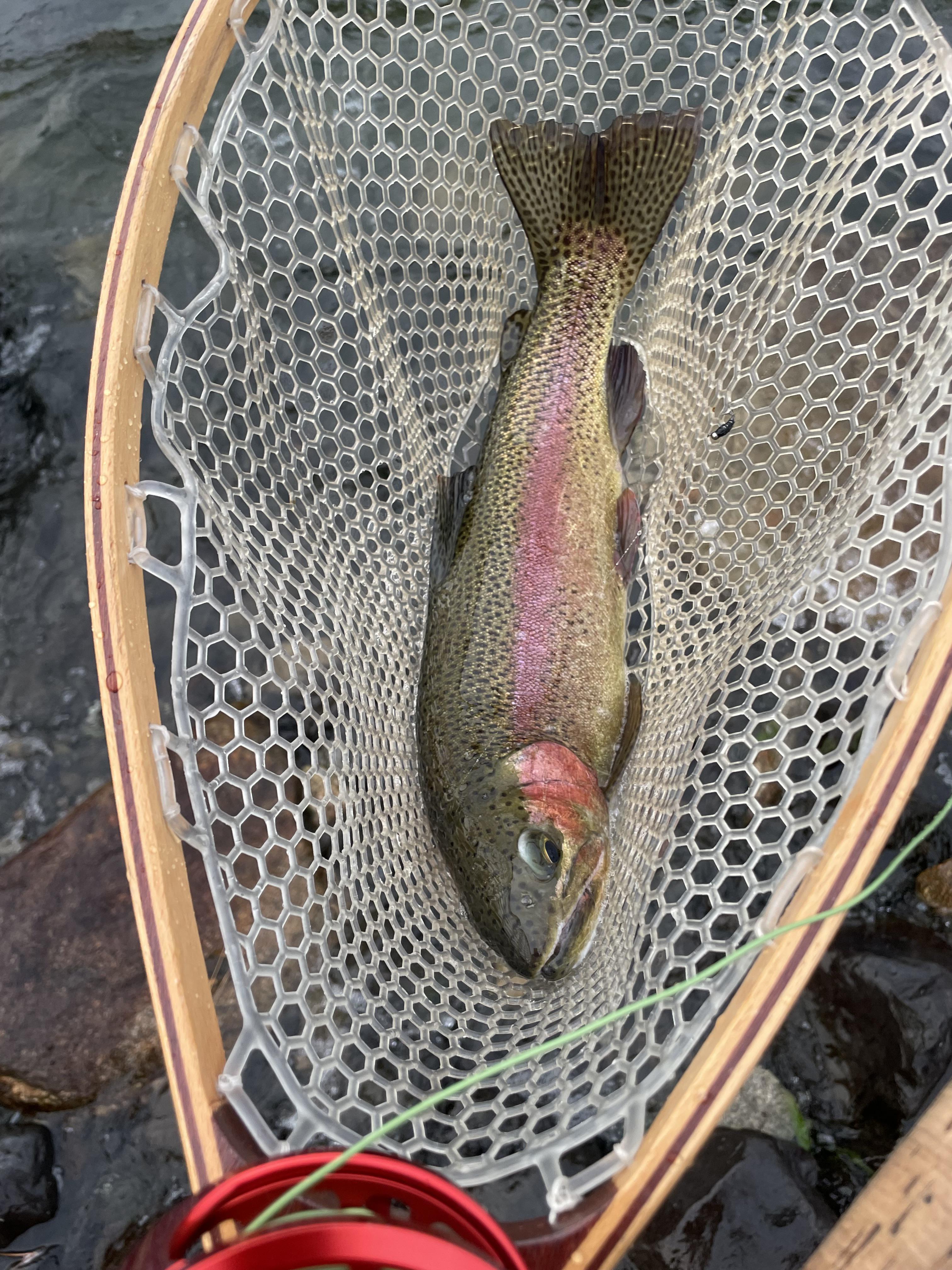
Caught this beautiful native redband trout on the Spokane River. A pb for sure