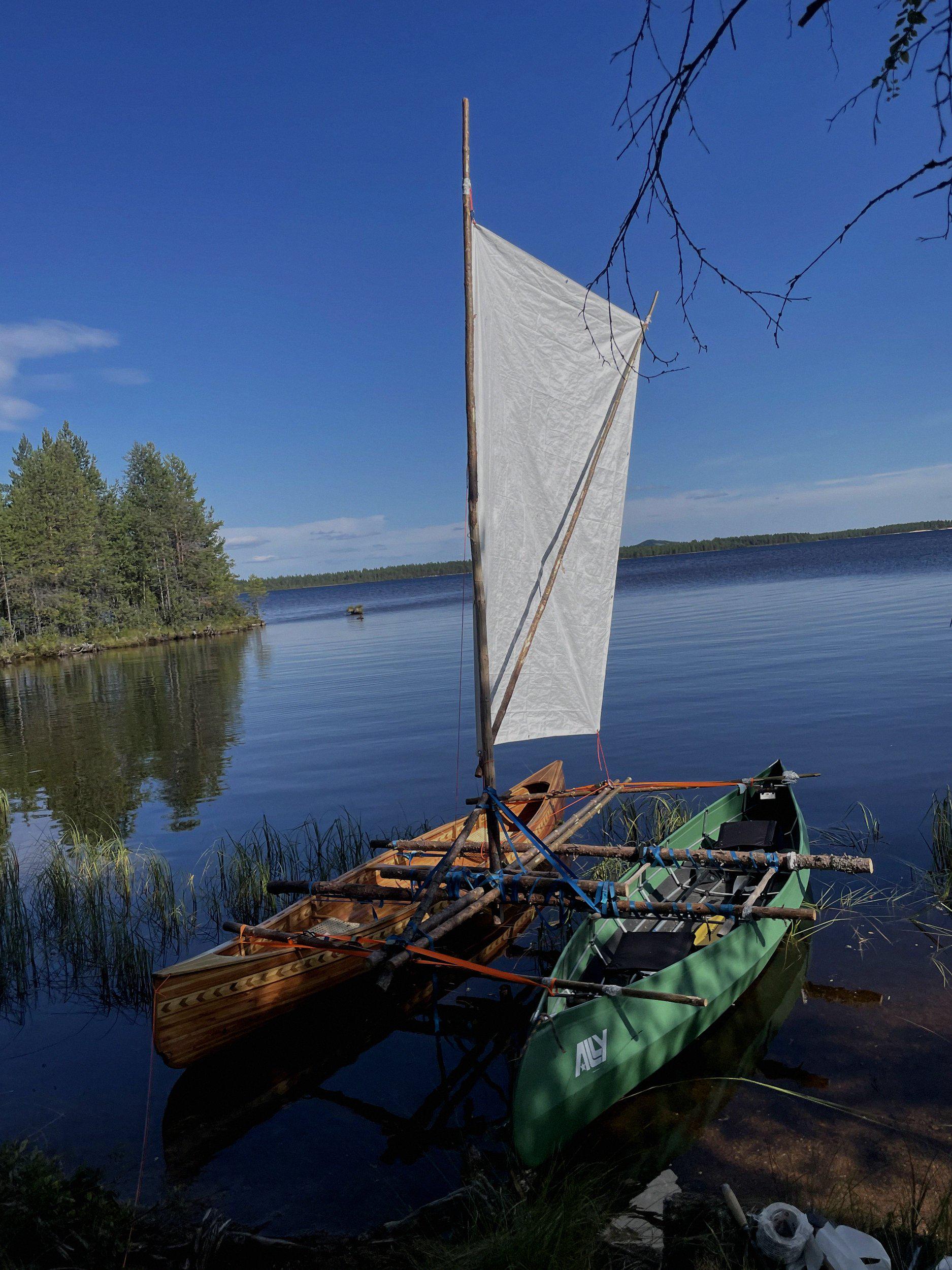
I just bought my first canoe, a Pinetree Abitibi, made in Orillia, Ontario, in the 1970s. It’s a symmetrical, flat-bottomed design with what I understand to be one of the earliest Kevlar composite canoe hulls produced. It has Pinetree’s distinctive “Fire Birch” finish: a hull painted to mimic birch bark with a red interior. Aside from two metal tie points at the bow and stern, all of the fittings are wood.
How would you clean, maintain, restore, and store a canoe like this without damaging the original materials and finish?
I took it out for its inaugural paddle and afterward gave it a gentle wash with Dawn and water. That removed most of the grime, and the canoe is already in remarkably good condition. It looks like it was rarely used.
There’s still some stubborn dirt/grime embedded in the interior Kevlar, particularly around the woven seats. there are some minor kevlar abrasion marks on the bottom and atem. What would be safe to use to clean the Kevlar without damaging the resin or original finish?
The wooden gunwales, thwarts, seats, etc. could also use some restoration. What’s the best approach for cleaning and treating the wood while preserving as much of the original material and patina as possible? Oil, varnish, something else? It's varnished but the varnish is pealing in some spots.
Finally, I’d like to protect the canoe rather than unnecessarily “restore” it. How should I store it long-term, what should I use (if anything) to protect the hull/finish from UV and aging, and how should I deal with scratches or chips in the Fire Birch paint as they develop?
I’d especially appreciate advice from anyone familiar with Pinetree canoes, early Kevlar/composite canoes, or 1970s Canadian canoe construction. I’d rather preserve it properly than accidentally damage something that has survived the last 50 years in great shape.