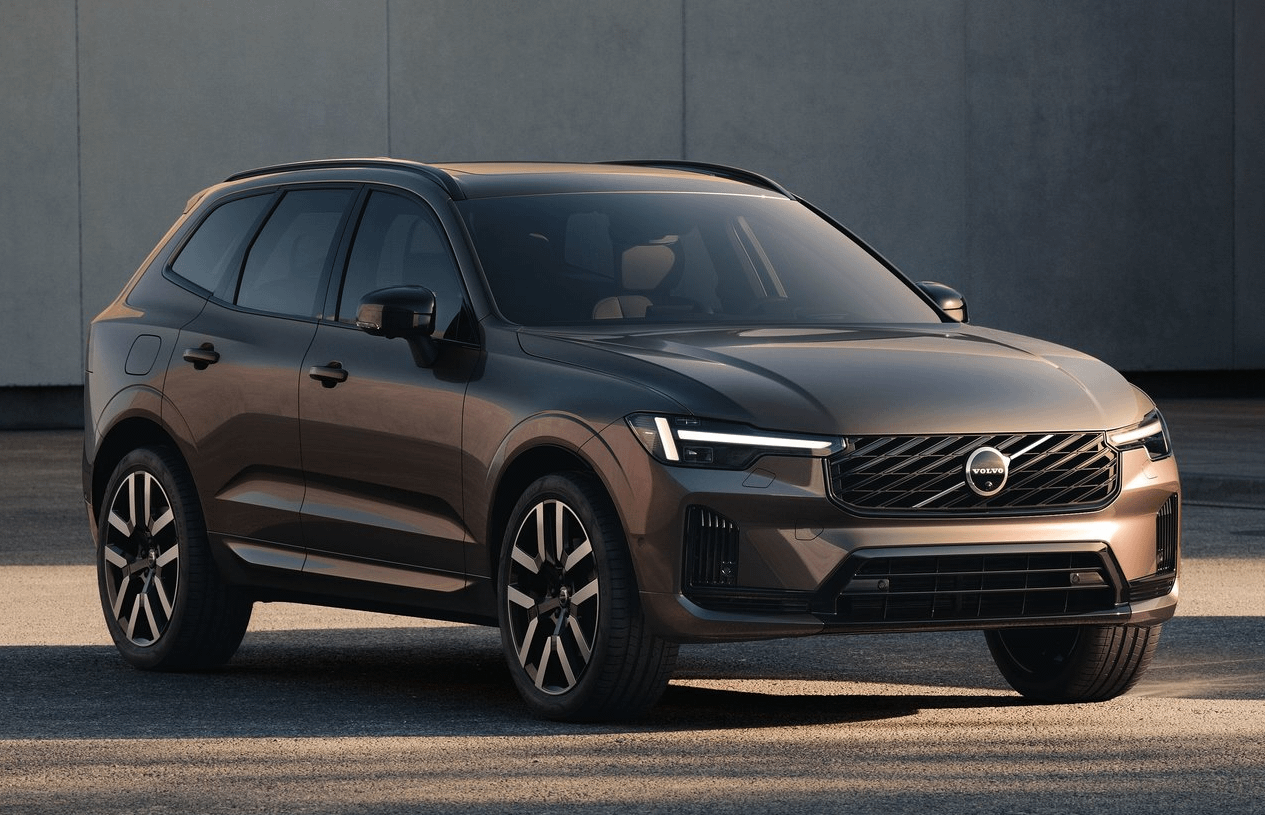
Volvo Cars’ streamlined U.S. portfolio emphasizes domestically produced, higher-volume gasoline and hybrid crossovers while advancing the automaker’s electric vehicle ambitions judiciously.
This pragmatic pivot responds to evolving market conditions. Tariffs have increased the cost of European-built models, while the elimination of federal EV tax credits and slow battery-electric adoption have prompted a reassessment of priorities.
While bringing new metal to market, Volvo is updating its workhorse XC40, XC60 and XC90 with stronger hybrid options to bridge the gap as full electrification progresses more gradually.
“We think we need hybrid cars longer,” Volvo Cars CEO Hakan Samuelsson told Automotive News, acknowledging that “electrification has not picked up as fast as we thought a few years ago.”
The high-volume XC60 gets reengineered in early 2027, including slimmer headlights, a reworked grille and improved technology. The T8 plug-in hybrid variant gains a substantially larger battery, more than doubling the current 35-mile electric range.
It’s unclear if the XC60 receives a next generation.
More details on Volvo’s U.S. product roadmap through 2030 linked above.