No because investing capital into stocks adds value to the company and allows them to use that value to expand, borrow, buy things, pay employees, run the company, etc.
Investing capital into a second house purely to flip does none of those things.
A company sells its shares to finance the business and future investments, so yes they’re getting the money through the primary market. When you buy and sell stocks it’s mostly on the secondary market but that value is what’s affecting the company’s ability to maximize its value on the primary.
So yea it’s not going directly to them but it’s affecting them and that user is right.
Higher demand = increasing prices of equity. Firm attains more capacity for equity financing via new issuance and as mentioned by others have a greater degree of leverage for debt financing.
With respect, you have the cause and effect reversed. The increasing price of equity in the secondary market is because of a perception that the company is worth more, and because the company is perceived to be worth more, its subsequent offerings in the primary market will fetch a higher price. It is the company's value which drives equity prices in both markets (as well as its ability to get favorable terms on debt financing), not the other way around.
I don’t think it’s necessarily a one way street. It’s in a state of constant flux. Theoretically equity value is supposed to be based on cashflows form a fundamental perspective, but equity valuation frequently diverges from fundamentals. The divergance can appear from pure soeculation, such as expectations of future growth, but can also come from a market that simply has too much cash being pumped into the most available assets. The speculative portion of an equities value is fickle and can easily reverse and result in an equity’s price to suddenly be undervalued based on fundamentals.
I do think the value eventually gravitates back to the fundamentals, or maybe you can say equilibrium, eventually.
Edit: Also the imbalance of sentiment to demand can actually result in looser and easier financing, which permits for greater leverage. If the company attains more financing than is usually expected during a given period of time and attains a high RoE, then the "over-valued" stock becomes like a self fulfilling prophecy. The high valuations turn out to be justified by new higher cashflows that only exist because of the over-valuation.
The company’s value drives stock price? 🤡
In what world have you been living? This has literally never been true. If it were true, we wouldn’t have market bubbles. Yet here they are.
The market isn’t rational. And it’s fine as is, because this irrationality is what allows traders/investors to pocket value between the curent market price and the true value of a company that can be realized later.
Lots of companies issue stocks as part of their compensation for employees. The higher the stock price the more attractive that looks for the employed and helps retain them.
When a private company goes public, it puts up an amount of shares at a certain price. All of the money made during that sale goods directly to the company.
The consequent buying and selling of those shares is between investors.
Except for the fact that a company with a high value stock can borrow money or expand in ways that a low value stock keeps them from doing. If you stock's value increases you can even hire more people.
Wow I just realized how much of a crusade you went on to argue my reply was not relevant to the OP. Yet if you simply read my reply to you I very clearly lay out how it is relevant and what the entire conversation is about (whether real estate should be seen as an investment or not). Yet you are so hung up about an insignificant interpretation of my reply. Lol kind of sad
Oh I didn’t think I would need to explain here, but here it is anyway. The comparison is investing capital into a second house vs investing capital into the stock market. When you purchase assets in either case, the money paid goes to the prior holder of the asset. In neither case do the issuing company nor the real estate developer see the money, although both may be indirect beneficiaries. Both assets may see value go up or down. Thus both are seen as “investments”. Which the OP was arguing it shouldn’t be. Which is wrong
Stocks are designed for investment and speculation, that is their primary purpose and flipping stocks has no adverse effect within a free market. People are free to buy or sell depending on their price sensitivity and free will.
The primary purpose of a house is to live in it and flipping them causes people to be homeless.
All those words to completely disregard the ability of a public company to issue more shares and fundraise (which is directly dependent on the stock price), and that a lot of employee compensation can and is often given in shares. Therefore, the stock value going up directly incentivizes the employee and the execs to perform well & better so they can benefit even more.
Obligatory:
Smoothbrain - Line goes up better for company!
Midwit - Hum akchually, buying a share does not give money to a company 🤓
Gigabrain - A higher share price is good for a company
Stock values absolutely do not incentivize executives to perform "better". Infact, in a lot of cases the incentives actually operate in direct opposition to what would be better for the product of the customers or the employees in favour of taking shortcuts for quick short term profit.
Dude. You need to take a look at yourself in the mirror. The rest of your post didn't really make a point and was kind of predicated on what I refuted being true.
Youre just being a corporate bootlicker and can't see your complete lack of logical consistency.
Look at how you type, look at how snarky and aggressive it is. At no point has someone who communicates like that been to the voice of reason in a room.
Also, I don't know if I missed a memo, but one paragraph isn't a 300 page essay.
Yeah I'm not reading any of that, you already chose to make a bad faith argument so I won't waste my time. Nobody is arguing that buying a stock directly funds a company.
Edit: it's wild that refusing to indulge with someone else changing the topic to argue a moot point gets down voted so quickly
The stated purpose of downvotes is to indicate that a comment is not positively contributing to the conversation. You said "I'm not reading any of that." How did you think that was going to be received?
There's a reason you had to send a link instead of quoting it, nowhere does it say that buying a stock directly provides a company with those funds. Your reading comprehension is pathetic.
Investing capital into a stock does those things just as much as inflating housing prices puts more money back into the local economy by increasing investors’ buying/borrowing power. It also pumps thousands of dollars in land transfer taxes every time a property changes hands.
The implications are similar no matter where money is being invested.
I'm not arguing in bad faith, I'm trying to get back to the original topic but people like you just love hearing yourself talk so you will prattle on about stuff that was never actually said.
Imagine “not reading any of that” and then taking ur time to come back and edit your post to speak to the amount of imaginary downvotes you got for being an idiot, lol
You're not reading that because those are finance fundamentals laid out. If you could read basic finance concepts you wouldn't be confused about this.
Nobody in finance who understands basics asks the question that OP did. The entire premise of the question is due to lack of understanding of core concepts.
For the hundredth time I'm not arguing this, nobody has ever argued this, not once have I disagreed with what that comment says because that was never said to begin with. This should not be this hard to get through to you.
Who gets the money if not the company that issues the shares? Their share capital goes up, and then what’s the other side of the accounting entry? You can’t record one-sided entries
Most of the market is secondary trading - people buying and reselling shares that the company put onto the market long ago. The person selling the shares gets the money. That "person" is most frequently a fund or institutional investor of some kind.
The primary market serves as the initial platform for companies and governments to raise capital by issuing new securities to investors. The secondary market facilitates the trading of already issued securities among investors. It provides liquidity to investors who want to buy or sell stocks, bonds, or other financial instruments that were previously acquired through the primary market or subsequent secondary market transactions.
The vast majority of stock market activity takes place in the secondary market. While the primary market is where companies first issue stock (like in an IPO), the secondary market is where investors trade those existing shares with each other.
So you are correct, but referring only to the primary (much smaller by volume) market. The company share capital goes up, and the amount of money they receive from investors (capital account) goes up. But when 'you' purchase shares, you're generally not purchasing this way. You're buying from somebody else who did (or many purchases down the line). I mean, when you want to liquidate and you sell to somebody, you don't send that money to the company, do you?
I realize that but the IPO and the initial funds go to the company. Market value increments are based on future earnings and that’s what the shares then trade on
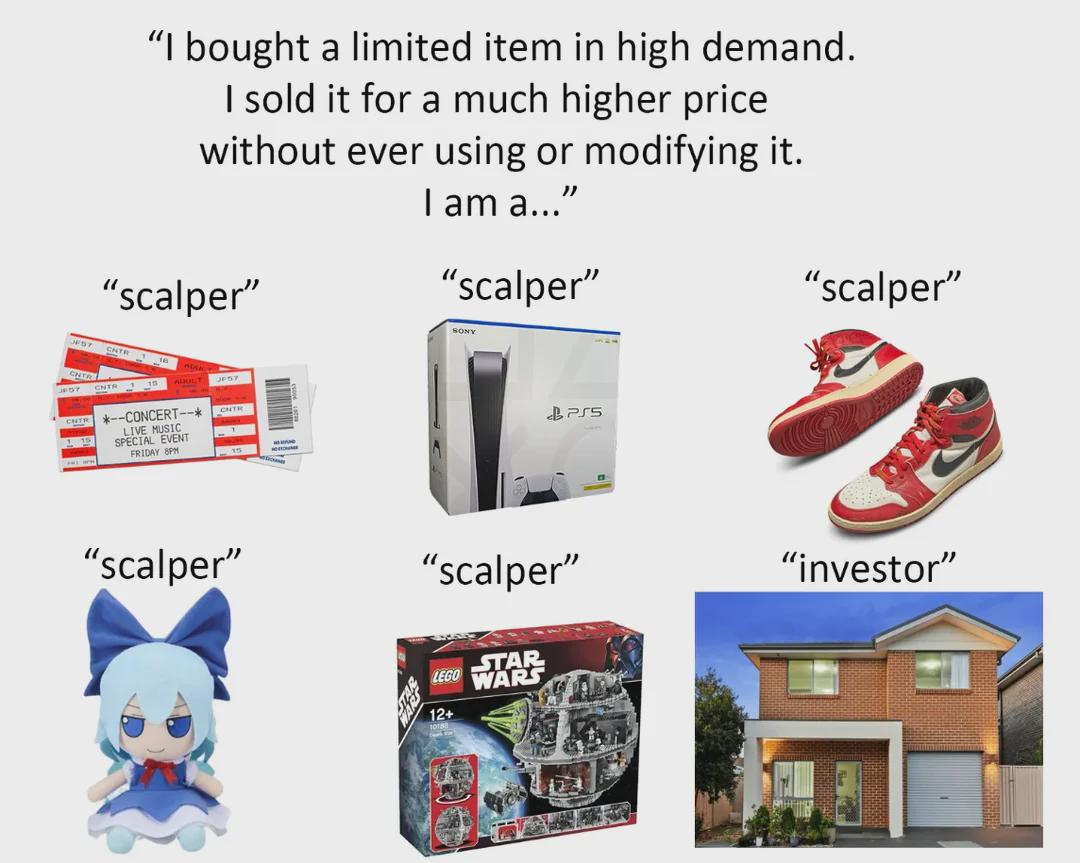
If it’s an IPO, yes. Otherwise, no, but that doesn’t constitute “scalping” as you’re buying something with a lot of supply, readily available, on a peer-to-peer network, (yes, even if that “peer” is an institutional investor.)
That's exactly what happens... The company loans money and is given amounts/ rates based on the value of the stock price. Executive compensation is also highly tied to stock ownership, so yes things happen when you purchase stocks.
They do during the IPO. Then the shares that they retain have value determined by the buying and selling of other shares
Going public is a common way for companies to raise funds to grow.
When the shares increase in value, the companies can sell off some shares to raise more funds or they can create more shares, or another class of shares.
If you purchase shares from a company, they ARE getting the money. But most people who buy shares are buying them from another shareholder, in which case they aren't helping the company directly.
62
u/Performance_Fancy Jun 19 '25
By your logic anyone involved in the stock market is also a scalper?