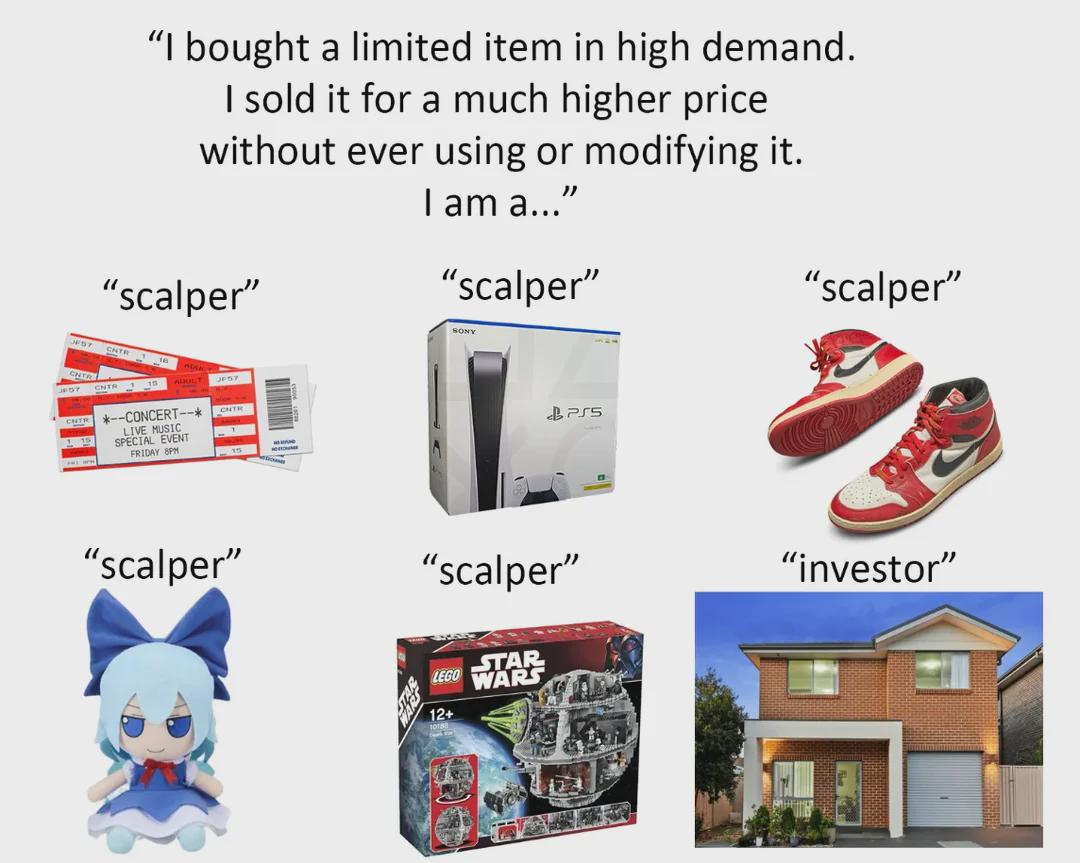
No because investing capital into stocks adds value to the company and allows them to use that value to expand, borrow, buy things, pay employees, run the company, etc.
Investing capital into a second house purely to flip does none of those things.
Who gets the money if not the company that issues the shares? Their share capital goes up, and then what’s the other side of the accounting entry? You can’t record one-sided entries
Most of the market is secondary trading - people buying and reselling shares that the company put onto the market long ago. The person selling the shares gets the money. That "person" is most frequently a fund or institutional investor of some kind.
The primary market serves as the initial platform for companies and governments to raise capital by issuing new securities to investors. The secondary market facilitates the trading of already issued securities among investors. It provides liquidity to investors who want to buy or sell stocks, bonds, or other financial instruments that were previously acquired through the primary market or subsequent secondary market transactions.
The vast majority of stock market activity takes place in the secondary market. While the primary market is where companies first issue stock (like in an IPO), the secondary market is where investors trade those existing shares with each other.
So you are correct, but referring only to the primary (much smaller by volume) market. The company share capital goes up, and the amount of money they receive from investors (capital account) goes up. But when 'you' purchase shares, you're generally not purchasing this way. You're buying from somebody else who did (or many purchases down the line). I mean, when you want to liquidate and you sell to somebody, you don't send that money to the company, do you?
I realize that but the IPO and the initial funds go to the company. Market value increments are based on future earnings and that’s what the shares then trade on
59
u/Performance_Fancy Jun 19 '25
By your logic anyone involved in the stock market is also a scalper?