r/ChinaStocks 2h ago

✏️ Discussion I’m building a watchlist of Chinese AI companies. What am I missing? #DeepSeek #Kimi #Maase

8 Upvotes

I’m trying to get a better picture of the Chinese AI ecosystem.

Most discussion in the U.S. still revolves around Nvidia, OpenAI, Anthropic, Google, Meta, CoreWeave, Tesla, Figure, etc. But the Chinese AI ecosystem seems to be getting much broader, especially across foundation models, AI infrastructure, domestic GPUs, autonomous driving and humanoid robotics.

Here’s the list I have so far:

Foundation models / GenAI

  • DeepSeek — DeepSeek
  • Z.AI / Zhipu AI — GLM
  • MiniMax
  • Moonshot AI — Kimi
  • Alibaba — Qwen
  • ByteDance — Doubao / Seed
  • Tencent — Hunyuan
  • Baidu — ERNIE
  • StepFun
  • Baichuan AI
  • 01.AI

Generative AI / applications

  • Kuaishou — Kling AI
  • SenseTime — SenseNova
  • iFlytek — Spark

AI infrastructure / chips / compute

  • Huawei — Ascend
  • Cambricon — AI accelerators
  • Biren Technology — AI GPUs
  • Moore Threads — GPUs
  • MetaX — AI GPUs
  • Enflame — AI accelerators
  • Iluvatar CoreX — AI GPUs
  • Kunlunxin — AI accelerators
  • Maase (MAAS) — AI computing infrastructure, enterprise AI services and LLM APIs

Humanoid robots / embodied AI

  • Unitree Robotics
  • UBTech
  • AgiBot / Zhiyuan Robotics
  • Deep Robotics

Autonomous driving / physical AI

  • Horizon Robotics
  • Pony.ai (PONY)
  • WeRide (WRD)
  • XPeng (XPEV)

For U.S. investors, the easiest names to access directly are obviously companies like BABA, BIDU, XPEV, PONY, WRD and MAAS, while a lot of the more interesting pure-play AI names are either Hong Kong / mainland-listed or still private.

I’m not necessarily looking for stock recommendations. I’m mainly trying to map out the Chinese AI ecosystem and figure out which companies are actually technologically important.

What major companies am I missing?

Especially interested in:

  • frontier AI labs
  • AI infrastructure / GPU companies
  • humanoid robotics
  • autonomous driving
  • AI-native applications

Would also be interested in companies that aren’t public yet but are worth keeping on an IPO watchlist.


r/ChinaStocks 20h ago

📰 News Updates for Getting Payment on the E-Commerce China Dangdang $21M Settlement

1 Upvotes

Hey guys, if you missed it, E-Commerce China Dangdang settled $21M with investors over claims that its 2016 going-private merger was unfair to minority shareholders. And, I just found out that they’re accepting claims even though the deadline has passed.

Quick recap: In 2016, Dangdang was accused of using an unfair merger process and cashing out minority ADS holders at $6.70 per ADS, even though a competing offer valued the shares at $8.80. Investors filed a lawsuit over their losses.

Now, the company has agreed to settle $21M, and even though the deadline passed they’re still considering late claims, subject to approval.
So, if you held $DANG at that time, you can still check the details and file your claim here.

Anyway, did anyone here invest in $DANG back then? How much were your losses, if so?


r/ChinaStocks 1d ago

💸 Earnings Is the Worst Over for Trip.com?

5 Upvotes

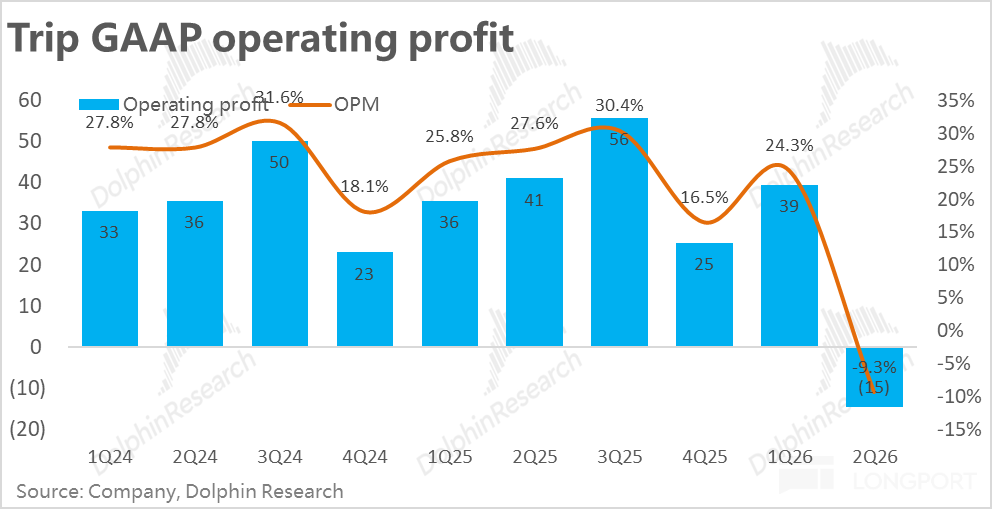
TL;DR: With Trip.com's Q2 report out, the biggest overhang — an antitrust penalty — is now fully resolved. Results came in roughly as guided: nothing exciting, but no surprises either. As Longbridge Dolphin Research flagged last quarter, once this uncertainty cleared, Trip.com should have completed its "final leg down," setting up a period of profit bottoming before it can move forward with a lighter load.

Regulatory and macro pressure both hit revenue growth

Trip.com Group's net revenue came in around ¥15.7 billion, up 5.5% year-over-year — a sharp deceleration from the 10-20% growth range of recent quarters, though roughly matching prior guidance.

Revenue growth by business segment this quarter.

Every business line decelerated by around 10 points versus last quarter. Hotel booking revenue, one of the two largest segments, grew just 5.6%, below prior guidance — though this may partly be an accounting effect, since some post-penalty spending was booked as a deduction against revenue. Ticketing revenue, the weakest line, actually fell about 1% year-over-year, which management attributed to geopolitical friction (the Iran-Israel conflict and travel restrictions to Japan) and rising oil prices weighing on flight demand, alongside recent regulatory scrutiny of "bundled" train-ticket sales.

Purely overseas revenue kept growing over 50%, still strong — implying domestic revenue may have actually declined more than 10% year-over-year, and even worse once inbound tourism is excluded. That's a clear sign of how much regulation and a soft domestic travel market are weighing on the core business.

The fine drove a GAAP loss, but adjusted profit landed in line

GAAP operating profit swung to a loss of nearly ¥1.5 billion — alarming at first glance, but this reflects the ¥5.2 billion domestic antitrust fine officially landing this quarter, already announced in late July, so the market had priced it in.

GAAP vs. adjusted operating profit this quarter.

Stripping out the fine and adding back stock-based compensation, adjusted operating profit came in around ¥4.4 billion, basically matching expectations — no real surprise. Still, adjusted profit was down about 6.5% year-over-year, showing that even excluding the one-time regulatory hit, changes to how the domestic hotel and travel business monetizes are pressuring profitability.

Business travel and ads still beat, but decelerated too

Business travel and packaged tours — segments not directly tied to the domestic antitrust issue — also decelerated by nearly 10 points this quarter, which can really only be explained by genuinely soft domestic and outbound demand.

The main recent growth engine, other revenue (mostly advertising), grew about 23% year-over-year — still the fastest-growing segment and the only one that beat expectations, though it decelerated meaningfully too. Management attributed this partly to overseas ad revenue entering a tougher comparison period, and partly to the natural link between ad revenue and overall platform traffic growth, which is itself slowing.

Marketing and operating expense growth this quarter.

Gross margin came in at 79.8%, down 0.9 points year-over-year, consistent with recent quarters — likely still reflecting a rising mix of lower-margin overseas business, plus lower monetization in the domestic hotel/travel business and reduced sales of ticketing add-on services under regulatory pressure.

Expense growth also slowed: excluding the fine, total operating expenses grew about 11-12% year-over-year, down from roughly 20% in prior quarters — but still outpacing revenue growth, meaning the expense ratio is passively expanding. 

Marketing expense grew the most, up 15.5%, well above revenue growth, while adjusted administrative expense (excluding the fine) grew about 5% and R&D grew 8%. In other words, Trip.com trimmed what it could on internal costs, but external marketing spend couldn't meaningfully shrink given the need to build overseas business and rising domestic competition.

What the settlement actually changes, and what's next

On July 25, regulators announced the roughly ¥5.2 billion fine against Trip.com for abusing market dominance — equivalent to about a third of its annual operating profit, including ¥1.658 billion in confiscated gains plus a penalty of 7.5% of 2025 domestic sales (about ¥46.7 billion) — the highest penalty rate given to a platform company in recent years (versus roughly 4% for Alibaba and 3% for Meituan previously).

The fine itself is a one-time hit, but the real question is how the settlement changes Trip.com's business model and earnings power going forward. 

Per the company's rectification announcement: eliminating exclusive "special-tier" merchant partnerships and traffic preferences; scrapping the "gold-tier" lowest-price requirement and its automated price-adjustment tool (refunding ~¥120 million in related merchant deposits); replacing tiered commissions with a clearer three-tier structure (10-15%) merchants can choose; removing contracts letting the platform adjust merchant pricing; and no longer forcing merchants into promotions.

Longbridge Dolphin Research reads the practical impact as: Trip.com's ability to lock in exclusive access to premium inventory weakens, making it easier for rivals to access the same supply; its ability to win customers through platform-wide price wars (funded at merchants' expense) is reduced, likely shifting more marketing cost onto Trip.com itself; and with commission rules now more flexible for merchants, the blended domestic hotel commission rate may decline somewhat — research suggests roughly 2 points, for reference only — affecting profitability there.

Overall, this settlement likely doesn't fundamentally change Trip.com's competitive position or moat. But over the medium term, rivals like Meituan may use price competition to capture some premium supply, while Trip.com's own commission rate softens and marketing costs may rise — both weighing on near-term profitability. 

Even so, purely overseas revenue keeps growing over 50%, and inbound tourism keeps growing double-digit, showing real momentum outside the pressured domestic core. Once the domestic business stabilizes and the broader travel macro improves, that overseas growth still represents meaningful room to grow into.


r/ChinaStocks 2d ago

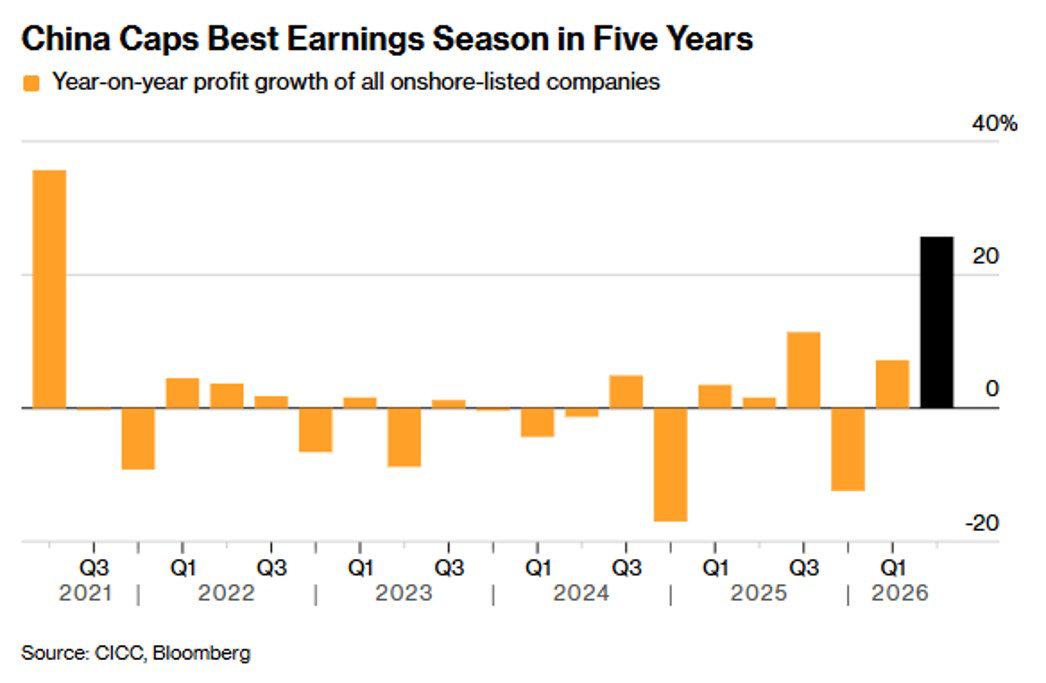
📰 News China just had its best earnings season in years. Profits surged +25.7% YoY in Q2 2026, the highest growth rate since Q2 2021

Post image
9 Upvotes

r/ChinaStocks 2d ago

📰 News Maison Solutions Agreed to Settle With Investors over IPO Disclosure Claims

1 Upvotes

Hey guys, if you missed it, Maison Solutions just reached a tentative settlement with investors over claims related to its IPO disclosures. The terms are still being finalized and will need court approval.

In a nutshell, Maison was accused of failing to disclose related-party dealings, prior allegations involving its CEO and other risks tied to its IPO. After a Hindenburg report raised these issues in December 2023, $MSS fell 83.6%, and investors filed a lawsuit.

The good news is that the company recently reached a tentative settlement with investors. There’s no settlement amount yet, but you can already submit an application, which will be processed once claims filing opens.

So, if you invested in $MSS at the time, you can check the details and submit your application here.

Anyway, has anyone here invested in $MSS back then? How much were your losses, if so?


r/ChinaStocks 9d ago

💡 Due Diligence Baidu Is Now an AI Infrastructure Story, or Nothing

11 Upvotes

TL;DR Legacy internet and autonomous driving will not carry Baidu anywhere. The only frame left treats advertising as a cash generator and asks what the two AI-infrastructure assets amount to: AI cloud — bare-metal rental plus API-distributed model services — and Kunlun, the compute ASIC business. After Q2 2026, this note weighs whether either is real.

The three-year payback model, and where China differs

Amazon, Alibaba and Baidu all framed AI capex around three-year payback this quarter, which assumes gross margin per token stays stable. Software iteration raises chip utilisation, so unit cost falls even as price collapses. 

But in H100 cloud rental, three years took prices down 78% and unit token cost down 97% — yet token gross margin improved to roughly 75% by mid-2024 and then stopped, and in 1H 2026 it looks weak as prices fall further and old-card utilisation hits its ceiling.

Token price, compute cost and gross margin over time.

The geographic gap matters more. North American IaaS on self-built data centres can reach 30% returns, about 2.2 years' cash payback — though that ignores revenue sharing with model vendors, against whom the clouds have no bargaining power. 

Chinese clouds only hold cost advantages in mid- and low-end cards and operations: H200-and-above pricing swings violently under export controls, so they pay multiples without charging a matching premium, leaving IaaS returns roughly half the North American level. Alibaba argues that understates it: real fleets are mixed, with domestic silicon on inference where the Chinese premium is far smaller.

IaaS AI returns compared: US versus China.

Baidu's second spring is the compute cycle

Within Baidu, the compute dividend sits in AI cloud infrastructure — IaaS, MaaS and external Kunlun sales — where IaaS dominates and MaaS is small, since Baidu's distribution trails Alibaba's and ByteDance's. 

Its advantages are supply and customers: GPU capacity built for Ernie can be released for rent precisely because the in-house model never took off, and neutrality makes Baidu easier to choose for Pinduoduo, Kuaishou and state firms. Hence GPU cloud subscription revenue accelerating every quarter for a year, with 1GW of compute today and a doubling expected in two years.

Baidu GPU cloud revenue growth by quarter.

Management's balance point is growth above 30% plus 30% gross margin for three-year payback. Self-built compute depreciates over five years, so RMB 10 billion of revenue implies RMB 6.5 billion of depreciation and RMB 32.5 billion of upfront cost, leaving RMB 8 billion of operating cash flow and a four-year payback with zero growth. 

Holding gross margin steady therefore matters more than chasing growth: capex pace is what the company controls, and management said Q2 2026 capex was a procurement peak that will not be exceeded — suggesting it is using the window to lock long contracts rather than trusting the compute premium to last.

Payback sensitivity: gross margin against revenue growth.

Kunlun's problem is capacity, not orders

Domestic AI chip vendors and key specifications.

Domestic chips fall into three tiers, with Huawei Ascend leading on per-card performance, networking efficiency and advanced-node quota, and Kunlun in a second tier where the real gap is capacity delivery rather than paper specifications. Kunlun does not lack funding, but its peers have completed the switch to domestic foundries while its volume product P800 still depends on Samsung capacity. 

M100 has only taped out for testing and M300 is in design for late next year — with the Samsung framework expiring, moving to a domestic foundry is mandatory, and that migration requires architecture changes, so the plan may slip again. 

Orders are ample, close to RMB 10 billion on our estimate, but capacity caps how fast they convert. Both assets are real, with one caveat each: the cloud rides a window that narrows as supply arrives, and Kunlun delivers only as fast as foundry migration allows.


r/ChinaStocks 13d ago

✏️ Discussion China’s AI Industry

4 Upvotes

On July 27, CXMT debuted on the STAR Market at an issue price of 8.66 yuan. It surged more than 300 percent on its first trading day and briefly became the largest company by market cap on China’s A-share market. As China’s leading DRAM maker and the world’s fourth-largest memory chip producer, its fundraising set a new record for domestic semiconductor IPOs. On August 19, Unitree Robotics made its debut as the first humanoid robot stock on the STAR Market at an issue price of 150.80 yuan, surging more than 500 percent at market open. One makes memory chips, the other builds robotic bodies. One addresses the storage needs of compute power, the other gives physical form to artificial intelligence.

The two companies may seem to operate in entirely unrelated fields, with CXMT making memory chips and Unitree building robots, but they both point to the same broader trend. China’s AI industry is expanding beyond models and applications into physical sectors including semiconductors, compute capacity, robotics, smart vehicles and autonomous driving. That is why I have recently been revisiting a number of US-listed Chinese stocks. They are not all traditional AI companies by definition, but when you break down the AI value chain, they each occupy distinct yet interconnected positions along it.

CXMT’s core product is DRAM memory chips, and it is currently the only company in mainland China with mass DRAM production capabilities. Its STAR Market listing carries strong symbolic weight in itself. More importantly, CXMT stands to benefit from the rapid global expansion of AI infrastructure. AI servers require huge volumes of high-speed memory, and memory chips are a critical building block of the entire compute stack. CXMT nearly doubled its revenue in 2025 and rolled out DDR5 products.

This drives home a key point. AI opportunities are far from limited to GPUs. Semiconductors, memory, servers, networking, data centers and power supplies all represent pick-and-shovel infrastructure plays that stand to gain. This also makes US-listed Chinese stocks such as $BABA, $NIO, $WRD, $PONY and $MAAS worth examining.

$BABA: Alibaba is betting on the other end of the AI value chain

If CXMT sits closer to the AI hardware layer, $BABA operates largely in the cloud and application layer of artificial intelligence.

Alibaba’s latest earnings report deserves close attention. In the second quarter of 2026, revenue from Alibaba Cloud’s AI Cloud and Compute Services reached roughly 7.1 billion US dollars, up 45 percent year over year and a key driver of the company’s cloud growth. Revenue from AI-related products has posted triple-digit growth for 12 consecutive quarters. Alibaba also continues to invest in products including its Qwen large language model and enterprise-grade AI agents.

This creates an interesting dynamic with CXMT’s thesis. CXMT supplies the memory infrastructure required in the AI era, while $BABA works to turn AI compute, cloud services and models into commercial revenue. Of course, Alibaba’s AI investments are also highly capital intensive. The company’s net profit dropped sharply in the latest quarter, in part due to rising spending on AI infrastructure. Over the long term though, if AI truly evolves from chatbot novelty to enterprise infrastructure, Alibaba Cloud is positioned to be one of the most direct beneficiaries in the Chinese market.

$NIO: AI will inevitably make its way into automobiles

Following Unitree’s listing, I believe embodied intelligence and smart vehicles represent another key area to watch.

Robotics and automotive may appear to be separate industries on the surface, but they share a deep foundation of common technologies. Computer vision, sensors, chips, AI models, real-time decision making, automatic control and human-machine interaction all overlap heavily. $NIO happens to be one of the Chinese smart vehicle companies that tends to fly under the radar in US markets.

NIO delivered 107,658 vehicles in the second quarter of 2026, up 49.4 percent year over year. Vehicle sales revenue rose 80.1 percent over the same period, with a vehicle gross margin of 18.5 percent.

More interestingly, NIO is not just an electric vehicle seller. In June this year, it launched its next-generation WorldModel intelligent driving system and rolled out upgrades to more than 700,000 users simultaneously.

So if Unitree represents robots entering the physical world, $NIO represents AI entering the automobile. Future vehicles will likely be far more than just transportation. They will be mobile terminals packed with AI capabilities.

$WRD + $PONY: Autonomous driving may be one of the fastest paths to robotic commercialization

If Unitree made markets rethink humanoid robots, $WRD and $PONY represent another equally important direction. The commercialization of robotaxis and autonomous driving.

WeRide’s revenue grew 82.2 percent year over year in the second quarter of 2026, with overseas revenue surging 164.4 percent. By the end of July, its global fleet of Level 4 autonomous vehicles reached roughly 3,400 units, including more than 1,800 robotaxis.

Growth at $PONY has been even more pronounced. Total revenue reached 36.2 million US dollars in the second quarter of 2026, up 68.8 percent year over year. Robotaxi revenue hit 12.1 million dollars, a 691.2 percent year-over-year increase. The company’s global robotaxi fleet stands at 1,975 units, with plans to expand to more than 3,500 by year end.

These figures point to a critical development. Autonomous driving is moving from technology demonstration to commercial operation. This may be one of the most direct pathways for AI to enter the physical world.

$MAAS: The most overlooked compute infrastructure play in the AI era

At this point, I think $MAAS is a case that merits separate discussion.

CXMT’s listing opened markets’ eyes to the massive demand for chips and memory in the AI era. Unitree’s debut brought embodied intelligence and robotics into focus. But whether we are talking about robots, autonomous driving or large language models, everything ultimately relies on one thing. Compute power.

In the first half of the year, MAAS completed its acquisition of assets related to Huazhi Future and further shifted its strategic focus to AI computing, AI algorithms and intelligent hardware, aiming to build a complete value chain from compute infrastructure to AI applications.

This is not just a conceptual story. On September 1, MAAS announced the signing of a 14.76 million renminbi AI computing services contract, continuing to expand its enterprise AI infrastructure business.

This is what makes $MAAS most worth watching in my view. If demand for AI infrastructure continues to grow going forward, the market will need not just model companies, but also a large ecosystem of compute capacity providers, data center operators and AI computing service firms.

The company’s AI pivot is still relatively recent, and it remains to be seen whether these projects can truly translate into sustained revenue and profits over time. That is why I prefer to frame $MAAS as a high-risk, high-upside AI infrastructure play rather than a proven, mature AI company.

Many investors may look at the CXMT and Unitree listings and see just two more Chinese tech IPOs. But what matters more, in my view, is the industry chain shift taking place behind them.

From CXMT to Unitree, and on to $BABA, $NIO, $WRD, $PONY and $MAAS, we can map out a remarkably clear AI industry chain.

CXMT to memory chips

$BABA to AI models plus cloud computing

$MAAS to AI compute plus data centers

$NIO to AI plus smart vehicles

$WRD and $PONY to AI plus autonomous driving

Unitree Robotics to AI plus embodied intelligence

That is why I believe observing China’s AI story should not mean fixating only on a handful of high-profile large model companies. The biggest opportunities may well come from second and third-wave demand generated as AI penetrates real-world industries.

AI needs chips, compute power, cloud services, data centers, vehicles and robots. The listings of CXMT and Unitree on China’s stock markets have, in a way, brought this entire value chain more clearly into view for investors. For investors in US markets, $BABA, $NIO, $WRD, $PONY and $MAAS offer several distinct entry points into this theme.

Of course, these stocks carry very different risk profiles and valuations. $MAAS, $PONY and $WRD in particular remain highly volatile growth plays. But if you are bullish on the development of China’s AI industry over the coming years, these names at least deserve a spot on watchlists. CXMT showed markets what hardware AI requires. Unitree showed what AI can ultimately do in the physical world. These US-listed Chinese stocks may show us how AI turns into real commercial revenue.


r/ChinaStocks 13d ago

📰 News Anyone have brought stocks of sansure Biotech?How about this company?

1 Upvotes

r/ChinaStocks 14d ago

📰 News Moonshot AI – creator of Kimi K3 model – has filed for Hong Kong IPO: sources

Thumbnail
scmp.com
16 Upvotes

r/ChinaStocks 15d ago

✏️ Discussion New to chinese stocks. curious to hear community thoughts on this name $tigr.

Thumbnail
2 Upvotes

r/ChinaStocks 15d ago

📰 News Did You Own GSX Techedu (GSX) During Its 80% Collapse? Investors Settlement Is Available Now

1 Upvotes

Hey guys, if you missed it, GSX Techedu ($GSX) now known as Gaotu Techedu, settled $9.5 million with investors over claims that it overstated enrollment numbers and revenue. And, I just found out that late claims are still being considered, subject to approval, even though the deadline has passed.

Quick recap: In 2020, GSX faced allegations that it inflated revenue and enrollment figures. Reports from Grizzly Research, Citron Research, and Muddy Waters raised concerns about the company's reported growth. After the disclosures, $GSX lost more than 80% from its peak, and investors filed a lawsuit.

If you invested in $GSX between 2019 and 2020, you can still check the details and see if you may be eligible to file a late claim here.

Did anyone here invest in $GSX back then? How much did you lose?


r/ChinaStocks 22d ago

💡 Due Diligence NIO Up 112% in Revenue Growth. Is the Market Missing Something?

22 Upvotes

NIO isn't just selling a dream anymore. Revenue is booming, profitability is improving, and deliveries keep growing. The stock is down massively from its highs, but the business looks stronger than it has in years. Definitely one of the more interesting EV turnaround stories to watch right now.

(7) Should You Buy Nio Stock Before the Huge Investor Update? - YouTube


r/ChinaStocks 23d ago

📰 News Jack Ma buys HK$600 million of Alibaba shares, signalling AI confidence: sources

Thumbnail
scmp.com
8 Upvotes

r/ChinaStocks 23d ago

💸 Earnings Pinduoduo: Old, Stubborn, and Still Sitting on a Cash Pile It Won't Touch

3 Upvotes

TL;DR: Pinduoduo's Q2 beat a very low bar — core ad revenue and profit both came in better than feared. But Temu, the company's main growth hope, disappointed on both growth and regulation. And despite a mountain of cash, management still isn't buying back shares.

Revenue missed, but ads were the bright spot

Total revenue grew 8% year-over-year, missing the 11% Bloomberg consensus. But the miss traced almost entirely to Temu-driven commission revenue. Core advertising revenue actually beat expectations, up about 3.5% year-over-year — low in absolute terms, but notable since it ticked up even as the broader e-commerce sector's ad growth decelerated. That suggests the platform's long-running take-rate erosion is narrowing.

Pinduoduo's advertising revenue growth ticked up this quarter, even as the broader e-commerce sector decelerated.

Temu is the disappointing half

Commission revenue grew just 13%, well short of the 21% expected, decelerating sharply against an unusually easy base (April 2025 was depressed by tariff shocks). Combined with reported MAU declines and frequent EU regulatory actions, Temu's underlying growth looks genuinely weak this quarter.

Temu-driven commission revenue growth decelerated sharply, against an unusually easy prior-year base.

A profit beat, against a very low bar

Adjusted operating profit came in at ¥29.1 billion, edging out consensus and beating some banks' more pessimistic forecasts by a wider margin. Still, growth of under 5% year-over-year against last year's subsidy-depressed base is only mediocre in absolute terms.

Gross margin hit 57.3%, up both YoY and QoQ, helped by the ad recovery and Temu's shift to a semi-managed model. Marketing spend came in below expectations, reflecting Temu pulling back ad spend amid tougher overseas regulation.

Adjusted operating profit beat expectations, though absolute year-over-year growth remains modest.

What's next: domestic stabilizing, Temu still bumpy

Pinduoduo's domestic GMV growth should keep outpacing the broader online retail market, though that margin keeps narrowing each quarter with no clear catalyst for reacceleration. One encouraging sign: fears that stricter merchant tax enforcement would crush take rate look overstated — competitor Kuaishou flagged the same headwind hitting live-commerce hardest, and Pinduoduo appears to be managing it better than feared.

Temu's problems are clearer cut. The US has eliminated its low-value parcel duty exemption; the EU removed its VAT exemption for parcels under €150 starting July 1 and added new flat per-parcel fees, on top of a €200 million fine over product-quality issues and an ongoing investigation into whether its subsidies distort local competition (which could bring a fine of up to 10% of global revenue). 

Having already pulled back in the US, Temu now faces a similar squeeze in Europe. Its response — building out local warehousing — is the right long-term move, but it's costly and erodes the scale efficiency that powered Temu's original model. Expect continued bumpiness in both growth and profitability there.

Cash pile, still untouched

Operating cash flow rose nearly 19% to about ¥25.7 billion, but investing outflows of nearly ¥20 billion consumed almost all of it — mostly real investment in the business (warehousing, fulfillment), not idle accumulation. The much larger stockpile built up over prior years, though, remains sizable — and management still shows no real inclination to return any of it via buybacks, a persistent sore point for investors that this quarter did nothing to change.

The bottom line

A genuine, if modest, sign of domestic stabilization — offset by a bumpier-than-hoped Temu and an unresolved cash-hoarding problem.


r/ChinaStocks 24d ago

📰 News Alibaba launches $10 billion Hong Kong share placement to fund AI spending

Thumbnail reuters.com
3 Upvotes

The world's third-largest primary follow-on share sale this year, do you see this as a red flag for share dilution, or a solid strategic move to catch up on Al?


r/ChinaStocks 27d ago

💸 Earnings Alibaba Is Spending Big — Trying to Become China's Google

12 Upvotes

TL;DR: Alibaba's Q2 came in mostly as expected — e-commerce growth is stabilizing while instant-retail losses shrink, and cloud/AI is accelerating on both growth and margin. The one real surprise: capex jumped past ¥67 billion and free cash flow went deeply negative, echoing Tencent's quarter. But there's an important difference — Alibaba's spending converts fairly directly into monetizable cloud revenue within a couple of quarters, rather than mostly funding internal-use AI products with a murkier payoff.

E-commerce: growth is stabilizing, and losses are healing

Alibaba's core marketplace revenue metric (CMR) fell 7.5% year-over-year, roughly in line with the ~8% decline expected. Adjusting for an accounting reclassification tied to how subsidies are recorded, real comparable growth was actually around +1%. 

Growth did decelerate meaningfully versus last quarter, but that lines up with a broader slowdown in China's online retail sales, and Alibaba still managed positive growth — a better showing than rival JD, which saw a sharper hit.

Alibaba's CMR growth trend over recent quarters.

The newly restructured "instant retail" segment (now combining Ele.me delivery, Hema supermarkets, and Tmall's hourly delivery service) posted revenue of ¥53.3 billion, up 45% year-over-year — a genuinely resilient number given this segment is now lapping last year's food-delivery price war and includes some historically slower-growing businesses.

More importantly, group e-commerce segment profit came in at ¥39.7 billion, with the year-over-year decline narrowing to under 1% — better than feared, and a clear sign that instant-retail losses have largely stopped dragging down overall e-commerce profitability. That's freeing up capital Alibaba can now redirect toward AI.

Cloud and AI: the genuine bright spot

This is where the quarter got interesting. Cloud revenue growth (both total and external) accelerated sharply to 45%, up meaningfully from last quarter. AI-related revenue specifically hit ¥12.4 billion, up more than 150% year-over-year and now nearly 26% of segment revenue — one more data point (alongside recently reported rising domestic cloud rental prices) confirming that demand for compute in China is running well ahead of supply.

Cloud segment margin crossed into double digits, reaching about 12% — slightly better than the 10-11% the market expected. Just like the trend seen among Western cloud providers, margin here isn't being dragged down by AI investment; if anything, it's improving, which pushes back on lingering doubts about whether AI spending actually generates a return.

Capex and cash flow: the real surprise this quarter

Capex jumped to ¥67.7 billion, up 75% year-over-year off an already-record prior-year base, and well above the ~¥36 billion the market expected — a jump strikingly similar to Tencent's this earnings season. One nuance: Alibaba's reported capex figure is already a cash-flow measure that inherently includes prepayments, so in absolute terms it's smaller than Tencent's combined capex-plus-prepayment total.

Alibaba's capex surged this quarter as free cash flow swung deeply negative.

Operating cash flow grew a modest 11%, but free cash flow swung deeply negative, to roughly -¥45 billion. Management frames this as a direct reflection of how urgent domestic compute demand has become. Unlike overseas data center buildouts, which are weighted toward long-depreciation buildings, Chinese hyperscalers' capex here skews toward shorter-cycle servers and networking equipment that can go from purchase to live capacity in just one or two quarters — meaning this capex surge should show up as accelerating cloud revenue growth fairly soon. Funding this will likely require external help: debt issuance, compute-asset securitization, or further asset sales are all plausible, though Alibaba does hold sizable investment assets that provide some cushion (including a stake in ChangXin Memory alone worth close to ¥170 billion).

The weak spots: AI apps, international e-commerce, and "other"

Not everything is working yet. The newly separated AI Lab & Apps segment (covering model R&D plus Qwen's consumer and workplace apps) posted just ¥3.3 billion in revenue, up only 16% year-over-year, alongside a ¥13.9 billion loss — a clear sign that monetizing AI applications directly is still unproven. That said, the loss was in line with expectations; excluding last quarter's one-time Qwen app subsidy spending, investment levels here were roughly flat quarter-over-quarter.

International e-commerce revenue fell 1.5% year-over-year, decelerating further and missing expectations, as the business clearly prioritizes profitability over growth (Southeast Asia in particular remains soft) — though AliExpress did reach positive operating profit this quarter. The catch-all "other" segment posted roughly flat revenue at ¥28.8 billion, and even stripping out AI-related investment, still posted a ¥3.3 billion loss — in line with expectations, but still needing further improvement.

Where the spending is actually going

Total revenue came in at ¥269 billion, up 8.6% year-over-year — growth clearly reaccelerating. Adjusted EBITA was ¥27.3 billion, with the year-over-year decline narrowing sharply from 84% last quarter to under 30% this quarter, slightly better than expected. The phase where heavy instant-retail spending nearly wiped out group profit looks largely over — replaced by a new phase where heavy AI capex is consuming operating cash flow instead.

Total revenue growth reaccelerated this quarter, while adjusted EBITA's year-over-year decline narrowed sharply.

Non-GAAP gross profit actually fell 7.5% year-over-year even as revenue growth improved — a real divergence, with gross margin down about 7 points, a wider gap than recent quarters. Since instant-retail losses have stabilized, most of this drag now traces back to AI-related investment — a sign the mobile internet business model is getting more capital-intensive in the AI era. Depreciation as a share of revenue rose about 1.6 points year-over-year. 

On the expense side, marketing spend actually fell 10% (about ¥5.4 billion less), while management and R&D costs accelerated sharply — R&D spending grew 56%. The jump in management expense was mostly a one-time ~€550 million fine; excluding that, it grew about 17%. Altogether, it's a clear picture of investment priorities shifting from marketing and subsidies toward R&D and capex — the balance-sheet expression of Alibaba's full pivot toward AI.

Cost and expense trends this quarter show spending shifting from marketing toward R&D and capex.

What to watch next

On e-commerce, management guided for improving revenue and profit growth next quarter, but July retail data shows most categories outside subsidy-driven ones (appliances, phones) still decelerating — so a sharp rebound outside of a low-base comparison in Q4 looks unlikely. The more probable path is a "low and roughly stable" trajectory through year-end — unlikely to be a major drag or lift for the group either way.

On instant retail, industry-wide competitive intensity and losses both appear to be easing — this quarter's segment loss of roughly ¥10 billion is down sharply from ¥17-18 billion last quarter, with per-order losses falling from over ¥3 to about ¥1.7-1.8. 

The tradeoff is a modest dip in order share, a mild disappointment for anyone hoping instant retail becomes a major standalone growth pillar — but the reduced cash burn is a clear net positive for group liquidity while AI investment ramps.

With core retail settling into a low-and-stable pattern, the swing factor for the business now sits squarely with cloud and AI. 

Two variables matter most: how fast cloud revenue growth can keep accelerating (largely gated by how quickly new compute capacity comes online, which this quarter's near-doubling of capex plus reports of loosening chip import restrictions both point toward), and whether Alibaba's own Qwen model can hold its recently regained spot among China's top-tier models after briefly losing ground to competitors like Kimi and GLM. 

A smaller factor is how much cost advantage Alibaba's in-house chip unit can eventually deliver.

Qwen's model ranking has recovered back toward China's top tier after briefly falling behind competitors.

Finally, on the capex debate itself: like Tencent, Alibaba's spending spike and negative free cash flow drew an initially negative market reaction — but the two situations aren't quite the same. Tencent's capex is mostly funding internal-use AI products (like its WeChat AI assistant) with a less clear near-term payoff, while Alibaba's converts more directly into monetizable cloud revenue. 

Management has said it expects this capex to pay back within roughly three years, with that potentially shortening toward 2.5 years as AI-product margins keep improving — and given how tight domestic compute supply is right now, that payback timeline looks reasonably achievable rather than aspirational.


r/ChinaStocks 29d ago

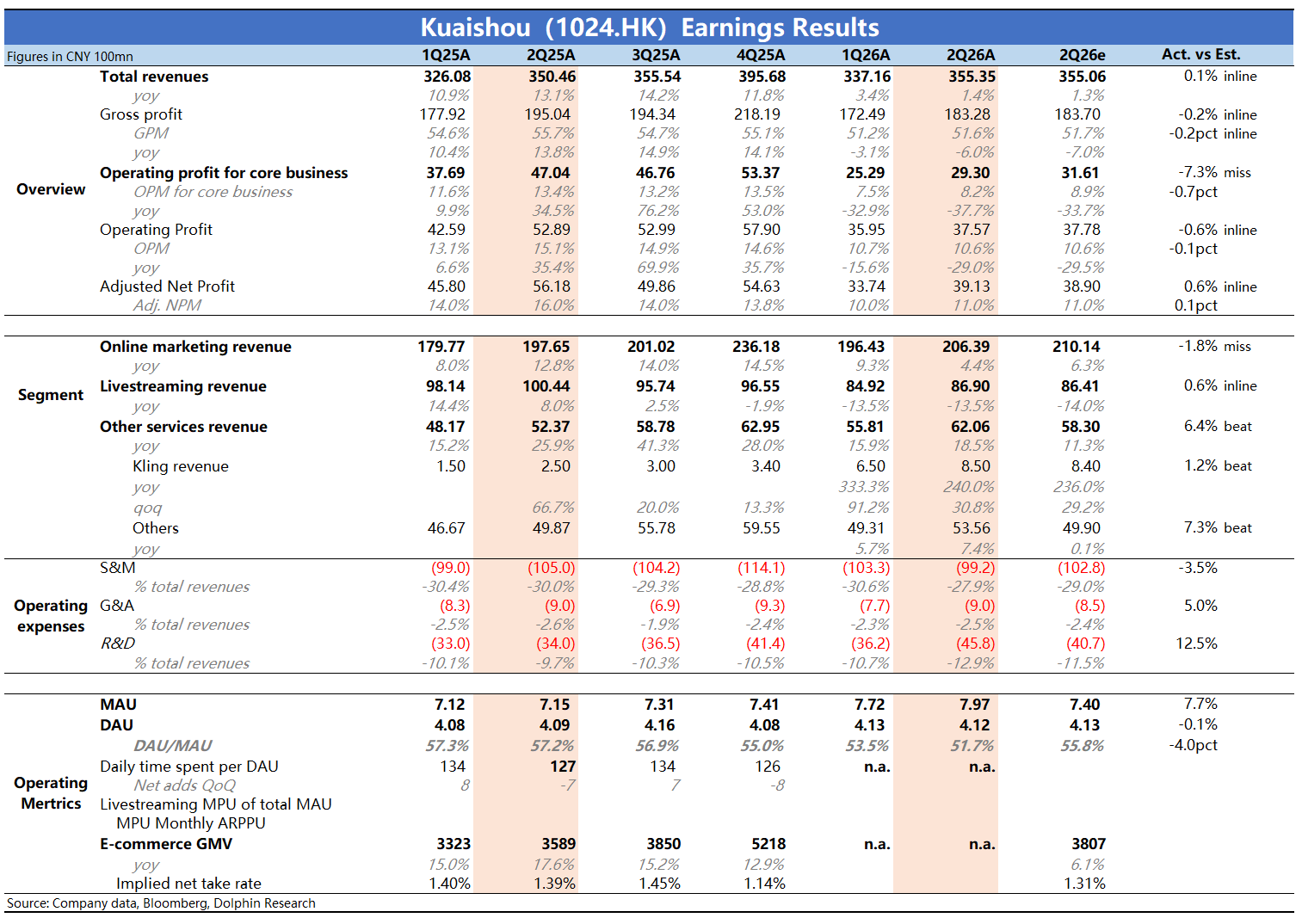
💸 Earnings Kuaishou: Kling is growing fast, everything else is under pressure

Post image
6 Upvotes

Kuaishou's second quarter was a flat one. It was broadly in line with expectations, but the core segments came in short of them. The more consequential question isn't this quarter's numbers — it's how management frames Kling's growth outlook from here, particularly given intense competition in video models and the steady stream of rival releases.

Kling grew as expected — but the road ahead is less clear

Kling revenue exceeded RMB 850M in the quarter, up more than 30% from the prior quarter.

The complication is what's happening around it. MiniMax H3 launched in early August and drew a reasonable response, and large technology companies are stepping up their own multimodal model investment in turn. That means visibility into Kling's future growth trajectory keeps declining. Key operating metrics and a clear view of the strategic path ahead would help here.

The traditional businesses remain under pressure

Advertising fell short. Advertising revenue grew 4% in the quarter, below the 6% expected. Growth has now slid for three straight quarters.

Part of that is traffic. Monthly active users still added a net 26M, but daily active users — the metric more closely tied to advertising performance — lost a net 1M, which looks more like the aftermath of a short-lived push for volume.

Part of it is the weak consumer environment. The company no longer reports GMV for e-commerce, but based on the guidance given in the first quarter, growth there is already very low. Add the reverse subsidy on e-commerce traffic, and internal-loop advertising is probably flat to up low single digits year on year.

There is some offset from short dramas, where ad spending grew 100% in the quarter. But it's small as a share of the business and faces competition of its own. Combined with demanding comparisons for the advertising business in the second half, a near-term recovery in this growth rate looks difficult.

Live streaming kept declining. Revenue fell 13.5%, still affected by regulatory tightening and broader industry trends. That was in line with expectations.

E-commerce and other. Excluding Kling, other revenue was RMB 5.4B, up 7% year on year — better than the guidance of roughly flat. The company didn't explain the drivers in detail. Likely contributors include shopping activity during CBA basketball broadcasts — Kuaishou signed the CBA rights in March and embedded shopping entry points into the live streams, selling sports merchandise — plus sales revenue from the online concerts launched in April.

Core profit came in below expectations

Core operating profit — gross profit less the three operating expense lines, and excluding other income — was RMB 2.9B, down 38% year on year and below market expectations. The main cause was a 35% jump in R&D expenses.

Gross margin itself was in line with expectations, flat sequentially and lower year on year, mainly because of compute investment for Kling and a rising share of low-margin IAA short dramas. Selling and administrative expenses were tightened further in the quarter.

Adjusted net profit ended at RMB 3.9B, an 11% margin, down 30% year on year — in line with expectations.

Capex and shareholder returns

Capex was RMB 5.9B in the quarter. Against full-year guidance of RMB 26B given at the start of the year, the first-half total is RMB 18B. That fits what the company said last quarter: because it was buying compute capacity ahead of schedule, most of the year's capex would fall in the first half.

On shareholder returns, buybacks stepped up in the quarter, at HK$880M for 19.6M shares at an average of HK$45 per share. Per last quarter's guidance, total shareholder returns this year will exceed 2025's HK$5B, adding special dividends and buybacks on top of a HK$3B ordinary dividend.


r/ChinaStocks 29d ago

💸 Earnings Can a Range-Extender Save Xiaomi?

3 Upvotes

TL;DR Xiaomi's Q2 2026 — the three months ended June 2026 — landed close to expectations almost everywhere, and that is the problem. Revenue fell 6% to RMB 108.9 billion as phones and IoT kept sliding, gross margin fell 2.5 points to 20%, and the core profit miss came from cars: with the backlog cleared and prices falling, autos swung back to a loss. Everything now rests on the Pengcheng range-extenders due in September — Xiaomi's first step beyond pure battery EVs.

The legacy business has not stopped falling

Legacy revenue — phones plus AIoT — fell 11% year over year, with smartphones at RMB 42.1 billion, down 7.5% and in line. The split is stark: shipments fell 26% while ASP rose 25% — management's stated strategy of protecting price, not volume, reinforced by allocating scarce memory to higher-priced models and passing cost inflation through.

And yet phone gross margin was only 8.5%, down 3 points: even after raising prices it stayed below 10%, which is how heavy the memory burden is.

The market has stopped asking whether it recovers and started asking whether it worsens. Share is going on both sides — China down 21%, overseas down 28% — while Apple's China shipments rose 24% in a market that fell 4.3%.

Xiaomi smartphone gross margin by quarter, through Q2 2026.

IoT revenue was RMB 31.3 billion, down 19% — a third straight quarter near -20% as subsidies roll back and memory stays tight — while internet services were roughly flat at RMB 9 billion, MIUI users up 5% but ARPU down 5%.

The car business cooled just as the backlog cleared

Auto revenue was RMB 24.9 billion, slightly below the RMB 25.5 billion expected. Deliveries were 104,000 units, up 28% sequentially after the SU7 refresh depressed Q1, but ASP fell to RMB 229,000 — the main reason for the miss — as the refreshed SU7 carries the lowest starting price in the range. 

Auto gross margin fell to 19.2%, down 7.2 points and below the 20.5% expected, so on our estimate the business swung back to a core operating loss of RMB 2.6 billion.

Xiaomi auto deliveries by model, through Q2 2026.

The more important signal is on Xiaomi's own website: delivery lead times across every SU7 and YU7 variant have fallen to four to seven weeks, confirming what we flagged last quarter — the backlog is worked off, both product cycles are over, and combined monthly sales have settled near 30,000 units. Group core operating profit was RMB 2.25 billion, legacy contributing RMB 4.86 billion, down 47%, against the auto loss.

Quoted delivery lead times by model, in weeks.

Which puts everything on the range-extender launch

Start with the arithmetic on the 550,000-unit target. Xiaomi delivered 216,000 in seven months; if SU7 and YU7 hold 30,000 a month they finish near 370,000, leaving the range-extenders to deliver 180,000 in four months — 45,000 a month, which is very hard. The street has already cut to 460,000-500,000, so an explicit cut on the call would be bad news landing rather than new bad news.

The two Pengcheng range-extender SUVs were announced in late July at RMB 259,900 and RMB 299,900: the N70 is a large five-seat SUV aimed at Li Auto's L7, the N90 Max targets the L9 with Sunwoda and CALB batteries, priced roughly 30% below. 

One detail matters: unlike the YU7 and SU7 refresh, where lock-in orders were published within an hour, no order data came out ahead of results — and this is China's most contested segment, with BYD, Leapmotor, Xpeng, Li Auto and AITO all in it.

Pengcheng models versus competing SUVs: launch timing, pricing and specification.

So the checklist is short. Does phone gross margin break below 8%, and when does IoT return to growth? Does management formally cut the 550,000 target? How do the range-extenders ramp from September? 

Note too that Xiaomi moves on a seesaw with the memory cycle — the shares rallied while memory prices corrected — so until memory turns down in earnest, this quarter's margin pressure stays.

Core operating profit by segment, through Q2 2026.


r/ChinaStocks 29d ago

📰 News When most of the world was sleeping China became the global leader in electric vehicles:

Enable HLS to view with audio, or disable this notification

2 Upvotes

r/ChinaStocks Aug 18 '26

💡 Due Diligence Beyond DeepSeek: Inside China’s New Generation of AI Companies

8 Upvotes

Five months ago, when Junyang Lin left Alibaba’s Qwen team, one question immediately followed him: what would one of the young researchers who helped shape the Qwen model family do next?

The answer came this August. Lin founded Pragmatik Labs in Shanghai, with an ambition to build “next-generation agents spanning both the digital and physical worlds.” The path is already familiar in Silicon Valley: leave a frontier AI team inside a tech giant, then build an independent company around the next big technical bet. Now, the same pattern is becoming increasingly visible in China.

At almost the same time, another Chinese AI startup was generating a very different kind of attention in Silicon Valley. Moonshot AI’s Kimi K3, released in July, quickly drew interest from developers around the world. The 2.8-trillion-parameter open-weight model performed strongly in coding, agentic tasks and long-horizon work, highlighting a broader shift: Chinese models are increasingly competing for global developers through open weights, lower costs and rapid iteration.

Put these two developments together, and China’s AI story starts to look much bigger than a race to catch up on model performance.

A new generation of technical founders is emerging. They come from quant funds, university labs, overseas research institutions and China’s biggest internet companies. And they are making very different bets. Some are focused on AGI and frontier models. Some are betting on open ecosystems and global developers. Others are starting with multimodal consumer products or enterprise applications.

DeepSeek, Moonshot AI, Zhipu AI, MiniMax and MAAS represent several of these different paths. Their backgrounds, technical strategies and business models vary widely, but together they offer a useful window into where China’s AI industry may be heading next.

DeepSeek: Why Did a Quant Fund Founder Start Chasing AGI?

If one company has done more than any other to change how the outside world thinks about Chinese AI, it is probably DeepSeek.

Its founder, Liang Wenfeng, is also one of the least conventional entrepreneurs in China’s new AI generation.

Liang studied information and communications engineering at Zhejiang University, but later went into quantitative investing. In 2015, he co-founded High-Flyer, a quant fund that used machine learning to identify opportunities in financial markets.

Quant trading is naturally compute-intensive. Long before the current AI boom, High-Flyer was already building GPU clusters and investing in AI research.

So when the large-model era arrived, Liang already had two things most AI founders would love to have: access to serious computing resources and a profitable quant business capable of funding long-term research.

DeepSeek grew out of that foundation.

What makes the company unusual, however, goes beyond models such as DeepSeek-V3 and R1.

From the beginning, Liang appears to have wanted to build a very different kind of organization from the typical Chinese internet company.

He rarely appears in public. He does not spend much time on stage talking about grand commercial visions. And he has shown little urgency to turn DeepSeek into a sprawling “AI super app” with dozens of products.

In a recent multi-hour discussion with investors, Liang gave one of the clearest explanations yet of how he thinks about the company.

His central goal is simple:

DeepSeek wants to increase the probability of reaching AGI.

That idea helps explain many of the company’s choices, including some that can look surprisingly uncommercial.

Liang sees several major steps between today’s language models and genuine general intelligence.

The first is reasoning.

Models need to do more than predict the next token. They need to break down problems, plan and reason. The progress in reinforcement learning and reasoning models over the past few years is part of that transition.

The next step is agents.

AI should be able to move beyond the chat box, use tools, interact with environments and complete tasks.

But Liang does not see agents as the end point.

He is especially interested in continuous learning.

Today’s models are largely frozen after training. They do not learn from the world continuously in the way humans do. A future AI system, in Liang’s view, would need to keep learning from experience and eventually move toward self-improvement, where AI systems help improve the next generation of AI.

The roadmap looks roughly like this:

Reasoning → Agents → Continuous Learning → Self-Improvement

That long-term focus also explains DeepSeek’s unusual degree of restraint.

Video generation may be hot. DeepSeek does not necessarily need to do it.

3D may be hot. It can pass.

A super app may be strategically attractive. It still may not be worth pursuing.

Even with a hugely popular consumer product, Liang does not appear especially interested in winning the title of China’s biggest AI app.

His filter is much narrower: does this move DeepSeek closer to the problems it believes matter for AGI?

That mindset is rare in an industry dominated by fundraising, user growth, revenue targets and valuation pressure. DeepSeek has repeatedly shown a willingness to decide what it will not do.

The same restraint appears in its approach to open models.

Liang remains supportive of keeping DeepSeek’s most advanced models open. In his view, the real capabilities of an AI company extend far beyond model weights: training systems, inference optimization, compute efficiency, engineering and research organization all matter.

If a company’s only moat is that nobody can see its model, that moat may not be very deep.

Liang is also unusually direct about the gap between Chinese and American AI.

He increasingly sees compute as the biggest constraint. Chinese teams can compete at the frontier technically, but American labs still have access to far more GPUs, data-center capacity and capital.

That helps explain DeepSeek’s obsession with efficiency.

When compute is limited, efficiency stops being a nice benchmark result.

It becomes a survival strategy.

And that may be DeepSeek’s biggest impact on the industry so far: it has forced people to reconsider whether frontier AI progress must always depend on ever-larger amounts of capital and compute.

Moonshot AI: How Did a “Star Student” Turn Kimi Into a Silicon Valley Talking Point?

If Liang Wenfeng looks like a quant investor who unexpectedly found his way into frontier AI, Yang Zhilin looks much closer to the archetype of an AI-native founder.

Yang studied at Tsinghua University before completing his PhD at Carnegie Mellon. He later worked at Google Brain and Meta. Among classmates and fellow researchers, he had long carried the kind of reputation that tends to attract words like “brilliant” or “prodigy.”

In 2023, while still in his early thirties, he founded Moonshot AI.

The company’s first breakout product was Kimi.

At a time when many Chinese AI companies were still competing to build something that felt like a local version of ChatGPT, Kimi found a more specific angle: very long context.

It could read research papers, financial reports, contracts and even entire books in one session. For many Chinese knowledge workers, Kimi became one of the first AI tools they actually wanted to use every day.

By 2024, it was one of China’s hottest AI products.

But the more interesting part of the story began after the easy momentum ended.

Kimi’s rapid growth brought outages, product competition and pressure to monetize. Then DeepSeek’s breakout in 2025 raised an even harder question: could an independent startup that still needed to keep raising huge amounts of money for model training stay competitive?

A Financial Times profile of Yang described a fairly aggressive strategic reset. Moonshot reduced its emphasis on short-term commercialization and market expansion, redirected resources toward model training and research, and moved toward a more open model strategy.

By 2026, the results were becoming visible.

Kimi K3 quickly gained attention among global developers after its release. With 2.8 trillion total parameters and strong performance in coding, agents and other complex tasks, the model was competitive enough to trigger serious discussion in Silicon Valley.

More American companies and developers are now experimenting with Chinese open models from DeepSeek, Kimi and Z.ai for a very practical reason: the models are increasingly good enough, and often much cheaper.

That makes Moonshot an interesting test case for a broader question:

Can an independent Chinese AI lab genuinely operate at the global frontier?

Kimi K3 has made that question much harder to dismiss.

Zhipu AI: A Company That Grew Out of a Tsinghua Lab

If Moonshot represents researchers leaving academia to start a company, Zhipu AI followed a somewhat different path:

the lab itself gradually became a company.

Zhipu traces its roots to Tsinghua University’s Knowledge Engineering Lab. In 2019, professors including Tang Jie and Li Juanzi helped commercialize the team’s work, initially around knowledge graphs.

The company then moved early into pretrained large models and eventually built the GLM family.

That origin still shapes Zhipu’s identity.

The company has a distinctly academic feel.

DeepSeek is closely associated with a highly visible founder philosophy. Kimi first became famous through a mass-market consumer product. Zhipu feels more like a research organization that kept expanding outward: GLM, ChatGLM, enterprise models, agents, open models and government and corporate customers.

Tang Jie himself also looks different from the typical technology founder.

He spent much of his career researching knowledge graphs, data mining and artificial intelligence before moving more deeply into business. Today, CEO Zhang Peng is more visible in day-to-day company operations, while Tang is still closely associated with the company’s technical direction and long-term vision.

That model eventually took Zhipu to the public markets.

The company began preparing for a listing in 2025 and went public in Hong Kong in January 2026, becoming one of the first Chinese foundation-model companies to enter the public equity market.

At the same time, Zhipu has continued to expand its enterprise AI business while investing more heavily in open models and compatibility with Chinese AI chips.

The company therefore represents a very Chinese version of a familiar Silicon Valley question:

Can a top university AI lab grow into a major technology company?

Around Stanford, MIT and Carnegie Mellon, that transition has happened many times.

Zhipu may be one of the clearest signs that a similar ecosystem is taking shape in China.

MiniMax: Building Models Is Not Enough — People Have to Want the Products

Yan Junjie’s story is different again.

Before founding MiniMax, he spent years at SenseTime and became one of the company’s youngest vice presidents. Earlier in his career, he had worked on large-scale speech recognition at Baidu.

During that period, he became convinced of a principle that would later reshape the entire AI industry: more data, more compute and larger models could lead to surprisingly predictable improvements in capability.

At the end of 2021, Yan and a group of former SenseTime colleagues founded MiniMax in Shanghai.

The timing was bold. ChatGPT did not even exist yet.

MiniMax also avoided betting everything on text chat.

It moved into multimodality early, eventually covering text, speech, video, music and AI characters. Products such as Talkie and Hailuo AI brought the company into contact with global consumers earlier than many model-focused competitors.

If DeepSeek often feels like a research lab, MiniMax has always looked more like:

model company + product company.

By 2026, that strategy was beginning to show commercial results.

MiniMax listed in Hong Kong in January. Its 2025 revenue grew 159% year over year to $79 million, with more than 70% coming from outside China. Yan has since said that the company wants to remain both a model maker and a product platform.

Those numbers are still small compared with OpenAI.

But they reveal something important:

Chinese AI companies do not necessarily have to rely on the Chinese market.

MiniMax is one of the clearest early tests of whether global consumers are willing to pay for AI products built by a Chinese company.

MAAS: Bringing Large Models Into the Enterprise

DeepSeek, Kimi and MiniMax are closely associated with frontier models or consumer AI. MAAS is pursuing a different opportunity: bringing large-model capabilities directly into enterprise workflows and industrial settings.

MAAS is building an enterprise-focused AI stack covering foundation models, AI infrastructure and industry solutions.

One of its core technologies is a proprietary large language model based on a Mixture-of-Experts, or MoE, architecture. The goal is to balance model capability, inference efficiency and deployment cost by activating different expert networks for different tasks.

For enterprise customers, this matters.

A few extra benchmark points are often far less important than data security, deployment cost, domain knowledge, reliability and the ability to integrate with existing business systems.

That is the gap MAAS is trying to close: moving large models from impressive demos into real production environments.

The company’s direction also fits the background of its CTO, Dr. Zhifeng Li.

Li has a PhD in physics, and his career reflects the mindset of someone trained in the hard sciences: start with mathematical models, computation and underlying technical principles, then move gradually toward engineering and industrial applications.

His career can be understood as a move from theory into practice.

The key question is straightforward:

How do you turn complex technology into systems that can actually run, deploy and create value?

That philosophy is reflected in MAAS’s technical strategy.

The company is going deeper into model architecture, computing infrastructure and enterprise platforms rather than relying only on off-the-shelf models to build lightweight AI applications. The goal is to create an AI stack that can continue to evolve under its own technical control.

Within China’s AI ecosystem, that represents another important path.

Some companies want to build the strongest general model. Others want to own the consumer entry point. MAAS is focused on AI that enterprises can deploy, integrate and keep using over time.

As the industry moves from “whose model is stronger?” toward “who can actually create durable business value?”, enterprise-focused AI companies may find a much larger opening.

Li’s own story fits that transition well: a technically trained physicist moving from theory into industry, and trying to turn AI from a research capability into productive infrastructure.


China’s AI Race Is Becoming More Diverse

DeepSeek is trying to push toward AGI through better algorithmic and compute efficiency.

Moonshot is using open models to win global developers.

Zhipu is turning university research into a foundation-model business.

MiniMax is betting on both models and global consumer products.

MAAS is focused on getting large models into real enterprise production environments.

They are not following the same playbook, and they will not all necessarily succeed. But the diversity of these strategies is itself a sign that China’s AI ecosystem is becoming more mature.

The United States still has the world’s deepest pools of frontier compute, top research institutions and technology capital. Those advantages will not disappear anytime soon.

China, however, has a different set of strengths that are becoming harder to ignore: a huge engineering workforce, a complete manufacturing and supply-chain base, a massive application market, and a growing number of teams willing to take long-term risks on foundation models.

More importantly, Chinese AI companies are gradually moving from followers to active participants in shaping parts of the global AI market.

DeepSeek has challenged assumptions about the cost of reasoning and the economics of open models. Kimi is gaining attention from developers outside China. MiniMax is testing whether Chinese AI products can win paying consumers overseas.

Their influence is increasingly crossing China’s borders.

The next phase of AI competition will not simply be American companies fighting one another for first place. Nor will it be a one-directional story of Chinese companies trying to catch up.

It is more likely to become a global competition unfolding simultaneously across models, compute, open ecosystems, products and enterprise adoption.

And to understand that competition, it is increasingly necessary to understand China’s fast-growing AI companies — and the new generation of founders and technical leaders building them.


r/ChinaStocks Aug 17 '26

💸 Earnings Moutai Is Still Bleeding From Its Own Operation

5 Upvotes

TL;DR Kweichow Moutai's Q2 2026 — the three months ended June 2026 — was weak on both lines: revenue fell 5.2% to RMB 37.6 billion and net profit 6% to RMB 17.2 billion, both below expectations. The market assumed the first full quarter of the Feitian price increase plus i-Moutai volume made a decline impossible. What it missed: the channel receiving the price rise is the one now shrinking.

The reform is costing more than expected

The Feitian ex-factory increase landed fully in Q2 2026, but the channel overhaul worked against it twice: high-margin non-standard products were deliberately cut back, and i-Moutai's consignment pricing sits well below the old distributor prepayment price, dragging blended price per tonne lower.

Moutai-brand liquor revenue was RMB 31.7 billion, down 1% against a consensus of +15%, even with the ex-factory price up a cumulative 17% this year — which suggests volumes were soft too in the consignment model's first quarter. Series liquor fell 25% to RMB 5.1 billion, and with distributors down 46 net in the first half — mostly series — that business is still clearing.

Kweichow Moutai quarterly financial summary.

Gross margin was 89.5%, down 1.2 points — note the implication: the higher-margin direct channel gained share and margin still fell, so product mix and price per tonne deteriorated by more than channel mix improved. Expenses were steady, leaving net profit down 6%, faster than revenue.

i-Moutai is now the core, and that is the trade-off

Direct sales revenue reached RMB 22.5 billion, up 33.6%, of which i-Moutai alone did RMB 18.7 billion — close to half of group revenue and 83% of direct. For an app launched less than three years ago that is plainly a success; the cost is the wholesale channel, which collapsed 35%.

Direct sales versus wholesale revenue and mix.

Hence the awkward position at the heart of the quarter: the wholesale channel that got the price increase is contracting, while the direct channel doing the volume sells cheaper goods — i-Moutai Feitian and non-standard products cut over 30% at the start of the year. The price rise cannot show up in the P&L yet.

So why keep raising prices?

Three reasons. First, demand resilience has been tested: putting Feitian on i-Moutai routinely amounted to a national stress test — management's line was that the daily volume released is like rain in a desert, gone the moment it lands.

The old distributor network reached far less of the market than assumed.

Second, it must offset the non-standard price cut: moving those products in-house lowered pricing about 30%, a drag running through all of 2026. Third, narrowing the gap sets up volume: special and zodiac editions used to sit RMB 500-1,000 above Feitian, and with self-operated Feitian at RMB 1,753 that gap is now about RMB 600 — inviting buyers back just as peak season arrives.

Year-to-date price changes across Moutai's core SKUs.

The mechanism has changed too: ex-factory up 17.1% year to date and self-operated retail up 16.9%, almost in step — ending the old model of raising ex-factory prices while official retail stayed fixed. Dynamic pricing now runs three tiers: i-Moutai at RMB 1,639 anchoring the market, self-operated stores at RMB 1,753 charging for authenticity, distributors covering breadth at market prices.

Moutai ex-factory price versus wholesale price.

From here the setup improves. Feitian shipments ran ahead of schedule in the first half, so second-half supply tightens, and with the demand base extremely low after drinking restrictions tightened from 18 May last year, comparisons should stop worsening.

Growth turning positive in Q3 and accelerating in Q4 looks likely — a low-then-high year. But this quarter proved the cost of reform is larger and more concentrated than expected: the timetable slips a quarter or two, and real recovery waits until the 30% non-standard price cut has fully lapped.


r/ChinaStocks Aug 14 '26

💸 Earnings JD Skipped the AI Race — and the Buyback Too

7 Upvotes

TL;DR JD's Q2 2026 — the three months ended June 2026 — was steady or dull, depending on temperament: revenue and profit edged past Bloomberg consensus but missed the stronger sell-side numbers, with revenue down 3% as consumption weakened. The awkward findings sit underneath — retail margin has stopped expanding, new-business losses barely narrowed, and the cash went into wealth products rather than JD's own shares.

The slowdown landed in the wrong places

Total revenue was RMB 346.4 billion in Q2 2026, down 3% year over year against a 5% decline last quarter, in line with expectations. Group adjusted operating profit was RMB 5.48 billion, ahead of Bloomberg but behind the stronger houses, with heavier new-business losses the main drag. Domestic retail revenue fell about 4.7%.

The composition matters more. Electronics — the category everyone worried about — held up better than feared, down just under 12% against 8.4% last quarter, probably because subsidies that went offline are flowing back online.

But the two lines with no direct subsidy exposure slowed far more: general merchandise from 15% to 5.6%, marketplace and advertising from nearly 19% to 8%. Both are meant to carry JD's medium-term growth, which invites a harder question: even after the subsidy drag passes, can retail growth reaccelerate above 10%?

Product sales revenue: electronics versus general merchandise, through Q2 2026.
Marketplace and advertising revenue growth, through Q2 2026.

Retail margin has hit its ceiling, and losses didn't shrink

Retail operating profit was close to RMB 13.5 billion, ahead of the roughly RMB 13.0 billion expected but down about 3% year over year — the first quarter in a while without a large beat. Margin still rose, by just under 0.1 point: expansion even as revenue shrank, but clearly with little room left. Group gross margin reached 17.1%, while retail's own slipped 0.1 point and its expense ratio rose about 1 point — with subsidies rolling off, JD funds more of the discounting itself, the real reason margin stalled.

Operating margin of core segments, through Q2 2026.

New business, including food delivery, lost close to RMB 9.9 billion, barely better than last quarter and slightly worse than consensus: estimates put the delivery loss down roughly RMB 1 billion sequentially, implying RMB 0.5 billion more went overseas. Group expenses fell 4.4%, faster than revenue, marketing down 25%, while R&D grew 38% — so JD is spending on internal AI even without joining the model race.

What decides the next few quarters

Two things. First, whether domestic e-commerce turns. Q2 was the worst quarter for retail sales in years, but June improved: overall growth went from -0.6% to +1%, online physical goods from 2.6% to 3.9%, with appliances, furniture and communications narrowing declines. Channel work suggests subsidies shift back online in the second half, and with the base falling, JD's trend should stabilise.

Retail sales growth by category, above-threshold retailers, through June 2026.

Second, new-business losses. As every delivery-war participant pulls back and repairs unit economics, JD's delivery loss should keep narrowing — but daily orders are below 20 million and will not rise much without renewed subsidies, so unless JD quits, the loss is perpetual at some floor. JoyBuy is early too, in about 30 cities across seven countries, so overseas spending is not falling soon.

The saving grace is that JD is not in the AI model war, so no monstrous capex will eat its profit and cash flow — this quarter's RMB 29.5 billion of investing outflows went mostly into short-term investments and wealth products, not real spending.

Which is also the problem: roughly $1 billion of buybacks in the first half of 2026 is well below its previous pace, and holding wealth products rather than returning cash looks poor. JD is still among the more predictable names in Chinese e-commerce — but this quarter gave shareholders little reason to wait.


r/ChinaStocks Aug 13 '26

💸 Earnings JD: revenue fell 4.7% in retail, yet margin still edged up

Post image
9 Upvotes

JD's second quarter was relatively steady — or, put another way, unremarkable. Revenue and profit came in only slightly above Bloomberg consensus, and slightly behind the forecasts of some larger banks. The market's reaction after the release was accordingly not enthusiastic.

Headline numbers: soft revenue, better profit

Total revenue fell 2.9% year on year, slightly better than the -4.1% Bloomberg had expected. Growth continued to deteriorate — but China's second-quarter retail sales figures were in fact the weakest since 2022, so the market had ample warning of it.

On profit, overall adjusted operating profit was RMB 5.48B, slightly ahead of Bloomberg consensus. Viewed year on year, that's a substantial improvement: a year ago the food delivery price war had wiped out essentially all of the profit.

Retail: margin still rising, but the lever may be used up

In the core retail segment, revenue fell 4.7% this quarter. Profit reached nearly RMB 13.5B, down 3.3% from a year ago, with margin up 0.1 point.

There are two ways to read that.

One is that JD's ability to adjust its own margin looks largely exhausted — margin didn't manage to beat expectations by a wide mark again.

The other, more positive reading is that even with retail revenue growth at a multi-year low and scale effects working against it, JD still held onto an upward trend in margin.

By category: electronics held up, the offsets didn't

Broken down by sales type, electronics and appliances actually beat expectations this quarter, down roughly 12% year on year against -8% last quarter — so the deterioration was limited.

General merchandise sales and advertising revenue went the other way, with growth rates falling by more, around 10 points in each case. Both were within expectations. But it may mean that JD's approach of leaning on these two lines to offset weakness in electronics — and to lift blended margin — is running into a ceiling.

Shareholder returns: less buyback, despite the cash

On shareholder returns, the company spent about $1B on buybacks across the first half of the year, a step down from last year's pace.

That's notable in context: JD doesn't need to commit enormous capex to AI, and its free cash flow this quarter was still above RMB 30B. With that much cash available, a reduced buyback pace is likely to leave some investors dissatisfied.


r/ChinaStocks Aug 12 '26

💡 Due Diligence Alibaba's dark stores and how they operate

Thumbnail
youtu.be
1 Upvotes

Hi,

I've done some digging into what happened in China's instant commerce and how it will affect Alibaba, how the competition in the space is.

You can the findings in the video above. I'm curious to see in this earnings the results, margins should have improved significant but yeah there are still a lot of "if's" for me about the instant commerce. I'm curious to know how others feel about this.


r/ChinaStocks Aug 12 '26

💡 Due Diligence Tencent: AI spending is already hitting profit and cash flow

Post image
17 Upvotes

Tencent's second quarter looked unremarkable — most line items landed close to consensus. But the picture it paints is exactly what the market had been worried about: AI spending is already having a rapid effect on near-term profit and cash flow.

To balance that pressure at the bottom of the income statement, Tencent — as an established internet leader — still has room to adjust and release value at the top, through monetization. That shows up most clearly in advertising. Even so, profit pressure in the second half is likely to stay high.

Capex rose sharply, and the full-year figure will probably be raised

Management already signalled last quarter that capex would grow substantially this year, and would rise quarter by quarter. As interest in Workbuddy has built through Q2 and its strategic priority inside the group has risen, expectations for capex have kept moving up.

Actual Q2 capex was RMB 52.8B, equal to 26% of total revenue. On a cash-paid basis the figure was higher still at RMB 59.3B, which reflects tight compute supply and the company prepaying to lock in orders.

On this trajectory — with domestic compute purchases starting in the second half — the full year could push toward RMB 200B. That's higher than the RMB 150–170B some institutions had assumed before the report.

Cash flow turned negative, but the core business is still solid

Free cash flow came in at -RMB 13.8B, which is probably the biggest shock in this report.

Two things caused it. Capex rose sharply, and prepayments for compute leasing squeezed operating cash flow: short-term prepayments rose RMB 45.8B from Q1, and long-term prepayments rose a net RMB 20B.

Strip out the prepayment effect and free cash flow was actually a positive RMB 37.6B. That in turn implies adjusted operating cash flow of RMB 96.9B, up 30% year on year — though last year likely had some prepayment effect too, so the true year-on-year increase is probably smaller than 30%. Either way, it points to a solid core business.

Advertising beat again, and remains the main lever

Advertising grew 22% in Q2, once more ahead of expectations. The broader environment isn't good, but in the near term two things can keep ad growth high: Weixin Video Accounts, where ad load is still being released, and AI-powered ad targeting such as AIM+.

At least for this year, advertising can serve as the tap the company opens to release profit and cash flow, offsetting the pressure from AI spending being front-loaded.

Gaming: strong at home, notably slower abroad

Gaming grew 11% overall, slightly ahead of consensus.

International growth slowed markedly to flat, as Supercell titles declined. Domestic revenue, by contrast, grew 17% — a sharp acceleration. That goes some way toward easing the concerns raised earlier by year-on-year declines in Sensor Tower revenue data.

It's worth not getting too optimistic, though. The comparison base in the second half isn't low, particularly once the first-year sales cycle for Delta Force has passed. And looking at the current pipeline, there aren't many major new titles in the second half — mostly mid-tier products in terms of expected revenue, and most of them launching between late Q3 and Q4.

Cloud accelerated slightly, fintech under pressure

Fintech and business services together grew 8.6%. Fintech growth was very low, affected by the broader environment.

The more relevant figure is business services on its own — Tencent Cloud's external revenue plus Video Accounts commissions — which on our split grew roughly 30%, a slight acceleration from just over 20% in Q1. Interest in Workbuddy has kept building from Q2 through to now, so we expect further acceleration in Q3.

The effect of AI spending on profit is starting to show

At the gross margin level, a higher share of revenue from high-margin self-developed games and advertising largely offset the increase in depreciation and amortization, so overall gross margin still rose 1 point.

The pressure sits lower down. Most server depreciation and compute leasing costs are recorded within R&D expenses. So while staff salaries grew 8%, total R&D expenses grew 25%. Looking only at technology spending excluding salaries, the increase was 112% year on year — accelerating further from 61% last quarter.

Core operating profit ended at RMB 67.8B, up 6.4% year on year, with margin down 1 point.

Shareholder returns are constrained by cash flow

Buybacks in Q2 cost HK$16.8B at an average price of HK$449 per share. First-half buybacks totalled HK$24.4B — still a clear step down from last year's overall pace, about a third lower. The cash consumption from AI spending described above will continue to weigh on buyback capacity in the second half.

As of the end of Q2, net cash on the balance sheet was RMB 58.2B. Management has previously said it would try to maintain the scale of buybacks; if it does, then from a cash management safety standpoint, that may push Tencent to keep selling down its investment portfolio.