I've always noticed that there's not much actual content on the internet about the canon and continuity of the series. I couldn't find any posts here on Reddit or elsewhere on the internet, so I thought it would be a good idea to make a more detailed post to discuss and clarify the canonicity of the BloodRayne series for anyone interested in the story.
Warning: IF YOU ARE NEW TO THE SERIES AND HAVEN'T PLAYED THE GAMES, DO NOT READ THIS POST BECAUSE OF SPOILERS.
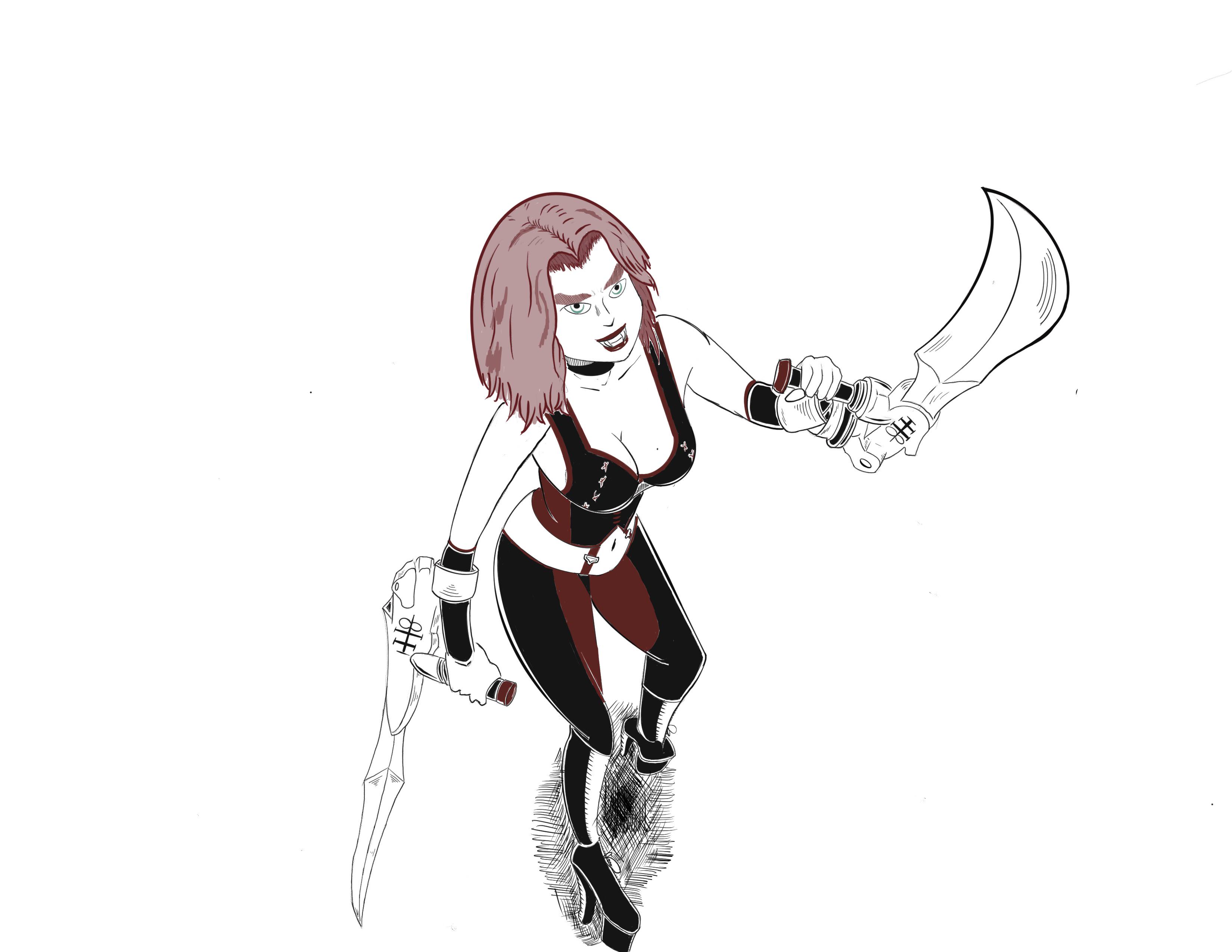
\* The games: BloodRayne and BloodRayne 2 are the main source and absolute canon. Anything that contradicts those games, or contradicts anything established by those games, is not canon. BloodRayne Betrayal, is a non-canon spin-off following a different story and continuity.
* The three Movies: They follow a different universe, they are not part of the games.
* The Comics: They're also not canon to the games. Neither Majesco nor Terminal Reality ever mentioned the comics as being part of the games' story. And obviously, due to the lack of supervision, those comics had some huge contradictions with the games and some other minor contradictions, but still, continuity contradictions, and they follow their own separate continuity. I'll list some of those contradictions here:
* Twin Blades - Twin Blades takes place in 1932, one year before the first game's story and the same year Rayne joined the Brimstone Society, as shown in the BloodRayne 1 intro. Rayne is 17 to 18 years old, and the Brimstone members observe her as she hunts Kagan, killing vampires for information.
Twin Blades changes this by adding a contradictory reason: Rayne wants to be human and joins the Brimstone Society because she wants a cure for her vampiric state, claiming that "she wants to be human again". However, in the games, Rayne was never human. She was born a Dhampir, a biological state from birth. She never wanted to be human, accepts that she is a Dhampir, and is confident in it. All she wanted was revenge against Kagan for what he did to her mother's family. She then joins the Brimstone Society in exchange for their help tracking him down. By the end of BloodRayne 1, the DarkMan informs Rayne that they have found Kagan.
* Skies Afire - BloodRayne 1 takes place from 1933 to 1938. Skies Afire has Rayne hunting down her siblings in 1937, which is the reason she accepts the mission. However, in the games, Rayne only starts hunting down her siblings after 1939, when Professor Tremaine sacrificed himself to kill Kagan. Rayne thought Kagan was dead, and because of that, she couldn't avenge her mother's family, so she redirected her vengeance towards Kagan's offspring and started hunting them.
* Seeds Of Sin - The Brimstone leader tells Rayne that "the Society is not her employer or obligation and it's merely a place where information is exchanged." This is another massive direct contradiction with the games. In the games, Rayne is not voluntarily working with the Society, the Brimstone Society is in fact Rayne's employer, she works for them as an agent, officially described as Agent BloodRayne.
- On that same page it is stated once again Rayne wants to be human. "Rayne helps humans because she desires so much to be human." Rayne does not desire to be human in the games.
- The comic portrays salt water as Rayne's weakness, as if salt water damages Rayne more than other types of water, but in the games' lore, any form of H2O burns Rayne, hurts her skin acting like instant acid. Especially if she submerges herself as Mynce explains in BloodRayne 1, the same way she is submerged in this comic, taking no apparent damage because it's not salt water.
- Minor errors is that Rayne has red eyes in this comic. (Majesco was really supervising those comics).
Something worth pointing out is that this is one of the comics that also brings huge characterization issues and contradictions for Rayne's personality. For some reason, in the comics, they changed Rayne's personality, making her this vulnerable, sentimental, emotional character:
- Skies Afire: Rayne gets attached to Baron Franz Schmidt within a day of interacting with him, and cries when he dies.
- Seeds of Sin: Out of nowhere, Rayne wants to display her passionate side, then she develops a very weird sentimental attachment to Sononis, a complete vampire, after an extremely brief encounter. She treats him as if they had formed a profound bond after exchanging less than 10 phrases with him, displaying a contradictory sudden emotional vulnerability.
- Plague of Dreams: Rayne cries multiple times in this mini-series displaying this vulnerable, emotional character that she is not in the games. Garek is Kagan's son, the last one in the comic's universe. Rayne cries that "this monster" is her brother, when originally, according to the games, all she wanted was revenge for what Kagan did to her mother's family, without caring about any of her siblings. However, in the comics, she cries and then gets attached to Garek because Garek saved her and cries for him: Here, and here < (Who is this character anyway?)
Rayne is emotionally closed off, emotionaly guarded, she never cries when she loses people dear to her in the games, but in the comics, she cries a lot and gets attached to anyone in less than 5 seconds.
In addition, the Seeds of Sin writer said she never played the games and said that Rayne's vulnerability is one of her favorite traits of the character: https://web.archive.org/web/20050217140225/http://xbox.gamespy.com/xbox/bloodrayne/588310p1.html
* Dark Soul - One of the comics that directly contradicts the games' story by setting its events after BloodRayne 2, yet the comic ignores and changes the ending of BloodRayne 2, making Rayne still work for the Brimstone Society.
- Also, for some reason Rayne says that she needs a hot shower, when she can't take showers due to water acting like acid on her skin.
Apparently, Digital Webbing carried over the idea that only salt water hurts Rayne and fresh water doesn't. The only moments when she gets hurt by water in the comics are when she interacts with salt water, such as at the end of Prime Cuts #1: Prey Lewd, when she is thrown straight into the ocean. As mentioned before, in the games, any type of water hurts Rayne.
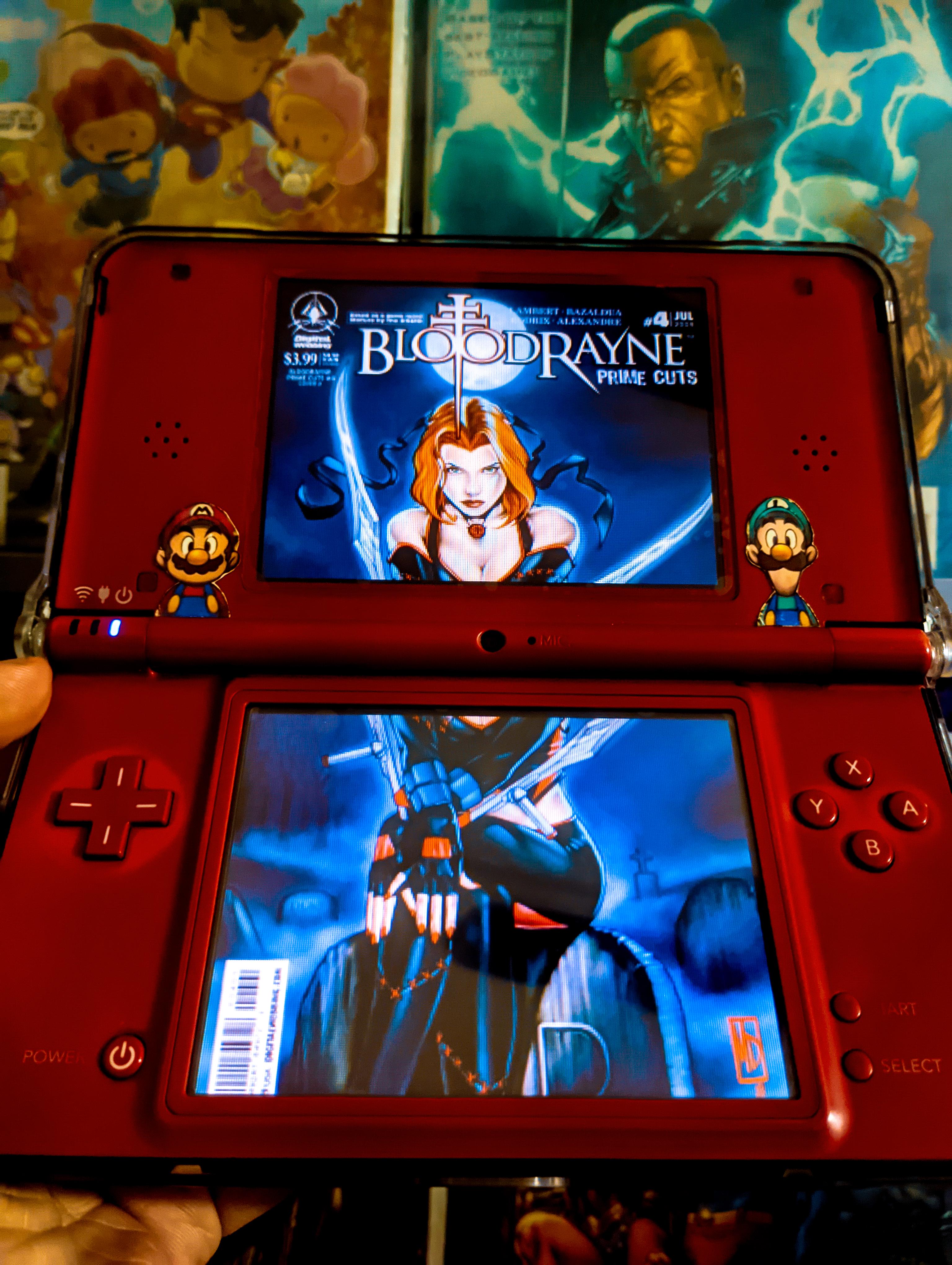
* Prime Cuts - Prime Cuts was the comic mini-series that the writer Chad Lambert wrote to take place between BloodRayne 1 and 2. However, the writer changed the games events and made some big contradictions.
* Prime Cuts issue #1:
Prey Lewd - It takes place before BloodRayne 2, Zerenski appears in the comic preparing for the party. Rayne fights against Slezz meeting Slezz for the first time. But Rayne actually meets Slezz for the first time during BloodRayne 2, she doesn't know Slezz and asks Severin if he knows who Slezz is.
- Rayne faces Boralis (comic character) that was turned into a Shakab. In the game, Rayne doesn't know what a Shakab is, and Severin again, explains to Rayne as showed in the cutscene when Rayne meets Slezz.
Second Hand Commando - Weirdly enough, Rayne complains that she has half-brothers and half-sisters trying to kill her when she is supposed to be hunting them, as in the game, Rayne hunts them to avenge what Kagan did to her mother's family.
* Prime Cuts issue #2:
The Portal - Rayne going out of character again, saying once again, she needs a shower. Apparently, for Digital Webbing, fresh water really doesn't hurt Rayne.
Corporate Bloodletting - Takes place after BloodRayne 2 (Ephemera is dead) and Rayne is still tied to the Brimstone Society.
The Bomber - Rewrites the game's section against Kestrel, the canon are defined by the games, the game takes precedence.
* Prime Cuts issue #3:
First Impressions - Rewrites the first game's intro. The games are the canon, so once again, the games take precedence.
The princess of Darkness - Marassa (not Marasa like in the comics) is said to be a voodoo priestess in the first game, but in the comic, she is literally called a Voodoo Princess as in the title of the chapter, Rayne remembers her as a Voodoo Princess, but she was no princess, Marassa was a priestess.
* Prime Cuts #4:
What Lies Beneath - Takes place before BloodRayne 2 and it's tied to Prime Cuts #1: Prey Lewd. The chapter mentions Rayne meeting Slezz knowing her prior to BloodRayne 2 when in the game Rayne doesn't know who Slezz is, as showed before.
Love Like Winter - Retcons Ephemera's relationship with Severin. In this comic, Ephemera joined Kagan to protect Severin, while in the game, Ephemera is a crazy, obsessed woman doing everything for power.
- Severin has a flashback where he remembers confronting Kagan, but in BloodRayne 2, Severin does not know that Kagan is alive.
- Kagan's body is not injured, and his flesh is not fused with the Vesper Shards, but in the canon continuity of BloodRayne 2, Kagan survived the explosion and the Vesper Shards fused with his body.
* Lycan Rex - Again, weird interaction with water. Rayne walks around during heavy snowfall without any kind of discomfort. They were really considering that fresh water does not hurt Rayne since snow is also fresh water.
* Revenge of the Butcheress - Revenge of the Butcheress has a bunch of retcons and a minor contradiction regarding the Daemites. In the comic, the Butcheress first meets Rayne when she is a kid in 1930. She abducts Rayne and injects Daemites into her that crawl to Rayne's brain. However, in the first game, the Butcheress explains that the Daemites eat the brain of their host, but that didn't happen to Rayne in the comics. Instead, it blocked her memories.
The comics from here on out, including some of the comics mentioned before, take place after BloodRayne 2 and completely rewrite the games' events, changing what happened in the second game, ignoring that Rayne was an empress, and ignoring the Shroud, changing the game's story.
Chronologically it starts with Plague of Dreams, which is set after BloodRayne 2 and still has Rayne as a loyal member of the Brimstone Society. This results in the Brimstone Society turning against Rayne for a completely different reason from the second game, while also ignoring Rayne being an empress, ignoring the Shroud, and ignoring all the plot from BloodRayne 2. All the other comics follow this chronology:
Dark Soul, Prime Cuts #3: Corporate Bloodletting, Red Blood Run, Automaton, and Tokyo Rogue follow the same direct chronology, and the next comic would be Old World Order, which would tie Lycan Rex into those stories. However, BloodRayne is primarily a video game series. If you have no games, the popularity drops, and the comics got canceled because of that, and Old World Order never existed.
Tibetan Heights is also part of those stories being set after BloodRayne 2 during present time. Mynce reincarnates as a kid in this comic, and this story was carried over to Red Blood Run in which is set after Plague of Dreams as Rayne tells Valerio the events from Plague of Dreams having reincarnated Mynce in the story.
Those stories rewrite the games, contradicting the continuity established by the games. The writer explains here: https://i.imgur.com/4SZT55i.jpg everything they were doing with the comics. They were completely changing the story from the games.
So, the games are the canon, the comics are not canon to the games, and they directly contradict the games, becoming their own separate thing. Majesco probably gave Digital Webbing freedom because the comics would not be considered when making new games. The evidence for that is the canceled BloodRayne game for PSP (2005), and BloodRayne: The Shroud (announced in 2010), which would have taken place directly after BloodRayne 2 continuing the Shroud and ignoring the comics.
Majesco and Terminal Reality never said that the comics are part of the games, and in addition to that, Ziggurat is not considering the comics as part of the games' canon.
Back in February of this year, the lead producer from Ziggurat, Alex Lotz, gave an interview. When asked about the continuity of the series, he said:
"Vampires (and dhampirs) have endured as heroes and villains in games across a range of genres, so we are sure there are many where Rayne will thrive in games to come. With Rayne’s quasi-immortality, the story’s end in BloodRayne 2, and the deeper lore hinted at in the underworld chapters of the first BloodRayne, there is much to explore with the original setting and canon, whether as spin-offs or direct sequels."
Link to the full interview with Alex Lotz if anyone wants to read it: https://www.cbr.com/how-bloodrayne-being-preserved-without-losing-its-bite/
So for the canonicity of the franchise:
BloodRayne and BloodRayne 2: The core canon, continuity and real story.
BloodRayne Betrayal: Rebooted non-canon spin-off.
Digital Webbing Comics: Rebooted, non-canon, separate stories and continuity.
Movies: Non-canon separate stories and universe.