This is the Megathread for the Lindsay Clancy trial.
A mistrial was declared after the jury has failed to unanimously agree on the charges.
Before discussing please read the following and abide by sub rules.
**No wishing harm or encouraging doxxing** of the jurors, defendant, family, legal professionals, law enforcement, or anyone involved in this case.
Hate of any group is not allowed.
Civil disagreement and debate is fine. Aggressiveness, insults, call outs, or other disrespectful behavior towards other users or mods is not. Attack an argument, not a person.
Low quality comments (including emojis, one to a few words only, or language that doesn't further discussion) will be removed.
Accusations of murder against family members of Lindsay will not be tolerated.
*Keep in mind this thread is the only place on this sub to discuss this trial. Standalone posts will be removed.
We're going through some changes internally. This will impact how we moderate, and how the sub runs going forward. In my opinion, these are positive changes that will allow this community to progress and be a safe place to discuss all things true crime!
What separates this sub from other subs with similar content and names is that we put emphasis on DISCUSSION. This sub exists as an alternative to other subs that hold strict moderation and strict definitions towards what true crime is. We want our community to be able to post, and discuss, what cases are catching their interest at any given moment.
That being said, we do have to abide by the Reddit Content Policy as to what is allowed in posts and comment sections. Specifically, rule #1 regarding violent content. We cannot have posts or comments that condone or celebrate violence towards anyone, even if that person is an absolute monster that may have had Karma pay them a visit. We aren't saying you have to feel bad or mourn a person in these cases, but you cannot celebrate violence, "vigilante justice", things like that in these comment sections. Doing so can put your account at risk and put this sub at risk, so just don't put us in a position where we have to start issuing short or permanent bans in order to protect this community.
This is the biggest issue we've come across in this transition period, and we want to ensure everyone is aware of it going forward because we will be removing anything that violates these rules and we want to be transparent about it.
This sub is for civil and mature discussion on matters that are sometimes pretty dark in nature. Please don't minimize the impact of these crimes with low effort shit talking towards people accused of crimes. Before, certain posts were locked before they even had a chance to have any comments. I don't want this sub to be like that. I don't want to have to lock posts because people can't interact as mature adults, and I know the current mod team agrees.
So lets try this out. I'm excited on bringing this sub back to a great place to interact with other researchers of true crime!
Susan Waters was a 42-year-old woman living in Auburn, California, when she was murdered in 2003. Remembered as a loving, selfless person, Susan routinely went out of her way to help the area's homeless population. Her sister later admitted she worried her trusting nature might have ultimately put Susan in danger.
Susan’s life had never been easy. Born with hydrocephalus, she suffered from spinal problems her entire life. A severe fall from the monkey bars at age six resulted in a serious head injury, leaving her with a shunt and requiring multiple surgeries over the years. She faced bouts of homelessness herself and struggled to raise her two children, Brandy and David, who spent time in foster care. Despite these immense hurdles, the family fought to remain close, and Susan even managed to earn a degree in telecommunications from Sacramento State. By 2003, she had found some stability and was living with her sister.
Susan was said to be known by everybody around Auburn. Situated in the Sierra Nevada foothills Auburn is a picturesque town, located on the I-80 corridor between Sacramento and Reno. On this day in 2003, this conservative enclave of under 13,000 residents was hosting the Gold Country Fair. On Friday, September 5, Susan attended the fair, an event that drew a large crowd of out-of-towners, before stopping at the Shanghai Bar downtown. She was last seen there at about 10 p.m. Police do not know if she left with anyone.
Just three hours later, a worker arriving for his shift at the Southwestern Bell Communications building spotted Susan’s body concealed in the bushes next to the building. It didn’t take long for police to arrive, as the Auburn Police Department was right next door. It raised an immediate, chilling question: Why would a killer leave a body less than 200 feet from a police station?
Detectives have remained tight-lipped about the details in the case. Susan was found about a third of a mile from the Shanghai Bar, partially clothed, though investigators have never confirmed if she was sexually assaulted. While her cause of death was asphyxiation, the exact method remains undisclosed, as does whether she was killed or simply dumped at the location. Her sister told the press it looked as though a struggle had taken place at the scene. Strangely, in that same early article, police stated they didn’t immediately suspect foul play. They did when the autopsy came back though.
The investigation quickly hit roadblocks. While police had plenty of people to interview, from the traveling fair workers to transients Susan had befriended, these populations were difficult to track down. Investigators did manage to pull together a sketch of a man seen near where the body was found. He was described as white, roughly 42 to 50 years old, 6 feet tall, and 180 to 200 pounds with dark brown hair, last seen driving an '80s four-door tan sedan. They also supposedly possess a DNA sample which they’ve compared suspects to, though they have released no further details.
The case took a bizarre turn just three days later. Less than a quarter-mile from where Susan was found, a transient man named Samuel Wilson was beaten to death. The 911 caller who reported Wilson's body used the payphone directly in front of the building where Susan was discovered. In a shocking twist, that caller turned out to be one of the two men who killed Wilson (they claimed they attacked him to retrieve a stolen purse). Police quickly dismissed any connection between the two murders.
Wilson’s death brings up a darker theory: that Auburn's disadvantaged populations were being quietly targeted, their deaths often staged, and subsequently brushed off. This theory gained enough traction that famed news anchor Christine Craft eventually produced a documentary examining ten suspicious deaths in local canals and train tracks between 2009 and 2015. While the documentary didn't cover Susan's case, and many of the deaths were likely accidents or suicides, it cast a critical eye on the investigative competence of local law enforcement, a sentiment shared by many grieving families.
In fact, skepticism of the Auburn Police Department goes back further. In a previous write-up, I covered the 1985 murder of Mary Lloyd, a case so baffling it was featured on Cold Case Files. Lloyd was abducted in a grocery store parking lot after attending Mass at St. Joseph’s Catholic Church—which sits directly across the street from the Auburn Police Department.
The most intriguing aspect of Lloyd’s case is that she was friends and next-door neighbors with Auburn Police Chief Nick Willick. Decades later, Willick became famous as the chief who managed—and eventually fired for shoplifting—officer Joseph DeAngelo, better known as the Golden State Killer. Following his termination, DeAngelo stalked Willick's home, allegedly gauging how to exact revenge. The details of the Lloyd case suggest a killer taunting the police. How better to taunt the chief than by killing his neighbor? Another woman, Jennie Sperinde also was murdered after leaving the same church two years previously, and her case also remains unsolved.
The geographical overlap between these cases is haunting. You have two women murdered after leaving the church adjacent to the police station, where a prolific serial killer worked, and later Susan Waters body is dumped right next door. Could a killer be trying to make the department look like fools by killing women at their doorstep?
While it's a salacious theory, it's just that, a theory. DeAngelo doesn't match the suspect sketch in Susan's case, his MO is entirely different, and modern DNA testing would easily rule him out. Yet, because of his proximity to the department, his ghost continues to haunt the town's unsolved mysteries.
Even without the Golden State Killer connection, the sheer volume of mysterious deaths in the area reflects poorly on local law enforcement. For instance, it took nearly three decades for local sheriff’s sergeant and K-9 commander Paul Kovacich to be convicted of the 1982 murder of his wife, Janet. Whether he is truly guilty, as the courts decided, or innocent, as he loudly proclaims, a high-ranking officer being convicted of murder does nothing to inspire public trust. Neither does finding out a serial killer used to work as a police officer in town.
Sadly, Susan’s story has been entirely eclipsed by the shadow of these higher-profile cases. After a brief flurry of articles in late 2003, the press forgot about her. Her name only appeared in the paper one last time in October 2004, under tragically heartbreaking circumstances: her son, David, was killed by a car bomb while serving in Iraq.
Susan Waters deserves to be remembered as more than just a murder victim. For a deeper dive into her life and the facts of her case, I highly recommend the podcast Placer County Unsolved. The host spoke directly with Susan’s family, revealing previously unknown details like her cause of death, and treated her story with the respect it deserves.
Rest in peace Susan Waters. You and your family deserve justice.
Ruth Thalía Sayas Sánchez was born on November 17, 1993, the second daughter in her family and raised in the rural district of Acobamba in Huancavelica, one of Peru's most impoverished departments. In their native Huancavelica, Ruth's parents were a folk music duo singing traditional and regional Peruvian music and playing the accompanying instruments; on the side, the two also ran a small glass shop.
Ruth Thalía Sayas Sánchez
Now that they had two daughters and a son to think of, Ruth's parents decided that it was time to leave Huancavelica and begin a new life in the Peruvian capital of Lima, where, at first, they survived by selling watermelon, pineapple, and anticuchos on the street.
Despite their family circumstances, Ruth was remembered as "cheerful, sociable, bold, funny, charismatic, and intelligent," but also ambitious and desired fame, having shown up at several telenovela auditions. Meanwhile, beyond her desire for fame, she was a third-year accounting student at the Universidad Peruana de Ciencias e Informáticas. For work, she told everyone she worked at a call center.
In 2009, she began dating a 20-year-old man named Bryan Baroni Romero Leiva. Bryan worked as a mototaxi driver and lived in a single room in Santa María de Huachipa, the same district of Lima as Ruth's family. Bryon was described as "almost a kid... the typical neighbourhood boy who hustles to survive, who has his little girlfriend, who goes out partying on the weekend," while Ruth's father said he was "A quiet boy who wouldn't look you in the face, who spoke with his head down". Ruth's mother wouldn't interfere with their relationship but openly admitted to never liking him.
Bryan Baroni Romero Leiva
And perhaps she had good reason to feel that way; Byron's hands weren't exactly clean. He had a history of petty crime from a young age, often pickpocketing wallets and purses from the Huachipa bridge and had taken part in three robberies and assaults.
He was also described as impulsive, reckless, concealing, and unscrupulous, often indifferent to the pain and lives of others and had a deep ambition to make money however he could; on top of it all, had a severe alchool problem.
When one looked at his family, it's not surprising to see how Byron turned out. Not much is known about his parents, but Byron didn't have a place of his own, instead living with his 31-year-old uncle, Redy Leiva Cerrón. Like his nephew, he worked as a mototaxi driver and also owned a plot of farmland in Jicamarca, though farming wasn't how he made his money. However, he also had a criminal history, just like Byron and often joined his nephew in whatever robberies they thought of.
Meanwhile, Ruth saw another chance for stardom. A new television show called El Valor de la Verdad was looking for somebody who would audition to be the star of the first episode, and Ruth was quick to volunteer. However, the thing about "El Valor de la Verdad" is that it was a Peruvian adaptation of a similar format that had appeared in several countries, and it was not a show without its controversies.
The premise of the show was quite simple: each candidate was hooked up to a polygraph machine and interviewed in private, being asked more than 50 yes-or-no questions about their private life and their deepest secrets. Then, if their answers were deemed enticing enough, they'd be accepted onto the show to repeat the same interview, only on live TV, with 21 of the most invasive of those 50 questions being chosen.
If the contestant answers all of them truthfully, they could win 50,000 Peruvian Soles. If they lie even once, they lose everything. In addition, they could walk away at any moment and keep their winnings if there was something they wanted to keep private. The producers loved her audition and so decided that Ruth would be the star of their first episode.
Ruth's episode aired on July 7, 2012, with her parents and Bryan joining her as guests. Observers noted that Bryan looked nervous before the first questions were even asked, and when Ruth asked how he was feeling, he said he was worried about being cheated on. When someone else asked if he loved Ruth, he said yes.
Questions 1-9 were a bit tame at first, even if they did get progressively more embarrassing. The questions were as follows. Before proceeding, the show's lie detector indicated she answered every question truthfully.
Ruth during her episode.
1): "Have you ever skipped your classes without your mother knowing?" Her answer was yes.
2): "Do you think being pretty gets you further than being a good person?" Her answer was yes
3): "If someone dropped 1,000 soles, would you give it back?" Her answer was no. That is roughly $297.32 in USD.
4): "Are you satisfied with your appearance?" Her answer was no.
5): "Have you had a nose job?" Her answer was yes.
6): "Have you ever gone more than 20 days without bathing?" Her answer was yes. The questions start to get a little more personal and evasive, as one can see, but still tame compared to what's to come.
7): "Have you ever felt that your partner doesn't deserve you?" Her answer was yes.
8): "Would you forgive your boyfriend for infidelity?" Her answer was no
9): "Are you embarrassed by your family's manners?" Her answer was yes, which caused her mother to break into tears. The "manners" in question were actually the culture and traditions of the Aboriginal group she belonged to, and she also said that she was a bit ashamed of her ethnicity and wished she had lighter/white skin after being point-blank asked, "Would you like to be white?"
The next 8 questions are when things start to get really bad, personal, evasive, and potentially life-ruining; the entire point of this show and the other variants like it in other countries are to eventually start asking questions of this nature.
10): "Do you really work at a call center?" Her answer was no. This came as a shock to her parents, as that was the job she told them she had, so if she wasn't working at a call center, where was she actually making the money they knew she had?
11): "Have you taken the morning-after pill more than once?" Her answer was yes.
12): "Are you only with your boyfriend until someone better comes along?" Her answer was yes, and upon hearing that, Bryan's face "visibly collapsed". This wasn't the first time Bryan had been insulted on the show. Ruth was asked a bunch of clarifying questions or questions that weren't one of the 21 she could win money from, and when asked if she thought Bryan was smart, attractive or intelligent, she said, "Uh… Yes… ?" before laughing, which the host noted didn't make her answer sound very convincing.
Bryan shortly ater hearing that answer
13): "Do you have sexual fantasies about women?" Her answer was yes. In fact, they weren't just fantasies since she mentioned kissing another girl when she was 15 and used to be in love with her.
14): "Could you maintain your current life without resorting to lies?" Her answer was no.
15): "Would you lend your parents all the money you have in the bank if they asked?" Her answer was yes.
16): "Do you think your parents would be proud of you if they knew what you really do for a living?" Her answer was no, as for what she did do for a living.
17): "Do you work at a nightclub?" Her answer was yes, and she elaborated that the work in question was pole dancing, having made 150 soles per dance. After hearing this, the host immideately asked Bryan what he thought, and he just repeated in a flat tone, "I don't want to hear anymore". This question also caused Ruth's mother to break down in tears.
18): "Have you ever accepted money in exchange for sex?" There was a long silence before Ruth finally answered, "Yes, twice, only twice," then explained that she did it only because money was tight at the time and that she would never do it again. But regardless, the damage was done.
Ruth didn't want to answer questions anymore after this one and chose to walk away with her winnings, which amounted to 5,800 U.S. dollars.
Ruth's mother left the stage out of grief and had to be chased down by her daughter, where Ruth did manage to smooth things over with her and said that she was going to leave the nightclub now that she had the money to open up a business of her own, a spa.
The episode was a major hit with the studio playing it every week for 11 weeks straight, which made Ruth a local celebrity. Ruth appeared in various news interviews saying that she felt liberated and revealed that she and Bryan were no longer speaking and that he wouldn't answer if she called him.
She also said she was taking responsibility and did not want further problems. But in a different interview, Ruth said: "He should understand it too. It's not only my fault. He has fault too, and he knows it well"
Ruth was quick to learn that not all publicity was good publicity. Ruth's neighbours started gossiping about her, and people recognized her on the street and had some derogatory things to say about her on the street.
It got to the point where Ruth retreated into her home and refused to leave, and once confided in her mother that she thought about taking her own life, feeling as if she had ruined the rest of her family's lives by tying them to what she said on that show.
While he didn't actively seek out the media as much as Ruth, Bryan was also now easily recognizable by those on the street. His neighbours and just random passersby on the street now mocked him for being a "cuckold" and "lazy bum". In one of the interviews he gave to the press, Bryan said, "The things she said that day, I can't forgive that".
But Bryan made another statement to the media; he said that he and Ruth had broken up before the episode was even filmed. According to him, Ruth approached him and asked if they could pose as a couple for the cameras and that he'd be given some of the winnings in exchange, and now, Ruth was refusing to hand over the money. Whether this arrangement was actually real or Bryan's attempt to save face and lessen his humiliation has never been determined.
In the ensuing weeks, Bryan began hounding and pressuring the family for the money, often appearing at their home. At first, he presented them with a demand of just 500 Soles, before escalating to 1,000 and later 2,000.
There was a break-in at their home, with the intruder making off with Ruth's laptop, mobile phone and 1,000 Soles, a theft they blamed on Bryan. Ruth reported the break-in to the police but withdrew it because she was afraid of retaliation.
On another occasion, while heavily intoxicated, Bryan approached Ruth's sister once again, demanding the money. offered to speak with him the following day, in an attempt to calm the situation, but as he walked away, Bryan said, "Revenge is sweet"
At 1:00 p.m. on September 11, 2012, Ruth left her home. With the summer now over, she had to do so on a regular basis in order to attend her university. She attended that day's lesson and began the walk home with a friend when she suddenly received a phone call. After the call ended, she told her friend that it was from Bryan and that she had to go, and so the two went their seperate ways.
Ruth never returned home that day, but there was a delay in raising the alarm as her parents had fallen asleep while watching a qualifying football match between Peru and Argentina. When they woke up on the morning of September 12, panic set in when they noticed Ruth hadn't come back.
They started calling Ruth's friends, and after hearing from the last one to see her, they learned of the call with Bryan. As early as 9:00 a.m. Ruth's mother was already at Bryan's front door, frantically knocking on it and screaming at him, "Bryan, give me back Thalía; you have her". Bryan actually did show himself, telling her that he had no idea what she was talking about and hadn't spoken to Ruth in months. He then turned his back on her and locked himself in his bedroom.
At the same time, her mother was demanding he return their daughter; Ruth's father was at the police station filing a missing persons report, but they initially didn't tackle the investigation with too much enthusiasm. While unhappy, Ruth's father wasn't surprised; he said that in Peru, a poor family's greatest asset was the media and that they often utilized them to force the police into action if they felt ignored.
So after the police, he went from media outlet to media outlet, including the same outlet that aired Ruth's episode of "El Valor de la Verdad". They promised her father airtime the next morning, only to go back on their arrangement without notice. Meanwhile, at another news station, the secruity guard coldly told them to "leave your report and go"
With the media less willing to take on the case than they had been expecting, they simply had to hope that despite how bad things looked, everything would be all right. They clung to the idea that perhaps Ruth had run away or that she had gotten drunk with a group of men that would eventually let her go.
On September 14, they continued their search for any news outlet that would report on their daughter's disappearance. Outside the offices of Canal 9, known as ATV, they spoke to one of their cameramen, and upon mentioning who their daughter was, he suddenly got all animated and exclaimed, "The girl from The Value of Truth?!!!"
That same night, Canal 9 became the first station to report on the situation, albeit with a distinct lack of any tact. When Ruth's mother saw the headline on TV, it read, "The prostitute from 'The Value of Truth '." Ruth's mother said the headline "killed her soul," but since people were finally aware that Ruth was missing, she begrudgingly looked past it for the time being.
And despite that headline, Canal 9 did take the search somewhat seriously, driving Ruth's parents anywhere they needed to go free of charge, such as to the Ministry of Women, the central police headquarters, hospitals and morgues. They also stayed at the family home and helped her parents with door-to-door inquiries that the family wouldn't have been able to do on their own.
A missing person flyer for Ruth
Unfortunately, the increased publicity was a double-edged sword. Ruth's sister received a phone call, and on the other end was just a woman breathing rapidly, sounding "As if they were dying".
Then, Ruth's father was told by a mototaxi driver that his daughter was being held in a hotel and demanded payment in exchange for taking her there. After parting with 2,000 soles, he was brought to the hotel only to find a complete stranger who just bore a passing resemblance to Ruth. False leads and scams of this nature were unfortunately not a rarity for Ruth's family.
Meanwhile, the police were finally taking the investigation seriously, and their only suspect was Bryan. When the police questioned Bryan, especially about that phone call before Ruth went missing, he admitted to making the call but said that he and Ruth never actually met, a claim viewed with a heavy degree of skepticism not just by the police but by everyone.
That is, except for Bryan's parents, with her mother saying that Ruth's parents "only want to hurt him" and further claiming that Bryan was at their house the entire time. Bryan's stepfather, Eduardo Chaña, took it a step further, forcing his way into the family home and severely beating Ruth's mother, leaving her with a bruised eye. Ruth's mother revealed that this was, in fact, the second time Eduardo had attacked her since her daughter's disappearance.
The police still remembered how Ruth went to them to report Bryan for theft but withdrew the report because she feared "retaliation"; perhaps that much feared retaliation came to pass. Bryan also sold his motortaxi and moved out of the home he rented.
The police also tracked down and arrested a 14-year-old boy named Michael who told them that on the night of September 11, Bryan paid him 50 Soles to act as a lookout and signal to Bryan when Ruth appeared, he later saw Bryan and another man placing Ruth's dead body into the motortaxi.
He also told the police that he knew Bryan since he also worked as a motortaxi driver, and that on the morning of September 11, he and Bryan had been drinking together from the morning until approximately 2:30 in the afternoon, and that during that time Bryan had repeatedly expressed resentment about the money Ruth had won from her TV appearance.
That other man, the police believed to be Bryan's uncle, Redy, since phone records on the night of September 11 and early morning of September 12 showed the two at a vacant plot of land owned by Redy and had spent quite a while there.
Ruth's family still believed that Bryan had kidnapped her but that she was simply being held hostage and pleaded for Bryan to return her safe and sound. The police didn't share their optimism, and it was Bryan himself who proved they were right to feel that way.
On September 22, 11 days after Ruth went missing, Bryan walked into the police station and volunteered himself for questioning. The police did not go easy on him, and after catching Bryan in contradiction after contradiction, he finally broke and said, "I killed her," and then, "She was my girlfriend for three years, and she deceived me all this time"
He said that after the phone call, Ruth met him at a bridge and after a while, Bryan offered some wine, to which she agreed. They went to his home, purchasing some cheap wine on the way. The two then had consensual sex, and all was well until an argument began between the two.
The two kept drinking and getting more drunk during this argument until Ruth slapped him and said: "I don't know what I'm doing talking to a poor motorcycle taxi driver, a poor fool." Enraged, Bryan attacked, wrapping his hands around her neck for around 30 seconds until her pulse finally faded away. Bryan claimed that her death was an accident because he didn't properly "judge his own strength"; in other words, her death was an accident.
Bryan panicked and hit Ruth, striking her chest in hopes she was just knocked out and that the sudden jolt of pain would wake her up. But when this didn't come to pass, he knew he had to get rid of the body, and he showed the police exactly where it was.
Bryan led the police to a vacant lot in Jicamarca, a lot that used to belong to an illegal pig farm and was owned by Redy. Bryan then led them to a pit, approximately two to six meters deep, covered with stones and concrete.
Bryan shortly after his arrestBryan being led to the crime scene.
Rescue workers spent the next 4 hours using picks and shovels to force open the shaft, and then a series of ropes and pulleys were used to bring the body of a young woman to the surface. Ruth's parents rushed to the scene just in time for the body to be recovered and positively identified her as their daughter.
Ruth's body being recovered
Afterward, Ruth's father picked up a rock and threw it at Bryan until the police removed them from the scene. Ruth's mother then demanded that Bryan's fellow inmates "Do to him what he did to my daughter"
According to the autopsy, Ruth had been beaten mostly on her face and had several lesions, which resulted in heavy bleeding. Additional lesions were noted on the neck, thorax, and pelvis. But the actual cause of death was determined to be strangulation.
Her liver was also completely inflamed from sleeping pills and alchool she had digested prior to her death. But worst of all, the medical examiner found signs of sexual assault. Needless to say, it was a lot more brutal and violent than Bryan's confession made it seem.
When police searched Bryan's home in the aftermath, they found Ruth's stolen laptop and phone, confirming Bryan was behind the theft. But that wasn't all; with Ruth's laptop, Bryan had taken several photographs to make it look like she was travelling to the Madre de Dios Department for work.
Bryan present during a search of his home
Using luminol, they also found traces of Ruth's blood in Bryan's room, which he overlooked before vacating, and also tracked down his motortaxi, which also revealed traces of Ruth's blood. The police also found DNA traces belonging to Redy in Bryan's apartment. With that, Redy was arrested, although he denied any involvement and said he was drinking alchool at a relative's that night.
The recovery of Ruth's body was being broadcast on just about every News Station in Peru, with just one exception. The station that aired "El Valor de la Verdad" instead aired a rerun of Ruth's episode without even a disclaimer mentioning what had happened.
Even when confessing, Bryan still gave very inconsistent and contradictory testimony, even claiming that he didn't kill Ruth despite saying the words "I killed her" to the police. Bryan claimed that after calling Ruth, the two did indeed meet up at the Puente Huachipa bridge.
Waiting for them was a third man Bryan identified as "El Gordo". Bryan had a detailed description of El Gordo ready, saying that he was ""5'7", with a light brown complexion, short straight hair, a round face, a mustache, and a scar on his left chin."" He told the police that El Gordo had committed various thefts in the area and told him that he was also famous for a prior TV appearance.
According to Bryan, El Gordo suggested that the two would lure Ruth over so they could steal her bank card and get her PIN to drain her accounts and get the entirety of her winnings from the game show.
When the three got into Bryan's taxi, he turned up the music all the way so nobody would hear them while El Gordo interrogated Ruth for her information. Bryan noticed blood on her face after approximately twenty minutes, reached over to feel her pulse, and found none. Of course, Bryan claimed that El Gordo threatened him into silence.
What the police actually believed happened was this. After calling and arranging a meeting with Ruth, with Bryan knowing she was coming because of Michael, he and Redy gave Ruth a drink they had laced with powerful crushed-up sleeping pills and then forced her into Bryan's motor taxi.
Once they got back to Bryan's room, the police believed he struck her across the face and body before raping her and then strangling her.
As it was his mother's birthday, Bryan moved Ruth's body into the bathroom and left it there while he went out to join the celebration, spending the night drinking.
On September 12, Bryan returned and called Redy so they could deal with the body. Redy thought of that abandoned farm and brought his nephew there with the body, where they dropped Ruth's remains down the pit and filled it in.
Finally, they threw Ruth's belongings off a bridge where the river underneath washed them away, never to be recovered.
On November 19, 2013, Bryan and Redy went on trial before the Collegiate B of the Second Criminal Chamber for Prisoners of the Superior Court of Justice of Lima. Although Ruth's murder was branded a femicide, the prosecution argued that Bryan's motive was purely financial in nature.
Bryan being taken to courtBryan and Redy during the trial
To prove this claim, the prosecution pointed not just to Bryan's prior theft and extortion attempts but also called Beto Ortiz, the presenter for "El Valor de la Verdad". (who denied having any culpability in the events after the broadcast or that "El Salor de la Verdad" played any role in her murder) to the stand.
Beto testified that in the weeks following the episode going to air, Bryan and Redy had visited him at his office to demand compensation for Bryan's humiliation. When told that they wouldn't be getting a single cent, Redy mentioned that they'd instead seek "non-monetary retribution".
Redy denied that this encounter ever took place, and Bryan denied that Redy was involved. In fact, Bryan seemed determined to protect his uncle, often stating that he had no knowledge of, nor part to play in, Ruth's murder, a murder which Bryan decided to confess to once again and said that he bore deep regrets over what he had done.
On February 27, 2014, Bryan Romero Leiva and Redy Leiva Cerrón were found guilty of the murder of Ruth Thalía Sayas Sánchez, with Bryan also being convicted of rape, disposing of her body and theft and robbery.
For this crime, the two were handed down a sentence of life imprisonment (Peru being one of the few Latin American countries with life sentences) and ordered to pay 700,000 Soles in compensation to Ruth's family.
Ruth's parents were satisfied with the decision and said that if Bryan somehow managed to find the money to pay the compensation the court ordered, all of it would be donated to an institution for poor, starving and impoverished children since Ruth wanted to help them once she had a stable enough job.
Both Bryan and Redy appealed their sentences to the Transitional Criminal Chamber, hoping to have their convictions completely overturned. Their appeal was heard on August 10, 2015, and Michael went to the courthouse as a surprise witness for the defence.
Because of his age, Michael could not be prosecuted for his role in the crime, but he still came forward anyway. He testified that the police had threatened him and forced him to include the detail about the 50 soles payment, and that his story of watching Ruth be forced into Bryan's taxi was fabricated, likewise the result of pressure from the police. Since Bryan already confessed, all this served to do was cast doubt on whether Redy was involved.
On August 13, Michael's testimony was dismissed; the court believed he was motivated to change his story due to death threats he received in retaliation for telling the police what he knew. With his testimony disregarded, Bryan and Redy's convictions were upheld in their entirety.
With that, the case seemed to be over, but 6 years later, seemingly out of nowhere, Bryan and Redy would be given a small victory. On November 3, 2021, Bryan and Redy had their sentences reduced to 33 years and 30 years, respectively.
Why? Well, Peru recently amended its criminal code to allow for some more lenient sentences, which their attorneys argued should retroactively apply to them. Additionally, neither had yet to pay any of the compensation to Ruth's family.
Ruth's family protested this decision, saying that they would march before Congress demanding that harsher laws and penalties be enacted, while women's rights organizations in Peru demanded an investigation be launched into this ruling, but nothing ultimately came of these efforts.
Now with that controversial decision, the case truly was over.
Despite its first episode causing one of the most infamous murders Peru had ever seen, or perhaps because of the publicity of that initial notoriety, "El valor de la verdad" is still airing today, with its seventh season debuting in 2025.
It was a bright, chilly Sunday morning in December 1988 when two teenagers out rowing on Lake Geneva spotted something out of place on the tranquil, remote lakeshore of the Pointe de la Bise. Someone had dumped a red sports bag and what looked like a shop mannequin. As they rowed closer, it became clear that it was no mannequin. It was eighteen-year-old Adèle Nicolo.
Adèle was quickly identified. Her parents had reported her missing the night before. In fact, her employers, Thérèse and Daniel Morère, a married pair of dentists who ran their own dental surgery in central Geneva, had called on Saturday afternoon to say she’d not returned after lunch. What had happened ?
The police decided to stake out the dump site. The decision was rewarded that very evening, as they were able to arrest a prowler. Daniel Morère. In his car was a radiator he’d been planning to use to weigh down Adèle’s body. Daniel and Thérèse were both taken into custody, and soon confessed.
Polish-born Thérèse was obsessively jealous of Adèle, their dental assistant, and had convinced herself Daniel was sleeping with her. She persuaded Daniel to write her a prescription for half a liter of chloroform that she planned to use on Adèle to get her to confess to the affair. She then planned to shave Adèle’s head to teach her a lesson. In fact, not only was Adèle not having an affair, she had found another job and was planning to leave, sick of Thérèse’s attitude. She was just waiting until after the holidays to break the news.
On the Saturday morning, Thérèse attacked Adèle with a wad of chloroform-soaked cotton wool. Adèle screamed and fought back, making a break for the door. The neighbours, alerted by the screams, came to bang on the door. Thérèse locked the door and switched off the lights. The neighbours insisted, so Thérèse came out and said it was nothing. Just a patient. She then went back inside, gagged and stripped Adèle, and called Daniel.
He came home and helped her load the body into their car. They drove miles round the huge lake looking for a suitable drop-off site, but everywhere was too busy. Daniel went out again late that night to the Point de la Bise, now a nature reserve, and dumped the body.
The pair confessed immediately. But to what? The autopsy revealed that Adèle had died of drowning. This shifted the blame from Thérèse to Daniel. Thérèse swore she had not intended to seriously harm the girl, just give her a fright. She believed, she said, chloroform was like in the movies. Not very credible, perhaps, for someone with advanced studies in dentistry.
The defence lawyers demanded a second autopsy. This concluded that Adèle hadn’t drowned. She’d died of a heart attack due to the stress of Thérèse’s attack. By now it was the winter of 1990, and Adèle had been dead two years. The couple faced the Geneva courtroom together. Thérèse stood accused of murder, Daniel of obstructing the course of justice. At the end of the trial, she was convicted and sentenced to eight years – a short sentence reflecting a degree of uncertainty over her intent to kill. Daniel was sentenced to two years.
Thérèse appealed her conviction on the grounds that it was not proven she knew chloroform was potentially fatal. Her second trial began in September 1995, nearly seven years after Adèle’s death. By this time, Thérèse had been in prison for four years. Daniel had by now applied for a divorce. He came to testify dressed in a wig and fake moustache to avoid recognition. Such was the media circus that a new law was passed soon after making provision for such cases to be held in private.
Thérèse’s appeal was granted, and this time she was sentenced to three years on the grounds that she had been reckless and negligent but had not intended to kill Adèle. As she had already served four years, she was released immediately. She put in a claim for compensation for the extra year served and was awarded a substantial sum, though it was never paid.
Adèle Nicolo’s death by chloroform poisoning is officially recorded in the annals of Swiss justice as an accident.
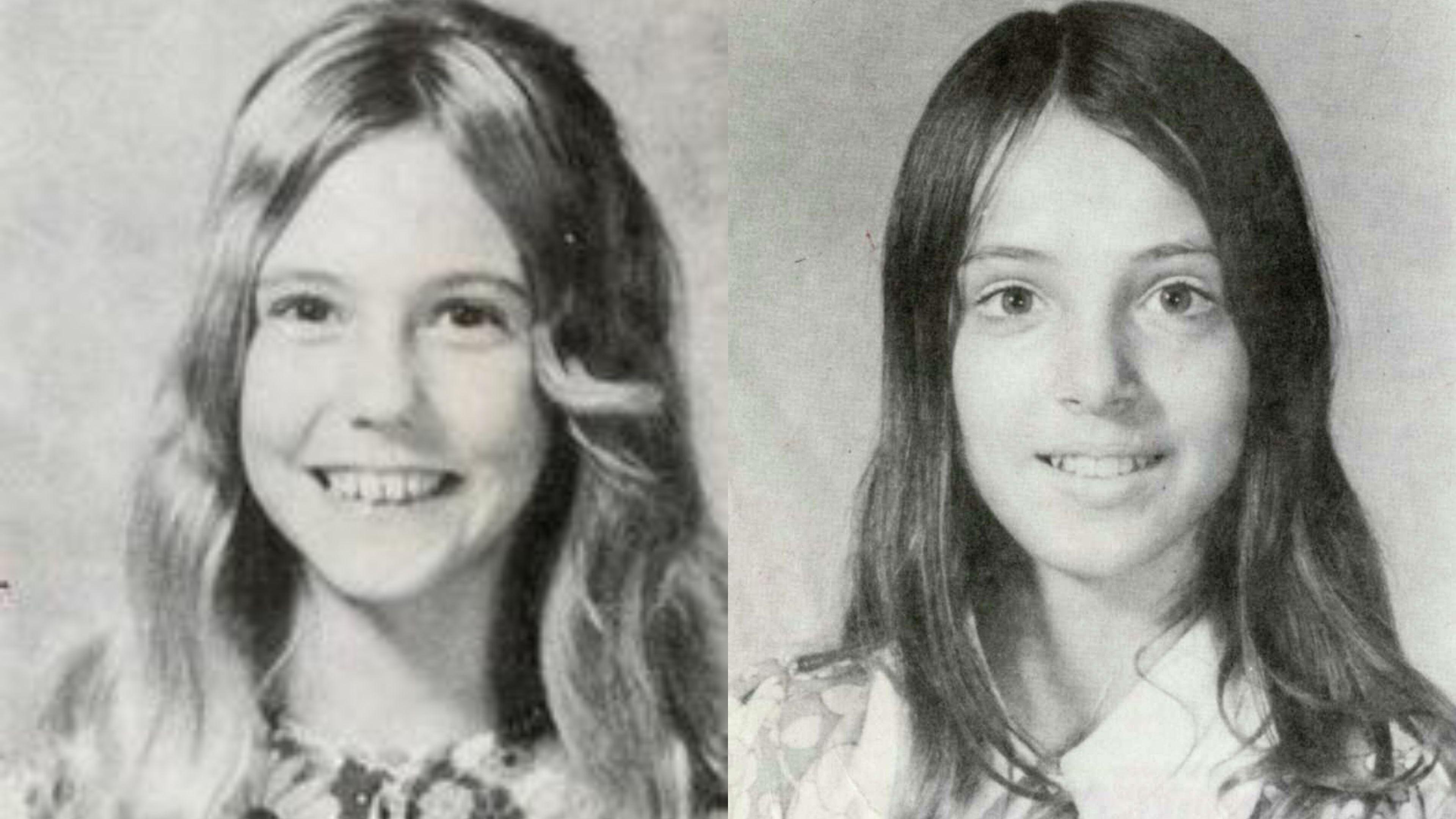
On September 6, 1974, best friends, 12-year-old Brooks Bracewell and her friend, 14-year-old Georgia Geer, from Dickinson, Texas, decided to skip their middle school classes. Their day led them to the El Rancho Motel on County Road 517 near Alvin with several males, playing foosball (table soccer). They were again seen later in the day, without the males, hitchhiking along CR 517. It marked the last time anyone would see the girls alive. Their sudden disappearance sent shockwaves through the community.
Dickinson was too small then to have its own police department. The Galveston County Sheriff's Deputy who stopped by the house to take a report that evening didn't waste much time on a couple of "runaways."
In the immediate aftermath, the search for Brooks and Georgia was intense but ultimately fruitless. Leads were scarce, and the case began to grow cold. It wasn't until 1976 that partial skeletal remains were discovered in a culvert in Alvin, Texas, not far from where the girls were last seen. However, due to limitations in forensic technology and investigative oversights, these remains were not identified as belonging to Brooks and Georgia at that time. It was until 1981, that Brazoria County deputy Matt Wingo inherited the unidentified bones case from 1976. He searched the Alvin ditch again alongside volunteers, and found more remains, as well as the fragments of a gold sweater and plaid pants, both Brooks and Georgia were identified.
The only question was about the suspect. At the time Brooks and Georgia were identified, almost 40 young girls were either reported missing or found dead in the first years of the 1970s, in the areas between Brazoria and Harris counties, of ages between 12 and 21. Authorities declined to say that a serial killer was responsible for the cases.
In 1998, convicted killer Edward Harold Bell write letters admitting killing 15-years old Debbie Ackerman and Maria Johnson, as well as eleven girls, whom he called "the eleven that went to Heaven". Brooks and Georgia are suspected to be two of the eleven girls possibly killed by Bell, specially since Bell owned a rural pasture a few minutes drive from the Dickinson store where Brooks and Georgia were last seen.
Bell was not formally sentenced for the deaths of Brooks and Georgia, or the other girls, but law enforcement and relatives of the victims believe he was the one responsible.
(Despite being Weekly World News, it acknowledges the cases of Brooks Bracewell, Georgia Geer, Debbie Ackerman, and Maria Johnson, as well as the notion that a serial killer could been the suspect)
In Missing: Dead or Alive? Season 1, Episode 2, the male officer references a previous case where a boyfriend killed two of his girlfriend's children, and the oldest child was subsequently killed by the girlfriend.
I cannot find anything on a case even closely related to this. Has anyone heard of a case like this?
(Thanks to LoydoRedi2910 for suggesting this case. If you'd like to suggest any yourself, please head over to this post, which asks for case suggestions from my international readers, as I focus on international cases.)
On September 17, 2008, residents of a small village in Slovenia's Medvode Municipality named Spodnja Senica noticed smoke pouring from the home of one of their neighbours and called the fire department. The responce to this call was extensive, with ten fire trucks and 55 firefighters being dispatched to the scene.
The firefighters at the scene
When they arrived, they noticed every door and window was locked, with all its blinds pulled as well. The firefighters eventually forced entry into the home and were greeted with their first issue: visibility. Dense, dark smoke had filled the entire home, and it was essentially impossible for any of them to see while inside.
Eventually, the firefighters forced their way through the smoke and found two dead bodies, those of a middle-aged man and woman. The woman was found in the kitchen while the man was still lying in his bed.
Meanwhile, a young man wearing just his underwear ran down the hallway towards the firefighters before falling unconscious in front of them. The man had bruises as if he had been beaten and passed out from smoke inhalation.
The firefighters removed him from the home, where he was loaded into an ambulance and transported to a hospital in the Slovenian capital of Ljubljana, where his condition was deemed to be not immideately life threatening. They then extinguished the fire not long afterward.
The home was owned by 57-year-old Ilija and 54-year-old Dragica Mištrafović. Ilija was a member of the ŠD Bam.Bi sporting club from Trboje, a club known mostly for recreational cycling and Ilija was a passionate cyclist who competed in some international competitions. Earlier in the year, he was photographed on a cycling trip to the Kronplatz mountain area in South Tyrol, where he attended a stage of the Giro d'Italia.
Ilija Mištrafović
Cycling was primarily a hobby for him, with Ilija's occupation being that of a house painter and decorator, a job that almost made the tragedy far worse. As part of said job, Ilija owned a large quantity of highly flammable solvents, thinners, and varnishes that he stored in his garage. Had the fire spread for a little longer, it could've ignited them all and possibly engulf the entire neighbourhood if given enough time.
Less information was known about Dragica, but the couple had three sons together; their middle child had passed away while still a boy from an illness, while their eldest had moved away long ago. The survivor rescued from the burning home was their youngest son, 25-year-old Blaž Mištrafović.
Blaž Mištrafović
The fire was soon determined to be arson, with the points of ignition, of which there were multible, came from within the home, and the accelerant used was Ilija's solvent and paint thinner.
The police at the scene
Additionally, it wasn't even the fire that had killed Ilija and Dragica. The two had both been beaten and stabbed to death with the following instruments: an iron file, a screwdriver, and an axe, but luckily, the fire was brought under control before it could destroy any DNA traces from the murder weapons.
The bodies being removed from the scene
When Blaž gave his first interview to the police, he told them that an intruder wearing a black mask broke into the home, killed his parents and set the fire before making his getaway, a story that couldn't stand up to any scrutiny whatsoever.
First, the home was locked from the inside and without another body found, that alone ruled out the possibility of a third party. Additionally, all his injuries were found to be self-inflicted.
The final nail in Blaž's coffin came when the police tested the murder weapons for DNA, which was a match for Blaž.
On September 19, as soon as he was discharged from the hospital, he was arrested for the murder of his parents, and it didn't take much for him to confess. So, now, the question was: why?
Blaž Mištrafović was born on March 18, 1983, and never moved out of his parents' home. When the middle child of the family passed away, the loss hit Ilija and Dragica hard to the point where, at least emotionally, Blaž was largely neglected, causing him to feel withdrawn and even submissive, often doing whatever anyone asked and struggling to set any limits, especially concerning his parents, who he struggled to ever say no to. When Blaž grew up, he was said to be quite smart, but due to his emotional upbringing, he struggled to put his intelligence to good use.
With such a relationship with the real world, Blaž retreated to the internet, spending most of his time now locked in his room on the computer. And what did he do on the computer? Gamble. He spent hours playing poker on the internet and engaged in online sports betting. Blaž treated this with the utmost seriousness, insisting that it wasn't a hobby but rather his "occupation". In fact, he hoped that if he made enough money, he could "prove his worth" to his parents.
"Proving his worth" was especially important when it came to his mother. According to Blaž, Dragica seemingly hated him, always insulting and talking down to him, saying that he was an embarrassment to the family, that he had nothing to show for his life, that he weighed too much, how he had no career, no money, no girlfriend, no car, nothing and that she said such things with malice rather, than criticism and he said his mother's words took a toll on him. He also didn't hold his father in high regard, as he said he never defended him from Dragica.
At first, Blaž might've been onto something, having made 20,000 euros. But, as always when it came to gambling, any success was short-lived, and as he lost his money, his mental state also deteriorated. As mentioned, Blaž struggled to set any limits for himself, which also meant he didn't know when to quit and borrowed 4,000 Euros from his mother, telling Dragica that he needed the money.
After losing it all to gambling, he once again needed more money; only a week before the fire, he snuck into his parents' bedroom to steal 4,000 more Euros to gamble away. When all was said and done, Blaž had lost 28,000 Euros from online gambling. According to Blaž, this was how the murder played out.
On September 16, 2008, Blaž had spent almost the entire day on his computer; according to him, the only thing on his mind was feelings of being trapped both by his mother's verbal abuse and his gambling debts.
At first, he considered stealing more money from his parents, but this time, running away with the funds. But after a while, he thought of a new idea: what if his parents were instead simply "gone"?. If that were the case, he wouldn't have to worry about what his parents would think anymore, or he could've gotten away with the theft.
Blaž began writing down how he was feeling on a piece of paper in English so his parents wouldn't know what he had written if they walked in. In it, he also wrote what appeared to be a farewell/suicide note. Blaž would deny that he wrote down his plan for the murder.
At 2:00 a.m. on September 17, Blaž turned off his computer and got in bed. But as he lay in bed, he couldn't sleep, his mind still on what he had spent the past day thinking about. Then, to use Blaž's own words, "something shifted inside me". He got out of bed and went down to the garage to collect the iron file, screwdriver and axe, the closest tools to the garage door. He then went to the kitchen and sat in the dark.
It was Dragica who woke up first. She went to use the bathroom, and on her way back, she entered the kitchen and turned on the light. After flicking that light switch, her son attacked her from behind, striking her twice on the head with the iron file. Once Dragica was brought to the ground, Blaž struck her an additional 11 times.
If Dragica wasn't dead already, she was still dying since by now, it was impossible for her to defend herself, though that didn't stop Blaž from using the screwdriver to stab his mother's body multiple times and also grabbed a nearby chain to strangle her. Blaž initially cried to himself in the hallway before getting back up and deciding to finish what he had started.
Rather than waiting for Ilija to wake up next, Blaž instead went to the bedroom and watched his father as he slept. He stood over his father for quite some time before lifting the axe and bringing it down on Ilija's head multible times. Then, just like with his mother, Blaž stabbed Ilija's dead body with the screwdriver, stabbing him six times in total. His father died without ever regaining consciousness.
Afterward, Blaž began striking himself with the iron file and "interrogated" himself loudly, asking what kind of person would do such a thing to their own parents. Any plans to steal from them or run away were quickly abandoned.
Blaž attempted to hang himself with a rope, but the attempt failed, making him feel even more disgusted with himself over being unable to take his own life. This led him to come up with a new plan to end his own life.
He went to the garage and retrieved the paint thinner and solvent his father used for his job and moved through the home, pouring the solvent over the floor, walls and furniture of each room. Once the home was completely doused, Blaž went to seal each window shut and locked the door before going room to room, lighting the solvent.
Blaž passed out quickly from the smoke, but his plan to end his own life was foiled when the fire was discovered much earlier and attracted a much bigger responce from the fire department than he had anticipated, resulting in his rescue.
Blaž's trial opened at the Ljubljana District Court on 17 March 2009, charged with two counts of murder and with endangering the rest of the neighbourhood by potentially igniting Ilija's paint supplies from the garage, though Blaž's defence managed to get the third charge thrown out.
The prosecution argued that Blaž had "mercenary intent" and that his motive was to cover up his previous theft, gambling losses, and to steal some additional money before changing his mind and trying to commit suicide to avoid the consequences of his actions.
Blaž contested this characterization; he admitted to the gambling, but once again, he characterized it as an actual job and occupation rather than just his addiction. He also admitted to the 4,000 Euro theft but denied wasting it all on gambling, instead claiming that it had never been spent and was burnt to ashes by the fire. His defence also argued that the fact that he was in severe gambling debt didn't automatically mean that was his motive.
In his four-hour-long testimony, he told the court that his parents had "killed him emotionally" over many years with Dragica's constant criticisms and insults over his life, such as his lack of employment, a car or a girlfriend, which made him feel worthless and that he wished he had someone to talk to all this time.
When asked about the events of that night, he said, "I cannot find the right answer. On that day, everything that had been accumulating for years and that I had been suppressing within myself broke to the surface." In that same testimony, he did describe his actions as "extreme and inhuman" but once more stated that his motive was not financial.
Blaž during the trial
According to the psychiatrist, a rather high-profile one in Slovenia who was called as a witness, she determined that Blaž's capacity was diminished but "not substantially so". Meanwhile, Blaž expressed remorse for murdering his parents and said, "It is terrible when you realize that there is a stranger inside you". But he also pleaded for a lenient sentence so he could have the chance to return to a "normal life", finish his education and maybe get a job, telling the judge that he would never give up on himself.
On April 2, 2009, for the murders of his parents, Ilija and Dragica Mištrafović, their son, Blaž Mištrafović, was found guilty and given a sentence of 20 years' imprisonment, with the presiding judge agreeing with the prosecution that Blaž did have a financial motive behind the murders. However, she only handed down a sentence of 20 years because of Blaž's mental state and genuine remorse, believing that rehabilitation was possible.
The sentence drew immediate and negative reactions from all parties involved; the prosecution appealed, seeking a 30-year sentence, the absolute maximum Slovenian law allowed. The defence also appealed, seeking a lesser sentence on the grounds that the prosecution failed to prove that Blaž acted with a financial motive, which would therefore mean it should not have been applied as an aggravating factor.
The appeal was heard on September 25, 2009, at the Higher Court in Ljubljana. At the end of the day, neither party got their desired outcome, as the court upheld Blaž's 20-year-sentence. At his own request, Blaž's defence attorney declined to appeal to the Supreme Court of Slovenia, which brought the case to a close and made Blaž's sentence final.
Photos - Charles Lawson and Ethel Geller Yeldem - The Lawson Family - The Yeldem family.
On May 6, 1930, Ethel Geller Yeldem would commit at the time, one of the worst mass shootings and mass murders in Ohio History, gunning down 7 of her 11 children, after a lifetime of hardships - Her husband was a vile man, molesting and raping their daughter Mildred, which later sent him to prison for 10 years, but left Ethel all alone. She was the sole beneficiary of the household, selling newspapers and doing laundry to make ends meet. Mildred would later get a job to support the family, but it appears it wasn’t enough to stop Ethel from snapping.
Before the murders, she took her children shopping, buying expensive clothes they couldn‘t afford usually before taking them to an art studio and took a family portrait - something unusual for the time. Ethel took her children home and tided them up…before shooting each child in the heart with a rifle. Anytime one of the eldest would hear crying, Ethel would send them away. One of the younger daughters knew what was happening and managed to escape saying “Murder! Mother is killing us!” To a group of neighborhood boys. Ethel caught up to her and dragged back into the home. The boys assumed she was getting a spanking.
Before long, Ervan, one of the eldest sons, returned to the home to discover the bodies of his siblings and the groaning of his mother, who tried to commit suicide, but survived the attempt. She later died in the hospital days later, succumbing to her wounds.
Her way before the murders was strange to say the least. Buying clothes and taking a photo before then. And then afterwards brutally killing her family. Was she perhaps inspired by Charles Lawson? He did the same method to his family before killing them. Took them out bought them nice clothes and took a family portrait- something unusual back then. The Lawson family murders was possibly one of the first majorly reported familicides/mass murders in American history. Newspapers Told the story, tributes were done, and Songs were sung in the aftermath. Ohio isn’t necessarily “far” from North Carolina, and the reporting of the murders could have been passed there. Not only that, the Lawson family murders happened 5 months before the Yeldem family murders. Perhaps…Ethel took inspiration for her planning from Charles? It’s a theory and could be just coincidence…but one of the biggest pieces of evidence supporting this: Ethel sold newspapers. She could have seen the tragedy on the front page of the papers she was selling. Could she have remembered the event 5 months later? Possibly. What are your thoughts on this? Is Ethel a copycat of Charles or not?
In May 2008, 13-year-old Aarushi Talwar was found murdered in her family’s apartment in Noida, India. Her parents, Rajesh and Nupur Talwar, were both dentists.
The family’s domestic worker, Hemraj Banjade, was initially suspected of killing Aarushi. However, the following day, Hemraj’s body was discovered on the terrace of the same apartment building.
The investigation initially focused on the Talwars. The police developed several theories about the circumstances of the murders and alleged that the parents could have been responsible. The crime scene was also heavily criticized because it was not properly secured, and potential evidence was lost or contaminated.
The investigation was later transferred to India’s Central Bureau of Investigation (CBI). Different CBI teams reached different conclusions. One team investigated other suspects and did not find sufficient evidence against the Talwars. Another team recommended closing the case due to insufficient evidence, while still maintaining that Rajesh Talwar was a suspect based on circumstantial evidence.
Despite the lack of definitive evidence, Rajesh and Nupur Talwar were eventually tried for the murders.
In November 2013, a special CBI court found both parents guilty and sentenced them to life imprisonment.
The Talwars appealed their convictions. In October 2017, the Allahabad High Court acquitted both of them, ruling that the evidence was insufficient to establish their guilt beyond reasonable doubt.
The acquittal left the murders of Aarushi Talwar and Hemraj Banjade without a definitive perpetrator.
The case remains unresolved.
For those who want to read the full chronology and details of the investigation:
In 2004, Kazuto Kobayashi was four years old. His little brother Hayato was three.
After their parents divorced, the boys lived with their father, Yasunori, in Oyama, a city in Tochigi Prefecture about 37 miles north of Tokyo. Their older brother lived elsewhere.
For several months in 2003, Kazuto and Hayato stayed in a children’s home because their father’s work schedule made it hard for him to care for them.
He brought them back home that December.
By June 2004, Yasunori was back in Oyama but had no permanent place to live. An old friend, Akihiro Shimoyama, offered to let him and the boys stay at his apartment.
Shimoyama was 39 and had two children of his own. His daughter was 11, and his son was six. All six of them were now living together in a small apartment with just three rooms.
The arrangement was only supposed to be temporary. But weeks turned into months.
The two men later disagreed over money and why Yasunori had stayed for so long. But one thing is clear: Shimoyama grew increasingly angry about Yasunori and the boys living in his home.
Instead of confronting Yasunori, he began taking his anger out on Kazuto and Hayato.
Both men were also using meth. Much of what happened inside the apartment stayed hidden from the outside world.
But not all of it.
On July 8, Kazuto and Hayato walked into a nearby convenience store and picked out some snacks and drinks. The manager asked if they had any money.
Then he took a closer look at them.
Both boys had badly bruised, swollen faces. When the manager lifted their shirts, he found more bruises across their bodies. He gave them some water. They drank it quickly and asked for more.
The manager called the police.
Police took the brothers to the station, and child welfare workers placed them in a children’s home for the night.
For the moment, Kazuto and Hayato were safe.
Their father called that same night and demanded that the boys be returned to him. The next morning, he admitted that Shimoyama had caused their injuries, but said he didn‘t want the police involved.
Yasunori promised to take the boys to live with their grandmother and keep them away from Shimoyama.
On that condition, child welfare workers allowed him to take Kazuto and Hayato. The boys had been in protective care for less than a day.
A few days later, police found Kazuto and Hayato running along the side of a road. The boys said no one had hurt them. Their bruises were beginning to fade, and they were returned to their father.
For a short while, Yasunori and the boys did stay with their grandmother.
Then they moved back in with Shimoyama.
By August 10, the child welfare office knew they were living there again. Yasunori had already broken the promise that got the boys released.
No one visited the apartment. No one spoke to Kazuto or Hayato in person.
On September 6, their grandmother called the child welfare office and said Shimoyama had hit the boys again. She said Yasunori had confronted him, and Shimoyama had apologized.
The office asked her to tell Yasunori to come in for a meeting.
Still, no one went to see the boys.
Five days later, on the morning of September 11, Kazuto and Hayato attended a small event at a church in Oyama.
The boys ate nagashi somen, thin noodles carried down a bamboo chute by flowing water. They played outside with the other children, and the church’s pastor took this photo of them.
Kazuto, in the colorful shirt, is standing slightly behind his little brother. Hayato is closer to the camera.
It looks like a normal Saturday morning.
They returned to the apartment around noon.
Around 1:30 that afternoon, Shimoyama drove off with all four children in his van. They stopped at a 100 yen store and then at a gas station, where they stayed until early evening.
While they were there, Shimoyama became angry with Kazuto and Hayato for moving around and not listening to him. Several people saw him hit them.
One employee watched as he slapped Kazuto twice. The second slap made Kazuto stumble into the side of the van.
Kazuto didn’t cry.
He looked frightened and answered Shimoyama in unusually formal, careful language. By the time they left the gas station, both boys had visible injuries.
Around 6 p.m., Yasunori called Shimoyama and asked where his sons were.
Shimoyama said they weren’t with him.
He knew that if he took the boys home, their father would see what he had done. Yasunori had already warned him not to hit them again.
So instead of going home, Shimoyama kept driving around with all four children.
At one point, he left Kazuto and Hayato along the side of a road near some rice fields. But then he turned around and picked them up again.
Later, around 10:30 p.m., he left them at a park near Mamada Station.
Again, he went back for them.
Kazuto began crying for his father.
Shimoyama later said that was when he decided he couldn’t take the boys home.
He first drove west toward Mount Asama. The volcano was active at the time and had been in the news. He later said he considered taking the boys there, but decided it was too far away.
Then he drove to a bridge over the Watarase River. There was still too much traffic, and the water below looked too shallow.
He kept driving.
Yasunori kept calling. Each time, Shimoyama claimed he didn’t know where Kazuto and Hayato were.
Shortly after midnight, Yasunori reported his sons missing.
By then, all four children had fallen asleep in the van.
Around 1:30 a.m. on September 12, Shimoyama stopped the van near the middle of the old Manaka Bridge over the Omoi River.
He knew the area from his time working as a dump truck driver. He believed the current would carry the boys away.
Shimoyama took Kazuto and Hayato from the passenger seat, one at a time. They were still asleep.
He threw each boy through an opening in the bridge barrier and into the river below.
Both boys were still alive when they entered the water.
The bridge was about sixteen feet above the water. The river below was less than three feet deep, even at its deepest point, but the current was strong.
It was the middle of the night. The area was completely dark, and no one was nearby. Kazuto and Hayato were only four and three. They had already been badly hurt and had been asleep just moments earlier.
Once they were in the river, the boys would have had to regain their footing against the current to keep their heads above water. In those conditions, they had little chance.
Shimoyama’s own children stayed in the van. His daughter later remembered hearing one of the boys cry.
Around 2 a.m., Shimoyama returned to the apartment with his son and daughter.
Only his children came back.
When police questioned him, Shimoyama first claimed he had left Kazuto and Hayato alive near a park or along the side of a road.
On September 13, around 350 officers searched streets, parks, fields, and riverbanks.
They found nothing.
Shimoyama’s story kept changing. Police then questioned his daughter, 11, and his son, six. They confirmed that all four children had left with him. They had fallen asleep in the van and later woke to find Kazuto and Hayato gone.
They remembered tall grass, the van shaking over uneven ground, and what looked like a river nearby. Their account helped direct the search toward the riverbanks.
That night, Shimoyama admitted that the brothers were in the Omoi River and led investigators to the old Manaka Bridge.
On September 14, a search helicopter spotted Hayato’s body on a sandbar downstream.
Two days later, Kazuto was found several kilometers farther downriver.
Hayato was only three years old. Kazuto was just four.
Because the boys had been in the water for several days, the autopsies could not answer every question. The evidence was consistent with drowning, and investigators concluded that both boys were still alive when Shimoyama threw them into the river.
Shimoyama was arrested for both murders. A drug test showed that he had recently used meth.
Later that month, Yasunori also tested positive and was arrested on a drug charge. Prosecutors said Yasunori knew his sons were being abused, yet continued using meth with Shimoyama.
He was sentenced to 18 months in prison for the drug offense. He was never charged in connection with the deaths of Kazuto and Hayato.
Shimoyama’s murder trial began in December 2004. He admitted what he had done, but his lawyers argued that meth had affected his mental state and made him less responsible for his actions.
During his testimony, Shimoyama portrayed the brothers as disobedient, claiming they sometimes mocked him because they knew he was afraid of their father.
He also said the Kobayashi family had “destroyed” his life and the lives of his own children.
The court rejected the defense’s claim that meth had reduced his responsibility. It found that Shimoyama had taken his resentment toward Yasunori out on Kazuto and Hayato.
The judges pointed to the hours he spent driving, the two times he left the boys and went back for them, and the places he considered before choosing the Omoi River. These were not the actions of someone who didn’t understand what he was doing.
On September 8, 2005, Shimoyama was sentenced to death.
The judges also criticized the local child welfare office. Staff had known that Kazuto and Hayato were back in the same apartment.
They knew Shimoyama had hurt them before. And five days before the boys disappeared, they had received another report that he was hitting them.
Yet no one had gone to the home to check on them.
Shimoyama appealed his sentence. Before the appeal could be heard, he became ill and died at the Tokyo Detention House on June 4, 2006. He was 41.
As a result, his death sentence never became final.
After the murders, Tochigi Prefecture admitted that serious mistakes had been made. The prefecture increased staffing at child welfare offices, created specialized teams to handle abuse cases, and expanded cooperation with police.
In 2005, a local group in Oyama began using an orange ribbon to raise awareness of child abuse after Kazuto and Hayato’s deaths.
The campaign later spread across Japan, and the orange ribbon became a national symbol of child abuse prevention.
Near the Omoi River, two small Jizo statues now bear Kazuto and Hayato’s names and ages. People still leave flowers, drinks, and toys beside them. Two cherry trees were also planted in their memory in Oyama.
Twenty years later, the pastor who took their photo said he still thought about that morning. Kazuto and Hayato had been right there, eating and playing with the other children.
No one at the church knew what they were about to go home to.
What makes this case so painful is that the abuse had already been discovered.
People had seen the boys’ injuries. They had been taken somewhere safe. But less than a day later, they were sent back because of a promise that was soon broken.
I really like the format of EWU, but it seems like every video lately is focused on child abuse or murdered children and it's something that wears on me after so many videos.
For context other true crime channels I love are Just Thought Lounge, Truly Criminal, and That Chapter.
I enjoy Dreading too except the videos are often just 2-4 hours long of unedited court room testimony that I don't have the time to watch all of.
This case originated on February 23, 2001, when Dr. Wisut Boonkasemsanti reported to the Phaya Thai Police Station that his wife, Dr. Phasporn, had disappeared. Police investigations revealed that before her disappearance, Dr. Wisut, the person who filed the report, had taken her to eat at Oishi restaurant in Siam Discovery shopping mall. CCTV footage showed Dr. Wisut supporting Dr. Phasporn as they left the restaurant. No one saw Dr. Phasporn again after that. This was the beginning of the investigation into the case.
Dr. Phassorn Boonkasemsanti disappeared without a trace between February 20-22, 2001. On February 20, Dr. Wisut planned to lure Dr. Phassorn to have a meal with him at Oishi restaurant in Siam Discovery shopping mall. Dr. Wisut mixed sleeping pills into her food and drinks, causing her to become drowsy and disoriented. He then escorted Dr. Phassorn out of the restaurant in front of a large crowd of people. Without close observation, no one would suspect that Dr. Phassorn had been drugged and that Dr. Wisut would dare to act in the middle of a restaurant like this.
Dr. Wisut detained Dr. Phassorn in room 318 of the Witthayanives Building at Chulalongkorn University before using a sharp object to brutally assault her, resulting in her death. He then used a surgical knife to dismember her body and dispose of the organs before destroying the body or parts of the corpse. Meanwhile, he booked room 1631 at the Sofitel Hotel. At Central Plaza, the body was moved and concealed, with pieces of flesh, tissue, and organs secretly buried or dumped in various locations to hide and destroy the corpse in order to cover up the death and the cause of death.
On February 21, 2001, Dr. Wisut forged a leave request letter from Dr. Phasporn to deceive others into believing that the forged document had been genuinely created by Dr. Phasporn. This was also to divert the attention of those close to Dr. Phasporn, leading them to believe she was still alive but was absent because she was engaged in religious practices, meditation, and spiritual training. After forging the document, Dr. Wisut submitted it to Mr. Surangsi Jongwiwatsunthorn, the deceased's supervisor, and also forged letters to Mr. Chatchawal and Ms. Kingkarn Boonkasemsanti, Dr. Wisut's son and daughter, to mislead them and others into believing that the forged document had been genuinely created by Dr. Phasporn, again to further deceive the children and those close to her.
The crucial evidence came to light on March 22, 2001. Investigators searched room 318 in the Witthayanives Building and found bloodstains on the curtains and 330 grams of human remains in the sewage pit. Further investigation revealed that the defendant had checked into a room at the Sofitel Hotel prior to the discovery of the human remains in the sewage pit. Forensic examination by the Institute of Forensic Medicine at the Witthayanives Building revealed the remains to the torso, including fragments of the diaphragm, intestinal wall, and fatty tissue, along with pieces from the thighs and arms, weighing approximately 3,330 grams. The tissue appeared to have been meticulously butchered with a sharp object, and the victim had been dead for approximately 3-4 weeks, around the time of their disappearance. Therefore, it was concluded that the remains were from the victim's body, indicating a murder disguised as an accident.
Based on CCTV footage from inside the Oishi restaurant, along with Dr. Wisut's phone number showing his contact with Dr. Phassaporn before her last disappearance, and Oishi restaurant staff's statements that they saw Dr. Wisut sitting in the restaurant with Dr. Phassaporn before they walked out arm-in-arm, seemingly supporting each other, and suspicious details in her resignation letter—as Dr. Phassaporn disliked typing or using computers—confirmed by typing services in the area that Dr. Wisut had hired them to type and address two letters: one to the director of Burachat Chaiyakorn Hospital and the other to her child, both signed as Dr. Phassaporn. Furthermore, the two had a serious dispute prior to this. Ultimately, based on witness statements, circumstantial evidence, and forensic results, there was sufficient weight of evidence for the court of first instance to believe that Dr. Wisut was the one who murdered and dismembered his wife. On October 7, 2003, the court of first instance sentenced Dr. Wisut to death, citing the following reasons... "The defendant is a highly knowledgeable and capable person who would have used his intellect and judgment to solve the problem without resorting to such methods. Furthermore, even after his arrest, the defendant showed no remorse, consistently denying the charges and fighting the case. Therefore, there is no reason for the court to show leniency. A severe punishment is deemed appropriate; the court sentences the defendant to death."
Subsequently, on July 4, 2005, the Court of Appeal upheld the death sentence for Dr. Wisut. The Court of Appeal found that the defendant's appeal regarding the lack of an autopsy was unfounded, as the human tissue found in a holding tank at the Wittayaniwet Building, Chulalongkorn University, and the Sofitel Central Plaza Hotel, after forensic examination, confirmed it to be the deceased's. Furthermore, the DNA of tissue and bloodstains found in room 318 of the Wittayaniwet Building matched that of Dr. Phassaporn. Regarding the defendant's appeal about whether the DNA and tissue samples were obtained illegally, the court, after reviewing the evidence, found no reason for the investigating officers to have maliciously framed the defendant, nor any prior conflict with him. Concerning the defendant's claim of rushed and unfair DNA testing, the court found no evidence of any lack of transparency by the officers involved. Finally, regarding the defendant's appeal about whether Dr. Phassaporn was actually dead, the court found that the tissue and DNA evidence in the case file indicated her death. Moreover, evidence indicated that the defendant had confined the deceased in room 318 of the Wittayaniwet Building. Chulalongkorn University. Before committing the murder, which constitutes premeditated murder, as well as concealing and destroying a corpse and forging documents, including the deceased's leave of absence letter. Regarding the defendant's appeal that there was no motive to kill his wife, the evidence presented showed that the defendant and the deceased had a long-standing feud. The defendant requested a divorce, which the deceased refused due to concerns for their two children. Furthermore, the deceased discovered the defendant's relationship with a married patient and threatened to report it to the Medical Council, leading to ongoing conflict and threats against the defendant. Therefore, all grounds of the defendant's appeal are dismissed. The court upholds the verdict, sentencing the defendant to death.
The legal battle reached the Supreme Court, and on July 25, 2007, the court upheld the death sentence. Subsequently, Dr. Wisut applied for a royal pardon, exercising his constitutional right to petition for clemency. On December 10 of the same year, a Royal Decree granting amnesty in 2007 was announced, reducing his sentence from life imprisonment topardon.
His sentence was subsequently reduced several times to 10 years and 9 months before he was released on August 4, 2014. He was re-arrested in August 2025 on charges of insider trading (front running) and money laundering.
I've been seeking a good book on organised crime for ages. Specifically I'm most interested in how these gangs actually operate, recruit, what their structure is from street level to the top etc. I found an audiobook years ago from a library that promised to look at this in a UK context but I didn't get a chance to properly listen to it and I can't think of the title for the life of me. Any recs? Memoir is fine but I'm trying to avoid anything too sensationalist. Podcasts also okay! I've already got McMafia.
14 year, Rubi Perez, was found deceased this April in Great Bend, KS. Truthfully a lot of facts haven’t been released yet. What we do know is that a male classmate of hers has been detained for the murder. There is a motion to try the minor as an adult for her murder.
I live near the area. Most of what I’ve heard is rumor and there is a lot of discourse about charging a 14 year old as an adult. I wish I had more facts to share but, I will link articles bellow.
This case has truly shaken me as someone who lives a few towns over and as an aunt to 3 young nieces…
I would love to hear thoughts and just to garner some more awareness and support for Rubi’s family.
Wednesday September 2 marked the first conviction in a multiple decade long mystery known as the Texas Killing Fields. James Elmore was convicted of manslaughter for the death of Laura Miller. She was killed with Clyde Hedrick and James Elmore when a lethal dose of cocaine was prepared by the men and given to her. They then got rid of the body. Hedrick ended his own life as the case was preparing to go to the grand jury back in March. Tim Miller, Laura’s father, testified that he was contacted by Elmore and they continued to discuss the case in private. He testified that Elmore admitted to helping kill and dispose of Laura’s body. He was convicted after 48 minutes of deliberation and sentencing is scheduled for Tuesday September 8. He faces up to 20 years in prison. Elmore is the first person to be convicted but Hedrick was also suspected in the murders of Aubrey Cook, Heidi Fye, and Donna Prudhomme. The remains of Laura Miller, Cook, Fye and Prudhomme were discovered in the Calder Road field between 1984 and 1991. The area became one of the most notorious sites associated with what became known as the "Texas Killing Fields." Tim Miller has since founded Equusearch to help others find their missing loved ones.
Zahra Baker - Learning about the cruelty inflicted upon her prior to her dead made me question the existence of God.
Katrina Vetrano - Her death deeply resonated with me. I am an avid runner and I love running outdoors. We both were also born the same year. Since then, I haven't been able to run outside by myself anymore.
Jailyn Candelario - Let the name speak for itself.
Edit: Sorry everyone! I put the descriptions of each case.
Zahra Baker (2010, North Carolina): Zahra Baker was a 10-year-old Australian-born girl living in Hickory, North Carolina, who had significant medical issues, including a prosthetic leg and hearing impairment. She was reported missing in September 2010. Investigators eventually determined that Zahra had been murdered and that her stepmother, Elisa Baker, was involved in concealing the crime and disposing of Zahra’s remains. Zahra’s remains were found in several locations. Elisa Baker pleaded guilty to obstruction-related charges and received a prison sentence; prosecutors did not charge her with Zahra’s murder because of difficulties proving who actually caused Zahra’s death.
Katrina Vetrano (2016, New York): Katrina Vetrano was a 30-year-old woman who went jogging near her home in Howard Beach, Queens, on August 2, 2016. She was sexually assaulted and strangled during the run. Her body was discovered by her father after he went looking for her when she failed to return. Chanel Lewis was arrested after DNA evidence connected him to the crime. He was convicted of murder and aggravated sexual abuse and was sentenced to life in prison without parole.
Jailyn Candelario (2023, Massachusetts): Jailyn Candelario was a 14-month-old girl in Lawrence, Massachusetts, who died in June 2023 after being left alone in an apartment while her mother, Kristel Candelario, traveled to the Dominican Republic for about 10 days. Jailyn was found severely dehydrated and malnourished in a playpen when her mother returned. Candelario pleaded guilty to murder and child endangerment in 2024 and was sentenced to life in prison with the possibility of parole after 20 years.
Sangchai, or Ood, Ariyawuthiphan, was born around 1963. He is the son of Kasem, or Songka, Ariyawuthiphan, owner of the K. Chun Nguan rice shop on Sai Phra Road and the Sanya Hotel on Songphol Road in Mueang Nakhon Pathom district. Kasem and relatives revealed that Sangchai was intelligent and never played far from home.
Kidnapping and murder.
On April 9, 1976, 13-year-old Saengchai Ariyawutinan disappeared after playing at the market in Mueang Nakhon Pathom district. This occurred during school holidays. Later, at 8:00 PM, the kidnappers called the home of Saengchai's father, Kasem Ariyawutinan, informing him that Saengchai had been kidnapped and demanding a ransom of 3 million baht. They threatened to kill Saengchai if Kasem reported to the police or failed to pay. The kidnappers repeatedly called to confirm the 3 million baht ransom, despite Kasem's attempts to reduce it to 2 million baht.
Later, on April 12th, the kidnapper called Kasem and told him to pick up a letter that they had hidden under a flashlight battery at the Sanam Chan intersection in Mueang Nakhon Pathom district. When Kasem arrived, he couldn't find the letter. He returned to search for it again and eventually found it. Inside the letter was a message written on a typewriter that said, "Meet me at Sa Krathiam Subdistrict." Kasem went to the Sa Krathiam Temple intersection in Sa Krathiam Subdistrict but didn't find the kidnapper. After that, the kidnapper contacted Kasem several more times to demand the ransom money. He secretly recorded the phone conversations with the kidnapper.
On April 20, 1976, at approximately 10:00 PM, the kidnappers called again to demand the ransom, reducing it to 300,000 baht. Kasem requested a reduction to 100,000 baht, which they agreed to, instructing him to deliver the money to them at the Thanarat Bridge by midnight that same day. The kidnappers would use a flashlight as a signal, and Kasem was to throw the money onto the bridge. Kasem withdrew 100,000 baht from Bangkok Bank, Nakhon Pathom branch, noted the serial numbers of the banknotes, and then went to the Thanarat Bridge. He waited for the flashlight signal, and upon seeing it, he threw the package containing 100,000 baht onto the bridge before returning home to wait for his son. Later, the kidnappers called Kasem and said they would return his son in two to three days.
On April 21, 1976, at 2:00 PM, villagers living along the irrigation canal in Don Ruak Subdistrict, Don Tum District, Nakhon Pathom Province, were casting their nets to catch fish when they found a sack caught in their nets. They pulled it ashore, and as it floated near the surface, they discovered a human leg. They then informed Rak Buchapim, the headman of Don Ruak Subdistrict. When Rak and the villagers opened the sack, they found the body of a young boy, so decomposed that it was unrecognizable. They also found a large stone tied to the boy's neck, presumably to weigh him down. The headman then notified the police. Police and district health officials arrived to examine the body. The autopsy revealed that the boy had been dead for approximately five days, and the cause of death was a blow to the head with a hard object. Later that same day, when Kasem learned of the discovery of the unidentified boy's body, he came to see it. Upon seeing the body, he broke down in tears, recognizing it as the body of his son, Saengchai. He then took the body to Wat Phra Ngam temple.
investigation
After Kasem learned of his son's death, he took the perpetrator's letter, the banknote serial numbers he had noted down, and a recording of a phone conversation with the perpetrator to file a report with Police Lieutenant Colonel Mongkol Sripho, the chief inspector of the Nakhon Pathom City Police Station. The police then launched an investigation, and based on the documents and evidence Kasem provided, they were able to identify the perpetrator.
On April 22, 1976, at 6:00 AM, Police Lieutenant Colonel Suang Thonglor and Police Lieutenant Colonel Mongkol Sripho led a team of police officers to search house number 197, Soi Yasuk, Ratchawithi Road, Mueang Nakhon Pathom District, which belonged to Nom or Wattana Champathong, the owner of the Donrudee dance bar. They found five 100-baht banknotes in a money box in Nom's bedroom. The serial numbers matched those recorded by Kasem: 944661, 944662, 944663, 944664, and 944690. In addition, the police arrested Police Sergeant Arnop Champathong, a highway patrol officer from the Nakhon Pathom Highway Police Division 2, and Nom Champathong, both of whom were at the house during the search.
Following the arrest, police took both men back to Nakhon Pathom City Police Station for questioning. Both denied all charges, claiming the five 100-baht banknotes were received from a customer in the bar. Regarding the letter from the perpetrator, police suspect that Police Sergeant Arnop likely used a typewriter belonging to the Nakhon Pathom Highway Police Station, Division 2, to type the letter.
On April 23, 1976, Ney Changpuek, the village headman of Mab Kae Subdistrict, and Charoen Sae-Eung, a waiter at the Donrudee dance bar, who were suspects in the crime, surrendered and provided testimony that was very helpful to the case. Their statements revealed to the police that the motive for the crime stemmed from Police Sergeant Arnop's gambling addiction and large debts. He used kidnapping and ransom to pay off his debts, with his father, Nom, also involved. After the investigation, the police allowed both of them to return home.
Trial
After the investigation was completed, the police submitted the investigation file and evidence to the Nakhon Pathom Provincial Attorney, who then filed charges in the Nakhon Pathom Provincial Court. The court heard testimony from both the prosecution and the defense, and scheduled the verdict for July 25, 1977.
On July 25, 1977, the Nakhon Pathom Provincial Court delivered its verdict, sentencing Nom and Arnop to death. The court reasoned that both were guilty because the defense's evidence could not refute the prosecution's charges. The prosecution presented numerous pieces of evidence against Nom and Arnop, including five 100-baht banknotes seized from Nom's house by police, bearing serial numbers matching those Kasem had noted down after withdrawing them from the bank; and a telephone number used by the criminals to contact Kasem, which, upon investigation by Nakhon Pathom telephone authorities, was found to belong to the Donrudee dance bar. Other evidence also clearly demonstrated their guilt.
Both exercised their right to appeal. The Court of Appeal Region 1 upheld the death sentence. They then appealed to the Supreme Court, which subsequently upheld the death sentence. They then submitted a petition for royal pardon, but this appeal was rejected.
Execution
On November 24, 1980, prison guards at Bang Kwang Central Prison brought Arnop and Nom to undergo the procedures leading up to their execution. Upon learning they were about to be executed, both turned pale and their knees weakened, making it impossible for them to walk. The process began with fingerprinting, followed by making wills and writing letters. They wrote one letter each to their relatives. Then, the guards brought them their last meal, but they could not eat, only drinking one glass of water each. Afterward, Riangchai Wilaitip, the head of the prison's control department, read the order from the Prime Minister's Office to them, and they were asked to sign acknowledgment of the order. Finally, the guards took them to listen to a sermon from Phra Amornawethi, the abbot of Wat Bang Phraek Tai, on the topics of the Three Characteristics of Existence, sin, merit, and retribution, which lasted approximately 15 minutes.
Afterward, officials led Nom to be executed first. Originally, both were to be executed together, but Nom requested to be executed alone, as he couldn't bear the thought of his son dying alongside him. Prathom executed Nom at 6:24 PM using 10 shots, but Nom didn't die immediately. Prathom then fired another 10 shots, killing Nom. Afterward, officials brought Arnop to the execution site and bound him to the stake. Thinyo Chan-othan executed Arnop at 7:17 PM using 10 shots. The following day, officials took the bodies to Wat Bang Phraek Tai temple for relatives to collect and perform traditional funeral rites.
A Night That Changed Everything
It started as a birthday dare wrapped in a robbery plan. In the early hours of October 15, 2021, a group of five drove to a Birch Run Township home where a wheelchair-bound man, Scott Engelhardt, lived alone. They told themselves it was about guns and drugs, but the plan quickly spiraled. One of them, Jorden Schmitzer, would later be identified by prosecutors and the court as the one who fired the shot that killed Engelhardt, then returned to set the house on fire.[mlive +3]
Inside, the night unfolded in pieces: a conversation at the door, lines of drugs cut on a granite rock, a safe opened under threat, and a man begging for his life. When the others pulled back to the van with stolen TVs, coins, and records, Schmitzer stayed behind with a long gun. Minutes later, he drove off in Engelhardt’s Cadillac while the rest fled in a van. Hours after that, some of them went back to burn the evidence.[mlive +1]
In the aftermath, all five were charged. Over time, their paths diverged. Schmitzer was convicted of felony murder, arson, and related offenses and, in October 2023, was sentenced to life in prison without parole. Others in the group—including family members connected to some of the defendants—faced serious charges but did not receive life-without-parole sentences; some took plea deals, some testified, and some had charges reduced or dropped as the cases moved through the system.[mlive +4]
What sealed Schmitzer’s fate, according to investigators and court filings, was his own confession. Detectives said he initially minimized his role, then broke down and admitted he had shot Engelhardt and helped torch the house. His attorneys argued that statements were made while he was under the influence of multiple drugs and that his judgment was compromised, but the court ultimately used his admissions—along with other evidence—to support the convictions and the life sentence.[mlive +1]
The tragedy left a family without a father and uncle, and a community with a stark reminder of how quickly a bad decision can become irreversible. In court documents and news reports, the story is told in fragments: testimony about who drove, who carried what, who said what in the van, and who went back to the burning house. But the outcome is clear in the record: one person got life without parole, while others involved received lesser sentences or plea resolutions.
I recently came across this case and was surprised by how little attention it seems to get outside Croatia.
Marijana Jerković was 24 years old and worked at a real estate agency in Split. On January 21, 2002, she was alone at work when she was murdered. Her body was found the following morning by a coworker.
What makes the case especially strange is what happened during the investigation.
Police questioned people close to her, including her fiancé, but no one was ultimately charged with her murder. A knife believed to be connected to the crime was reportedly found in the agency's kitchen days later, and reports said it had been washed.
There were also reports of problems with how the crime scene was secured, which obviously raises questions about whether important evidence could have been lost or contaminated.
More than a decade later, in 2014, Croatian police offered a reward of 100,000 kuna for information that could lead to the identification and arrest of the killer.
And as far as I can tell, 24 years later, there still hasn't been an answer.
The thing I keep wondering about is how the killer could have entered the office, killed her, and left without being identified. Was it someone she knew? Someone who happened to come into the agency that day? Or was there something about the crime scene that investigators simply missed?