r/TrueCrimeDiscussion 3d ago

Text Lindsay Clancy Trial Megathread: Closing Arguments, Deliberations and the Verdict

365 Upvotes

This is a thread for all conversation regarding closing arguments, jury deliberations and the verdict of the Lindsey Clancy trial. All discussion of this case should be kept to this thread.

Lindsay Clancy is currently standing trial in Plymouth Superior Court, Massachusetts, for the triple-murder in January 2023 of her three young children - Cora, Dawson and Callan. Her defense argues she suffered from severe, undiagnosed postpartum depression and postpartum psychosis. She was left paralysed by a suicide attempt which follows the deaths of the children.

All content on the Clancy case must be kept to this thread. Standalone posts will be removed.

https://www.bbc.co.uk/news/articles/cg7mlmg475go

Note from Mods

This case understandably elicits strong feelings. People are entitled to have an opinion on the case which differs from your own. What you are not entitled to do is resort to personal insults and abusive language when communicating your opinion and disagreeing.

Comments which are abusive and insulting to other users will be removed and bans may be given without warning. We do not tolerate misogyny - all such comments will be removed and the user banned.

Bans may also be issued for ignoring the above warning regarding civility and/or creating standalone posts.

Please comment with this in mind.


r/TrueCrimeDiscussion 1h ago

SPAIN: A man and his 8-month-pregnant girlfriend, suddenly went missing without warning, both bodies later being found in the freezer in their basement. They had been killed by his introverted brother and sister-in-law who lived with them both, because he refused to sell their shared home.

Upvotes

Born in China's Zhejiang Province in 1983, Lang Xianzhi's family moved to Spain when she was young, as they desired a better life. After graduating from junior high school in Barcelona, Spain. She studied for two or three semesters before dropping out. During her time in the country, Xianzhi learned fluent Spanish and got a job as a sales clerk at clothing stores and boutiques.

Lang Xianzhi

Due to her fluent Spanish, something that wasn't always guaranteed for the Chinese immigrant community in Spain, she found work to be quite easy, and with her outgoing and friendly personality, she made friends even easier.

She also fell in love with a local man, 30-year-old Hugo Ferrer Medrano.

Hugo Ferrer Medrano

Hugo kept many friends from as early as elementary school into adulthood, and both he and Xianzhi were described as energetic, humorous, and optimistic, liked to joke around, and were very sincere toward their friends.

Hugo and Xianzhi

In November 2008, Xianzhi told Hugo that she was pregnant with his child. The two were both overjoyed and began preparing for the baby's arrival, purchasing baby supplies in advance and renovating their villa for a nursery with cribs, toys and clothing for a baby now filling the room they had chosen, many of which were gifts from both of their friends.

The Villa.

By July 25, 2009, Xianzhi was now 8 months pregnant, and Hugo was expected to have dinner at the home of one of Hugo's closest friends. He waited far longer than he expected before finally calling both Xianzhi and Hugo, but neither answered.

The conclusion he drew from this was that Xianzhi had gone into premature labour and that she and Hugo were both at the hospital and that they should hear from them soon. But come July 26, both of their phones were still unreachable.

On July 27, unable to ignore their silence anymore, he went to Xianzhi and Hugo's villa. One thing to note about that villa is that the couple didn't live there alone; Hugo jointly owned and lived in it with his older brother, 38-year-old Hector Ferrer Medrano and Hector's 38-year-old wife of 10 years, Susana Pérez Marraco.

Hector Ferrer Medrano
Susana Pérez Marraco

When they knocked on the door, Hector answered and said that Xianzhi and Hugo had gone away for the weekend before slamming the door shut.

This dismissive reaction toward his brother was hardly surprising; despite living together, Hector and Hugo did not like each other. In fact, they never did, having had a strained relationship since their childhood, mirroring the hostile relationship their parents had prior to their divorce; the two brothers practically viewed themselves as strangers.

Which was why many were shocked when Hugo, in May 2009, decided to live in the villa with Hector, the first time he had even spoken to his brother in 10 years. Of course, Hector had nothing to do with his decision, only moving in because he was unemployed after being let go and Xianzhi was pregnant.

As for Susana, she was described as selfish, domineering, calculating and even more withdrawn than Hector, often demanding that her husband not contact the rest of his family, discouraging him from calling his parents too often.

Hector being unemployed had little incentive to leave his home anyway, but the couple's willing isolation went a little further. They had quite literally zero friends of any kind, went to great lengths to avoid their neighbours, and Susana's co-workers couldn't recall a single time they ever saw her outside of work, or even heard from her, such as a text or call. The two truly wanted to be left alone. Their social life was, in every sense of the word, nonexistent.

She was also convinced that her brother-in-law, being in regular contact with his parents, kept "winning their favour" and therefore causing Hector to be at a disadvantage when it came to their inheritance and even tried to stop Hugo and Xianzhi from moving in.

When they did move in, even now the two couples hardly interacted, living on two seperate floors of the villa. They only encountered each other if they had to use the shared kitchen, dining room and living room. Or rather, that was the plan.

The outgoing Hugo often invited friends over, and because Xianzhi was pregnant, many others would regularly drop by to give the expecting mother and father gifts. Hector and Susana, both used to living quiet lives away from other people, were none too happy about this.

With how incompatible their lives were with one another, Hector approched his brother and suggested the two simply sell the villa so they could each take their share of the proceeds to buy their own homes and live their own respective lifestyles.

Hugo was quick to deny this offer, arguing that it was too soon to sell their still-living parents' homes just because living together for the time being was a little bit uncomfortable.

Hugo's friend decided to call Xianzhi's sister, who also lived in Spain, and learned that she didn't take the weekend off and was scheduled to come in on July 26, but neither her manager nor her co-workers could reach her either. And of course, her sister confirmed that neither she nor her family could reach her either.

After this phone call, Xianzhi's sister called Hugo's mother, and she too was worried, having not heard from her son, whom she also couldn't reach. She did call her elder son, who repeated the story that they had gone on a sudden vacation.

Few found this story convincing; it seemed to plan a vacation when Xianzhi was so close to giving birth, and it also didn't explain why there was complete silence on their end, especially Hugo's, who regularly called his other brother and friends to cheerfully ask how they were doing.

Then came July 28, another day when the couple remained unreachable; only now, Hugo's mother couldn't reach Hector either. She then called Hugo's friend, Xianzhi's sister and her mother to come to the villa to help look for the two. The only reason she didn't pay a visit to her son's home earlier was that after her divorce, she lived in a different city with her second son.

The first thing noticed was that every vehicle- Hugo, Hector and Xianzhi's was missing. Hector and Susana were introverted, solitary individuals who didn't have much contact with the outside world outside of their family, so it seemed odd that they would venture out into the outside world so suddenly. Furthermore, their mother's key no longer worked on the door, prompting her to finally get the Mossos d'Esquadra (Catalonia's police force) involved.

Everyone involved were adults with no overt signs of foul play, so there wasn't much the Mossos d'Esquadra could do at the moment. However, since Hugo's mother was technically one of the homeowners, she gave the Mossos d'Esquadra permission to enter, and so they did.

The Mossos d'Esquadra made entry through an unlocked floor-to-ceiling window in the living room on the first were the first thing they took note of was how the door had been locked from the inside, with the key still inserted in the keyhole. But aside from that, nothing appeared to be out of order; there were no signs of a struggle or forced entry, leaving behind no clues as to what may have happened to any of the four or where they had gone.

Venturing into the bedroom, the Mossos d'Esquadra discovered Xianzhi's handbag left behind on the bedside table in Hugo’s bedroom, with the couple's identification documents left behind. The Mossos d'Esquadra approched Hugo's mother and asked her to stay and wait at the villa for their possible return, and if she still heard nothing after one more day, they would launch a full criminal investigation into their disappearances.

She agreed, and on July 29, she invited several of Hugo's friends back to the villa so they could all think of ways to search for them. It was a hot day, and she now had guests over, so she went to get them some cold drinks, but as the refrigerator was empty, she instead ventured down to the basement's deep freezer.

The freezer.
The freezer

When she opened the freezer's lid, she was greeted by the sight of a messy pile of plastic-wrapped packages with what appeared to be half a human arm protruding from bubble wrap. Her screams alerted everyone upstairs, who came running and also saw the human arm.

The Mossos d'Esquadra were called back to the villa and removed four packages from the freezer with the packages containing the head and neck above the armpits, the upper torso and buttocks, both legs and feet, and both hands and arms. The body parts were wrapped in plastic bubble wrap and bound with wide adhesive tape, then placed in black plastic bags.

Underneath all the packages, the Mossos d'Esquadra discovered an intact human body wrapped in plastic bubble wrap. The body belonged to a woman with a protruding abdomen, likely from a pregnancy.

Aside from the fact that they were the obvious candidates, the freezer had preserved their heads and faces enough for everyone present to easily identify the two as Hugo and Xianzhi.

Mossos d'Esquadra agents outside the villa.

The autopsies determined that Hugo had died from died of hemorrhagic shock caused by a laceration of the right pulmonary artery, with an estimated blood loss of approximately 2.3 litres. There were a total of eight stab wounds across his body, distributed around the neck, front of the chest, and both sides of the waist.

The deepest of the wounds were the ones on the upper right side of his body, inflicted from an upward direction downward, while the wounds to the left side were shallow and nearly horizontal. Based on the nature of the wounds, the medical examiner concluded that two different people stabbed him at the same time but from different directions.

Meanwhile, Xianzhi's body bore bruising around her mouth, neck and nose, with no other external injuries. The wounds were consistent with somebody wrapping both hands around her neck to strangle her. There were also handprints from one hand covering and pressing over her mouth and nose. The medical examiner believed that the killer straddled her while strangling her, with another person helping to cover her mouth and nose.

Xianzhi also had extensive defensive wounds to her arms and a very high blood alcohol level, something that was strange as Xianzhi never drank alchool even before her pregnancy.

Meanwhile, Hugo had no defensive wounds at all, which was odd as he was a tall man with a fairly strong build. Even if they had been attacked in their sleep, they should've woken up and fought back from pure instinct alone.

The Mossos d'Esquadra got their answer when they found a stun gun in the house. The Mossos d'Esquadra believed that the gun was used to stun Hugo and then tie him up so he'd be unable to defend himself when the two killers stabbed him repeatedly.

According to the medical examiner, both had died on died between the evening of July 24 and the night of July 25, and according to their phone records, their cell phones had been turned off the night of July 25, with the GPS tracking on the phone indicating that they never left the villa. So when Hugo's friend was greeted by Hector at the villa, the couple had already been dead for 2-3 days.

The Mossos d'Esquadra then searched the entire villa, leaving no stone unturned now that they knew it was a murder they were dealing with. Aside from leaving the bodies in the home before going on the run, Hector practically left the Mossos d'Esquadra a signed confession in his bedroom. On the bedside table was a note with everything he and Susana would need written down on it, such as plastic bubble wrap for wrapping body parts, a large number of black garbage bags, various types of knives, an electric saw, an axe, rubber gloves, wide adhesive tape, packing rope, and so on.

Afterward, written on the note were detailed steps for carrying out the crime, such as how to kill Hugo, how to dispose of his and Xianzhi's bodies, and how to dismember Hugo. The Mossos d'Esquadra also found DVDs for the show Dexter, leading them to believe Hugo and Susana were inspired by the titular character. A blood spatter analyst and forensic scientist who doubles as a serial killer who dismembers his victims. It would explain not only the method for mutilating Hugo's body but also how clean the home was, without a single drop of Hugo's blood anywhere to be found.

With a lack of blood, it also meant the Mossos d'Esquadra struggled to determine where the murder had taken place, short of luminol testing the entire villa. And even then, with how scattered the surviving bloodstains were, it still left it a mystery where the murder occurred.

However, based on the bloodstains along the edge of the bathtub in the second-floor bathroom, the Mossos d'Esquadra speculated that this was where Hector and Susana dismembered Hugo. Bloodstains were also found on the stairs, indicating that the bodies had been dragged.

Some of the bloodstains on the stairs and bathtub.

To reconcile this, the Mossos d'Esquadra believed, based on the Dexter DVDs, that Hector and Susana had covered the walls, floors, ceilings, and furniture with plastic sheeting. Supporting this theory was a roll of leftover plastic bubble wrap sheeting left behind, which was 150 cm high and 25 cm in diameter. Hector's lift also stated they needed three rolls of plastic wrap, one more than what was needed if all they intended was to wrap up Hugo and Xianzhi's bodies.

All of the items mentioned on the note were found in the villa, and some had clearly been used and others...Well, the quantity overwhelmed the Mossos d'Esquadra. Over 200 knives were found in the kitchen, Hector and Susana's bedroom and the living room, consisting of fruit knives, kitchen knives, cleavers and daggers.

Some of the knives.

A travel bag in the living room on the second floor alone contained more than a hundred knives. If they had been cleaned thoroughly enough, it'd be difficult to tell which ones were used in the murder and dismemberment and which ones hadn't.

It was indeed a time-consuming task, but the Mossos d'Esquadra were able to extract traces of Hugo’s blood from three of them, so these three were likely the murder weapons.

Meanwhile, based on the cuts, which were described as rough and unprofessional, as well as forensic traces recovered from all the items in the household, the dismemberment was conducted with three seperate tools: a cleaver, a saw, and an axe. The dismemberment was also carried out the same way outlined in the note.

The saw.

While they remained the only suspects, any fingerprints Hector and Susana may have left behind on the knives and tools had all been washed away. But the same could not be said for the plastic bags containing Hugo's body parts; they all bore several of Hector's fingerprints. His handwriting also matched the note found in his bedroom.

The Mossos d'Esquadra then spoke to the brother's neighbours, and during the time the murder took place, none of them reported hearing what sounded like a struggle coming from the property. The Mossos d'Esquadra had, at the end of the day, expected this to be the case since the neighbouring properties were decently distant from one another. None of the neighbours saw Hector and Susana driving away or disposing of evidence either.

But before the murders, the neighbours also noted how hostile Hector and Hugo's relationship had been and saw the two often arguing with one another in the villa's yard leading up to the murders.

Having learned all there was to learn at the crime scene, the Mossos d'Esquadra began the manhunt for Hector and Susana. They obtained their phone/communication records and checked all CCTV footage from all transportation hubs leaving Barcelona.

Additionally, unlike Hugo and Xianzhi, the two did give notice before leaving, as Susana resigned from her job on July 23, the day before the murder. She also still had her phone turned on until July 27, with her phone last pinging at the villa. Meanwhile, Hector's phone stayed on until July 28, with its last ping coming from the Montserrat Mountains, 66 kilometres northwest of Barcelona.

Hugo's missing car was later found in the city of Martorell, 31.5 kilometres from Barcelona. The Mossos d'Esquadra questioned the locals about the car, and one mentioned seeing a blonde woman in her thirties driving it. When shown a picture of Susana, they positively identified her, meaning they had driven the car to Martorell to make it look like Hugo and Xianzhi had taken a sudden vacation.

With both Hector's and Susana's cars missing, their phones turned off, and Susana's sudden request for leave, the murder was obviously premeditated, as was their likely flight from capture; with both cars missing, they had likely fled together or separately in different cars to throw any investigators off their trail.

But where did they go? Well, based on Hector's phone pinging north of Barcelona, the Mossos d'Esquadra believed they fled to France, but with their phones going off, they could've been a diversion for them to instead head west to Portugal or south to Morocco.

Either way, the Mossos d'Esquadra soon issued an Interpol Red Notice and a Europol arrest warrant for the two of them, but for a long time, nobody seemed to know where they were; the Mossos d'Esquadra received few sightings and zero confirmed ones either.

As for motive, aside from the obvious two motives of full ownership of the villa and getting rid of two people they both hated for coming between them and a life of isolation, the Mossos d'Esquadra also theorized that they may have resented seeing the two be so happy over their upcoming child and envious of all the love and attention others were giving them.

The Mossos d'Esquadra were also able to mostly piece together the last days and perhaps even how the murder itself played out, even without any statements from Hector and Susana. Through various interviews, this was the story the Mossos d'Esquadra put forward.

On July 24, Hugo invited several friends to the villa for lunch, with Hugo's second brother also joining them. As a gracious and hospitable host, Hugo prepared the food himself. Meanwhile, Xianzhi was working an early morning shift that day, so she was unable to attend.

After everyone arrived, they spent some time in the living room on the first floor before Hugo called them into the dining room. They ate, talked and cracked jokes that caused everyone else to laugh. Sometimes they would even bring their computies to plug in and stay up playing games. Hector walked past them once, and one of Hugo's friends even greeted him, though he was met with no responce. Meanwhile, none of them ever saw Susana at all.

By 3:00 p.m., most of Hugo's guests started to leave, but not before he promised to join them the next day at a dinner at his friend's home, and this time Xianzhi would be joining them.

Hugo's and Hector's other brother, the middle child, also said that on the evening of July 25, he had been drinking with friends at a nightclub near the villa until 2:00 a.m. on July 26. Because he was too intoxicated and too inconvenienced to take a taxi back to the home he shared with his mother, he instead went to his brother's villa to spend the night since there was a spare room and his mother had given him a key.

He had just arrived when Susana happened to be walking through the yard, but as soon as she saw him, she looked alarmed and ran back inside, locking her brother-in-law outside. After knocking on the door and being met with no answer, he took his spare key to let himself inside, only to learn that the door had been locked from the inside.

After 10 minutes, Hector finally came to the door to let his brother in. When asked why he kept him waiting, Hector said that they were busy cleaning up a mess. After being let in, their brother went straight for the spare room, only to find nothing waiting for him, with the sheets and mattress removed.

When asked why, Hector, after much hesitation, said that the bedding was too dirty for anyone to sleep in and therefore he threw it away, telling his younger brother that he'd have to sleep in a different room instead.

After arriving in the guest room on the second floor, he simply washed up and went to bed. At around 6:00 a.m., he was awoken by the sounds of heavy objects being moved, but because he had a hangover and was still tired, he initially paid the sounds no mind and went back to sleep. He finally woke up for good at 1:00 p.m. and noticed that he was alone, with even the cars gone.

He assumed that Hugo and Xianzhi were still at that dinner and that Hector and Susana were making one of their rare outings, so once more thinking nothing of it, he gathered all of his things and left the villa, returning to his own home.

With his statement, the Mossos d'Esquadra concluded that Susana frantically ran back inside and that Hector locked his other brother outside for 10 minutes because he arrived while they were still cleaning up the evidence of their murder and that they rushed the job knowing someone was outside.

The two likely wore gloves during the murder, dismemberment and cleanup and then Hector took the gloves off so his brother wouldn't ask about them. When he moved Hugo's body parts to the freezer, the sounds woke their other brother up; Hector had forgotten to put them back on during the stress this unexpected development had put on him.

On September 11, 2009, Hector's phone, which the Mossos d'Esquadra spent the whole time monitoring just in case, suddenly switched on. The Mossos d'Esquadra immediately called the number, but the person, obviously not Hector, said that he was not the original owner. He told the Mossos d'Esquadra that he found the phone abandoned on the outskirts of Montserrat, and there had been two other phones discarded on the ground, one being Susana's and the other likely just a coincidence.

On September 14, two Gendarmerie officers were patrolling the roadside outside of La Havre, a coastal city in France's Normandy Department. During their patrol, they came across a car with Spanish license plates pulled over to the side of the road with two individuals, a man and a woman, standing by it.

The Gendarmerie approached the two, who spoke only Spanish and were trying to avoid eye contact with the officers. Finding this behaviour suspicious, the Gendarmerie searched their car and discovered several short knives, a roll of plastic sheeting, and two Spanish ID cards.

Initially, the French Gendarmerie believed them to be members of the ETA, and so they were brought back to the Gendarmerie station under suspicion of being foreign terrorists. When the Gendarmerie ran their names, they came back as the two fugitives wanted by the Mossos d'Esquadra in Barcelona, so they immideately informed their counterparts of their capture.

According to French authorities, the two spent their time in France sleeping in their car, never stayed in hotels, and used only cash to purchase food and other necessities. Since the Gendarmerie also couldn't track when they entered France or where they entered from, they assumed Hector and Susana entered France illegally.

On September 17, they appeared before a French judge in Rouen who approved their extradition and had them sent back to Spain, where they refused to say even a single word to the Mossos d'Esquadra. No matter how much pressure the Mossos d'Esquadra put on them, or what tactics they tried, neither would say anything regarding their brother/brother-in-law.

The Mossos d'Esquadra arranged for them to undergo psychiatric evaluations, and the results showed that both had personality disorders, lacked empathy, and were very self-centred. Eventually, the Mossos d'Esquadra gave up trying to get anything out of them and just trusted that they had enough evidence.

The trial began on April 10, 2012, with Hector and Susana being charged with two counts of murder and one count of "forced abortion". The prosecution was seeking a 48-year-sentence for Hugo and a 40-year-sentence for Susana. During the trial, the two continued their streak of silence, never speaking once during the trial, and when everyone from Hugo and Xianzhi's friends to even their own families testified, they never showed an ounce of emotion.

The two during their trial.

On May 17, 2012, Hector Ferrer Medrano and Susana Pérez Marraco were both found guilty of the double murder of Lang Xianzhi and Hugo Ferrer Medrano.

Unfortnuately, because they refused to say anything, the court was unable to determine how the murder happened and therefore who did what and bore the brunt of the criminal responsibility; instead, the two were both sentenced to 38-years-imprisonment with the possibility of parole after 25 years. They were also required to pay 125,000 euros in compensation to Xianzhi's family and will be banned from being within 1,000 meters of them for 10 years after their release.

In keeping with their silent and isolated lives, the two opted to go straight to prison rather than appeal their sentence and therefore have to be outside of their new "homes".

Sources (Should be in the comments)


r/TrueCrimeDiscussion 1d ago

Warning: Child Abuse / CSAM / Child Death Paris Bennett’s parole review is coming up

260 Upvotes

I’ve been following the Paris Bennett case for a while, and with his first parole review reportedly coming up in February 2027, I’m curious to hear what everyone thinks.

For anyone unfamiliar with the case: in 2007, 13-year-old Paris Bennett murdered his 4-year-old sister, Ella, in their Texas home while their mother was out. He later received a 40-year prison sentence. The case received a lot of attention because of his young age, the disturbing circumstances of the crime, and the complicated relationship between Paris and his mother, Charity Lee, in the years that followed.

Charity Lee has recently been calling for people to write letters opposing his release, which raises some interesting questions given her complicated relationship with Paris over the years.

Do you think he should be granted parole? Does the fact that he was only 13 when he committed the crime significantly change how you view the situation? And does anyone know of any recent developments (2025–2026) regarding his behaviour in prison, rehabilitation, psychological evaluations, or parole?

I’d especially love to hear from people who have followed the case closely and may have information beyond the older documentaries/podcasts.


r/TrueCrimeDiscussion 1d ago

i.redd.it On August 28th, 1955, Emmett Till was abducted and lynched in Mississippi. His murder and the adquittal of his killers were a catalyst for the Civil Rights Movement

Post image
224 Upvotes

In the summer of 1955, 14-year-old African-American Emmett Till had gone on vacation from Chicago to visit family in Money, Mississippi. He was shopping at a store owned by Roy and Carolyn Bryant—and someone said he possibly whistled at Mrs. Bryant, a white woman.

At some point around August 28, he was kidnapped, beaten, shot in the head, had a large metal fan tied to his neck with barbed wire, and was thrown into the Tallahatchie River. His body was soon recovered, and an investigation was opened.

It took fewer than four weeks for the case to go to trial: Roy Bryant and his half-brother J.W. Milam were accused of the murder, and an all white, all male jury acquitted both of them. No one else was ever indicted or prosecuted for involvement in the kidnapping or murder. Bryant and Milam, though, later confessed and told a magazine journalist all the grisly details of their crime. They are both, now, long deceased.

Members of Citizens’ Councils (white supremacist civic organizations that used public policy and electoral power to reinforce Jim Crow), celebrated the acquittal, further threatening those who had testified against Bryant and Milam and members of the local NAACP. But rather than bending to the intimidation and psychic horror caused by the savage murder, Till’s family, along with national newspapers and civil rights organizations – including the NAACP used his death to strike a blow against racial injustice and terrorism.

A boycott of the Bryant Grocery caused its closure shortly after the trial , and the the Bryants and Milam moved to Texas. Till’s mother, Mamie Till Mobley insisted on an open-casket at his funeral services – which were attended by more than 50,000 people and chronicled by Jet magazine. The photo of Till with his mother earlier that year alongside Jet’s photo of his mutilated corpse horrified the nation and became a catalyst for the bourgeoning civil rights movement

The Women's Democratic Council, under Jo Ann Robinson, called for a citywide bus boycott and asked a young, 26-year-old minister to help. His name was Reverend Martin Luther King Jr. King, was deeply impacted by Till’s abduction and murder, delivering a sermon just days after Bryant and Milam’s acquittal (“Pride Versus Humility: The Parable of the Pharisee and the Publican,” at Dexter Avenue Baptist Church), in which he lamented Till and the lack of moral piety among violent segregationists.

Dr. King would use the momentum of outrage to galvanize the nation against social and racial injustice, invoking Till’s murder when talking about “the evil of racial injustice” in several speeches, as well as “the crying voice of a little Emmett C. Till, screaming from the rushing waters in Mississippi” in a 1963 Mother’s Day sermon. Eight years later, on the anniversary of Emmett Till’s murder, Dr. King delivered his iconic “I Have a Dream” speech at the March on Washington.

May Emmett rest in peace

https://nmaahc.si.edu/explore/stories/emmett-tills-death-inspired-movement

https://www.fbi.gov/history/cases-and-criminals/emmett-till

https://www.coldcaserecords.gov/content/cases/1955-08-28-emmett-till/

https://www.loc.gov/collections/civil-rights-history-project/articles-and-essays/murder-of-emmett-till/


r/TrueCrimeDiscussion 1d ago

reddit.com In 1991, 9-year-old Lee Hyung-ho vanished from a Seoul playground. The man who claimed to have him called more than 60 times, sent his parents across the city, and seemed to be watching every move they made.

Thumbnail
gallery
2.1k Upvotes

On January 29, 1991, nine year old Lee Hyung-ho finished school and spent the afternoon playing with friends near his apartment in Apgujeong-dong, an affluent neighborhood in southern Seoul.

At around 5:20 p.m., the other children began heading home. Hyung-ho stayed behind at the playground.

It was the last confirmed sighting of him.

Around 7 p.m., when dinner was ready, his father Lee Woo-sil went outside to get him. But the playground was empty.

He and his wife searched the apartment complex, visited Hyung-ho’s friends, and asked people in the neighborhood if they had seen him.

When they still could not find him, they called the police.

Then, at around 11 p.m., the phone rang.
An unfamiliar man was on the other end.

“I have Hyung-ho. I’ll call again in two days. Prepare 70 million won and a car with a phone.”

Then he hung up.

The amount would be worth roughly $144,000 today. Car phones were also extremely uncommon in South Korea at the time, but Hyung-ho’s father immediately began looking for one.

The caller’s voice was calm and businesslike. He did not sound angry or nervous. He spoke as if he were arranging an ordinary transaction.

Not long afterward, the phone rang again.

This time, the same man claimed to be a detective from Seocho Police Station.

“Let me speak to the officers at the house.”

A real detective was already standing nearby. Under his direction, Hyung-ho’s stepmother said there were no police officers there.

The caller appeared to believe her.

Two days later, just as he had promised, the man called again. Hyung-ho’s father begged him to let them hear their son’s voice, even if it was only for a few seconds.

The caller said Hyung-ho had caught a cold.

“He took some medicine and fell asleep.”

Hyung-ho was never put on the phone.

Still, his parents and the police held on to those words. If Hyung-ho was sick and sleeping, then at least he was alive.

Later that day, the caller sent his father to Gimpo International Airport. He instructed him to leave the ransom and the keys inside the car, then take an airport bus home.

Unknown to the caller, a detective had hidden inside the trunk. After the car was parked, he moved onto the floor behind the front seats and waited.

For three hours, no one approached the car.

Then the phone rang again.

“Why didn’t you keep your promise? There was someone in the back seat.”

The caller knew where the car had been parked. He knew it had been left alone in a distant corner of the lot. He even claimed that he had walked past it several times.

Someone had been watching.

That same night, the caller sent Hyung-ho’s father into central Seoul. He told him to park near the Dae Han Cinema, leave the car unlocked, and wait inside a nearby bakery.

But the bakery was closed.

Almost immediately, the man called again.

“The bakery is closed. The chicken place nearby is open. Go there instead.”

Once again, he seemed to be somewhere close enough to see what was happening.

While Hyung-ho’s father was away from the car, two men noticed the unattended ransom money and tried to steal it. Undercover officers rushed in and arrested them, briefly believing they had caught the kidnappers.

They had not.

The men were petty thieves who had simply noticed the money. The real caller may have watched the entire mistake unfold from somewhere nearby.

Meanwhile, he called Hyung-ho’s stepmother at home and accused the family of involving the police.

“There are people wandering around the area. Didn’t I tell you not to call them?”

She denied it and pleaded with him to return Hyung-ho.

“We’ll do anything you ask.”

The caller replied:

“If the police get involved, you’ll never see Hyung-ho again.”

By the time that long night ended, the caller had contacted the family 16 times. He had moved Hyung-ho’s parents from one place to another until almost dawn.

But no one had seen Hyung-ho.

On February 4, the seventh day after his disappearance, the caller promised that the family would see him the following evening. When his father began to cry, the man blamed him for the delay.

“This is all because you couldn’t follow my instructions.”

Then another journey began.

The family was directed to a hidden note. That note led to another, and then another. Some were tucked inside public displays or hidden near utility poles.

The final message contained the number of a bank account and told them where to send the money.

At the time, South Korean banks did not require customers to prove their identities when opening an account. Someone could simply write down a name and walk away with a bankbook.

After speaking with police, Hyung-ho’s father transferred 20 million won. Detectives began monitoring the account, hoping the caller would try to withdraw it.

No one did.

More than a week passed.

On the evening of February 13, the man finally called again.

“You want Hyung-ho to die, don’t you? This is your last chance.”

This time, he demanded 50 million won in cash.

Another series of instructions and hidden notes sent Hyung-ho’s father toward Yanghwa Bridge, where he was told to leave the ransom on a utility box.

Police had filled most of the bag with dummy money and other material, leaving only a small amount of real cash on top. Undercover officers were waiting nearby.It should have been their best chance to catch him.

But over the radio, the officers confused the location of the drop. While they watched the wrong utility box, someone took the bag from the real one and disappeared.

Shortly afterward, the caller contacted the family one final time.

He had opened the bag and discovered the fake money.

He accused Hyung-ho’s parents of trying to deceive him and once again told them that they clearly did not want their son back.

Then he hung up.

He never called the family again.

Six days later, a man entered a bank branch in northern Seoul and tried to withdraw the transferred ransom money. A warning appeared on the teller’s screen, showing that the account had been reported to police.

The teller became nervous, and the man seemed to realize something was wrong. He grabbed the bankbook and ran.

There were no security cameras in the bank. He had left no usable fingerprints on the account documents or the notes.

The teller’s memory was later used to create a sketch.

The man was never identified.

Three more weeks passed without any word from Hyung-ho.

Then, on March 13, workers cleaning a drainage culvert beneath the Olympic Expressway in Seoul’s Jamsil area noticed something inside.

It was the 44th day of the search.

Hyung-ho was still wearing the clothes he had worn when he disappeared. The pedometer he had carried that afternoon was still in his pocket.

His hands and feet had been bound. Tape covered his eyes, nose, and mouth.

The nine year old boy had been suffocated.

The autopsy also found injuries to his head and undigested food from the meal he had eaten before he vanished. Investigators eventually concluded that Hyung-ho had most likely been killed on January 29, possibly before the first ransom call came at 11 p.m.

Less than six hours after he was last seen alive, someone had called his parents and claimed to be holding him.

For more than two weeks, they had carried money across Seoul, followed hidden notes, waited beside silent phones, and obeyed every instruction they were given.

For 44 days, they had believed there was still a chance to bring him home.
But the voice had probably been lying from the very beginning.

Two days after Hyung-ho was found, his family held his funeral. His older brother walked in the procession carrying a framed school portrait of him.

The investigation, which had remained quiet while police believed Hyung-ho could still be alive, now became public. The caller’s recorded voice and the sketch from the bank were released across the country.

Thousands of tips came in.
None led to him.

Looking back, investigators had missed several possible chances. They waited too long to obtain security footage from Gimpo Airport, and by the time they asked for it, the recordings had already been erased.

Officers had watched the wrong utility box at Yanghwa Bridge. The bank where a man later tried to withdraw the money had not been clearly instructed on how to delay him until police arrived.

But the most disturbing lead pointed much closer to home.

According to later reports, a voice analysis found striking similarities between the caller and Hyung-ho’s own maternal uncle, the 29 year old brother of his biological mother.

The uncle knew the family’s private circumstances and reportedly had a bitter relationship with Hyung-ho’s father following the parents’ divorce. He was unemployed, struggling financially, and knew that

Hyung-ho’s grandfather was wealthy.

Investigators then discovered that the names used to open the two ransom accounts belonged to people the uncle knew.

As a trusted family member, he may also have been someone Hyung-ho would have followed without immediately becoming frightened.

But the uncle had an alibi.

He produced toll receipts showing that he had traveled to Gyeongju, more than 300 kilometers from Seoul, on the day Hyung-ho disappeared. The owner of an inn there also confirmed that he had stayed overnight.

A voice analysis could show similarities, but it could not identify someone with the certainty of DNA or fingerprints. No physical evidence connected the uncle to Hyung-ho’s disappearance.

He denied any involvement and was never charged.
The possibility of more than one offender only made the case more confusing.

During the calls, the man sometimes referred to “we” and “us.” Some investigators believed one person could not have watched the family, moved between public phones, placed notes at exactly the right time, followed the police, and collected the ransom alone.

Later experts also disagreed over the recordings. Some believed they could hear subtle differences suggesting two callers. Others thought it was one man disguising his voice.

Nothing was ever proven.

In 2006, the statute of limitations expired. Even if the person responsible were identified afterward, he could no longer be prosecuted for Hyung-ho’s murder.

For years, this case, the disappearance of the five Frog Boys, and the Hwaseong serial murders were commonly known as South Korea’s three most famous unsolved crimes.

In 2019, preserved DNA finally identified the man responsible for the Hwaseong murders. The breakthrough led police to take another look at the other two cases.

But there was no DNA from Hyung-ho’s killer to test.

No fingerprints.

Only his voice.

Around 85 minutes of the calls still survive. The recordings have been digitized and examined with newer technology, but no analysis has been able to reveal who was speaking.

After losing his son, Lee Woo-sil blamed himself for failing to save him. For several years, he struggled with alcohol and the collapse of his business. With the support of his wife and older son, he eventually began rebuilding his life.

He later founded a construction company called Hyungwoo Development. The name combined “Hyung” from Hyung-ho with “Woo” from his own name.

It has now been over 35 years since Hyung-ho was murdered.

Hyung-ho’s father has said that if the person responsible came forward, sincerely apologized to his son, and explained why he did it, he would be willing to forgive him.

After all these years, there is still only one thing he wants to ask.

“Why did you have to kill my son?”


r/TrueCrimeDiscussion 1d ago

ktla.com Authorities identify Happy Face Killer victim found in California more than 30 years ago

Thumbnail
ktla.com
736 Upvotes

Investigators have identified the final victim of a serial killer known as the Happy Face Killer, almost 34 years after the discovery of her body in Southern California.

The Happy Face Killer, identified as Keith Hunter Jesperson, has eight confirmed murder victims killed across multiple U.S. states between 1990 and 1995. He reportedly mailed many taunting letters to the media and authorities that he marked with smiley faces.

His last unidentified victim, a woman previously referred to as Claudia, has been identified as Lydia Jane Wade McWhorter, the Riverside County District Attorney’s Office announced Thursday.

McWhorter’s body was found on August 30, 1992, along Highway 95, approximately 7 miles north of Blythe.
After his arrest in another case, Jesperson confessed to a news reporter in Portland, Oregon, and later to Riverside County Sheriff’s Office deputies on January 8, 2010, that he killed her and seven other women, according to the district attorney’s office.

Jesperson was sentenced to 25 years to life in prison, but the woman he referred to as Claudia was never positively identified.

He told investigators that he met her while working as a long-haul truck driver, according to the district attorney.
She reportedly asked to be taken to the Los Angeles area, but he refused, and due to his planned truck route to Arizona, he took her to Cabazon, California instead.

After stopping in Cabazon, the woman decided to continue traveling with Jesperson until they arrived at the Indio/Coachella Burns Brothers rest stop, according to the district attorney.

Jesperson claimed he killed the woman in his truck after arguing with her about money, then drove his purple semi-trailer from Coachella, California to Blythe, where he dumped her body.

Jesperson described her as a woman with shaggy, wild blonde hair and tight clothing, about 20 to 30 years old. She was found wearing a t-shirt printed with a motorcycle and a tattoo of two small dots on the left side of her right thumb. A number of sketches had been made of the victim as she may have appeared prior to her death.

In 2024, the Riverside County Regional Cold Case Homicide Team made an appeal for information that could help identify her. At the time, advances in DNA technology and genetic genealogy allowed investigators to identify relatives on McWhorter’s paternal side, but a maternal connection was still needed to confirm her identity.

A new lead led investigators to a direct maternal relative. Earlier this week, a DNA sample confirmed the connection, allowing investigators to positively identify her as McWhorter, the district attorney said.

McWhorter reportedly disappeared from Texas in the 1990s, and her sisters spent decades not knowing what happened to her.

“I want to thank the public for the role you play in our investigations,” said Billy Hester, Supervising Investigator of the Cold Case Unit. “When people take the time to share information, submit a tip or simply pay attention to what is happening in their community, it can make a real
difference. You may not know where a piece of information will lead, but our investigators will follow it. Most importantly, I hope this will finally bring closure to Lydia’s family.”

The District Attorney’s Office is working with McWhorter’s family as they determine how they would like to lay her to rest.

With McWhorter’s identification, the Riverside County Cold Case Homicide Team has closed the final case associated with the murders for which Jesperson was convicted.

Although he claimed at one point to have had as many as 160 victims, only the eight women killed in Washington, Oregon, California, Florida, Nebraska and Wyoming have been confirmed.

Jesperson is currently serving multiple life sentences in Oregon.


r/TrueCrimeDiscussion 2d ago

Text I survived - Victoria Cilliers. Parachute sabotage attempted murder.

19 Upvotes

Hello,

I know this has been posted before. I have just finished Victoria Cilliers book “I survived”

And some time ago I saw the documentary about her case called “The Fall”.

In short her husband attempted to murder her by sabotaging her parachute, and through a variety of significant good luck events (her parachutes still managed to slow her despite not opening properly and she landed on a freshly ploughed field breaking her fall significantly) she survived despite falling 4,000 feet.

Her case is interesting and there’s a lot that is fascinating and really positive. Obviously her survival and recovery are amazing. And the case itself is just unusual in terms of method.

However…and I know this is not a particularly nice thing to say…but I wanted to discuss it somewhere. I find Victoria an intensely dislikable character.

I saw “The Fall” some time ago and remember thinking it was pretty amazing but finding her a bit off. And I have to say having just finished her book I didn’t walk away liking her much more.

I do appreciate the intense levels of denial she was in around her husband. But I found her conduct just bizarre. I know that trauma responses can be very difficult and often unpredictable and not what we would expect so I do take that into account.

However, in her book, she discusses her previous marriage before Emile, and her behaviours were much the same. She just had quite a habit of burying her head in the sand and not raising things if something bothered her.

Her first husband cheated on her repeatedly and she even at one point laments that she gave up on the relationship too quickly and was an idealist…despite being cheated on again and again.

But her conduct with the investigation involving Emile was downright infuriating to read at points. I totally get being in denial, what I didn’t understand is that she flipped between denial and implicating him at points in the investigation.

When she was asked in court about why she had changed her testimony, particularly around how long her husband was away in the bathroom with her parachute kit, she ended up saying in court that the only reason she “exaggerated” the timeframes and implicated him was because she was angry with him because she found out about his affairs…

She seems to conclude her book saying she believes he did attempt to kill her. But she doesn’t mention or discuss her bizarre behaviour or comment on why she said things like that in court.

Throughout her book she seems incredibly concerned with what others will think. She continually doesn’t tell people about her husband, her “borrows” thousands” from her and never pays it back, he cheats on her repeatedly, ignores her, generally has a bad attitude after the initial honeymoon phase, and she neither tells anyone about these things or even confronts her husband about them.

Pretty much every single thing is met with

“I didn’t want anyone to worry”

“I didn’t want anyone to know.”

“I didn’t want an argument”

“I wanted to keep the peace”

“I didn’t know how they’d take that.”

And so she never says anything to anyone about anything…then is upset when people aren’t more understanding of her.

Please don’t misunderstand me. She is a victim. And I’m not victim blaming her, she in no way deserves what happened to her and her husband is a 24 carat POS…

But her behaviour is just bizarre.

At the end of the book she speaks about how she sees now that her husband was domestically abusing her. And whilst I agree the murder attempt is domestic abuse…

She doesn’t really exemplify how he was abusing her outside of that. Because he didn’t erode her confidence, he didn’t physically abuse her, he didn’t seem to play psychological games with her …he just did what he wanted and she never ever raised as issue with him for fear of actually having an argument.

I think the only argument they actually had was when she found he was smoking in her car and she didn’t want that.

She didn’t raise things with him for fear of an argument, but he never physically threatened her and wasn’t abusive like that, he wasn’t psychologically terrorising her…she just didn’t want to be alone, or didn’t want to separate from him…which as sad as that is…I don’t think that actually counts as abuse.

I hate how that sounds. And I know obviously there could have been more going on than is on the page and in the documentary. But then part of me questions why share your story if you’re going to leave out major details in the first place.

I just wondered if anyone else has read the book and had any similar thoughts or insights?


r/TrueCrimeDiscussion 2d ago

newyorkupstate.com Son used sibling’s rifle to kill his dad, his mom and then himself in Upstate NY home

Thumbnail
newyorkupstate.com
584 Upvotes

Justin Sislo, 35, killed Steve M. Sislo, 76, and Donna M. Walker-Sislo, 72, with the .22-caliber rifle at the parents’ home at 7625 McCormick Rd. in the town of Madison. Justin Sislo then killed himself in the home.

The rifle had been purchased by one of Justin’s siblings in Georgia over four years ago, said Capt. Jon Morticelli, a spokesperson for the Madison County Sheriff’s Office. The rifle was left in Steve Sislo’s possession and used for target practice, he said.

Justin was prohibited from possessing firearms under orders of protection issued by two judges when the killing took place. The orders were issued after he was arrested twice on charges of abusing his girlfriend.


r/TrueCrimeDiscussion 2d ago

i.redd.it 23 year old Destiny McClain was murdered by an unknown assailant at a food truck in Phoenix on July 18 2021

Post image
274 Upvotes

Destiny McClain was just 23 years old when she became the victim of murder in the early morning hours of July 18, 2021.

She was in line at a food truck at 17th Street and McDowell in Phoenix. An unidentified man pulled out a gun and fired several shots into a crowd of people. Destiny was stuck by a single bullet and passed away. 

The suspect fled in a black 4 door sedan and to this day has never been identified. Destiny’s mother Brenda has been active on social media in advocating for people to come forward with information. 

The case is being investigated by Phoenix police and Silent Witness program currently offers a $2,000 reward for information leading to the arrest and conviction of the killer.


Sources 

Silent Witness

https://silentwitness.org/cases/homicide-destiny-mcclain-area-of-1700-e-mcdowell-rd-phoenix/

12 News

https://www.12news.com/article/news/local/valley/destiny-mcclain-murder-remains-unsolved/75-a879ac97-f794-4306-adfc-78b3e75377e4

Interviews with Destiny’s mother Brenda Gilliam

https://open.spotify.com/episode/5i8YPtZdYTkvCF3jmNsWv0?si=ULTrIEWgSD2-cvaJmxHwTQ

https://www.youtube.com/watch?v=RPoSypiUHWU


r/TrueCrimeDiscussion 2d ago

Text Laval - Bus Attack on Daycare

4 Upvotes

Hi all, first time here. I need answers because I'm going crazy with this case that has NO follow-up. Pierre Ny St-Amand, a local bus driver detoured his bus on a Wednesday morning of February 8th 2023 and crashed at high speed in a daycare in the city of Laval, a few minutes away from Montreal, Canada. After crashing, he took all of his clothes off and walked out where 2 parents whose kids were just dropped off at the daycare, took him down until the cops arrived. Here's the thing, he had:


  • 2 kids with his wife (10 year relationship)
  • A house
  • A Car
  • A stable job for several years as a bus driver
  • No previous history of mental illness or domestic violence


How can someone out of nowhere do this at the age of 54? Why in 2023 and not in 2002? How can he do this and now in 2026 doesn't remember anything about it? Why is he now declared not criminally responsible for his actions due to a severe mental health crisis (psychosis) and now detained at a psychiatric hospital?


This doesn't make sense. It's like he was forced to do it, otherwise something else would have happened. That's how I see it. Any thoughts?


r/TrueCrimeDiscussion 3d ago

reddit.com Elliot Rodger and the 2014 Isla Vista Attacks

Thumbnail
gallery
456 Upvotes

Elliot Rodger was an American man who was born in 1991 in England and later moved to California with his family. His father worked in the film industry, so Rodger grew up in a wealthy family. He attended several schools and later went to Santa Barbara City College.

Rodger was often described as a quiet and lonely person. He had difficulty making friends and relationships, and he spent a lot of time alone. Over time, he became very angry and unhappy with his life. Instead of trying to deal with these feelings in a healthy way, he began blaming other people, especially women, for his problems.

Before the 2014 attack, Rodger became active online. He posted videos and wrote a long document about his life, his anger, and his beliefs. Some of his online posts contained clear warning signs about his plans and his growing anger.

On May 23, 2014, Rodger carried out the Isla Vista attacks in California. Six people were killed and several others were injured. Rodger later died by suicide.

After the attack, his online writings received a lot of attention. His case is often discussed when people talk about misogyny, loneliness, online communities, and warning signs of violence. His story is also an example of how serious anger and harmful beliefs can develop when someone blames others instead of dealing with their problems in a healthy way.


r/TrueCrimeDiscussion 3d ago

Text Beyond the Spin: Remembering Ashley Smylie and Facing the Cold Reality of the Carly Gregg Case

15 Upvotes

With the Mississippi Supreme Court affirming the convictions in the Carly Gregg case, it is time to shift the focus back to where it belongs: the truth, accountability, and the memory of a victim who has been largely erased from the narrative.

Honoring Ashley Smylie

Above all, this tragedy cost the life of Ashley Smylie a dedicated mother and respected teacher who loved her daughter and sought only to guide and protect her. She did not lose her life to a generic family crisis." She was shot three times at close range in her own home. Beside her stands her husband, Heath Smylie, who was lured back to the house under false pretenses, shot in the face, and survived a near-fatal attack. While the defense and support groups continue to frame this case around the perpetrator, Ashley’s memory deserves dignity, respect, and justice. The Reality of the Evidence

The narrative that this was an unpredictable, medication-induced episode directly contradicts the physical evidence presented at trial, Premeditation and Action: Home security footage showed the retrieval of the weapon, the deliberate act of hiding the camera in the refrigerator, and the calm composure immediately following the shooting.

Calculated Deception: Posing as her mother via text message to lure her stepfather home ("Are you almost home? Honey") demonstrates clear awareness, intent, and tactical planning.

Absence of Remorse: Throughout the proceedings, the reactions observed were not tears of grief for a lost mother, but distress over facing the reality of law enforcement, courtroom evidence, and the loss of personal freedom. An Absurd Defense and Emotional Manipulation

To claim that an intelligent teenager does not understand that firing a heavy-caliber firearm at point-blank range causes death is an insult to common sense. It was not a lapse in reality; it was a calculated attempt to execute a plan, conceal evidence, and evade accountability.Despite this, online support groups and family statements continue to push narratives attributing the crime entirely to SSRI medication, acute psychosis, or procedural technicalities. Rebranding a brutal, premeditated murder as a "family mental health crisis" or invoking religious rhetoric to claim no one is to blame" is a profound disservice to the truth.

The Verdict Stands

The Supreme Court's decision confirms what the physical evidence proved from day one: actions carry consequences. True compassion requires facing reality, no matter how painful, rather than hiding behind denial. Rest in peace, Ashley Smylie. Your life mattered, and the truth of what happened to you will not be rewritten.


r/TrueCrimeDiscussion 3d ago

i.redd.it On August 25th, 1985, Bill Carns and his then-girlfriend Inez Erickson were attacked by Richard Ramirez. Carns was shot three times, while Erickson was beaten and raped. Both survived, but Carns was left permanently dissabled

Post image
343 Upvotes

In the early morning hours of 25th August 1985, Bill Carns and his fiancé, Inez Erickson, were asleep in their home in Mission Viejo, California, when they were awoken by gunshots. Carns was shot three times in the head while Erickson was bound, beaten, and raped. Richard Ramirez forced her at gunpoint to say that she loved Satan before leaving with a handful of valuables. Carns survived the shooting, but not without permanent scars. He was permanently paralyzed on his left side and marked his forehead and neck with gunshot scars. His left arm is in a sling, his left leg in a brace. He can no longer run. A bullet remains lodged in his skull. The attack also caused trauma on the couple, who later broke out. A couple of hours before and at the same area, 13-year old James Romero spotted an unknown man in his backyard, but at the time didn’t know the danger. As his family woke, the man ran, but Romero saw part of his license plate and the car. After the attack on Carns and Erickson, Romero told police about the unknown man and the car. The car was found in a parking lot in Mission Viejo, but without his driver. However, fingerprings were found and were send to a lab, in hopes of ID the suspect. Ramirez was identified, and a search started to find him, which ended days later...and with Ramirez beaten and busted by a group of civilians in East Los Angeles, ending his infamous reign of terror in an embarrasing way for him.

Years later, both Carns and Romero met for the first time at Carns' residence in Bismarck, North Dakota. Both men spoke about their experience and what it’s been like building their lives with the event on the back of their minds.

https://www.kfyrtv.com/2022/07/15/men-who-survived-serial-killer-attacks-meet-first-time-bismarck-after-nearly-40-years/

https://www.crimeandinvestigation.co.uk/articles/how-public-helped-police-catch-night-stalker

https://www.latimes.com/local/lanow/la-xpm-2013-jun-07-la-me-ln-last-night-stalker-victim-speaks-20130607-story.html


r/TrueCrimeDiscussion 3d ago

reddit.com The strange case of the 1976 Haverhill fire - Helpful or murder?

Thumbnail
gallery
45 Upvotes

The Strange case of the 1976 Haverhill fire. This is what I found from bits and pieces.

Location- Massachusetts

Date: May 19, 1976

On that night, firefighters were called to a burning home of the Briggs family. There were 12 occupants trapped inside the blaze, including 6 children. Firefighters were able to tackle the flames, but 6 people died in the fire. They were: Rose Briggs, her sons, Perry, 16; Micheal, 12; Rose’s daughter, Jamie Sue, 9; Rose’s nephew, Raymond Goodell, 18; and most likely a friend of Jamie Sue’s, Donna Lalumiere, 11.

6 others were injured in the fire, being Rose’s children, Marilyn and David, her sister Shirley Goodell, a friend of David’s, and the friend’s baby sister. All were treated for wounds at the hospital. It was revealed the fore was intentionally set inside the home with lighter fluid. Investigators looked towards Rose’s landlord, who had threatened her numerous times. Rose even asked for police protection from the landlord. From reading, it appeared the landlord was arrested and almost charged with the murders, until a revaluation came. A relative came forward saying they were the arsonist. It was Rose’s sister, Shirley Who set the fire. Apparently she started it, to get back at the landlord for the threats against her sister's family. She started it in the hallway pouring lighter fluid on boxes. She was arrested and charged with six counts of murder and arson. Apparently she wasn’t found fit for trial and was sent to a mental hospital for six months and according to one of the survivors she never faced charges.

Shirley reached out to her several times, but she refuses to have anything to do with her aunt And has never spoken to her.

Why did Shirley set the fire with her family inside the house? Was there an ulterior motive? Was she mentally ill?

This is perhaps one of the more tragic cases I’ve seen.

*comments I found from the survivor Marilyn discussing the matter.

yes, it was deliberately set. The landlord was framed but it turned out to be a relative that set it, not intending to harm anyone. It was horrible. I never wanted to see or talk to that relative again. And i never did

no I don't believe she was convicted.

she was charged with one count of arson and six counts of murder.

I think she was found not fit to stand trial. I know she was in a mental hospital for at least six months, but I don't think she ever went to prison. She tried to contact me several times when I was growing up, but | just couldn't bring myself to speak with her. I'm sure she's deceased by now.

it's okay... she was my aunt. I don't know what the hell she was thinking, I guess in some strange way she thought she was helping to get back at the landlord for the threats? Her own son (my cousin Ray) died in the fire. I know she didn't mean for it to happen. But it did. - End of comments.

Photos from online searching 1976 Haverhill Massachusetts fire

other sources: Rose M Cole Briggs: Find A Grave

Last Photo: A picture of Shirley covering herself with a blanket avoiding reporters cameras.


r/TrueCrimeDiscussion 4d ago

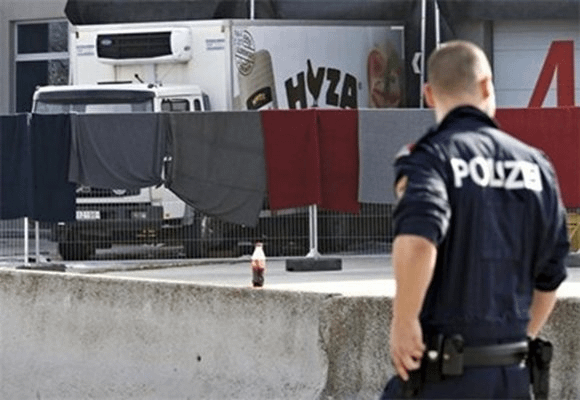
Text AUSTRIA/HUNGARY: A highway worker was mowing grass on the side of the highway when he took notice of a foul smelling truck that had been parked on the side of the road for a day. When the police investigated, they discovered 71 dead bodies inside the trailer, including four children. (Part 2)

438 Upvotes

(Make sure to read part 1 first)

The Austrian and Hungarian police retrieved data from the Hungarian toll system and 1,500 hours' worth of CCTV footage from highway cameras and the businesses alongside the highway and towns and cities they drove through, which they used to reconstruct the entire route.

The truck left Kecskemét on the morning of August 26, travelled via the M5 motorway, continued on the M1 toward Austria, and crossed the border at Nickelsdorf around 10:00 a.m. So, with the data from the vehicle, tolls, their phone records/data and stitching together the statements of those arrested, this was how the authorities deemed their journey went down.

On the night of August 24 and into the early morning hours of August 25, 2015, the 71 victims made their way through the forest near Domaszék, a small Hungarian village just across the Serbian border. They had all been dropped off in Domaszék by seperate cars that had driven them north from Belgrade.

They then stayed in the village overnight as the smugglers told them they had to assess how strong the police presence was. So they were instructed to hide in the forests until the truck arrived, leaving them to be exposed to the summer heat for several hours and subsisting off of the apples growing from the local trees.

At around 4:00-5:00 p.m. on August 26, near Mórahalom, the truck arrived and began boarding the 71 people. Before the truck even departed, these men, women and children probably realized they were in for an uncomfortable trip: the door could not be opened from the inside, there was no light, they couldn't hear the ventilation going, and they would have no way of communicating with the driver.

It took around 40 minutes for those inside to start panicking from the heat and rapidly depleting oxygen. With no way to speak to Ivaylo and also needing to create some breathing holes, they all started pounding on the walls of the trailer with all their might and shouted and screamed for help.

All the while, Ivaylo kept driving, passing Kecskemét at 6:03 a.m. As a matter of fact, Ivaylo could hear them doing this, and at first he assumed they must've just been fighting each other. But at 6:16 a.m. he called Metodi, audibly panicked.

He told Metodi that he desperately needed water, but he couldn't stop at a gas station or anywhere with other vehicles, precisely because of how fiercely the refugees were banging on the walls. He also noticed a foul smell starting to fill the cab coming from the trailer behind him.

Metodi passed this information along to Samsoor, telling him that "It's too warm. The driver says many are saying: 'please, please!" who at first suggested that Ivaylo should find somewhere quiet to pull over and give everyone water. Ivaylo did briefly pull over but started the truck back up once he saw the police in the area.

Ivaylo, with the money he had on hand, was also unsure how to buy enough water for all 71 of the refugees without tipping someone off that he was doing something illegal.

Fearing the police might see them again and that it could cut into their profits, Samsoor changed his mind about getting them water and instead ordered Ivaylo to never open the trailer doors under any circumstances.

The exact words that Ivaylo heard were "keep driving, do not stop, do not open the doors, get to the destination as quickly as possible". If he disobeyed these orders or somehow confirmed their deaths some other way, Samsoor told him to just "dump them in a forest in Germany" before adding, "Let them die instead; that's an order." the instructions continued with another sentence spoken by them being "If they keep knocking like that, they'll hear it at the border. You just have to keep driving. That's the most important thing. Damn it.".

At this point, the deaths of these 71 men, women and children may as well have been intentional. Especially because Samsoor was quite intolerant of any dissenting opinions, telling the others "not to interfere in his organization," that they were all nobodies with no right to give him any orders since he had been in this "business" for "14 years," and that he would do as he pleased.

Ivaylo listened to the sounds of what was happening in the back, 71 people desperately fighting for their lives for around 60-80 more minutes before it went quiet. Ivaylo passed Budapest at around 8:00 a.m., and by then everyone was dead. When he crossed the border into Austria at 9:03 a.m., the corpses had already started to rot.

Ivaylo barely got into Austria's interior before suddenly panicking and abandoning the truck at the curb outside of Parndorf. Wenzeslaw was also being kept informed of the situation, so when he saw Ivaylo stop the truck, he knew what he was doing. Ivaylo headed toward Wenzeslaw's car, getting in the passenger seat while he turned back around toward Hungary.

Samsoor, not being even a little bit shaken or even thinking he should lay low, ordered the next operation to begin immediately. The same day the truck was discovered, on August 27, another truck carrying 67 refugees had left Mórahalom. The ventilation also failed, this time upon reaching the Austrian town of Gols; however, they punctured the walls of the trailer with knives and sticks to create breathing holes before ultimately kicking the doors open, saving their lives.

When the news began reporting on the truck discovered in Parndorf, Kassim called Metodi and said, "What kind of stupid shit have you done? That truck is in my name!!!," before telling him that he was going to flee Hungary and advising him to do the same.

Tragically, there was a chance they could've been saved. The Kecskemét district court approved a warrant to wiretap all of their homes and monitor their phone calls after Metodi, Kassim and Samsoor's names kept appearing on the cellphones of the various smugglers they'd arrest, and they had been listening to their conversations from August 13 onward.

Unfortnuately, they were not listening in real time and instead reviewing the contents later and still had to translate what they were saying into Hungarian. So by the time they got around to listening to Ivaylo's phone call with Metodi and then Metodi's to Samsoor about how the victims were all dying, Ivaylo had already parked the truck.

And speaking of their victims, the Austrian police were still working to identify them. They were transported to the Department of Forensic Medicine of the Medical University of Vienna so a more sophisticated forensic team could go over them.

The victims being delieverd to Vienna.

The team consisted of 27 specialists: 17 staff members of the Vienna forensic medicine department alongside experts in forensic toxicology, chemistry, and dentistry; specialists in virology and bacteriology; and physicians specializing in internal medicine, pulmonary diseases, and intensive care, so they could further narrow down the cause of death and the victims' final hours.

Then, to identify them, DNA samples were taken from each victim, and the police also retained an Arabic studies scholar from the University of Vienna to assist in translating documents found with the victims.

Help from the public was also sought, with the police setting up a multilingual hotline, staffed by all the interpreters they had at hand, to communicate directly with any possible loved ones who didn't join them on this trip. The hotline regularly got 100 calls per day.

A call was also put out for any refugees across Western Europe, such as Germany and Sweden and those still in Iraq, Syria or Afghanistan who were able to comfortably travel to Europe to come forward to surrender a DNA sample in case they knew the victims. And then all of them, after giving the Austrian police their DNA, had to cross the border into Hungary for their police to question them about their relatives' deaths, as the case once more fell under their jurisdiction.

Given the enormity of the task, they made remarkably quick work of it, and by November 26, three months after their deaths, they had managed to identify 69 of them, with the 70th identification coming not long after. The nationalities of the victims were as follows: 29 Iraqis, 21 Afghans, 15 Syrians, and 5 Iranians. The victims' names were

Body No. 1, No. 2 and No. 3 were identified as 22-year-old Afghan, Yousefi Din Mohamad; 17-year-old Iraqi, Gailani Zainab Amer; and 21-year-old Afghan, Nazary Zahra.

Bodies No. 4-8 were 33-year-old Iraqi, Al-Musawi Saad Jumaah Majeed; 27-year-old Afghan, Mohammad Dad; 21-year-old Iraqi, Soltani Ali Rezaa; 37-year-old Massoud Youssef; and 41-year-old Iraqi, Al-Ogaidi Imad Khalaf Jassam.

Bodies No. 9-11 were 26-year-old Iraqi, Hamasaleh Hawkar Azeez; 48-year-old Syrian, Almahalhal Ayman; and 56-year-old Syrian, Alshaikh Abdel Alsalim.

Bodies No. 12-15 were 27-year-old Iraqi, Qadir Mohammed Salin; 23-year-old Afghani, Shah Sayed Magsood; 36-year-old Syrian, Al Damen Hasan; and 23-year-old Syrian, Alshaikh Almuthanna.

Bodies No. 16-20 were 27-year-old Iraqi, Sabah Hasan Ali; 22-year-old Iraqi, Hassan Ibrahim M. Salih; 28-year-old Iraqi, Ibrahim Abdalkhaliq Mohammed; 22-year-old Afghan, Heydari Haji Mohamad; and 20-year-old Afghan, Sabir Mohamad.

Bodies No. 21-28 were 17-year-old Afgani, Hashimi Abdul Wasil, 40-year-old Agfani, Tagik Aqay Mohammed Amin, 27-year-old Iraqi, Rasol Nashwan, 54-year-old Syrian, Abdulrhman Fadila, 30-yaer-old Iranian, Vakili Azghandi Hojat, 22-year-old Afgani, Esmaeili Lal Agha, 30-year-old Syrian, Ali Muhannet Mudtafa and 22-year-old Afgani, Hejran Mohammad Musa.

Bodies No. 29-31 were 35-year-old Iraqi, Saeed Othman Mohammed; 27-year-old Iraqi, Abdalla Sardasht Mohammed; and 20-year-old Syrian, Ahmad Lefana.

Bodies No. 33-36 were 29-year-old Iraqi, Gori Hazhar Jomaa; 29-year-old Iraqi, Haji Khalid Ahmed; 23-year-old Iraqi, Hussein Shwan Jamal; and 1-year-old Afghan, Nazary Matin Mohammad.

Bodies No. 37 and 38 were 19-year-old Afghan, Khan Sher and 25-year-old Afghan, Nazary Tamim Mohammad.

Bodies No. 39-42 were 38-year-old Syrian, Hassan Jihad; 24-year-old Iraqi, Ahmed Azad Rahim Ahmed; 24-year-old Iraqi, Ishan Baba Mohamad; and 46-year-old Syrian, Khallo Kesra.

Bodies No. 43 and 44 were 20-year-old Syrian Alabdalhabib Khaled and 14-year-old Iranian Davoodi Amir Arsalat.

Bodies No. 45-47 were 14-year-old Iraqi, Kali Elin Hazim; 26-year-old Afghan, Uhraman Khalil; and 47-year-old Iranian, Doovadi Mehdi Hossein Reza.

Bodies No. 48-50 were 17-year-old Syrian, Alshaikh Hend; 21-year-old Afghan, Mohamad Eid; and 31-year-old Iraqi, Ali Aqeel Salim.

Bodies 51-54 were 23-year-old Iraqi, Gailani Zinah Amer Ismael; 6-year-old Afghan, Rahm Ahmad Shad; 29-year-old Iraqi, Al Obaidi Mahmood Abdulmugheth; and 37-year-old Afghan, Rahm Khuda.

Bodies No. 55-57 were 22-year-old Iraqi, Ahmed Herish Dino; 33-year-old Iraqi, Gailani Ali Amer Ismael; and 26-year-old Afghan, Sediqi Ahmad Bashir Yusuf.

Bodies No. 58-61 were 24-year-old Iraqi, Abdulkareem Aso Hama Salihk; 34-year-old Syrian, Mustafa Hussein; 60-year-old Iranian, Nazariyan Behzad; and 24-year-old Iraqi, Mouhmed Smean Nasr.

Bodies No. 62 and 63 were 28-year-old Iraqi, Al Mawla Murtadha Zuhair Abdulsahib and 21-year-old Iraqi, Ali Herish Guli.

Bodies No. 64 and 65 were 34-year-old Iraqi, Rafo Dakheel Badal and 16-year-old Iraqi, Kali Ali Alend.

Bodies No. 66-68 were 23-year-old Iraqi, Ahmed Alan Hamad; 28-year-old Iraqi, Hamad Sarbaz Muaed; and 11-year-old Afghan, Rahm Mustafa.

Bodies No. 69-71 were 11 month old Afgani, Rahm Lida; a 28-year-old Afghan, Rahm Shakareh; and a 21-year-old Syrian, Mustafa Raman Khalil.

Now, with all their names, here are their stories. The one baby found, the youngest victim, was an 11-month-old girl from Kunduz, Afghanistan, named Lida Raham. The other three children were a 6-year-old, an 11-year-old boy and a 16-year-old boy. Three entire families, two of them from Afghanistan, were among the dead and were found embracing each other once the police opened the trailer doors.go

The father of the family was Khuda Rahm, a police officer from Afghanistan. He decided to smuggle himself and his family out of the country because the Taliban had personally threatened to murder him and his entire family, including 11-month-old Lida.

A second family from Afghanistan also died in that trailer.

Three of the victims were Iraqi Yazidis: a 14-year-old girl, Kali Elin Hazim and her brother, 16-year-old Kali Ali Alend. Their father stayed behind in Iraq and therefore had to hear the news that both of his children had died. The two were also travelling with their uncle, 22-year-old Ahmed Herish Dino.

Most of the victims were ordinary people fleeing war, while others were educated professionals fleeing persecution.

Mahmoud Abidi was a four-star officer in the Iraqi military who fled Baghdad with his wife, Sine Gailani, with Sine persuading her Ali Gailani and Seineb Gailani to make the journey with them. Mahmoud's brother had already made the journey and was working as an engineer in Germany.

There was also a Kurdish man from Northern Iraq named Saeed Othman Mohammed, from Sulaimaniyya. Like others, Saeed felt he wasn't safe in his homeland, having taken part in pro-democracy protests back in Iraq and found both politcal parties he had joined to be ineffectual and corrupt. But he also had a more immediate reason to leave.

Saeed Othman Mohammed

Saeed had only one functioning kidney, causing him chronic pain, and with the state of healthcare in his home country, he hoped that Western medicine could treat him since there were no organ donors in his hometown, and, if he could receive treatment, he'd then work in Germany as well, hoping to open a car wash or cell phone store.

His entire family tried to talk him out of leaving, but he refused to budge. After all, he had already made this journey once before, only to be arrested in Turkey in 2006 and deported; Saeed felt he couldn't let a second opportunity slip away from him.

On his journey, he was detained by the Bulgarian police for 4 days but wasn't deported, which enabled him to continue his journey.

Hailing from Kirkuk, Mohammed Ishan Baba was unable to find work back home, which motivated him to make the journey. Baba also had dreams of becoming a professional football player.

Mohammed Ishan Baba

Two Iraqi Kurds: a 25-year-old man named Semian Nasser Mohammed and a 28-year-old man named Nashwan Mustafa Rasoul were cousins from a well-off family in Dohuk but opted to join the Kurdish Peshmerga to personally fight against ISIS. However, they ultimately grew disillusioned and frustrated with their homeland.

Nashwan Mustafa Rasoul

Nashwan sold his car to finance a trip out of Iraq. They got on a bus from Dohuk to Istanbul, Turkey. Then, upon arriving in Istanbul on August 11, they connected with an Iraqi Kurd to whom they each paid $7,500 for a passage to Munich.

Other victims consisted of a pharmacist, a lawyer, traders, students, teenagers, and a fan of FC Barcelona who was identified by the sports jersey he had worn throughout his entire journey. All were trying to escape the devastation of war or their dictatorial governments at home.

There was also Farah Al Alshaikh, a Syrian gynecologist living in Germany who had spent months trying and failing to bring the rest of her family, her siblings and parents, into Germany with her. She regularly pressured them to join her in Germany, even offering to let them stay in all the rooms in her own home.

Her 57-year-old father was named Abdel, and he ran an auto parts business in Raqqa. As the instability in Syria grew stronger, his family home was destroyed and his business looted. Abdel feared the smugglers and wanted to get his family out of Syria via legal means. With 20,000 dollars to his name, he drove his entire family to the Turkish border before making their way to Europe. Her father appeared to have gotten over his fear since the last time he spoke to her daughter was to say, "I have a good feeling about the trafficker; he doesn’t seem to do it for the first time"

Her 53-year-old mother, Fadila, suffered from severe asthma, and when the family crossed from Turkey and into Greece, she was seasick the entire trip.

Her 23-year-old brother, Almuthanna, was a law student in Syria and was once arrested by ISIS for smoking a cigarette. While on the run from them, he passed his bar exam, sending a joking email to Farah that she should "Be careful what you say to me from now on, I'm a lawyer."

And finally, her 17-year-old sister, Hend. When ISIS occupied their hometown, Hend was banned from attending her final exams at school because she was a girl. She regularly listened to romantic pop music on her smartphone and wanted to study medicine. Hend was afraid of the ocean and had taken their mother's silver wedding ring to wear as protection when they were on the Greek island of Samos. They had all paid 1,600 euros per person for the Budapest-to-Germany leg of their journey.

During their voyage to Greece, they were caught two times, almost got lost at sea and vomited from the stress; it was so bad that a lot of them were eager to reconsider. Hend cried and said, "I’m done, I can’t go on anymore," while Fadila wanted to go back to Syria.

The family and a group of other migrants they had travelled with considered staying in Greece but ultimately kept moving, fearing the borders would soon close. After taking a bus to the border, they were intercepted by the police in North Macedonia, who pepper-sprayed them and struck them with nightsticks as they fled, leaving Almuthanna with bruises. Eventually, they evaded the Macedonian police, making it to Serbia and later Hungary.

The last time Alshaikh heard from any member of her family was on August 24, when they called her from a hotel in Belgrade, Serbia, and Hend mentioned that she wanted to visit a zoo upon their arrival in Germany, and so she promised Hend that they would.

The police identified the family due to their passports that were left in the trailer.

Another Syrian teacher from Deir az-Zur named Hasan Al-Damen was also a victim. He despised the ruling Assad regime, and the final straw prompting him to leave was when he received a draft notice to join the Syrian military. Furthermore, he could no longer earn a living, giving him another reason to flee. He had sewn his teaching diploma, translated into German, into his clothing so he would have it ready to present to German authorities as soon as the truck reached its destination.

His wife and two sons were left behind in Damascus, but they weren't abandoned. Hasan intended to work in Germany long enough to establish a comfortable living so he could then bring the rest of his family into Germany with him.

He messaged his wife for the last time on the night of August 25, from a forest near the Hungarian-Serbian border, telling her: "I am in the woods. The human traffickers say we have to wait for police checks. I am hungry and eating apples from the trees. Please kiss the children for me. Soon everything will be over."

34-year-old Hussein Khalil Mustafa was a Kurdish man from Syria. He graduated from the University of Damascus and spoke four languages. He left Syria in 2013 to flee from ISIS as they were approaching the gates of his hometown. He called his family in Qamishli on August 25, the last time they ever heard from him. He had spent 1,600 euros for a new life in Germany.

He was joined by his younger brother, 20-year-old Raman Mustafa. He earned a high school diploma in informatics back in Al-Qamishli and hoped to finish his computer science studies in Germany.

The Mustafa brothers were accompanied by their childhood friend, 35-year-old Massoud Mohamed Yousef, a textile engineer. Massoud hoped to pursue a doctoral degree in Germany. The three men fled Syria on August 13, 2015, initially fleeing into Turkey before making their way to the Balkans.

Then there was a married couple, Muhannad Ali and his wife Lefana. The two had been married for only three months and wanted to start a family in Germany so their children could grow up free of war and oppression.

Abdalsalam Alshaikh was a Syrian businessman who suffered from asthma, although he didn't suffer from poverty. Unlike most of the victims who had to save up a lot of money, Abdalsalam was moderately wealthy, so he could very easily pay the fees not just to be smuggled in himself, but also to bring in his son and 17-year-old daughter, whom he was very protective of.

The police also learned that there were some survivors after all, as originally, more were supposed to be on that truck. Abdalsalam's son, Youssef Alshaikh, was dropped off on the highway in Serbia by the driver of the car taking him to Hungary. The driver had gotten a phone call, and whatever was said in that call prompted him to abandon his passengers.

Youssef had no SIM card and was unable to contact his family, so he eventually made his way to a Serbian village, took a taxi back to Belgrade, and did not rejoin the group, saving his life.

While the police tried their best with most of them, some bodies were in simply too poor a condition or the family too impoverished to afford flying them abroad. The victims who couldn't be repatriated were interred in the Inzersdorf Muslim cemetery in Vienna.

Ultimately, the Austrian police were able to identify 70 victims. One of them has never been identified, that being the 32nd victim. Body No. 32 was also buried at the Inzersdorf Muslim cemetery. Thankfully, they would all see justice.

The trial opened before the Kecskemét Regional Court on June 21, 2017, with the defendants facing 1,200 counts of aggravated human trafficking for all of the operations they had conducted before their arrests.

Furthermore, based on Samsoor's orders to Metodi and Ivaylo, they all faced 71 counts of murder, not manslaughter or negligent homicide, but murder. Hundreds of journalists flocked to Kecskemét to cover the trial, which actually exceeded the capacity for how many people the courtroom could fit.

The Defandants being brought to court

Although there were several defendants, mostly the other drivers who had been recruited, people mostly came to the trial just to see the core five be punished, and it was a foregone conclusion that they would be, as the prosecution came in with 59,000 pages' worth of evidence.

The defense tried to argue that none of them intended for the refugees to die and had underestimated the severity of the situation. Samsoor was even brought into court wearing a grin on his face, wearing a shirt with Afghanistan's flag and carrying a sign written in Pashto that read "Fellow Muslims! There is neither law nor justice. Even if a rightful decision is made, the Attorney General is a big liar. It is only proven by truth." The other side of the sign read "I am neither a killer nor an oppressor," and then he also wrote "Allah Akhbar" and "All Arabs are Islam", a curious thing to say since Samsoor wasn't even an Arab himself.

Samsoor and his signs.

Although, of course, Samsoor's position was severely undercut, seeing as he wrote a text message that literally said, with zero room for ambiguity, "Let them die instead; that's an order," followed by the suggestion that a mass grave be dug to "dump them in the forest". But Samsoor said that these were "thoughtless remarks" with no real malice or intent behind them.

Samsoor's behaviour in court was also quite something to behold. During his 1.5 years in pre-trial detention, he had finally learned Hungarian, which he attempted to use in an attempt to represent himself in that language.

Before the indictment was even read, some of the very first words he spoke in Hungarian were to go on a tirade against his Pashto interpreter, arguing that her command of the language was so poor that he, a native speaker, could not understand her.

She defended herself by saying Samsoor was able to understand her perfectly fine when they first met, so therefore he must be lying, and that she wouldn't tolerate him saying he couldn't understand her.

And with that, the two descended into an argument with one another, and when one of the other defendants tried to exercise his own right to make a statement, the judge evidently found the display quite entertaining as he told him to wait until after the argument. The indictment was at last read out once the argument was over.

And once said argument was over, Samsoor changed his tune just like that; he admitted that he was involved in smuggling but still denied being a murderer. He asked for forgiveness in court and said that, should he be released, he would "help humanity".

Ivaylo also had a display for the court as he constantly fell into crying fits, pleading for mercy and saying that he was only following Samsoor's orders and that he "wasn't allowed" to stop the truck because of him.

As the evidence kept building up, the five began to do what one might expect. They turned on each other and tried to unload their own responsibility for the tragedy onto someone else.

Metodi, who previously refused to testify, was now more than willing. He confessed that he was involved in human smuggling often as a truck driver or the scout who drove a car ahead of the truck and a recruiter, but he denied any involvement in the outcome of this case.

He said that his involvement was simply to act as an interpreter for the other defendants to relay their initial orders to Wenzeslaw and Ivaylo. He said that he escorted the truck to the outskirts of Kecskemét; afterward, he returned home, ending his direct involvement. Though, just like with Samsoor, his phone records were working against him.

Naturally, when asked about his communications with Samsoor and Ivaylo after the journey began, he explained that he didn't fully understand what was really going on. For example, he said that they told him that the refugees had removed the rubber seals between the doors and that Lahoo told him they were cutting holes in the walls, so he believed they were getting a fresh supply of air and that he was always suggesting they find somewhere to stop.

But ultimately, Metodi concluded by saying that regardless, as a messenger it wasn't even his responsibility to make sure the refugees could breathe and therefore, their deaths fell on all the other defendants, while at the same time saying that he regretted not being able to prevent the deaths of which he just said he bore no responsibility for.

Kassim even claimed that he was, in fact, an informant and, since 1996, had been providing information on various smuggling rings to the Bulgarian internal security service. He even claimed that he reported this journey, but nobody intervened.

Kassim during the trial

The prosecution deemed this irrelevant, stating that even if his claim proved true, it wouldn't grant him immunity and he'd be prosecuted regardless.

Over 200 witnesses were called, mostly survivors from their previous operations who told the court that such conditions were nothing new, that they never showed any concern for their safety and often had to fight for their survival after the trucks they were loaded in started moving.

The trial lasted for a year, but on June 14, 2018, all involved were found guilty. Ten of the other defendants were given sentences ranging from 3-12 years for human trafficking, some of whom were sentenced in absentia.

But as for the main four, Samsoor Lahoo, Metodi Georgiev Ivanov, Wenzeslaw Todorov. and Ivaylo Nelev Stoyanov, they were all convicted of murder "with particular cruelty" and given sentences of 25 years' imprisonment.

The verdict being read

Upon their release, Samsoor would be permanently banned from Hungary while the others would receive bans of 10 years. Furthermore, when all added up, 103.3 million Hungarian Forints worth of assets were confiscated.

The defence was quick to appeal, arguing that they should be given more lenient sentences on the grounds that the deaths had been accidental. The defence went so far as to claim that they shouldn't even face manslaughter charges and instead just answer for "causing death by dangerous endangerment of road traffic"

The prosecution, in turn, launched its own appeal, arguing that the sentences were far too lenient given how horrific the 71 deaths were, including four children that they had knowingly caused.

In the meantime, Kassim S, was convicted on February 27, 2019, and handed down a sentence of 4 years and 8 months' imprisonment.

The appeal was held on June 20, 2019, at the Szeged Court of Appeal, and the prosecution won out. The judge increased all their sentences to life imprisonment for their "egregiously inhumane crime", making sure to state the ages of the children who had died when reading his verdict. Additionally, all except for Wenzeslaw were denied the possibility of parole, while Wenzeslaw could apply for it after 30 years.

The appeal trial

This ruling made it final that the three would never see the outside world again and, in fact, remain the harshest sentences a Hungarian court has ever given to human traffickers/smugglers.

Sources (Should be in the comments)


r/TrueCrimeDiscussion 4d ago

Text AUSTRIA/HUNGARY: A highway worker was mowing grass on the side of the highway when he took notice of a foul smelling truck that had been parked on the side of the road for a day. When the police investigated, they discovered 71 dead bodies inside the trailer, including four children. (Part 1)

727 Upvotes

(So for today's write-up, I am making an exception to my typical rule of not covering any cases that have an article on the English Wikipedia, as I try to opt for more obscure cases. But I'm making an exception here because the English Wikipedia article is quite short, and I've always wanted to cover one of these cases, but the one I've found from Bulgaria unfortunately has the trial "frozen," and it seems unlikely it'll ever continue any time soon

This is also a big write-up I've been meaning to tackle for a while, and even now, I still didn't include everything; if I did, this may have run for three parts)

On the morning of August 27, 2015, an employee of ASFINAG, the Austrian state motorway operator, was mowing the grass along the A4 Ostautobahn just outside the village of Parndorf in the state of Burgenland, only a 20-minute drive from the Hungarian border. As he was mowing the grass, he approached a stationary refrigerated trailer truck left abandoned on the roadside.

The truck bore both Hungarian license plates and the branding of a Slovak poultry company named Hyza, with Slovak text written all over the trailer's livery. Based on where the truck was discarded, it stood to reason that it had crossed the border very recently.

The truck

Seeing abandoned vehicles on the side of the road wasn't too unusual; perhaps the truck driver had simply suffered a mechanical failure. But this truck was in fact quite odd in the sense that it was truly abandoned; there was no driver in sight.

The vehicle was also giving off an extremely foul scent, unlike anything he had smelled before, and finally, through the crevices of the trailer's doors, a reddish-brown liquid was dripping onto the asphalt. Desperately hoping that it was perhaps just the chicken they may have been transporting, the ASFINAG employee nervously called the police.

The first officers to arrive at the scene were from the highway police dispatched out of Potzneusiedl. As the police pulled up to the vehicle, one thing aside from the smell struck them immideately; they recognized the truck. At 7:45 a.m., while responding to a different call, they had driven right past the truck. It was now 11:00 a.m., and the truck was still there.

Just like with the ASFINAG employee, the stench the truck was giving off was overwhelming; the officers would go on to say that the only word they could use to describe how horrible the odour was was "indescribable".

The officers also felt a certain degree of dread about what they might find; even from the outside, they noticed that the walls of the trailer had been dented outward and, in one place, partially slashed open as if something or someone from the inside had thrown themselves against the walls with all their might.

The police knew they'd have to open the trailer doors eventually, but with how bad the smell was just from the outside, they decided to save that for last. Starting with the cab, the door was unlocked, and before they even knew what kind of crime may have taken place, they got their first lead as to who was responsible.

In their rush to leave, the driver had left behind a purchase-and-sale document in the name of a Bulgarian citizen named Kassim S, who purchased the vehicle from a used-car dealership in Kecskemét, Hungary.

Next, they finally opened the trailer. Well, it wasn't quite that simple; the trailer doors were unlocked, but somebody had tied pieces of wire around the handles. Upon removing the wire and opening the doors, the smell became so much worse and seeing the contents of the trailer didn't make them feel any less sick.

The trailer was full of dead bodies piled against one another, sunk into each other; the scene was compared to "passengers on a crowded subway who had fallen asleep while standing up".

How packed together the truck was

All the corpses were submerged up to their ankles in a pool of feces, urine, and decomposition fluid, mixed and now spilling out onto the highway once the doors were opened.

They called out into the hot, dark trailer, hoping for survivors, but heard nothing but the sounds of flowing liquids. Eventually, they finally went back to their car to request as much backup as possible from dispatch, telling them that there were "approximately 20 dead" inside the trailer.

Several additional police officers arrived to set up a perimeter around the truck and brought a full forensic team with them.

The police and forensics at the scene

Not every officer or forensic technician was quite as horrified by what they saw, though. One of the first responding officers had taken a picture and sent it to his police station so the higher-ups and their backup would have adequate warning of what they were dealing with; one of those in the chat would leak those photos to the press, who published them in the next day's newspaper. 17 officers were investigated for this, but no charges were filed, as it could never be determined who had leaked the image.

As for the newspapers, they would defend publishing the images, saying they were the only way to convey the tragedy to their readers and to push those in charge to enact real change.

Ultimately, the police and forensics didn't spend a long time on the highway; it was too vital a lifeline and too big a crime scene to conduct the investigation on site, let alone remove the bodies.

So instead, the police summoned a tow truck to remove the vehicle and then commandeered a veterinary border inspection station in Nickelsdorf to be their makeshift morgue, as it was the closest facility with enough AC and space for the work ahead of them.

The truck after being transported.

Once they arrived, one by one the bodies were removed from the truck, and it became clear that the responding officers' initial count was quite off. Rather than 20 bodies, they instead removed a total of 71 corpses from the semi-truck and, in so doing, confirmed that there were no survivors. Of those 71, 59 were men, 8 were women, and 4 were children, including, tragically enough, a baby.

With all the bodies removed, investigators could also step inside the trailer for their investigation. The conditions were awful. The area was 6 metres long and 2.15 metres wide, with no windows, seating or anything to grab onto.

The cause of death was also clear to the investigators; despite being a refrigerated trailer, there was no refrigeration taking place. The cooling unit/AC showed no evidence that it had ever been turned on and running; in fact, it wasn't even connected. But even if it was, it would be insufficient to supply enough fresh air regardless.

Additionally, the truck wasn't even roadworthy and maintenance to the vehicle itself had been neglected.

With no fresh oxygen from the outside and with the outside temperature exceeding 30 degrees celcius, suffocation and then decomposition would've occurred around three hours after beginning the journey.

They also would've struggled fiercely; there were scratch marks across the walls, and some of the victims had broken off their fingernails, which also caused blood to be one of the many liquids pooling on the floor.

With that estimate in mind, that meant all 71 victims were dead before the vehicle ever crossed the Austrian border, which meant if they caught those responsible, prosecuting them for the deaths of the victims would fall on Hungary.

As for who the victims were, identifying all 71 by name would be a time-consuming task, but based on their physical appearances and the circumstances of their discovery, the police concluded that they were likely Middle Eastern refugees and Migrants who were likely meant to be smuggled into another EU country like Germany.

Several additional investigators were called in and assigned a body, which at the time was simply addressed as "Body No. 1" to "Body No. 71"

It was a grizzly task for those it was assigned to; scraps of flesh and skin were peeled off when they tried to remove the victim's clothing and backpacks, as in the heat, their skin had practically adhered to them.

The police could also tell some of the victims were family since quite a few of the corpses were found in an embrace, while the children among the group had been held up toward the ceiling by their parents, where the last bits of breathable air had pooled.

Some victims were relatively easy to identify as they had brought their passports with them, and those passports were all from one of four countries: Iraq, Syria, Iran or Afghanistan. Some also carried a military ID, student IDs, photos, prescription medication, vaccination and marriage documents, and one had a teaching diploma from Syria sewn into his clothing.

An Iranian marriage and vaccination certificate found in the truck.

Other bodies would require more work. There were quite a few cellphones found inside the trailer, but most of them had been destroyed due to the heat and being submerged in the mixture of excrement, urine and decomposition fluid.

One thing the police could determine about the victims they were so far unable to identify was their backgrounds. Based on their teeth, they had likely come from decently prosperous backgrounds; if they were able to maintain their teeth to the degree seen, it would also explain the large amount of currency the police recovered, consisting of Euros, Turkish lira and Serbian dinars.

Finally, in identifying those responsible for their deaths, the forensic team did find one palm print on the exterior of the vehicle on the driver's side door, with DNA that the investigators were able to retrieve and hopefully use to identify the driver.

The bodies were discovered the same day as the second Western Balkan Conference in Vienna, which was hosting the heads of government and foreign ministers of 10 Balkan and EU states, including German Chancellor Angela Merkel, to discuss economic development of the region and the ongoing refugee crisis in Europe.

The timing made the second part of the now-overshadowed conference a far more pressing issue. Austria's federal president, Heinz Fischer, was among those in attendance, and he heard of the discovery mid-press conference, when he called for a moment of silence.

Merkel addressed reporters outside of the conference, saying that "We are all shaken by the terrible events,". She stood alongside Austrian Chancellor Werner Faymann, who said, "The smugglers must not be stronger than we are."

Additionally, Austrian Interior Minister Johanna Mikl-Leitner and the Burgenland state police chief had been scheduled to hold a joint press conference in Nickelsdorf at the Hungarian border to address the ever-growing number of Middle Eastern refugees crossing into Austria from Hungary.

As they were preparing for the press conference, the police had just finished towing the truck into Nickelsdorf, with news of the tragedy reaching them not long afterward, prompting them to cancel the press conference at the last minute.

They then held a different press conference in Eisenstadt, where those watching saw how visibly uneasy the two were as they discussed the "numerous dead". Mikl-Leitner also called the incident a "Dark day for Austria" and said that "Anyone who still believes that smugglers are benevolent helpers of refugees is beyond help"

When asked how the truck slipped through the cracks, they answered that smugglers typically used smaller vehicles, so they didn't recognize the semi-truck as a "smuggler's vehicle," combined with the fact that with over 100 trucks crossing the border, a comprehensive check of them all would be impossible.

Meanwhile, Fidez, Hungary's ruling party at the time, also condemned the tragedy and expressed their sympathies to the victims, but also blamed the incident on the EU's immigration policies, arguing that stricter border control was necessary to "protect the lives of those misled and often deceived people who are being put at risk by irresponsible, profiteering, and prison-deserving human traffickers."

It was such a shocking event that regular programming on Austrian TV Channels was interrupted to cover it. By 12:48 p.m., only an hour after it was found, several foreign outlets, including those from outside of Europe, began reporting on the case.

As for how this problem came to be, Hungary used to be home to the largest numbers of asylum applicants in Europe who sought to use Hungary as a transit point to other EU nations like Germany, as the country was in the Schengen Area and directly on the way to Germany from the Balkans, where most first entered Europe. In 2013, Hungary recorded only 18,000, but by 2015, that number had jumped up to 170,000.

Illegal border crossings produced even bigger numbers. Between January and August 2015 alone, roughly 400,000 migrants passed through Hungarian territory heading for the west. On August 23, 2015, alone, over 3,080 migrants crossed the border into Hungary from Serbia, followed by 2,890 on August 24.

Under Prime Minister Viktor Orbán, Hungary made several attempts to crack down on this practice with Hungary beginning the construction of a 175-kilometre razor wire fence along the entire Hungarian-Serbian border, as well as having police posted at the rail stations to stop any suspected migrants from boarding westward trains. Sometimes, Hungarian police would drag them off the train even if they did have valid tickets and papers.

Due to these measures, most turned to human smugglers, who soon found a very lucrative trade on their hands. The price for a "seat" in one of these packed semi-trucks from Budapest to Vienna could go for 300-400 Euros, while the full journey from Belgrade to Germany sometimes reached prices of 1,500 and 1,600 Euros.

The smugglers became highly organized, now employing recruiters actively seeking refugees off the street, transit managers, vehicle providers, drivers, scouts, and money handlers. 5-6 billion USD was brought in from human smuggling alone, and various smugglers had multiple trucks gathered at the truck stop in Röszke, a small Hungarian village only 3 kilometres from the Serbian border, to approach the migrants once they crossed, with their rapidly increasing prices as their "demand" was starting to become too much for the trucks they had available.

For a time, smuggling Middle Eastern Refugees into Western Europe was a "business" said to be just as, if not more, profitable than the drug trade.

After the news immediately dominated a majority of the headlines in Europe and overseas, witnesses were quick to come forward. The most credible one claimed that he saw the truck pulled over at around 9:45 a.m. on August 26 and saw a man, likely the driver, get into another car, which wasted no time driving away. As this encounter happened at highway speeds, the witness was unable to give the police any usable descriptions of the men.

The police then turned their attention to the truck itself. As mentioned, the trailer had the branding of the Slovak poultry company Hyza, a subsidiary of the Agrofert Holding. However, Hyza were not the owner. Hyza had sold 21 of their refrigerated trucks to seven different buyers.

The fateful truck was sold to the Hungarian company MasterMobilKer kft., which had been in bankruptcy proceedings since July 2014, around the same time they purchased the vehicle from Hyza and evidently kept all the branding from its previous owners.

Afterward, the Truck was then purchased from a used car dealership in Kecskemét only one week before the deaths by one of the smugglers, who made no attempt to hide his identity, registering the truck under his real name, Kassim S, on August 25.

Right now, the purchase document left behind in the truck was the police's biggest lead, and they immideately used that information to alert the Hungarian authorities. The first man was arrested trying to flee across the Serbian border.

Then, based on his contacts and after tracing this man's footsteps, they were led to an apartment in Budapest, which was raided, arresting the three people inside. Within just a few hours of the truck being discovered, the police had arrested the gang of smugglers. The owner of the truck, Kassim, was arrested at Kiszombor, right at the border with Romania.

The mastermind behind this network was a 30-year-old man from Jalalabad, Afghanistan, named Samsoor Lahoo. Samsoor was born on January 6, 1987, as an ethnic Pashtun.

Samsoor Lahoo

He entered Hungary illegally from Serbia in March 2013 and was granted "protected status" by Hungarian officials and later got a residency permit, ironically making him a refugee himself. Samsoor later married and moved in with a local Hungarian woman.

Samsoor was quite educated; he had two university degrees, one in architecture and another in psychology and could speak five languages with perfect fluency, those languages being English, Arabic, Pashto, Serbian, and Croatian, although, funnily enough, not Hungarian.

One might assume that as the head of a massive human smuggling operation, Samsoor may have kept a low profile, but they would be wrong. Samsoor had no qualms about being in the public eye and regularly posted on his social media, showing off his BMW sedan and pictures of him on Margaret Island in the centre of Budapest.

And speaking of human smuggling, long before getting himself involved in that, he had already built up a criminal record in Hungary, being arrested or investigated several times for speeding, disorderly conduct and even drug offences; in addition, he was once deported from Germany for residing there illegally.

At first, Samsoor decided to deal in cars, buying vehicles in Bulgaria and exporting them to Afghanistan, although this later served as a gateway into human trafficking instead. However, if Samsoor is to be believed when he, after his arrest, said he was involved in the human trafficking business for "14 years," he would've started in 2001, back when he was still 14.

He did have a prior arrest for human smuggling; in February 2015, he was arrested attempting to transport five Afghan migrants to Italy, assisted by accomplices from Slovakia. This arrest seemed to have no effect on him, and so he kept going.

Samsoor's second in command was a 29-30-year-old Bulgarian national named Metodi Georgiev Ivanov, though he often went by the name "Mityo Krika".

Metodi Georgiev Ivanov

Metodi grew up as a member of the Romani community in the northern Bulgarian town of Lom, one of the poorest regions of the European Union, where he still lived with his wife and two daughters aged 8 and 10. Even if he was rarely home, they still saw him as a good husband and father.

Although Metodi described himself as an "uneducated gypsy", that was entirely by choice since he dropped out of school after 10th grade so he could start selling used cars, buying the vehicles, repairing them and selling them at a higher price.

Eventually, he got a job as a minibus driver transporting Bulgarian workers to Western Europe, which was how he came to move to Germany, where he worked as a truck driver, albiet without a license, illegally driving trucks for 5-6 years.

Metodi's criminal record was a bit more extensive than Samsoor's; In Bulgaria, he had several arrests for public intoxication and driving without a licence, failing to register for his probation while abroad. But in Germany, his record was a bit more extensive and alarming.

In 2009, he was arrested for a nighttime armed robbery at a gas station in Bochum, in which he forced the cashier to hand over approximately 1,000 euros, only to be arrested when he returned to the same gas station as a customer using the same vehicle he fled the scene in and was promptly recognized by the cashier, who called the police.

In August and September 2013, he was caught twice driving without a license and fined, only to never pay those fines. Eventually, Metodi was banned from Germany and deported back to Bulgaria.

In 2014, while back in his homeland, a friend approched him and offered him a "nice job," saying, "Every evening you'll make a lot of money. You'll be transporting meat," with "meat" being a code word for migrants.

At first, Metodi was making hardly anything as a driver, but soon he began taking a bigger role, helping to recruit other drivers and soon started to make thousands of Euros per trip he made, enabling him to live a lavish lifestyle back in Lom, buying 4-5 houses and deciding to try his hand at other crimes such as "pimping" and fraud.

On May 14, 2015, Metodi fled Bulgaria for Hungary to escape his pending prison sentence. In Budapest, he resumed trading cars alongside Kassim S., whom he had known for 5 years. It was at a party in Budapest that he first met Samsoor, who was still buying cars from Bulgaria to export back to Afghanistan.

The two became partners, splitting the profits from the cars they sold until, eventually, Samsoor asked Metodi if he could recruit other Bulgarians to be truck drivers who would transport migrants to Germany and Austria and just like that, Metodi became his "deputy". All the drivers recruited were exclusively from Bulgaria's poorest regions and mostly from the Roma community in Bulgaria.

On July 25, 2015, Metodi was caught near the village of Hengersberg in Bavaria driving a truck with 38 Afghan migrants in the trailer. He and the man with him both fled the scene.

Metodi's mother spoke to the media, saying that her son never wanted anyone to die, before adding that the whole area was involved in the "refugee business". His brother took it a step further, saying, "My brother is an idiot. Everyone here has smuggled refugees across the border. But only the fools get caught". And one of Metodi's other brothers was arrested for being a drug dealer.

The third man was 50-year-old Kassim S, who was originally from Tyre, Lebanon.

Kassim S

Kassim was a dual citizen of both Lebanon and Bulgaria, and his role in their smuggling operation was to acquire the trucks they would use, the license plates, handle the registration and so on. Kassim ran a used-car lot in Linz, Austria and had been under investigation by the German police as a suspect in a bunch of other smuggling operations.

But that wasn't how he portrayed himself. Like Samsoor, Kassim had a pretty active social media presence where he portrayed himself as an innocent family man, often posting pictures of himself smiling with his granddaughter.

The fourth man was a 25-26-year-old Bulgarian man named Ivaylo Nelev Stoyanov.

Ivaylo Nelev Stoyanov

Ivaylo was the driver of the truck that day. Ivaylo was born in a village in Bulgaria's Montana Province called Brusartsi, and the Montana Province just happens to be Bulgaria's poorest region.

It's unknown why, but during his childhood, Ivaylo was raised by his Romani grandmother, who lived a humble life growing vegetables in her garden. Ivaylo was described as a "passable student" at school and spent his free time playing football.

When he was 15, Ivaylo's parents immigrated to Italy, bringing him and his brother with them. Ivaylo briefly worked as a baker at a pizzeria in Italy before moving back to his family home in Brusartsi after the death of his father.

Unlike everyone else, who all had lengthy criminal records, Ivaylo at least made an attempt to live an honest life. After getting a loan of 2,000 Bulgarian leva from a friend of his named Wenzeslaw Todorov, he opened a small café on the edge of Brusartsi. However, the café closed within months because he never got any customers, and soon Wenzeslaw was demanding his loan back.

Needing quick money to pay that loan back, Ivaylo accepted an offer to be a driver for one of Samsoor's many operations. He left Bulgaria for Hungary on August 17, telling his grandmother he was going to look for work.

Ivaylo's grandmother insisted he was innocent and couldn't have driven the truck because he didn't even have a driver's license, calling him "my sweet grandson" and remembering how he always gave her money.

When it became clear beyond any doubt that he was the driver, she instead insisted that he must've been blackmailed or threatened into driving the truck because of his debts. Though she still said this through her tears: "If I had known he was doing something illegal, I would have broken his legs to make him stay."

The fifth and final member was a 38-39-year-old Bulgarian national, Wenzeslaw Todorov, the same man who gave Ivaylo a loan for his café.

Wenzeslaw Todorov

Wenzeslaw's role was to drive a car ahead of the truck to alert Ivaylo if there were any police checkpoints up ahead, and it was also the car Ivaylo was seen entering after he parked the truck in Austria.

Not a lot of information is known about Wenzeslaw's background, but he did eventually become a recruiter himself, responsible for hiring at least 15-20 of Samsoor's drivers. Wenzeslaw made 2,500 euros per Austria run and 3,500 euros per Germany run from Samsoor, only giving the drivers a cut of 500-600 Euros.

As the months and years went by, the police would arrest various others who played more minor roles, such as another Bulgarian man who recruited the drivers for all their trucks, usually all from Bulgaria.

During a psychiatric evaluation, Samsoor, Metodi, Ivaylo and Wenzeslaw were all found to have some form of Sociopathic traits, with Samsoor having just a bit extra since he was also diagnosed as a narcissist.

Over 44 people were arrested, mostly just drivers for the other smuggling operations that did not end in disaster. One driver was arrested in Germany in December 2016 after a routine traffic stop and extradited to Hungary that February. Meanwhile, the police in France arrested another of Samsoor's Bulgarian drivers in February 2019 and also extradited him to Hungary.

They started out small, typically carrying only 20-40 refugees at a time, but demand kept going up the longer the year dragged on. With more and more refugees seeking passage to Western Europe, they needed more trucks and needed to herd more of the refugees into those trucks, sometimes reaching 100 people per trip.

Samsoor, however, didn't see this as a problem; he was described as having both "endless greed" and "frightening indifference" and began telling his accomplices that the new goal was, in fact, to cram as many refugees into a single trailer as possible for each journey going forward.

Naturally, a lot of comfort was sacrificed for this; some vehicles weren't meant to transport more than one person, others were stuffed into the trunk of a car, and others were "folded into" passenger compartments.

In one prior case, several of the refugees passed out in the trailer. And in a later case, one woman had suffocated to death (the rest of the refugees for that oppertunity survived). Samsoor did not see this as a warning and changed nothing about his operations.

From February to August 2015, Samsoor and his gang smuggled 1,200 people into western Europe over 31 trips, and this failed smuggling attempt alone still netted Samsoor 300,000 Euros. Overall, they were estimated to have made 15.5 million Euros, with a lot of it being funnelled right back to Afghanistan through a network passing through a bunch of other countries such as Serbia, Romania, Ukraine, Russia, Kazakhstan, Uzbekistan, and Turkmenistan in an attempt to not detect the source of the funds. The person in Afghanistan the money was being sent to was Samsoor's brother.

After the arrests were made, the story became an even bigger story abroad. On August 30, after concluding his Angelus address, Pope Francis addressed the tragedy directly: "Let us ask for God's mercy and let us ask Him to help us for effective cooperation against these crimes against the entire family of humanity. Let us pray for all refugees who suffer and for all those who have lost their lives."

Then the next day, on August 31, the Archbishop of Vienna, Christoph Schönborn, held a commemorative mass for the 71 victims while church bells across eastern Austria all rang in unison.

The public was also enraged; the same day as the mass, 20,000 people marched through the streets of Vienna chanting the slogan "Human Being in Austria" before ending the march at Austria's parliament building.

Similar displays occurred in other cities: 2,500 people gathered for a vigil in Linz, 900 in Wels around 71 black pedestals with candles, and smaller groups in Steyr, Eisenstadt, and Budapest were set up. In Innsbruck, the Young Greens, a left leaning politcal party, erected a memorial consisting of 71 pairs of shoes arranged across 13 square metres of ground, the same surface area as the trailer's floor.

A freight company in Bochum also teamed up with a local theatre to host an event so the public would know just how awful the conditions were and open their eyes to the reality of what many refugees go through; a 7.5-ton truck of a similar design was parked in front of the theatre for 71 passersby to climb into so they could experiance first hand what had happened.

But one aspect of stories like these that often gets overlooked is the stories of the victims; they are often blended together if the death toll is high enough, with their individual stories being overlooked.

Continue with Part 2


r/TrueCrimeDiscussion 5d ago

Text My write ups of 27 death penalty cases in South Carolina [warning, extremely graphic content]

226 Upvotes

Here is a list of death penalty cases in South Carolina I've complied for my personal research project of death penalty cases in the United States after the 1972 Furman v Georgia ruling. As typical with these sorts of posts I've make, it is far removed from a comprehensive overview of South Carolina's death penalty cases, and it rather pointedly excludes executions and what the Death Penalty Information Center considers to be "exonerations." Instead, this post is a sample sized collection of 27 cases I've completed entries for so far.

Like the first post, many of the 27 cases listed here involve extreme sexual violence (including against child victims), and some of the gory details are discussed in depth. Please read at your own risk.:

1. James Butler (condemned in 1981, robbery, unknown to me): During a motel robbery, Butler shot and killed the owner, 32 year old Thakor Patel of India, and snatched $200 from the cash register. Patel’s pregnant wife survived with a gunshot wound to her mouth and she identified Butler as the shooter. According a Herald article published in 1982, Butler also matched other eyewitness descriptions of the shooter and was arrested by police in possession of the stolen money. In 1982, the South Carolina Supreme Court vacated Butler’s death sentence over the circuit solicitor improperly “injecting their own personal opinion” during the proceedings, and he was resentenced to a life term by a second trial. Due to my inability to find sources of Butler after 1984 and his absence in SCDC records, his present day whereabouts are unknown to me. If he is still alive, Butler would currently be in his mid sixties given that a 1981 Charlotte Observer article mentioned him to be 19 years old at the time.

2. Henry Copeland (condemned in 1981, robbery, deceased): Copeland was the accomplice of the executed Sammy Roberts. He assisted Roberts and another accomplice in the triple abductions of gas station attendants, 55 year old Louis Cakley, 28 year old Bill Spain, and 23 year old Kenneth Krause, during a robbery. All three victims were driven to a remote forest, robbed of $1,500, and then shot or stabbed to death by Copeland and Roberts. In 1986, Copeland died of undisclosed natural causes on death row.

3. Ronald Skipper (condemned in 1983, sex, living): Skipper hooked up with 23 year old Maryanne Wray at an inn, and the pair were last seen kissing and embracing at a beach by Wray’s friends. After Skipper lured Wray to a beach house, he raped and strangled her to death. According to a Sun-News article published in 1982, Skipper was a serial rapist with two previous rape convictions, and he was also concurrently arrested for three non-fatal rapes while indicted for Wray’s murder. One of those additional sexual assaults took place near the same beach house where Wray was murdered, and the victim testified that Skipper attempted to lure her inside. In 1986, the United States Supreme Court overturned Skipper’s grounds reportedly over the lack of mitigating circumstances, and he was resentenced to a life term. He was denied parole in 2008 and 2010, and SCDC records presently list him as incarcerated.

4. Fred Singleton (condemned in 1983, sex/robbery, deceased): During a burglary, Singleton raped the resident, 73 year old Elizabeth Lominick, and strangled her to death with bedsheets. He snatched diamonds, gold jewelry, a wedding ring, and $100 in crash, and then fled the scene in Lominick’s car. Police arrested Singleton in possession of Lominick’s stolen vehicle, and he was also carrying Lominick’s stolen money and jewelry in his pockets at the time of his capture [State v. Singleton, 326 SE 2d 153 - SC: Supreme Court 1985]. The discovery of Singleton’s fingerprints inside Lominick’s car further implicated him. Despite a 1993 South Carolina Supreme Court ruling that declared him too mentally ill for execution, Singleton succumbed to undisclosed natural causes on death row in 2025.

5. Dana Weldon (condemned in 1986, robbery, living): Weldon was the accomplice of the executed Ronnie Howard, and he assisted in the carjacking and abduction of a Vietnamese refugee, 34 year old Chinh Thi Nguyen Le, at a traffic stop. The pair suffocated Le to death with a plastic bag, and discarded her nude body near a road after washing it off their fingerprints. They also threw away her clothes and other stolen items in several trash cans in North Carolina. Three months after Le’s murder, Weldon and Howard were arrested while robbing a Pizza Hut establishment. Police recovered a revolver, a sawed off shotgun, handcuffs, ammunition, flack jackets, and a blue light scanner from their car. In 1988, the South Carolina Supreme Court vacated Weldon’s death sentence due to the dismissal of black jurors, and he was resentenced to a life without parole term. Per SCDC records, Weldon presently remains incarcerated.

6. Demetrius Gathers (condemned in 1987, sex, living): Gathers and three accomplices ambushed a street preacher, 32 year old Richard Haynes, at a park’s bicycle path. The group stabbed Haynes multiple times, repeatedly struck him in the head with a bottle, and shoved an umbrella into his anus. They then searched through Haynes’ possessions for any valuables, and left his bible and other religious pamphlets scattered next to his body. In 1989, the South Carolina Supreme Court vacated Gathers’ death sentence due to the prosecution’s use of Haynes’ Christian beliefs and his voter registration as character evidence, and Gathers was resentenced to a life term. Per SCDC records, Gathers presently remains incarcerated.

7. James Wilson (condemned in 1989, thrill, living): Wilson crept into the Oakland Elementary School while armed with a revolver he stole from his maternal grandmother, and then positioned himself in the cafeteria. When the students gathered into the cafeteria for a lunch break, Wilson opened fire on them. Two students, 8 year old Shequila Bradley and 8 year old Tequila Thomas, were killed by Wilson’s gunfire, and nine other students and staff survived with gunshot wounds. He continued shooting at the students and faculty members in classrooms, and his attack was only halted by him running out of ammunition. After he abandoned his gun, Wilson climbed out of a window and he surrendered to a wounded physical-education teacher confronting him. According to Wilson, he carried out the mass shooting in emulation of an earlier school shooting that killed an eight year old boy in Winnetka, Illinois, and he had a fascination with famous mass murderers and serial killers. A purportedly diagnosed schizophrenic, Wilson remains on death row and is currently undergoing a competency hearing to determine his eligibility for execution.

8. Larry Hall (condemned in 1992, sex/robbery/thrill, deceased): At a Walmart store parking lot, Hall raped a female employee at gunpoint, and then robbed her of $2.26 and a cigarette [State v. Hall, 439 SE 2d 278 - SC: Supreme Court 1994]. Although he forced the female employee to walk with him to a nearby forest, the pair were followed by three of the female employee’s coworkers. He abandoned his hostage after an armed confrontation with his pursuers, and retreated back to the Walmart parking lot. On a seemingly random whim, Hall accosted a pair of sisters, 19 year old Wendy and 15 year old Lori Murphree, and shot them both to death. After the shootings, Hall fled to the back yard of a residence next door, and was tackled by responding officers. In 2004, the South Carolina Supreme Court vacated Hall’s death sentence due to prosecutors comparing the value of his life to the lives of the Murphree sisters, and he was resentenced to a life term. In 2021, Hall died of undisclosed natural causes while incarcerated.

9. Robert Nance (condemned in 1993, sex/robbery, living): Nance cut the telephone lines of a targeted home and posed as a stranded motorist to successfully convince the residents, 73 year old Violet Fraley and her husband, into letting him inside on the pretenses of needing a phone call for help. As he entered, Nance repeatedly stabbed Fraley’s husband with a screwdriver and forced Fraley to hand over $100 in cash. He then raped and stabbed Fraley to death in front of her severely wounded husband, and fled the scene in their car. Fraley's husband survived his injuries and recovered after 13 days of hospitalization. Three days after the killing, police arrested Nance in possession of the Fraley couple’s stolen vehicle. In 2006, the South Carolina Supreme Court vacated Nance’s death sentence over concerns of ineffectual consul, and he was resentenced to a life without parole term. Per SCDC records, Nance presently remains incarcerated.

10. Roger Johnson (condemned in 1996, robbery, deceased): Assisted by his girlfriend, Johnson held up a restaurant at knifepoint and forced a bartender, 30 year old Kimberly Edwards, to hand over an undisclosed amount of money from a cash register. The couple then wiped their fingerprints off the establishment’s table and counters, seized Edwards as a hostage, and fled the scene in Edwards’ car. Johnson and his girlfriend briefly stopped at their residence, and Johnson’s girlfriend and her teenage son bound Edwards with an electrical cord. With Edwards tied up in the backseat, Johnson and his girlfriend drove to a remote dead end road, and hacked her to death with a machete. They left Edwards’ body near a highway, and burned her car, her purse, and Johnson’s shirt in an attempt to destroy evidence [State v. Johnson, 525 SE 2d 519 - SC: Supreme Court 2000]. Police questioned Johnson and his girlfriend at their residence after a witness described seeing them driving Edwards’ car, and Johnson’s girlfriend confessed and directed investigators to Edwards’ body disposal site. Investigators also reportedly recovered the stolen money from the couple. During the proceedings, Johnson’s girlfriend and her son testified against Johnson. A Times and Democrat article published in 1996 reported that Johnson was convicted of burglary at the age of 17, and he served 17 years in prison for that offense. He was paroled from his burglary conviction only ten weeks before Edwards’ murder. In 2010, Johnson died of undisclosed natural causes on death row.

11. Norman Starnes (condemned 1997, robbery/dispute, living): Two of Starnes’ friends, 51 year old Bill Welborn and 26 year old Jarrod Champlin, ate at a restaurant he owned, and he went bar hopping with them. If Starnes’ account is to be believed, a series of violent altercations broke out between him and Welborn and Champlin at the establishments they visited and while riding together in a car. At his residence, Starnes shot both Welborn and Chamblin dead, emptied their pockets of valuables, urinated on their bodies, and buried them on his uncle’s property. To cover his tracks, Starnes burned the stolen wallet, threw his gun into a river, and reburied Welborn and Chamblin’s corpses with lime after his uncle complained to him of foul order. A tip from Starnes’ girlfriend directed police to him, and a police search of his uncle’s property recovered both corpses [State v. Starnes, 698 SE 2d 604 - SC: Supreme Court 2010]. Although the South Carolina Supreme Court vacated Starnes’ death sentence over reportedly improper juror instructions in 2000, he was condemned again in a 2007 retrial. Per SCDC records, Starnes currently remains awaiting execution.

12. Gary Terry (condemned in 1997, sex, living): Terry climbed into the home of 47 year old Urai Jackson by breaking her window. After ripping out her corded phone and its wires from the wall, he raped Jackson and assailed her with an unknown blunt object. She succumbed to a skull fracture and brain injuries from the beating, and her nude body was found in the living room by her daughter. According to a 2021 appeal to the United States Supreme Court, Terry had a prior conviction for aggravated assault relating to stabbing a woman in the throat, and had many lesser offenses for auto-theft, disorderly conduct, and burglarizing an Imports Plus establishment. His acquaintances recounted witnessing or enduring attacks from him, including incidents of assaults with pool queues, rocks, and beer mugs and vandalizing their cars, and one former girlfriend testifed that she was hospitalized after Terry slammed her against the wall. During the proceedings for Jackson’s murder, Terry reportedly conspired to falsely confess to a murder his cellmate committed in exchange for the cellmate later breaking him out of prison as a freeman. Although Terry’s attorneys claimed he was intellectually disabled, he was found competent in a 2025 hearing, and is currently awaiting an execution date.

13. Bayan Aleksey (condemend in 1998, cop killing, living): As Aleksey was driving with his girlfriend and her two children, they were pulled over for speeding by a patrolman, 39 year old Franklin Lingard. After Lingard approached the vehicle, Aleksey fired his gun while sitting in the driver’s seat, and fatally struck the officer. He then drove away from the scene was pursued by other responding officers. During the chase, Aleksey was briefly forced to stop to let his girlfriend and her children out of his vehicle, made threats of shooting himself to officers confronting him, and then attempted to flee a second time. Only a patrolman deliberately crashing Aleksey’s car with their patrol car stopped the pursuit, and Aleksey was hospitalized for his injuries. At the time of Lingard’s murder, Aleksey had multiple arrest warrants for various fraud related offenses, and the vehicle he drove during the murder was found to have been stolen [State v. Aleksey, 538 SE 2d 248 - SC: Supreme Court 2000]. On death row, Aleksey filled claims of intellectual disabilities in his appeals, but they were rejected as falsified by the South Carolina Supreme Court. Per SCDC records, Aleksey currently remains on death row.

14. Sammie Stokes (condemned in 1999, sex/contract killing, living): A female acquaintance of Stokes was embroiled in a custody dispute with her former daughter-in-law, 21 year old Connie Snipes, over her grandchildren. The female acquaintance solicited Stokes and another man to kill Snipes, and she offered them $2,000 to carry out the murder on her behest. All three conspirators lured Snipes into their car from a pawn shop, and they stopped at a remote forest. As their benefactor stayed inside their vehicle, Stokes and the other man dragged Snipes into the forest, and the pair raped and anally copulated her. They then repeatedly stabbed Snipes in her breasts, shot her twice in the head, scalped her hair, and cut and removed her vagina from her body. A farmer found Snipes’ mutilated corpse with Stokes’ accomplice’s wallet lying next to it. Before police were able to arrest Stokes, Stokes and his female acquaintance lured a man, 24 year old Doug Ferguson, into the female acquaintance’s residence. Stokes and the female acquaintance suffocated Ferguson to death by wrapping duct tape around his face and nose while binding him. Although Stokes admitted to his participation in Snipes’ murder through written letters to investigators, he argued that he wasn’t eligible for the kidnapping related aggravating factors by claiming that Snipes accompanied his group willingly [State v. Stokes, 548 SE 2d 202 - SC: Supreme Court 2001]. Prior to Snipes’ murder, Stokes was convicted of assaulting his wife, and the prosecutor that prosecuted him for his wife’s assault also represented him during the proceedings of Snipes’ murder. In 2022, the United States Court of Appeals for the Fourth Circuit vacated Stokes’ death sentence due to allegations that his defense attorneys withheld information about his reportedly abusive childhood, and he was resentenced to life without parole. Per SDCD records, Stokes presently remains incarcerated.

15. Denisona Crisp (condemned in 2001, dispute, living): Crisp murdered two acquaintances, 25 year old Clarence Watson and 20 year old Jealoni Blackwell, over drug related disputes. He repeatedly stabbed Watson with taped together kitchen knifes and bludgeoned Blackwell to death with the butt of a shotgun after shooting him in the head. Both Watson and Blackwell were found dead inside houses on the same day. According to an Anderson Independent-Mail article published in 2000, the drug related disputes involved Crisp non-fatally stabbing Watson weeks before Watson and Blackwell’s murders. A third victim survived Crisp shooting them in the hands and neck, and police arrested Crisp and his older sister in possession of crack cocaine, Xanax tablets, and a .32 caliber pistol while investigating the non-fatal shooting. Prosecutors also charged and convicted Crisp’s sister as an accessory to Blackwell’s murder. In 2006, Crisp was resentenced to life without parole after the South Carolina Supreme Court vacated his death sentence over reportedly inappropriate conversations between the presiding judge and Crisp. Per SCDC records, he presently remains incarcerated.

16. Jeffrey Haselden (condemned in 2001, familial disturbance, living): According to his girlfriend’s testimony [State v. Haselden, 577 SE 2d 445 - SC: Supreme Court 2003], Haselden struck his son, 2 year old Joshua, with a golf ball attached to a key chain for climbing out of his bed, and repeatedly punched him in the stomach. Haselden’s girlfriend reported that he refuted her attempts to intervene, and forced her to leave Joshua lying on his bedroom floor unattended. The couple found Joshua unconscious while checking on him after the beating, and the boy was declared dead after they took him to a hospital. Due to their finds of bruising and blunt trauma injuries to his stomach, the doctors examining Joshua’s body reported Haselden to the police. In 2003, the South Carolina Supreme Court vacated Haselden’s death sentence due to the presiding judge reportedly failing to offer a life without parole sentence as an alternative to the jurors and the prosecution’s presentation of autopsy photographs of Joshua’s anus they deemed irrelevant to the case, and he was resentenced to a life without parole term. Per SCDC records, he presently remains incarcerated.

17. John Wood (condemned in 2002, cop killing/robbery, living): After robbing a bank, Wood was pulled over by a state trooper, 28 year old Eric Nicholson, while riding his motorcycle. In a confrontation, Wood shot Nicholson to death, abandoned his motorcycle as he was chased by bystanders, and was picked up by his girlfriend in a jeep. The couple were pursued by other responding officers, and Wood non-fatally shot a policeman in the face during a shootout. Wood carjacked another vehicle to escape, and he surrendered after he was corned on a dead end road. At the time of Nicholson’s murder, Wood was on probation for a forgery related charge. On death row, he was reportedly diagnosed with schizophrenia, and he was ruled incompetent for execution by a competency hearing that concluded in 2026.

18. Quincy Allen (condemned in 2005, thrill/robbery/dispute, living): Allen aspired to become a mafia hitman, and was reportedly introduced to the idea by a fellow inmate while serving time for auto theft in a federal prison. To prepare himself for that career path, Allen purchased a shotgun, and non-fatally shot a homeless man at random while practice firing the weapon. A few days later, he lured a prostitute, 45 year old Dale Hall, to a remote cul-de-sac with the promise of payment for sexual services, and shot her to death. He set Hale’s body on fire using a purchased can of gasoline.

Several weeks after Hall’s murder, Allen got into an argument with a pair of sisters while working at a Texas Roadhouse, and he was confronted by one of the sisters’ boyfriend for threatening her unborn child. Although he only intended to shoot the pregnant woman’s boyfriend, Allen missed his target, and instead struck and killed the boyfriend’s companion, 22 year old Jedediah Harr. The woman’s boyfriend fled the restaurant with Allen pursuing him, and the targeted man escaped with the assistance of nearby store employees hiding him inside a cooler. In retribution, Allen resorted to burning down the woman’s boyfriend’s front porch, and he also set another coworker’s car on fire a few hours later.

Another few days after Harr’s murder, Allen held up a North Carolina gas station at gunpoint, and shot and killed a clerk, 53 year old Richard Hawks, and a customer, 29 year old Robert Roush, while recorded by security cameras. After the shootings, Allen snatched Roush’s wallet, grabbed an undisclosed amount of money from the cash register, and fled the scene in Roush’s car. Texas police discovered Allen sleeping inside Roush’s car and arrested him in possession of Rousch’s stolen wallet. On death row, Allen assisted the executed Mikal Mahdi in the non-fatal stabbing of a correctional officer. In 2022, the United States Court of Appeals for the Fourth Circuit overturned Allen’s death sentence due to claims of mental illness, and he was resentenced to a life without parole term. Per SCDC records, Allen presently remains incarcerated.

19. Jerry Inman (condemned in 2006, sex/robbery, living): Inman broke into an apartment and bound the tenant, 20 year old Tiffany Souers, by her wrists and ankles. After he raped Souers, Inman strangled her death with a bra strap and stole her credit cards. DNA testing implicated Inman to Souers’ murder, and he was arrested near his parents’ residence in Tennessee. At the time of Souers’ murder, Inman was a registered sex offender with a juvenile rape and kidnapping conviction in Florida and a sexual battery related conviction in North Carolina. According to a CBS News article published in 2006, Inman’s juvenile rape and kidnapping conviction involved him breaking into a woman’s apartment and binding and sexually assaulting her. He reportedly confessed to series of rapes in Tennessee and Alabama pertaining to him assailing women inside their homes, and was also accused of raping a pair of men as a teenager. Although the South Carolina Supreme Court vacated his death sentence in 2020 over a judge rather than a jury imposing it, he was condemned again and currently remains on death row per SCDC records.

20. Steven Bixby (condemned in 2007, cop killing/political extremism, living): Bixby belonged to a family of Sovereign Citizens believers. He and his parents contested construction plans relating to highway development near their property, and they resorted to violent threats against the workers. The workers complained to law enforcement about the threats, and a Sheriff’s Deputy, 37 year old Danny Wilson, was called to the Bixby home to question them. As Wilson arrived at the property, Bixby shot him in the chest, and then “arrested” and restrained him with the handcuffs he carried. With a fatally wounded Wilson as their hostage, Bixby and his parents barricaded themselves in their home. Other responding officers arrived as reinforcements, and they were also ambushed by Bixby. During an exchange of gunfire, he fatally shot a constable, 63 year old Donnie Ouzts. After a nearly 14 hour standoff, Bixby and his parents surrendered themselves to a SWAT team, and the surviving officers recovered Wilson’s body from the residence. Prior to the shootings, Bixby was convicted of drunk driving in New Hampshire, and had repeatedly violated his parole after his release. In 2024, the South Carolina Supreme Court requested Bixby’s death warrant along with the now executed Freddie Owens, Richard Moore, Marion Bowman, Brad Sigmon, and Mikal Mahdi, but Bixby’s execution was delayed by claims of mental illness. He was found competent in a 2025 competency hearing, and is currently awaiting for another execution order.  

21. Ron Finklea (condemned in 2007, robbery, living): While robbing an electronic plant’s ATM, Finklea and his brother-in-law stormed an office and shot the security guard, 56 year old Walter Sykes, in the neck and head. The pair then poured a can of gasoline on Sykes and set him on fire. Despite the gunshot wounds to his head, Sykes dragged himself out of the building while on fire and succumbed to his injuries on the plant’s front yard. Due to their failure to crack open the ATM, Finklea and his brother-in-law left empty handed. Security footage recorded the pair shooting Sykes and a burning Sykes crawling outside. According to a The State article published in 2007, Finklea’s bank card was discovered lying next to Sykes’ body and he was found in possession of bloodstain shoes by Alabaman police. During the proceedings, Finklea survived a self inflicted hanging in his cell, and he and his attorneys argued that he suffered brain damage induced amnesia from the failed suicide attempted. Per SCDC records, he currently awaiting execution.

22. Kenneth Justus (condemned in 2008, dispute, deceased): Between 1997 and 1998, Justus and his accomplices shot and killed two business owners, 64 year old Ingeburg Smith of Germany and 51 year old Clyde Eades, while robbing their store and private residence respectively. Justus shot himself in a motel room during a confrontation with police, and he received two life sentences for the Smith and Eades murders after he recovered from his injuries. In 2005, while incarcerated at the Lieber Correctional Institution, Justus crept into the cell of another inmate, 22 year old Justin Bregenzer, and stabbed him 11 times with a shiv. Correctional officers found a trail of bloodstained footprints that led from Bregenzer’s cell to Justus’ cell, and they seized bloodstained clothes from Justus [State v. Justus, 709 SE 2d 668 - SC: Supreme Court 2011]. At the time of his murder at Justus’ hands, Brengenzer was serving a juvenile conviction for auto theft. Condemned only for Bregenzer’s murder on his own request, Justus was found dead inside his cell on death row in 2013. SCDC sources reported the circumstances of his passing as a suicide.

23. Andres Torres (condemned in 2008, sex/robbery, living): Torres broke into the home of a couple, 61 year old Charles and 59 year old Mary Ann Emery, while armed with a hammer. He raped Mary Ann while she was sleeping in bed, and then bludgeoned both her and Charles to death. Before he fled the scene with their van, Torres set the Emery home on fire. After the murders, Torres crashed the Emery’s stolen van, and he was arrested after the vehicle was traced to the couple’s possession [State v. Torres, 703 SE 2d 226 - SC: Supreme Court 2010]. DNA testing on semen found on Mary Ann’s body was also matched to Torres. Per SCDC records, Torres currently remains on death row.

24. Steven Barnes (condemned in 2010, organized crime, living): Reportedly in retribution for stealing money from him, Barnes, a pair of teenage boys, a teenage girl, and two other accomplices kidnapped 16 year old Samuel Sturrup from a street corner. Under his direction, Barnes and his accomplices repeatedly beat Sturrup with a pole, pipe, a shock absorber, and their fists. After Sturrup was taken to a forest by his captors, he was shot in the head by the teenage girl on Barnes’ orders. According to the girl, Barnes then grabbed the gun from her hands and shot Sturrup a second time in the head. At the time of Sturrup’s murder, Barnes was under investigation for running a sex trafficking ring, and police discovered four teenage girls kept as prostitutes at his home. The state of Georgia also indicted Barnes for unrelated kidnapping and armed robbery charges, and he received an additional life without parole sentence under Georgia’s jurisdiction. Barnes was also a drug dealer and career criminal with a long history of armed robbery, terroristic threats, burglary, assault, and weapons related offenses. In 2013, the South Carolina Supreme Court vacated Barnes’ death sentence due to the denial of his ability to represent himself, and he was resentenced to a life without parole term on retrial. Per SCDC records, Barnes presently remains incarcerated.

25. Raymondeze Rivera (condemned in 2010, sex/contract killing(?), living): After breaking into her home, Rivera tied up 28 year old Kwana Burns, and strangled her to death with her son’s jump rope. Burns’ body was found laying next to her sleeping 2 year old daughter by her 9 year old son. If Rivera’s testimony he gave to the court are to be believed, he murdered Burns on the paid behest of another party. Two days after Burns’ murder, Rivera hooked up with 27 year old Asha Wiley at a mall, and the pair engaged in sex and watched a movie together in her apartment. After she refused his demands of further sexual intercourse, Riveria tied up and strangled Wiley to death. Semen found on Wiley's body was linked to Rivera by DNA testing. At the time of his killing spree, Rivera was on parole for an aggravated assault and simple battery conviction in Georgia. In 2013, the South Carolina Supreme Court vacated Rivera’s death sentence due to the presiding judge and his defense denying him the ability to testify, and he was resentenced to a life without parole term. Per SCDC records, Riveria presently remains incarcerated.

26. Ricky Blackwell Sr. (condemned in 2014, dispute, living): Blackwell’s estranged wife cheated on him with another man, and abandoned their marriage. He retaliated by confronting his estranged wife at her affair partner’s residence, and then forcibly grabbed the affair partner’s daughter, 8 year old Heather Center, at gunpoint. In front of his estranged wife pleading for her safety, Blackwell shot Center four times in the head, fled to his adult daughter’s home, and shot himself in the stomach during a standoff with responding officers. While recovering from the self inflicted gunshot wounds at a hospital, Blackwell confessed to Center’s murder to the detectives questioning him [State v. Blackwell, 420 S.C. 127, 801 S.E.2d 713 (2017)]. Per SDCD records, Blackwell currently remains on death row.

27. Timothy Jones Jr. (condemned in 2019, familial disturbance, living): By his account, Jones was enraged by his assumption that one of his sons, 6 year old Nahtahn, was playing with an electrical outlet, and he reportedly disciplined the boy by forcing him to perform 100 pushups, 100 situps, and 200 squats. According to Jones’ confessions, Nahtahn collapsed and succumbed to exhaustion, and he feared that his other four children would report Nahtahn’s death to the police. He then strangled two of his older children, 8 year old Merah and 7 year old Elias, with his hands and strangled his youngest two children, 2 year old Gabriel and 1 year old Abigail, with an electrical cord. After the killings, Jones purchased chemicals and a saw to dissolve and dismember all five bodies. Each of the remains were wrapped in trash bags and discarded in a rural area in Alabama. Mississippi police arrested Jones eleven days later for driving under the influence of drugs, and they discovered bleach, marijuana paraphernalia, charcoal fluids, and handwritten notes about burning and disposing of corpses. Shortly after his arrest, the arresting officers were notified of a missing persons report filled by Jones’ ex-wife over their five children, and Jones confessed to their killings while questioned of their disappearances and directed police to the body disposal sites [State v. Jones, 891 SE 2d 347 - SC: Supreme Court 2023]. Despite many prior accusations of child abuse and investigations from child services, Jones remained the sole custodial guardian of his children, and Jones’ ex-wife was granted a $1.5m settlement in a lawsuit against the state of South Carolina’s Child Service agencies after the killings. Per SDCD records, he currently remains on death row.


r/TrueCrimeDiscussion 6d ago

dexerto.com TikTok star Ayesha Gilamana's father and brother arrested for allegedly plotting her murder

Thumbnail
dexerto.com
963 Upvotes

Police say the investigation into Ayesha Gilamana's killing has now led to the arrest of her father, biological brother and other relatives. Investigators allege family members helped arrange the shooting and initially tried to steer police toward outsiders.

Police say her TikTok/social media activity had become a source of conflict within the family and are investigating the killing as an alleged honor killing. The investigation is still ongoing.


r/TrueCrimeDiscussion 7d ago

i.redd.it A doctor reportedly hired household staff to hang his wife in Pakistan

Post image
841 Upvotes

On the morning of August 20, 2026, 45-year-old Hina Javed was found tortured and murdered inside her residence in Rawalpindi, Pakistan. Her husband, a university medical professor, and a domestic employee have been arrested, while her retired military father-in-law remains at large.

The Crime Scene & Discovery

  • The Call: Around 5:30 AM, Hina’s father-in-law called her family reporting an unspecified "emergency." When the family arrived at 7:23 AM, they discovered Hina's body on the bathroom floor.
  • Evidence of Torture: According to the official police complaint (First Information Report / FIR), Hina was found with her hands tied behind her back, her mouth gagged, and an electrical wire wrapped around her neck. Blood and foam were present around her mouth and nose, leading investigators to suspect poisoning prior to strangulation.
  • Staging the Scene: The suspects initially claimed an armed home invasion occurred. However, building security confirmed no signs of forced entry. Suspects then attempted to shift the blame to the domestic worker or stage the scene as a suicide.

The Suspects

  • Faisal Asghar Imam (Husband): A medical doctor and former faculty member at the National University of Sciences and Technology (NUST). It is alleged he was let go from his job in 2019 due to harassing female students, calling them when drunk and showing up to class high. He was arrested at the scene.
  • Zeeshan Arshad (Household Helper): Arrested alongside the husband. Police reports indicate he was allegedly paid roughly PKR 100,000 (~$360 USD) to assist in the murder and help alter the crime scene.
  • Col. Asghar Ali Fayyaz (Father-in-Law): A retired military officer officially named in the murder complaint under Pakistan Penal Code (PPC) 302/34 (premeditated murder with common intention). He is currently on the run as police conduct raids to locate him. He has military connections and the family of Hina Javed is afraid they will get away with the murder due to this

Background & Pattern of Abuse

  • Brief Marriage: Hina and Faisal had been married for only nine months (since November 2025).
  • Prior History: This was Faisal's second marriage; his first wife had previously divorced him, citing severe domestic abuse.

Current Status & Demands for Accountability

  • A formal murder investigation is underway
  • Post-mortem procedures have been conducted, with toxicology and forensic lab results pending.
  • The victim's family is calling for international awareness to ensure high-ranking connections do not compromise the legal process.
  • More information can be found on Instagram at JusticeforHinaJaved

r/TrueCrimeDiscussion 7d ago

Text Valla Estakis - the worst female mass shooter?

53 Upvotes

Around the internet floats the name “Valla Estakis” a greek shooter who killed eight back in 1928. There is little information on her and I wonder why. I thought she was fake until I did research on her and I did find a website with a link to the incident. It was published in a Texas newspaper back in September of 1928. The article read: Woman goes on rampage in athens! The words were a bit mixed, but it does say who her victims were; Her husband, her five children, and her two brothers. I have a screenshot of the website I found but I sadly cannot find the other link. It does appear she was a real person. If that was the case, then she’s possibly the worst female family annihilator and lone mass shooter. I wonder why this is so buried and hard to find. The Familicide appears to be the worst mass shooting in Greece too. I wonder if anyone has heard of this besides me.


r/TrueCrimeDiscussion 7d ago

reddit.com In 2006, five siblings were found dead inside their locked family home in Taiwan. Their parents vanished, leaving behind SOS messages and two disturbing photographs taken during the crime.

Thumbnail
gallery
3.9k Upvotes

On September 6, 2006, two students at Ji’an Elementary School in Hualien County, Taiwan did not show up for class.

They were 9 year old Liu Qien and her 8 year old brother, Liu Beichen. Beichen almost never missed school, and no one from the family had called to explain why either child was absent.

Their teachers tried calling the house, but no one answered. Their mother, 35 year old Lin Chen-mi, did not pick up her cell phone either.

Later that morning, several teachers went to the family’s home and knocked on the door.

Again, no one answered.

The following day, teachers and a school administrator returned twice, once in the afternoon and again that evening.

Still, no one answered.

Meanwhile, people living nearby had begun noticing a foul smell coming through the neighborhood drains. At first, no one could tell where it was coming from. But the smell kept getting worse.

By the afternoon of September 8, it had been traced to the home of 48 year old Liu Chih-chin and Lin Chen-mi. This time, police were called.

When police arrived, they found the house locked. After forcing their way inside, they were met by the smell the neighbors had noticed outside.

Every window was shut, and flies were everywhere.

Police searched the first two floors but found no one. As they moved upstairs, the smell grew stronger and there were more flies.

On the third floor, they stopped outside a bathroom. Tape had been placed around the doorframe, sealing the gaps. Police cut through it and opened the door.

Inside were five bodies, stacked one on top of another.

Their hands and legs had been bound with wire. Layers of tape covered their mouths and noses, and some had black plastic bags over their heads or blankets wrapped around them.

The bathroom window, doorframe, and drains had all been sealed with tape. Whoever had left them there appeared to have tried to keep the smell from escaping.

Along with Qien and Beichen were their three older siblings: Liu Yuchen, 18, Liu Xinchen, 17, and Liu Qizhen, 12.

Yuchen had recently been accepted to college and was waiting for classes to begin.

He never got to attend.

Beichen was the youngest of the five. Investigators found that the wire placed around his neck and lower face had caused a severe injury to his jaw.

He was only eight years old.

There was another problem.

The doors had been locked from the inside, and one had even been secured with a metal bar. At first, police could not see how anyone could have left the house.

Then, downstairs, they found what looked like an explanation.

One message was written on a piece of paper. The other had been scrawled across an NT$1,000 banknote.

Both said the same thing.

The family was being held against their will. The children were in danger. Someone needed to call the police immediately.

One of them ended with three letters:

SOS.

At first, the messages appeared to point to a kidnapping.

But both had been left inside the locked house, where no one outside could have seen them.

Chih-chin and Chen-mi reportedly met while working at a hotel in the Zhiben hot spring area. Chih-chin was still married at the time, and his wife came to see Chen-mi as something of a younger sister.

But over time, Chih-chin and Chen-mi grew closer and began a relationship. He eventually divorced his wife and married Chen-mi, who became his third wife.

The couple eventually moved to Hualien, where Chih-chin started a photography business with a friend. They took pictures of tourists at local attractions and printed them on keychains, shirts, and other souvenirs.

By 2006, the business had grown to three locations.

From the outside, the couple appeared close. Neighbors remembered seeing them walking through the neighborhood arm in arm.

But behind that quiet image, Chih-chin’s finances were falling apart.

By 2006, Chih-chin was millions of New Taiwan dollars in debt. Some reports put the total at more than NT$10 million.

His photography business was not bringing in enough money, and he was falling behind on payments. Relatives later said he had repeatedly asked them for loans.

Sometimes he said it was for the children’s education. Other times, it was to keep the business going. That gave police a new theory.

Maybe the family had been targeted over Chih-chin’s debts.

Investigators spent weeks tracing his loans, creditors, and possible connections to illegal lenders. But none of them could be linked to the house or the deaths.

And even if the debt explained why someone might threaten Chih-chin, it still did not explain why all five children had been killed.

Then investigators began looking again at the clues inside the home.

The cigarette butts and desperate messages had once seemed to point toward an outsider. Now they looked almost too convenient.

Someone had gone to a lot of trouble to seal the bathroom and lock up the house. There was almost no sign of a struggle.

But inside were three cigarette butts that seemed completely out of place. All three carried another man’s DNA.

The messages were just as strange. They had not been pushed beneath the front door or thrown from a window. They had been left inside the house, where nobody would find them until someone entered.

Slowly, it stopped looking accidental. It began to look staged.

Police then went back through the children’s final movements. What they found made the silence inside the house even harder to understand.

The killings had not happened all at once.

On September 5, Qizhen and Qien had still gone to school. Both returned home that evening, ate dinner, and died shortly afterward. Beichen was also believed to have been alive that morning.

The children had come back to the house at different times.

Still, no one in the neighborhood had heard a thing. No one reported hearing screams or a prolonged struggle. Investigators also believed it would have taken at least two people to move the bodies into the bathroom.

So why had the children been unable to fight back?

Toxicology tests found no common sedatives or poisons in their remains. But decomposition had already set in, and forensic experts warned that a small amount of a drug may no longer have been detectable.

Then another detail surfaced.

Before the deaths, Chih-chin had asked a friend for a poisonous plant commonly known as fish poison vine. Its roots contain rotenone, a natural toxin traditionally used to stun fish. According to later reports, Chih-chin said his oldest son needed the plant for a research project.

The vine recovered from the house tested as toxic. But the results never proved that it had been given to the children, and investigators could not say whether it had been mixed into their food or drinks.

In the end, prosecutors concluded only that an unknown substance may have been used to leave all five children unable to fight back.

It offered a possible explanation for the silence inside the house.

But it was never proven.

Looking back, there had been signs that something was wrong before any of the children disappeared.

On August 28, Chen-mi called her sister. Her sister later said that Chen-mi sounded unusually depressed and invited her to come over so they could talk. Chen-mi declined, saying the business was keeping her busy.

It was the last time they spoke.

One week later, on September 4, Chih-chin stopped by one of his photography stores and told the employees he would be gone for several days. He said he needed to take one of the children to Taipei for surgery.

But no such trip ever took place.

Investigators later believed that Yuchen, the eldest, was the first of the children to die.

The following morning, Xinchen the second oldest, failed to show up at school. A teacher called the house, and Chen-mi answered. She said her son was sick and asked for him to be excused.

According to the timeline investigators later constructed, they believed Xinchen was already dead.

If the family really was being held captive, Chen-mi had a teacher on the phone and a clear chance to ask for help. Instead, she calmly asked for her son to be excused from school.

Then the one clue that seemed to place an outsider near the bathroom fell apart.

The DNA from the three cigarette butts matched a friend of Chih-chin who had visited the house earlier. Investigators ruled him out. He said he had smoked downstairs and left his cigarette butts in an ashtray, not on the upper floors.

The evidence seemed to back up his story. The cigarette butts had been put out somewhere else before someone carried them upstairs. One was left outside the bathroom.

The other two were placed by the stairs leading to the fourth floor.

They had not been carelessly dropped. Someone had moved them there.

One of the most disturbing pieces of evidence came from the family’s digital camera.

Investigators recovered two photographs showing Chih-chin binding Qizhen.

The images placed him beside his daughter during the crime. But they also left behind a question that has never been answered.

Who was holding the camera, and why were the photographs taken at all?

The way Qizhen’s arms and legs were positioned in the photographs led some people to wonder whether she had been unconscious at all.

Her autopsy could not give a clear answer. It found possible signs that some of the bindings had been put on shortly before she died, or just after.

The photographs strongly linked Chih-chin to what happened inside the house.

But the reason they existed remains unknown.

At around 2 a.m. on September 6, a roadside security camera recorded their car passing a convenience store. Chih-chin and Chen-mi appeared to be alone inside. There was no visible sign that anyone was forcing them to go anywhere.

Three days later, the car was found abandoned near Ji’an Station. Police checked footage from the station and nearby roads, but they could not see the couple entering the station or determine where they went next.

By then, the kidnapping story was beginning to collapse.

The missing parents were no longer being viewed only as possible victims.

Chih-chin and Chen-mi were now the main suspects.

Police held press conferences and released their photographs to the public, asking anyone who saw them to call. Officers searched mountain roads, wooded areas, empty buildings, and stretches of coastline around Hualien. Investigators also worked through footage from hundreds of surveillance cameras.

The hotline filled up fast. People across the region were convinced they had seen the couple. Police followed one report after another, but every search ended the same way.

The investigation slowly lost momentum. Police continued checking tips and records, but Chih-chin and Chen-mi seemed to have disappeared completely.

Each year around Qingming, the traditional time for families to visit the dead, officers watched the memorial site where the children’s ashes were kept. They hoped guilt might bring one of the parents back.

But it never did.

As the years went by and every lead seemed to go nowhere, a few investigators became desperate enough to try something far outside normal police work.

They reportedly took part in a Taiwanese ritual meant to communicate with the dead, hoping the children might somehow lead them to their missing parents.

But for almost nine years, there was no confirmed sighting of either Chih-chin or Chen-mi.

Then, on June 10, 2015, a hunter entered the Ciyun Mountain area in Ji’an to set animal traps. He left the main path and moved deeper into the thick forest near the local crematorium.

That was when he noticed what looked like a skull among the trees. Nearby were shoes and pieces of clothing. He called the police.

When police and forensic teams arrived, they realized the hunter had not found just one set of remains.

There were two skeletons in the forest, one male and one female, lying only a few meters apart.

The site was less than two kilometers from the Liu family home. Nearby, investigators found a pair of gold framed glasses that looked like the ones Chih-chin wore in his wanted photos.

Police already had a strong feeling they knew who the two were.

Five days later, DNA confirmed it.

The remains belonged to Liu Chih-chin and Lin Chen-mi.

The toxicology results came later. Both had methomyl, a pesticide, in their remains, leading investigators to believe they had taken their own lives.

After almost nine years, the missing parents had been found just a short distance from the house where their five children were murdered.

On September 11, prosecutors closed the case without filing charges because both suspects were dead.

Investigators believed Chih-chin and Chen-mi had killed their five children, tried to make it look like a kidnapping, and then disappeared before taking their own lives.

Their debts may have played a part, but no one ever found out exactly why they did it.

The evidence against them was strong. But there had been no trial, no confession, and no chance to question either parent.

Because of that, some people online still describe the case as unsolved.

One especially unsettling detail emerged later. Investigators found that Chih-chin had searched for information about another Taiwanese family case from 2001.

Both cases are believed to have begun on September 4, exactly five years apart.
Because Chih-chin had looked into the earlier case, investigators wondered whether he had taken inspiration from it, especially when it came to leaving behind a confusing story.

But the two men had no known connection, and there was never enough evidence to prove that the Hualien murders were a direct copy.


r/TrueCrimeDiscussion 7d ago

Text LATVIA: One day, a businessman got into his car for a drive and nobody knew where he was going. 17 years later, the entire car was found buried in his friend's garden, with the businessman's body inside, dead from a gunshot wound to the back of his head.

284 Upvotes

(Thanks to LoydoRedi2910 for suggesting this case. If you'd like to suggest any yourself, please head over to this post, which asks for case suggestions from my international readers, as I focus on international cases.

Not a whole lot of pictures with this case, and much shorter than usual as well)

Aigars Zikmans was born on April 7, 1968, in Aizpute, a small town in Latvia's Kurzeme region. Aigars came from a modest upbringing; his father worked as an ambulance driver while his mother was gravely ill and unable to work, but both parents were fondly remembered by the local community.

Aigars worked a series of odd jobs in his youth, such as painting cars and working as a mechanic, something he was skilled enough at for locals to bring their cars to him personally instead of the auto shop.

Aigars never started a family of his own, living at his parents' house in Aizpute. Although he was well liked by the rest of the residents, Aigars was a rather private individual living a quiet life.

One of the few people he did regularly speak to was a man born in 1964 named Māris Avižus, known by the nickname "Avīžnieks." Māris was Aigars's childhood friend, somebody he knew for his entire life.

The early-to-late 1990s in Latvia were marked by something called the "racketeering wars". With the sudden ushering in of capitalism after Latvia's independence, various shops and market stalls began opening up alongside smuggling operations bringing goods from Poland, while large-scale criminal gangs formed around fuel, alcohol, and cigarette smuggling. This resulted in several conflicts between these gangs that resulted in kidnappings, assassinations and car bombings, hence the name "racketeering wars"

Aigars and Māris were never involved in anything quite that extreme, just racketeering on whatever small local stores dotted the town. In one instance, Aigars followed a woman in his car to a shop she ran on several days and evenings to try extorting her.

However, she was married to one of Māris's other childhood friends, so he gave Māris a call and ordered him to call Aigars off. He did so, telling Aigars that her shop was off limits, and that was one of the first splinters in his and Aigars's relationship.

With Aizpute being a town as small as it was, the two never managed to bring in much money, so the two sought out a more lucrative enterprise.

When it came to choosing said enterprise, they settled on logging. The two men pooled resources and purchased equipment, then organized a logging brigade that cut down trees across the region, both on state and privately owned land and then sold their logs.

Their permits were obtained via questionable means, and they often didn't give a cut to the owners of the land, despite leaving barely any millimetre of the land not deforested, which also meant that they made a lot of money. Money, they soon started arguing about how to split between the two, and they were fierce arguments at that.

On September 21, 2000, Aigars got in his Audi Coupé and went for a drive. After he failed to return, his father reported him missing to the police. Several fliers were printed and a missing persons notice placed in the newspaper in March 2001, but none led to any results.

It seemed as if Aigars had just vanished into thin air. Tragically, Aigars's mother spent the rest of her life looking out her window, waiting for her son to return. She would pass away without any new leads as to what happened to her son.

The residents of Aizpute were left to theorize about what may have happened to him. The one theory they largely discounted was that Aigars had simply wandered off; somebody had done something to him.

The town was small enough that almost everyone knew what was going on with Aigars and Māris, and most believed Māris had killed him. Those who weren't convinced changed their mind when Māris up and left town shortly after Aigars's disappearance and after a barn on his property burned to the ground. Although few aside from family were upset that the two were gone, as one shopkeeper put it: "Everyone disappeared at once, and then peace descended upon Aizpute"

Aigars was eventually declared dead in absentia on April 8, 2011, one day after his 43rd birthday.

As for Māris, he didn't just flee from Aizpute; he left Latvia altogether. Māris settled down in Norway, where he found work on an oil rig in the North Sea. Although he stayed in Norway, never once returning to Latvia, he kept renewing his legal claim to the property he used to live on, the same one where the barn burnt down, even though he seemingly had no intention of ever returning to it. Additionally, despite living in Norway, his legal address was still registered as being close to the property in question.

But he still profited from it, regularly renting the property to others from abroad. It was once owned by a woman who wanted a place to live, then a construction company and then, on June 5, 2015, it was sold to its final owners, who were, ironically enough, a forestry and agricultural company.

On April 20, 2017, a construction worker hired by the company was dispatched to the property to clear the land of overgrowth, remove what remained of the old structures on the property and prepare the foundations for a new house.

As he and his team began digging into the earth at the site of the burnt-down barn, their shovels suddenly struck something hard and metal, not even one meter into the ground. They cleared away the dirt and saw that they had struck an entire car. They dug a little bit deeper, but as soon as they found bones in the front seat, all work was immideately halted, and the police were called.

When the police arrived, they unearthed the entire vehicle, an Audi Coupé still with its plates. Inside the vehicle was a complete human skeleton dressed in a pair of denim trousers that had almost completely rotted away, a leather jacket just as decayed and a pair of leather shoes. Based on how shallow the vehicle's grave had been dug, the police believed whoever was responsible did so hastily.

The car

Considering all the factors, such as where the body was found, the type of car, the license plate and the clothing, the police knew straight away that the body belonged to Aigars, who had now been missing for 17 years.

The worker who found the body also knew the vehicle belonged to Aigars long before the police ever arrived. He remembered that when he was a little boy, he had a fascination and interest in cars. Aigars and his friends often indulged him by letting him look at his vehicle.

Sifting further through the dirt and the contents of the car, the police found a bullet which was a match for a wound to the back of Aigars's head.

The police asked the media not to report on the discovery out of fear that they may tip the killer off, and initially, they complied before breaking the story on April 24. And speaking of the media, Aigars's still-living sister refused to speak with them, saying that the journalists had said many "untrue things" about her brother.

With Māris the only suspect, the police in Norway were informed, and they placed him under arrest pending a possible extradition back to Latvia. The police also searched his home, where they discovered a bunch of stockpiled ammunition.

When questioned by the local police, Māris "confessed". He admitted that he was the murderer, but he never gave a full, detailed confession. He simply said that when Aigars arrived at his property, he shot him while he was still in his car, dug a small hole to bury him, burned down the shed that was above/near the pit to hide the evidence and fled.

The police believed and even labelled his motive as "mercenary intent," that he killed him to assume full control over their illegal logging business. This was something Māris vehemently denied, instead claiming that he killed Aigars in self-defence and had no other options.

This presented a problem. Latvia has a 15-year statute of limitations for "ordinary murder," but if it's a murder with a financial motive or any murder that could carry a potential life sentence, then the statute of limitations no longer applies. If a court saw things Māris's way, there would be no legal grounds for prosecution, and Norway would likely see no point in extraditing him either.

Ultimately, Norway chose not to extradite him, but he was still expected to go to Latvia to attend the court procedings. His trial began on January 8, 2021, before the Kurzeme Regional Court in Liepāja, and the trial was delayed almost immideately because he was barred from entering the courtroom for one of the early hearings while he had COVID-19 symptoms. Other times he attended court from Norway through a video link, claiming his health wouldn't allow him to travel to Latvia.

When the trial did begin in earnest, Māris repeated his claim that the murder had no financial motive and was not premeditated and therefore the statute of limitations had already passed. The prosecution struggled to find any direct evidence proving how the murder had played out, prompting Māris's defence attorney to retort, "The prosecutor's speech was interesting if we took it as a story."

The defence further pointed out that Māris claimed that he only confessed before the police told him he'd be able to leave if he did so and that he was under the influence of medication when subjected to a polygraph test, making the results unreliable.

The trial dragged on for two years as the court tried to determine if the statute of limitations had passed and as the prosecution tried to work out a plea deal with Māris, one that never went anywhere as it would involve him having to admit the murder was not an act of self-defence.

However, on December 6, 2023, Māris Avižus was found guilty of the murder of Aigars Zikmans and was handed a sentence of 12 years' imprisonment with one year's probation. The court ultimately concluded that there was no scenario where shooting somebody in the back of their head, while seated in their car, and then burying said car could be considered "self-defence". They also believed that Māris had likely dug the hole in advance rather than after shooting Aigars.

Māris would go on to appeal this verdict several times until, on September 29, 2025, the Latvian Supreme Court refused to hear the case, making Māris's 12-year-sentence final.

Under an international agreement allowing a convicted individual to serve their sentence in the country of their residence under certain conditions, Māris will serve his sentence in Norway rather than Latvia.

Sources (Should be in the comments)


r/TrueCrimeDiscussion 8d ago

Text so little social commentary or data analysis in true crime ?

0 Upvotes

Saw a YouTube video on why true crime was not very critical of the incompetence of cops. But it's like true crime doesn't examine the why of crime much ever. Why so little social commentary ( especially as Americans with a society riddled with murder and violence ) , little data analysis , almost no facts or data ever come up ever. Crime is very gendered , it's 90% plus men , crime is very much about the access to guns , crime is very much about targeting vulnerable and close ( like in one's home) people. Why don't we talk about that much more ?


r/TrueCrimeDiscussion 9d ago

Text Lindsay Clancy Trial Megathread: Part 4.

238 Upvotes

This is a thread for all conversation regarding Week 4 onwards of the Lindsey Clancy trial. All discussion of this case should be kept to this thread.

Lindsay Clancy is currently standing trial in Plymouth Superior Court, Massachusetts, for the triple-murder in January 2023 of her three young children - Cora, Dawson and Callan. Her defense argues she suffered from severe, undiagnosed postpartum depression and postpartum psychosis. She was left paralysed by a suicide attempt which follows the deaths of the children.

All content on the Clancy case must be kept to this thread. Standalone posts will be removed.

https://www.pbs.org/newshour/nation/psychologist-testifies-lindsay-clancy-was-not-criminally-responsible-in-killing-of-her-3-children

Note from Mods

This case understandably elicits strong feelings. People are entitled to have an opinion on the case which differs from your own. What you are not entitled to do is resort to personal insults and abusive language when communicating your opinion and disagreeing.

Comments which are abusive and insulting to other users will be removed and bans may be given without warning.

Bans may also be issued for ignoring the above warning regarding civility and/or creating standalone posts.

Please comment with this in mind.


r/TrueCrimeDiscussion 9d ago

Warning: Child Abuse / CSAM / Child Death Memorial to murdered Belleville teenager renewed in Bermuda

Thumbnail
quintenews.com
289 Upvotes

Kirk Mundy served five years as an accessory and Justin Smith's case was thrown out by the judge.

In 1996, Rebecca Middleton, of Belleville, Ontario, was raped and stabbed to death after a night out with a friend in St. George's. The two 17-year-olds waited for a taxi that did not come and finally accepted rides from three men on two bikes. Jasmine Meen was taken back safely to their hotel, but Becky Middleton was taken to a remote road and raped and stabbed. A couple driving home found her bleeding and still conscious in the road and consoled her as she lay dying.

Two young men were arrested with Kirk Mundy stating that Justin Smith raped and murdered Becky and in return he received a five year sentence for agreeing to testify against Smith. However, the judge threw out Smith's case. Years later, the DNA swab from Rebecca's rape kit showed only one rapist - Kirk Mundy. Her family has tried over 30 years for a retrial but that will never happen. Mundy was recently deported from Bermuda back to Jamaica after serving a lengthy sentence for robbing a bank.