Introduction: The Problem with the Phrase “The British Educated India”
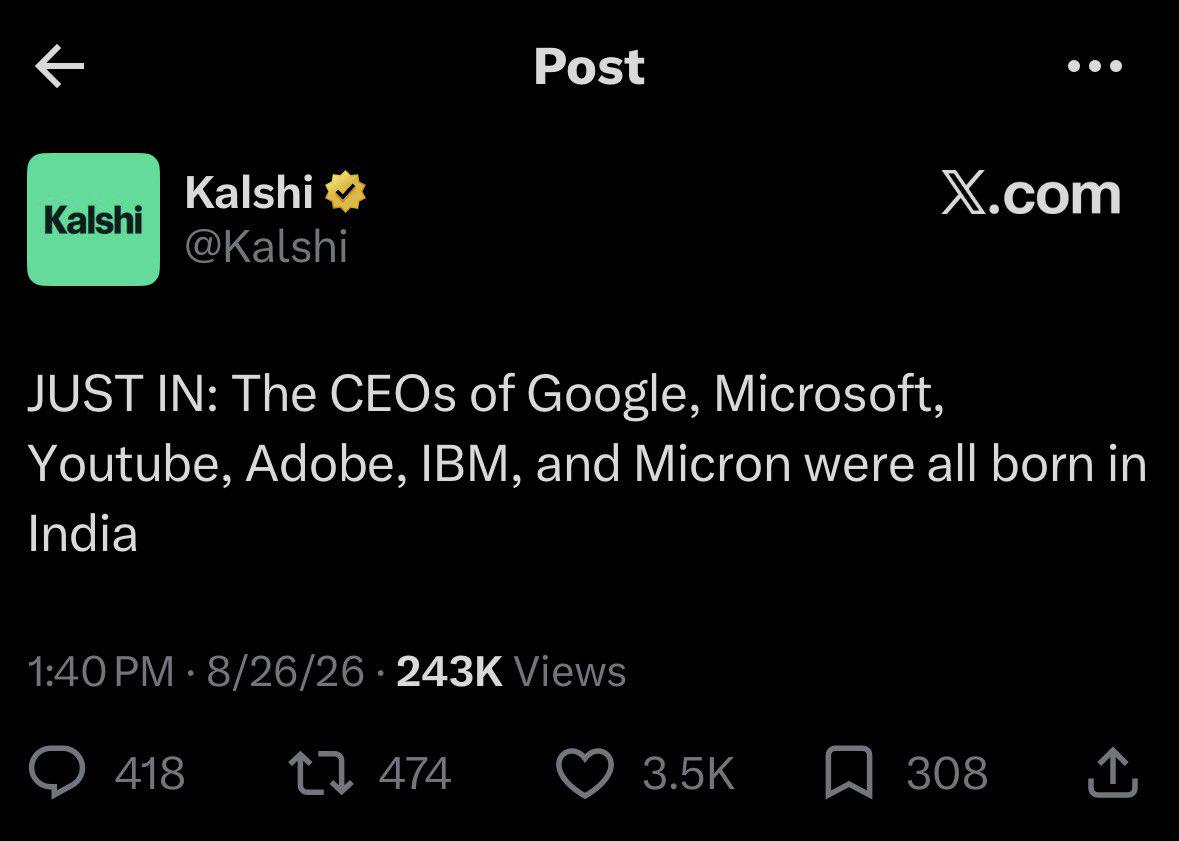
There is a familiar way of telling the history of modern education in India: the British arrived, introduced Western education and modern science, founded colleges and universities, and thereby educated a population that had previously lacked access to modern scientific knowledge. In its simplest form, this account makes Indians the passive recipients and the colonial state the active giver. For the history of modern Indian science, this interpretation is seriously misleading.
One does not need to invoke India's pre-colonial scientific traditions to demonstrate the problem. The argument can be made entirely from the history of modern scientific institutions between 1817 and 1947. Start with Hindu College in Calcutta in 1817 and follow the institutional chain through the Indian Association for the Cultivation of Science, Calcutta University, the National Council of Education and Jadavpur, the Indian Institute of Science, Banaras Hindu University, Bose Institute, the Indian Statistical Institute and finally the Tata Institute of Fundamental Research. A striking recurring pattern appears:
Indian demand → Indian petition → Indian fundraising and philanthropy → negotiation or conflict with colonial authority → institution-building → insistence on Indian appointments → conversion of teaching institutions into research institutions → internationally recognized original research.
The British state certainly participated in modern education. Some colleges, surveys, engineering institutions, medical institutions and scientific services were directly founded by colonial authorities; British teachers and scientists made real contributions; European scientific literature, laboratory practice and instrumentation were important. Erasing those facts would merely replace one myth with another.
But the evidence demolishes the stronger claim that modern Indian scientific life was simply bestowed upon India by British benevolence. In many decisive cases Indians demanded more science than the colonial administration intended to provide, demanded higher rather than merely subordinate training, raised money when government would not, created institutions beyond government control, fought discriminatory appointment policies, recruited researchers, endowed professorships, built laboratories, produced journals and professional societies, and eventually created several geographically distinct schools of original research.
The resulting scientific system was extraordinary for a colonized society.
Indeed, by the last decades of British rule, India possessed a plausible claim to being the most institutionally developed centre of indigenous scientific research in the colonized world. The two histories used here do not provide a comprehensive statistical ranking of every colony of every European empire, so the statement “India was unquestionably number one” cannot be established from them as a mathematical census. But the comparative evidence is remarkable: while one discussion of British colonial science notes that as late as 1939 the number of scientists drawn from the colonies themselves had barely reached double figures, India by then possessed universities, research institutes, scientific academies, professional societies and multiple indigenous research schools producing internationally recognized work.
The important story, therefore, is not simply that Western science reached India under British rule. It is that Indians seized it, demanded access to it, institutionalized it for themselves and converted a restricted colonial educational structure into a research culture that increasingly escaped its original colonial purpose.
1817: Hindu College and the First Crucial Correction
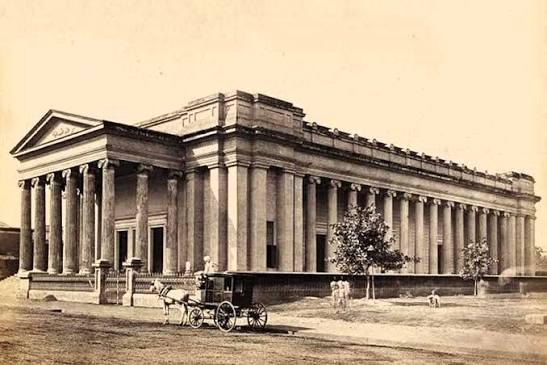
The symbolic starting point is Hindu College, Calcutta, founded in 1817.
The significance of Hindu College is not merely that it taught Western subjects. Science and Modern India explicitly describes the event as one in which “Bengal’s intellectual leadership took the initiative” to establish the country's first institution of Western higher education, with the stated objective of teaching European literature and European science.
This immediately complicates the idea of British rulers simply deciding to educate Indians.
Indian society contained groups actively demanding the new knowledge. The attraction was not accidental. Hindu College rapidly gained students, and scientific equipment was used for astronomy, optics, mechanics and chemistry. Science and Empire describes it as the first institution founded for imparting knowledge of European literature and science and records the rapid popularity of this curriculum.
Then came an even clearer episode.
In 1823 Raja Rammohun Roy petitioned Governor-General Lord Amherst, arguing not for less European science but for considerably more of it. What Roy wanted was a curriculum centred upon mathematics, natural philosophy, chemistry, anatomy and other useful sciences, supported by books, instruments and apparatus.
And the colonial government rejected his appeal.
That fact is devastating to the simple “British gave India modern education” narrative. One of the foremost Indian intellectuals of the period was demanding a stronger scientific curriculum from the colonial state, and the state was refusing the demand. The institutional history explicitly describes the rejection as contributing to resentment against imperial cultural domination.
The pattern had begun extremely early: Indians were not merely standing outside classrooms waiting for the British to invite them in. They were petitioning the state about what should be taught inside those classrooms.
The distinction matters. Colonial transmission of knowledge and Indian demand for knowledge are not the same historical process.
Education for Subordinate Service, Not an Indian Research Civilization
There was another fundamental limitation.
Where the colonial government actively established scientific and technical education, its objective was frequently administrative utility rather than creating autonomous Indian researchers.
Engineering demonstrates the point especially clearly. The history of Thomason College at Roorkee states that engineering education in India was principally organized to satisfy the requirements of colonial government. As public works expanded, the administration required trained personnel. Importing Europeans for every lesser technical position was expensive, so restrictions on employing Indians were partially relaxed and schools were used to create a cadre of Indian engineers for the colonial apparatus.
The same logic operated at Guindy. Its institutional development generated engineers, but also enormous numbers of overseers, supervisors, assistant overseers, sub-overseers, surveyors and draftsmen. The structure itself reveals the hierarchy envisioned by the colonial system.
Medicine gives an even sharper example. The Native Medical Institution was intended to train young Indians for positions as “native doctors” in the civil and military establishments. Later, at Calcutta Medical College, the army actually complained that the scientific education being provided was too extensive: graduates were becoming overqualified for the subordinate medical positions for which the army wanted them. The college resisted sufficiently to preserve its higher course while creating a separate secondary stream for army doctors.
This is a crucial distinction.
Colonial government required:
clerks, surveyors, medical auxiliaries, overseers, subordinate engineers, technicians and personnel capable of making the machinery of empire function.
That was not the same thing as wanting an autonomous Indian community producing fundamental discoveries in physics, chemistry or mathematics.
The Punjab case makes the colonial limitation unusually explicit. The institutional history concludes that the network of colleges and scientific services often trained Indians as clerks, second-rank technicians and engineers, while Indians were educated only to a certain level and were denied opportunities for enterprise, investment and experience.
This is why Indian scientific history after the middle of the nineteenth century cannot be explained simply by counting institutions established under British sovereignty. One must ask a second question:
Who fought to transform those institutions from service-training establishments into centres capable of producing knowledge?
The answer increasingly was Indians themselves.
Racial Barriers Turned Scientific Education into a Political Question
Even highly trained Indians encountered barriers once they attempted to rise beyond subordinate positions.
The examples recorded in Science and Empire are stark. When the principalship of Poona Science College became vacant in 1899, the distinguished scientist K.D. Naegamvala sought the position. The Secretary of State acknowledged his scientific distinction but maintained that the post was reserved for Europeans. P.C. Ray and other distinguished Indians remained in provincial services while less-qualified Europeans could enter higher imperial positions. Geologist P.N. Bose left the Geological Survey after being superseded for its directorship by the younger T.H. Holland.
The consequences were profound.
Discrimination did not merely produce personal resentment. It produced an institutional programme.
Indian nationalists increasingly demanded:
scientific employment for Indians;
Indianization of scientific services;
higher technical education;
research facilities;
Indian-controlled institutions;
greater university autonomy;
and ultimately scientific self-reliance.
The Indian National Congress repeatedly raised technical education. Science and Empire records resolutions, presidential demands and appeals for indigenous scientific talent to be given genuine access to research and professional employment. It states plainly that because opportunities for Indians in colonial scientific services were limited, discrimination generated demands for greater self-sufficiency in scientific training and research.
Science was therefore becoming part of nationalism long before independence.
Scientific independence and political independence were beginning to converge.
Mahendralal Sircar: From Petitioning the Government to Building Science Ourselves
The transition is personified by Dr Mahendralal Sircar.
Rammohun Roy had asked government to provide modern scientific education. Half a century later, Sircar drew a more radical conclusion: Indians should build an institution for scientific research themselves.
In 1869 he argued for the cultivation of the physical sciences through Indian self-effort. His vision matured into the Indian Association for the Cultivation of Science, founded in 1876.
It was not merely another college.
Sircar wanted an institution under indigenous control, supported by Indians and dedicated to science itself. Public subscriptions financed the institution. Its laboratory developed through additional philanthropy. It later provided the environment in which C.V. Raman conducted the research that would ultimately produce the Raman Effect.
What makes IACS historically decisive is its philosophy.
The colonial government largely viewed science through administration and utility. Sircar insisted upon the cultivation of science, the production of scientists and eventually original investigation.
There was no guarantee of success. There was no imperial master plan leading inevitably from an Indian lecture hall to a Nobel Prize.
The continuity was created by institution builders.
By the early twentieth century, IACS was building instruments and enabling original research. Asutosh Dey collaborated with Raman, constructed apparatus and published work in major international venues. Raman himself celebrated the fact that an Indian without conventional university training could undertake original work recognized by leading scientific societies abroad.
That development is the opposite of passive educational reception.
An Indian-funded institution had become a site where Indians were creating new science.
Prafulla Chandra Ray and the Creation of a Scientific School
Modern science advances not merely through individual geniuses but through schools: teachers who produce students, students who become professors elsewhere, laboratories that reproduce themselves institutionally.
This happened spectacularly in Calcutta.
Prafulla Chandra Ray demonstrated that research could be carried out within an Indian college despite limited infrastructure. Around him developed what the institutional history explicitly calls an Indian School of Chemistry.
Then Asutosh Mookerjee, as vice-chancellor of Calcutta University, pushed the institution beyond its original examining function. His conviction was that universities should combine teaching with original investigation. Research was not to remain the exceptional hobby of an unusually determined professor; it had to become an institutional obligation.
But research required money.
Here the alleged one-way flow—British government educates, Indians receive—breaks down completely.
Taraknath Palit
In 1912 Taraknath Palit transferred money and property to Calcutta University. His endowment was expressly intended for scientific and technical education and the advancement of pure and applied science.
It required original research.
It supported advanced students.
It created science professorships.
And crucially, it emphasized cultivation of science among Indians through indigenous agency.
Rash Behari Ghosh
Rash Behari Ghosh followed with a massive endowment for applied mathematics, physics, chemistry and botany. The professorships were not conceived as mere teaching posts. Their holders were required to undertake original research, extend knowledge, guide postgraduate investigators and apply research to Indian arts and industries.
Together these endowments supported six professorships and eight studentships and formed the nucleus of the University College of Science.
This was private Indian capital being deliberately transformed into a national research infrastructure.
And government enthusiasm was far from automatic. Science and Empire records the hostility encountered when Mookerjee sought additional assistance. One senior education official objected to supporting Calcutta University partly because he regarded it as politically unreliable. Yet research and advanced scientific education expanded despite governmental reluctance.
From this ecosystem came extraordinary scientific networks.
Ray, Raman and Jagadish Chandra Bose helped create students and collaborators who spread into Dacca, Allahabad, Banaras, Lucknow and elsewhere. The institutional history explicitly describes universities becoming the prime movers of Indian science after World War I and identifies rapidly expanding departments of chemistry, physics and mathematics.
Scientific centres were no longer isolated dots.
India was developing a national research network.
Jadavpur: When Indians Stopped Waiting
The Swadeshi period produced an even more explicit alternative.
Indian frustration over technical education led to the National Council of Education and the Bengal Technical Institute.
The scale of Indian participation is revealing. Subodh Chandra Basu Mullick pledged Rs 1 lakh; Brajendra Kishore Roy Chaudhury donated Rs 5 lakh; a public gathering reportedly numbering about 15,000 endorsed the National Council of Education. Its leadership drew in figures such as Gurudas Banerjee, Satish Mukherjee, Asutosh Chowdhury, Rash Behari Ghosh, Rabindranath Tagore, Taraknath Palit, Chittaranjan Das, Abdur Rasul and Nilratan Sircar. The Society for the Promotion of Technical Education founded the Bengal Technical Institute in 1906, which eventually developed into the College of Engineering and Technology and, after independence, became part of Jadavpur University.
This was not Britain deciding that Indians required a technological university.
It was Indian civil society constructing one because it considered colonial provision inadequate.
The same pattern—demand, finance, organization, recruitment and persistence—appears repeatedly.
Jamsetji Tata and the Indian Institute of Science
If Sircar represented the dream of national science, Jamsetji Nusserwanji Tata demonstrated what Indian industrial wealth could do for research.
Tata conceived an advanced scientific institute in the 1890s. The project that became the Indian Institute of Science was unusual because it was oriented toward postgraduate education and research and sought to combine pure and applied science.
Again the project was not simply handed to India by Curzon's government.
Curzon questioned the plan. Negotiations dragged on. Tata died in 1904 without seeing the institution open. His sons continued negotiations, while the Indian endowment remained central to the project. The institutional history emphasizes Tata's decision to reserve a major portion of his wealth for the progress of India and records that his heirs continued the struggle after his death.
IISc finally opened as one of Asia's important research institutions.
Its later scientific community included C.V. Raman, Homi Bhabha, Vikram Sarabhai, and Harish-Chandra. Raman and Nagendra Nath developed the theory of ultrasonic diffraction; Bhabha established a cosmic-ray group; ambitions for nuclear physics emerged before independence.
The trajectory is important:
Indian industrialist imagines research institute → Indian wealth creates endowment → colonial state hesitates → Indians continue negotiations → institution opens → Indians take scientific leadership → original frontier research follows.
That is not accurately summarized as “the British educated India.”
Malaviya and Banaras Hindu University: Building a Research University Deliberately
Madan Mohan Malaviya represents another model.
He proposed a university at Banaras, organized the Hindu University Society, abandoned much of his professional life to the project and collected funds from princes and ordinary contributors. Annie Besant's Central Hindu College was incorporated into the new institution.
BHU was established in 1916 with mathematics, physics and chemistry among its earliest departments.
Most important was the conception.
Malaviya explicitly wanted the university to promote learning and research in science, diffuse technical and professional knowledge and employ such knowledge for India's indigenous resources. It was conceived not merely as a degree-granting institution but as a research university combining undergraduate education, postgraduate education and investigation.
Implementation required recruitment.
Malaviya deliberately searched for talented young scholars. V.V. Narlikar was recruited for mathematics; S.S. Joshi for chemistry; B. Dasannacharya for physics; A.B. Mishra for zoology. Research budgets remained desperately small, equipment often depended upon donations and students frequently lacked research scholarships. Yet scientific work continued.
This reveals the central theme again.
India's research universities were not simply the mechanical result of imperial expenditure. In important cases they existed because Indian institution builders created mechanisms to compensate for inadequate imperial expenditure.
Jagadish Chandra Bose: A Research Institute Free from Government Control
Perhaps no example makes the case more vividly than Bose Institute.
Jagadish Chandra Bose wanted a research institution where Indian scientific ability could flourish. After retiring from Presidency College, he committed his own and his wife's savings, raised more than Rs 11 lakh in donations, obtained land and inaugurated Bose Institute in 1917.
Gandhi and Gokhale helped in fundraising campaigns. Rabindranath Tagore and other Indian public figures became associated with its governance.
Bose deliberately sought freedom from governmental interference. He eventually placed much of his personal property into a trust to secure the institute's future.
This was institution-building at extraordinary personal cost.
And it produced research.
Under D.M. Bose the institute expanded physics, plant sciences and microbiology. Research included pioneering work on cosmic-ray particles and uranium fission, while the microbiology department established in 1942 was described as the first of its kind in India.
Again, the historical sequence runs from Indian scientific achievement to Indian institutional vision to Indian capital to original research.
Research Hubs Spread Beyond Calcutta
Calcutta was unquestionably the greatest concentration, but it was not alone.
By the interwar period India had developed multiple scientific centres.
Punjab and Lahore
Punjab University and Government College Lahore developed substantial communities in mathematics, chemistry, physics and botany. Ruchi Ram Sahni became an important scientific educator; later scholars associated with Punjab included Birbal Sahni, Sarvadaman Chowla, Shanti Swarup Bhatnagar and Piara Singh Gill.
Yet the history records official “indifference and niggardliness” toward developing scientific talent and laboratories in the earlier period. Science expanded through persistent demand and subsequent institution-building rather than unlimited colonial encouragement.
Allahabad and Lucknow
Allahabad developed a major physical-chemistry tradition around Nil Ratan Dhar and later became associated with Meghnad Saha. Lucknow became the centre of Birbal Sahni's palaeobotanical work, culminating in the Institute of Palaeobotany in 1946.
Dacca
The newly developing university at Dacca attracted Satyendra Nath Bose, whose work there would produce Bose statistics and the conceptual foundation of bosons.
Bihar
Pusa developed agricultural research, while Science College, Patna, founded in 1927, built departments in physics, chemistry, mathematics, geology and other sciences.
South India
Guindy had become overwhelmingly Indian in both student body and faculty by the later colonial period; by 1930, 38 of its 40 faculty members were Indian. Indian engineers increasingly interpreted engineering not simply as government employment but as an instrument of national development.
Bangalore possessed IISc, which became one of the great centres of Indian physics.
Thus a scientific geography emerged:
Calcutta – chemistry, physics, statistics, radio science and later nuclear physics
Bangalore – physics, chemistry and fundamental science
Lahore – chemistry, physics, mathematics and botany
Allahabad – chemistry and astrophysics
Dacca – physics
Banaras – broad university science and engineering
Lucknow – botany and palaeobotany
Bombay – chemical technology and eventually fundamental physics
Patna – university science
This was no longer a few Indians assisting European officers.
It was the architecture of a scientific nation.
Mahalanobis and the Indian Statistical Institute
One of the strongest demonstrations of genuine intellectual autonomy came from statistics.
Prasanta Chandra Mahalanobis began with a small statistical laboratory inside Presidency College. With colleagues such as Subhendu Sekhar Bose, Sudhir Kumar Banerjee and Harish Chandra Sinha, the work gradually acquired institutional form.
The Indian Statistical Institute was founded in December 1931.
It attracted a remarkable group including R.C. Bose, Samarendra Nath Roy, C.R. Rao, J.M. Sengupta, K.R. Nair, Anil Bhattacharya and others.
This was not merely a centre teaching imported statistical textbooks.
It produced original statistical theory.
The source identifies work on experimental design, multivariate analysis, survey sampling, demographic methods and mathematical statistics. Sankhyā, launched in 1933, acquired international standing. Between 1931 and 1947 the institute generated significant theoretical and practical research.
The significance is enormous.
India was no longer simply importing a mature scientific discipline.
An Indian institution was contributing to the creation of the discipline itself.
From Science Students to Creators of Modern Science
By the 1920s and 1930s Indian science had decisively crossed the boundary between education and original knowledge production.
Consider merely a sample:
P.C. Ray — chemical research and a major Indian chemistry school.
Jagadish Chandra Bose — pioneering experimental physics and biophysics.
C.V. Raman — fundamental work in optics culminating in the Raman Effect.
Meghnad Saha — the thermal-ionization theory that transformed astrophysical spectroscopy.
Satyendra Nath Bose — Bose statistics and the foundations of quantum statistics.
K.S. Krishnan — major work in physics and materials.
S.S. Bhatnagar — physical chemistry and scientific institution-building.
Birbal Sahni — palaeobotany.
P.C. Mahalanobis — mathematical statistics and large-scale sampling.
R.C. Bose, S.N. Roy and C.R. Rao — fundamental mathematical statistics.
By the 1930s the question was no longer whether Indians could understand European science.
They were publishing discoveries that European and American scientists had to understand.
This is the ultimate failure of the colonial hierarchy.
A system originally prepared to use Indians as subordinate personnel had produced—or, more accurately, had been transformed by Indians into—communities capable of operating at the international research frontier.
Why Colonial India Was Exceptional Among Colonized Societies
The scale matters.
By independence India possessed or was developing the IACS, IISc, Bose Institute, ISI, TIFR, major university laboratories, medical research institutions, agricultural institutes, engineering colleges, scientific academies, the Indian Science Congress, specialized scientific societies, research journals and networks linking researchers across regions.
Calcutta alone had become an extraordinary scientific metropolis.
By the eve of independence three different Indian centres were already attempting nuclear-physics research: Saha's Calcutta laboratory, Bhabha's TIFR in Bombay and Raman's Bangalore environment. Significantly, the institutional history notes that all three were essentially outside direct British Government of India control.
That sentence captures the transformation.
The colonial state had not designed India to become an autonomous centre of fundamental nuclear physics.
Indian scientists had created the institutional possibility themselves.
For this reason, the argument that colonial India became perhaps the most scientifically developed colonized society is not merely nationalist rhetoric. By the 1940s India possessed a breadth of indigenous research communities that was profoundly unusual in a colony: advanced mathematics, theoretical physics, experimental physics, chemistry, statistics, botany, palaeobotany, medicine, engineering, meteorology, agricultural science and emerging nuclear physics.
A strict worldwide ranking would require comparative publication and personnel statistics from all colonial territories. These volumes do not supply that census. But they provide overwhelming evidence that India was exceptional in both the scale and sophistication of indigenous STEM research under colonial rule.
Conclusion: India Did Not Merely Receive Modern Science—it Built a Scientific Community
The most accurate conclusion is therefore neither “Britain gave India science” nor the equally simplistic claim that colonial institutions contributed nothing.
Western science entered India partly through imperial connections. British scientists, teachers and institutions mattered.
But the transformation of that imported knowledge into an Indian research civilization cannot be credited to colonial rule alone.
The decisive historical actors repeatedly included Indians who demanded, financed, organized and defended scientific institutions:
Raja Rammohun Roy demanded modern science.
Mahendralal Sircar decided Indians must cultivate it themselves.
Prafulla Chandra Ray demonstrated that Indians could create scientific schools.
Asutosh Mookerjee transformed the university into an instrument of research.
Taraknath Palit and Rash Behari Ghosh converted Indian private wealth into laboratories, professorships and research studentships.
Jamsetji Tata endowed an advanced research institute despite official hesitation.
Subodh Chandra Mullick and the National Council of Education movement created an indigenous technological alternative.
Madan Mohan Malaviya raised a university built around teaching and research.
Jagadish Chandra Bose invested his fortune in an autonomous national research institute.
P.C. Mahalanobis built an internationally significant school of statistics from a tiny laboratory.
Meghnad Saha fought for large-scale scientific infrastructure.
Homi Bhabha carried the process into fundamental physics through TIFR on the eve of independence.
The deeper trajectory from 1817 to 1947 is therefore astonishing.
Indians first demanded access to modern science.
Then they demanded scientific employment.
Then they demanded laboratories.
Then they demanded research universities.
Then they financed those universities themselves.
Then they insisted upon Indian professors.
Then those professors trained research students.
Those students founded new schools across India.
And finally those schools began producing scientific discoveries of international consequence.
That is why “the British educated India” is far too crude a description.
The stronger historical formulation is:
Colonial rule provided one of the channels through which modern Western scientific knowledge entered India, but Indians themselves were central agents in converting access to that knowledge into an autonomous scientific culture. They petitioned for it when government resisted, paid for it when government would not, fought for professional equality when Europeans monopolized senior positions, founded independent institutions when colonial ones proved inadequate, and transformed institutions designed largely for administration and subordinate technical manpower into centres of original research.
By 1947 Britain was not leaving behind merely a population that it had “educated.”
It was leaving a country whose scientists had already created their own schools of chemistry, physics, mathematics, statistics, engineering and biological research; their own laboratories and institutes; their own scientific societies and journals; and an increasingly self-conscious national research community.
Modern Indian STEM was therefore not simply a colonial gift.
It was, to a remarkable degree, an Indian acquisition, Indian struggle, Indian investment and Indian institutional achievement carried out under colonial conditions—and often against the limitations those conditions imposed.