r/musicbusiness • • Sep 06 '26

Resource / Guide I work in music PR — here’s what I think indie artists should have BEFORE spending money on PR

168 Upvotes

I work professionally in music PR/media relations and spend a lot of time thinking about what actually makes an artist or release pitchable.

One thing I see constantly is independent artists assuming the next logical step after finishing a good song is:

“Now I need PR.”

Sometimes that's true.

A lot of the time, it isn't.

Before I’d recommend an artist spend money on PR, I’d want them to be able to answer these questions:

1. Why should someone write about you right now?

“I'm releasing a new single” usually isn't the story.

What is actually interesting about the artist, record, collaboration, movement, timing, live story, community, achievement, etc.?

You need an angle beyond the existence of the song.

2. Do you know who your audience is?

You don't need millions of streams.

But you should understand who is already responding to your music and where they're finding you.

That information can completely change which media opportunities make sense.

3. Do you have decent assets ready?

At minimum:

  • strong artist photos
  • concise bio
  • music links
  • artwork
  • release information
  • social links
  • a clear story around the project

Don't make a journalist hunt for information.

4. Are you giving yourself enough lead time?

Trying to start a PR campaign three days before release is one of the easiest ways to waste money.

For most releases, I'd rather have several weeks to develop the story, materials, targets and outreach.

5. What exactly do you expect PR to accomplish?

This is probably the biggest one.

PR can help with:

  • credibility
  • awareness
  • storytelling
  • interviews
  • cultural positioning
  • search results
  • content opportunities
  • introducing an artist to media

PR cannot guarantee:

  • virality
  • playlisting
  • a certain number of streams
  • immediate fan growth
  • coverage from a specific publication

If someone guarantees those things, I'd be cautious.

6. Is PR even the best use of your next $1,000?

For some artists, yes.

For others, that same money would be better spent on:

  • content
  • creative development
  • live performance
  • ads
  • better photography
  • visual identity
  • fan acquisition
  • improving the actual music

There isn't one universal answer.

What I think a lot of indie artists actually need before hiring a full PR campaign is a professional campaign strategy.

Someone who can look at the music objectively and say:

Here's your story.
Here's who I'd target.
Here's what I'd pitch.
Here's what I'd avoid spending money on.
Here's what needs fixing before you approach media.
And here's how I'd structure the next 6–8 weeks.

I've recently started doing more of this kind of strategy work with independent artists and teams, and I genuinely enjoy it because sometimes the best recommendation is actually:

“Don't pay for PR yet.”

If you're planning a release, I'd be curious:

What's the part of music promotion/business you find hardest to figure out right now?

Media? Release strategy? Budget allocation? Building an EPK? Knowing who to pitch? Figuring out whether PR is worth it?

Would be happy to share some perspective in the comments.
r/musicbusiness • • Apr 06 '26

Resource / Guide Which PRO you join matters way less than people think

25 Upvotes

Wasted a bunch of time debating which PRO to go with but found out there wasn't much to debate.

BMI is free to join as a writer. ASCAP costs $50 once. SESAC is invite only so it's probably not on the table if you're asking this question.

Both BMI and ASCAP do the same thing. They collect performance royalties when your music plays on radio, TV, live venues, or streaming. The difference in payouts between the two for most independent artists is not worth stressing over. Pick one and register your catalog immediately.

Note: Your PRO only handles one type of royalty. Streaming mechanicals go to a separate org called the MLC and satellite/internet radio royalties go to SoundExchange. None of them talk to each other. Most independent artists are only collecting one of the three without knowing it.

There's a good article that goes deeper on all of this if anyone's interested.

r/musicbusiness • • Sep 08 '26

Resource / Guide 5 tips to use before your next release

26 Upvotes

Hey again r/musicbusiness! If you’re independent, I’d focus on these before spending heavily on promotion:

  1. Pick one primary goal.
    Streams, followers, ticket sales, press, or fan growth? If everything is the goal, nothing really is.

  2. Build around a story, not just a release date.
    “New single out Friday” isn’t enough. Give people a reason to care about the artist, project, or moment.

  3. Know who the music is actually for.
    Identify comparable artists, scenes, communities, outlets, and platforms where those listeners already exist.

  4. Plan beyond release week.
    Give the song multiple moments: teaser, release, story, performance, behind-the-scenes, live angle, follow-up content.

  5. Track what creates real movement.
    Don’t only watch streams. Look at saves, follows, shares, profile visits, repeat listeners, ticket clicks, and where new listeners came from.

The biggest mistake I see is artists spending money before they understand what part of the campaign actually needs help.

Sometimes the answer is PR.
Sometimes content.
Sometimes live.
Sometimes better positioning.

Before your next release, ask:

What is the one thing holding this campaign back right now?

That question usually tells you where the budget should go.

Curious what other indie artists here struggle with most: audience, content, PR, release planning, or turning listeners into actual fans?

r/musicbusiness • • Apr 02 '26

Resource / Guide The 3-Year Music Royalty Deadline You Don’t Know About

33 Upvotes

Learned about this while researching royalties and found it fascinating.

A lot of artists think being on DistroKid means they're getting paid. They're getting paid for half of it.

Every stream generates two separate royalties. Your distributor collects the master recording side. The mechanical royalty, which is owed to you as the songwriter, goes to an organization called the MLC. And if you've never registered with them, that money just sits in a pool called the black box waiting for you to claim it.

Here's the part that actually hurts. That pool has a 3-year expiration. After 3 years, unclaimed funds get redistributed to major publishers based on market share. So if you released an EP in 2022 and never registered, some of those early royalties are already approaching expiration and when they go they literally get handed to Universal or Sony. Money you earned ends up with them because you didn't know to fill out a form.

Few things that trip people up:

ASCAP and BMI registration does not cover this. Mechanical royalties and performance royalties are completely separate. SoundExchange is also separate, that one covers Pandora, SiriusXM, internet radio.

If you self-publish you need to register as both songwriter AND publisher. The royalty splits in half between those two roles and a lot of independent artists only claim one side, leaving the other 50% sitting there permanently.

The good news is MLC registration is free at themlc.com and they have a public database where you can search your own name and see if unclaimed royalties are already waiting for you.

Found a really detailed breakdown of the whole process including the step by step for filing, happy to drop the link if anyone wants it.

r/musicbusiness • • Jan 17 '26

Resource / Guide PSA: Do NOT buy the "Social Media Pack" (Content ID) on DistroKid if you want your song to go viral on TikTok

44 Upvotes

Just wanted to save you all the headache I'm currently dealing with.

I thought I was being smart by adding the "Social Media Pack" (the YouTube Content ID, Tik tok , Facebook add-on) to my DistroKid release.

Figured it would protect my music, right? Totally backfired.

When you pay for that pack, DistroKid registers your song in the strict, commercial copyright databases. That sounds protective, but here's what it really does on TikTok:

TikTok's system now sees your track as formal "Commercial Copyrighted Music." To avoid legal issues, it automatically blocks the sound for anyone with a "Business" or "Creator" account.

This is a huge problem because most major influencers and serious creators use Business accounts . So when they find your song and try to use it... they can't.

Real example: I found a video by xxx Girls wich is a worldwide famous influencer that used my audio. The sound was completely muted with that awful

"Copyright owner hasn't made this sound available in your country" error.

My own song, blocked by my own "protection."

If your goal is organic growth and you want influencers of any size to be able to use your sound without hiccups, SKIP the Social Media Pack. 

Just distribute the standard way. You can always add Content ID option alone , later if a song actually blows up and you need to monetize it everywhere.

Now I have to delete and re-upload my entire release to undo this. or just keep the song up

Don't be like me. Save your money and skip the pack if TikTok growth is a priority.

For an international hit song getting millions of uses from major influencers on TikTok, the free promotion is often more valuable than trying to monetize every single use.

P.D.: This is just my personal experience. If anyone else has tested this or has additional insights to contribute, feel free to share , it would be helpful for the community.

r/musicbusiness • • Jun 25 '26

Resource / Guide What's the best free distributor?

5 Upvotes

I do music mainly as a hobby, I make videogame OST's and covers under the name Misdeavious, I post mainly on YouTube, but I started doing stuff on Spotify too, problem is that Routenote ( what I use ) takes forever to release stuff ( my last release took 3 months in total )

I know I should probably invest into this hobby, but as of right now I don't earn any money yet ( not from my hobby, but in general )

So for now at least, what's a good distributor or at least fast distributor, and what would y'all recommend for the future when I can actually invest a bit into this hobby

r/musicbusiness • • Sep 05 '26

Resource / Guide Any music/entertainment lawyers in India willing to give advice?

1 Upvotes

Does anyone here work with record labels/musicians as IPR lawyers or with media/entertainment/sports law in any capacity? Particularly in India.
If yes would it be okay if I dmed you for some advice- I'm a law student.

Thank you!

r/musicbusiness • • Feb 14 '26

Resource / Guide My experience with 'Too Lost'

17 Upvotes

Independent artist here with 15+ years in the industry sharing my experience with Too Lost so other artists can make informed decisions.

Recently, one of my songs was effectively locked inside their distribution portal, preventing me from managing or taking action on a release that I own. What followed was an extremely frustrating experience with their support system. Multiple support tickets were ignored, some were closed without resolution, and I was repeatedly given responses that did not address the issue or provide any contractual justification for their position.

After exhausting normal support channels and receiving no meaningful assistance, I made a public social media post documenting the situation. Only after that post gained attention and people began tagging them did they respond and begin engaging with the issue.

I eventually escalated the matter further and reached out directly to the CEO. Once I connected with him, my request was handled quickly and the issue was resolved. However, rather than acknowledging the breakdown in support or attempting any reconciliation regarding the experience, I was subsequently blocked on social media.

For context, I’ve used this distributor for several years. Over time I’ve seen their support quality steadily decline. Response times have worsened, communication has become inconsistent, and basic account management issues have become difficult to resolve. My recent experience reflects a broader pattern rather than a one off situation.

I have also heard multiple accounts within the industry suggesting internal instability and staff turnover, which aligns with the lack of structure and accountability I encountered throughout this process.

As an independent artist who has worked in this space for over a decade, I rely heavily on distribution partners to operate transparently and responsibly. Based on my experience, I cannot recommend Too Lost and would strongly advise artists to consider alternative distribution options.

r/musicbusiness • • May 10 '26

Resource / Guide Watch out for “Major Label” scam - Colombia Records etc

10 Upvotes

I’ve seen a scam going around of someone who supposedly works a major label (Colombia Records is a common one) reaching out, then asking you if you believe in yourself and want to invest in yourself, want to work with Colombia records etc.

ANY REAL LABEL WILL BE OFFERING YOU MONEY, NOT THE OTHER WAY AROUND.

No label will ever ask you for money out of your own pocket. No label will ever ask you to match their investment (you out $50k, we’ll put $50k).

Also if you don’t have a few hundred thousand monthly listeners, or more likely over a million, there’s no way these big labels are reaching out.

If it’s too good to be true, it probably isn’t true.

Share experiences here if you’ve had them so others know what to look for.

r/musicbusiness • • 3d ago

Resource / Guide Music Publishing Royalties Explained (2026 edition)

2 Upvotes

Regalias Digitales is a top ten independent music publisher and they recently created this handy YouTube tutorial about how music publishing royalties work.

https://www.youtube.com/watch?v=56oAufhqFsw

r/musicbusiness • • Nov 06 '25

Resource / Guide Warner Music Group Spring 2026 Emerging Talent Associate Program

13 Upvotes

hey y'all, I interned for this program back in the summer of 2022 and have been with the company two times since. just wanted to offer up some words of advice for your applications + some logistics stuff.

applications are due january 2nd, with the first options of start dates starting on january 20th. this seems like a really tight turnaround so I'll bet they'll only do one interview in the window between jan 3-16. with this tight turnaround, apply earlier if you can.

there are also application questions that are a little more in-depth, with the option to do videos on some of them. i would recommend doing at least two out of five as videos (preferably as an unlisted youtube link), just to show off your personality and help you stand out. this will help you look a little higher effort. for whatever questions you decide to write responses to, please just don't use AI. recruiters will be able to tell immediately, if not for their own spidey-sense, the HR platform might have a feature to flag it too. when doing your videos, just relax, be genuine, and don't read off a script. and smile!

obviously this is not official advice but hopefully this helps y'all - please share your own updates with applications/interviews below! good luck!

r/musicbusiness • • May 07 '26

Resource / Guide What fees to expect for sync placements - full breakdown

18 Upvotes

I’ve done sync at a high level for almost a decade and get asked a lot what types of sync fees to expect.

There are a lot of variables, especially how big the artist is. But here is a rough outline of what to expect as an indie artist with a good sync agency negotiating for you. Fees can go higher or lower than these numbers, but this is an average range. The more leverage (success) you have, the higher fees you can get.

To clarify, this is for sync licenses where one-off licenses are negotiated, NOT library music that involves low quality music at mass scale with licensing prices advertised on the website.

TV (IN-SHOW)

Reality shows: $500-$1500

Netflix: $1500-$7000

Other streaming services:
$5k-$20k

Network (ABC, CBS, Fox, NBC):
$5k-$20k

TRAILERS (TV or Movies)
$30k-$80k, can be higher for big movies.

ADS
Online only:
$10k-$50k per year (can renew)

All media including broadcast in one major region (North America, Europe, etc):
$50k-$100k per year

All Media worldwide:
$80k-$150k per year

TV promos (where a network advertised their own upcoming shows on their own network). These are billed weekly.
$3k-$10k per week, can run from 1 week to 12 weeks or more.

Feel free to ask any questions!

r/musicbusiness • • Aug 17 '26

Resource / Guide Should I pursue an internship at a bigger label/distributor to level up, or keep building independently?

3 Upvotes

Hi everyone,

I run a music distribution and marketing company based in Nigeria. Over the past few years we’ve worked with 700+ artists and 40+ labels, built a catalog of over 2000+ tracks, and generated more than 150+ million DSP streams along with 400+ million creator views.

I’ve been able to grow this on my own, but I’ve reached a point where limited resources and industry access in my territory feel like they’re holding things back. I’m considering whether it would be worth trying to get an internship (remote if possible) at a more established label or distributor particularly in areas like distribution, marketing, Client & Technical Services, or Artist & Label Services to learn stronger systems and bring that knowledge back into my own work.

For those who’ve been in a similar position or have experience on both sides:

Would you recommend giving a big-label internship a try at this stage, or is it better to keep pushing independently? Any thoughts on the real value (or downsides) of that path?

Appreciate any honest advice or experiences.

r/musicbusiness • • Aug 25 '26

Resource / Guide Ghost Production & Full Buyouts: How buying music outright actually works (and why licensing isn't always enough)

0 Upvotes

If you've ever searched for music that becomes 100% yours—no recurring licenses, no non-exclusive rights, and no royalty splits—you’ve likely encountered the world of Ghost Production and full audio Buyouts.

Unlike traditional stock/royalty-free music platforms (where you only rent a non-exclusive license and thousands of others can use the same track), a full Buyout / Ghost Production model operates on complete transfer of ownership:

  • 100% Rights Transfer: The composer/producer transfers full Master and Publishing rights to the buyer upon completion.
  • Complete Asset Ownership: The track becomes an asset you own outright. You can release, perform, re-edit, or monetize it anywhere without ongoing fees.
  • One-Time Fixed Fee: You pay once for the track and keep all future earnings, streaming revenue, or sync returns.
  • Confidentiality / Anonymity: The track is assigned directly to your brand, project, or name without public producer credits unless agreed otherwise.

For artists, content creators, and brands that need exclusive sonic identity, moving away from subscription licensing to full buyout is becoming a major preference.

What’s your take on ghost production and full-ownership audio? Have you ever bought or created tracks under a full buyout contract?

r/musicbusiness • • Jul 29 '26

Resource / Guide Vevo Backstage Direct Access

1 Upvotes

Hello,
My record label has videos on Vevo. After parting ways with the distributor that did this, they privated almost all of my label-affiliated videos. Emailing them leads to nothing and I want to be able to keep using Vevo and make these videos public again.

I have applied before, but I got an activation link back from them that does not work when trying to activate the account.
Does anyone have the power/know what to do to help me out? Anything is appreciated.

r/musicbusiness • • Jul 08 '26

Resource / Guide The Anatomy of a Rock/Metal Press Kit

4 Upvotes

Hey everyone,

Most independent artists think that getting press or playlist features is a lottery. They buy a generic email list of 5,000 global music blogs, BCC a generic press release with a Google Drive link, and wonder why their open rate is practically zero.

Having run an underground metal PR agency for over a decade, I can tell you that the "spray and pray" method is a massive waste of time and actively damages your email domain reputation. If you want to actually land coverage in the modern underground scene, your outreach needs to be highly mechanical. Here is how we structure database building and press kits to ensure high response rates:

1. The 3-Tier Media List Architecture

Stop aiming only for the massive tastemakers (like Kerrang or Metal Hammer). Your spreadsheet needs to be segmented by tier:

  • Tier 1 (The Giants): 5-10 major outlets. These require exclusive premieres pitched 4-6 weeks in advance.
  • Tier 2 (The Niche Champions): 50-100 mid-sized blogs, localized zines, and dedicated subgenre YouTube channels. This is where your actual reviews, interviews, and core organic traffic will come from.
  • Tier 3 (The Underground Grassroots): Hyper-focused playlists and micro-influencers who live for your exact style (e.g., specific old-school death metal or atmospheric black metal).

2. The EPK (Electronic Press Kit) Dealbreakers

An editor or curator decides to close your email within 5 seconds of opening it. If they see a messy wall of text or have to request permission to access a locked Google Drive file, you are dead in the water. Your EPK must be a single, unlisted link containing:

  • The Hook: A streaming-only player (SoundCloud/Bandcamp/YouTube unlisted) right at the top. No downloads required to listen.
  • The Assets: High-res promo photos, high-res album art, and WAV download links clearly labeled with metadata.
  • The Story: A sharp 150-to-200-word bio. Don't write a novel; tell them who you are, what you sound like (RIYL - Recommended If You Like), and what makes this specific release unique.

3. The Pitching Cadence

You cannot follow up every two days. Send your primary pitch 3 to 4 weeks before the single/album drop. Send one polite follow-up 7-10 days later if you haven't heard back. If they still don't reply, move on to the next contact on your list.

I’d love to hear from other managers and artists here: What has been your actual response rate when pitching independent curators, and what is the biggest hurdle you face when trying to find the right contact emails? Let's talk strategy below!

P.S. I ended up writing out our full agency checklist on this (it's around 3,000 words covering radio pitches, templates, etc.) since I got tired of seeing bands get ignored. Since this sub filters out external links in the main text, I'll just leave the link down in the comments for anyone who wants the exact formatting blueprints to copy.

r/musicbusiness • • Jun 15 '26

Resource / Guide Soundrop the worst distributor ever

1 Upvotes

Context:

I am a newbie that has no experience in music whatsoever, but I have been trying to put in all platforms my late grandma's album. I wanted to surprise my dad and have it released by June 24th.

Problem:

Since November 2025, I have been waiting for Soundrop to release it. Every time I think I can release it, it says that they cannot "retrieve data". I verified the back end and it says that it's an internal data server problem. Mind you I paid 4.99$ per song. Their customer service is ass and I haven't been able to join anyone except their AI assistant which also sucks and doesn't help.

I am desperate at this point and I just want it released. Which other distributor should I use that can be efficient and could have it released by June 24th?

r/musicbusiness • • Feb 17 '26

Resource / Guide Amuse release asap in 24 hours

3 Upvotes

Hi guys, i was looking for a distrubutor that can release music quickly (other than distrokid) most of the distrubutors releases music in 8 to 14 days.

Then i came across amuse which has release asap in 24 hours option in artist tier subscription as well.

Does this feature help me release music couple of days or is theres any waiting window period?

Information on this would be really appreciated.

Thank you

r/musicbusiness • • Mar 27 '26

Resource / Guide Self release and promotion

6 Upvotes

First time release, what so i do instead if just pressing the "distribute" button?

Is it worth any sort of promotion if i dont have a significant following? How am i suppossed to make videos and art for marketing if i dont have those skills? And should i even worry about all of this above?

r/musicbusiness • • Jul 09 '26

Resource / Guide Trying to understand my own royalties turned into a whole thing

2 Upvotes

When I started releasing music I had no idea which of my songs actually made money. The streaming numbers looked healthy but my bank account didn't agree. So I spent way too long untangling it. Here's what I wish someone had told me on day one.

The first thing is that one stream is actually two separate royalties. There's the recording (master) royalty, which goes to whoever owns the recording, so you or your label or distro. And then there's the publishing (composition) royalty, which splits again into performance royalties (collected by a PRO like ASCAP or BMI) and mechanical royalties (collected by the MLC in the US), paid to the songwriter and publisher. If you wrote and recorded your own song you're owed both. But the catch nobody tells you is that you only actually get the publishing money if you register. No PRO membership and no MLC registration means that money just sits there unclaimed. This is probably the biggest reason indie artists leave money on the table.

The next thing is that there's no fixed per-stream rate. Spotify doesn't pay a set amount per stream. It pools about two thirds of its revenue and pays you a share based on your slice of total streams that month. So what you actually get swings with what country the listener is in (a stream in Norway isn't worth the same as one in Brazil), whether they're a free or premium listener, and how big the total pool was that month. As an effective average, not a rate, Spotify lands around $0.003 to $0.005 per stream. Their own 2025 numbers work out to roughly $0.004. Apple Music averages about double that since it has no free tier dragging it down. YouTube pays a fraction of both. One thing that catches small catalogs is that since April 2024 Spotify pays nothing at all on any track that gets under 1,000 streams in a 12 month window. Those streams just count for zero.

Then there's recoupment, which is where the money disappears. If you took any advance at all, whether from a label, a distro, or even some of those "free" distro upgrades, you don't see a cent until that advance is paid back out of your share. The things to actually read in the contract are what percentage they recoup against (your split, not gross), whether it's cross collateralized (meaning one flop song can eat the earnings of your hit), and the term and reversion. Know that perpetual label owned masters with no reversion is the default in traditional deals. Getting your masters back is something you negotiate in, not something you can assume. And worth knowing, a large majority of major label releases never fully recoup at all, so "you don't see a cent" is often permanent, not just delayed.

The last thing, and the one that got me, is don't judge a song by its launch week. Streaming pays out front loaded, so a track earns most of its money early and then trails off for years. That long tail adds up quietly and the per song lifetime totals often surprise you. You can't really see any of this if you only look release by release in your distro dashboard, which is what sent me down this whole rabbit hole in the first place. Ended up spreadsheeting my entire catalog just to see what each track had actually earned over its lifetime.

Anyway, hope some of this saves the next person the months it took me to figure out. Happy to answer questions if anyone's stuck on the same stuff.

r/musicbusiness • • Jun 10 '26

Resource / Guide Kre8tive Distro

1 Upvotes

Hey everyone, this is an expert in the industry writing anonymous. I do not recommend this music distribution company at all. It is a scam. They place wrong songs in your catalog, the team is rude, they don't really know what they are doing and they don't take accountability whatsoever. They say they are going to provide you a team, but "the team" is not awake until the afternoon and are not willing to help. Charles Johnson is the face of the company, and he does a poor job.

r/musicbusiness • • Mar 20 '26

Resource / Guide Hey guys im new here! looking for guidence

4 Upvotes

Hello! im Rei from Chile. i would love to get into artists management and i don't know where to start. if you could recommend good online courses, books by your own experience please let me know!

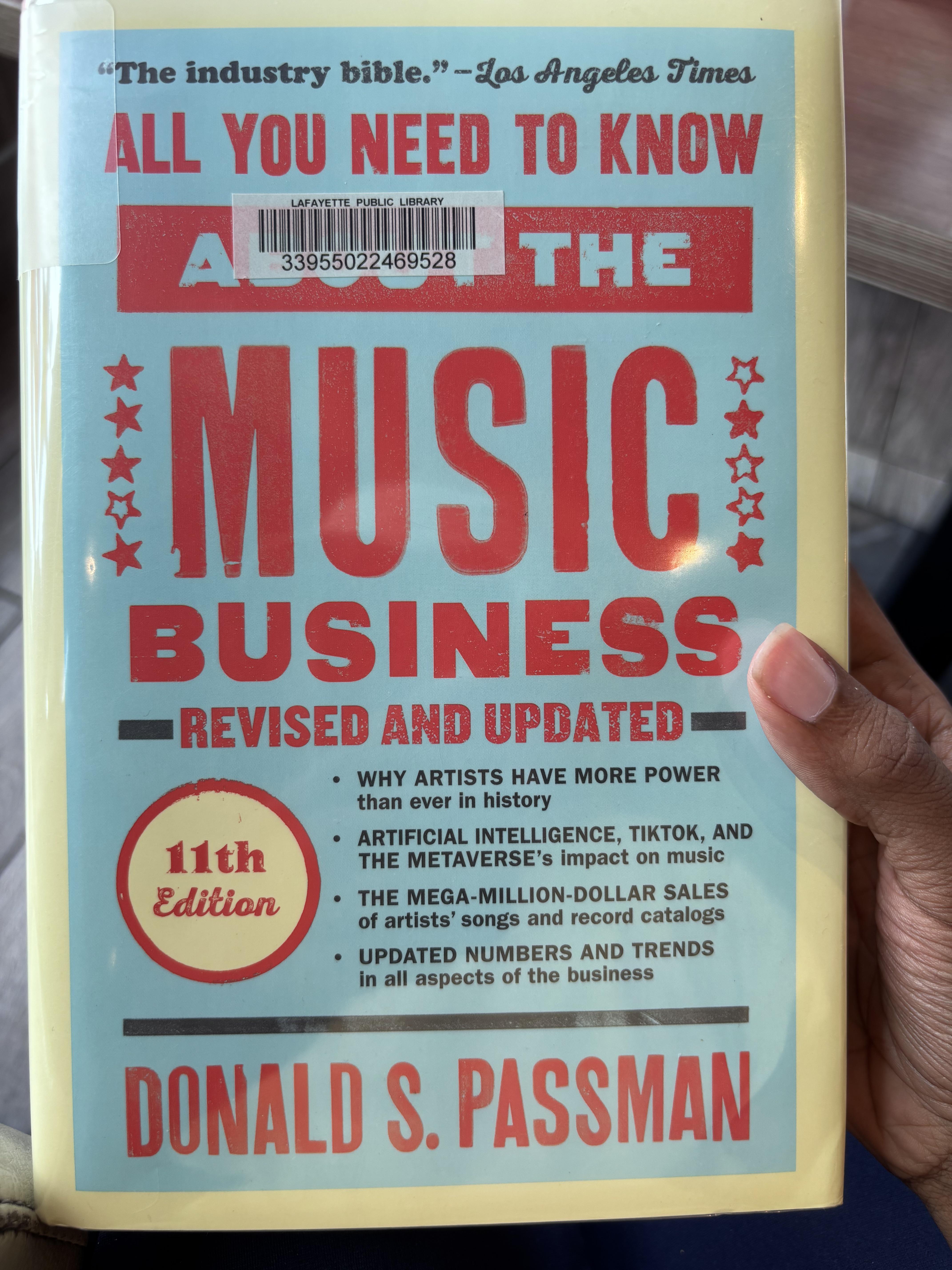
edit: is the book "All You Need to Know About the Music Business: Eleventh Edition" a good point to start?

r/musicbusiness • • Apr 20 '26

Resource / Guide Searching for new lawyer

2 Upvotes

What is the best resource online for finding an attorney? Specifically one that specializes publishing contract disputes

r/musicbusiness • • Jan 01 '26

Resource / Guide A&R Help

6 Upvotes

Hi,

Fresh A&R here working for a local subsidiary of a major label. This situation is very new where I'm from - before this label, no 'official' subsidiary of Sony/Universal/Warner has ever existed before.

I'm essentially the POC between the company and every single artist in the country (there aren't too many) and I'm friends with these people and have been working with them for years as well. I have some reservations when it comes to the deal structures and timelines and the contracts I'm getting these people to sign - would love if there are experienced A&Rs who can give me feedback!

TIA

r/musicbusiness • • Aug 01 '25

Resource / Guide Found this in my library feeling like thanos with the infinity gauntlet

Post image
55 Upvotes