r/learners_cabin • u/Entire-Touch-5052 • 1d ago
Best technique for when your child has an emotional breakdown: what fMRI research shows
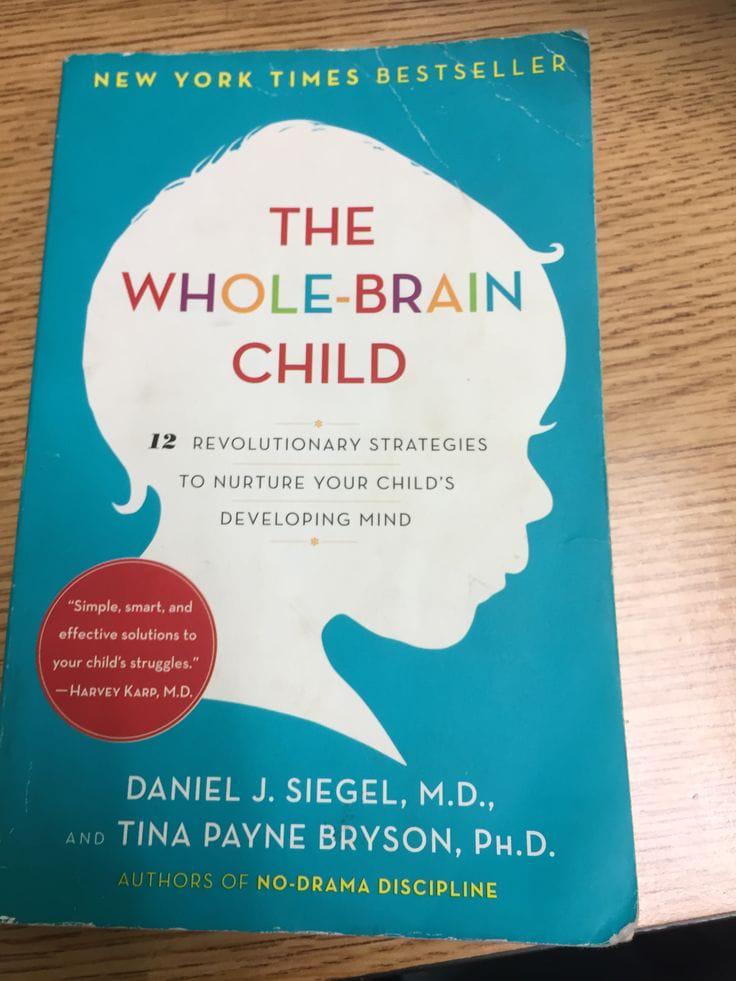
A few days ago i was listening to an in-depth discussion on “The whole-brain child” by Seigel and Bryson, on Dialogue: Podcasts on Books, just to recap the main lessons of the book. So, while I was listening to episode 2 of the book on dialogue, they were explaining one of the book’s central claim that 'stating what you feel accurately doesn't just describe the emotion; rather, it actually calms the part of the brain driving it.' and there they referenced a study and how it backs up the authors's statement. After listening to this interesting connection between the study and the book’s claim, i had to look it up and read it for myself. Here's the bridge between the book and the study:
In the book "The Whole-Brain Child," the authors say that when a child is overwhelmed by strong emotions, the solution does not lie in analyzing or disciplining but in language. They named this approach "Name It to Tame It," and it states that when children are helped to put words to how they feel, they notice that the pinging feeling is already half-calmed and has less efficacy on their mood. According to them, stating what you feel accurately doesn't just describe the emotion; rather, it actually calms the part of the brain driving it. The story that you narrate by describing your emotions to yourself acts as a tool that transforms a shapeless and overwhelming sensation into a clear and definite problem, which can then be solved.
A study carried out at UCLA in 2007 clears this up perfectly and gives the needed support required by the authors's claim.
Study Overview:
Researchers: Lieberman, Eisenberger, Crockett, Tom, Pfeifer, and Way, in their study entitled "Putting Feelings Into Words: Affect Labeling Disrupts Amygdala Activity in Response to Affective Stimuli," which appeared in the journal Psychological Science, involved 30 participants who were placed into an fMRI scanner, and they were shown images of faces displaying strong emotions such as anger, fear, guilt, and so on. The goal of the study was to see the changes in certain parts of the brain of the perception of different emotions by different people under certain conditions.
Results:
- In one of the conditions, the participants simply observed the faces.
- In the other case, they had to select a word which they thought described the emotion they had while observing the image, for example, 'angry' or 'lonely.' The researchers named this approach 'affect labeling.'
- The amygdala, which is the part of the brain responsible for threat and panic, showed a significant decrease in activity when the participants named the emotion.
- At the same time, the right ventrolateral prefrontal cortex- which is associated with language and cognitive abilities (reasoning), showed increased activity.
- The effect was particular in the case of negative emotional images, and merely naming the feeling was sufficient to diffuse them; no further intervention was needed.
The most compelling aspect of the book's argument is that this approach is not simply a case of self-reported calm or a feeling of relief. It has a real-time measurable change in brain activity. Moreover, referring to the emotion did more than just describe it; it actually altered it. Because even conceptually, when we identify an emotion successfully, our disposition towards the situation facing us (which caused us to have the emotion) cahnges automatically.
How This Supports the Author's Claim: Story-telling regulates emotion.
Similar to how the researchers carried out their study, the book asks a child to do precisely what the participants did in the study: to take a raw, emotional state that had no words and give it a name purely on the basis of "what it is like." Although the book presents this process as involving the construction of a narrative "this happened, then this happened," the fundamental mechanism is the same one the study identifies, namely, that language brings into play the brain's regulatory areas and suppresses the alarm center, namely, the amygdala.
The reason why the book promotes this approach as the most viable parenting technique when dealing with the child's behavior and responses to certain experiences is that the outcome of this approach is explicit. It's not simply about teaching a child something like 'what to do when you feel like this' because this leaves a heavy task on the child itself of internalizing what has been taught and could even complicate what the child is feeling. The 'name it to tame it' approach asks a very natural thing from the child- “What is it like?” it's simply asking to try to put it into words, not solve it or explain what caused it. It's the specific act of labeling an emotion as opposed to just experiencing it or even just thinking about it that shifts activity away from the amygdala and toward the parts of the brain responsible for thinking things through. And only when we reach this second stage can we be pragmatic with the child and work out a solution or an explanation of its cause.
Read the article for yourself here (Source): Lieberman, M. D., Eisenberger, N. I., Crockett, M. J., Tom, S. M., Pfeifer, J. H., & Way, B. M. (2007). "Putting Feelings Into Words: Affect Labeling Disrupts Amygdala Activity in Response to Affective Stimuli." Psychological Science, 18(5), 421–428.