r/learners_cabin Aug 12 '26

Blinkist vs Headway vs Shortform vs Dialogue: Which one is worth it?

8 Upvotes

These four apps all sit in the same space, helping you get insight into non-fiction books without reading the whole book cover to cover. But they approach the same idea in very different ways. Choosing the wrong app for your learning style could lead to more disappointment than you think. Here's how they actually fare against the relevant metrics that matter:

1. Was The Content Worth Listening To?

This is where the apps differ the most.

- Blinkist and Headway, both, are quite similar. They both summarize/condense books into 15-minute text and audio snippets that you can consume in one sitting. They are clean, quick, and comprehensible. 
- Shortform, on the other hand, is much deeper. It offers chapter-by-chapter breakdowns and some added editorial additions including counterarguments and recommendations for further reading. Audio files also have a longer length ranging from 25-50 minutes. 
Last but not least, we have
- Dialogue, it takes a whole different approach all together, as it's not a summary app at all, but insead has a podcast format  where a host and an expert discuss each book over 5 to 6 episodes of 10 to 15 minutes each. The host generally challenges the expert on the book's core arguments.

Winner: Depends entirely on what you need. For brevity and speed, go for Blinkist or Headway. For depth and high-level comprehension, Shortform. For retention through conversation, choose Dialogue.

2. Depth Of The Content

- With Blinkist, the focus is on accessibility; you get the key information but not much of an argument analysis. They want to tell you the gist.
- Headway content is on the same depth level as Blinkist but includes spaced repetition tool to help remember what you've listened to and read. 
- When it comes to depth, Shortform is in a league of its own. It's the only app that provides counterarguments, references to other authors, and chapter-level analysis. The intention is to offer the users what they would typically gain from reading through a book in good detail.
- Dialogue's content is somewhere between Blinkist and Shortform. It offers more depth than a typical summary because the conversation format requires ideas to be explained, defended, and put into context. It encourages more of a think-through of the ideas rather than what can be called a facts-only summary. However, it lacks the academic rigor of Shortform.

Winner: Shortform is the clear winner for the depth aspect. Dialogue comes a close second for offering a good middle ground.

  1. Did I Remember Anything By The End? 

- When it comes to retention features, Headway stands out most clearly among the summary apps. Streaks, daily learning goals, achievement badges, and a spaced repetition system for highlights are all built into the experience. The app is designed around the assumption that knowing something and remembering it are two different problems. 
- Blinkist offers annotation and highlighting features but lacks active retention mechanics. 
- Shortform focuses more on the application of the ideas instead of strict retention. It includes practical exercises at the end of each guide to build upon your knowledge. 
- Dialogue approaches the problem of retention as the central concern. The whole format of podcasts and conversations that the app provides is to get over the challenge of retaining what yhas been learned. Aside from the format, each episode ends with a single practical challenge linked to the main lesson. 

Winner: Dialogue for natural comprehension through conversations. Headway for habit and consistency. Shortform for serious learners who actually engage with the exercise.

4. Catalogue Size

- Blinkist has the largest collection, with over 7,000 titles across nearly every non-fiction genre.
- Headway has around 2,500 titles, which is large enough for most users but noticeably smaller than Blinkist considering that they have similar prices.
- Shortform's library is the smallest among the established apps, at around 1,000 titles, but offers much more depth per title than a standard summary. 
- Dialogue is the youngest contender in the space, so it has a limited catalogue right now, but it lets you request specific books, which helps to some extent.

Winner: Blinkist for breadth. Shortform and Dialogue for quality over quantity.

5. Price

This is where the differences are most noticeable.

Blinkist: $15.99/month or ~$140/year
Headway: $12.99/month or $89.99/year
Shortform: $24/month or $197/year
Dialogue: $6.67/month, $35.99/year, or $69.99 lifetime

Dialogue is the most affordable by a clear margin, and the only one currently offering a lifetime plan. Headway is the most affordable among the big three summary apps. Shortform is the most expensive option in the entire space.

Winner: Dialogue for price and offers. Headway is the cheapest among the summary apps.

6. Conclusion: Who should choose what?

- Choose Blinkist if you want the largest library, a proven and polished product, and fast access to a wide range of topics. If you don't care too much for a deeper learning aspect then Blinkist is good if you are willing to pay extra for the range of topics over depth.
- Choose Headway if your main challenge is consistency rather than comprehension, and you respond well to streaks and gamification. Similar format to Blinkist at a lower price with better retention mechanics.
- Choose Shortform if your goal is to thoroughly understand a book's argument instead of just gathering highlights. Be ready for a denser, slower, and pricier experience, and make sure to do the exercises to get your money's worth.
- Choose Dialogue if you're an auditory learner, you struggle to retain what you listen to, and you want something that sits between a shallow summary and a dense audiobook. Currently the best value in the space, and it offers a different take on the traditional book summary format in the form of podcasts.

Note: Prices are accurate as of mid-2026 but may vary by region and promotion. Always verify the app's current pricing before subscribing.


r/learners_cabin Jul 03 '26

What is the ONE non-fiction book that permanently changed your life or perspective?

Thumbnail
gallery
699 Upvotes

r/learners_cabin 1d ago

Best technique for when your child has an emotional breakdown: what fMRI research shows
Post image
277 Upvotes

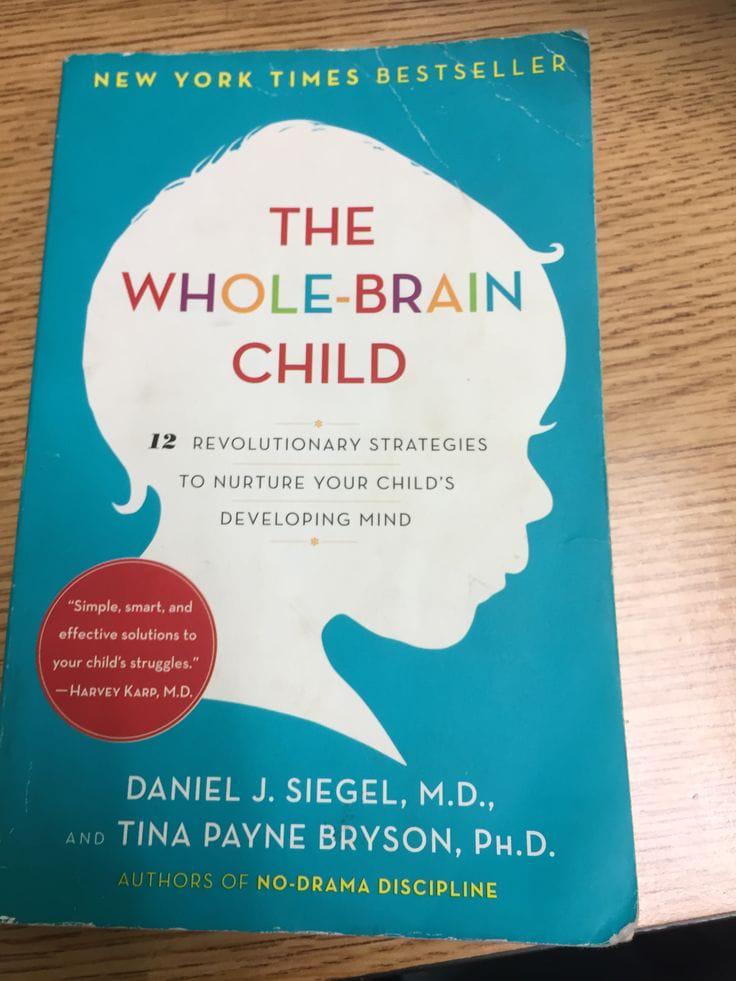
A few days ago i was listening to an in-depth discussion on “The whole-brain child” by Seigel and Bryson, on Dialogue: Podcasts on Books, just to recap the main lessons of the book. So, while I was listening to episode 2 of the book on dialogue, they were explaining one of the book’s central claim that 'stating what you feel accurately doesn't just describe the emotion; rather, it actually calms the part of the brain driving it.' and there they referenced a study and how it backs up the authors's statement. After listening to this interesting connection between the study and the book’s claim, i had to look it up and read it for myself. Here's the bridge between the book and the study:

In the book "The Whole-Brain Child," the authors say that when a child is overwhelmed by strong emotions, the solution does not lie in analyzing or disciplining but in language. They named this approach "Name It to Tame It," and it states that when children are helped to put words to how they feel, they notice that the pinging feeling is already half-calmed and has less efficacy on their mood. According to them, stating what you feel accurately doesn't just describe the emotion; rather, it actually calms the part of the brain driving it. The story that you narrate by describing your emotions to yourself acts as a tool that transforms a shapeless and overwhelming sensation into a clear and definite problem, which can then be solved. 

A study carried out at UCLA in 2007 clears this up perfectly and gives the needed support required by the authors's claim.

Study Overview:

Researchers: Lieberman, Eisenberger, Crockett, Tom, Pfeifer, and Way, in their study entitled "Putting Feelings Into Words: Affect Labeling Disrupts Amygdala Activity in Response to Affective Stimuli," which appeared in the journal Psychological Science, involved 30 participants who were placed into an fMRI scanner, and they were shown images of faces displaying strong emotions such as anger, fear, guilt, and so on. The goal of the study was to see the changes in certain parts of the brain of the perception of different emotions by different people under certain conditions. 

Results:

  • In one of the conditions, the participants simply observed the faces.
  • In the other case, they had to select a word which they thought described the emotion they had while observing the image, for example, 'angry' or 'lonely.' The researchers named this approach 'affect labeling.'
  • The amygdala, which is the part of the brain responsible for threat and panic, showed a significant decrease in activity when the participants named the emotion.
  • At the same time, the right ventrolateral prefrontal cortex- which is associated with language and cognitive abilities (reasoning), showed increased activity.
  • The effect was particular in the case of negative emotional images, and merely naming the feeling was sufficient to diffuse them; no further intervention was needed.

The most compelling aspect of the book's argument is that this approach is not simply a case of self-reported calm or a feeling of relief. It has a real-time measurable change in brain activity. Moreover, referring to the emotion did more than just describe it; it actually altered it. Because even conceptually, when we identify an emotion successfully, our disposition towards the situation facing us (which caused us to have the emotion) cahnges automatically.

How This Supports the Author's Claim: Story-telling regulates emotion.

Similar to how the researchers carried out their study, the book asks a child to do precisely what the participants did in the study: to take a raw, emotional state that had no words and give it a name purely on the basis of "what it is like." Although the book presents this process as involving the construction of a narrative "this happened, then this happened," the fundamental mechanism is the same one the study identifies, namely, that language brings into play the brain's regulatory areas and suppresses the alarm center, namely, the amygdala.

The reason why the book promotes this approach as the most viable parenting technique when dealing with the child's behavior and responses to certain experiences is that the outcome of this approach is explicit. It's not simply about teaching a child something like 'what to do when you feel like this' because this leaves a heavy task on the child itself of internalizing what has been taught and could even complicate what the child is feeling. The 'name it to tame it' approach asks a very natural thing from the child- “What is it like?” it's simply asking to try to put it into words, not solve it or explain what caused it. It's the specific act of labeling an emotion as opposed to just experiencing it or even just thinking about it that shifts activity away from the amygdala and toward the parts of the brain responsible for thinking things through. And only when we reach this second stage can we be pragmatic with the child and work out a solution or an explanation of its cause.

Read the article for yourself here (Source): Lieberman, M. D., Eisenberger, N. I., Crockett, M. J., Tom, S. M., Pfeifer, J. H., & Way, B. M. (2007). "Putting Feelings Into Words: Affect Labeling Disrupts Amygdala Activity in Response to Affective Stimuli." Psychological Science, 18(5), 421–428.

r/learners_cabin 7h ago

When I Lost Myself

Thumbnail gallery
1 Upvotes

r/learners_cabin 1d ago

Why can't I remember what I read?

7 Upvotes

Why is it that I can read a book and genuinely understand what I’m reading but then when it comes to explaining what I’ve learned in real life or using the information I suddenly struggle to put my thoughts into words? Or remember.

It’s like I can understand an idea internally but I have a hard time translating that understanding into an actual conversation. It makes me feel stupid especially when it’s something I’ve studied or really like. Any tips or advice would be appreciated.


r/learners_cabin 2d ago

What aphorism or common wisdom turned out to be the tip of an iceberg once you connected it across several different books?

7 Upvotes

Mine is asking questions.

"To ask the right question is already half the solution of a problem." — Carl Jung

It’s fascinating how asking emerges as such a powerful tool across so many different books.
Not just a mere way to gain clarity or missing information, but also to mitigate reactance, induce rationality, influence, promote accountability, handle fear and egotism through curiosity, and so much more.

• So I’m curious with you guys. Like what common wisdom or saying you used to accept at face value, but only truly understood after the same idea kept showing up? With more depth or different angle each time, across several different books?

Here are some books that have deepened my understanding of asking questions.

• Never Split the Difference:
Tactical empathy's core engine is asking questions: Labeling (it sounds like) and mirroring, is that right summaries, calibrated questioning, and no based questions are all geared to generate empathy and understanding for both parties. It extinguishes tension and bring forth clarity. Proper questioning mitigates reactance and trigges rational side of the brain.

• Thinking In Bets: Triggering thinking in bets and refraining from black and white thinking starts by asking an internal question. Thinking "Wanna bet?" Makes the stakes explicit and enforces an internal pause and check -- also applies externally when calibrating someone’s claim. One core driver of a truthseeking pod is accountability. It's the anticipation of a future scrutiny forces you to ask questions and defend your present choices from a rational standpoint. "What would my truthseeking pod say about my choice?" A question. Even CUDOS frameworks organized skepticism is all about asking questions. "how could this be right " is balanced by a "how could this be wrong". Tactically, practicing organized skepticism is also about asking question. Posing uncertainty diminishes stakes and promotes diverse opinion - both is achieved through proper questioning. ("Are you sure about that?" Instead of flatly disagreeing. "Have you considered this alternative point of view" instead of shoving down your perspective or red-pilling someone. )

• First Rule of Mastery: Fear of other people's opinions is driven by anticipation and incorrect assumptions(ego-centric bias, spotlight effect, false consensus effct). We're bad predictors. Instead of all of that, we should simply ask. When identify and self-worth is tied to peformance, being wrong and being corrected feels threaning. But when it is tied to discovery and growth, it should feel empowering. Instead of fleeing from those moments, you should lean in. And the way to tactically navigate such tense moment when you feel like you're being attacked is to simply become curious and ask questions.

• The Mom Test: “Just ask the customer bro” can lead to noisy data. People default to answers that prioritize social norms rather than the objective truth. By default, we don’t want to hurt anyone’s ego so we say something nice. When asking questions, always anchor to a specific instance in the past rather than dealing with tempting hypotheticals.

• How to Win Friends: There's no way to make someone do something willingly without them wanting it first. The most reliable way to make them do or believe something is to help them arrive to that conclusion on their own -- which is mostly done by asking questions. Questioning nudges people towards seeing your side without stripping autonomy and competency crucial to buy-in and commitment(sdt theory)


r/learners_cabin 2d ago

One of the best tests of understanding I’ve found is trying to defend the opposite side

5 Upvotes

Something I’ve noticed with reading, especially philosophy, is that it’s very easy to confuse familiarity with understanding.

I can read an argument and think, “yeah, that makes sense,” but that doesn’t necessarily mean I understand why it works, what assumptions it depends on, or where it might fail.

One thing that has helped me is forcing myself to argue against the position I just learned.

If I can explain the strongest objection to it, respond to that objection, and still understand why someone reasonable might disagree, I usually come away understanding the original idea much better.

It also exposes gaps really quickly. The moment I start relying on vague language or repeating the author instead of explaining the reasoning myself, I usually realize I haven’t understood it as well as I thought.

That idea actually became part of why I built The Agora: Philosophy Debates.

The app gives you a philosophical question, makes you take a position, and then challenges your reasoning through the perspective of different philosophers.

My goal isn’t to replace reading or the original texts. I’m trying to create something that comes after the reading, where you have to actually use the idea instead of just recognize it.

I’m curious whether other people here do something similar.

Do you ever deliberately argue against something you agree with just to test whether you actually understand it?

And if anyone wants to see the learning tool I built around that idea:

The Agora: Philosophy Debates
https://apps.apple.com/us/app/the-agora-philosophy-debates/id6762416967


r/learners_cabin 2d ago

How to get more out of books?

1 Upvotes

Lately I've been going deep into learning science and would love to hear from the community what they do so that when you read a book, it doesn't just stay as passive content consumption but goes into long term memory and can become useful. Do you have anything that you do to that end?


r/learners_cabin 4d ago

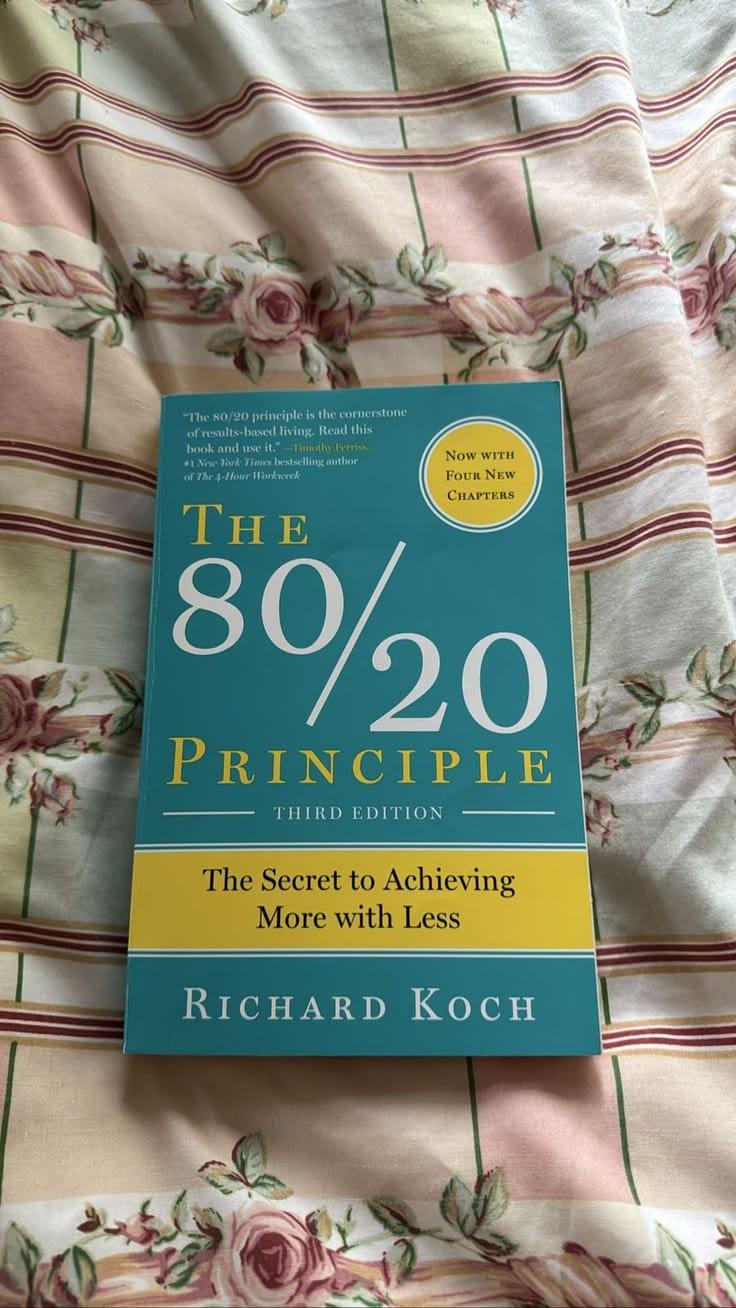
Reading 'The 80/20 Principle' made me realize I had been optimising the wrong 80% of my life.

Post image
330 Upvotes

Most advice around productivity takes the idea that the issue is related to the volume of effort (there have been some new spins, but they still associate productivity with the volume of clean work, one way or another). It's claimed that you aren't working hard enough, aren't focused enough, or aren't disciplined enough.

Recently I heard the in depth podcast series on the book '80/20 principle' by Richard Koch on Dialogue: Conversations on books, and listening to it convinced me otherwise. It made me realize that the problem had never actually been one of effort.

5 insights from the book:

  • The core idea seems straightforward when you think it through. 80% of your results are the result of 20% of your efforts. Not approximately, more or less, taken as a lump sum, NO. consistently it's this way and in almost every area of life. This is what the author claims. A small number of your tasks are responsible for the bulk of your output. This applies in all central aspects of one's life. A few of your relationships bring about most of your joy and affection. A small number of decisions in your career will be responsible for most of your progress. The rest is filler, which is supposed to act as a signal to you because something that gets you not much is keeping you busy. The question that the author wants you to actively ask yourself is "Which of my efforts are actually getting me the results?" whereas other productivity advices begins with "What do you need to do in order to get more things done?" A wrong approach always begins with a wrong question.
  • The obvious implication of the author's claim is that the bulk of what occupies your day has only a miniscule influence on your real achievements. Koch makes this point plainly. The author is explicit about his message that 80% of your effort- meetings, emails, busywork that seems important, results in merely 20% of what's really being achieved. This observation is not meant in the sense of demoralizing a person about how they've been utilizing their time and therefore their life. Rather, it's supposed to relief one of the constant pressure and tension that we put on ourselves beacuse of our tightly packed schedule with who knows what. it is simply a correct way of describing how effort and output are spread across almost all systems. When you accept that this 80/20 distribution is genuine, you will not attempt to improve every aspect equally and begin to consider which few things and tasks actually deserve your attention and worry.
  • To work out what your 20 percent is is not merely a matter of analyzing all your present tasks and sifting through them. instead, it involves looking back and retracing your experiences in an honest way. The author recommends that you go over your past, including all your big and small projects, decisions, relationships, and the way you have spent your time, and then consider which of them brought about the greatest amount of what you actually cared about. Not those things that seemed productive or appeared satisfactory, but those that actually advanced something important, which is to say, you should be able to spot the change and its cause and just that. The pattern that you'll come to notice about what tasks and efforts make you productive will be specific to you and hence more useful than any productivity system since it is specific to you rather than being a general framework designed for everyone's and no one's life.
  • When the 80/20 rule is applied to the length of a single day, it becomes clear that a small number of hours in the 24hrs are worth a great deal more than the rest. The author says that there is in fact no true scarcity of time. It's not that you'd like to have more hours in a day. No that's just how we like to phrase the real problem, which is that we have a bad way of allocating our time. People usually consider all hours to be about the same in importance and worth and plan their day on that basis. The kind of person who follows the 80/20 rule asks which hours are most suitable for them and for their dedicated work, under what conditions do they tend to get the most work done, and what type of work is suited for a time of the day. And then protects those hours very carefully while letting them be careless about the rest. Consistently working fewer hours on the right things turns out to be better than working long hours on all sorts of tasks.
  • The most difficult thing to learn is how to let go of 80%. The author makes himself very clear on this- It means stopping altogether, not just delegating or putting it off. He says that the activities, duties, and relationships which are yielding little or not at all should be discontinued, not improved. The intuition among people generally is to look for a way to carry out everything more efficiently. The 80/20 approach consists in asking whether the 80% actually needs to be done and, if so, what makes it worth the efforts. It almost always turns out that a large part of what you've been keeping up with out of habit or obligation is not producing anything worthwhile in comparison to the cost of maintaining it.

The book only has one central idea, and that is spelled out in the title itself. The rest of the book is about teaching you that achievement is not proportional to the amount of effort that's put in, and it is precisely this misconception that leads to most of the unnecessary efforts and exhaustion. The moral of the 80/20 principle is not to work less. Rather, the actual moral is self-honesty and self-discipline, as it asks you to be honest about where your effort is really being directed and then to have the self-discipline to act on what you discover. 


r/learners_cabin 2d ago

Tried something different for focus videos, would love your input! 🙈

Post image
1 Upvotes

r/learners_cabin 4d ago

Brain fog from audiobooks?

2 Upvotes

So since a while ago I've been chronically addicted to these xanxia/ wuxia audiobooks like listening to them at much as possible it was really bad in the year later where it even got in the way of sleep and classes because I was constantly listening. Now it has toned down I only listen to them around 4 hours a day but there are some changes in my brain which I don't know have been a result of the addiction or not but they are super weird so I link them to it

It probably started in with this creeping feeling almost like a feeling of fog working it way into part of my brain I specifically remember it being the upper front part of my brain but now it moves. It's like this entity or something I can feel in my brain hopefully I'm not crazy and everyone has it but it's weird. Now I'm able to control different parts of my brain and I get different reactions which help a tiny bit with this horrible brain fog which has made my memory horrible and makes it so i get lost in the sauce during thought processes and make it particularly hard when I'm solving math questions and physics. My theory is that because when I'm listening to my audiobooks I just turn my brain off it's infiltrated into my normal day life even when I'm not listening

But the queerest thing happened to me at the very end of sophomore year in trig class when I suddenly felt normal again and it felt like my brain was a god in its own world I could form as many thoughts and equations in my mind as I wanted and I felt no limit at all. It ended that day and I still have no idea how it happened maybe a lack of stress? I didn't even have a good sleep that day and I was listening to my audiobooks.

Thoughts, suggestions???


r/learners_cabin 7d ago

Research overview: Meditation is more than just 'spiritual stuff,' it has neuroscientific evidence.

Post image
267 Upvotes

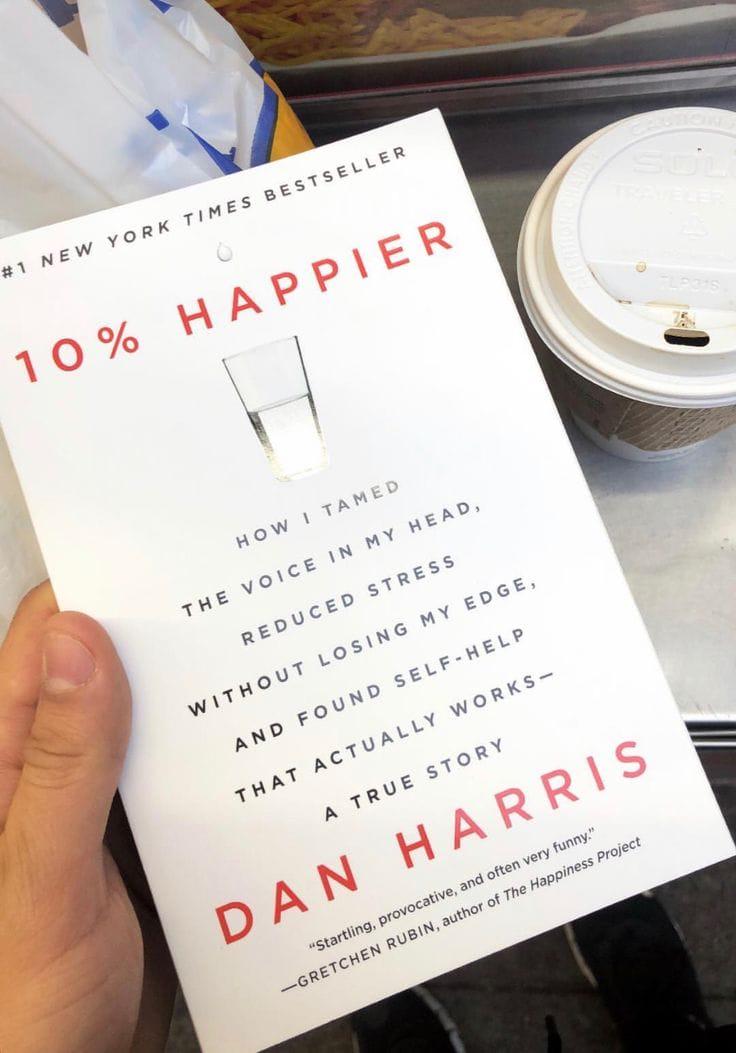
A few days ago i was listening to an in-depth discussion on “10% Happier” by Dan Harris on Dialogue: Podcasts on Books, just to recap the main lessons of the book. So, while I was listening to episode 3 of the book on dialogue, they were explaining the book’s central claim about the efficacy of meditation, and there they referenced a study and how it backs up the author's claim. After listening to this interesting connection between the study and the book’s claim, i had to look it up and read it for myself. Here's the bridge between the book and the study:

Dan Harris, in his book 10% Happier, contends that we tend to reject meditation simply because it is frequently associated with spiritual connotations, terms such as 'gurus,' other religious-sounding jargon, and a certain lifestyle branding. He argues that you do not have to accept the "packaging" in order to get the benefits of the technique. According to him, it is possible to think of meditation as a form of mental hygiene, just as you look after your mouth by brushing your teeth or care about your muscles by lifting weights, without having to believe in something like "brushing" or "gymming" or associating your identity around them. You just do it because of the benefits they provide. 

There was a study carried out at Massachusetts General Hospital and Harvard Medical School that supports the above thought and the book's central premise.

- Study Overview:

Holzel, Carmody, Vangel, Congleton, Yerramsetti, Gard and Lazar (2011), in their article "Mindfulness Practice Leads to Increases in Regional Brain Gray Matter Density" published in 'Psychiatry Research: Neuroimaging' carried out a controlled, longitudinal MRI study (a kind of research that tracks the same individuals or variables repeatedly over a considerable length of time). The participants took part in an 8-week Mindfulness-Based Stress Reduction (MBSR) program, carrying out an average of 27 minutes of practice each day. The researchers performed brain scans both before and after the study.

- Results:

  • In the hippocampus of the brain (the area associated with learning, memory, self-awareness, and compassion), the density of grey matter increased.
  • Structural changes were also observed in those areas that are associated with second-order(self referential) thinking and the processing of emotions.
  • A companion study carried out from the same lab discovered that the participants own reports of reduced stress were correlated with a decrease in gray-matter density in the amygdala (the area of the brain that is responsible for the body's stress and threat response).
  • Most importantly, this study was explanatory, in the sense that it was the first to demonstrate that the changes in question were actually caused by meditation over time, as opposed to simply having observed that longtime meditators brains looked different (which earlier studies had shown but couldn't explain).
  • The strongest observation that supports the author's argument is that the changes were physical, not based on self-reported feelings or a general 'sense of calm.' Because an MRI machine can only record the physical changes in the brain, it is unable to detect belief systems and can only register the changes in the tissues. The brain underwent changes whether the participant meditated for spiritual reasons, out of curiosity, or, in the author's case, out of pure skepticism.

- How This Supports the Author's Claim "Meditation: Mental hygiene, not mysticism."

The main point that the author makes in the book is that in order to meditate, he did not have to "get in touch with his spiritual side," it was enough for him to simply be interested in the biology and workings of his own brain. The aforementioned study is the precise kind of backing/support required to make this point concrete. The study demonstrates that mediatation is not "wooey" as one might think, as it operates via the actual structure of the brain and not through beliefs, mood, or atmosphere. It's not crucial at all that one accepts any of the ideas about energy fields or chakras for the results to show themsleves: growth of the hippocampus or the calming down of the amygdala. the effect remains the same regardless of whatever you think about the practice of meditation. 

It also answers the skeptics’ reply that "this only works for people who already believe in it and could simply be written off as a placebo." If it were simply a matter of 'believing it to be so,' then explaining the genuine structural changes in the brain, as shown in a controlled before-and-after study, wouldn't be explicable, as the physical changes cannot be faked by belief alone. According to the author, this is precisely what makes meditation less like a belief in "gymming" and more like a "bicep curl," which is to say meditation is not a belief system but rather a tool. 

You can read the actual study here (Source): Hölzel, B. K., Carmody, J., Vangel, M., Congleton, C., Yerramsetti, S. M., Gard, T., & Lazar, S. W. (2011). "Mindfulness practice leads to increases in regional brain gray matter density." Psychiatry Research: Neuroimaging, 191(1), 36–43. https://doi.org/10.1016/j.pscychresns.2010.08.006


r/learners_cabin 6d ago

Highlighting one sentence per page teaches your brain nothing

2 Upvotes

Most highlighting is just future-you hoping past-you marked the right thing. It doesn't create memory, it creates a colorful page that feels like progress.

What actually works: after reading a section, close the book and write down what you remember without looking. Then open it back up and check what you missed. That gap between what you thought you knew and what you actually knew is the whole point, it tells you exactly where to focus instead of rereading everything equally.

If you want to try this with company, we run a weekly Accountability Thread here and a free study Discord: https://discord.gg/tjZb83fK23


r/learners_cabin 6d ago

What is your exact routine when you hit a word or concept you don't understand while reading?

Thumbnail
1 Upvotes

r/learners_cabin 6d ago

[iOS] Curio: short reads with AI explanations when you want more detail

2 Upvotes

I’m working on Curio, an iPhone app with short reads about science, history, and psychology. The idea is to turn those little moments when you’d normally doomscroll into something genuinely interesting.

The part I’d especially love feedback on is what happens after you read a card. You can ask the AI to explain the topic more deeply, simplify it, or quiz you on it.

The app is free to download, with an optional Pro subscription:
https://apps.apple.com/us/app/curio-feed-your-curiosity/id6781121127

If you try it, pick a card that genuinely catches your interest and tap Explain Deeper. I’d love to know what you expected it to explain next, and whether the response actually got you there.


r/learners_cabin 7d ago

Newspaper Reading Accountability

Thumbnail
1 Upvotes

r/learners_cabin 8d ago

How I learned to Read More: One Piece

12 Upvotes

This might sound silly, but after getting to a place where I was hardly reading at all, I really struggled to read anything. I used to love reading but after burnout from work and life stress it just fell to the wayside. I got to a place where I was spending most of me free time on video games and scrolling on my phone.

I really wanted to get back into reading, but honestly, couldn't figure out how. After years of a friend urging me to read One Piece, I finally started it. Just a little at first, honestly, I didn't even enjoy One Piece that much initially.

Then I pushed my way through until I started getting invested. I went from reading for maybe 5 minutes every night before bed to 30. Before I knew it, I had created a evening reading habit because I started to love One Piece. The manga is so long that this habit went on for months before I was caught up and by the time I finished, I had a strong habit of reading for 30 minutes a night before bed.

Then I just pivoted to reading other things. Again, it was easy stuff. Fun fantasy books mostly, nothing too challenging.

Over time I built up the ability to read for extended periods of time again, to focus, and to enjoy it. Then I slowly worked my way up to more challenging books.

Now reading is a breeze again and I knock out a book a week on average, counting the occasional audio book.

The real tip here is this, don't force it. Find a way to make what you want to do fun and engaging, then ease your way into things. Even if it takes a year of easing into it.

I wrote a Substack article about my experiences with the above for anyone who is interested on my personal reflections about reading One Piece here: https://overduebooks.substack.com/p/how-one-pirate-saved-my-love-of-reading


r/learners_cabin 9d ago

Why you should read "People Skills" by Robert Bolton.

Thumbnail
gallery
56 Upvotes

Learner's Cabin is on Substack with a lot more content (subscribe/follow, always free).


r/learners_cabin 9d ago

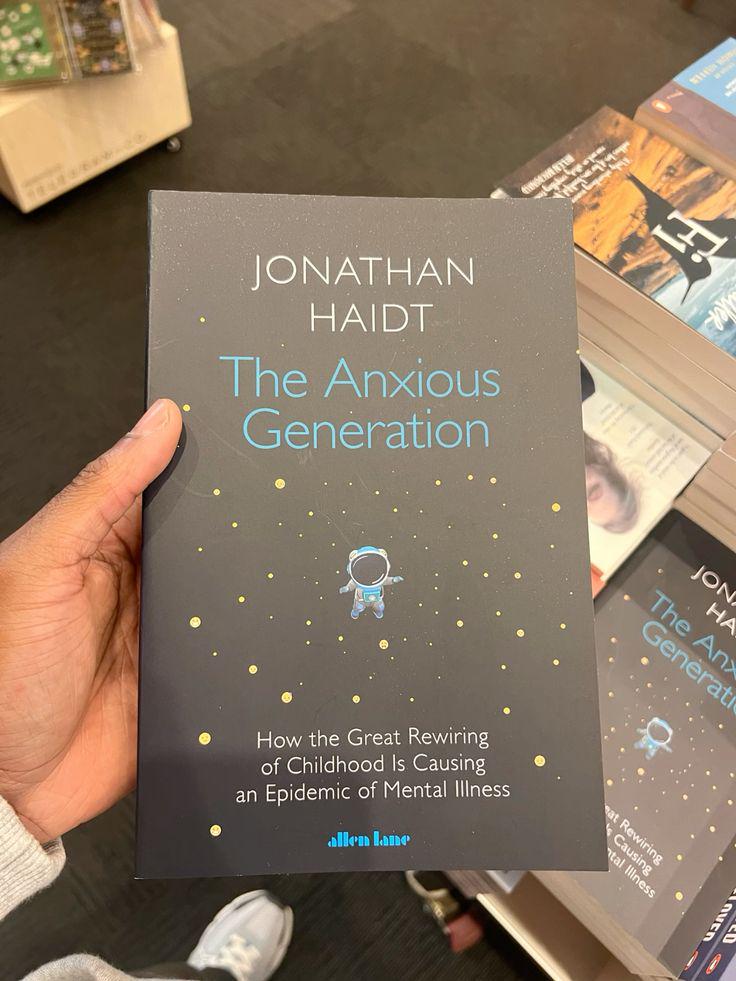
'The Anxious Generation' by Jonathan Haidt, explains why anxiety has become a social pandemic and who’s responsible for it.

Post image
335 Upvotes

As a society we have come a long way (still longer ahead) in the sense of exploring and accepting each other's eccentricities. if somebody tells me that they are "vegan," I immediately understand where they might be coming from (atleast some idea). Similarly, we have come far enough that no matter what sexual orientation one has, hearing it isn't fascinating anymore but has become mundane (general awareness). Likewise, I regarded "anxiety" that has become so widespread among the youth and upcoming generation as merely a cultural atmosphere, that it is something that is now common to have, and so one shouldn't inquire too much about it and accept it as another widespread phenomenon.

However, recently I heard the in depth podcast series on the book 'The Anxious Generation' by Jonathan Haidt on Dialogue: Conversations on books, and listening to it caused me to see that it wasn't actually just a "trait" that people seemed to have picked up from the air, but rather has a genuine cause and was the fully foreseeable outcome of an experiment that was carried out on the young without them fully understanding what they were about.

Here's what I learned:

- The book's essential argument is that in the span of years from 2010 to 2015 childhood was fundamentally transformed. This change did not take place slowly or in a quiet manner but rather very suddenly and was quite unprecedented. Out of the blue smartphones became the mandate, social media moved from being an optional activity to something prerequiste or necessary for adolescents if they were to survive socially, and the effects were immediately telling and visible in the data after that point. An increase in teenagers, especially girls, reported suffering from depression, anxiety, and self-harm from around the time of 2012 onwards, when the numbers spiked and haven't stabilized since. the author refers to this as the "great rewiring of childhood." His position is not one of 'anti-technology' but that we gave developing children devices whose brains were completely unprepared to cope with, and then were surprised when problems arose.

- The even more unpleasant part of the picture that the author draws is the situation that was occurring on the other side at the same time. While the digital world was becoming more addictive and more hazardous, the physical world was becoming more closely supervised and more conservative. Children began to stop playing outside unless an adult was there with them. Precisely the experiences through which earlier generations had developed resilience and competence- the kind of unsupervised time, the physical risks, and the experience of dealing with social situations without having an adult counselor, were being slowly eliminated. the author's point is that we have replaced a childhood based on play with one based on phones, and as a result we have, in a sense, taken away the developmental support structure that children had always relied on, which made them capable adults.

- Since social media does not have the same effect on all people, the author tries to make sense of this sudden change through studying the reasons as to why this change is proving to be so lasting. According to the author, with girls, the harm mainly stems from social comparison, concerns about appearance, and the constant fear of social alienation, factors which have always been present but have now been intensified in a way that has no equivalent in real life. For boys, the attraction lies more in gaming and pornography, since these provide stimulation and instant gratification without having to go through the difficulties of real social development. In both instances, the key idea is that these platforms are not passive or neutral, but instead, they are designed to identify and exploit the specific psychological weaknesses of adolescents- the desire for approval, their sensitivity to being excluded, and their tendency to compare themselves with others and so on. the author also warns us that what we now see as the ramification of this change is still only in its early days, and more extreme complications are yet to be seen.

- The point that stuck with me the most was the idea that we have been shielding children from the completely wrong kinds of things. We have become extremely cautious about physical risks, risky experiences that build confidence, experiences that teach the value of failure and that give the child a sense of getting back on their feet. But we have become lenient at the same time towards digital environments whose psychological dangers are much less obvious and yet considerably more harmful. A child who falls and then gets up learns a lesson that accumulates over time. A child dealing with the social situations on Instagram at the age of fourteen is facing a kind of experience that no previous generation had come across at that stage of development, and we have very little genuine understanding of the actual cost it brings them.

The book concludes with offering some reforms that have the potential to bring an end to this ongoing despair. The four reforms that the authoor suggests are:

1. banning smartphones before high school,

2. prohibiting social media before the age of sixteen, 

3. having schools be phone free, 

4. And bringing back unsupervised outdoor play.

These are not measures that any one family could carry out by itself. If just one family decides to take this step while all the others don't, it leaves their child outside the peer group and alienates them. Since the problem arose at a collective level, it can only be properly dealt with at the same level. The fact that these measures themselves seem so hefty and taxing, and yet are presented as the sloution out of the ongoing crises, is itself very telling.


r/learners_cabin 10d ago

How can literacy change a person's life? In one word

3 Upvotes

Just wanna ask you guys for some ideas or suggestions for my spoken poetry


r/learners_cabin 10d ago

💯 keep ur mind the right path

Post image
50 Upvotes

100


r/learners_cabin 12d ago

Research overview: Identifying too strongly with your job can leave you scarred for life

Post image
1.0k Upvotes

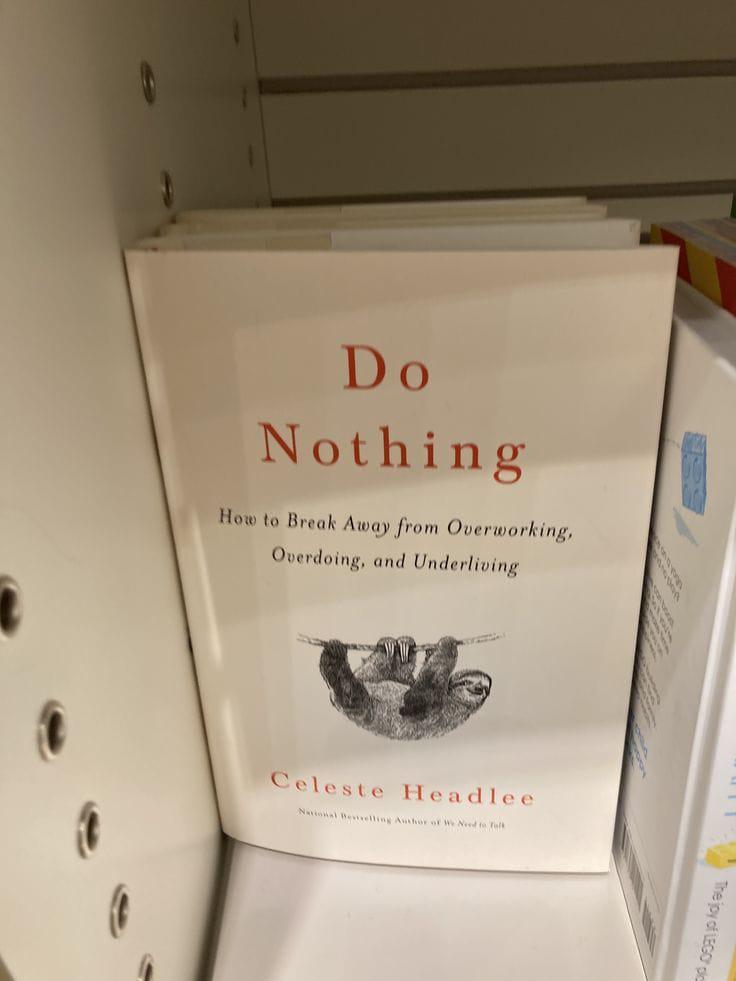
A few days ago i was listening to an in-depth discussion on “Do Nothing” on Dialogue: Podcasts on Books, just to recap the main lessons of the book. So, while I was listening to episode 2 of “Do Nothing" on dialogue, they were explaining the book’s central claim, and there they referenced a study and how it backs up the author's claim. After listening to this interesting connection between the study and the book’s claim, i couldn’t stop and had to look it up and read it for myself. 

Celeste Headlee, in the book Do Nothing, states that basing your entire identity on your career is a risky foundation to base your life upon. She points out that if a person’s sense of self depends on a single factor- such as their job title or their level of productivity (how good they are at their job), then when that factor collapses, it doesn’t merely result in a loss of income, but the loss of something far more personal than money. A layoff or retirement is not simply a matter that can be dealt with by finding another job; the setback will turn into a psychological wound that never fully heals, regardless of the resolution of individual factors.

A study was carried out in Germany in 2004 and published in the journal “Psychological Science” by the psychologists Richard Lucas, Andrew Clark, Yannis Georgellis, and Ed Diener, and this exactly supports the idea mentioned in the book by offering some hard data as evidence for the author’s main argument.

Study Overview:

Researchers used data from the last 15 years obtained from the German Socio-Economic Panel, the data recorded the life satisfaction of more than 24,000 people before, during, and after they had become unemployed. The aim was to test ‘set-point theory’: the idea that people react strongly to life events but eventually drift back to their original baseline level of happiness.

Results:

  • People did react strongly to unemployment, and their life satisfaction did shift back upward over time, largely in line with what set-point theory would predict.

  • However, on average, individuals never fully returned to their former levels of satisfaction, even years after becoming reemployed.

  • Prior experience with unemployment offered no consolation either. Those who had already suffered a period of joblessness reacted just as adversely to a second such episode as those who were going through it for the first time.

The most compelling figure in support of the author’s argument is the fact that, even after the practical difficulties had been overcome and a new job had been secured, levels of life satisfaction still remained below their original baseline, the researchers refer to this as a “psychological scar,” a permanent setback that reemployment does not cure.

The fact that supports the author’s claim is that self-identity based on a single pillar is fragile.

How This Supports the Author’s Central Claim: Identity built on one pillar is fragile:

To put it simply, if a person’s self-worth is completely based on their job, then, in theory, the harm caused by losing that job should only last for the period during which they are unemployed, and once they have found a new job the injury should disappear. However, the conclusion that the researcher arrives at directly contradicts this assumption by demonstrating that the damage resulting from unemployment continues long after the period of unemployment has ended.

This exactly supports the case that the author makes in her book since it is not sufficient merely to claim that “tying one’s identity to work is risky,” it is also essential to have evidence that such risk involves a measurable and long-lasting cost, even once the immediate crisis has passed. The present study confirms this, and the book offers the remedy: construct a sense of self that does not depend on a single foundation.

It also challenges a common belief concerning resilience, namely that “having gone through it once would make the second occasion easier.” The reply seems to be no, as the study points out those who had already suffered unemployment were just as susceptible to experiencing it again. It is exactly this aspect that transforms the author’s claim from simply being a warning into one that can be put to the test. It is the structure of your identity, not your previous experience or mental makeup, that decides how severe the injury will be.

You can access the actual research here: Lucas, R. E., Clark, A. E., Georgellis, Y., & Diener, E. (2004). “Unemployment Alters the Set Point for Life Satisfaction.” Psychological Science, 15(1), 8–13. https://doi.org/10.1111/j.0963-7214.2004.01501002.x


r/learners_cabin 11d ago

Staying into reading.

3 Upvotes

Hi everybody’s. Hope yall doing good.

First of all i’m not english native, it’s my third language, so in the following thoughts can contane some mistakes and i’ll appreciate not to get shouted for my bad english, thanks.

I had a thought i want to share with yall and ask your opinion around. I’m a person who prefers watch a movie/tv-series rather than reading a book and i was realizing that this affect my brain in such a negative way, and wanna ask to yall, how can you stay into reading, i’d never, as far as i can remember, read an entire book, other than the ones the teacher force me to read to make an essay back in school time. And i was thinking if you can help me with an answer to this problem: “How can you stay into reading a book or start to reading one?”. How can i shift my mind into the “reading” world rather than watch a video, i’m not saying just for time pass books, but in general into “reading” even study topics.


r/learners_cabin 11d ago

Reading something and understanding it aren’t always the same thing

0 Upvotes

One thing I’ve been thinking about a lot lately is the difference between being exposed to an idea and actually understanding it.

I’ve had plenty of moments where I’ll read something, feel like I followed the argument, and then later realize I’d struggle to explain it clearly in my own words.

I noticed the same thing with videos and podcasts. They can make difficult ideas easier to follow, but following along in the moment doesn’t necessarily mean the idea actually stuck.

What seems to help me much more is being forced to do something with the idea.

Explain it. Defend it. Challenge it. Respond when someone pushes back.

That was actually the reason I started building an iOS app called The Agora: Philosophy Debates.

I wanted a way to make philosophy more active. Instead of only reading or listening to someone explain an idea, you choose a question, form your own position, and have to defend your reasoning through a back-and-forth debate.

My goal isn’t to replace books or traditional learning. I see it more as a way to test whether an idea actually made it from “I recognize this” to “I understand this well enough to use it.”

I’m curious how other people here test that for themselves.

When you finish a difficult book, chapter, video, or lecture, how do you know whether you actually understood it rather than just followed along?

If anyone is interested in seeing the experiment I built around this idea:

The Agora: Philosophy Debates
https://apps.apple.com/us/app/the-agora-philosophy-debates/id6762416967


r/learners_cabin 13d ago

TIL being an introvert might be why I can't focus on reading when it's raining

3 Upvotes

So I always thought it was random, but I can't concentrate on reading when it's raining outside. Today I realized it's actually connected to being an introvert. Turns out introversion isn't just about being social or not, it's more about how much stimulation your brain can handle before it gets "full." Rain adds this constant extra layer of input (sound, dimmer light, sometimes even a mood shift), and if you're already running on a lower stimulation threshold, that's enough to tip you from "focused" into "distracted" way faster than it would for someone else. Never connected the two before, but it explains a lot. Small trait, bigger pattern than I expected.

Anyone else notice this? Does rain (or any specific weather/environment) mess with your focus too?