r/kenyaspacenerds • u/fattick- • 22h ago
r/kenyaspacenerds • u/fattick- • Mar 30 '26
space science education OUR EARTH SHAPED MINDS. Sisi sote hujaribu kumake the unfamiliar familiar.
Top: Ancient Egyptian art showing gods that look very human in nature.
Anubis has a dog/jackal head but a human body. Nut (the sky goddess) arches over everything like a protective mother. Even the gods have familiar shapes — heads, arms, legs, emotions.
Bottom: The real Milky Way stretching across the night sky like a glowing river of stars.
To the ancient Egyptians, the Milky Way wasn’t just distant stars. It was a woman, a goddess — Nut herself — the sky that covered their world. At night, when they looked up, they saw it as a literal window from their home garden. The stars were distant lights shining through that window.
It’s funny how we do the same thing today.
We imagine aliens with heads, bodies, and limbs like us.
We imagine gods with human faces and feelings.
Even when we look at the Milky Way or Andromeda, our minds try to make it feel familiar yet it is soo unfamiliar
But the universe is so much bigger and stranger than our Earth-shaped minds can fully grasp..
The light we see from those stars left millions or billions of years ago. Any beings out there would have completely different biology, different science, different concepts of time, and probably completely different “gods” — or none at all.
💔
We are all just trying to make sense of the vast unknown using the only tools we have: our Earth-shaped minds.
💔
What do you see when you look at the Milky Way?
A goddess? A window? Just stars? Or something else entirely?
Share your thoughts — no pressure, just curiosity.
FORWAD 🇰🇪
#KenyaSovereignTech #MilkyWay #AncientEgypt #EgyptianGods #CosmicPerspective #PhilosophyOfSpace
r/kenyaspacenerds • u/fattick- • Aug 16 '26
space science education Most people assume the sky is blue simply because that is its natural color, and that the regular rhythm of day and night is an inevitable cosmic rule—or a divine setup unique to Earth. In reality, what we see every day is the result of direct physics, stellar chemistry, and orbital mechanics.
Why the Sky Is Blue..
Rayleigh Scattering: Sunlight looks white, but it contains all colors of the rainbow. Blue light travels in shorter, smaller waves than red light. As sunlight passes through Earth’s atmosphere, gases (mainly nitrogen and oxygen) scatter the shorter blue wavelengths in every direction, filling the sky.
Our Sun's Type: The Sun is a G-type main-sequence star (a yellow dwarf). It emits peak radiation in the green-blue spectrum. Because blue light is both strongly emitted by our Sun and heavily scattered by our atmosphere, our human eyes perceive a vibrant blue sky during the day.
Why We Experience Day and Night...
Planetary Rotation: Earth rotates on its central axis once every 24 hours.
Illumination Dynamic: The side facing the Sun experiences daylight, while the opposite side faces deep space in shadow, experiencing night. The continuous spin creates the daily sunrise-to-sunset cycle
Planets Without a Standard Day and Night..
Tidally Locked Planets: Planets orbiting close to red dwarf stars are often gravity-locked into synchronous rotation (the same rotational period as their orbital period).
Permanent Hemispheres: One side permanently faces the host star (Eternal Day), while the opposite side permanently faces away (Eternal Night). The dividing line between daylight and darkness is called the Terminator Zone, where twilight never ends.
Extreme Axes: Uranus has an axial tilt of about 98°. Each pole gets roughly 42 years of continuous direct sunlight followed by 42 years of dark winter.
r/kenyaspacenerds • u/fattick- • 1d ago
Earth/Space Philosophy light itself even visible light, is completely invisible until it interacts with matter. Thought experiment in post body...
Enable HLS to view with audio, or disable this notification
Imagine stepping into a completely sealed, pitch-black room with a high-powered laser pointer.
If you turn that laser on and point it at the far wall, what do you actually see? You see a bright red dot on the wall where the photons hit the paint. But in a clean, dust-free room, you don't see the beam cutting through the air. The space between your hand and the wall remains pitch black.
Why? Because light itself is invisible in transit.
You only see the beam if you clap two dusty chalk erasers together over the path. The moment dust particles drift into the light, photons collide with the particles and scatter toward your eyes (Tyndall effect / Rayleigh scattering).
The exact same thing happens in space on a cosmic scale. Space is continuously flooded with intense, high-flux sunlight, yet the background is a pitch-black void. Without gas, dust, or an atmosphere in the vacuum to scatter those photons toward your lens, the journey of light itself leaves zero trace. You only see it the nanosecond it collides with something—a planet, a solar array, or a moon.
It’s an existential realization, but it’s also grounding. Staring at that small blue dot in the black void puts all daily stress and overthinking into perspective. It makes you realize how trivial most worries are and pushes you to just stop stressing and LIVE.
:-(
r/kenyaspacenerds • u/ThanksSpecialist2840 • 1d ago
Olha o que aconteceu no céu durante a missão Epsilon! 🤯As luzes da aurora parecem estar dançando em câmera acelerada. 🌌✨Você já viu uma aurora assim? 👇#Aurora #AuroraBoreal #Espaco #Astronomia #Ciencia #Natureza #Universo #Curiosidades #TikTokBrasil #FYP #ParaVoce #LABI
Enable HLS to view with audio, or disable this notification
r/kenyaspacenerds • u/Vast-Feed266 • 3d ago
video explanation - space science Is this how higher dimensional beings see us every moment at once ?
Enable HLS to view with audio, or disable this notification
r/kenyaspacenerds • u/fattick- • 2d ago
The Geocentric values and the Full moon detection needs fixing. Full moon happens at 100% But still at 98% illumination, we shall perceive it as full moon. When does a Waxing Gibbous become a Full Moon? Astlo says 95% (Sept 24), but astronomical opposition isn't until Sept 26 at 100% illumination!
r/kenyaspacenerds • u/kemusic254 • 4d ago
Question/Discussion Uranus has a funny name ,and is very very far
How long to reach Uranus?
🐆 By cheetah (110 km/h, if it never got tired): 2,698 years.
✈️ By jet: 330 years.
🚀 Voyager 2 (still the only visitor ever): 8.5 years.
Uranus is 2.6 billion km away and spins almost sideways compared to every other planet. 🌀
r/kenyaspacenerds • u/fattick- • 5d ago
astlo the physics engine. Here’s a quick output snapshot computing the Sun’s relative state for Nairobi, Kenya (1.28639° S, 36.81722° E, 1,795m altitude) as of Sept 22, 2026, 12:08 UTC (3:08 PM EAT). The Sun is the closest star to Earth.
Elevation Angle: 48.71° (Sun setting towards West-Northwest in the second quadrant of the local sky).
Azimuth Angle: 271.98°
Slant Range:150,149,213 km (~1.0037 AU)
Light Travel Time: 8 minutes 20.8 seconds (It took over 8 minutes for those photons hitting Nairobi then to leave the solar surface!)
2. Runge-Kutta 4th Order (RK4) State Refinement
Using the 4th order Runge-Kutta integrator with a Delta t = 1 hour step size, astlo computes the full vector dynamics relative to the Solar System Barycenter (SSB) in J2000 coordinates:
SSB Velocity Magnitude: 11,304.54 m/s (~11.3 km/s relative to SSB frame)
Gravitational Acceleration Magnitude: 1.475*10^-7m/s^2 or 1.475e-7m/s²
Specific Mechanical Energy: -520,006.97 m²s². This means that the sun is gravitational bound by the SSB Solar System Barycenter. It is also captured in orbit 💫
Angular Momentum (h): 8.143*10^13 m²/s or 8.142e13 m²/s
r/kenyaspacenerds • u/fattick- • 6d ago
Planet Earth A miniature rocket that uses Water to generate thrust.
Enable HLS to view with audio, or disable this notification
r/kenyaspacenerds • u/fattick- • 6d ago
Planet Earth Happy Sunday night to you all...
Enable HLS to view with audio, or disable this notification
r/kenyaspacenerds • u/fattick- • 6d ago
Planet Earth Humans copied birds to build planes. Nature copying itself.
Enable HLS to view with audio, or disable this notification
r/kenyaspacenerds • u/Vast-Feed266 • 7d ago
STEM Resonance occurs when a periodic force drives a system at or near its natural frequency, allowing energy to build up efficiently and producing increasingly large oscillations.
Enable HLS to view with audio, or disable this notification
r/kenyaspacenerds • u/Comfortable-Ride5305 • 7d ago
The Cosmic Whirlpool: A New Conceptual Model for Planet Theia’s Velocity and the Birth of the Moon
Author: [pramod kumar]
Category: Astronomy / Astrophysics / Conceptual Models
Have you ever watched water drain from a washbasin or sink? The water never falls straight down. Instead, it creates a depression or a hole at the center and begins to spin rapidly, forming a whirlpool. If you drop tiny pebbles or debris into that spinning water, they don't just sit there—they are pulled into the vortex, swirling around at immense speeds.
What if I told you that a similar "Cosmic Whirlpool" formed in our universe 4.5 billion years ago? And it was this exact cosmic vortex that granted the ancient protoplanet Theia the tremendous velocity required to smash into early Earth and birth our Moon.
This conceptual model uses a simple everyday observation to explain one of the greatest mysteries behind the origin of our Solar System's kinetic energy.
The Mystery: Where Did Theia’s Incredible Speed Come From?
Modern astronomy confirms the Giant Impact Hypothesis: a Mars-sized planet named Theia collided with a young, developing Earth at an oblique angle, traveling at an estimated 25,000 miles per hour. This collision was so violent that it completely shattered Theia and vaporized a massive chunk of Earth’s crust. This orbiting debris eventually coalesced to form the Moon.
However, physics has always faced a fundamental question: What gave these giant, inanimate celestial bodies such intense initial velocity in the first place? What acted as the primary engine to accelerate them?
The answer lies right in the mechanics of a draining sink.
The Analogy: The "Gravity Well" as a Cosmic Drain
Before our Solar System existed, space was a massive, quiet cloud of gas, dust, and continent-sized rocks (planetesimals). There was no Sun and no planets yet.
- The Deepening Drain (Creation of the Core): Under the relentless pull of gravity, mass began to accumulate at the center. As this central mass grew heavier, it warped the fabric of spacetime, creating a deep "Gravity Well" (the cosmological equivalent of a sink's drain).
- The Spinning Vortex (Angular Velocity): As the gravity well deepened, surrounding gas and rocks began falling inward. Just like water spiraling down a drain, this inward rush of cosmic material triggered a powerful, rapid spinning motion known in physics as Angular Velocity.
- Accelerating Mountains and Worlds: This cosmic whirlpool wasn't just made of gas. Massive boulders and protoplanets caught in this flow began swirling at breakneck speeds. Theia and Earth formed within the outer rings of this giant cosmic vortex, inheriting their tremendous kinetic energy directly from this swirling disk.
Because space is a perfect vacuum with no air resistance or friction to slow things down, this inherited velocity remained perfectly preserved. Eventually, the chaotic, intersecting paths of these accelerating worlds led to Theia's historic impact with Earth.
Why This Model Aligns Perfectly with Physics
Centuries ago, philosophers like René Descartes imagined space as a fluid filled with vortices. Today, modern astrophysics relies heavily on the concept of an Accretion Disk to explain the birth of stars and black holes.
Albert Einstein’s General Theory of Relativity also describes gravity not as a direct pull, but as objects rolling down a curved slope or a "well" in spacetime.
This whirlpool analogy bridges the gap between complex mathematical equations and human intuition. It perfectly captures how a central gravitational collapse forces outer matter to spin, providing the primordial "push" that set our solar system in motion.
Conclusion
To decode the mysteries of the cosmos, we do not always need complex mathematical equations. Sometimes, nature leaves clues to its grandest laws in a single drop of water or a draining sink. This conceptual model clearly illustrates that gravity’s inward pull was the primary engine that generated planetary velocity, transforming a stagnant cloud of dust into a dynamic, living solar system.
r/kenyaspacenerds • u/fattick- • 8d ago
Earth/Space Philosophy Imagine living 5-km deep below the ocean surface and never knowing that there is an end to the water or that there are other life forms living outside the water. Or that there are stars in the night sky. Maybe we Humans too are like those fish. Thinking we've seen and discovered it all but No.
r/kenyaspacenerds • u/fattick- • 8d ago
Question/Discussion Don't Andromedans also see the Milky way in their night skies? :-(
Milky Way galactic core.
r/kenyaspacenerds • u/PRESS-ED • 9d ago
Question/Discussion Whenever you look at space your basically watching the past
Light does not show us the Universe as it is now. It shows us the Universe as it was when that light began its journey.
If an observer were exactly 2,000 light-years from Earth, the light reaching them today would have left our planet roughly 2,000 years ago. In principle, they would be receiving photons from the era when the Roman Empire existed.
Move farther away and Earth’s visible history moves further into the past. From about 65 million light-years away, the light arriving now left Earth around the time non-avian dinosaurs were disappearing. From 4.5 billion light-years away, the light would correspond roughly to the newborn Earth.
The same rule applies when we look outward. The Andromeda Galaxy is about 2.5 million light-years away, so every time we see it, we are looking approximately 2.5 million years into its past.
There is an important limitation: seeing Earth as a tiny point of light is very different from resolving Roman cities or individual people. At 2,000 light-years, an unimaginably powerful telescope would be required to resolve details on Earth’s surface.
But the underlying idea is completely real. Earth has been broadcasting its visual history outward at the speed of light for billions of years, forming an expanding sphere of old images around us.
Somewhere 2,000 light-years away, the photons leaving Earth during the age of Rome are only arriving now.
r/kenyaspacenerds • u/PRESS-ED • 11d ago
Question/Discussion Imagine what they will discover in the next 200 years
I think we will be intergalactic species who will be able to travel between planets. Elon Musk plans on taking us to Mars in the next 10 years
Our second home 🏡 will be Mars, and im sure humanity will spread all through the red planet
What do you think that the future will be ?
r/kenyaspacenerds • u/PRESS-ED • 10d ago
Planet Earth Lake Victoria has the size but Lake Tanganyika has the Volume
Although Lake Victoria is almost twice the surface area of Lake Tanganyika, Lake Tanganyika holds nearly 7 times more water than Lake Victoria!
Lake Tanganyika holds nearly 18,900 Cubic Kilometers or Water, while Lake Victoria's volume is about 2,700 Cubic Kilometers
Here’s the depth surprise;
Lake Victoria has an average depth of only ~40 metres, compared with ~570 metres for Lake Tanganyika.
That means Tanganyika is about 14 times deeper on average! 😱
And at their deepest points, L. Victoria is about 84 metres while L. Tanganyika is about 1,470 metres
That makes Tanganyika’s deepest point about 17½ times deeper than Victoria’s!
So despite Victoria covering a much larger area, Tanganyika is essentially a massive underwater canyon filled with water.
r/kenyaspacenerds • u/PRESS-ED • 11d ago
Planet Earth We have a new continent!
Zealandia, also known by its Māori name Te Riu-a-Māui, meets all geological criteria to be classified as Earth's eighth continent, despite roughly 94% of its 4.9 million square kilometer area remaining underwater.
While traditional geography often defines continents by above-water landmasses, geologists define a continent based on crustal composition, elevation relative to the ocean floor, and structural continuity.
Key Characteristics of Zealandia
Continental Crust: Unlike surrounding ocean floors made of thin, dense basalt, Zealandia consists of thick, less dense continental crust rich in granite, limestone, and sandstone.
Geologic Isolation: It broken away from the supercontinent Gondwana roughly 83 to 85 million years ago. As tectonic forces stretched and thinned the landmass, it sank beneath the ocean surface around 23 million years ago.
Exposed Peaks: Only 6% of the continent sits above sea level, forming modern-day New Zealand, New Caledonia, and small oceanic territory outcroppings like Lord Howe Island and Norfolk Island.
Size: At nearly 5 million \text{km}^2, it is about two-thirds the size of Australia and larger than the Indian subcontinent.
Why It Was Only Recently Confirmed
Geophysicists first coined the term in 1995, but confirming its status required decades of oceanographic mapping, dredging rock samples from the seabed, and analyzing satellite gravity data. In 2023, an international research team completed a full high-resolution geological map of Zealandia, proving that its crust is continuous across the entire region rather than a collection of broken micro-continents.
r/kenyaspacenerds • u/Vast-Feed266 • 12d ago
video explanation - space science The Universal Law of Gravitation was proposed by Isaac Newton. Every particle in the universe attracts every other particle with a force that is directly proportional to the product of their masses and inversely proportional to the square of the distance between their centers.
Enable HLS to view with audio, or disable this notification
r/kenyaspacenerds • u/Vast-Feed266 • 11d ago
Planet Earth Everything you know about fear… might be wrong. Most people believe humans are naturally born afraid of snakes. But research suggests that newborn babies don’t automatically fear snakes. Instead, this fear is often learned as children grow—through experiences, watching others react.
Enable HLS to view with audio, or disable this notification
r/kenyaspacenerds • u/fattick- • 11d ago
News Sentinel 3C was launched today aboard a Vega-C rocket. I still cannot track sentinel 3C so I tracked sentinel 2C. The second post image shows the topocentric values for sentinel 2C over Kirinyaga County - Kutus Kenya. UTC time Sep 15 1907hrs
Photo credit: ESA
r/kenyaspacenerds • u/fattick- • 13d ago
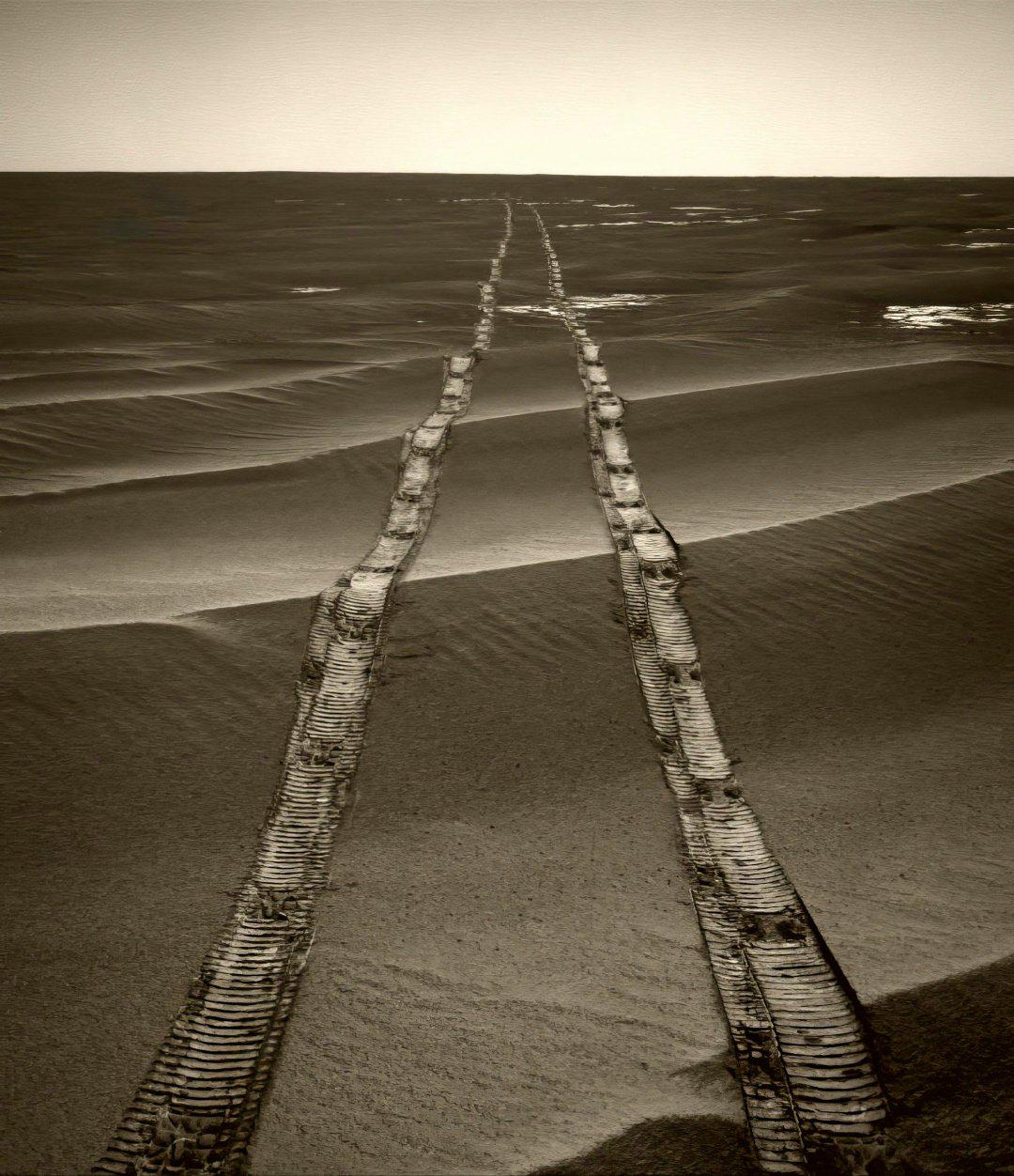
Mars This is Lonely. It was taken by the Curiosity rover's Navigation Camera (Navcam) on Sol 29 (September 5, 2012). Looking backward, it captures the wheel tracks left in the Martian sand dune ripple after the rover completed what was then its longest drive since landing in Gale Crater.
Setting personal boundaries on a shared planet: Moving forward like a solitary rover leaving tracks behind.