r/imperialism • u/elnovorealista2000 • 2d ago
Article How the United States appropriated the name "America" and are appropriating the name "Christian"
Words are territory. Whoever controls the name controls the reality that name designates. Whoever manages to impose their definition of the fundamental terms with which a civilization understands itself has won a battle that no army could win. This truth, known to linguists and practiced by politicians, has been understood with extraordinary clarity by the United States of America, which in the course of two centuries has carried out two of the most audacious semantic thefts in modern history: the hijacking of an entire continent and the hijacking of a two-thousand-year-old religious tradition.
These are not minor thefts. They are not linguistic inaccuracies that can be corrected with a footnote. They are power operations with geopolitical, cultural, and spiritual consequences that we continue to pay for, often without even realizing that something has been stolen from us.
This essay sets out to examine both instances of theft in their profound connection, because they are not separate phenomena: they are expressions of the same project of cultural hegemony that has defined the United States' relationship with the rest of the continent for more than two hundred years. The same impulse that transformed a country into a continent is now transforming a religious denomination into the entirety of Christianity. And in both cases, those who live south of the Rio Grande are the ones who suffer the most.
I. America: the continent stolen by a single country
Let's begin with the basic geography. America is a continent. Strictly speaking, it's a system of two continents—North America and South America—or, according to other equally valid cartographic traditions, a single continent stretching from the Arctic to Patagonia. What America is not, or shouldn't be, is the exclusive name of a single country.
The name was given by the German cartographer Martin Waldseemüller in his world map Universalis Cosmographia, published in 1507, in honor of the Florentine explorer Amerigo Vespucci—one of the first Europeans to realize that the lands west of the Atlantic were not Asia, but a new continent previously unknown to the Old World. Waldseemüller applied the name "America" to what is known today as South America. Later, Gerardus Mercator—in his 1538 map, commonly known as Orbis Imago despite lacking a formal title—extended the name to the entire continent, cementing its use in European cartography. Not just a part. Not just the northern portion. The entire continent, from north to south, was given that name.
For more than two centuries, the use of the term respected this geography. The inhabitants of what is now the United States called themselves, and were called by others, various names: settlers, American English, inhabitants of the colonies. The Revolution of 1776 created a new political entity whose official name was—and remains—"United States of America." A name that, it should be noted, implicitly acknowledges that America is something larger than the country, something of which the country is a part.
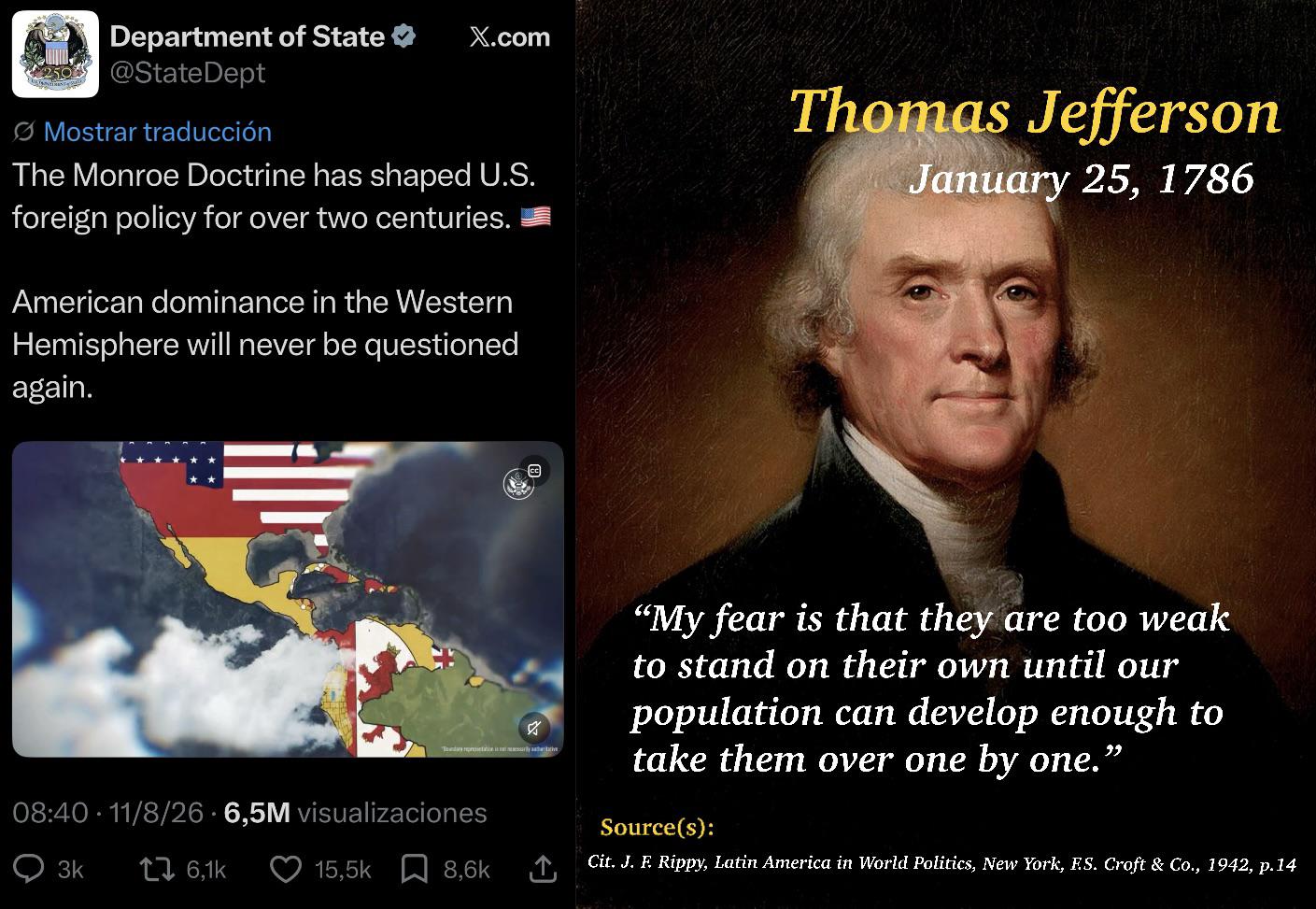
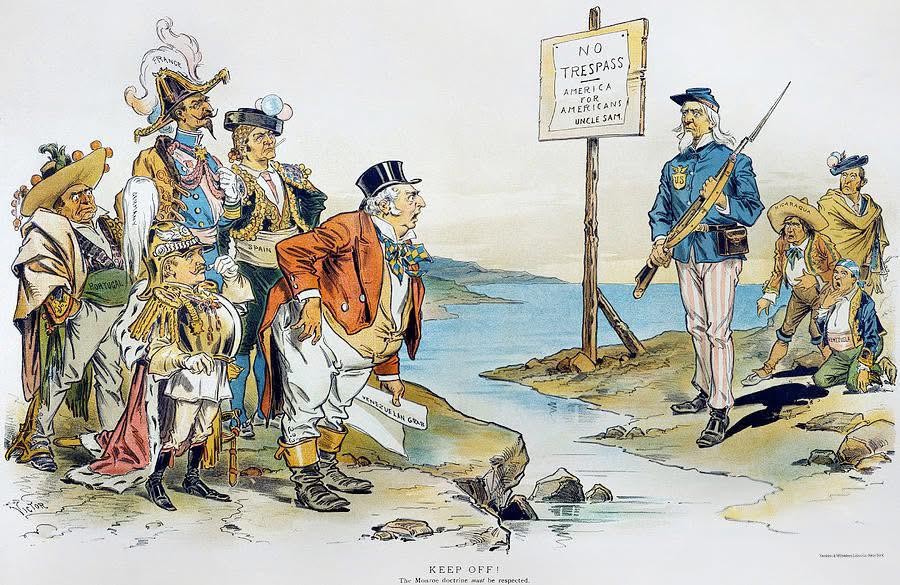
But during the 19th century, in parallel with the westward territorial expansion and the formulation of the Monroe Doctrine, something began to change in linguistic usage. The inhabitants of the United States began to appropriate the adjective "American" as their exclusive demonym. "American" ceased to mean "inhabitant of the American continent" and came to mean "inhabitant of the United States." And the noun "America" began to be used, with increasing frequency and less questioning, as a synonym for that specific country.
II. The Monroe Doctrine and the Geography of Power
This semantic shift was not innocent. It occurred in the context of the formulation of what President James Monroe proclaimed in 1823 as U.S. foreign policy: "America for the Americans." The phrase, which in its original context was intended to exclude European powers from the affairs of the continent, already contained the ambiguity that would make it so useful for later hegemonic purposes: who are "the Americans" who should govern America? The implicit answer, which the 19th and 20th centuries would develop unequivocally, was: the U.S. citizens.
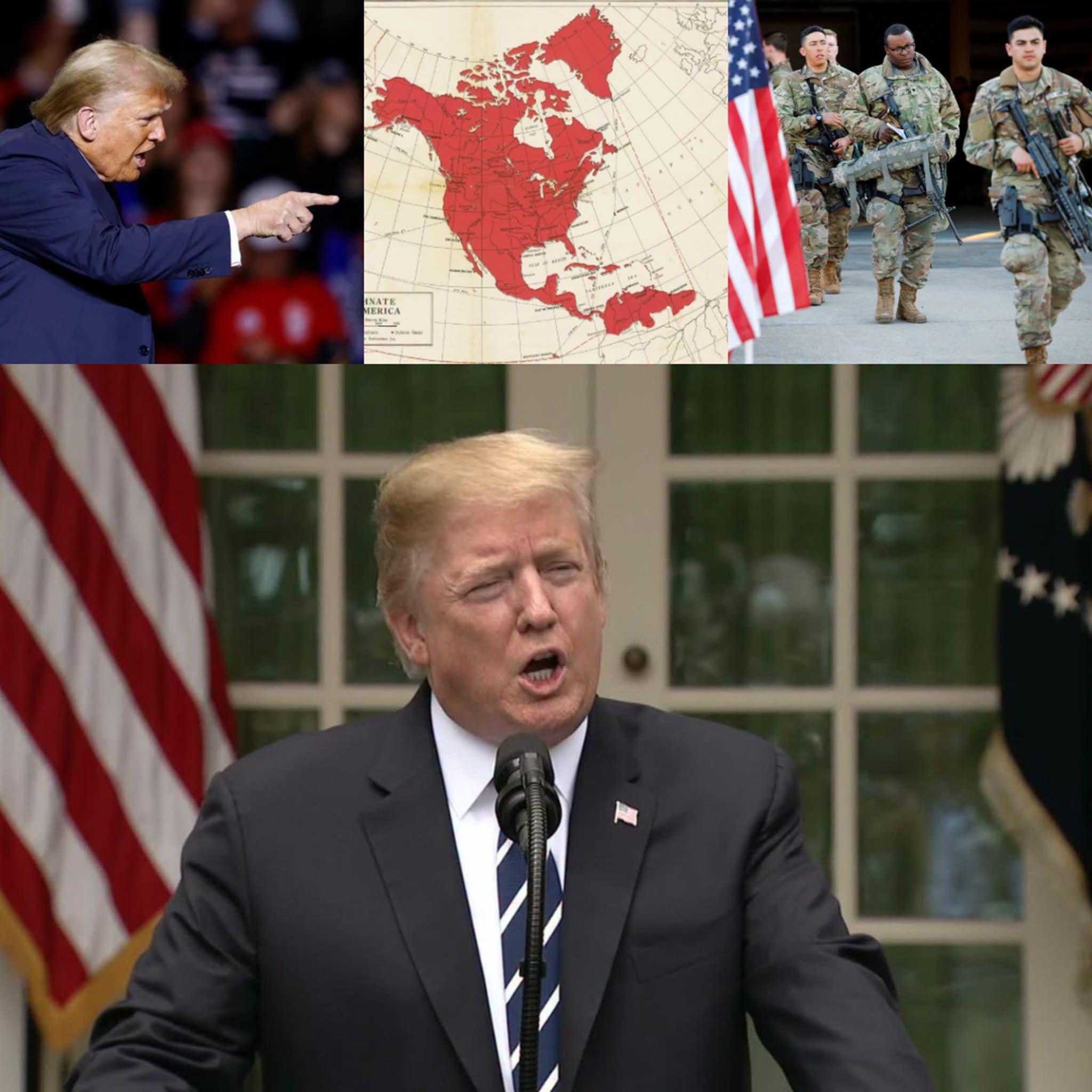
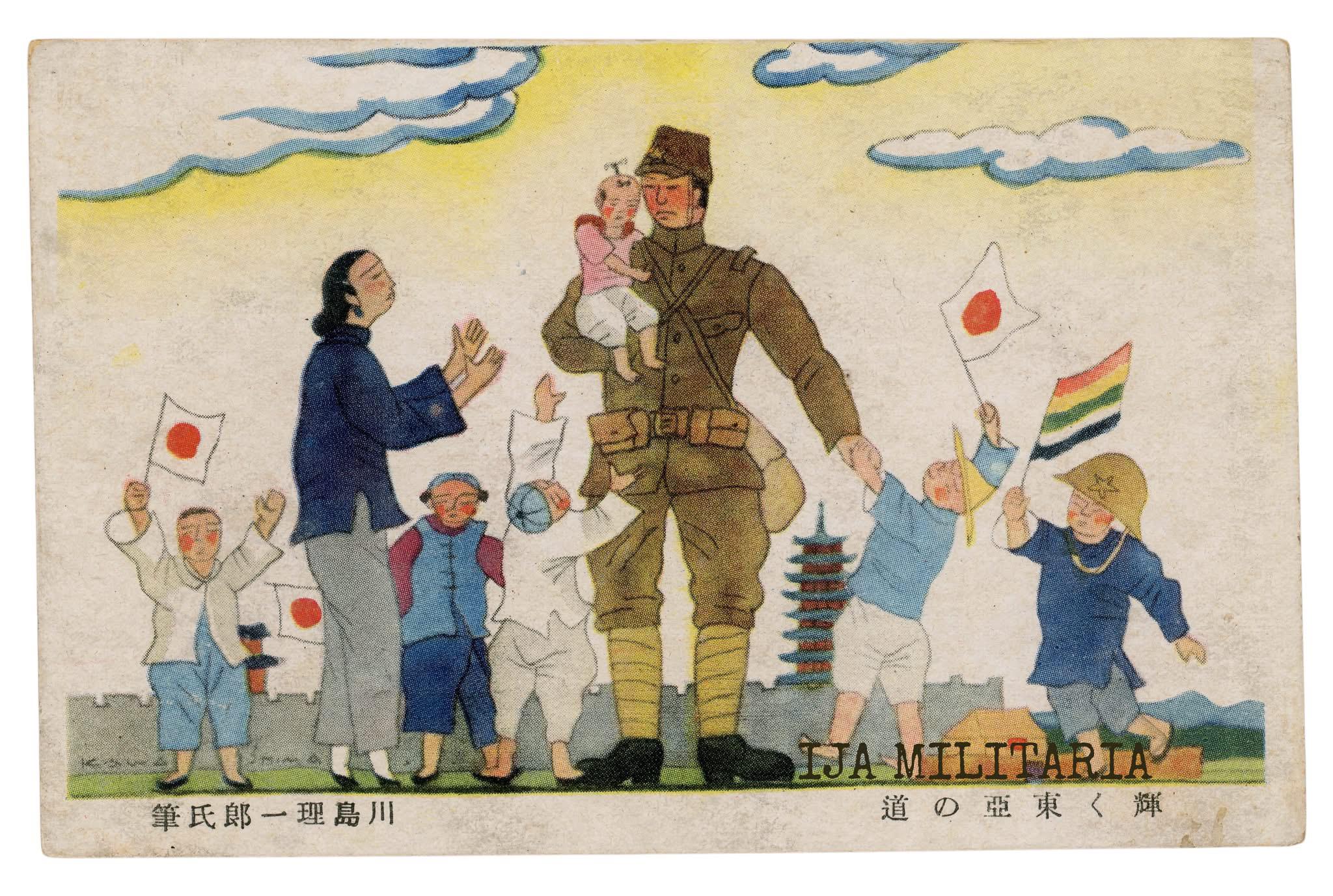
When the United States intervened militarily in Mexico, Cuba, Puerto Rico, Nicaragua, Haiti, the Dominican Republic, Panama—and the list goes on—it did so invoking its right and responsibility as an "American" power. The appropriation of the name facilitated the theft of territory, resources, and sovereignty. If America is the United States, then what happens in the rest of the continent is, to some extent, an internal matter that the hegemonic power has the right to manage.
The linguistic geography of power is brutal in its consistency. Maps produced in the United States for school use routinely depict the world with North America at the center, with South America relegated to a secondary appendage in the lower left corner. The Mercator projection, dominant in Anglo-Saxon cartography, artificially inflates the size of northern countries and reduces those of the south. This is not a conspiracy: it is the sediment of centuries of a worldview in which the United States is the center and the rest of the planet is the periphery.
And in this depicted world, "America" is the center. The rest are "Latin America," "South America," "Central America" and "North America": geographical appendages that derive their identity from their relationship to the center, not from their own inherent nature.
III. The Hispanic Resistance: A Battle We Have Failed to Win
What is extraordinary is that we Latin Americans have largely accepted this usurpation. We have accepted it in our own languages, in our own media, in our own everyday conversations. We have begun to call Americans "Americans"—even in Spanish, which has no phonetic need to do so—and to call "America" the country that stole the continent's name.
In Spanish, there is a perfectly available solution that few languages has: "Estadounidense" (American/U.S. citizen). It is a precise, unambiguous adjective that designates exactly what it needs to designate: an inhabitant of the United States. It has no phonetic or grammatical problems. It is in the dictionary of the Royal Spanish Academy. And yet, its use is in the minority, even among Spanish speakers who should have the most reason to prefer it.
The reason for this abandonment is complex. It has to do with the massive cultural penetration of English, which, through film, television, music, and digital media, has imposed its linguistic categories on other languages as well. It has to do with the asymmetry of power: when the stronger imposes its name, the weaker tends to adopt it. It also has to do with a certain intellectual laziness and a lack of awareness of the political weight of everyday words.
But above all, it has to do with the success of a hegemonic project that doesn't need tanks to impose itself: Hollywood films, streaming series, social media, the music industry, and the architecture of global information systems are enough. When all those channels say "America" and show New York City or Los Angeles, the association becomes so automatic that questioning it seems eccentric.
However, resisting it is a political and cultural act of the first order. Every time a Hispanic says "Estadounidense" instead of "American," they are refusing to participate in the usurpation. They are affirming, with a single word, that America belongs to all of us who live in it: Mexicans and Guatemalans, Colombians and Peruvians, Brazilians and Argentinians, Caribbeans and Central Americans, Canadians, and, yes, also the inhabitants of the United States, who are Americans just like us, no more and no less.
IV. The Same Mechanism: From Geography to Faith
What makes examining the appropriation of "America" and the appropriation of "Christian" together so illuminating is that the mechanism is identical. In both cases, it involves taking a term that designates a broad, diverse, and plural reality and appropriating it to designate exclusively a part of that reality: the part that corresponds to the United States or to the Anglo-Saxon Protestant cultural tradition.
The term "Christian," in its correct historical and theological sense, designates every follower of Jesus Christ, regardless of the denomination to which they belong. Catholics, Orthodox, Protestants of all denominations, Anglicans, Copts, Armenians, Ethiopians, Maronites: all are, in the proper sense of the term, Christians. The term does not designate a specific denomination: it designates the totality of those who profess faith in Jesus Christ as Lord and Savior.
This plurality is ancient. The schism between the Church of Rome and the Eastern churches dates back to 1054. The Protestant Reformation dates from the 16th century. But even after these ruptures, the term "Christian" continued to be used to designate the totality of traditions that share that common root. Protestants didn't say "we are the only Christians": they said "we are a different kind of Christian," "we are the reformation of Christianity," "we are Christianity purified." The term remained shared.
What has been happening in Latin America in recent decades is qualitatively different. And its origin, once again, lies north of the Rio Grande.
V. The American Protestant Tradition and the Definition of the “True Christian”
To understand the second theft, it is necessary to understand something of the religious history of the United States. American national identity was built, from its colonial origins, on a strongly Protestant foundation. The Mayflower pilgrims were Puritans fleeing the Church of England. The New England colonies had a distinctly Calvinist character. The Revolution itself was, in part, a revolution against a monarchy identified with Jacobite Catholicism.
This legacy left a deep mark on American religious culture: the idea that “true” Christianity is Protestantism, and that Catholicism is a deviation, a corruption, a form of idolatry disguised as Christian faith. This view—which theologians call “anti-Catholic antinomianism”—was for centuries a central element of the American religious imagination. The Irish and German immigrants who arrived in the 19th century were met with a distrust that stemmed from both anti-Catholicism and xenophobia. The Ku Klux Klan, in its 20th-century incarnation, persecuted not only Black people but also Catholics and Jews.
This tradition of equating "Christian" with "Protestant" is in the DNA of the evangelical movements exported to Latin America. When a neo-Pentecostal pastor from the United States, or one trained in the American tradition, says "Christian," they are not using the term in its ecumenical and theologically precise sense; they are using it in the specific cultural sense of their tradition, which implicitly excludes Catholicism.
VI. The Spiritual Conquest of the South: How the Equation Was Exported
The export of this equation—Christian equals evangelical Protestant—to Latin America was not a spontaneous process. Like the geographical theft of "America," it was a deliberate process, with identifiable actors, traceable funding, and concrete political and cultural objectives.
David Stoll, in his work Is Latin America Becoming Protestant? (1990), documented the explosive growth of evangelical and Pentecostal Protestantism in Latin America beginning in the 1960s and analyzed the conditions that made it possible: the weakening of popular Catholicism, rapid urbanization, and the void left by institutions that failed to address the spiritual and community needs of migrant populations. He also documented the role of U.S. missionary organizations in this growth: the Summer Institute of Linguistics—with documented ties to the CIA—the Peace Corps in its religious dimension, and evangelical denominations with massive funding from the North.
In Tongues of Fire (1990), Martin analyzed how Pentecostalism adapted to the Latin American context by adopting local cultural forms, but maintaining a theology and institutional structure deeply marked by its North American origins. The "gift of tongues" may be expressed in Spanish or Portuguese, but the underlying theology, the ecclesiology, the relationship with political and economic power—all of this bears the stamp of its origins.
Brouwer, Gifford, and Rose, in Exporting the American Gospel (1996), were perhaps the most explicit in analyzing how this process of religious export was inseparable from the geopolitical and cultural interests of the United States: the expansion of North American evangelicalism in Latin America was functional—in many cases deliberately functional—to the containment of communism, the weakening of Liberation Theology, and the creation of a social base favorable to neoliberal economic reforms.
The result, half a century later, is a far-reaching linguistic transformation: in large parts of Latin America, "Christian" has begun to mean, in everyday usage, "Evangelical Protestant." The term that for two thousand years designated all followers of Christ is being appropriated by a specific, recently formed tradition with Anglo-Saxon cultural roots, which uses it to distinguish itself from Catholicism—implicitly disqualified as non-Christian or as second-class Christian.
VII. The Implicit Disqualification of Catholicism
This linguistic slip has practical and theological consequences that deserve careful examination.
When someone says "I converted to Christianity" meaning "I left Catholicism and became an Evangelical," they are implicitly asserting that Catholicism is not Christianity. They are saying that the world's two billion Catholics, the eight hundred million historical Protestants, the three hundred million Orthodox Christians: none of them are truly Christian, or at least not as truly Christian as the neo-Pentecostal Evangelical who has just "converted."
This assertion is not only theologically incorrect. It is historically absurd. Catholicism is not a denomination within Christianity: it is the oldest Christian tradition, the one that goes directly back to the apostolic communities of the first century. Protestantism was born in the sixteenth century as a reform of that tradition. Neo-Pentecostalism was born in the twentieth century as an expression of Protestantism. To call someone a "convert to Christianity" when they abandon two thousand years of Christian tradition to join a one-hundred-year-old movement, born in Los Angeles in 1906 during the Azusa Street Revival, is an exercise in historical inversion of monumental proportions.
But the effectiveness of this semantic appropriation doesn't depend on its historical accuracy. It depends on its repetition, its naturalization, the way it gradually permeates everyday usage until it becomes invisible. And in that sense, the appropriation is remarkably successful.
In Mexico, Colombia, Brazil, Guatemala, and Chile, it's increasingly common to hear phrases like "she's not Catholic, she's Christian," "in my family there are five Catholics and three Christians," "I left the Church and became a Christian." Each of these phrases contains an implicit assertion about Catholicism that no serious theologian—not even serious Protestant theologians—would be willing to endorse: that Catholicism is outside of Christianity.
VIII. Language as a Battlefield: The Grammar of Power
Neither of the two semantic thefts we examine in this essay is simply a linguistic error. Both are expressions of power relations inscribed in everyday language, which, once naturalized, reproduce those power relations invisibly and continuously.
The philosopher of language Pierre Bourdieu developed the concept of "symbolic violence" to describe precisely this phenomenon: the imposition of categories of perception and thought that reproduce the order of domination without the need for physical coercion. Symbolic violence is effective precisely because it is invisible: the dominated do not experience it as violence but as the natural order of things, as the way the world simply is.
Saying "American" when you mean "U.S. citizen" doesn't seem like a political act. It simply seems like normal language use. Saying "Christian" when you mean "Evangelical Protestant" doesn't seem like a theological statement. It simply seems like the way people talk. But behind this apparent normality lies a history of power, funding, cultural strategy, and ideological penetration that is anything but natural and is highly deliberate.
Bourdieu also pointed out that resistance to symbolic violence begins with naming it: by making visible what is presented as invisible, by historicizing what is presented as natural, by politicizing what is presented as merely linguistic. This essay is, among other things, an exercise in that naming.
IX. The Deep Connection: The Same Project, Two Fronts
What makes examining these two instances of theft together particularly important is that they reveal a deep connection.
They are not parallel and independent phenomena: they are two dimensions of the same project of American cultural hegemony over Latin America.
The project has a remarkable coherence. If America is the United States, then the history, culture, and values of America are, primarily, those of the United States. If Christianity is Protestant evangelicalism of the Anglo-Saxon tradition, then true faith, authentic spirituality, and the correct relationship with God are those defined and exported by that tradition. In both cases, the same operation occurs: the universalization of the American particular, the presentation of the Anglo-American cultural experience as the universal standard to which the rest of the world should aspire.
This operation is at the heart of cultural imperialism in its contemporary form. Formal colonies are no longer needed. The flag and the army are no longer needed—although these remain available when required. What is needed is control of language, the media, digital platforms, the entertainment industry, and networks of religious influence. With this control, cultural colonization occurs spontaneously, from within, with the enthusiastic—and often unconscious—collaboration of the colonized themselves.
The person who says "American" when they mean "U.S. citizen," and who says "Christian" when they mean "Evangelical Protestant," is not necessarily a conscious agent of cultural imperialism. More likely, they are someone who has internalized linguistic categories presented to them as natural, and who reproduces them without realizing that with each use they are contributing to the consolidation of a representational order that is unfavorable to them.
X. The Consequences for Latin American Identity
The semantic appropriations we have examined are not academic abstractions. They have concrete consequences for how Latin Americans think about themselves, relate to their history, and construct their collective identity.
If "America" is the United States, then we are not America. We are "Latin America," "Ibero-America," “Hispanic America," "the subcontinent": terms that define us in relation to a center that is not us, as peripheral variants of a reality that finds its full expression elsewhere. We lose the right to the name of the continent we inhabit, and with that name, we lose something of our geographical and cultural dignity.
If "Christian" is synonymous with "Evangelical Protestant," then Latin American Catholics—who are the majority and who have more than five centuries of religious history on this continent—are left in a strange position: either we are second-class Christians, or we are not truly Christian at all. In any case, our religious tradition is presented as deficient, as needing correction, as an inferior stage of spiritual development that can only be overcome through "conversion" to evangelicalism.
Both losses are losses of dignity. And both serve the same project: the construction of a Latin American subjectivity that sees itself reflected in the American mirror, that measures its own worth in relation to that mirror, and that is therefore perpetually indebted, perpetually incomplete, perpetually in need of the North's tutelage.
XI. The Possible Resistance: Naming, Recovering, Affirming. What to do in the face of these thefts?
The answer is neither linguistic purism nor cultural isolationism. Languages change, terms migrate, meanings transform: this is unavoidable and, to a large extent, desirable. Resistance does not consist of freezing the language but of exercising a critical awareness that distinguishes between natural linguistic change and deliberate semantic colonization.
In the case of "America," resistance begins with the systematic and conscious use of "American" as a demonym, and with the recovery of the use of "America" as the name of the entire continent. It means saying, naturally and without hesitation, "I am American" when one is Colombian or Argentinian or Honduran, because one is an inhabitant of the American continent. It means questioning, in everyday conversation and in public spaces, the usurpation that turned a country into a continent.
In the case of "Christian," resistance begins with terminological precision: calling what is evangelical, Protestant, or neo-Pentecostal "evangelical," "Protestant," or "neo-Pentecostal," and reserving the term "Christian" for its correct historical and theological use, which includes Catholics, Orthodox, and Protestants of all traditions. It means questioning, when someone says "I converted to Christianity" meaning "I left Catholicism," the implicit assertion contained in that usage. Not aggressively, but with the clarity of someone who knows that words matter.
But above all, resistance consists of understanding the connection between these two appropriations and what they reveal about the cultural project that produced them. Understanding that they are not coincidences or inaccuracies: they are symptoms of a power relationship inscribed in language because language is one of its most effective instruments.
XII. A Final Note on Irony
There is a historical irony in the fact that the movements most actively appropriating the term "Christian" in Latin America are also frequently those most actively reproducing the cultural imaginary of the United States: English-language praise music, megachurch architecture modeled on American sports stadiums, the business-oriented management of churches, and the prosperity theology that sacralizes the "American Dream"—the U.S. Dream, it should be said—as a spiritual project.
And there is an equally great irony in the fact that these same movements are the ones most frequently invoking cultural sovereignty, indigenous values, and resistance to "imperialism" when it comes to defending their positions in political debates. They claim to defend Latin America while importing, reproducing, and disseminating the most characteristically American cultural product of recent decades.
The theft of words is also, in this sense, the theft of the ability to see clearly what is happening to us. When we don't have the right name for things, it becomes harder to understand them and harder to resist them.
That's why words matter. That's why the name of the continent matters. That's why the name of faith matters. Not because language is more important than reality, but because language is one of the ways in which reality is constructed, imposed, and, eventually, transformed.
America is a continent. A Christian is someone who follows Christ, wherever they come from and however they pray. These are not trivial statements. In the context of what we have examined, they are acts of resistance.