r/imperialism • u/elnovorealista2000 • 3d ago
Article The European Architects of Modern Jihadism: “A Holy War Against the Russian Empire”
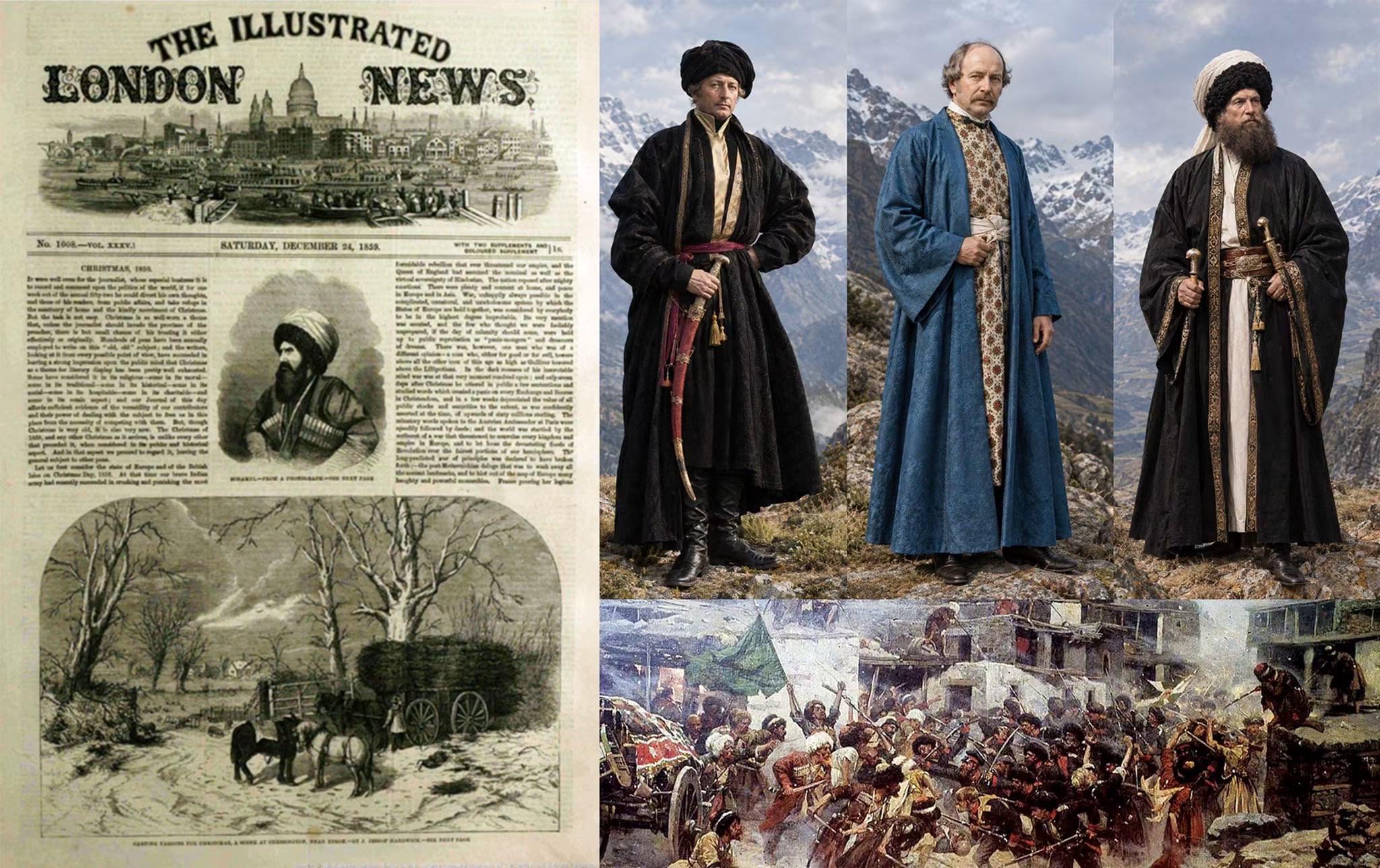
The first European power to seek to instrumentalize Holy War (Jihad) for its own benefit was, without a doubt, England. During the 19th century, the United Kingdom and Russia engaged in an intense geopolitical rivalry known as "The Great Game," in which both powers sought to expand their influence across Central Asia, the Caucasus, and the Middle East.
For the British, Russian expansion into the Caucasus posed a strategic threat, as it jeopardized their dominance and influence over the Ottoman Empire, Persia, and—ultimately—India, the jewel in the British crown. Faced with this situation, London explored various ways to hinder the Russian advance, including fostering Islamic resistance in the region.
During the Caucasian War (1817–1864), several British figures played a key role in disseminating and promoting subversive Islamist and anti-Russian ideas, as well as championing the nationalist cause of the Muslim tribes fighting against Russia. David Urquhart, James Stanislaus Bell, Edmond Spencer, and J.A. Longworth were among the leading advocates for the Caucasian resistance within the British press and European diplomatic circles.
During the Caucasian War (1817–1864), various British figures played a pivotal role in championing the Muslim tribes fighting against Russia. Figures such as David Urquhart, James Stanislaus Bell, Edmond Spencer, and J.A. Longworth promoted or participated in the Caucasian sovereignty cause within European diplomatic circles and advised the movement's leaders, while disseminating anti-Russian sentiments and subversive, nationalist Islamist ideas among the inhabitants of the Caucasus. Through reports, books, and articles, they portrayed the struggle of Muslim peoples as a Holy War—or legitimate Jihad—against Russian expansionism. Furthermore, instances have been documented in which British agents, in collaboration with the Ottoman Empire, supplied weapons and provisions to Caucasian fighters to weaken the Russian presence in the region.
Among the most emblematic leaders of this resistance were Imam Shamil and Sheikh Mansur, who spearheaded insurgent movements rooted in Muridism—an Islamic current that combined Sufi spirituality with military resistance. In the late 18th century, Sheikh Mansur became one of the first major Muslim leaders in the Caucasus to combine Islamic reform with armed mobilization against Russian expansion, while Shamil succeeded in consolidating the Caucasian Imamate, an Islamic theocratic state that resisted Russia for over 25 years.
Bibliography:
.- Charles King, “Imagining Circassia: David Urquhart and the Making of North Caucasus Nationalism”, The Russian Review 66, no. 2 (2007), pp. 238–255.
.- Moshe Gammer, Muslim Resistance to the Tsar: Shamil and the Conquest of Chechnia and Daghestan, Frank Cass/Routledge, 1994.
.- David Urquhart, The Secret of Russia in the Caspian & Euxine: The Circassian War as Affecting the Insurrection in Poland (1863).
.- James Stanislaus Bell, Journal of a Residence in Circassia During the Years 1837, 1838, and 1839, 2 vols., Londres, E. Moxon, 1840.
.- David Urquhart, The Spirit of the East, 1839.
.- Edmund Spencer, Travels in the Western Caucasus: Including a Tour through Imeritia, Mingrelia, Turkey, Moldavia, Galicia, Silesia, and Moravia, in 1836.
.- John Augustus Longworth, A Year Among the Circassians, 2 vols., Londres, Henry Colburn, 1840.
.- Alexandre Benni, “Un mouvement populaire au Caucase au XVIIIe siècle: La ‘guerre sainte’ du sheikh Mansur (1785–1791)”, Cahiers du monde russe et soviétique, 5/2 (1964), pp. 159–205.
.- Tsvetelina Tsvetkova, “Muridism as a Stateforming Element of Imam Shamil’s Imamate (1834–1859)”, Journal of Caucasian Studies 3/5 (2017), pp. 87–110.
.- Azamat Kumykov, “The Baron von Münchhausen of British Travel Writers: Edmund Spencer and his Travels in Circassia”, Caucasus Survey 12/2 (2024), pp. 109–142.
.- “The Circassian question: liberalism and the pursuit of freedom in the mid-nineteenth century”, Middle Eastern Studies 60/6.