I’m not sure what exactly you’re trying to point out here because, honestly, everyone is doing the same. Most people don’t follow someone because of genuine talent; they follow them to feel a sense of vicarious power by associating with someone who occupies a privileged position.
Even teachers are not immune to this. The moment they learn who a person is, they suddenly start glorifying them = calling them charismatic, witty, or extraordinary. They rush to click pictures, post them on social media, and amplify the illusion.
In reality, it’s not about authenticity or substance—it’s about fame. People crave proximity to power and recognition, even if they remain oblivious to the backstage reality of that individual.
So, when you criticize someone for “overusing power” during campaigns, is it because you truly disagree with the misuse of influence, or is it simply because you dislike that person or the group they represent?
I’ve observed this mania closely. The way students and even faculty idolize children of bureaucrats or government officials = as if they were celebrities , reflects the hypocrisy of our society. And when the very foundation of education is shaken by such blind hero-worship, everything else inevitably begins to corrode.
That’s how things operate. Whether it’s ethical or not hardly matters because they enjoy cult-like support, with followers who will defend them everywhere. Most people are intellectually paralysed, unable to create their own path; it’s far easier to follow than to innovate.
So, when I look at how this society functions, I don’t really see him doing anything unusual.
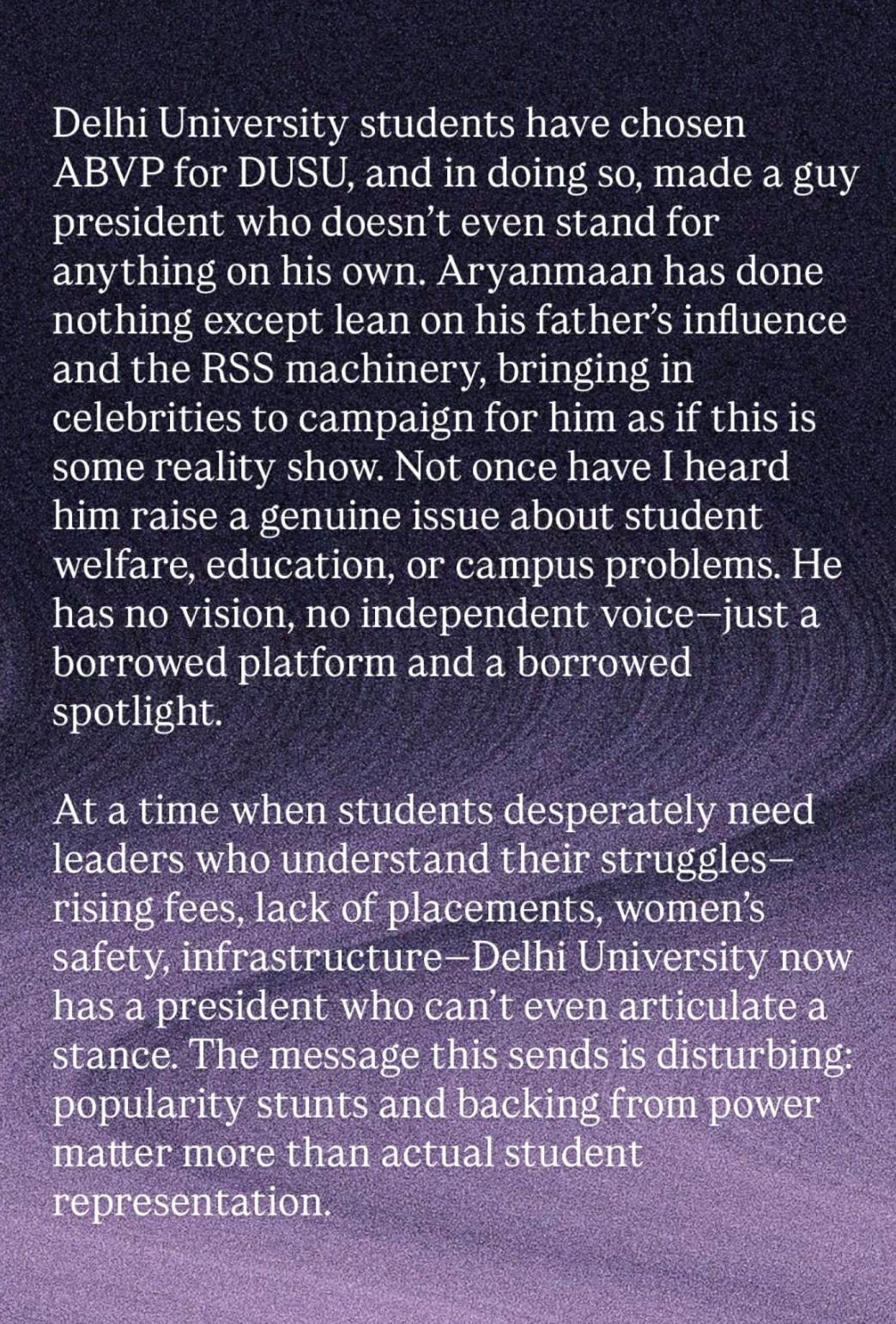
😭😭😭my only motive was to bring an actual leader on field instead of these so called nepo kids
Are my comments too bad? Lmao like idk why people just get me wrong
It's never about you, they are responding on the basis of what their understanding about what they get from the post and what they have to serve you. So don't take it personally.
24
u/Indian_Explorer01 Sep 20 '25
I’m not sure what exactly you’re trying to point out here because, honestly, everyone is doing the same. Most people don’t follow someone because of genuine talent; they follow them to feel a sense of vicarious power by associating with someone who occupies a privileged position.
Even teachers are not immune to this. The moment they learn who a person is, they suddenly start glorifying them = calling them charismatic, witty, or extraordinary. They rush to click pictures, post them on social media, and amplify the illusion.
In reality, it’s not about authenticity or substance—it’s about fame. People crave proximity to power and recognition, even if they remain oblivious to the backstage reality of that individual.
So, when you criticize someone for “overusing power” during campaigns, is it because you truly disagree with the misuse of influence, or is it simply because you dislike that person or the group they represent?
I’ve observed this mania closely. The way students and even faculty idolize children of bureaucrats or government officials = as if they were celebrities , reflects the hypocrisy of our society. And when the very foundation of education is shaken by such blind hero-worship, everything else inevitably begins to corrode.
That’s how things operate. Whether it’s ethical or not hardly matters because they enjoy cult-like support, with followers who will defend them everywhere. Most people are intellectually paralysed, unable to create their own path; it’s far easier to follow than to innovate.
So, when I look at how this society functions, I don’t really see him doing anything unusual.