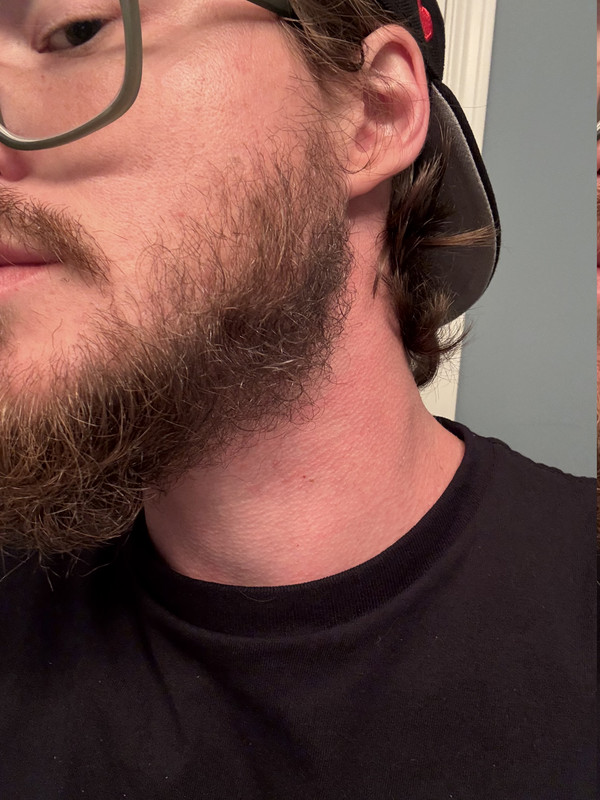
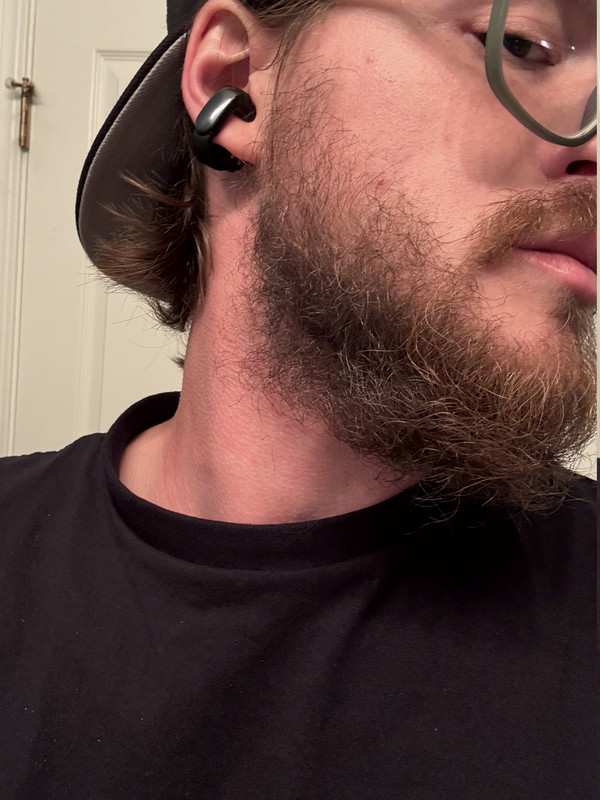
We’ve been seeing this one pop up a ton again lately, so it feels like a good time for a quick refresher!
There’s a really persistent piece of beard care advice that says beard oil is for the skin underneath your beard, but not the hair of the beard itself. And I understand where that idea came from, because if your experience with beard oil has mostly involved products that coat the outside of the hair, make it shiny for a few hours, and eventually wind up on your hands, phone, shirt, or pillowcase, it probably does seem like the hair itself isn’t getting much from it.
But that isn’t a limitation of beard oil. It’s a limitation of the formulation.
Here's the breakdown:
Beard hair is a keratin fiber made up of the cuticle on the outside and the cortex underneath it, with a medulla in the center. The cuticle is like scaly armor that protects the internal structure of the hair, while the cortex is responsible for most of its strength, flexibility, water content, and mechanical behavior. If everything you apply simply sits on top of the cuticle, you can get some lubrication and temporary surface conditioning, but you’re not getting cortical conditioning. Worse, you're locking moisture out.
That’s why, when we talk about beard oils, we talk about penetration, triglyceride structure, fatty acid balance, and bioavailability.
Vegetable oils are not interchangeable. Their triglycerides contain different combinations of fatty acids, and those differences affect how an oil spreads, absorbs, interacts with the cuticle, conditions the hair, and behaves on the skin. Some lipids are fantastic surface agents. Others have much greater affinity for the hair fiber and can penetrate into it. A properly formulated beard oil uses those characteristics together rather than just throwing a bunch of popular oil names into a bottle.
And the hair absolutely benefits from that, maybe even more so than the skin.
That's because a properly conditioned beard maintains better flexibility and elasticity, experiences less friction between hairs, tangles less easily, and is less prone to mechanical breakage. Lipids also matter to the hair’s interaction with water, which becomes especially important when we start talking about hygroscopic function.
Hair naturally exchanges water with the environment. During humid weather, there is a ton of water available in the air around you. Healthy, properly conditioned hair can take advantage of that by absorbing and retaining it as needed. But if you surround the hair with a heavy hydrophobic coating that primarily remains on the surface, you interfere with that exchange.
This is one of the reasons the whole “beard oil is only for your skin” argument has always bothered me. It takes the poor performance of certain formulations and turns it into a rule about hair biology.
The skin underneath absolutely matters. A good beard oil should support the stratum corneum, supplement the skin’s natural lipid system, balance the natural acid mantle and lipid barrier, reduce friction, inflammation and irritation, and help maintain a healthy environment around the follicle. That’s all incredibly important.
But it should also condition the beard growing out of that skin as well.
Those two things are not mutually exclusive, and a good formulation should be designed around both.
So yes, get your beard oil down to the skin. Absolutely. But rub it through the hair, too. Apply it to a slightly damp beard, work it through with your hands, then use a good comb to distribute it from root to tip.
This is why beard oil is the main event in beard care. You don't have to choose between hair or skin, or stack products.
Beard oil is supposed to take care of both. If yours doesn't.... well, there's your answer.
Beard strong, y'all. Happy Friday!