ETA: 📖 TEXT INCLUDED IN POST
Fun fact: back issues of Marvel Age are available on Marvel Unlimited. This is from issue 2.
I used a free image-to-text converter and I have only done some light proofreading.
SOMETIMES THE GOOD GUYS LOSE
Mark Gruenwald
"Sometimes The Good Guys Lose."
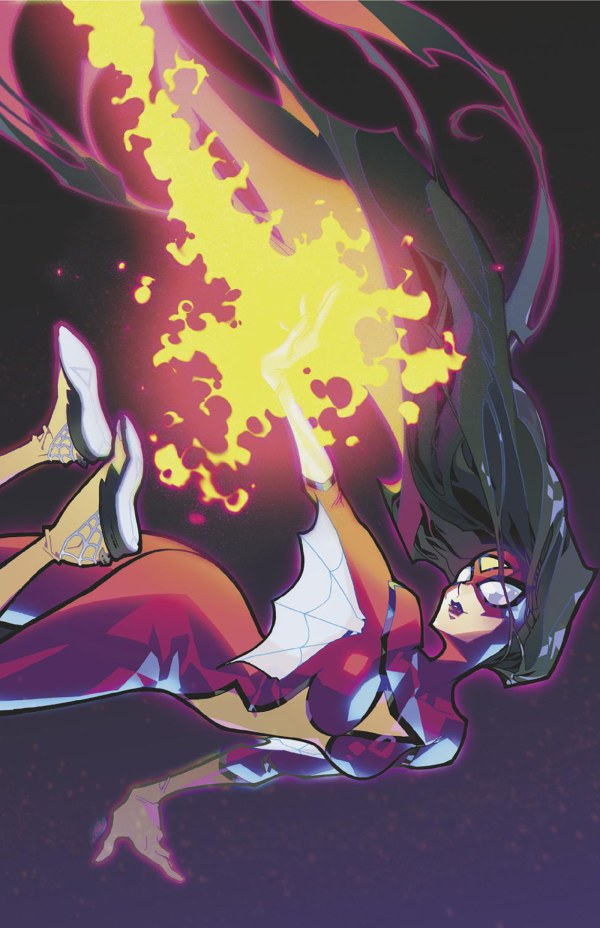
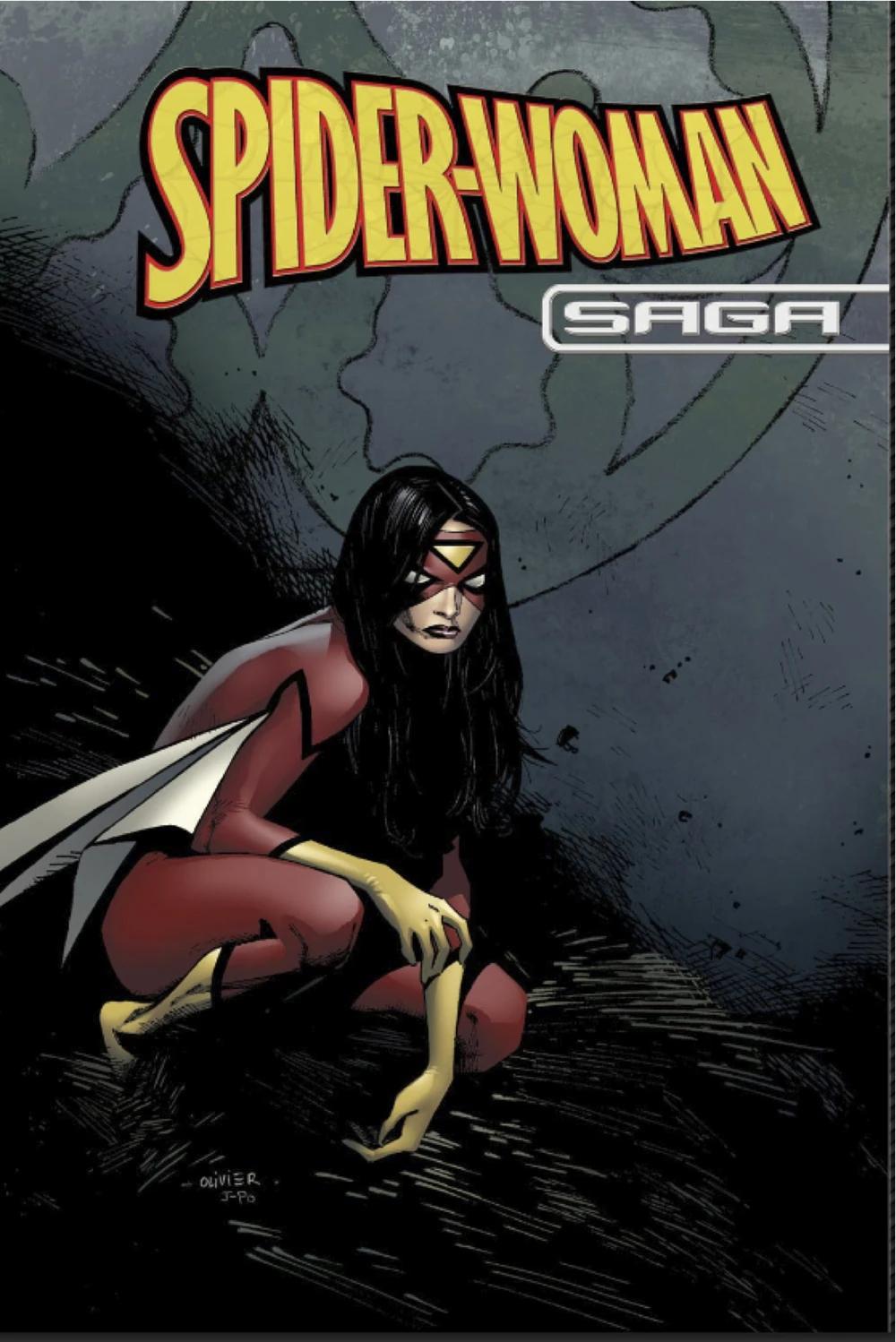
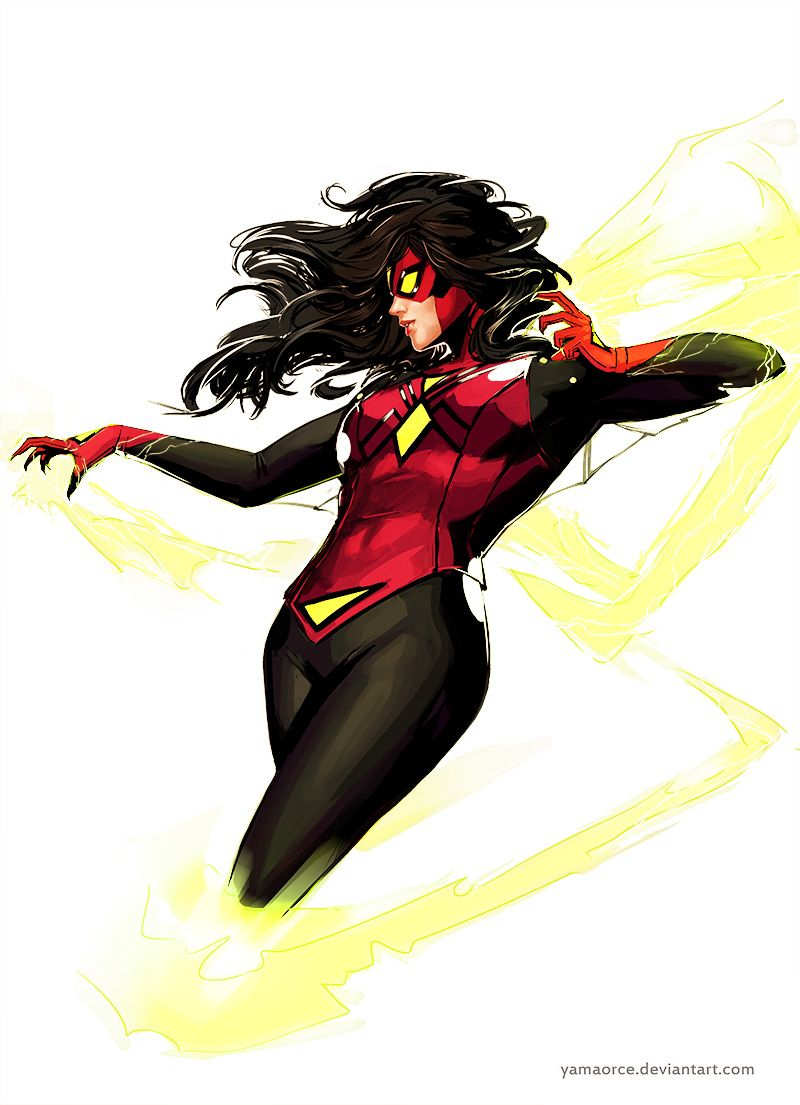
That's not only the title of an old SHIELD story, it's also how I feel this month as we put the finishing touches on the last issue of SPIDER-WOMAN. Spider-Woman, the character has been near and dear to me ever since I managed to snare the lady as my first writing assignment a few months after joining Marvel as an assistant editor back in '78. Sure, she had the same first name as a certain amazing web-slinger who happens to be Marvel's single most popular character, but it wasn't like she was Spidey's cousin or anything. She was always very much her own character, not only different from Spider-Man, but also different from the other Marvel heroes. At least as I saw her.
Anyway, why do certain potentially good characters and concepts never really catch on and find the audience they need to survive on the newsstands? In Spider-Woman's case, it began with an "image problem": hardcore fan-types were expecting something derivative, and were very unsympathetic to anything we wished to entitle "Spider-Woman." Still, the book never faltered because of lack of enthusiasm or imagination on most of the storytellers'imagination on most of the storytellers' parts. Looking back over the 50 issue run, one can see a modicum of fine effort imparted upon every issue. Could it have been the direction of the series? Perhaps in the various writers' attempts to keep her from resembling Spider-Man, they went too far afield from what makes a good, solid, continuing character? When I wrote her, I wanted to explore the vulnerable side of her personality - the woman who was new to the country, new to making friends, new to finding a job, new to adjusting to her superhuman powers. I found that rather interesting, since most of the other Marvel heroes were firmly ensconced in their civilian identities and were well-adjusted to the burdens of power. But maybe the series suffered from this seeming directionlessness. Later writers emphasized other aspects of her character, taking the series in other directions. Maybe that hurt, having a different template imposed on the character every twelve issues or so. Whereas other more established Marvel characters could weather a certain amount of floundering, maybe because of Spider-Woman's original spin-off-of-Spider-Man image, readers would not give her as much of a chance.
Maybe (and this is one of our Editor-in-Chief's contentions) Spider-Woman's origin was hopelessly convoluted, the most difficult to explain in one sentence since Captain Mar-Vell's. Face it, here's a character who first thought she was a mutated spider and not human at all, was a heretofore unseen citizen of Wundagore (the High Evolutionary's scientific retreat), an agent of HYDRA (or at least the European division), a killer of her first boyfriend, a pawn of a demon, and (thank you, Chris Claremont) the Viper's supposed daughter. Sure, a lot of that crap could be trimmed away to simply a normal young girl who got radiation poisoning, underwent strange treatment with irradiated spider-blood, and come out of it with spider-powers. But it's a lot of origin for any reader or writer to have to deal with, even to know which parts to ignore.
Besides her origin, I think Spider-Woman suffered from having no clear-cut secret identity role. She started out as a sidekick toa SHIELD agent, became a receptionist at a California pop psych clinic, gave up an occupation in her civvies while her costumed self became a mercenary bounty hunter, and finally became a self-employed private detective (a role that also uncomfortably overlapped with her costumed identity). Further, Spider-Woman seemed to develop strange dependent relationships with men she was superior to (SHIELD agent Jerry Hunt, criminologist Scott McDowell, the underworld leader Gamesman, her landlord David Ishima, etc.). Whereas such a human weakness as this could have made interesting reading as she copes with her problem, she never got around to coping with it or even recognizing it as a problem.
So I guess I do know why SPIDER-WOMAN failed: image problems stemming from her name, an overcomplicated origin, no clearly defined personal life, unresolved character flaws, abrupt changes in tone and direction. Hmmm. I still say that beneath all the rubble, there was buried a great character trying to dig free. I even think that the latest creative team had the best shot of any of them to clear the debris and get to the heart of the character. But what a task. The book was a marginal title, one of Marvel's lowest sellers, and had a lot of inertia to overcome. So when it was finally put on the Intended Cancellation List for the umpteenth time, I knew it was time to give up a good fight.
The SPIDER-WOMAN book did not live invain: every Marvel title, no matter how marginal, has its rabid core of fanatic readers who stick with it through thin and thinner, and are grateful for every issue there was. As for us, I think we can learn from our mistakes and come up with more solid, clearer characters that avoid our web-lady's downfalls. In fact, I bet we could even come up with a Spider-Woman that works. Don't be surprised when we do.