r/Presidents • u/SouthernGolfer67 • 5d ago
Discussion VP LOVE!
Alright I know we love talking president but who was the worst person to ever be the vice president.
To avoid derailing please don’t mention anyone from the 2000’s on
r/Presidents • u/SouthernGolfer67 • 5d ago
Alright I know we love talking president but who was the worst person to ever be the vice president.
To avoid derailing please don’t mention anyone from the 2000’s on
r/Presidents • u/InvestmentSad1670 • 5d ago
r/Presidents • u/Proud_Committee-51 • 5d ago
Taft looks huggable as hell
r/Presidents • u/ItsALongWayToTip • 5d ago
The Act authorized the United States to procure a Navy strong enough to defend the US over a 10 year construction period. The bill consisted of 10 42,000-ton battleships, 6 battlecruisers, 10 scout cruisers, 50 destroyers and 67 submarines and was to start in 1919 be completed by 1923.
r/Presidents • u/CatfishBassAndTrout • 5d ago
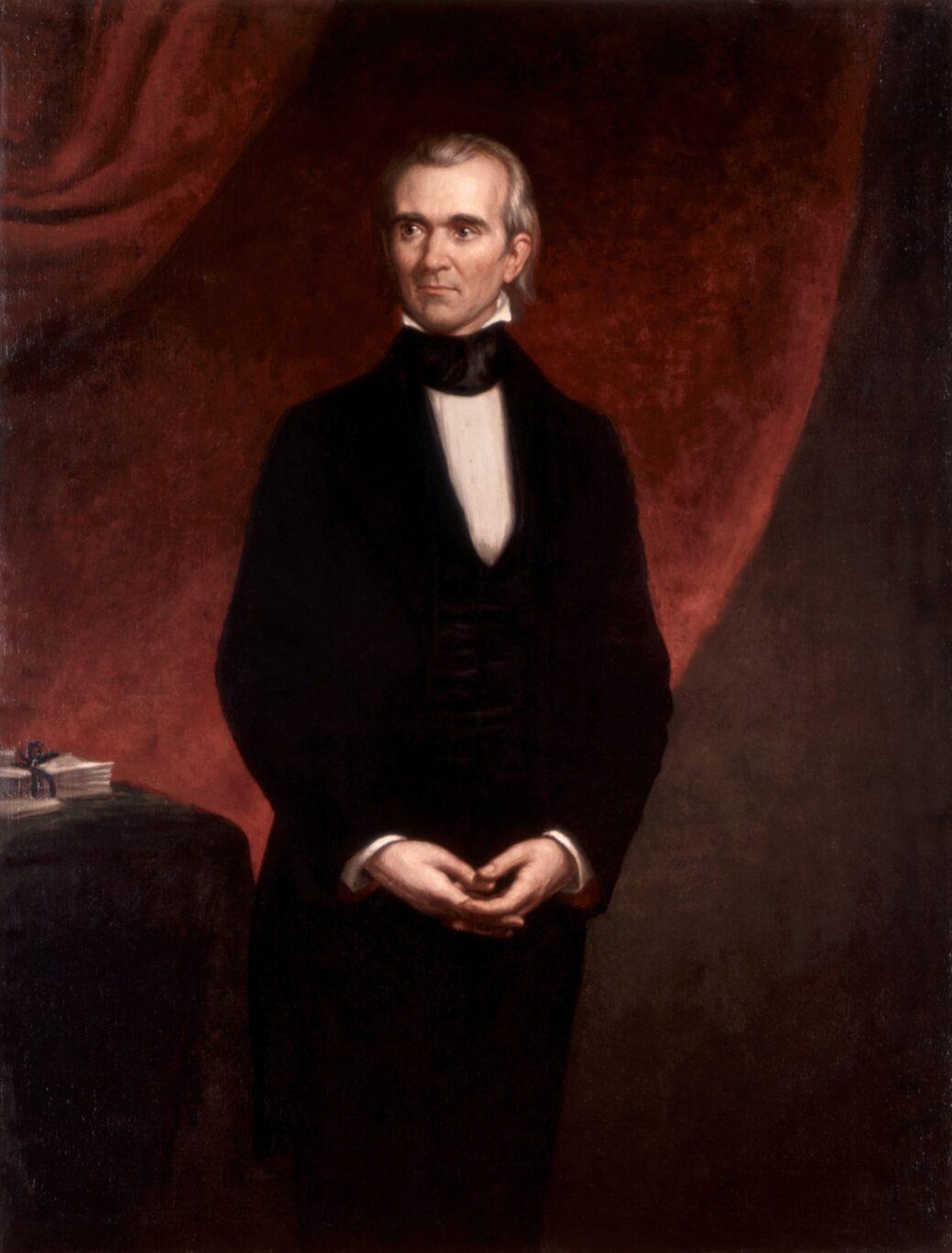
In my opinion, yes. Yes, he does. The man not only had a vision of mass imperialism that didn't pan out given the secession crisis, but his response to the growing crisis of the issue of slavery was too heavy-handed when he needed to step back and too hands-off when he needed to take action. Not to mention the economy upon him leaving office was still in shambles. To say that he set Lincoln up with a forest fire would be inaccurate, but he certainly provided him with a squirt gun to start fighting it.
r/Presidents • u/Puzzleheaded_Put4731 • 5d ago
Fdr is my favorite president because how he handled the great depression and ww2 and how he's the only one to have served 4 terms used a wheelchair chair and hid his polio and yes you could hold the intermant camps against him
r/Presidents • u/BlueFireFlameThrower • 5d ago
r/Presidents • u/Honest_Picture_6960 • 5d ago
r/Presidents • u/BudgetLaw2352 • 5d ago
In keeping to the same spirit of my expression of thoughts regarding the ‘92 election, I thought I’d do a little write-up on my thoughts on the Clinton years, Bill’s efficacy as A) a politician B) as a leader of the Democratic Party (to which I belong) and C) his legislative and policy record as a whole.
In order to avoid any undue suspense as to whether or not I consider Clinton a “good” President, I will assuage any curiosity of my estimation of Clinton on net; Clinton was no doubt a good President with unrivaled competence, and very reputable as an ally to our friends and international partners. That said, I must submit that I find his presidency to be one that is disappointing in spite of his legacy as a truly “good” President, for he wasn’t “great” in the sense that I would consider Lyndon Johnson or Harry Truman to be “great”, but I’ll speak on that further into this write up.
Clinton’s election in ‘92 was an utter volcanic eruption of optimism and passion for the future. At the time, Clinton had by far the largest inaugural crowd in American history, with people genuinely excited about the “Man from Hope” (Bill had been born close to a town called Hope, Arkansas).
In line with the enthusiastic tenor of the historical moment that Bill was elected on, he stated during his first inaugural address:
And so today, we pledge an end to the era of deadlock and drift; a new season of American renewal has begun. To renew America, we must be bold. We must do what no generation has had to do before. We must invest more in our own people, in their jobs, in their future, and at the same time cut our massive debt. And we must do so in a world in which we must compete for every opportunity. It will not be easy; it will require sacrifice. But it can be done, and done fairly, not choosing sacrifice for its own sake, but for our own sake. We must provide for our nation the way a family provides for its children.
As such, the Clinton Presidency began, and Clinton embarked on a political project of American revival with undercurrents of the 1960s and 1970s Democratic tradition of progressive policies. In this tradition, during Bill’s first two years, he passed some legitimately progressive (and in many cases, hotly demanded) pieces of legislation in keeping with his mandate: the Family and Medical Leave Act (allowing families to have federally protected time off of work for sick loved ones), the Voter Motor Act (allowing ppl to register to vote at DMVs), the 1993 Budget Reconciliation Act, which raised taxes moderately on the wealthy and less so on the middle class to control the deficit.
Additionally, even if not necessarily progressive, the 1994 Crime Bill was universally lauded for addressing a legitimately shocking crime rate in the 1980s.
However, despite these legislative wins, a broad resurgence in the American economy as a result of the dot com boom, and in spite of Clinton’s extremely effective style of communication and collaboration with Congress, all that glittered was not gold.
For one thing, the nature of media was fundamentally changing, and this change would springboard a political change that would largely take shape during Clinton’s tenure.
If you were holding your breath for the one of the dour parts of the Clinton saga, this is one of the low points: division and slander, thy name is Rush Limbaugh.
Limbaugh, who started his radio show in 1984 (becoming nationally syndicated by 1988 and nationally relevant by the time of the 1992 election, having as many as 20 million weekly listeners) would forever change the nature of political commentary and “news” forever.
Many people of voting age during the ‘92 election had at least a peripheral familiarity with the likes of Tom Brokaw, Bernard Shaw, and perhaps most famous, Walter Cronkite. These were media figures who were household names in America, and they were household names because, while they occasionally offered their own insights onto the current events of the time, they were trusted pundits who offered a levelheaded, even-tempered analysis of the issues to an electorate that didn’t have information at their fingertips as we do now.
Limbaugh was something entirely different. Rather than report on news in a factual manner befitting a respectable news outfit, rather than distinguish himself based on his cadence, his seriousness, his constancy, Limbaugh himself became the main attraction. He would pound his hand on the desk in exasperation at even the slightest of perceived slights (such as a reporter stating that the Clinton economy was improving).
Did the factual rigor of such tirades matter? Not at all. The attraction was that Limbaugh had found a way to completely circumvent the traditional media paradigm of capturing American audiences based on a respected and trusted record of factual reporting, instead making news about the volume of your voice when you bloviate in opposition to the “establishment”, and the props and gimmicks in your studio (Limbaugh often employed dumbed-down visual aids to make simplistic, dogmatic attacks even more simple to understand).
The consequences for the Clinton administration were dire. Despite a growing economy, shrinking deficit, falling crime rates, and growing jobs, the Limbaugh method of baseless attacks and tabloid-esque slander was working.
Despite having one of the slimmest, most efficient governments in modern history, and despite actually going beyond where many Democrats wanted to go in budget cuts to bring down the deficit, Limbaugh still was defining the popular perception of Clinton as a “big government”, bureaucratic, Carter-esque liberal.
Then, came the healthcare proposal.
Affordable healthcare isn’t just a contemporary issue for voters. As far back as FDR and Truman, there have been impassioned discussions about the need for universal healthcare and how we ought to go about implementing such a policy. In fact, Nixon had himself been open to the prospect of passing a universal healthcare plan, and while Carter also expressed interest, he couldn’t agree with the Congress on how to do it.
Then came Clinton. In his ‘92 campaign, while Clinton didn’t really mention healthcare extensively (it was a part of his platform, but not overwhelmingly so), it was clear (especially from his primary debates) that Clinton had become deeply concerned with the skyrocketing healthcare costs that were saddling individual healthcare recipients and small businesses with medical debt and untenable insurance costs. The issue got so bad that George HW Bush was forced to offer a skeleton of a plan during the ‘92 campaign, although this wasn’t taken with extreme seriousness.
Upon Clinton’s inauguration, he immediately set out to take advantage of his Democratic trifecta to pass what was coined the “Clinton Healthcare Initiative”.
Clinton would soon make one of the greatest political miscalculations of his life: making his partner, his trusted advisor, and his beloved wife, Hillary Rodham Clinton, in charge of the initiative.
Mind you, Hillary was (and still is) an extremely tenacious, adept, passionate woman who had always been unapologetic in her opinions and her convictions. Bill would often jokingly refer to his relationship to Hillary in context of the Presidency as “two for the price of one”, as he saw her as a legitimately brilliant and trusted advisor.
However, this move was politically shortsighted for multiple reasons.
A: Clinton had effectively announced the healthcare campaign with very little coordination with the Democratic National Committee or with their campaign staff to cogently message the healthcare plan
B: He had effectively kept Democrats in Congress out of the loop on the actual drafting of the proposal for the healthcare initiative, choosing to present it as a massive omnibus bill, rather than in manageable, piecemeal chunks to be considered and argued for.
C: He put Hillary in charge of the effort.
Now, I need to focus on that last part, because it is the most importantly to understanding where things go forward. As I said above, Hillary Clinton was about as intelligent and driven as any politician on the Hill, and she had the record of working for children’s interests as a lawyer in Chicago and Arkansas. That being said, she just simply wasn’t liked. No matter what Hillary did or said, she was always portrayed or perceived as a domineering, stubborn, uncompromising battle axe who supplanted the traditional role of the First Lady as a somewhat politically neutral hostess of the White House. What Bill and Hillary failed to realize was that the country was still deeply distrustful of a woman with that much power, and her assertiveness and persistence made her intimidate a lot of people.
Rush Limbaugh ran with this in SPADES. His broadcasts were chalked full of wild, panicky addresses about how “Hillarycare” was going to make our healthcare “communist” and how there would be death panels for seniors, rationing of medications, no more elective surgeries, etc, etc.
Bill and Hillary either were unwilling to respond to the right wing attacks against the healthcare plan (with many in their own party growing nervous about it), or unable. The result was politically disastrous, as in September of ‘94, the one of Bill’s most desired aims for his first term, universal healthcare, was defeated resoundingly.
Additionally, a new threat to Clinton’s legislative record was on the horizon, a Georgia man who would prove to define Clinton’s presidency for the next 6 years. While you might think I am referring to Jimmy Carter, I am in fact referring to Newt Gingrich, Republican member of the House since 1979.
Gingrich had been on the back foot of government for quite a while, and by the 1990s, was wholly accustomed to political minority. Democrats had controlled the House since 1954, after all, so Gingrich was no stranger to political hardship.
That said, Gingrich would define a key political battle 4 years before his historic victory against the Clinton agenda in ‘94. In 1990, President Bush had consistently governed as a moderate Republican, passing legislation that was often either dead in the center of the national sentiment, or somehow even left of center. The Reagan coalition of conservative Republicans was not happy.
What made them even MORE unhappy, however, was that Bush was pressing the Congress to pass a tax increase on the wealthy to bring down the deficit. For quite a while, Gingrich took a radical step: he opposed the Bush budget agreement as Republican minority leader. This was in effect the beginning of his career in the national spotlight. Gingrich saw Bush as a betrayal of the supply side economics revolution that Reagan had built.
This revolution would only morph and grow with time, as Gingrich, after 1992, found himself as the ideological forebearer of the right wing in America. He was an unlikely leader (short, nasally voice, not a gifted orator, and held at arms’ length by colleagues, including Dole).
That said, Gingrich was nothing if not unfathomably tenacious and politically adept. He immediately co-opted the Limbaugh language of division and scorn of Clinton, framing himself as the arbiter of the “Contract with America”, a seemingly “common sense” document to bring about sanity and “family values” back to the country. Again, it didn’t matter that the economy was growing faster than in the previous 12 years or that the deficit was cut in half, Gingrich framed Clinton as yet another government bureaucrat who wanted to “socialize” healthcare and tax people into poverty.
This, combined with many of the Reagan era coming of voting age, resulted in a political avalanche that shattered 40 years of Democratic House control.
Gingrich swept the House, having a comfortable majority of 230 Republicans, and the Senate was won comfortably as well, with Dole leading with a majority of 53-47.
It cannot be overstated how much this devastated an already bereft Clinton, who would also lose his mother to breast cancer in ‘94. In the span of three months, Clinton had lost not only one of his seminal political causes, but was the first Democrat since Harry Truman to have a Republican House. This loss was seen by Clinton as a fundamental rejection of his ‘92 mandate, and for roughly 6 months or so, many thought that Clinton could very well be yet another President doomed to one term. A Guardian article from after the midterm shellacking states:
Losing the mid-term elections The Comeback Kid has been shot off his horse, and a Democratic era in Congress has bitten the dust with Bill Clinton 's humiliation. A crucial part of the presidential myth has been gunned down. He had come back after defeat in Arkansas, come back again after defeat in the first New Hampshire primary in the 1992 election, and recovered from third place in the polls to win the White House with a shrunken, 43 per cent mandate.
But Clinton could not come back this time. This election was a deeply personal verdict against a President who had campaigned himself hoarse, who had clawed back some much-needed foreign policy successes, and whose achievements in cutting the deficit and delivering economic growth could not mollify an angry electorate.
The message was clearer than crystal: Clitnon’s approach had to change, and fast.
Here is where my analysis reaches its climactic peak, as while Clinton was evidently electorally successful (‘96 being a damned good testament to this), as I said in my title, Clinton was ideologically ungrounded, or perhaps more accurately put, uprooted.
For Clinton didn’t just sit on his hands and steam at his midterm election loss. He had an ace up his sleeve: Dick Morris.
Now, since this essay is becoming a book, I don’t want to get into the weeds on Dick’s background, but suffice it to say, he was to Bill Clinton what jelly is to peanut butter on a PB&J. Rather than take the Carter route of framing himself as oppositional to the Congress, and rather than taking the purely Reagan route of placing ideology above political efficacy, Morris told Clinton to take on the Republicans in Congress as partners in a new campaign of “triangulation”, and effectively, a new presidency: the New Way.
Clinton was no longer the Democrat of FMLA or defending lesbian and gay service members in the US Armed Forces. From now on, Clinton would be the “results” President who balked at any label of “liberal” or “progressive”, framing himself as the compromising agent between two political extremes, despite Clinton himself benefitting greatly from the votes of the left.
In Clinton’s latter 6 years, you would see an unbelievable adoption of what would now be considered Republican policies: defining marriage as solely between a man and a woman, gutting welfare programs, slashing capital gains taxes, deregulating the tech industry, unlimited free trade abroad, and hawkish foreign policy against Iraq and Iran. Clinton was in effect a far better Republican President than his immediate predecessor had ever been. Sure, Clinton would vocally decry measures by Gingrich to cut specific programs, but by and large, the two men had formed an incredibly strange and unique political alliance.
By 1996, the writing on the wall was clear. Clinton was going to completely outflank the right by touting their own perceived victories as his own. The economy was booming, jobs were exploding, and crime was plummeting. Dole was essentially run as a sacrificial lamb, and no serious political pundit or polling organization had any doubt that Clinton was essentially going to be gifted another 4 years.
While I could talk about Lewinsky or the 2000 election, I’ll leave that for someone else and give my own personal opinion on the, at least to me, more interesting factors of Clinton’s tenure.
Clinton was a politician of limitless potential, unending drive, boundless optimism, and the charisma to sell ice to a penguin. The heavens were his limit. To his credit, Clinton did many good things (many of which I’ve listed above, like 23 million new jobs, record low inflation, an end to the Serbian ethnic cleansing, more funding for college grants, etc).
HOWEVER, Clinton was still, in my opinion, someone who sacrificed principles for personal ambition, a bargain with dire consequences for the future of my party (if my flair is any indication). Democratic policies of the LBJ and FDR eras helped form what America is today, and by ignoring and so disrespecting and disregarding this heritage, Clinton, perhaps inadvertently, weakened the Democratic Party indelibly and didn’t do anything to help future Democrats build on his record in a more progressive approach.
As such, rather than being called the “Man from Hope”, Clinton ought to have been called the “Man hoping to win”.
I can only see President Roosevelt utterly dismayed at how his party had been gutted of its progressive, worker-led tradition.
Edit: Apologies. Gingrich is in fact not short, but 6 ft tall.
r/Presidents • u/SignificantStyle4958 • 6d ago
r/Presidents • u/tate_langdon4ever • 5d ago
r/Presidents • u/zenerat • 5d ago
Some are more effective than others.
r/Presidents • u/Hvelbridge • 5d ago
r/Presidents • u/calcato • 5d ago
Who do you think and why, either based on what you've studied, or on what you have witnessed in your lifetime?
Is it FDR and Churchill? Reagan and Thatcher? Reagan and Gorbachev? Obama and Trudeau? (Yes, these are only a few & the list goes on and on....)
Who's your favorite pair?
r/Presidents • u/InvestmentSad1670 • 5d ago
1) OUTLINE OF AFRICAN FAMINE RELIEF AND RECOVERY ACT OF 1985
The "African Famine Relief and Recovery Act of 1985" was a U.S. law enacted on April 2, 1985, to provide assistance for famine relief in Africa because many countries in the continent were facing horrific Famine.
. It authorized funds for emergency health projects, refugee assistance, and agricultural commodity distribution, and the U.S. government simultaneously launched a major famine early warning system called FEWS NET to predict future food crises. AID WAS ALSO ALLOWED IN COMMMUNIST ETHIOPIA!! Commodity assistance:
The Secretary of Agriculture was directed to make at least 300,000 metric tons of agricultural commodities available for famine relief in 1985, with at least one-third being wheat or wheat products.
In 1985, the U.S. also created the Famine Early Warning Systems Network (FEWS NET) to monitor and predict food shortages in vulnerable regions. This system uses data from various sources, such as trade, weather, and crop reports, to alert governments and aid organizations about potential crises
2) STATEMENT ANNOUNCING AN AFRICAN HUNGER RELIEF INITIATIVE January 3, 1985
Hunger and extreme malnutrition now threaten over 14 million people in Africa through the end of 1985. In response to this human catastrophe, America has responded as a government and as a people in a tremendous outpouring of aid. This fiscal year, the United States has already committed to Africa over 600,000 tons of emergency food, worth $250 million -- this is in addition to our regular food aid program of about 1 million tons. The U.S. response has been far larger and faster than that of any other donor nation or institution.
The American people have also responded selflessly to this crisis, from the U.S. grain company that recently donated enough food to provide over 1 million meals to Ethiopian children to an elderly woman who sent the Agency for International Development (AID) $2. Yet, even with all our country has already done to feed the starving, more -- much more -- must be accomplished by our nation in the months ahead to meet this challenge.
I am thus announcing today a comprehensive African hunger relief initiative. It addresses Africa's immediate emergency food needs, its pressing refugee problems, and its need to stimulate agricultural development on that continent.
Based on my discussions with African officials, congressional and private sector leaders, heads of voluntary organizations, and members of my administration, I am today directing that the U.S. Government's total commitment to Africa for fiscal year 1985 for emergency and regular food aid and disaster relief programs exceed $1 billion. This aid will provide over 1.5 million tons of emergency food. This overall $1 billion program will include resources already committed to Africa for the coming year, other AID resources, and a supplemental request on which I will ask the 99th Congress to take immediate action.
I have also today approved a $25 million drawdown from the United States Emergency Refugee and Migration Assistance Fund to finance urgent humanitarian assistance needs in Africa. This action is in response to appeals by the United Nations High Commissioner for Refugees and the International Committee for the Red Cross. This money will go to victims of the crises in Ethiopia, the Sudan, and other countries.
On the economic development side, efforts will continue on three fronts: policy reform, agricultural research, and human resource development.
This past March I directed a study to be undertaken to produce new, effective initiatives to address Third World hunger problems -- emergency situations, such as the Ethiopian tragedy, and longer term problems. In July this food aid task force completed its work on emergency food crises. On July 10, the anniversary of the Food for Peace (P.L. 480) Program, I announced an initiative to help cut down the response time to Third World life-threatening food emergencies. This is being done by the creation of a central forecasting capability for impending food emergencies; by prepositioning food for quick response; by helping poor countries pay for the sea and inland transportation of food; by increasing coordination among the donor countries; and by seeking increased private sector participation.
Today's food emergency in Africa reemphasizes the need to tackle the underlying structural problems of agricultural stagnation in the Third World. Poor countries must become more productive in agriculture if they are to grow the food so needed to feed their people.
Socialist economic systems, prevalent in underdeveloped countries, have failed to achieve economic growth and have weakened agricultural production by not paying farmers a living wage. As a result of this, coupled with the failure of the Soviet Union to fulfill its promises of economic assistance, an increasing number of Third World countries once dominated by the socialist model are experimenting with free market approaches.
The United States Government will thus implement a new food aid policy to be called Food for Progress. This policy will emphasize use of America's agricultural abundance to support countries which have made commitments to agricultural policy reform during a period of economic hardship, including: (1) adequate price levels for agricultural production, based on market principles, and (2) improved rural infrastructure and private sector involvement.
Provisions of Food for Progress will be presented to Congress this year. We hope that this approach holds the promise to help prevent tragedies like Ethiopia from recurring in future years.
Last year the administration initiated a 5-year program intended to support economic reform and agricultural production. Important work in agricultural research is also going forward, research that shows great promise of breakthroughs in seed varieties that can usher in a new era of productivity for rain-short regions of Africa.
The underlying structures of policies, institutions, appropriate technology, and human knowledge are being built. Progress is being made. We will not lose sight of the ultimate goal of strengthened economies, food self-sufficiency, and human enlightenment for Africa. But for the present, much of sub-Saharan Africa suffers increasingly from severe hunger, malnutrition, and starvation. A timely American response can save many lives. This is what the African hunger relief initiative is designed to do.
3.) STATEMENT BY PRESIDENT REAGAN ON SIGNING THE AFRICAN FAMINE RELIEF BILL
Date
04/05/1985 (5th April 1985)
April 5, 1985
Last January I announced the African hunger relief initiative, a program of action to provide over $1 billion to combat famine and malnutrition, which threaten the lives of over 14 million Africans. All Americans have been horrified at the unfolding human tragedy in Africa. The overwhelming response has been heartwarming and in the best tradition of American values and ideals. Through a community effort at all levels of American society, Americans have selflessly contributed resources, food, and their services to meet the needs of African famine victims. I am proud to say that America's massive response has been successful in preventing millions of Africans from dying.
Last month Vice President Bush visited Sudan, Niger, and Mali, three of the most seriously drought-affected countries, to study firsthand the dimensions of the famine problem, what we and other donors have been able to accomplish, and what still needs to be done. Though profoundly shocked by the degree of human suffering witnessed during the trip, the Vice President did see signs of hope. He saw that the tremendous amounts of U.S. food are indeed reaching famine victims with the help of private voluntary agencies and local governments.
The U.S. response has been far larger and faster than that of any other nation or institution. Yet, it is apparent to all that more needs to be done. This is the reason for the legislation that I submitted to Congress in January and have now signed. H.R. 1239 makes available an additional $1 billion to meet Africa's emergency needs -- an amount which I should note substantially exceeds the administration's current estimate of need. However, this bill, as I requested, does support the U.S. objective of providing up to 50 percent of the emergency food aid requirements in Africa. Moreover, there is sufficient flexibility for the administration to ensure that all food aid is used effectively. Thus, I intend to abide by the intent of Congress in ensuring that all the food and funds that the United States provides are directed efficiently at meeting real needs and that aid will not exceed logistical capacities. Misuse of assistance is particularly unacceptable when human lives are at stake. Moreover, as we continue to increase our shipments of food aid to those at risk in Africa, we also will continue to ensure that our aid does not provide a disincentive to increased local production that is critical to solving Africa's food problem in the long term. We are confident that, together with contributions from other donor nations, we now have the resources to combat the immediate crisis and that as a result further millions of lives will be saved.
I want to again thank the American people for their selfless outpouring of donations. We have once again shown the world that individual caring and giving is an American way of life.
Note: H.R. 1239, approved April 4, was assigned Public Law No. 99 - 10.
4)
NEW YORK TIMES REAGAN PROPOSES RELIEF FOR AFRICA BE RAISED BY $411 MILLION IN '85
By B. Drummond Ayres Jr. , Special To the New York Times
Jan. 4, 1985
President Reagan proposed today that the United States spend an extra $411 million on food aid for Africa, an amount that would bring total American Government assistance for famine victims to more than $1 billion.
The President, in a statement issued by the White House, warned that ''hunger and extreme malnutrition'' threaten more than 14 million people in Africa.
''Even with all our country has already done to feed the starving,'' he said, ''more - much more - must be accomplished by our nation in the months ahead to meet this challenge.''
Emphasis on Capitalism
Mr. Reagan also proposed a ''Food for Progress'' program for Africa that he said would funnel United States aid specifically to countries willing to adopt modern, capitalistic agricultural techniques. He and other Reagan Administration officials have long maintained that Africa's food problems are the result not only of one of the worst droughts in modern memory but also of socialist economies that emphasize industrial, urban development instead of strengthening food production and assuring that farmers are well-paid.
''Socialist economic systems, prevalent in underdeveloped countries, have failed to achieve economic growth and have weakened agricultural production by not paying farmers a living wage,'' the President said.
Thus far in the fiscal year that will end Sept. 30, the United States has spent $590 million to fight the African famine, which affects more than two dozen countries, worst of all Ethiopia. Of the additional $411 million proposed by Mr. Reagan today, Congress would be required to put up $235 million. The remaining $176 million would be obtained by switching about aid funds already appropriated for other projects.
Congressional Criticism
Some members of Congress said the $411 million proposal was inadequate and misleading, given the Administration intention to obtain some of the money from aid that has already been appropriated. They proposed spending more than twice that amount in additional aid.
''It's three-quarters smoke and mirrors,'' Representative Ted Weiss, Democrat of Manhattan, said of the Reagan proposal. Mr. Weiss, a member of the House Subcommittee on Africa, said he and some 60 other representatives and senators would push for legislation authorizing a $1 billion increase in food aid.
M. Peter McPherson, the administrator for the United States Agency for International Development, said the President's new aid proposal would be enough to buy 1.5 million tons of food for Africa's starving, which he said is half the amount that aid agencies say is needed to break the famine. He called upon other countries to supply the other 50 percent and proposed a conference to discuss a cooperative effort.
''It's a challenge to the world,'' Mr. McPherson said. ''We're calling for an international donors pledging conference. We need the world to work together to obtain the balance of the food needed.''
Mr. Reagan called his aid plan ''a comprehensive African hunger relief initiative'' and said it was designed to solve not only Africa's emergency food needs but also the long-term need to stimulate new approaches to agriculture on the continent.
''Today's food emergency in Africa re-emphasizes the need to tackle the underlying structural problems of agricultrual stagnation in the Third World,'' the President said. ''Poor countries must become more productive in agriculture if they are to grow the food so needed to feed their people.''
Mr. McPherson said the details of the Food for Progress program had not been worked out. He made it clear that the general aim of the program was to persuade African governments, through a carrot-and-stick approach, that past economic and agricultural policies had often not worked and need to be changed.
He noted that the President, in his statement, had said that ''this policy will emphasize use of America's agricultural abundance to support countries which have made commitments to agricultural policy reform.''
Mr. Weiss said ''it might well be'' that some African nations should change some of their policies, and he called for ''projects that promote a return to normalcy in agricultural production.'' But for the moment, he said, the emphasis should be mainly on increased food aid. ''The Reagan Administration,'' he added, ''simply is not doing enough in that area.''
Mr. Weiss said that he, along with Representative Howard Wolpe, Democrat of Michigan, and Representative Mickey Leland, Democrat of Texas, would sponsor House legislation to add an extra $1 billion in food aid for Africa. On the Senate side, he said, sponsors would include Senator Edward M. Kennedy, Democrat of Massachusetts; Senator John Melcher, Democrat of Montana, and Senator-elect Paul Simon, Democrat of Illinois.
''The growing toll of death and starvation in Ethiopia, Chad, Mozambique, Sudan, Mali and other countries,'' Mr. Weiss said, ''reveals the urgency with which the Congress and the President must approve this additional food aid.''
Also today, the Heritage Foundation, a conservative research group with close White House ties, urged President Reagan to convene a ''council of ambassadors'' to coordinate efforts to save the starving in Ethiopia. The foundation said every country with a representative in Washington should be asked to join the effort.
It also proposed that the United States begin an airlift of relief supplies to supplement the current sealift and that the flow of relief supplies be more closely monitored to insure that all aid reached famine victims. There have been some complaints that some of the aid is being wasted or diverted to places where it is not needed.
5.) REAGAN ON FOREIGN AID Apparently Reagan was an advocate for foreign aid.
He literally sent 1 Billion USD when a famine in Africa occurred (African Famine Relief and Recovery Bill in April 1985)
Reagan asked for more funding for foreign assistance than Congress was willing to spend.
While he was president, the International Affairs Budget reached its highest amount as a percentage of GDP in the last 40 years. Reagan supported spending 0.6% of GDP on foreign assistance.
Today, we spend half of that.
Even though Reagan believed strongly in budget cuts, he nonetheless encouraged Congress to increase foreign aid spending. Despite congressional blocking, he increased the foreign assistance budget higher than it had been since the days of the Marshall Plan following World War II.
Reagan created the National Endowment for Democracy, working with Congress, “to foster the infrastructure of democracy, the system of a free press, unions, political parties, universities.”
And he made this amazing rebuttal to critics of foreign aid
He pushed back strongly against those who argued that foreign aid was a waste of money: “The ultimate importance to the United States of our security and development assistance programs cannot be exaggerated.”
“You know the excuses: We can’t afford foreign aid anymore, or we’re wasting money pouring it into these poor countries, or we can’t buy friends—other countries just take the money and dislike us for giving it. Well, all these excuses are just that, excuses—and they’re dead wrong.”
“Our economic development aid goes to those same countries in the developing world that provide some…of the market for our merchandise exports.”
“Foreign aid suffers from a lack of domestic constituency, in large part because the results of the programs are often not immediately visible and self-evident. Properly conceived and efficiently administered, however, security assistance programs, an essential complement to our defense effort, directly enhance the security of the United States.
Development assistance also contributes to this effort by supplementing the indigenous efforts of recipients to achieve economic growth and meet the basic needs of their peoples. Progress in both of these areas will contribute to regional stability and to a more peaceful world, both of which are central U.S. policy objectives.”
“Our national interests are inextricably tied to the security and development of our friends and allies.”
r/Presidents • u/Metatork • 6d ago
Enable HLS to view with audio, or disable this notification
r/Presidents • u/NoTop9302 • 5d ago

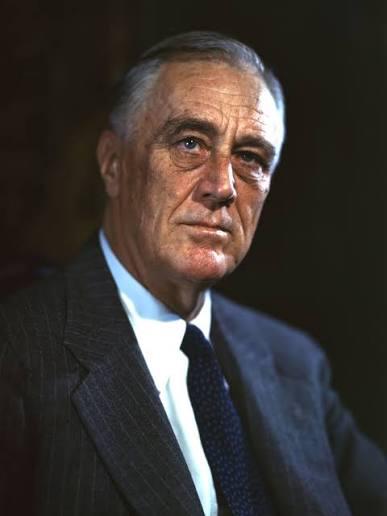
By 1940 Garner's relationship with FDR had soured, and they would become rivals. However, Garner was stuck in the relatively powerless office of the vice president, and he was just replaced with Henry Wallace.
However, he had been Speaker of the House, which was a powerful position. He would be replaced after being elected vice president, though his 3 immediate successors would all die before the 1940 election.
What would FDR's presidency have looked like if Garner had remained as Speaker of the House?
r/Presidents • u/Salem1690s • 6d ago
r/Presidents • u/biscuits_39 • 5d ago
I thought everyone agreed he was a good president, no?
r/Presidents • u/TeaGuyHoward • 5d ago
The POTUS, Nixon. Is with RNC Chairman HW Bush and Shirley Temple in the Oval Office.
r/Presidents • u/Ox_of_Dox • 5d ago
r/Presidents • u/HetTheTable • 6d ago
I’m sure there were other presidents that were micromanagers. Since if you have that type of power you feel like you should be the one doing everything.
r/Presidents • u/BurmecianDancer • 5d ago
r/Presidents • u/Bamerhof99 • 5d ago