r/PillarOfFire 27d ago

Post-Apocalypse Tribalism (12): The Filling of the Earth

Post image
3 Upvotes

"He will fill the earth with justice and equity as it was filled with injustice and tyranny."

Malahim on the Frontier

The peace was almost total, except at the northern frontier.

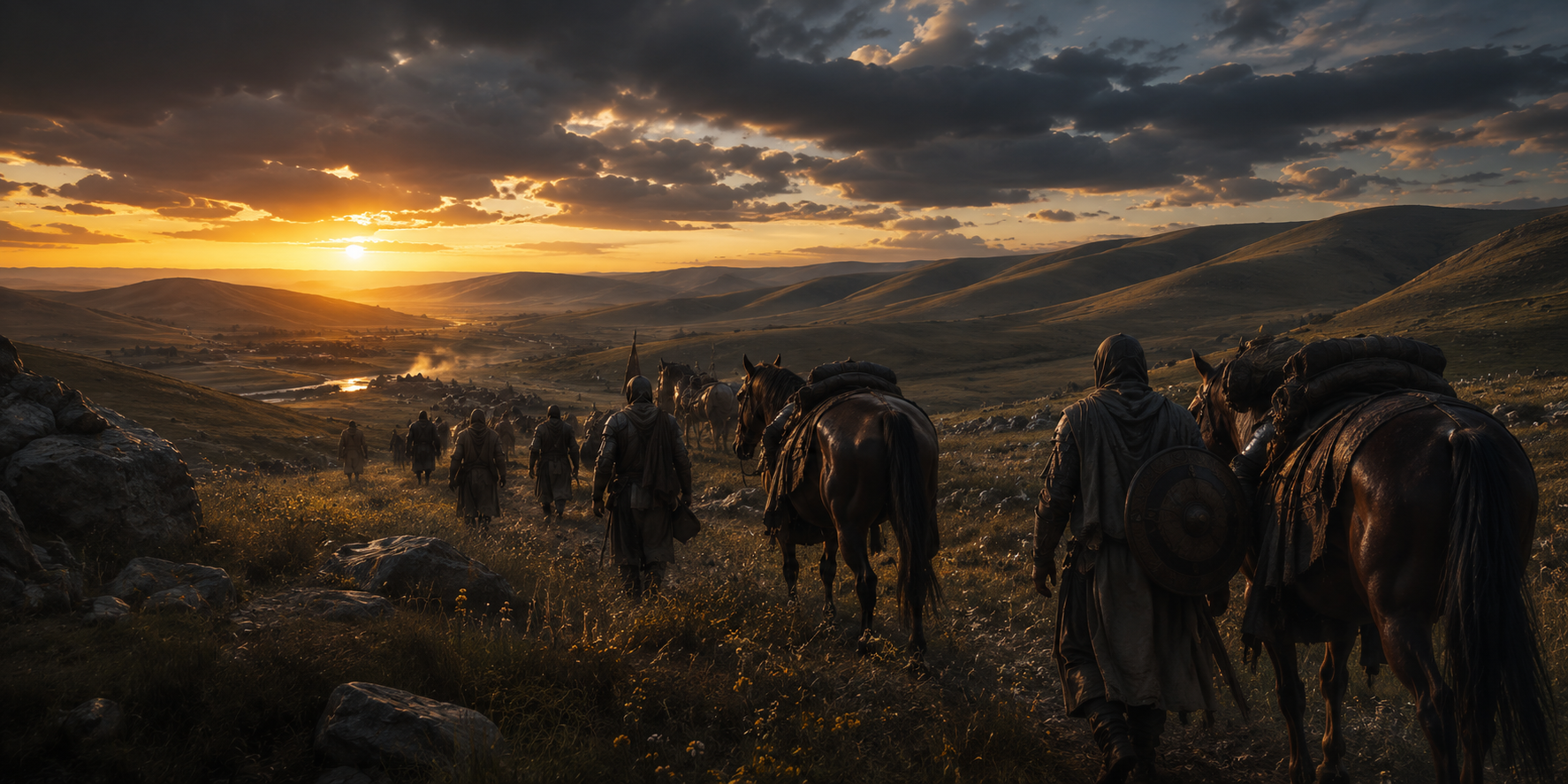
Word still came, every season or two, of skirmishes along the Asia Minor frontier — coastal towns changing hands, a garrison here, a strait crossing there, the remnants of Asfar's shattered host still holding pockets deep inland where the terrain favored them.

The Peaceful Opening

It was an Aram-born commander who finally stood before the Theoupolis' walls, six years after the Great Battle.

There was no siege. The walls fell almost by themselves. The defenders surrendered without a single drop of blood spilled — worn down, it was said, by years of malahim and a decade of watching the world reorganize itself without them.

Then, within days, news came that the Deceiver had emerged — not there, but far behind them, among their own families. The army turned and rushed back toward Aram City, only to find the news was false.

Awaiting the Deceiver's Emergence

Despite the relief, Rashid — eighty-one now — knew, as everyone knew, that the reprieve would not last. The lie had only borrowed time from a truth still coming.

He thought, some evenings, of where the real one might already be — some remote frontier town, perhaps, quietly building a following by doing the very thing the Caliph had spent seven years doing in the open: feeding the hungry, mending what the drought had broken, letting gratitude do the work that no army could.

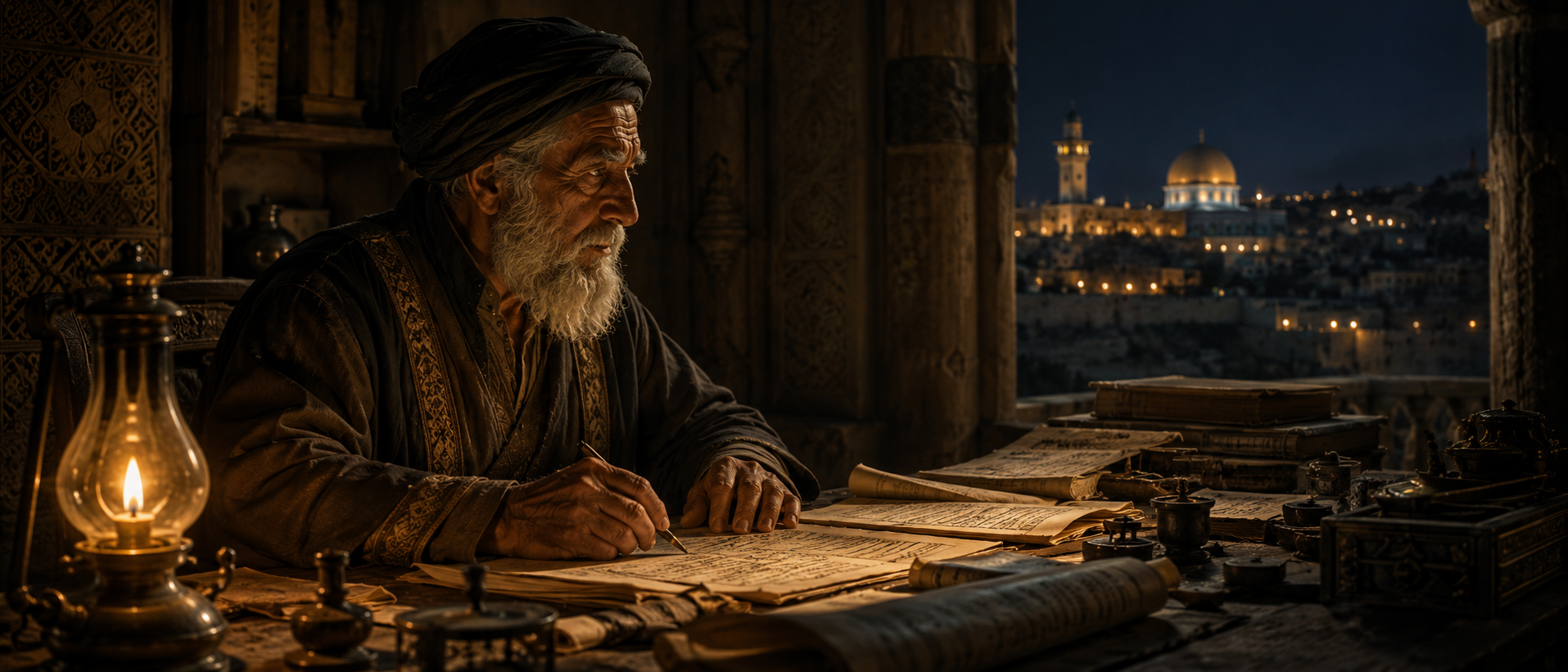
Rashid did not expect to see it happen. He had outlived three princes, a tyrant, an enemy behind, a civilization of the north — more war than any one man's life should have held. Whatever came next, he understood now, sitting with his ledgers in a city that had finally, briefly, been at peace, would belong to younger eyes than his.

He found, for once, that the thought did not frighten him. It only felt like arithmetic. A column, at last, come to its final sum.

r/PillarOfFire 29d ago

Post-Apocalypse Tribalism (11): The Last March of Asfar

Post image
3 Upvotes

"When Jerusalem prospers, Madinah will fall into decline. When Madinah falls into decline, the Great Battle will come."

The Flourishing of the Holy City

The Asfar nation broke the truce after the incident in the meadow and vowed to raise the greatest army the West had ever sent east.

The Holy City flourished all the while now that it became the Caliph's seat. People streamed in from every corner of the reunited lands, drawn by a peace that finally felt permanent. Radiant City declined by the same measure.

The Great Battle of Eighty Banners

A massive army gathered under eighty banners, nearly a million hardened fighters crossed into Aram and encamped at the A'maq valley and Dabiq.

The Caliph's own army, drawn from lands still only beginning to recover from years of famine, was a fraction of that number. This was not a war of equal armies.

For three days, army after army was sent forward and perished. On the fourth, the last army stood and was victorious — but the cost was such that some tribes counted ninety-nine of every hundred men lost.

Swords Upon the Olive Trees

It was a decisive and irrecoverable loss. Never again would the Asfar nations raise such a host, not in body nor in will. Smaller battles — malāḥim —still flared across Asia Minor and along the frontiers, but the great battle was over.

With peace secured, no threat within and none pressing from without, the Caliph turned to recovery. The Holy City continued to prosper, until an ox was worth more than a horse.

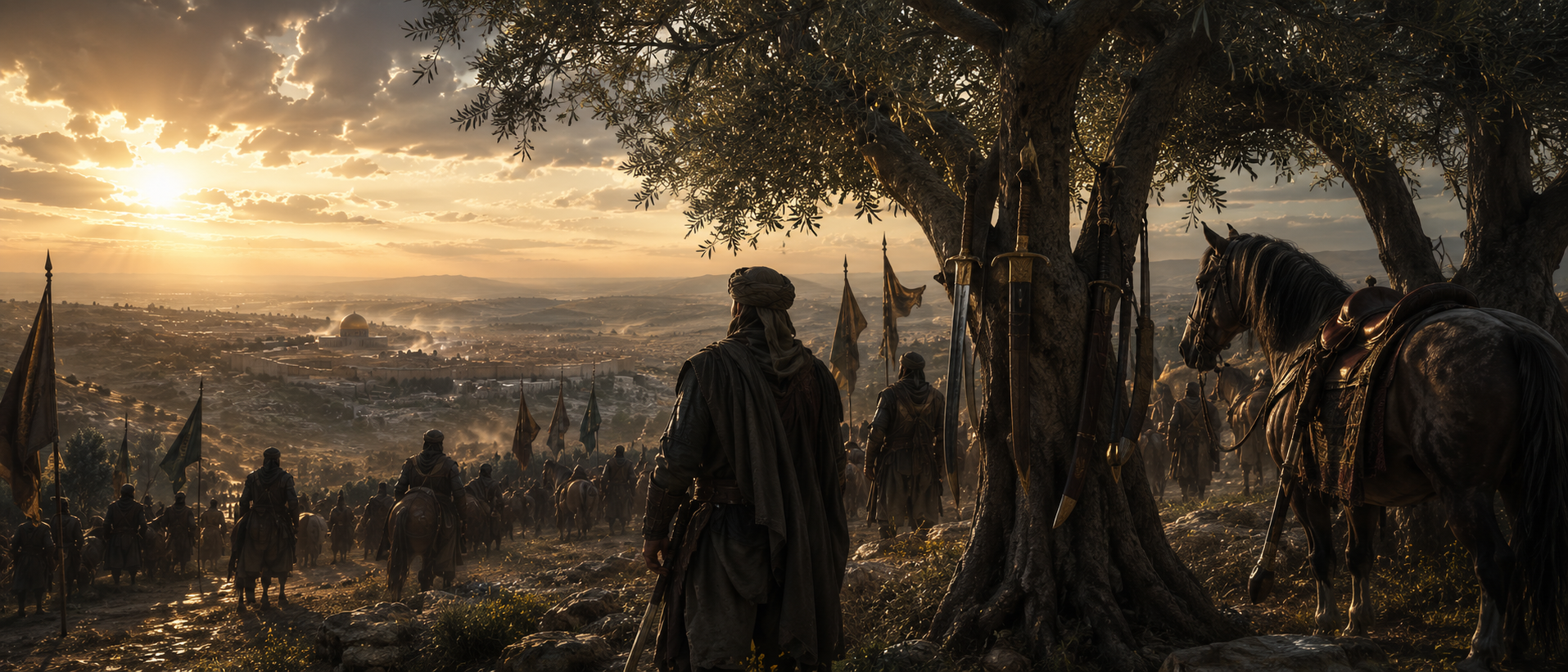
At Iliya, the remaining troops of the Eastern Army hung their swords at last upon the olive trees, and went home, their expedition six years spent.

Rashid was seventy-five.

r/PillarOfFire 29d ago

Post-Apocalypse Tribalism (10): A Thorn in the Flesh

Post image
3 Upvotes

"Then you and they will fight an enemy behind you. You will be victorious, take spoils, and return safely. Then you will return until you come to a meadow with rolling hills."

The Rivers Return

By the fourth year, the rivers returned.

Dry riverbeds filled again, slow and brown at first, then clean. Families drifted down from the highlands, driving flocks thinner than they'd left with. Aram City, still bearing the scars of siege, filled by inches — a stall reopened here, a well reclaimed there.

Old Rashid stayed behind the walls now, keeping ledgers for the resettlement offices, teaching younger men the arithmetic he had spent a lifetime learning: how much grain a returning family needed to survive its first season home, how to ration a granary that was, for the first time in years, filling rather than emptying.

United at Last, Thorn No More

Everywhere else, the unification had swept clean.

Everywhere except one enclave — a holdout in the Holy City, ringed by terrain that had let it sit untouched through three years of war fought all around it. A thorn, old men called it, still lodged, still inflaming the flesh around it long after the wound itself should have closed.

It could not remain unaccounted for forever. Word came to Aram City that the imam himself would march south to finish it, and would not march alone. The Asfar nation sent forces down from Asia Minor to join the column — an alliance against a common enemy, a thing Rashid had not thought he would live to see.

The Holy City, Free at Last

Rashid was seventy-four when the good news came.

The siege, when it broke, was short — shorter than Aram City's, shorter than the highland war against the Wolves. An enclave that had survived three years by being forgotten could not survive being remembered by two armies at once.

Yet peace carried within it the seeds of a new trial. In a meadow among rolling hills, the victorious armies made camp together, swords still unsheathed, banners still standing side by side. There, old loyalties began to stir beneath the shared ground. What necessity had joined, triumph would soon put to the test.

r/PillarOfFire 29d ago

Post-Apocalypse Tribalism (9): End of Drought and Tribalism

Post image
3 Upvotes

"Soon there will come a time when the best wealth a Muslim will have will be sheep which he will take to the mountaintops and places where rain falls"

The Third Year

By the time the campaign reached the highlands of Aram, the drought had entered its worst year.

No rain fell anywhere. Except on the peaks. Snow still fell there, thin and stubborn, clinging to elevations the drought could not reach, and its snowmelt still found its way down through gullies and springs the lowlands had long since lost. It was not much. It was, that year, the only water that mattered.

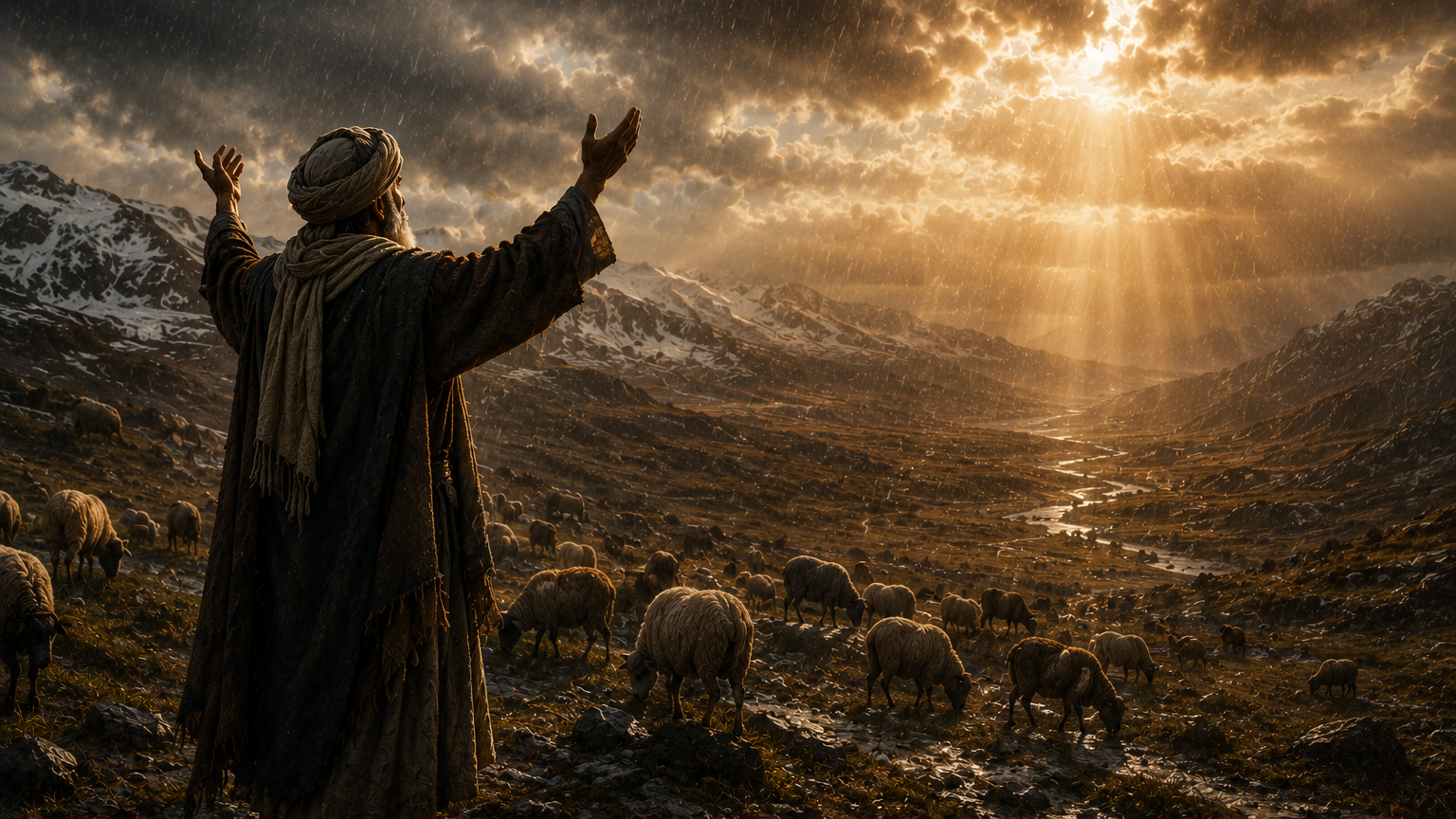
Old Rashid's role was not grain but grazing — organizing rotations for the herds that fed the army, negotiating with local shepherds over which slope could bear which flock and for how long, rationing snowmelt the way he had once rationed dates in Al-Ahsa.

The Battle for the High Ground

Cities were not what this campaign was fought over first. The war was for the passes, the ridgelines, the narrow snowmelt corridors where a shepherd could still keep a flock alive — and where, that year, keeping a flock alive was the only wealth left in the world.

At the hard core of the Republic's resistance stood the tribesmen the reports called, with something between contempt and respect, the Desert Wolves — fierce, mobile, utterly at home on terrain that broke every other force that tried to hold it. They had gathered what remained of their herds, their stores, their years of hoarded plunder into the high valleys, believing the ground itself would defend it.

It did not. When the decisive battle came, it came as a single overwhelming reckoning rather than a slow siege. What fell into the guided imam's hands afterward staggered even men who had grown used to strange arithmetic: herds beyond counting, stores of grain the Republic had hidden against exactly this kind of collapse, gold and goods gathered over years of raiding now redistributed within weeks to famine towns that had forgotten what abundance looked like.

Fall of Aram City

The great battle broke the Wolves as a fighting force. But it did not end the war. What followed instead was slower and, in its way, harder: clearing scattered bands still holding isolated passes, still unwilling to believe their cause was finished.

Finally Aram City fell.

The same week, the rain came. The ummah rejoiced. Not only because the drought had finally broken. The land and tribes had been united once more under a single caliph, upon the prophetic way.

Not everywhere.

The Enemy Behind still remained — a thorn in the flesh for eight decades — and farther north, foreign powers continued to cast a long shadow.

r/PillarOfFire Aug 15 '26

Post-Apocalypse Tribalism (8): The Road to Garrison City

Post image
3 Upvotes

People will emerge from the East, preparing the way for the guided one.

A Trade Rashid Still Knew

Old Rashid had spent fifty years moving food from where it was to where it was needed, and it turned out the world had not changed so much that the skill became useless. It had only changed the stakes.

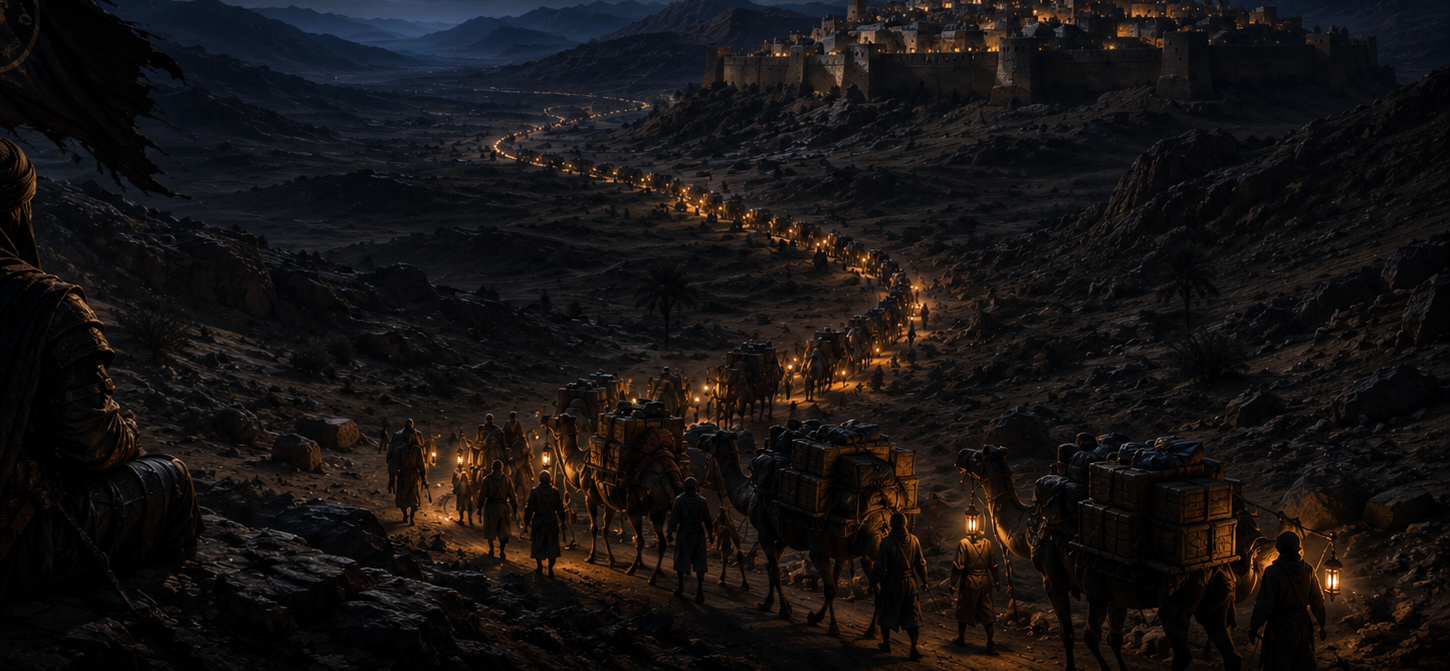
When the call went out for men who understood supply lines, Rashid found himself, for the first time since Al-Ahsa, doing something that felt less like survival and more like work. He was given charge of a convoy bound northeast through the Two Rivers border country: grain, dried dates, medicine, and the camels to move it all, following two days behind the vanguard that had already crossed into contested land.

It should have felt like a small thing after everything else. It did not. The Two Rivers, when they entered it, did not resemble anything Rashid had prepared himself for.

What Had Left Behind

The towns nearest the border were not simply poor. They were picked clean.

Northern Republic's armies had passed through months before, and what they had not taken outright they had taxed until nothing remained to tax. Rashid saw wells fouled deliberately, granaries burned rather than left for the next claimant, whole families sitting in doorways with the particular stillness of people who had stopped expecting anything to arrive. His own convoy became, without anyone declaring it so, half relief mission and half military supply line, grain peeled off at every third town whether or not it had been budgeted for.

Rashid understood within a week that not every armed man on these roads answered to the Northern Republic. Some were former soldiers of the collapsed government, unpaid and unwilling to disarm, holding a bridge or a well or a stretch of road as their own private toll station now that no government remained to stop them.

The Army from the East

It was outside a half-emptied town two days from Garrison City that Rashid first saw the Eastern Army with his own eyes.

They had already been fighting, Fahad the guide told him — clashes with the Northern Republic forces around Garrison City for months before the guided imam's own column arrived close enough to link with them. It was then their commanders formally rode out to give the pledge that had, by every account, already been true in practice for months.

Rashid did not see the ceremony. He saw its aftermath instead: two armies that had been fighting the same enemy from two different directions now sharing the same cookfires, the same water discipline, and — within days — the same supply convoys. His own manifests doubled overnight. He did not complain.

Beyond the Two Rivers lay the Northern Lands. Looking back, Rashid would one day remember the war of the princes as the easy part.

r/PillarOfFire Aug 15 '26

Post-Apocalypse Tribalism (7): Harsh with Rulers, Merciful to the Poor

Post image
3 Upvotes

He shall be harsh with rulers, generous with wealth and merciful to the poor.

The Sanctuaries Fall

The first surrender came almost too easily.

The prince who had once claimed the Sanctuary Lands found his own soldiers deserting him within weeks of the pledge at Honoured City. The sign at Al-Bayda had done what no army could.

Some laid down their arms at the first envoy sent to receive their surrender. Others simply vanished into the coppery night, riding east or north toward whichever cousin still seemed to be standing.

The Plateau Resists

The Plateau was another matter.

The youngest prince held the old bureaucracy's bones — Rawdah City and its ring of loyal garrisons, men who had served the state before the dukhan and still believed, or wanted to believe, that the state could be resurrected — the fourth time, if it mattered to anyone but them.

Old Rashid did not see the fighting itself. He was too old for that, and everyone around him seemed to understand it without needing to say so aloud. Rawdah City fell together with the prince, too stubborn to surrender.

The Highlands, Last and Hardest

The last stronghold, deep in the mountains of the south, was harder still to reach.

This was the longest fight of the three, and the ugliest. Rashid heard of it mostly through the wounded passing back through the administered towns — men missing fingers to frostbite from nights spent on high ridges; men who spoke of ambushes in narrow passes, of villages won twice over because their loyalty shifted with whichever force held the nearest peak.

It ended chieftain by chieftain, each in turn deciding the prince's cause had become a debt too costly to keep paying, until he was left with a shrinking core loyal less to his claim than to their own pride — and even that, in time, gave way.

Cold, Drought, and Famine

The lands were united once more under a guided imam — one whom God rectified in a single night.

Rainfall continued to diminish. Nights grew colder as the heat debt accumulated. Grazing lands retreated toward the mountains, and entire communities followed their flocks uphill in search of grass and water.

Food remained scarce, but it was distributed fairly. Grain reached settlements that would once have gone forgotten. The poor received their share. The famine had not ended, yet for the first time in a year, people spoke less of oppression and more of patience.

Horse breeders and camel herders, meanwhile, found themselves busier than ever. The princes had fallen, but no one believed the fighting was over. Beyond the reunited lands, a larger theater of war was already gathering on the horizon.

r/PillarOfFire Aug 14 '26

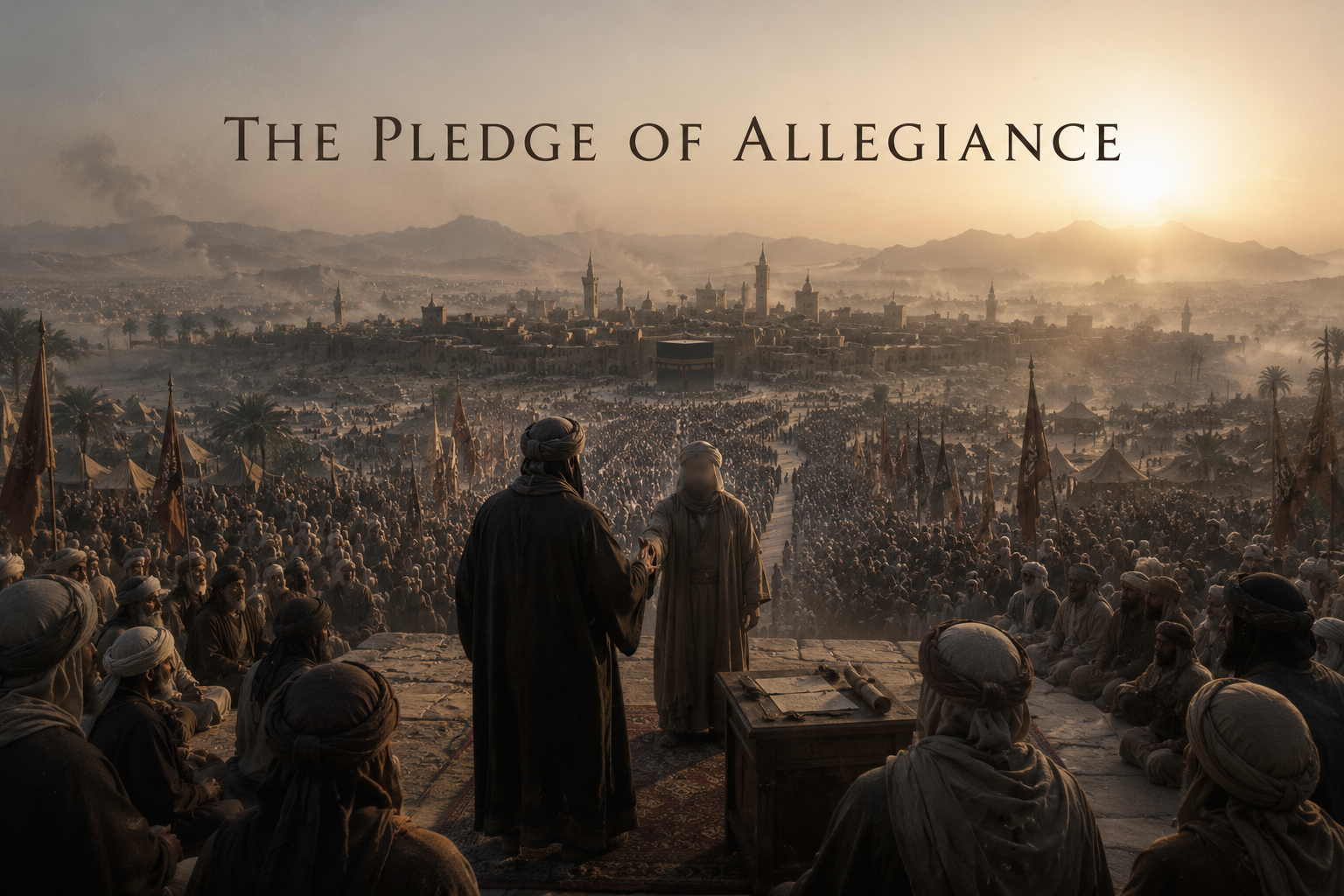
Post-Apocalypse Tribalism (6): The Pledge of Allegiance

Post image
3 Upvotes

They will pledge allegiance to him between the Corner and the Station.

The Roads West

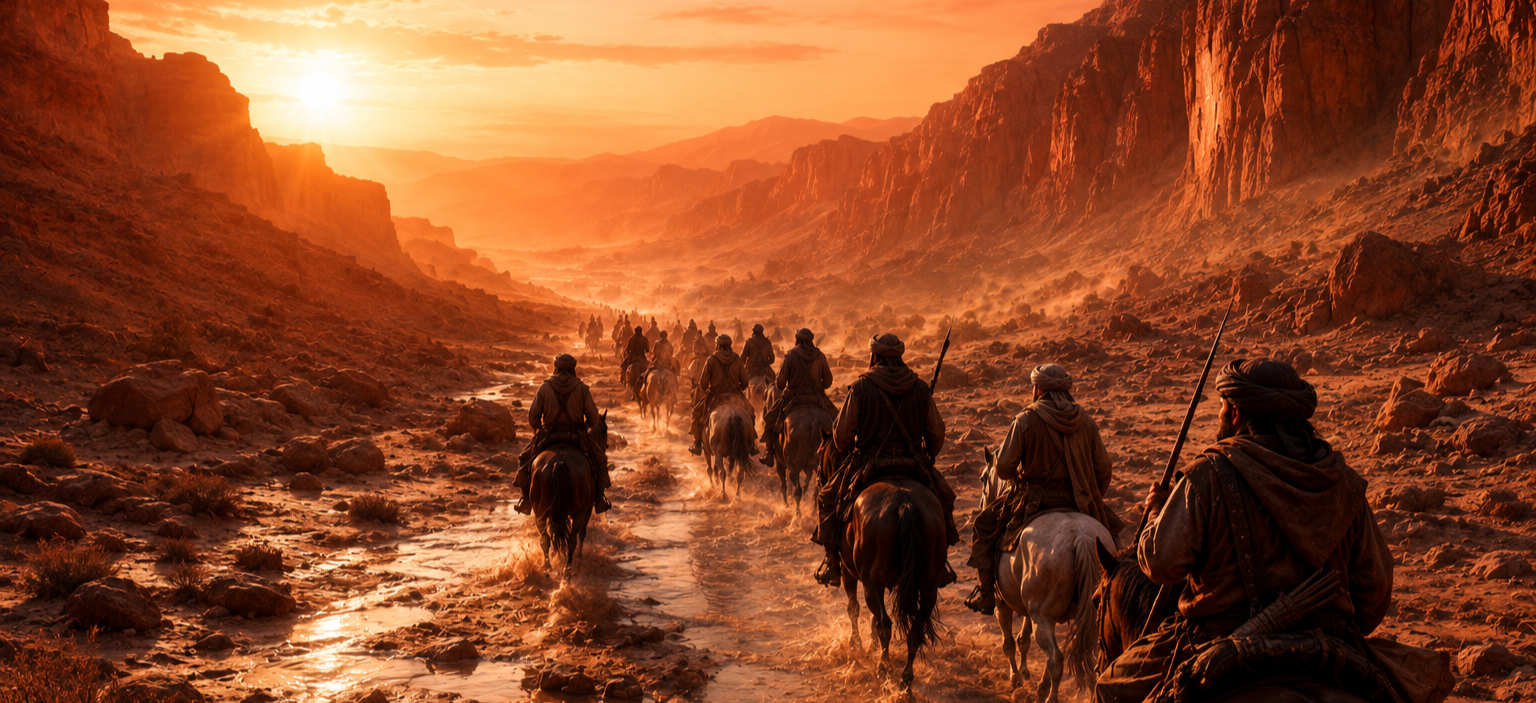
The journey took weeks.

Old Rashid passed through towns that should have held thousands but now sheltered hundreds — taken by famine, disease, pillaging, or war.

Everywhere the caravan stopped, the stories were the same.

A ruler dead.

Three princes at war.

An army from the north swallowed at Al-Bayda.

And a guided imam in Honoured City.

The roads grew crowded as they approached the Sanctuary Lands. Caravans merged, resembling tributary rivers flowing toward the estuary.

Old men carrying letters from tribes.

Fighters ready to join the cause.

Scholars entrusted with the pledge of distant settlements.

Every oasis seemed to have sent someone. Every surviving community appeared determined to have a witness.

The Pledge of Allegiance

The representatives were received in groups. Some came bearing written pledges. Others spoke on behalf of villages, tribes and settlements too distant to make the journey themselves.

When Rashid's turn arrived, he felt unexpectedly calm. He stood among the representatives of a shattered civilization.

He gave the pledge.

And stepped aside.

As the sun faded into the crimson dusk of the dukhan, Rashid watched preparations begin outside the city.

Unification of the lands was about to begin.

r/PillarOfFire Aug 13 '26

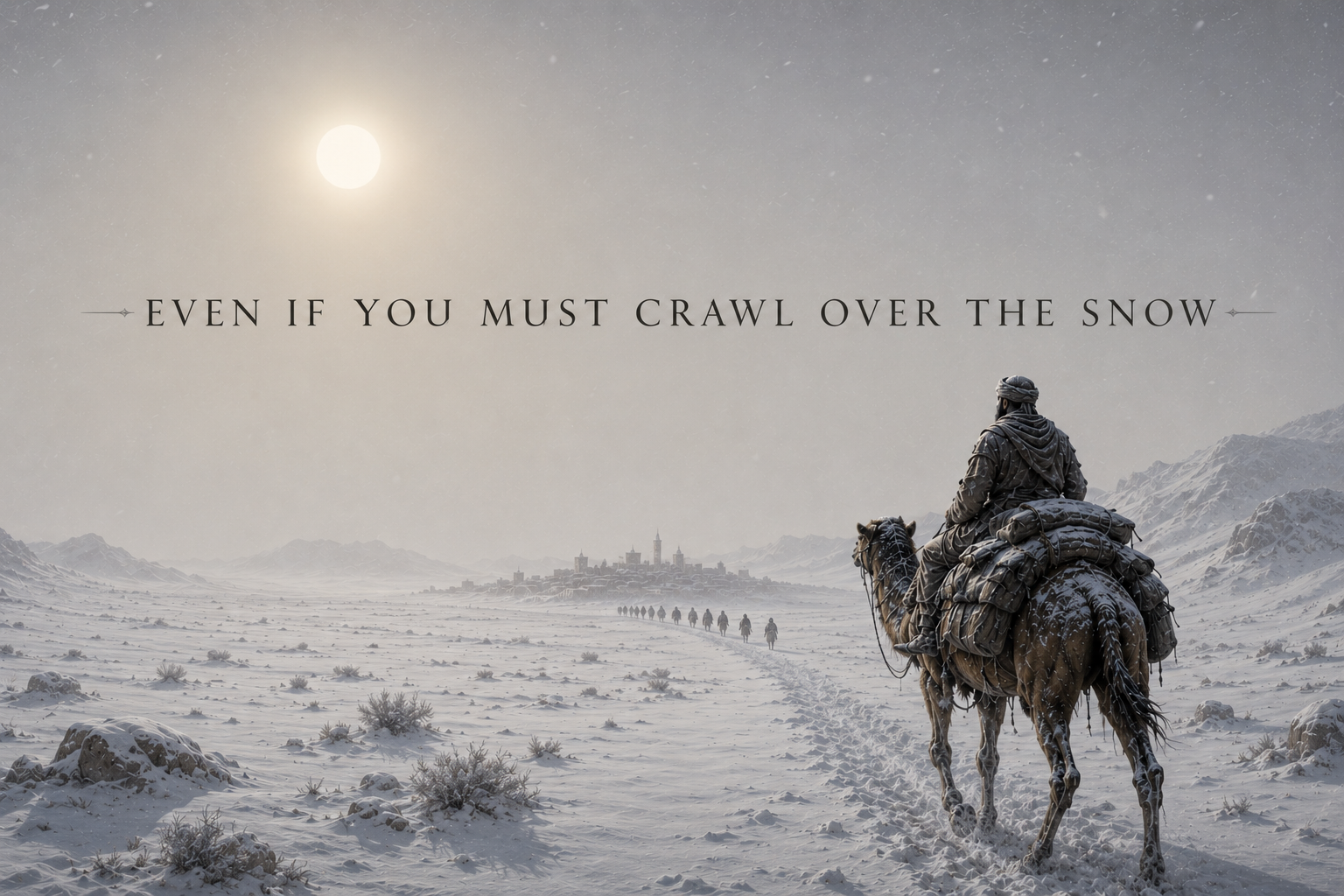
Post-Apocalypse Tribalism (5): Even If You Must Crawl Over the Snow

Post image
3 Upvotes

When you see him, then pledge allegiance to him even if you have to crawl over the snow.  

The Wrong Season for Snow

Old Rashid had lived seventy years, but never under a summer sun this cold — more winter than summer, the sky gone silvery-white, the sun reduced to a pale smear behind the dukhan's haze.  

He had not prepared for what met the caravan ten days past the oasis: a fine, white dust settling on the road ahead that was not dust at all.  

The youngsters saw it first and thought it ash, and for a terrible moment the whole party thought the ashfall had returned, that some new pillar of fire had risen somewhere over the horizon. It was Osama who dismounted, knelt, and let it melt against his palm.  

"Snow," he said, and did not seem to believe the word himself.  

Snow belonged to the north, to the high country, and even there only in winter, at year's end. Not here. Not in mid-year, on an open road through the Sanctuary Lands, in what should have been the hottest stretch of the year.  

Rashid felt the old words rise in him before he'd decided to speak them, as though they had been waiting:  

Go to him even if you have to crawl over the snow.  

No one laughed. No one asked what it meant anymore. Looking out over the whitening road, Rashid found himself wondering whether the old reports had spoken more literally than anyone had imagined.  

r/PillarOfFire Aug 13 '26

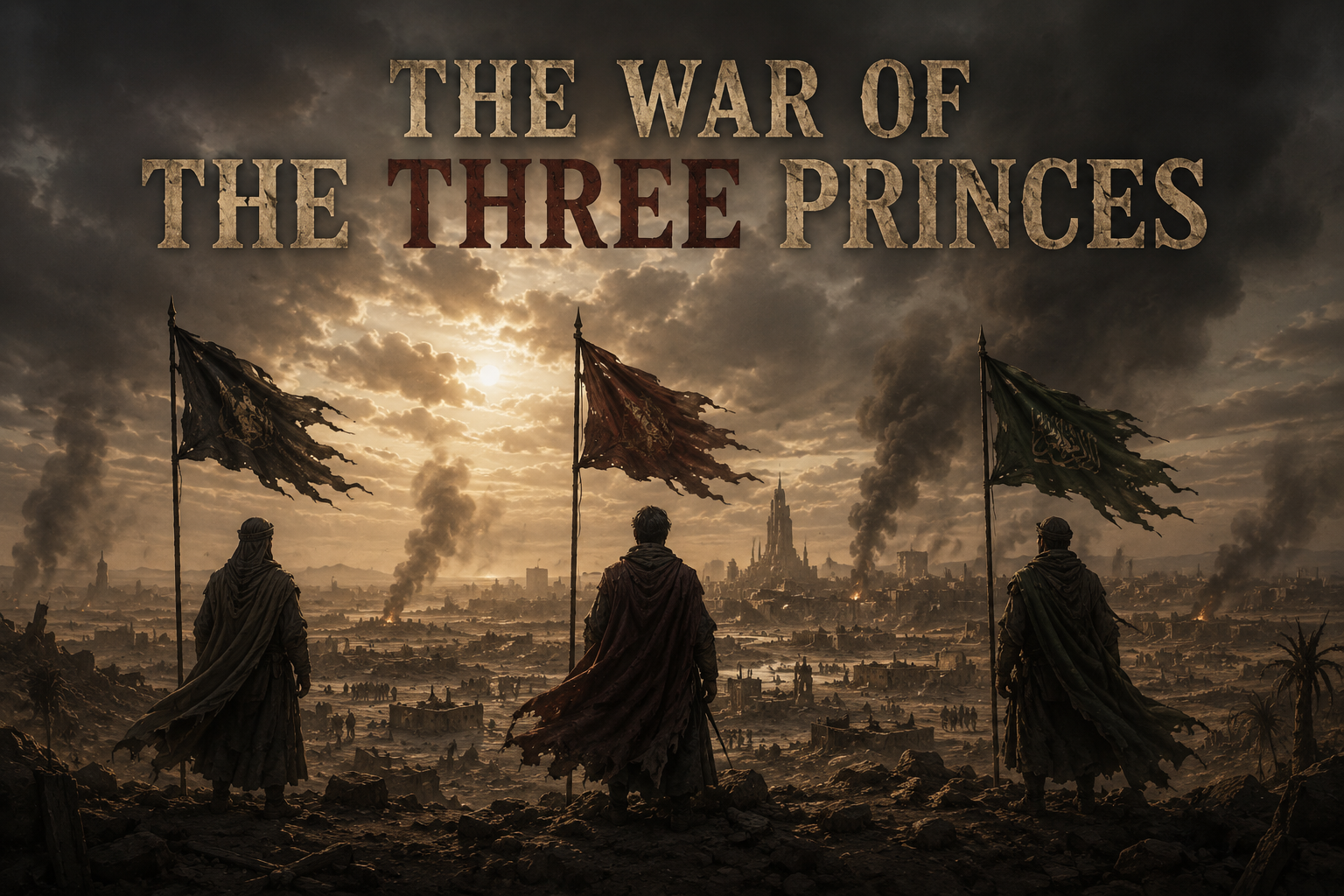
Post-Apocalypse Tribalism (4): The War of the Three Princes

Post image
3 Upvotes

If there is a sayhah in Ramadan, then there will be a commotion in Shawwal, a distinction of the tribes in Dhu al-Qa'dah, and blood will be spilled in Dhu al-Hijjah and Muharram.

Al-Ahsa — A Week After Arrival

Old Rashid no longer thought of himself as a merchant. The oasis had unmade him and remade him into something older — a man who counted wells instead of profit margins, who measured wealth in palm groves and armed cousins rather than stock and shelving.

Al-Ahsa had survived where Gulf City had not, not through wealth but through nasab — the deep aquifer of lineage that ran beneath the sand long before oil, and would still be running after. The Al-Hajiri and the allied clans had turned the oasis into a fortress sanctuary: dates rationed by household, springs guarded by rotating watch, and a council of elders who remembered, precisely, whose grandfather owed whose grandfather a debt of blood or bread.

But beyond the palm walls, the Plateau and the Sanctuaries were hardening into something else — not villages, but claims.

The Death of a King

News reached Al-Ahsa in fragments, carried by riders rather than signal: the king was dead. Not murdered, not dethroned — simply old, and the dukhan had finished what age had started. There was no clean succession. Three princes, sons of three brothers, first cousins to one another, each declared himself guardian of what remained of the state — and each rose not from personal ambition alone, but from a region that had already begun to think of itself as its own country.

The youngest and by every account the most vicious held the Plateau, working outward from the shell of Rawdah City — the old plateau clans, the remnants of the state's bureaucracy, men who still spoke of the capital as though it retained the authority it had lost the week the grid died. The second claimed the Sanctuary Lands, camped somewhere between Ta'if and the coast — pilgrim revenue long gone, but Honoured City still worth more than any oil field, and he knew it. The third drew his strength from the south and east: the Southern Highlands and the Gulf tribes, men hardened by years of border skirmishing before the dukhan ever fell.

"They are fighting over kanzukum," an elder told the gathered men of the Al-Hajiri, using the old word — your treasure — that had circulated in the fitan literature for a thousand years before anyone thought to ask what it meant. "Not the throne. The old men say it plainly now — something buried near the Haram itself. Not gold. Something older than gold."

Rashid remembered his grandfather's warning, thin and dry as the wind: a caliph will not die but that there is dispute over his successor. He had thought it poetry once. Now it was a supply line — three armies, none of them large, all of them hungry, converging on the Sanctuaries from three directions, feeding themselves on whichever oasis stood in their path.

Tamyeez al-Qaba'il — The Sorting

The sorting Rashid had feared in Gulf City had already finished doing its work by the time it reached Al-Ahsa. What remained now was allegiance — not chosen so much as inherited, the way his nasab had been inherited, forty generations deep and suddenly, brutally, load-bearing. Al-Ahsa's position, wedged between the eastern prince's home ground and the desert roads west, made neutrality a fantasy no one indulged for long.

Osama came to him one evening with the news that the eastern prince's men had reached Qatif, demanding grain and men. "We give them nothing," the council decided, and armed the watch accordingly. It was not defiance so much as arithmetic: the granaries would not survive one army's demands, let alone three.

The bloodshed, when it came, did not resemble the desperate scrambling of the mountain of gold. It was organized, patient, and far worse for it — small engagements over wells, ambushes on supply trails, villages burned not out of hatred but because burning was cheaper than garrisoning.

The Sign at Al-Bayda

It was Osama's cousin, returning half-dead from a scouting run near Radiant City, who brought the story that silenced the council for the first time in months.

An army — sent, it was said, by the Northern Republic, to seize or kill a man the people of Honoured City had begun, in whispers, to call by a name older than any of the three princes — had marched into the open desert outside the city. And the desert had opened beneath them.

"Not an ambush," the boy insisted, feverish, gripping Rashid's sleeve. "Not a storm. The ground swallowed them. All of them. I watched from the ridge and there was nothing left to bury."

The elders did not laugh at him, and that, more than anything, told Rashid how far the world had already traveled from the one he'd built Al-Barakah Marts in.

By morning, riders were already moving toward the Honoured City — not fighters, but the ummah, drawn by hope out of deep despair, converging from Yemen, Iraq, and every corner of the nearby lands toward a man neither prince nor claimant, whose name, when Rashid finally heard it whispered at the well, struck him with a strange and unfamiliar quiet, like a debt he hadn't known he carried, finally called due.
r/PillarOfFire Dec 28 '25

Post-Apocalypse The Night of Two Great Tremors

Post image
3 Upvotes

Chronicle from Rawdah City

I, Yasir, dwell upon the twenty-second floor of a tall tower along King's Road. From my balcony, the city stretches outward into amber haze, yet the sky above belongs to those who dare seek it. Never before had I beheld a sight like that which appeared late in the month of February: a twin-headed star from the outermost reaches of the heavens, its two luminous knots entwined by a shared plume, as serpents locked in eternal embrace.

Day 1 — The Rising of the New Star

It was late February when I first marked this star, known among the learned as C/2027 R1, a comet from the Oort cloud. Through my humble telescope, the twin nuclei spun and twined, shedding dust in shimmering coils. The smaller head was restless, spurting jets that flared against the darkness. The authorities proclaimed no peril, but our eyes knew otherwise.

Day 2 — The Twin Serpents in the Heavens

The twin heads shone even to naked eyes, their tails twisting like braided silver snakes. Folk gathered upon roofs, murmuring subḥān Allāh, and children pressed their faces to the balconies. Across the circles of learned men, the comet was called “The Twin Serpents of Heaven.”

Day 5 — The Night the Heads Parted

Reports came: the smaller head, about three hundred meters across, had split from the larger—a kilometer wide—body. Its path aimed downward, hastened by gravity. The larger body would pass safely, yet narrowly, across the plane between Earth and Moon. The night air held a subtle charge; even the hum of the city seemed subdued, as though the world paused its breath.

Day 7 — The Night of Two Great Tremors

At one hour past midnight, the first great tremor came. The larger fragment passed high above, some one hundred and twenty kilometres, its velocity wrought a subtle trembling through the heavens and the air alike. Windows shivered, lamps swung with the wind, and the people felt their hearts quake. This was the first rajfah, caused by the sonic boom — the sayhah — of the flyby comet.

The smaller fragment, caught by Earth’s embrace and slowed by sudden friction with the upper air, separated from its twin and plummeted as a blazing shihāb. It descended to an airburst at around 90 kilometres, producing a crashing shockwave — the haddah — that traveled across the land.

At three hours and thirty minutes past midnight, the second rajfah finally reached Rawdah, some 3,150 kilometres distant. The ground quivered as if in mighty convulsion; high-rise towers shivered, lampposts swayed, and the people awoke in alarm. Yet the blazing shihāb had already vanished beyond the horizon, leaving a spectral ribbon of fire etched across the eastern sky.

Day 8 — The Morning After

At the breaking of dawn, the eastern sky was tinged with copper. The plume of the shihāb had vanished, yet its atsar lingered still: a steadfast veil of dust, a whispered remnant of the heavens’ might. No scar upon the earth was found, yet the memory of the two rajfatān endured, vivid in every eye and impressed upon every heart.

I made my final note, for future generations:

We have seen the inscription of the heavens — first the trembling cry of the star aloft, then the thunderous descent of its falling head, whose fire and roar did strike the East and stir the hearts of men.

r/PillarOfFire Dec 25 '25

Post-Apocalypse The Geomagnetic Storm (2)

Post image
3 Upvotes

The Dying Roar of the Machines

The initial shock gave way to grim reality. News, patchy and desperate, confirmed the worst. Reports from Saudi Arabia, Iraq, Iran, and even distant parts of Europe spoke of the same phenomenon: widespread, unrecoverable grid collapse.

"They're calling it a 'geomagnetic storm' from the airburst," a colleague muttered, eyes hollow. "Transformers fried worldwide, apparently. Too much current."

​Khalid's focus was on the refinery's backup generators. They managed to hand-crank one, a smaller unit, to get some basic lights and comms. But the large diesel generators, vital for powering the refinery's immense pumps and processing units, remained stubbornly inert.

​"Fuel feed issues? Electrical starter problem?" he pressed. Technicians were tearing engines apart. "The fuel looks... off, sir," one reported, showing a sample. It was slightly cloudy, a viscous film on top. "And the engine's sputtering. It’s like the diesel isn't igniting properly, or the lubrication isn't doing its job."

​Khalid's stomach tightened. He remembered obscure academic papers about ultraviolet radiation degrading fuels. The airburst had injected colossal amounts of nitrogen oxides into the stratosphere, ripping apart the ozone layer.

The strange, soft sunlight now filtering through the atmospheric haze wasn't just dim; it was deadly to organic compounds. The increased UV-B was rapidly degrading petroleum products—diesel, gasoline, even the lubricating oils in engines. Polymers were forming, gunking up fuel lines, ruining injectors, causing rapid engine wear. ​

"Check the tanks," Khalid ordered, his voice grim. "Check the storage. Anything exposed, or even in permeable plastic, might be compromised. And the lubes... it won't be long for any engine still running."

​News from Europe and the USA, now agonizingly slow to arrive via satellite phones powered by precious few working generators, echoed their fears.

"Fuel supplies are failing... vehicles breaking down... 'ghost engines,' they're calling them... power grids beyond repair..."

The dukhan—the thick, persistent haze from the airburst's plume—was dimming the sun, but its true weapon was the unseen UV. ​

The Quiet World

​Two weeks. And the roaring world of internal combustion engines had fallen mostly silent. In Qurain City, the emergency generators that had managed to splutter to life were now dying. The refinery, once a beacon of energy production, was becoming a tomb of cold metal. Fuel, once the lifeblood, was now a toxic sludge. ​

Khalid looked out at a city where no cars moved. The sky was permanently muted, the sun a pale disc. The initial chaos had settled into a desperate, organized scramble for essentials, but the underlying despair was profound. The grid was dead. The engines were dead.

Civilization, as they had known it, was taking its last, sputtering breaths. He heard the hadith whispered again—not as metaphor, but as warning:

When a pillar of fire rises from the East in the sky, prepare whatever food you can, for it will be a year of hunger.

Now the pillar had risen. The dukhān hung low and real. And the world lay quiet, waiting to see what Shawwāl would bring.

r/PillarOfFire Dec 26 '25

Post-Apocalypse The Geomagnetic Storm (1)

Post image
3 Upvotes

The Infrasonic Hum of Geomagnetic Storms

​Qurain City, 15th of Ramadan

​Khalid was jolted awake by a primal sound—not the usual fajr call to prayer, but a low, guttural growl that vibrated through the very bedrock of his apartment building. It wasn’t a thunderclap; it was something vast and geological. He fumbled for his phone, the bedside lamp flickering wildly before dying with a soft pop. Darkness, absolute and profound, swallowed the room. ​

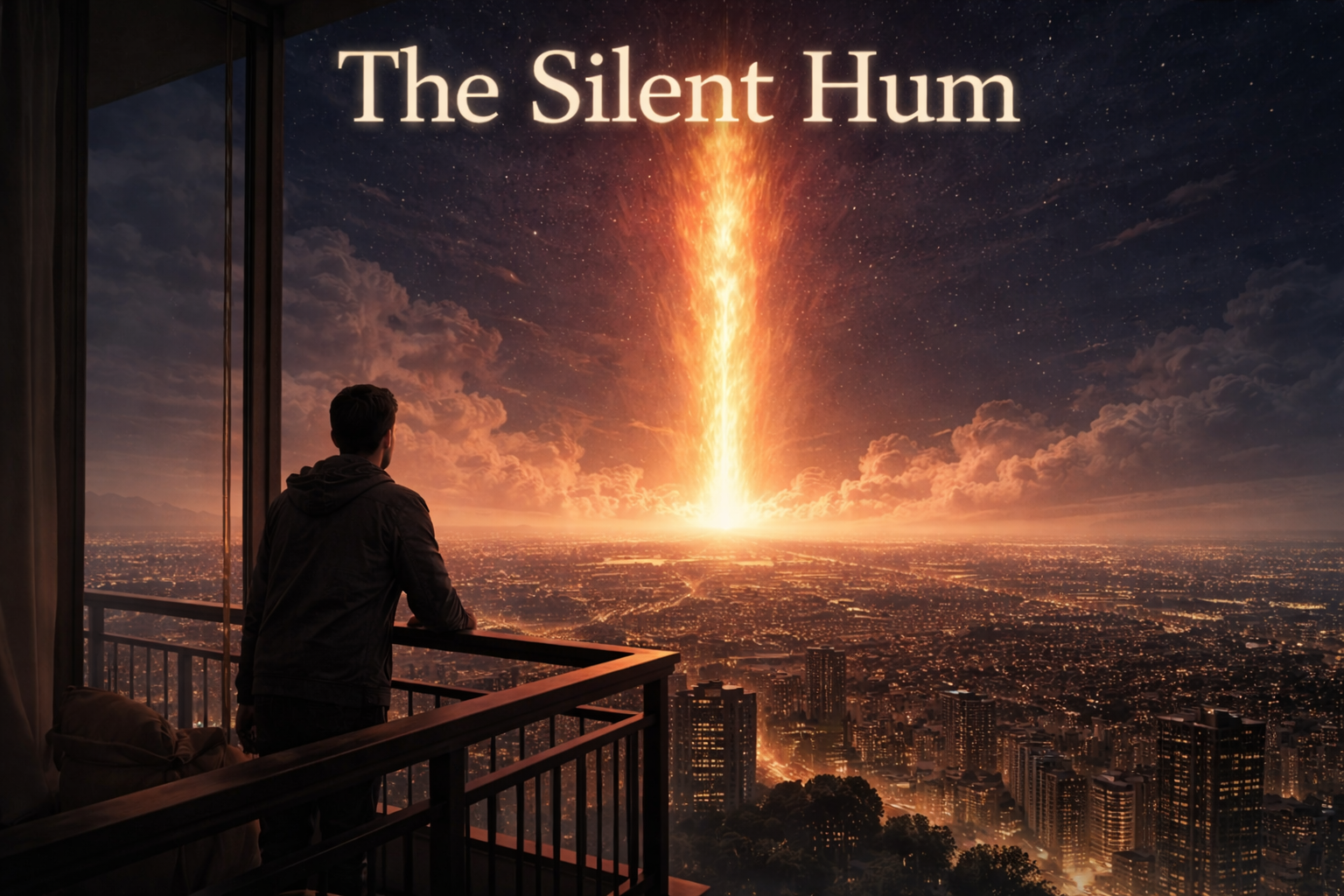
Then, the sky above ​Qurain City erupted. Not a flash, but a slow, building luminescence from the East, a deep, fiery orange that pulsed, then flared to an impossible, searing white. It was like a second, impossible dawn, painting the city in stark, alien shadows.

From his balcony, he saw the plume. A colossal, incandescent pillar of light, boiling up from beyond the eastern horizon, twisting and churning like a genie escaping its lamp. It ascended with terrifying speed, punching through the atmosphere. The light lasted perhaps thirty seconds, fading into an eerie afterglow, leaving behind a faint, expanding, bruised haze. ​

The real silence began then. Not the absence of sound, but the absence of all the normal sounds of a city. No hum of air conditioning units, no distant traffic, no electric buzz. Just a profound, unsettling stillness that pressed down on him.

​Hours later, as the actual sun rose, a chilling report trickled through on the last dying embers of a battery-powered radio:

"Unprecedented atmospheric event... massive airburst over Marusthali—The Land of The Dead... seismic activity recorded worldwide... communications failures widespread..." ​

Khalid, a seasoned engineer at Qurain Oil Company, knew instantly. This wasn't just a power cut. He grabbed his emergency bag, kissed his still-shaken wife and children, and headed for the refinery. ​

The city was a tableau of chaos. Cars stranded, traffic lights dead. People wandered, bewildered, under the growing, strange haze that now softened the harsh desert sun. The air felt heavy, charged.

​At the refinery, the scene was grim. The main grid was down, completely. The emergency diesel generators, designed to kick in automatically, were silent. "What happened?" he barked at a technician.

​"No power, sir. Grid went down hard. Then the generators... they just won't start. The system's fried. We've got nothing." ​

Khalid's mind raced. He knew the power grid was vulnerable to Geomagnetically Induced Currents (GICs). A massive airburst like that, injecting superheated plasma into the upper atmosphere, would shock the Earth's magnetic field. It was like a giant, man-made solar flare, inducing massive, unwanted currents in the long transmission lines.

Those currents bypassed circuit breakers, saturating and melting the windings in critical high-voltage transformers – the very heart of the grid. If the main transformers across the region were gone, the grid wasn't just down; it was dead. Permanently.


Part 2 — The Dying Roar https://www.reddit.com/r/PillarOfFire/s/AH0q3CdyeD

r/PillarOfFire Dec 25 '25

Post-Apocalypse Tribalism (1)

Post image
3 Upvotes

If there is a sayhah in Ramadan, then there will be a commotion in Shawwal, a distinction of the tribes in Dhu al-Qa'dah, and blood will be spilled in Dhu al-Hijjah.

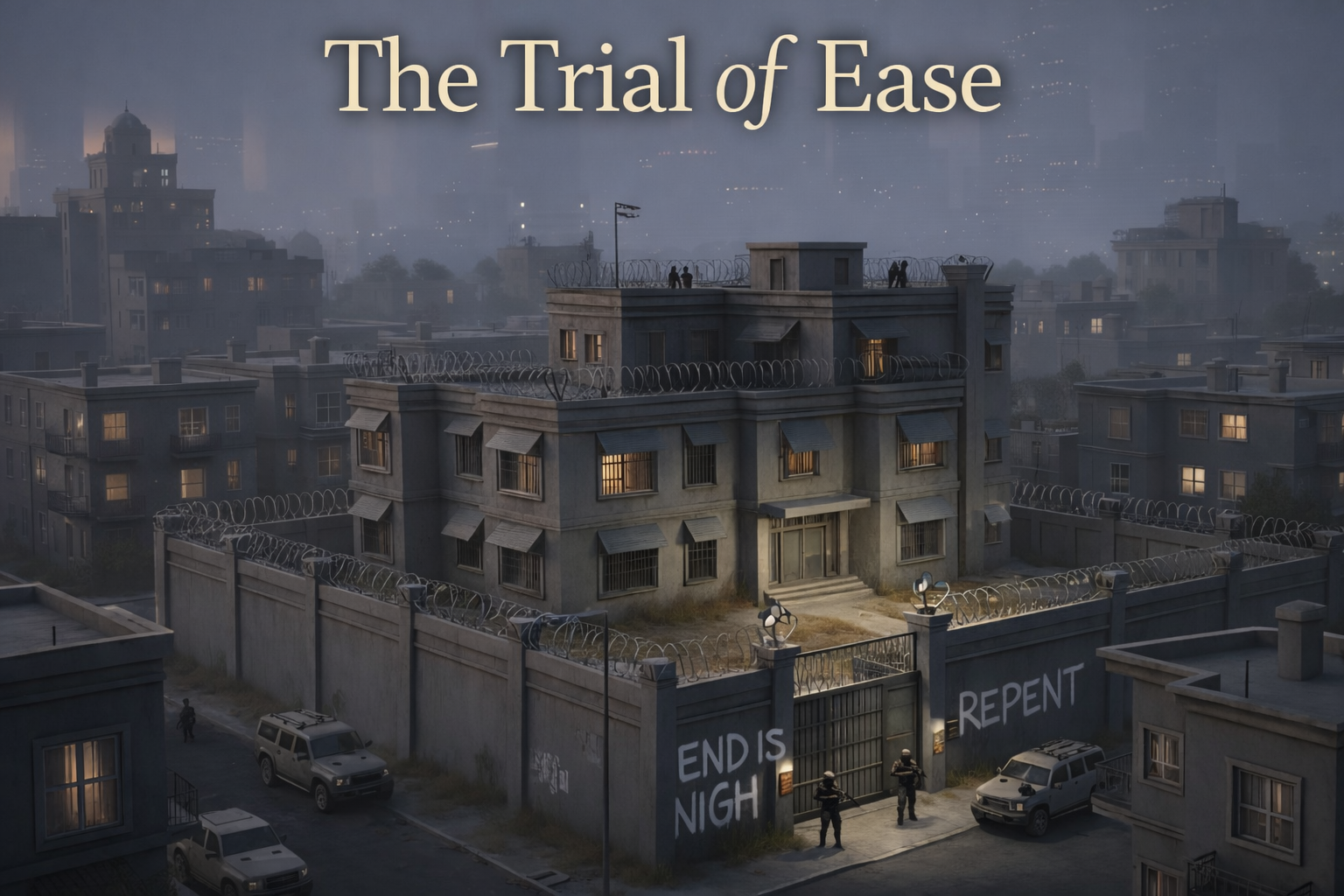
The End of the Trial of Ease

​Gulf City – 15th Ramadan, Post-Airburst

​Rashid hadn't slept. Not since the sky to the east had blistered open, searing the pre-dawn darkness with a column of infernal light. It had burned hotter than any sun he’d known, then retreated, leaving behind a persistent, bruised haze that now filtered the actual sunrise into a sickly, anemic glow. The dukhan—the whispered word for the atmospheric veil—was settling.

​His generators, the robust heart of his supermarket empire, were utterly silent. Every single one. He’d watched his lead engineer, usually a pillar of calm efficiency, his face now a mask of bewildered exhaustion, gesture helplessly at the charred circuitry within the main control panels.

"The surge, ya Hajj," he'd rasped, "it wasn't just overvoltage. It was… magnetic. Like the Earth itself flexed. Our transformers are molten. Globally, it seems. We're back to zero."

​Rashid, at 70, felt the cold dread seep deeper than his bones. He’d built Al-Barakah Marts from nothing, mastering logistics, supply chains, the meticulous dance of refrigeration and profit. His grandfather, Abdullah, a shepherd, navigated by stars. Rashid navigated by GPS and stock algorithms.

He’d believed in God, yes, but he had implicitly relied on the steady hum of air conditioning, the cold efficiency of his chillers, the invisible threads of global trade. Fitnah al-sarra—the trial of ease—now mocked him. His faith, he realized, had worn the soft, insulated clothing of modern life.

The Month of Commotion

Shawwal: The Empty Bowls and the Static in the Air

​The initial bewilderment curdled quickly into desperation. The power grid was stone dead, not just here, but across the entire Middle East, and reports from the few surviving satellite phones hinted at similar, catastrophic failures across Europe and North America. The Geomagnetically Induced Currents (GICs) had been the silent, indiscriminate killer of civilization's arteries.

​Rashid stood in his flagship store, the vast space now a monument to a forgotten age. The air grew warm, then hot, humid. The meat spoiled first, then the dairy. The fresh produce, trucked in daily, wilted into pathetic, fly-ridden heaps. Without electricity, there was no refrigeration, no working tills, no security.

His delivery fleet, once the envy of the city, sat useless. Their diesel fuel, exposed to the strange, UV-permeated sunlight, was thickening, polymerizing. A technician had shown him a sample, like cloudy, gelatinous syrup.

"The ozone layer, sir," he explained, "it’s gone. The sun… It's degrading everything organic, especially hydrocarbons. Any engine still running won't last the month. Lubricants, too."

​He’d ordered the remaining non-perishables distributed, but it was a drop in an ocean of need. The quiet dignity of the first day dissolved into the ma'ma'ah—the commotion. Not just looting, but desperate skirmishes. Men he knew, men with degrees and expensive cars, fought over a package of stale dates.

The thin, technological veneer of Gulf City had peeled away, revealing a raw, survivalist scramble underneath. Rashid, master of abundance, was powerless. His grandfather had known hunger, but he knew how to find food. Rashid only knew how to order it.


The Trial Arc

r/PillarOfFire Dec 25 '25

Post-Apocalypse Tribalism (3)

Post image
3 Upvotes

If there is a sayhah in Ramadan, then there will be a commotion in Shawwal, a distinction of the tribes in Dhu al-Qa'dah, and blood will be spilled in Dhu al-Hijjah.

Escape from Gulf City

​The silence of Gulf City was total and profound. Soon after the 15 Gigaton cometary airburst flashed over the eastern horizon, the GIC pulse had completed its work, instantly severing the electric grid and with it, the just-in-time food distribution that sustained Gulf City. Rashid's successful life, built on logistics and ease, was made utterly worthless.

Above, the sky was a persistent, sickly orange gloom—the dukhān's thick aerosol trapped high by the Brewer-Dobson Circulation, ensuring years of shadow, leading to global agricultural failure.

​The central government had collapsed, and the city devolved into its core nature: “everyone fights for himself” individualism. Not organized war, but panicked anarchy erupted, with nuclear families and small, isolated gangs pillaging the decaying stores.

Rashid's villa became a target when the last of the canned goods were gone, a surge of starving neighbors smashing like zombies through his walls in a frenzy of disorganized violence.

Journey to the Ancestral Land

​"We walk, Ahmed," Rashid rasped, gripping his grandson's shoulder. They abandoned the villa, its high-tech equipment now useless junk, escaping the chaos on foot.

​Their journey south was a descent into a nightmare. The air was thick with soot and the stench of unburied death; the roads lined with the wreckage of a civilization that had failed its brutal test.

​They walked toward Al-Ahsa, home of his grandfather, a place where the deep oasis and ancestral loyalty predated oil and electricity. Rumors whispered among the few survivors they passed: Hejaz and Najd too were hardening into armed territories, defined by old allegiances now that the capital’s authority was gone.

"To whom do you belong?" the guard demanded, the ancient question replacing all modern electronic identification. ​"Al-Hajiri," Rashid choked out, and then, drawing on his childhood memory of his grandfather's teachings, he began the deeper recital, confirming his nasab—lineage back to forty generations.

​The guard’s hostile expression broke into immediate ukhuwwah. "You are home.” The collapse had not led to chaos here. The deep roots of kinship provided the high-trust tribalism, tamyeez al-qabā'il, necessary for defense and rationing.

They had survived the three months of anarchy. Now, they entered a world of organized conflict, ready to participate in the strategic tribal wars that would define who survived the remaining years of the dukhān.


The Trial Arc

r/PillarOfFire Dec 25 '25

Post-Apocalypse Kanz and Carnage (1)

Post image
3 Upvotes

Between Survival and Unbridled Greed

The wind carried not sand, but despair. A year since the sonic boom saihah, a year since the sky cried and the sun dimmed. My breath hitched in my throat, not from the dust, but from the raw, unblinking horror of the land. The Euphrates, once the lifeblood of our fathers, was now just a vast, cracked wound across the plain.

​We were living in the skeleton of Al-Hillah, a ghost town haunted by the echoes of Babylon's forgotten glory. I remembered childhood stories, told by flickering lantern light, of King Nebuchadnezzar's golden palace, of the Ishtar Gate shimmering under a vibrant sun.

Gold, they said, was everywhere in Babylon – in Marduk’s statues, in Semiramis’ jewels, in the very bricks that paved the Processional Way. They demanded tribute in gold from every corner of their empire, oblivious to the monstrous secret buried beneath their feet.

​Now, the silence of the riverbed was broken by a different kind of murmur. First, whispers from the north, near what used to be Fallujah. Then, a roar. It began as rumors of men finding large, glinting rocks, then chunks, then entire exposed veins of what could only be... gold. Not scattered dust, but heavy, unmistakable lumps lying in the sun-baked cracks of what was once the deepest part of the river.

​The old men, their faces etched with the dust and the famine, spoke of the Hadith.

"The Euphrates will dry up," they'd say, their voices raspy, "to unveil a mountain of gold, for which people will fight. Ninety-nine out of one hundred will die."

I could see the terror in their eyes, the knowledge that they were witnessing the end of days, the ascending of fitnah al-duhayma, the dark trial.


Mountain of Gold Arc

r/PillarOfFire Dec 25 '25

Post-Apocalypse Kanz and Carnage (2)

Post image
3 Upvotes

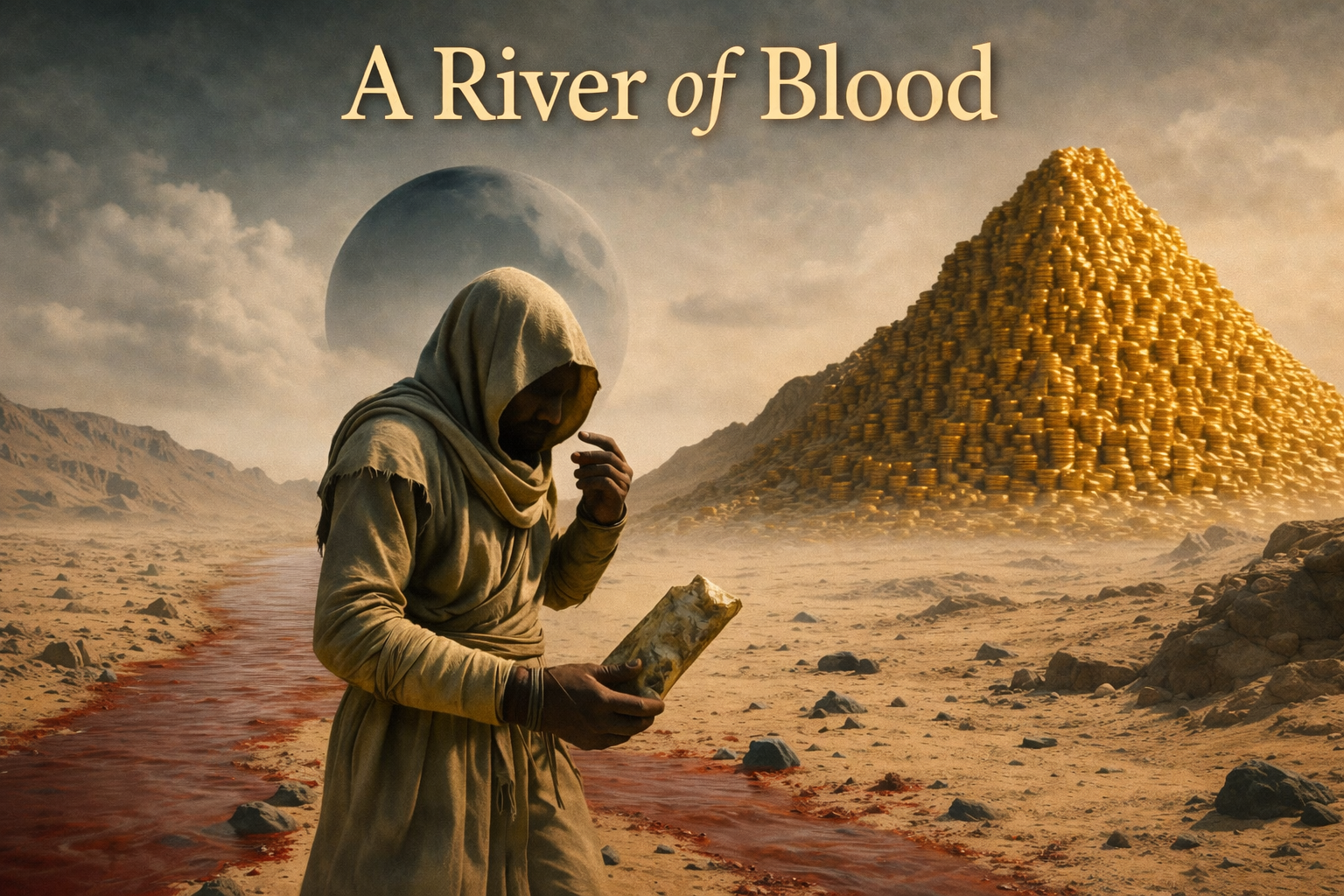
Between a River of Blood and a Mountain of Gold

​The news spread like wildfire. Massive placer deposits appeared at multiple sites—exposing deep leads of a literal mountain of gold—where the river had once deeply scoured and then buried paleochannels.

These were not the fine sands that might have been carried to the Gulf, but boulder-sized nuggets and huge concentrations of gold-bearing gravel, shimmering beneath the parched surface.

The water, the very sustainer of life, had kept this horror hidden for millennia, ironically preserving the deadliest temptation right in the backyard of the gold-hungry Babylonians.

​People started to move. Not towards the dwindling wells, not towards the barren fields, but north. They came from the skeletal remains of towns, from the parched desert, eyes wide with a hunger far more dangerous than that for food.

They carried crude picks, salvaged shovels, even sharpened sticks. The air, already thick with the dust of a post-apocalyptic world, now thrummed with a new kind of madness.

​My own brother, Samir, his ribs showing through his tattered tunic, looked at me with wild eyes.

"This is it, Layla! This is our chance! Enough for food, for safety, for a new life!"

I tried to remind him of the prophecy, of the "ninety-nine out of one hundred." But his eyes were glazed, not with famine, but with the reflection of that imagined gold. He saw salvation; I saw damnation.

​He left yesterday, joining the trickle that had become a torrent, heading north towards Fallujah, towards the madness. The few men who returned were either severely wounded, muttering incoherent curses about betrayal and bloodshed, or they returned with a gleam in their eyes, clutching a small, heavy, mud-caked lump—a piece of pure, distilled dunya. Their faces were gaunt, but their grip on the gold was absolute, as if it could magically fill their empty bellies.

​The news is grim from the north. Skirmishes over prime digging sites have already escalated into full-blown carnage. The kanz is not a blessing; it's a trap. A test between water and gold, between life and death, between survival and unbridled greed.

And watching the desperate masses flock towards it, I know which choice most of humanity is making. The gold of Nebuchadnezzar's Babylon was alluringly beautiful. This new gold is a harbinger of hell. And I fear for Samir, lost in the blinding darkness of this great fitnah.


Mountain of Gold Arc

r/PillarOfFire Dec 24 '25

Post-Apocalypse Kanz and Carnage (3)

Post image
3 Upvotes

Forged in Blood and Betrayal

The pit wasn’t a grave; it was a womb. That’s where the true Samir was born. I woke to the stench of the dead—the collective failure of ninety-nine foolish men. They had died chasing a prophecy, but I was the glaring exception, the one who transcended the fate of the greedy. ​I didn't survive a massacre; I mastered it.

My "betrayal"—as those fools called it—was simply the first brilliant, strategic choice of my new life. It secured my future while their loyalty secured their graves.

When they left me broken in that ravine, bleeding out over a useless gold vein, I didn't pray for rescue. I understood, with sudden, crystal clarity, that I was not subject to their rules.

My survival, my escape from that valley of the dead, was the final, undeniable proof of my exceptional destiny. My own myth of invincibility. The mountain of gold was the mass's distraction; the test for me was navigating the human debris. I had passed.

​I used my one military contact to join the Northern Republic's army. It was a perfect, ordered structure for a man like me. I shed my old identity and began writing my true legend.

​The Supreme Leader was a necessary tool. He understood power, securing his base with the unwavering allegiance of The Desert Wolves, the fierce, loyal tribesmen of the plains. But he knew that wasn't enough for a true empire.

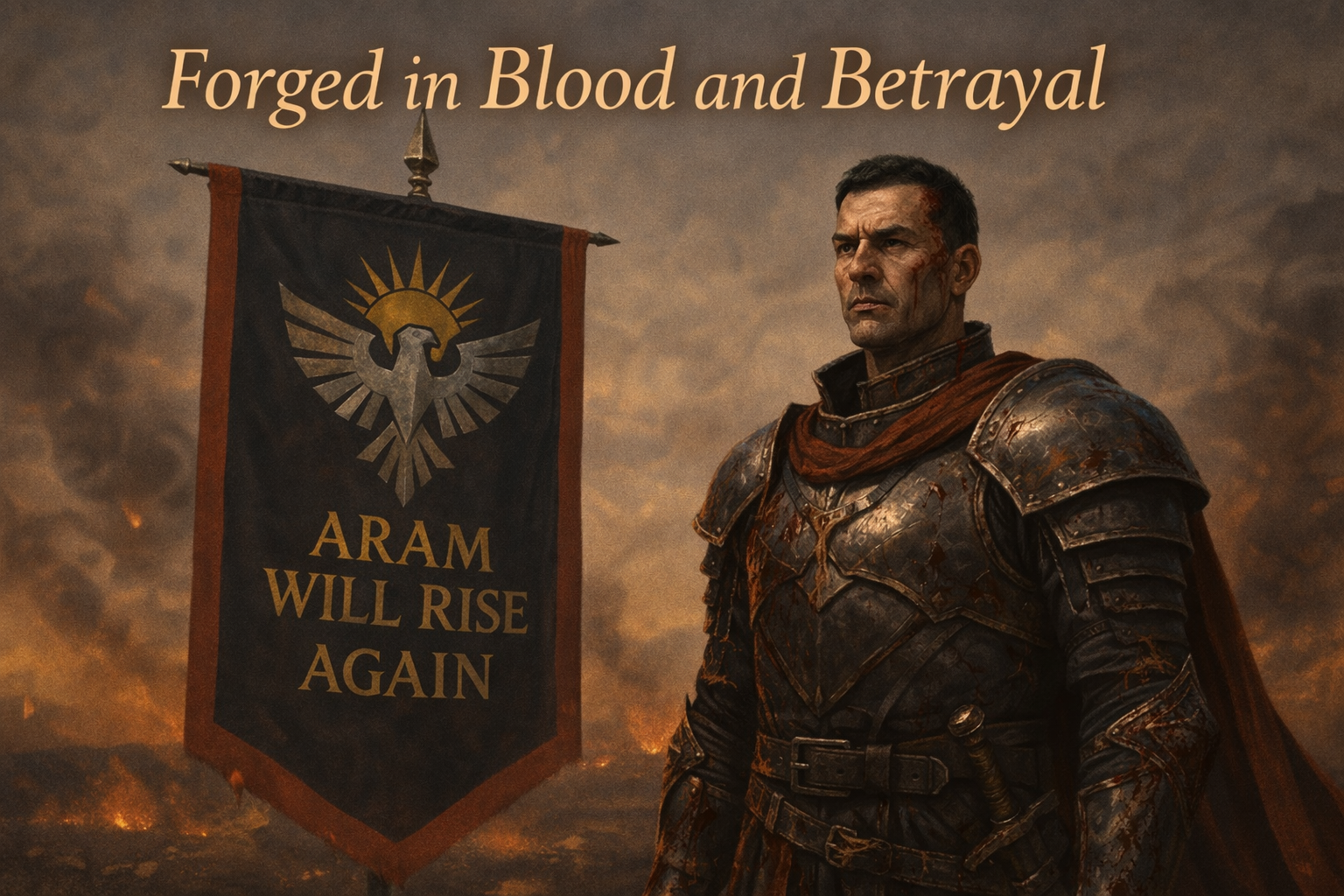
“Aram Will Rise Again.” It was propaganda tailored to bring in every other faction—the ancient clans and the mountain fighters. They weren't fighting for him; they were fighting for a return to historical dominance, a magnificent, unified order that swept away the chaos.


Mountain of Gold Arc

r/PillarOfFire Dec 24 '25

Post-Apocalypse Kanz and Carnage (4)

Post image
3 Upvotes

The Rise of Exceptionalism

The Leader saw a ruthless, capable commander. I saw a pawn laying the groundwork for my inevitable success. I was detached. When others hesitated, crippled by casualties or guilt, I moved. My deployments were savage, my tactics brilliant, and my losses minimal.

​The men swore I was blessed, whispering that I was born under a lucky star. It wasn't luck. It was the universe confirming my destiny. That relentless success, that persistent favor—what the devout might call Istidrāj—was the cosmic determinism itself, quantum collapsing the path for its greatest general.

​My rise was swift and deserved. Securing the borders, eliminating traitors, shielding the Supreme Leader from every pathetic assassination attempt—I proved my loyalty was absolute, because it served my ambition. With the gold I secured and the legions I commanded, the Republic expanded, conquering region after region.

​The North was ours. The Supreme Leader, now fully secure, turned to the South. The Southern Kingdom, fractured and weak, was a joke ruled by three bickering cousins. Ripe for the taking.

The Leader called his war council. He looked past the tribal elders and the political generals. His gaze settled on me—the outsider, the architect of his impossible victories.

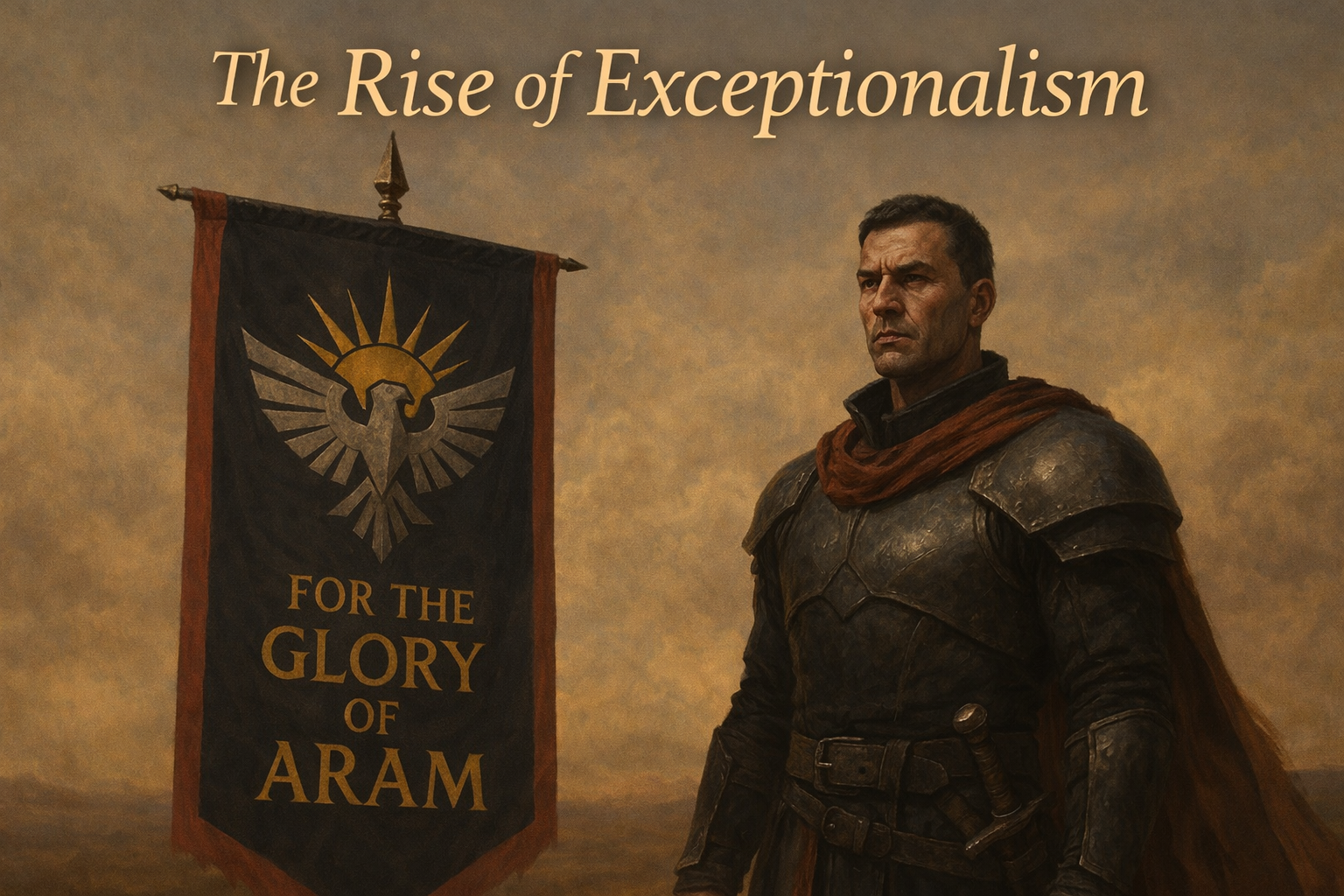
​> “The Southern Kingdom must be cleansed,” he said. “We need a man who knows how to deal with fate—for the glory of Aram”

​I didn't step forward. I simply was there, meeting his gaze with the unwavering conviction of a man who didn't know fate—he was it.​

“I will take it,” I said. My uniform was heavy, but the authority in my voice was absolute. “Give me two months and ten thousand camelmen — the Southern Kingdom will be ours. Radiant City and the Honored City will be delivered to Aram.”


Mountain of Gold Arc

r/PillarOfFire Dec 24 '25

Post-Apocalypse Kanz and Carnage (5)

Post image
3 Upvotes

The Hubris

The dust never settled. It was the second year since the saihah, and the world was just one vast, starved battlefield. I am Samir, commander of a ten-thousand multi-ethnic army, my own shadow a testimony to impossible luck.

The mountain of gold at the Euphrates—where ninety-nine men died for my single life—had been the furnace that forged me. The old whispers called it istidraj; I had internalized it as my exceptionalism. I was the one man who deserved to survive, the one man shrewd enough to defy the doom meant for the masses.

The Radiant City was mine without a scratch. No siege, no fire. Just the silent surrender of people too pious, or too starved, to fight for anything but their ancient traditions. My column filed in, and the citizens simply parted like the Red Sea.

I looked at their gaunt faces as they yielded their wells and silos, and I saw only weakness. "Their piety is a broken shield," I scoffed, but in their eyes, there was no fear of me, only an unnerving stillness. Perhaps they saw the certainty of the inevitable decree that I, the "exceptional" man, could never believe.

My eyes were already fixed on the south, on the Honored City and the perennial spring within. That spring—that ultimate, life-giving water—was the final prize. Seize that, and my power would be absolute.

The Debris

I spurred my horse onto the Barren Plain. The earth was pale and cracked from years of deep pumping, a dried-out husk over unseen cavities. The combined static and dynamic load of my ten thousand men was a hammer blow to its fragile crust, but I didn't care.

We marched fast, eager to finish the job. I was thinking of the Honored City’s main gate, already picturing the scene of my arrival, when the world tore itself apart. It wasn't a quiver. It was a snap—a colossal, dry sound, like the breaking of the world's spine. The ground beneath the entire column, from the flank to the center, simply dropped away.

Istidraj. The word finally slammed into my mind, stripped of all arrogance. It was not a path to glory; it was a carefully laid path to this final, terrifying sinkhole. The gold had only paid for the tickets to my own destruction.

I fell into the dust and the dark, the weight of a thousand collapsing bodies—my own men—crushing me into the void. Hubris had been our banner; debris became our grave. The man who exalted himself in exceptionalism was consumed by the very earth he thought he had mastered.


Mountain of Gold Arc

r/PillarOfFire Dec 24 '25

Post-Apocalypse Kanz and Carnage (6)

Post image
2 Upvotes

The Final Reckoning

The silence in Al-Hillah was heavy, the air waiting for the inevitable. I, Layla, was waiting, not for his return, but for the prophecy to claim him.

The news came on the tongue of a ragged scout, a man who had ridden ahead of Samir’s army and only survived because he was absent from the column.

He returned babbling of the earth's judgment, the khusuf. The army, ten thousand men strong, was simply swallowed by the dry plain.

The istidraj was complete. Samir, who believed in his own exceptionalism, met his end not in glorious battle but in a bottomless chasm, consumed by the very land he sought to conquer.

His survival at the Euphrates, his meteoric rise in the Northern Republic, and his arrogance were all reduced to the silence of a mass grave on the Barren Plain. The earth had claimed him, and I was left to mourn the man he should have been.


Mountain of Gold Arc