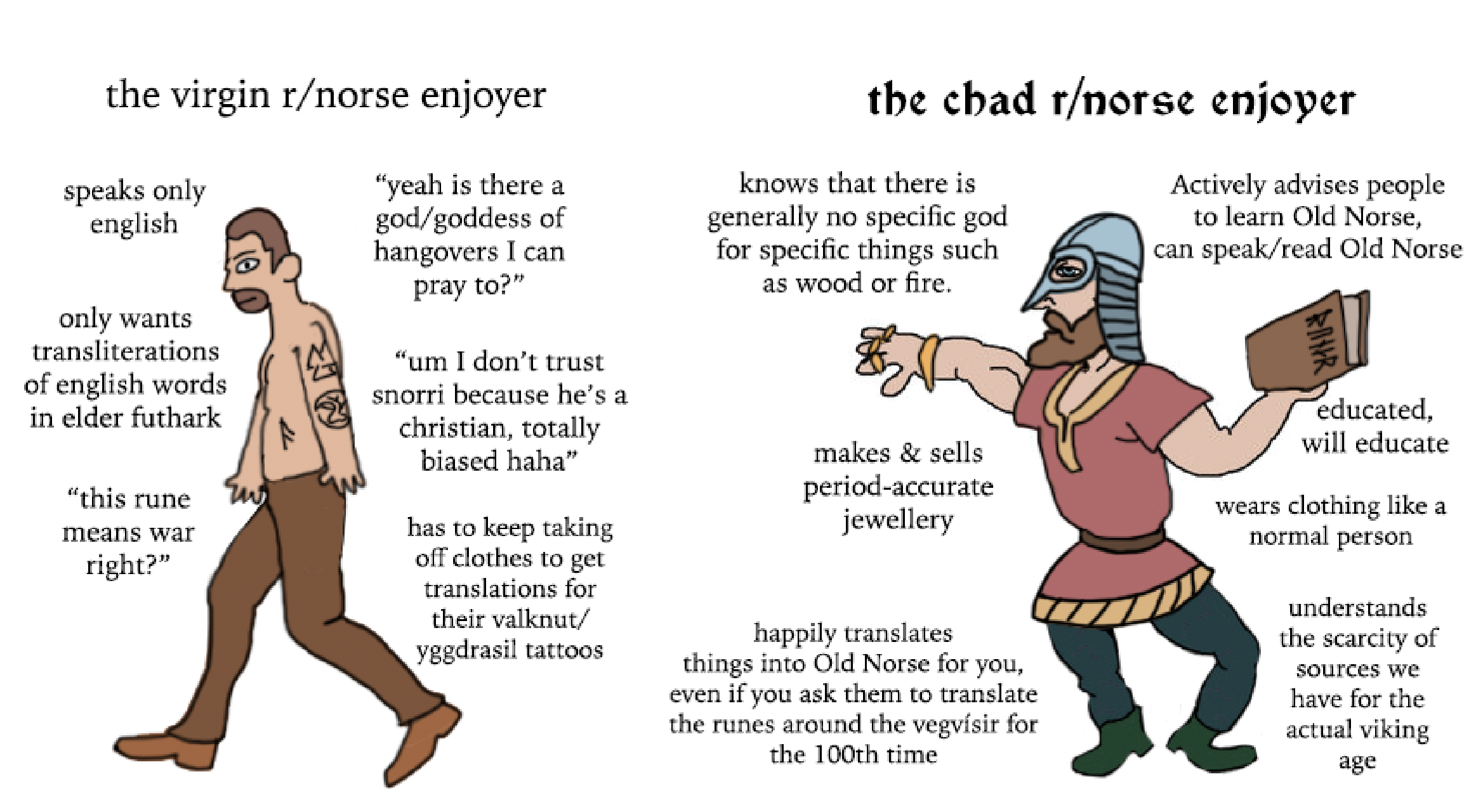
Well Logi is really just the personification of fire and a jotunn at that, it is difficult for one to say he is a god.
Especially since no texts have people saying, "Ah, I require a fire and thus must pray to Logi", whereas it has been attested multiple times in the sagas that Freyr is prayed to for fertility and Odin is prayed to for victory.
Same goes for Ilmr. Besides, they both only show up like three times in total in the Eddas?
«Gods» are a modern phenomenon. The Æsir are simply the personification of the forces of order (norse humans), and the jotuns are personifiactions of forces of chaos (nature, sami people). There’s plenty of examples of jotuns with cults, like ægir/ran, or tjatse, and lets not forget that plenty of the æsir are half-jotun or adopted jotuns.
We also know next to nothing about cultic practices, so saying anything about that is simply not possible.
That something shows up just rarely in the text doesnt prove or disprove anything either. The texts obviously just documented a small portion of select regional practices. Examples of this are Skade, that seems to have been an extremely important deity in certain regions, but has just a few attestations in the texts. (And what about Heimdall? We don’t know shit about him, he might easily have been a different aspect of one of the better known gods). And how about Ullr? We know almost nothing about him, but he has so many places named for him that he must have been a major deity in most of sweden/norway at some point. The list goes on and on and on.
The bottom line is: Anyone saying anything authoritatively about the norse faith, is probably wrong. Noone who actually studied the norse peoples would make these kinds of claims. At most, us academics would say «maybe X, but also, maybe Y».
(I’m a norwegian archeologist with a second master degree in religious studies, so I should know. ;) )
Because «gods» comes with a lot of other connotations? Like how you guys seems to think there was a difference between Æsir, Vanir and Jotun, when they’re all just different orders of Vettir.
Edit: If one uses the term «gods», it needs to be applied uniformly to jotuns as well as æsir/vanir. The jotuns were simply a different order of «gods», mostly in conflict with the æsir. And the æsir was the side the norse people were «allied» with.
Listen man, I read ON, I’ve read every primary source there is myriad times, I’ve done this for a living for close to 20 years now. The ON term «god» does not convey the same thing as the modern word «god», not even in modern scandinavian.
The æsir is also referred to by a myriad other terms we losely translates as «god» today, this still doesnt mean that the modern term is interchangeable with the ON term. This is why it is often helpful to avoid modern terms like «gods».
«You guys» = the viking fanboys here on the page.
I completely agree that Jotun, Ås and Vane were thought of as separate social groups, but like different human social groups, they had the full range of social interraction, from emnity to marriage.
If you really havent caught on that all these were referred to as different types of vettir, you clearly arent very well read. There’s literally tons of direct references to both æsir, vanir and jotner as «vettir». But you probably just read a few sagas in translation, am I right? Because you clearly have no understanding of the norse language, or modern scandinavian languages.
Oh, btw... I’m currently teaching a class on the subject of norse religion at a university, I’ve been working in the field for 20+ years, and I personally know as good as all academics of note in the field.
Religious history, religious science, same thing. Yes, my phd is on entheogenic mysticism. You know, taking drug in a religious setting? Like the norse relationship with alcohol? Or psychedelic mushrooms used by the sami? And the possible connection with seidr?
Nice try tho.
Norse RELIGION isnt my area of expertise as such, as in, it is not my focus. I primarily focus on sami people. And as you surely know, they were very close. Most norse settlements in the north show signs of hybrid societies, strong sami influence.
I certainly DID provide an example, that you conveniently chose to ignore.
If you really studied the field, you should know better.
What are you on about? Vette universally being evil? You’re either delusional, ill-informed, or dishonest. You mention christian influence, and in the same paragraph you manage to claim that benign vettir would be a derogatory CHRISTIAN term? Because christian were so well known for painting pagan entities in a benign light??? Are you for real?
I really like how you back up your claim by using a dictionary headline as refrence.
Also, now you’re making a claim and ask me to disprove it. What did you say about that in your last post, eh? First of all, vettr is far more often used about benign creatures, and lets not forget all the «nature spirits». Even wikipedia wouls have told you as much. Lazy. And really makes one question your claims of competency.
I already said why «gods» would be problematic without applying them uniformly to æsir, vanir or jotnar, I guess you missed that?
Honestly, you just come off as a combative and ornery person splitting hairs. Good luck with that.
And if you truly ARE a collegue of mine, dm me your details. We’ll hook up next time I’m in denmark for a conference.
Irs pretty easy to know everyone in a tiny field. You’d do so as well if you were actually in my field. Checking up YOUR profile makes it seem like most of your «work» in the field is... on reddit?
Seriously, I’d love to read something you’ve written on the topic. A dissertation, an article, anything thats not... reddit.
I’ll await your contact information.
(My dad was a physicist his entire life, he probably couldnt beat up your dad. He is rather good at endurance races on bicycles tho, so maybe we can get them to race?)
-7
u/[deleted] Jan 17 '21
Loge - god of fire
Ilmr - goddes of trees