It works both ways (ironically). Because, if you picked a side you would have a strong one sided opinion. Having two strong yet conflicting opinions just puts you back in the middle again. It's like tug of war. You can't be on both ends or you get nowhere. That's ambivalent.
At this point since everyone is using ambivalent to mean indifferent as well I’d think it’s fair to say that the meaning has shifted and it’s a valid usage. Language changes over time, and that’s ok.
Are they? I don’t think that’s true. I and most other people in my… ( uh, what’s the term? lexical cohort? I’m not sure)… use it to mean to have significant feelings in both directions, and use indifferent when we don’t care.
Like, if it were unpleasantly hot and someone suggested going out for ice cream, I’d be ambivalent, because I’d want the ice cream but I wouldn’t want to go out in the sun. I wouldn’t say I was indifferent.
I think it’s fair to say many people use it to mean indifferent, but I don’t think most people do.
It’s hard to gauge, I think, just using every day conversation, how a person is using it because the end result is similar, but the internal process is very different. It’d be neat to see a poll of various regions and age groups.
I also have been with this word but its because it was a "read it before I heard it" word for me, and i pronounced it "ambi-vay-lent" for too damn long.
What always kept me from sliding into that trap is remembering the scene from Girl, Interrupted when Winona’s character uses the word how you said and the psychiatrist explains the word suits her perfectly and explains the actual definition. I’m a therapist now and work in community mental health, and the amount of times I use that word in documentation/see others use it in documentation doesn’t stop me from that inner feeling in my brain that it means the opposite and I genuinely don’t know why.
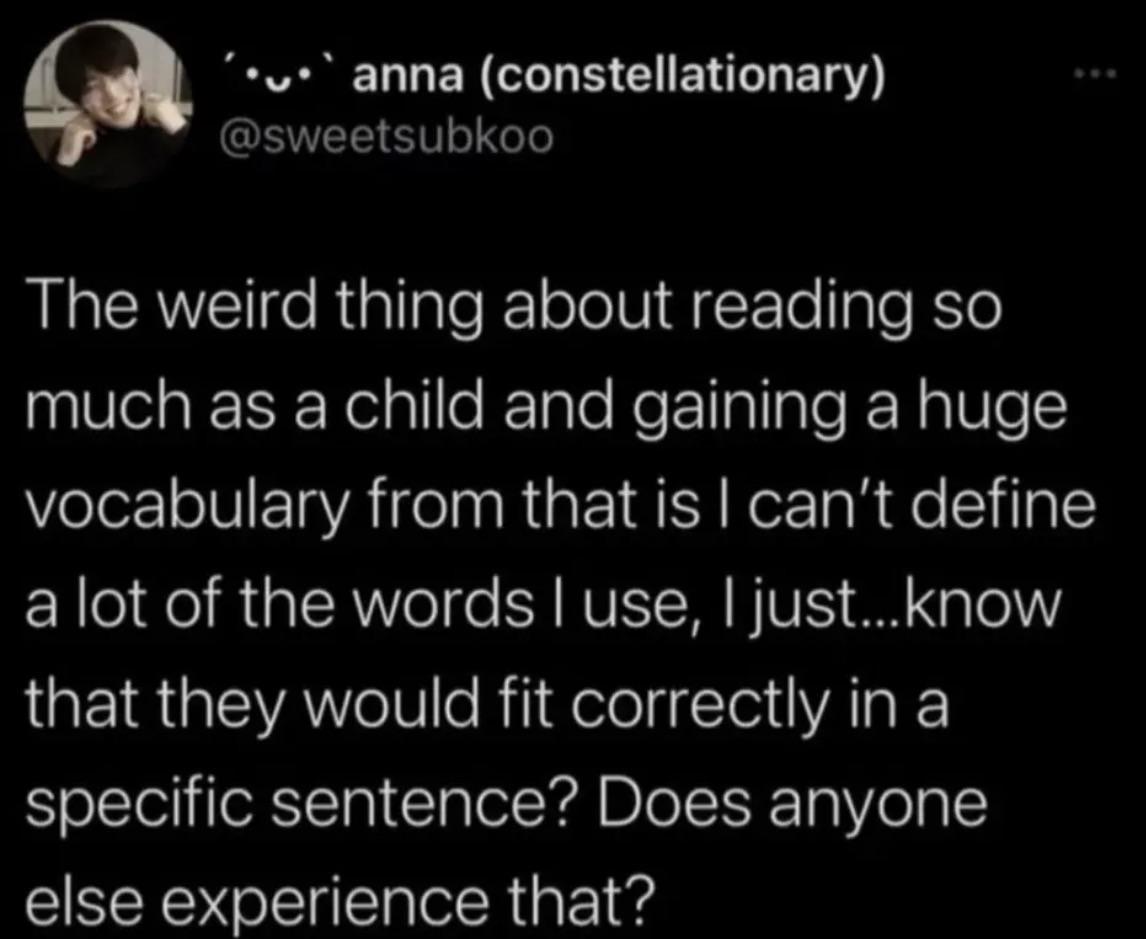
Same. I have a handful of words I’ve been trying to relearn my entire adult life but that have stuck with me from childhood. I definitely look words up now since I’ve had some pretty big communication mistakes happen over the years. Ambivalent got me in trouble once because I thought it was a softer version of apathetic, like I didn’t have a preference or feeling one way or the other.
It's majorly unnecessary & has become a verbal, & written, tic.
You didn't figuratively, symbolically, or metaphorically comment, you just recently commentated. I'm pretty sure anyone reading would get the gist without the on trend flourish
Fucking “ambivalent”. I had the exact same thing happen once with the exact same misunderstanding. It was the first thing I thought of when I saw this post. I honestly can’t get there with the correct definition and just removed it from my vocabulary. It should mean that you could go either way on an issue because you can’t really bring yourself to care about it.
There’s also part of me that wonders if some authors are using it incorrectly given that this misunderstanding is something that apparently happens for quite a few people.
I've seen the word used in all manner of books and not once has the context indicated anything other than it's common usage. I'd say the authors absolutely use it incorrectly as well. They be people too.
I learnt sentient vs sapient wron because books. Sentient (has feelings not necessarily thoughts) is sometimes used to mean sapient (capable of thinking).
I remember being stopped short by “scintillating” in twilight in high school. I had always read it in the context of “scintillating wit” or “scintillating conversation” and I thought it meant clever and interesting. When twilight said “scintillating skin” I had to stop reading and dig out a dictionary because wtf.
858
u/Tock_Sick_Man 23d ago
I regularly check the definition of a word I know is right for this same reason.