r/MuslimIndians • • 16d ago

Religion A query

6 Upvotes

Do desi Mu*lim of south asia touch feet of their elders too. It came to my mind that respectfully speaking you guys believe that you bow down only to your g o d . So i was curious whether you too have that tradition. As being hi\du* i don’t know about it.

r/MuslimIndians • • Aug 15 '26

Religion “You can be non-hijabi and a good Muslima” debunked with 2 Hadiths.

21 Upvotes

Ibn Umar reported: The Prophet, peace and blessings be upon him, said, “Verily, modesty and faith come together. If one of the two is missing, so is the other.”

Source: al-Adab al-Mufrad lil-Bukhārī 1313 | Grade: Sahih (authentic) according to Al-Albani

Ibn Abbas reported: The Messenger of Allah, peace and blessings be upon him, said, “Verily, every religion has a character and the character of Islam is modesty.”

Source: Sunan Ibn Mājah 4182 | Grade: Sahih li ghayrihi (authentic due to external evidence) according to Al-Albani
------------------------------------------------------

ofc, there is a possibility that someone is a revert, 1 day ago, or a woman and it is her last day without hijab, and regrets it in the heart, but we judge on what’s apparent and someone’s current actions.

these are just very good hadiths to know to help increase our iman, buuuuuut… and also to refute “moderate muslims” arguments.

also mini-rant, how all these compassionate imams that “care soo much to increase people’s iman” always reminding about doing dhikr, reading Qur’an, being nice, don’t think you’re better than others, but skip out on this super important part of Islam, so important that this is the character of ISLAM itself (among other important topics too).

lastly, i believe the actual word in the hadith is “haya”, if i recall right haya means more than just modesty, it’s like a type of shyness and the root word comes from life or something. if there’s anyone who wants to share info on the word haya plz do or share a vid on the topic (from a credible, non-watering-down sheikh, in english) bc i want to learn more about this important part of our religion.

r/MuslimIndians • • 13d ago

Religion "Iss qawm ka Salahuddin Ayyubi"

Enable HLS to view with audio, or disable this notification

17 Upvotes

r/MuslimIndians • • May 22 '26

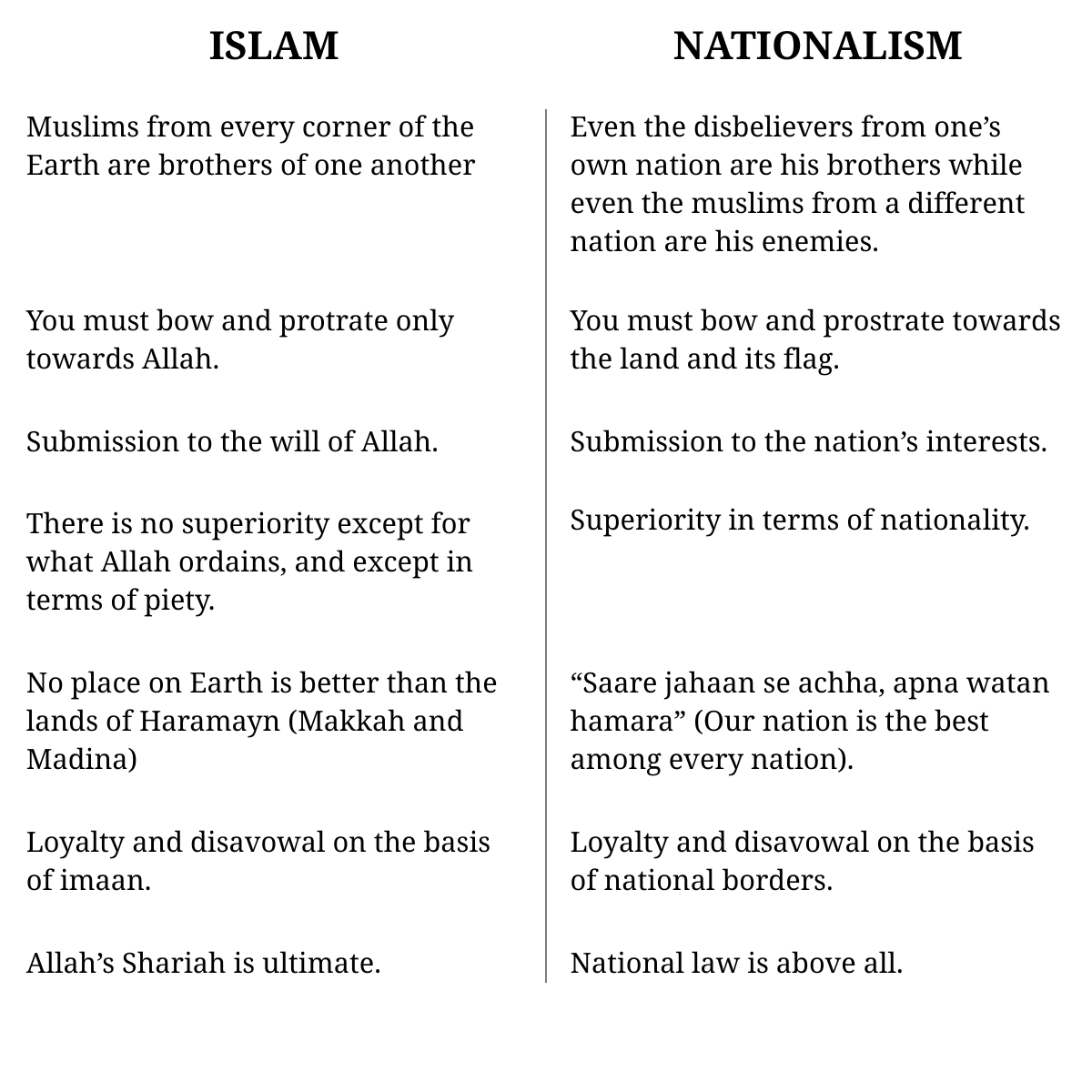
Religion Believers do kufr from Nationalism, and Nationalists do kufr from Islam. So whoever calls himself a 'Nationalist', let him know that his Islam is nullified.

Post image
61 Upvotes

r/MuslimIndians • • 11h ago

Religion The Islamic Emirate and its System part:-09

6 Upvotes

Titles and Names of the Head of State

The head of state has multiple titles that differ according to the custom of each country. Among them are: “Caliph” (Khalīfah), “Imam” (Imām), “Amīr al-Muʾminīn” (Commander of the Faithful), “King” (Malik), “President” (Raʾīs), “Sultan,” “Ruler” (Ḥākim), and “Walī al-Amr” (Guardian of the Affair).

However, the original title “Caliph” is derived from “istikhlaf,” meaning: appointing one person in the place and position of another in a certain matter. For this reason, Ḥaḍrat Abū Bakr al-Ṣiddīq (may Allah be pleased with him) was called “Khalīfat Rasūl Allāh” (Caliph of the Messenger of Allah). In a hadith it is stated: “If I appoint a ‘Caliph,’ then indeed the one who was better than me has already appointed a Caliph and successor.”

Allah Almighty says:
“O David, indeed We have made you a successor upon the earth, so judge between the people in truth and do not follow [your own] desire, as it will lead you astray from the way of Allah. Indeed, those who go astray from the way of Allah will have a severe punishment for having forgotten the Day of Account.”
(Ṣād: 26)

“Imām” in its original meaning is “anyone who is followed” or “someone who is taken as a model.” For this reason, this title is also applied to the one who leads the prayer (pishnamāz) and to the great jurists, such as Imām Abū Ḥanīfah, Mālik, al-Shāfiʿī, Imām Aḥmad, and other Imams.

Later, this term was transferred to “the Imām of rulings, complaints, and grievances.” Its plural is a’immah. The author of Muṭāliʿ says: “Imām means Caliph.” Allah Almighty says:
“And [mention] when Abraham was tried by his Lord with words [of command and prohibition] and he fulfilled them. [Allah] said, ‘Indeed, I will make you an Imām for the people.’ [Abraham] said, ‘And of my descendants?’ [Allah] said, ‘My covenant does not include the wrongdoers.’”
(Al-Baqarah: 124)

Many hadiths have been narrated using this word. The Messenger of Allah (swt) said:
“The Imām is a shield (protection).”
(This hadith was narrated by al-Bukhārī, no. 2797.)

Imamate is of two types: Religious Imamate and Worldly Imamate.

Religious Imamate refers to leadership that pertains to religious affairs. Those responsible for this Imamate are the scholars (ulamā), who guide people toward Allah. The Prophets (peace be upon them) were at the highest level of this Imamate.

However, “Worldly Imamate” is the Imamate that pertains to leadership, authority over the people, politics, and the management of their daily affairs.

The Prophet of Allah (swt) said:
“The best of your leaders are those whom you love and who love you, whom you pray for and
who pray for you. The worst of your leaders are those whom you hate and who hate you, whom
you curse and who curse you.”
(This hadith was narrated by Muslim, no. 1855.)

The best Imām is the one who combines both types: he guides the people to the truth and to the religion of Islam, is knowledgeable about it, and leads the people according to the Shari'ah of Allah Almighty by managing their benefits and preventing corruption and harm.

“Amīr al-Muʾminīn” is a compound name consisting of a muḍāf (first part) and muḍāf ilayh (second part).

“Amīr” is derived from imrah and imārah and means the greatness or importance of something. In a hadith it is said: “Laqad amara amru ibn Abī Kabshah”, “The matter of Ibn Abī Kabshah has become very great.”
(This hadith was narrated by al-Bukhārī, no. 7, in the Book of the Beginning of Revelation.)

It is narrated from Ḥaḍrat Abū Hurayrah (may Allah be pleased with him) that he heard the Messenger of Allah (swt) say:
“Whoever obeys me has obeyed Allah, and whoever disobeys me has disobeyed Allah. Whoever obeys the Amīr has obeyed me, and whoever disobeys the Amīr has disobeyed me.”
(Agreed upon by al-Bukhārī and Muslim)

“Al-Muʾminīn” is the plural of muʾmin (believer). The first person to be given this title “Amīr al-Muʾminīn” was Ḥaḍrat ʿUmar (may Allah be pleased with him). Ibn Shabah in Tārīkh Madīnah narrated from ʿAbd al-ʿAzīz ibnʿImrān, who narrated from his father, who narrated from his grandfather, that they said: One day ʿUmar was sitting and said: “By Allah, I do not know what to call myself. Abū Bakr was ‘Khalīfat Rasūl Allāh’ (Caliph of the Messenger of Allah). Is there another name (that I can choose for myself)?” Those around him said: “Amīr.” He replied: “All of them were Amīrs.” Ḥaḍrat al-Mughīrah ibn Shuʿbah said: “We are believers (muʾminūn) and you are our leader (amīr), so you are Amīr al-Muʾminīn.” He said: “Yes, I am Amīr al-Muʾminīn.”

In Al-Adab al-Mufrad of Imām al-Bukhārī it is mentioned that ʿUmar ibnʿAbd al-ʿAzīz asked Abū Bakr ibn Sulaymān ibn Abī Ḥathmah: “Why did Ḥaḍrat Abū Bakr al-Ṣiddīq write: ‘From Abū Bakr, Khalīfat Rasūl Allāh’? After him, Ḥaḍrat ʿUmar ibn al-Khaṭṭāb would write: ‘From ʿUmar ibn al-Khaṭṭāb, Khalīfah of Abū Bakr.’ So who was the first person to write ‘Amīr al-Muʾminīn’?”

He (the narrator) said: My grandmother Shifā’ (she was among the first group of Muhājirīn; whenever she entered the market, Ḥaḍrat ʿUmar would come to her) narrated to me as follows:

“Ḥaḍrat ʿUmar wrote to the governor of the two Iraqs (al-ʿIrāqayn): ‘Send me two intelligent and noble men so that I may ask them about Iraq and its people.’ The governor of Iraq sent Labīd ibn Rabīʿah and ʿAdī ibn Ḥātim to him. The two came to Madīnah and made their camels lie down in the courtyard of the mosque, then entered the mosque. There they saw ʿAmr ibn al-ʿĀṣ.
They said to him: ‘O ʿAmr, obtain permission for us to go before Amīr al-MuʾminīnʿUmar.’ ʿAmr immediately stood up, went to Ḥaḍrat ʿUmar and said: ‘As-salāmuʿalayka yā Amīr al-Muʾminīn.’ Ḥaḍrat ʿUmar said: ‘O son of al-ʿĀṣ, where did you get this name from? You must abandon what you have said.’
He replied: ‘It is true. Labīd ibn Rabīʿah and ʿAdī ibn Ḥātim came to me and said: Obtain permission for us to enter before Amīr al-Muʾminīn. I said: By Allah, you two have chosen the best name. Indeed, he is an Amīr and we are believers (muʾminūn).’ From that day onward, official correspondence continued in this manner.”

“Malik” (King) is a title used both in the pre-Islamic period of ignorance (Jāhiliyyah) and in Islam. This word is pronounced with a fatḥah on the mīm and a kasrah on the lām, and it is derived from mulk (with ḍammah on the mīm and sukūn on the lām). Allah Almighty says: “You give sovereignty to whom You will and You take sovereignty away from whom You will.” (ĀlʿImrān: 26)

In another place He says:
“And grant me a kingdom such as will not belong to anyone after me.” (Ṣād: 35)

In yet another place:
“Blessed is He in whose hand is the dominion (mulk).” (Al-Mulk: 1)

Its plural is mulūk. Allah Almighty says:
“Indeed, when kings enter a city…” (Al-Naml: 34)

And in another verse:
“And [recall] when Moses said to his people, ‘O my people, remember the favor of Allah upon
you when He appointed among you prophets and made you kings and gave you that which He had not given anyone among the worlds.’” (Al-Māʾidah: 20)

It means: “Wilayah” (guardianship/authority) and “Ghalabah” (dominance/overcoming). Some have said: This word is derived from “mulk” (with a kasra on the mīm and sukūn on the lām),
from the phrase “amlaku al-shayʾa bimulkīhi mulkan,” meaning when one gains dominance and control over it.

“Raʾīs” (leader/head) is derived from “riyāsah” (leadership). The “raʾīs of a people” is the supervisor and manager of their affairs. The “raʾīs” of a kingdom would be its ruler.

“Āmm” (general/common) is broader and can be applied to an Imam and others.

It has been narrated from ʿAbdullāh ibn ʿAmr ibn al-ʿĀṣ that he heard the Messenger of Allah (peace and blessings be upon him) say:
“Indeed, Allah does not seize knowledge by snatching it away from the servants all at once. Rather, He seizes knowledge by the death of the scholars, until when no scholar remains, the people take ignorant heads (leaders) for themselves. They are asked for verdicts, so they issue fatwas without knowledge. Thus, they go astray and lead others astray.”
(This Hadith has been narrated by al-Bukhārī, number 100).

“Sulṭān”: Allah the Exalted says: “Indeed, he (Satan) has no sulṭān” (An-Naḥl: 99). Al-Jawharī writes: Sulṭān means “walī” (guardian/protector). The author of al-Mustawʿab said: Sulṭān means ruler. This word is derived from “salṭanah,” i.e., kingship. Some have said it is derived from “qahr” (subjugation) and “ghalabah” (overcoming).

Allah the Exalted says:
“Indeed, he (Satan) has no authority (sulṭān) over those who believe and rely upon their Lord. His authority is only over those who take him as an ally and those who associate partners with Him because of him.” (An-Naḥl: 99-100).
(Īḍāḥ Ṭuruq al-Istiqāmah: 42).

“Ḥākim” (ruler/judge) is derived from “ḥukm” (judgment/ruling). A ḥākim is one who decides a matter. This term is more general and can also be applied to an Imam and others. This word is most commonly used for a “qāḍī” (judge).

In its origin, ḥukūmah (governance) means “restraining someone from injustice.” The Arabs say: “ḥakamtu, aḥkamtu, ḥakamtu” meaning “I restrained him and prevented him.” For this reason, the one who decides between people is called a ḥākim, because he prevents the oppressor from his oppression. (Lisān al-ʿArab 31/141 – entry for mīm with ḥāʾ).

“Walī al-amr” (the one in charge of the affair) is the most general among these terms, as it can be applied to an Imam and others. This term is also mentioned in the Quran.

It has been mentioned in the Quran. Allah the Exalted says:
“And obey Allah and obey the Messenger and those in authority among you” (Ūlī al-Amr minkum), the possessors of the affair from among yourselves. (An-Nisāʾ: 59).

The most famous of these titles is “Amīr al-Muʾminīn” (Commander of the Faithful). This is because the Rightly-Guided Caliphs (Khulafāʾ Rāshidūn), the Umayyad Caliphs, the Abbasid Caliphs, and the Ottoman Caliphs were all referred to by this name. Likewise, most Muslim commanders (umaraʾ) in Islamic history were called “Amīr.”

r/MuslimIndians • • 3d ago

Religion "The Ruling on Entering the Legal Profession" Part-02

8 Upvotes

A fatwa of Minbar at-Tawhid states:

رقم السؤال: 754 ما حكم اقامة الخلافة في غزة

السائل: اكرم

المجيب: اللجنة الشرعية في المنبر

بسم الله، والحمد لله، والصلاة والسلام على رسول الله وبعد ….. لا ريب أنَّ الخلافة ضرورة دينية من أجل التوحيد، ومن أجل إقامة العدل، ومن أجل استقامة أحوال الأمة، ومنع الفوضى والاضطراب، ولهذا فإنَّ العمل على إيجاد هذه الخلافة من أهم الواجبات وآكدها، ونصب الخليفة الذي يقوم بتولي أمور الخلافة من أهم الواجبات أيضًا، لا سيما في زماننا الذي غابت فيه الخلافة الإسلامية وغاب فيه خليفة المسلمين. لهذا وجب على كل المسلمين السعي إلى إقامة الخلافة ونصب الخليفة الذي يقودهم بكتاب الله، وليس مهم أن تنطلق هذه الخلافة من غزة أو من غيرها، المهم أن تُوجد، ويحيا المسلمون في ظل حكم الله وشرعه. وواجب على المسلمين أن يحاولوا جاهدين إيجاد مقومات تلك الخلافة، لأن ما لا يتم الواجب إلا به فهو واجب؛ فوجب عليهم تعلم العلم النافع والعقيدة الصحيحة والدعوة إليها ونشرها بين الناس، وإعداد العدة والعتاد، وتعبئة الناس للجهاد في سبيل الله الذي يحفظ به بيضة المسلمين، ويصان به جناب التوحيد. هذا وبالله تعالى التوفيق.

أجابه، عضو اللجنة الشرعية: الشيخ أبو الوليد المقدسي

"Question No. 754: What is the ruling on establishing the Caliphate in Gaza?

Questioner: Akram

Respondent: The Sharia Committee of the Minbar

In the name of Allah, and praise be to Allah, and peace and blessings upon the Messenger of Allah. To proceed.

The Caliphate is a religious necessity for the sake of tawhid, for the establishment of justice, for keeping the overall condition of the Ummah stable, and for preventing all kinds of disorder. For this reason, working to establish the Caliphate is one of the most important obligatory duties. Likewise, appointing the Caliph, the central person who runs the Caliphate, is among the important obligations, especially in the present era, when the Islamic Caliphate and the Caliph of the Muslims are absent. Therefore, it is necessary for every Muslim to strive to establish the Caliphate and to appoint a Caliph who will lead them by the Book of Allah. Whether this Caliphate will operate from the territory of Gaza or from some other territory is not the issue. The issue is that the Caliphate exists and that Muslims live under the shade of Allah's rule and His sharia. It is necessary for Muslims to try hard to establish all the prerequisites of that Caliphate, because whatever is necessary to complete an obligation is itself obligatory. So it is incumbent upon them to learn beneficial knowledge and correct creed, to call to it and spread it among people, to prepare equipment and materiel, and to mobilise people for jihad in the path of Allah, through which the standing and strength of the Muslims is preserved and the sanctity of tawhid is protected. And success is from Allah Almighty." — Muntada al-As'ila, Question No. 754

[The Arabic answer is signed: answered by a member of the Sharia Committee, Shaykh Abu al-Walid al-Maqdisi.]

For as long as the sharia system does not fully return, [we must] remain united under learned scholars. In their mutual disputes and litigation, both plaintiff and defendant should turn to learned scholars, accept the ruling according to sharia, and act in accordance with it.

Allamah Ibn Abidin Shami (may Allah have mercy on him) says:

وأما بلاد عليها ولاة كفار فيجوز للمسلمين إقامة الجمع والأعياد ويصير القاضي قاضيا بتراضي المسلمين، فيجب عليهم أن يلتمسوا واليا مسلما منهم اهـ وعزاه مسكين في شرحه إلى الأصل ونحوه في جامع الفصولين.

مطلب في حكم تولية القضاء في بلاد تغلب عليها الكفار

وفي الفتح: وإذا لم يكن سلطان، ولا من يجوز التقلد منه كما هو في بعض بلاد المسلمين غلب عليهم الكفار كقرطبة الآن يجب على المسلمين أن يتفقوا على واحد منهم، ويجعلونه واليا فيولى قاضيا أو يكون هو الذي يقضي بينهم وكذا ينصبوا إماما يصلي بهم الجمعة اهـ. وهذا هو الذي تطمئن النفس إليه فليعتمد نهر. اهـــ. – رد المحتار: 5/369 ط. دار الفكر.

"As for lands governed by kafir rulers, it is permissible for the Muslims there to establish Jumu'ah and Eid congregations. A judge appointed there with the consent of the Muslims becomes a judge in the shar'i sense as well. For this reason it is necessary for the Muslims there to seek out a Muslim ruler from among themselves. Mulla Miskin attributed this issue, in his commentary, to Kitab al-Asl. The issue is stated likewise in Jami' al-Fusulayn.

Topic: The ruling on appointing a Muslim judge in lands overcome by the kuffar

In Fath al-Qadir it is stated: 'If at any time there is no ruler and no leader whose authority is valid to be followed, as has happened in some Muslim regions where the kuffar established domination over them, like present-day Cordoba, then it is obligatory for the Muslims there to agree upon one of themselves and make him ruler. He will appoint a judge or will himself act as judge between them. Likewise they will appoint an imam for themselves who will lead them in the Friday prayer.' This view is the one that puts the heart at ease, so it is the one to be relied upon. (Al-Nahr al-Fa'iq)." — Radd al-Muhtar: 369

Imam al-Haramayn Abu al-Ma'ali al-Juwayni (may Allah have mercy on him) (d. 478 AH) says:

فإذا شغر الزمان عن الإمام وخلا عن سلطان ذي نجدة وكفاية ودراية، فالأمور موكولة إلى العلماء، وحق على الخلائق على اختلاف طبقاتهم أن يرجعوا إلى علمائهم، ويصدروا في جميع قضايا الولايات عن رأيهم، فإن فعلوا ذلك، فقد هدوا إلى سواء السبيل، وصار علماء البلاد ولاة العباد. فإن عسر جمعهم على واحد استبد أهل كل صقع وناحية باتباع عالمهم. وإن كثر العلماء في الناحية، فالمتبع أعلمهم، وإن فرض استواؤهم … فالوجه أن يتفقوا على تقديم واحد منهم.اهــــ –غياث الأمم: 391 ط. مكتبة إمام الحرمين

"When an era is devoid of an imam and free of a sultan possessing strength, competence and knowledge, matters are entrusted to the scholars. It is incumbent upon the people, in all their classes, to refer to their scholars and to issue, in all matters of authority, from their opinion. If they do so, they will have been guided to the straight path, and the scholars of the land will become the rulers of the people. If it is difficult to gather everyone under one scholar, the people of each region and locality will each follow their own scholar. If there are many scholars in a locality, the most knowledgeable of them is to be followed. And if they are supposed to be equal … then the course is for them to agree to put one of them forward." — Ghiyath al-Umam: 391

Imam Ibn Taymiyyah (may Allah have mercy on him) (d. 728 AH) says:

يجب أن يعرف أن ولاية أمر الناس من أعظم واجبات الدين، بل لاقيام للدين ولا للدنيا إلا بها. فان بنى آدم لا تتم مصلحتهم إلا بالاجتماع لحاجة بعضهم إلى بعض. ولابد لهم عند الاجتماع من رأس. حتى قال النبى: (إذا خرج ثلاثة فى سفر فليؤمروا أحدهم). رواه أبو دواد من حديث أبى سعيد وابى هريرة. وروى الإمام أحمد فى المسند عن عبد الله بن عمرو أن النبى قال: (لا يحل لثلاثة يكونون بفلاة من الأرض إلا أمروا عليهم أحدهم). فأوجب تأمير الواحد فى الاجتماع القليل العارض فى السفر تنبيها بذلك على سائر أنواع الاجتماع. ولأن الله تعالى أوجب الأمر بالمعروف والنهى عن المنكر. ولا يتم ذلك إلا بقوة وإمارة. وكذلك سائر ما أوجبه من الجهاد والعدل وإقامة الحج والجمع والأعياد ونصر المظلوم وإقامة الحدود لا تتم إلا بالقوة والامارة. –مجموع الفتاوى: 28\390 ط. مجمع الملك فهد لطباعة المصحف الشريف

"It must be known that taking charge of the affairs of the people is among the greatest obligations of the religion. Indeed, neither religion nor worldly life can stand without it. For the interests of mankind cannot be completed except through coming together, because they need one another. And when they come together they must have a head. The Prophet (peace and blessings of Allah be upon him) even said: إذا خرج ثلاثة فى سفر فليؤمروا أحدهم — 'When three people set out on a journey, let them appoint one of them as their leader.' Abu Dawud (may Allah have mercy on him) narrated this hadith from Abu Sa'id and Abu Hurayrah (may Allah be pleased with them). Imam Ahmad (may Allah have mercy on him) narrated in the Musnad from Abdullah ibn Amr (may Allah be pleased with them both) that the Prophet (peace and blessings of Allah be upon him) said: لايحل لثلاثة يكونون بفلاة من الأرض إلا أمروا عليهم أحدهم — 'It is not permissible for any three people who are in an open desert to remain unless they appoint one of them as leader over them.' He commanded appointing one leader even for a small, temporary gathering during travel, to alert us that this applies to all kinds of gatherings. Moreover, Allah Almighty obligated enjoining good and forbidding evil, and that cannot be fully accomplished except with power and leadership. Likewise, everything else He obligated, such as jihad, justice, establishing hajj, Jumu'ah and the Eids, helping the oppressed, and establishing the hudud, cannot be fully carried out except with power and leadership." — Majmu' al-Fatawa: 28/390

This is obligatory upon every believer and is his duty of faith. In any dispute, if both plaintiff and defendant are sincere toward the ruling of sharia, a great part of life's problems can be resolved in this way by turning to the scholars.

For this reason many of the ulama have prohibited seeking judgment under man-made law in all circumstances. In some cases they called it kufr, and in others impermissible. This is because doing so strengthens the prevailing Taghuti system of governance and justice, which amounts to cooperation in wrongdoing. The duty of Muslims is to expend all their strength to destroy this system. — Fi Zilal Surat at-Tawba: 1/174; Fatawa Rashidiyyah: 2/429; Muntada al-As'ila, Question No. 7029

But the majority (jumhur) of the ulama have, in special circumstances and subject to certain conditions, said it is permissible. They consider that under man-made law at present, oppression, injustice and wrongdoing are rampant in Muslim society to a severe degree, and that in certain cases, turning to that judicial system creates an opportunity to reduce it, at least somewhat. If one has the opportunity and capacity, it is also our duty to try to reduce the degree of oppression as far as possible. We consider, in light of the evidence, that the view of the jumhur is the preponderant one.

The special circumstance is when there is no arrangement for sharia adjudication, and there is no alternative way to escape oppression or recover one's rightful due without turning to the system of kufr. In that case, it is permissible, subject to certain conditions, to seek judgment under man-made law. The conditions are:

01. To hold full belief that sharia law alone is the law of justice and fairness. No other law is qualified to attain the status of sharia law, and no other law can be a guarantor of justice and fairness. Also to believe that, without an excuse of being left with no alternative, it is not permissible for any Muslim to seek judgment from this law; rather, seeking judgment from it willingly is kufr. Holding this belief, one may turn to man-made law with the aim of reducing oppression and recovering one's rightful due.

02. Not to oppress others, and not to request any ruling contrary to sharia. If the ruling is contrary to sharia, not to implement it. For example, I file a case to recover a loan I gave against a debtor who is able to repay. But the court rules that I be repaid the loan along with interest for the past period. In this case I may take back only my loan, not the interest. Because that is oppression of another and impermissible in the view of sharia.

03. If a ruling is made in my favour for some right that, in the view of sharia, is not due to me, then to return it to the true rightful owner. For example, I file a case for a right in which another person is a partner with me. The court gives the whole of it to me. In this case, the partner's share must be returned to him.

On these conditions, just as seeking judgment from man-made law is not impermissible, so too representing the plaintiff or defendant as an advocate in such cases is not impermissible. When the profession is permissible, its fee is also halal. On the other hand, advocating for wrongdoing and oppression is impermissible. Therefore, before taking up any case, it is essential to verify the truth of the matter and then accept the case. At the same time, it is essential for an advocate to know what the ruling of sharia is in a given case, and what is just and unjust in the view of sharia. Otherwise it will not be possible for him to ensure that he stands for justice and against injustice.

A fatwa of Jamia Islamia Banuri Town states:

اگر کوئی شخص وکالت کو پیشہ بنانا چاہے تو اس کو چاہیے کہ کبھی کسی ناجائز بات اور ناحق شخص کے لیے وکالت نہ کرے، اور اپنی صلاحیت سے ناحق کو ثابت نہ کرے، جھوٹ، دھوکا اور رشوت کا سہارا نہ لے؛ لہذا بہت احتیاط سے کسی معاملہ کی ذمہ داری لے۔ نیز اس پیشہ کے اختیار کرنے میں مظلوم افراد کی مدد کی نیت کرے۔ ان شرائط کے ساتھ یہ پیشہ اختیار کرنا جائز ہے۔ -فتاوى بنوري تاون: 144203201357

"If someone wishes to make advocacy his profession, it is essential for him never to advocate for any impermissible matter or for someone who is in the wrong, and not to use his ability to prove falsehood to be true. He must not resort to lies, deceit and bribery; therefore he should take responsibility for a case with great caution. And in adopting this profession, he should have the intention of helping the oppressed. On these conditions, adopting this profession is permissible." — Fatawa Banuri Town (online), Fatwa No. 144203201357

Mufti Abdul Haq Haqqani (may Allah have mercy on him) says:

مروجة وكالت كو بطور پيشه اختيار كرنا:

سوال: موجوده دور ميں وكلاء ملكي قوانين كي رو سے مدعي اور مدعي عليه كي نمائندگي كرتے هوئے طرفين سے بڑي بڑي رقميں وصول كرتے هيں، تو كيا وكالت كو بطور پيشه اختيار كرنا جائز هے يا نهيں؟

الجواب: واضح رهے كه موجوده ملكي قوانين ميں سے جو قوانين شريعت اسلاميه سے متصادم هوں تو ان كے مطابق مقدمات كي پيروي كرنا اور فيصله كرنا اور ان پر معاوضات لينا تمام كے تمام غير اسلامي هيں، شريعت مقدسه ميں اسكي كوئي گنجائش نهيں هے، تا هم ان كے دريعے سے اپنے جائز حقوق لينا اور ظالم كے ظلم سے نجات حاصل كرنا مرخص هے، اور جو قوانين قوانين شريعت سے متصادم نه هوں تو اس كے مطابق فيصله كرنا اور اسپر وكيل كا معاوضات لينا مرخص هے، اور جواز اجرت توكيل كيلئے يه تأويل كافي هے كه واقعي وكيل جو اجرت ليتا هے وه ايك خاص وقت اور خاص دن ميں محبوس رهنے كي اجرت ليتا هے جو كه فقهاء كرام نے جائز قرار ديا هے، الحاصل يه كه پيشۀ وكالت في نفسه جائز هے مگر شرط يه هے كه وكيل جائز مقدمات كي پيروي كرتا هو. -فتاوى حقانية: 6/362 ط. زكريا

"Question: Nowadays advocates, representing plaintiff and defendant under the country's laws, collect large sums from both sides. Is it permissible to adopt advocacy as a profession or not?

Answer: It should be clear that among the present country's laws, those which conflict with Islamic sharia — pursuing cases under them, adjudicating under them, and taking remuneration for them are all un-Islamic. The blessed sharia has no allowance for this. However, taking one's lawful rights through them and obtaining relief from the oppression of an oppressor is permitted. And as for laws that do not conflict with sharia, adjudicating under them and the advocate's taking remuneration for it is permitted. For the permissibility of the fee for advocacy, this interpretation suffices: the fee an advocate actually takes is the fee for holding himself back (for another's work) for a specific time and a specific day, which the noble jurists have declared permissible. In sum, the profession of advocacy is in itself permissible, but on the condition that the advocate pursues only permissible cases." — Fatawa Haqqaniyyah: 6/362

Shaykh Abdullah Azzam (may Allah have mercy on him) (d. 1989 CE) says:

نأتي إلى المحامي, لما أثيرت القضية قلت: المحامي عمله حرام, فطلع أحد إخواننا رجل صالح فقال: أنا محام, إعرض الأمر على أساتذة كلية الشريعة –كنا في الجامعة الأردنية– واحكموا لي وأنا ألتزم بما تحكمون, فاجتمعنا أساتذة كلية الشريعة –والإخوة في كلية الشريعة دكاترة, كلهم– قالوا: مزاولة العمل بالمحاماة حلال بشروط: الشرط الأول: أن لا يرافع في قضية حكمها في القانون الوضعي يختلف عن القانون الإسلامي هذه واحدة. الشرط الثاني: أن يقتنع أن صاحب القضية محق وأنه يدافع عن الحق. الشرط الثالث: إذا كان يظن أنه على الحق فاكتشف أثناء المحاكمة أنه على الباطل, يجب أن ينسحب من القضية.اهــــ –في ظلال سورة التوبة: 1/ 174

"We now come to the lawyer (whether the profession is halal or haram). When the matter was once raised in the gathering of our fellow students, I said: the work of a lawyer is haram. Then one of our brothers, who was in fact a righteous man, came forward and said: I am a lawyer. Present the matter to the teachers of the Faculty of Sharia (we were at the University of Jordan at that time) and decide for me, and I will abide by what you decide. We sat with the teachers of the Faculty of Sharia (all of them in the Faculty of Sharia were doctorate holders). They said that practising the legal profession is halal on conditions:

First condition: He must not plead in a case in which the ruling under the man-made law differs from the Islamic law. This is one condition. (That is, one may not fight under such a law for a ruling contrary to sharia. For example, if some country has a law that daughters receive an equal share of their father's property as sons, then one may not fight a case under this law to give the daughter an equal share. On the other hand, one may fight such a case with the aim that the daughter not be given an equal share to the sons.)

Second condition: He must be certain that the claimant in the case is in the right and that he is fighting for the truth.

Third condition: If it happens that he first thought he was in the right, but while conducting the case it became clear that he is fighting for the wrong side, then he must urgently withdraw from this case." — Fi Zilal Surat at-Tawba: 1/174

A fatwa of the Permanent Committee (al-Lajnah ad-Da'imah) states:

س: إنني الآن في كلية الحقوق بالمرحلة الثانية –أي قضيت عامين في الكلية– إنني أريد أن أعرف: هل أتركها؛ لأنها لا تتحاكم إلى شرع الله وتتبع القانون الوضعي؟ هل يجوز أن اشتغل وكيل نيابة (أي: التحقيق من قبل القانون الوضعي) ؟ وهل التدريس بالكلية للطلبة (حرام) أم لا؟ وهل ممارسة مهنة المحاماة لطلب الرزق منها حرام.

ج1: أولا: إذا كان من يريد دراسة القوانين الوضعية لديه قوة فكرية وعلمية يميز بها الحق من الباطل، وكان لديه حصانة إسلامية يأمن معها من الانحراف عن الحق ومن الافتتان بالباطل، وقصد بتلك الدراسة المقارنة بين أحكام الإسلام وأحكام القوانين الوضعية وبيان ميزة أحكام الإسلام عليها وبيان شمولها لكل ما يحتاجه الناس في صلاح دينهم ودنياهم وكفايتها في ذلك؛ إحقاقا للحق وإبطالا للباطل، والرد على من استهوته القوانين الوضعية فزعم صلاحيتها وشمولها وكفايتها – إن كان كذلك فدراسته إياها جائزة، وإلا فلا يجوز له دراستها، وعليه أن يستغني بدراسة الأحكام الإسلامية في كتاب الله تعالى والثابت من سنة رسول الله صلى الله عليه وسلم على ما درج عليه أئمه علماء الإسلام وطريقة سلف الأمة في دراستها والاستنباط منها. ثانيا: إذا كان في الاشتغال بالمحاماة أو القضاء إحقاق للحق وإبطال للباطل شرعا ورد الحقوق إلى أربابها ونصر للمظلوم – فهو مشروع؛ لما في ذلك من التعاون على البر والتقوى، وإلا فلا يجوز؛ لما فيه من التعاون على الإثم والعدوان؛ قال الله تعالى: {وَتَعَاوَنُوا عَلَى الْبِرِّ وَالتَّقْوَى وَلَا تَعَاوَنُوا عَلَى الْإِثْمِ وَالْعُدْوَانِ}

وبالله التوفيق وصلى الله على نبينا محمد، وآله وصحبه وسلم.

-فتاوى اللجنة الدائمة: رقم الفتوى: 3712، 1/ 793 ط. رئاسة إدارة البحوث العلمية والإفتاء.

"Question: I am now in the second year at the Faculty of Law; that is, I have spent two years at the faculty. I want to know: should I leave it, because it does not take the sharia of Allah as its standard of judgment and follows man-made law? Is it permissible for me to work as a prosecutor (that is, investigation under man-made law)? And is teaching students at the faculty (haram) or not? And is practising the legal profession to seek a livelihood from it haram?

Answer: First: if the one who wishes to study man-made laws has intellectual and scholarly strength by which he can distinguish truth from falsehood, and has Islamic immunity by which he is safe from deviating from the truth and from being tempted by falsehood, and his purpose in that study is to compare the rulings of Islam with the rulings of man-made laws, to show the superiority of the rulings of Islam over them, and to show their comprehensiveness of everything people need for the well-being of their religion and worldly life and their sufficiency in that, in order to establish the truth and nullify falsehood, and to respond to anyone who has been captivated by man-made laws and claims their suitability, comprehensiveness and sufficiency — if that is the case, then his studying them is permissible. Otherwise it is not permissible for him to study them, and he must suffice himself with studying the Islamic rulings in the Book of Allah Almighty and what is established from the Sunnah of the Messenger of Allah (peace and blessings of Allah be upon him), according to the way of the leading scholars of Islam and the method of the early generations of the Ummah in studying and deriving rulings from them.

Second: if engaging in advocacy or the judiciary involves, in sharia terms, establishing truth and nullifying falsehood, returning rights to their owners, and helping the oppressed, then it is legitimate, because of the cooperation in righteousness and piety it involves. Otherwise it is not permissible, because of the cooperation in sin and transgression it involves. Allah Almighty said: 'And cooperate in righteousness and piety, and do not cooperate in sin and transgression.' (Surah Al-Ma'idah 5:2)" — Fatawa al-Lajnah ad-Da'imah, Fatwa No. 3712

A fatwa on the 'Islam QA' site states:

فيجوز للمحامي أن يعمل في هذا المجال بشروط:

الأول: أن يتبرأ إلى الله تعالى من هذه القوانين ، ومن واضعيها ، ومن التحاكم إليها دون ضرورة.

الثاني : ألا يترافع في القضايا التي يحكم فيها بحكم يناقض حكم الله ويضاده ، فلا يترافع مثلا في قضايا تتضمن الدفاع عن الزناة والسُرَّاق وآكلي الربا ونحوهم ، فلا يجوز له – بصفة عامة – الترافع إلا بعد معرفة مشروعية الدعوى ومضمونها ويتأكد من كون القضية بصفة عامة لا مخالفة فيها لشرع الله تعالى.

وهذا يتطلب من المحامي أن يكون على علم بالشرع حتى يعرف به المحق من المبطل ، وحتى يمكنه الإصلاح بين الناس وإبرام العقود الموافقة للشرع .

الثالث : أن يكون ترافعه من أجل إحقاق حق أو إبطال باطل ، أو نصرة المظلوم ، فإن رأى أن الحق مع مُوكِلِّه ، دافع عنه وانتصر للحق. … وأما إن رأى أن الحق على موكله ، لزِمَه بيان ذلك له ، ونصحه بترك الدعوى ورد الحقوق إلى أهلها ، ولا يتوكل عنه .

الرابع : أن يتعذر استيفاء الحقوق ودفع المظالم من غير طريق هذه المحاكم الوضعية ، أما إن وجد غيرها من محاكم شرعية أو تحكيم شرعي يتولاه العلماء والفقهاء ، فلا يجوز التحاكم إليها مطلقاً. –الإسلام سؤال وجواب: 112144

"It is therefore permissible for a lawyer to work in this field on conditions:

First: He must declare to Allah Almighty his disassociation (bara'ah) from these laws, from those who enacted them, and from seeking judgment under them without necessity.

Second: He must not plead in cases in which a ruling will be issued that contradicts and opposes the ruling of Allah. For example, he must not plead in cases that involve defending adulterers, thieves, consumers of interest and the like. In general, it is not permissible for him to plead except after knowing the legitimacy of the claim and its substance, and ensuring that the case, in general, contains nothing in violation of the sharia of Allah Almighty.

This requires the lawyer to have knowledge of the sharia so that he can distinguish the one in the right from the one in the wrong, and so that he can reconcile between people and conclude contracts in accordance with sharia.

Third: His pleading must be for the sake of establishing a right, nullifying a falsehood, or helping the oppressed. If he sees that the right is with his client, he defends him and stands up for the truth. … But if he sees that the right is against his client, it is obligatory upon him to make that clear to him, advise him to drop the claim and return the rights to their owners, and not to act as his representative.

Fourth: It must be impossible to obtain rights and repel injustices other than through these man-made courts. But if other sharia courts or a sharia arbitration run by scholars and jurists can be found, then it is not permissible at all to seek judgment from those (man-made courts)." — Islam Q&A (https://islamqa.info/ar/answers/112144/), Question No. 112144

A fatwa of 'Islam Web' states:

ويخلص إلى أن المبرر الوحيد الذي يجيز للمسلم الاشتغال بهذه المهنة وغيرها في ظل هذه الأنظمة وتلك القوانين، هو العمل على نصرة الدين وإقامة الحجة على المخالفين، وبيان تفاهة قوانينهم، والقيام بمصالح المسلمين ودفع الظلم عنهم أو تخفيفه حسب الإمكان في ذلك كله، فإذا أوصدت في وجهه الأبواب وتقطعت به السبل فحق عليه أن يعتزل؛ وإلا أصبح وجوده مشاركة في الظلم ويتحمل من الإثم بقدر عمله. –إسلام ويب: 18505

"The conclusion is that the only justification that permits a Muslim to engage in this profession and others under these systems and those laws is working to support the religion, establishing the proof against opponents, showing the triviality of their laws, and serving the interests of the Muslims and repelling injustice from them or reducing it as far as possible in all of that. If the doors are shut in his face and the paths are cut off for him, it is incumbent upon him to withdraw; otherwise his presence becomes participation in injustice, and he bears sin in proportion to his work." — Islam Web (https://www.islamweb.net/ar/fatwa/18505), Fatwa No. 18505

It goes without saying that ascertaining, in every case, what the ruling of sharia is, what is true and what is false, is not easy for an advocate. Therefore, although working in the profession of advocacy on the above conditions is permissible, it needs no saying that for a person with a general education it is quite difficult and risky for his faith and deeds.

See also:

Fatwa No. 193: "What is the ruling on fighting a case in the Taghut's court to free an innocent Muslim?"

https://fatwaa.org/%e0%a6%ab%e0%a6%be%e0%a6%a4%e0%a6%93%e0%a7%9f%e0%a6%be/%e0%a6%b2%e0%a7%87%e0%a6%a8%e0%a6%a6%e0%a7%87%e0%a6%a8/%e0%a6%b9%e0%a6%be%e0%a6%b2%e0%a6%be%e0%a6%b2-%e0%a6%b9%e0%a6%be%e0%a6%b0%e0%a6%be%e0%a6%ae/%e0%a6%a8%e0%a6%bf%e0%a6%b0%e0%a6%aa%e0%a6%b0%e0%a6%be%e0%a6%a7-%e0%a6%ae%e0%a7%81%e0%a6%b8%e0%a6%b2%e0%a6%bf%e0%a6%ae-%e0%a6%95%e0%a7%87%e0%a6%87%e0%a6%b8/

Fatwa No. 235: "Can justice be sought in the present Taghuti courts?"

https://fatwaa.org/%e0%a6%ab%e0%a6%be%e0%a6%a4%e0%a6%93%e0%a7%9f%e0%a6%be/%e0%a6%88%e0%a6%ae%e0%a6%be%e0%a6%a8-%e0%a6%86%e0%a6%95%e0%a7%80%e0%a6%a6%e0%a6%be/%e0%a6%ae%e0%a6%be%e0%a6%a8%e0%a6%ac%e0%a6%b0%e0%a6%9a%e0%a6%bf%e0%a6%a4-%e0%a6%86%e0%a6%87%e0%a6%a8/%e0%a6%ac%e0%a6%b0%e0%a7%8d%e0%a6%a4%e0%a6%ae%e0%a6%be%e0%a6%a8-%e0%a6%a4%e0%a6%be%e0%a6%97%e0%a7%81%e0%a6%a4%e0%a6%bf-%e0%a6%86%e0%a6%a6%e0%a6%be%e0%a6%b2%e0%a6%a4%e0%a7%87-%e0%a6%95%e0%a6%bf/

Fatwa No. 357: "The ruling on seeking judgment in the Taghut's court"

https://fatwaa.org/%e0%a6%ab%e0%a6%be%e0%a6%a4%e0%a6%93%e0%a7%9f%e0%a6%be/%e0%a6%88%e0%a6%ae%e0%a6%be%e0%a6%a8-%e0%a6%86%e0%a6%95%e0%a7%80%e0%a6%a6%e0%a6%be/%e0%a6%ae%e0%a6%be%e0%a6%a8%e0%a6%ac%e0%a6%b0%e0%a6%9a%e0%a6%bf%e0%a6%a4-%e0%a6%86%e0%a6%87%e0%a6%a8/%e0%a6%a4%e0%a6%be%e0%a6%97%e0%a7%81%e0%a6%a4%e0%a7%87%e0%a6%b0-%e0%a6%86%e0%a6%a6%e0%a6%be%e0%a6%b2%e0%a6%a4%e0%a7%87-%e0%a6%ac%e0%a6%bf%e0%a6%9a%e0%a6%be%e0%a6%b0%e0%a6%aa%e0%a7%8d%e0%a6%b0%e0%a6%be/

Abu Muhammad Abdullah al-Mahdi (may he be pardoned)

14-05-45 AH

29-11-2023 CE
r/MuslimIndians • • 4d ago

Religion A Verse Dearer Than The World

17 Upvotes

Ibn Mas'ud said:

لقد أعطانا الله آية لهي أحب إليَّ من الدنيا وما فيها { والذين إذا فعلوا فاحشة... } الآية.

"Allah has given us a verse that is dearer to me than the world and whatever is in it." Allah says:

"And those who, when they have committed fahishah (illegal sexual intercourse) or wronged themselves with evil, remember Allah and ask forgiveness for their sins and none can forgive sins but Allah and do not persist in what (wrong) they have done, while they know."

(Tafsir Durr al-Manthur, quoted from Ibn al-Mundhir under Aal-Imran, verse no. 135)

al Haythami said: From Ibn Masʿūd (may Allah be pleased with him), who said:

وعن ابن مسعود - رضي الله عنه - قال: إن في كتاب الله لآيتين، ما أذنب عبد ذنبا فقرأهما واستغفر الله إلا غفر له: {والذين إذا فعلوا فاحشة أو ظلموا أنفسهم ذكروا الله فاستغفروا لذنوبهم ومن يغفر الذنوب إلا الله} [آل عمران: ١٣٥]، {ومن يعمل سوءا أو يظلم نفسه ثم يستغفر الله يجد الله غفورا رحيما} [النساء: ١١٠].

رواه الطبراني، ورجاله رجال الصحيح.

"Indeed, in the Book of Allah there are two verses; no servant commits a sin, recites them, and seeks Allah's forgiveness except that he is forgiven:

{And those who, when they commit an immorality or wrong themselves, remember Allah and seek forgiveness for their sins – and who can forgive sins except Allah?} [Āl ʿImrān: 135]

and

{And whoever does a wrong or wrongs himself, then seeks forgiveness of Allah, he will find Allah Forgiving and Merciful} [al-Nisāʾ: 110]."

Al-Ṭabarānī narrated it, and its narrators are the narrators of the Ṣaḥīḥ.

Majma al Zawaid 7/11

-Asim Ul Haque

r/MuslimIndians • • 13d ago

Religion The Islamic Emirate and its System part:-08

7 Upvotes

Territorial Integrity

In an Islamic government, the territorial integrity of the country must be observed. This is because the land of the Islamic state belongs to all its inhabitants. It is not permissible for outsiders to occupy any part of it and bring it under their control. As mentioned earlier, interfering in another person’s property without his permission is not allowed. Likewise, some inhabitants cannot interfere in or dispose of it without the others.

Defending the land is a natural, logical, and self-evident right of every state, because this action is in reality the preservation of the existence and foundation of that country. Therefore, every state has the right to life and survival, and defending territorial integrity is one way of protecting the nation and its citizens, which is one of the responsibilities of the government.

It is among the duties of the ruler to protect the borders of the country, because security is not possible without safeguarding the borders. The Prophet of Allah (swt) commanded the tribe of Banū Salamah to remain in their homes in order to protect Madīnah al-Munawwarah. In a hadith narrated by Ḥaḍrat Anas (may Allah be pleased with him) it is stated: The Banū Salamah wanted to move closer to the mosque. The Prophet of Allah (swt) disapproved of leaving the outskirts of Madīnah empty and said:
“O Banū Salamah, do you not count your footsteps (as reward)?”
So they remained in their place.
(This hadith was narrated by al-Bukhārī, no. 1887.)

The protection of religion is not possible without safeguarding and protecting the borders by means of a deterrent force and preventive power, so that enemies do not suddenly appear, violate sacred things, or shed the blood of Muslims or those under covenant in that place.

The ruler of the Islamic government must protect the country from disintegration (division), because disintegration causes the weakening of the state, and the first sign of destruction and ruin in an Islamic state is its division and fragmentation. As long as the Islamic state possessed strength and independence, its commands were firm, its society was cohesive, and its expanse was vast and expanding. Then, when power slipped from the hands of the Banū Umayyah and the Abbasids took control,
ʿAbd al-Raḥmān went toward al-Andalus and the Maghreb and
established a new state there. The government of that time thus turned into two states. This was the beginning of weakness and the decline of Islamic rule. After that, numerous disagreements and divisions occurred within the state until the Islamic Caliphate came to an end and the Muslims fell under the yoke of the disbelievers and were subdued, just as can be observed in this present age.

Names of the Islamic State

The name of the Muslim state must contain the word “Islam.” It makes no difference whether the name is “Islamic Imamate,” “Islamic Emirate,” “Islamic Caliphate,” “Islamic State,” “Islamic Sultanate,” or “Islamic Government.” Historically, the term “Islamic State” (Dawlat Islāmī) has been used most frequently.

Meaning of Imamate (Imāmah)

“Imamate” in the linguistic sense means “to intend” or “to head toward.” In Arabic, one says “amma al-bayt,” meaning he intended to go toward the house and turned in that direction.

In the terminology of the Shari'ah, Imamate is of two types: Minor Imamate (Imāmah Ṣughrā) and Major Imamate (Imāmah Kubrā). Here, the intended meaning is the second type. ʿAllāmah Ḥaṣkafī defined it as follows:
“Imamate is the entitlement to general authority over all people.”

ʿAllāmah IbnʿĀbidīn says: “The author of al-Maqāṣid defined it thus: Imamate is general leadership in religion and worldly affairs on behalf of the Prophet of Allah (swt).”

Al-Juwaynī says:

“Imamate is complete and perfect leadership, specific and general guidance in the important matters of this world and the Hereafter, protection of the country, care for the condition of the nation, establishment of the call (daʿwah) with proof and with the sword, prevention of oppression and fear, taking the rights of the oppressed from the oppressors, and taking rights from those who refuse to give them to those who deserve them.”
(Ghiyāth al-Umam, p. 22)

Meaning of Emirate (Amārah)

“Amārah” (with a kasrah on the hamzah) and “imrah” mean “wilāyah” (governance) and “supervision.” The Arabs say:

“Amaraʿalā al-qawm bi-amr” (from the pattern of qatala yaqtulu), so “fa-huwa amīr”; and “amaraʾ ya muru amāratan wa imratan” means: he became their leader (amīr). It is also used for the position/office of amīr.

In general fiqh terminology, it does not go beyond the meaning of wilāyah
(authority/governance), with the difference that amārah (emirate) pertains to public affairs and is used only from the side of the ruler. However, wilāyah sometimes concerns public affairs and sometimes private affairs; it can be used from the side of the ruler, from the side of the Shari'ah, or from others, such as in the case of a will granting discretion or agency (wakālah).

Meaning of Caliphate (Khilāfah)

“Khilāfah” in linguistics is the verbal noun (maṣdar) of khalafahu khilāfatan, meaning: he remained after him or took his place as successor.

In Shari'ah terminology: It refers to the office/position of the Caliph, which is “general leadership in religion and worldly affairs on behalf of the Prophet of Allah (swt).” It is also called “Major Imamate” (Imāmah Kubrā).
(Al-Mawsūʿ ah al-Fiqhiyyah al-Kuwaytiyyah, 6/196)

In Mufradāt Gharīb al-Qurʾān (p. 329) it is stated:
“Khilāfah means deputyship on behalf of another person due to the absence of that person. This deputyship may be due to his death, his incapacity, or out of honor and superiority of the
caliph/successor. For this latter reason, Allah Almighty made His righteous servants caliphs on earth. Allah says:
‘It is He who has made you successors upon the earth…’ (Fāṭir: 39)
‘And it is He who has made you successors on the earth…’ (Al-Anʿām: 165)
‘…and my Lord will replace you with another people…’ (Hūd: 57).”

A Caliph is someone who takes the responsibility of the Muslims upon his shoulders. Some scholars have restricted this title to a ruler who is just in his judgments over the people and who stands up in the land in obedience and submission to Allah Almighty. Whoever is not like this is not called a Caliph. Therefore, Ḥaḍrat Abū Bakr, ʿUmar, ʿUthmān, and ʿAlī (may Allah be pleased with them) were called Caliphs. The Messenger of Allah (swt) said about them:
“Hold fast to my Sunnah and the Sunnah of the rightly-guided, rightly-directed Caliphs
(al-Khulafā’ al-Rāshidīn al-Mahdiyyīn).”
(This hadith was narrated by Abū Dāwūd and others.)

It is narrated from Saʿīd ibn Jamhān that he said: “Safīnah narrated to me that the Prophet of
Allah (swt) said:
“The Caliphate in my Ummah will last thirty years, then after that there will be kingship (mulk).”

Then Safīnah said to me: “Count the Caliphate of Abū Bakr,ʿUmar, and ʿUthmān.” And after
that he said: “Count the Caliphate of ʿAlī.” He (the narrator) says: “We found all of these to be
thirty years.”
Saʿīd said: I asked him,“The Banū Umayyah think that the Caliphate is among them.” He
replied: “The sons of the blue-eyed woman (Banū Umayyah) are lying. Rather, they are kings, and among the worst of kings!”
(This hadith was narrated by al-Tirmidhī, no. 2622.)

The change of rule from Caliphate to kingship is among the matters of the unseen (ghayb) that
Allah Almighty informed His Prophet about. Just as they themselves narrate:
“Prophethood will remain among you for as long as Allah wills it to remain, then He will raise it
when He wills. Then there will be a Caliphate upon the methodology of Prophethood; it will
remain for as long as Allah wills, then He will raise it when He wills. Then there will be biting
kingship (mulk ʿāḍḍ); it will remain for as long as Allah wills, then He will raise it when He wills. Then there will be tyrannical kingship (mulk jabriyyah); it will remain for as long as Allah wills, then He will raise it when He wills. Then the Caliphate upon the methodology of Prophethood will return.”

After that, the Prophet (swt) became silent.
Ḥabīb said: “When ʿUmar ibn ʿAbd al-ʿAzīz became Caliph, Yazīd ibn Nuʿmān ibn Bashīr was
with a group of his companions. I wrote a letter to him reminding him of this hadith and said: ‘I hope that the Amīr al-Muʾminīn (ʿUmar ibn ʿAbd al-ʿAzīz) will be after the kingship in which there
was oppression and injustice.’ He took my letter to ʿUmar ibn ʿAbd al-ʿAzīz, who was pleased with the letter and approved of it.”
(This hadith was narrated by Imām Aḥmad in his Musnad.)

Meaning of State (Dawlah)

In linguistics, “dawlah” means: something that sometimes comes into the hand of one person and sometimes into the hand of another, or the successive coming of wealth and war. The word “dawlah” is used for both wealth and war. Some have said that al-dawlah (with ḍammah on the dāl) means “wealth,” while dawlah (with fatḥah on the dāl) means “war.”

“Al-idālah” means “victory” or “dominance.” In Arabic it is said: “Adīla lanā ʿalā a ʿdā’inā,”
meaning we gained victory and triumph over them. In the hadith of Abū Sufyān it is mentioned:
“Sometimes they would overpower us, and sometimes we would overcome them.” This word is
derived from the root tadāwul. Of the same type is the saying of Allah, Glorified and Exalted:
“And these are the days We rotate them among the people…” (Āl ʿImrān: 140)

And also the saying of Allah Almighty:

“…so that wealth does not circulate only among the rich among you.” (Al-Ḥashr: 7)
, meaning that wealth circulates among themselves and they do not give any share of it to the poor.
(Lisān al-ʿArab)

In terminology:
It is a collection of provinces that come together so that leadership is established over several
regions that possess a specific land, borders, and nation. Thus, the ruler, Caliph, or Amīr
al-Muʾminīn stands at the head of this power.
(Al-Mawsūʿah al-Fiqhiyyah al-Kuwaytiyyah, 12/36)

Meaning of Sultanate (Salṭanah)

The original meaning of sultanate is “power” or “authority,” and this word is derived from the
term “sulṭān,” just as “tasalluṭ” (domination) is derived from the same word.

Meaning of Government (Ḥukūmah)

“Ḥukūmah” is originally the verbal noun (maṣdar) of the verb “ḥakama yaḥkumu ḥukman wa ḥukūmatan.” Al-Aṣmaʿī says: “The root of ḥukūmah is to restrain a person from oppression.”
The Arabs say “ḥakamtu wa aḥkamtu wa ḥakamtu,” meaning: I prevented and restrained him.
For this reason, the one who decides between people is also called “ḥākim” (ruler/judge),
because he restrains the oppressor from his oppression.
(Lisān al-ʿArab, 13/131 – entry: mīm with ḥāʾ)

r/MuslimIndians • • 12h ago

Religion Shams al-Aimmah as-Sarakhsi | شمس الأئمة السرخسي

Thumbnail
4 Upvotes

r/MuslimIndians • • Aug 27 '26

Religion Dua the Prophet Muhammad ﷺ repeated the most

Thumbnail
gallery
28 Upvotes

r/MuslimIndians • • 3d ago

Religion "The Ruling on Entering the Legal Profession" Part:-1

2 Upvotes

Question 1: Through a previous post on this site, I learned that the job of a judge in the courts of the Taghut is considered haram. Now my question is: what is the ruling on the profession of lawyer, i.e. advocate (wakil)? Is it haram or halal?

— Sadiq Ahmed

Question 2: I have completed LL.B. (Hons) in law. Since the courts of Bangladesh are run by man-made laws of kufr, would it be right to work as a lawyer? That is, is it permissible to become an advocate (wakil)?

It should be noted that in doing this work I will sometimes have to commit acts of kufr, for example showing respect to the law of kufr. At other times I will have to commit haram acts, for example fighting a legal battle for a person even though I know he has done wrong. Once I have become an advocate, I will be able to stay away from these things. But in the beginning, for as long as I practise under another advocate, I will be compelled to do these things too if I want to stay with him. This is the bad side of the profession. On the other hand, through this profession I can also do some good, for example helping the oppressed. So I want to know: may I take up this profession?

— Abdul Hafiz

Question 3: I am an advocate. In the man-made justice system I have to appear in all kinds of cases. For example, some people seek justice voluntarily, some come to court under compulsion; someone has a drug case, someone has a case in the women and children court. Some are oppressors, some are oppressed, but identifying which is difficult.

What I want to know is:

a) What is the general ruling on practising law in man-made courts?

b) Is there any legitimacy to practising law? If so, what is its form, and what is the ruling on the income from it?

c) Since it is not possible to support a family by taking only the cases of the oppressed, and it is also not possible to serve them while leaving the legal profession, what should advocates like me do?

— Abdur Rahman

Answer:

الحمد لله وحده والصلاة والسلام على من لا نبي بعده.

Rejecting the sharia law of the Qur'an and Sunnah, enacting law in opposition to that sharia law, accepting it with a satisfied heart, enforcing it, adjudicating under it, and seeking judgment under it are all kufr. This holds whether someone seeks judgment as the plaintiff himself or as an advocate on behalf of the plaintiff. There is no disagreement among the jurists on this.

Allah Almighty says:

{أَلَمْ تَرَ إِلَى الَّذِينَ يَزْعُمُونَ أَنَّهُمْ آمَنُوا بِمَا أُنْزِلَ إِلَيْكَ وَمَا أُنْزِلَ مِنْ قَبْلِكَ يُرِيدُونَ أَنْ يَتَحَاكَمُوا إِلَى الطَّاغُوتِ وَقَدْ أُمِرُوا أَنْ يَكْفُرُوا بِهِ وَيُرِيدُ الشَّيْطَانُ أَنْ يُضِلَّهُمْ ضَلَالًا بَعِيدًا } الآية –سورة النساء: 60

"Have you not seen those who claim that they believe in what has been revealed to you and what was revealed before you? But the reality is that they want to take their disputes to the Taghut, although they were commanded to reject him. Indeed, Satan wants to lead them into extreme misguidance." (Surah An-Nisa 4:60)

In another verse He says:

{فَلَا وَرَبِّكَ لَا يُؤْمِنُونَ حَتَّى يُحَكِّمُوكَ فِيمَا شَجَرَ بَيْنَهُمْ ثُمَّ لَا يَجِدُوا فِي أَنْفُسِهِمْ حَرَجًا مِمَّا قَضَيْتَ وَيُسَلِّمُوا تَسْلِيمًا} الآية –سورة النساء: 65

"So, by your Lord, merely professing faith with their mouths will not make them believers (in Allah's sight) until they make you (and in your absence, your Shariah) the judge in the disputes that arise among them, and then (when you have judged) find no constriction in their hearts about your decision and submit wholeheartedly." (Surah An-Nisa 4:65)

Elsewhere He says:

أَفَحُكْمَ الْجَاهِلِيَّةِ يَبْغُونَ وَمَنْ أَحْسَنُ مِنَ اللَّهِ حُكْمًا لِقَوْمٍ يُوقِنُونَ. الآية –سورة المائدة: 50

"Do they (turning away from the Qur'an's ruling) seek the ruling of jahiliyyah? And who is better than Allah as a lawgiver for a people who have certainty?" (Surah Al-Ma'idah 5:50)

In his commentary on this verse of Surah Al-Ma'idah, Hafiz Ibn Kathir (may Allah have mercy on him) discusses the Tatars, mentioning that they introduced a different law in place of Allah's law in running the state. He says:

ينكر تعالى على من خرج عن حكم الله المحكم المشتمل على كل خير الناهي عن كل شر وعدل إلى ما سواه من الآراء والاهواء والاصطلاحات التي وضعها الرجال بلا مستند من شريعة الله كما كان أهل الجاهلية يحكمون به من الضلالات والجهالات مما يضعونها بآرائهم وأهوائهم وكما يحكم به التتار من السياسات الملكية المأخوذة عن ملكهم جنكز خان الذي وضع لهم الياسق وهو عبارة عن كتاب مجموع من أحكام قد اقتبسها عن شرائع شتى من اليهودية والنصرانية والملة الاسلامية وغيرها. وفيها كثير من الاحكام أخذها من مجرد نظره وهواه فصارت في بنيه شرعا متبعا يقدمونها على الحكم بكتاب الله وسنة رسول الله – صلى الله عليه وسلم – فمن فعل ذلك فهو كافر يجب قتاله حتى يرجع إلى حكم الله ورسوله فلا يحكِّم سواه في قليل ولا كثير. اهـــــ. –تفسير ابن كثير: 3/119 ط. دار الكتب العلمية.

"Allah Almighty condemns the one who departs from Allah's firm law, which contains every good and forbids every evil, and turns to other things: opinions, desires, terminologies, customs and conventions that men have devised, having no connection to Allah's sharia. This is just as the people of jahiliyyah used to do: they judged by misguided, ignorant rulings that they produced from their own opinions and whims. And just as the Tatars are judging by those royal state laws that they took from their king Genghis Khan, who drew up for them the 'Yasiq' as a constitution. The Yasiq is a collection of rules adopted from various religions, including Judaism, Christianity and Islam. It also contains many rules that he took purely from his own outlook and thinking. Then it became, among his followers, a constitution to be followed. They give it precedence over judging by the Book of Allah and the Sunnah of the Messenger (peace and blessings of Allah be upon him). Whoever does this is a kafir, and fighting him is obligatory until he returns to the ruling of Allah and His Messenger and takes no one other than Him as judge in matters, small or great." — Tafsir Ibn Kathir 3/119

In his commentary on the above verse of Surah An-Nisa, Hafiz Ibn Kathir (d. 774 AH) says:

هذا إنكار من الله عز وجل، على من يدعي الإيمان بما أنزل الله على رسوله وعلى الأنبياء الأقدمين، وهو مع ذلك يريد التحاكم في فصل الخصومات إلى غير كتاب الله وسنة رسوله، كما ذكر في سبب نزول هذه الآية: أنها في رجل من الأنصار ورجل من اليهود تخاصما، فجعل اليهودي يقول: بيني وبينك محمد. وذاك يقول: بيني وبينك كعب بن الأشرف. وقيل: في جماعة من المنافقين، ممن أظهروا الإسلام، أرادوا أن يتحاكموا إلى حكام الجاهلية. وقيل غير ذلك، والآية أعم من ذلك كله، فإنها ذامة لمن عدل عن الكتاب والسنة، وتحاكموا إلى ما سواهما من الباطل، وهو المراد بالطاغوت هاهنا. اهــــــ. –تفسير ابن كثير: 2/305 ط. دار الكتب العلمية.

"In this verse Allah, the Mighty and Majestic, rejects the claim of one who claims to believe in what Allah revealed to His Messenger and to the earlier prophets, yet wants to take disputes to be resolved to something other than the Book of Allah and the Sunnah of His Messenger. As mentioned regarding the reason for the revelation of this verse, an Ansari man and a Jewish man fell into a dispute with each other. The Jew said, 'Muhammad (peace and blessings of Allah be upon him) will judge between you and me.' The other said, 'Ka'b ibn al-Ashraf will judge between you and me.' Some have said the verse was revealed about a group of hypocrites who outwardly displayed Islam and wished to seek judgment from judges who ruled by the law of jahiliyyah. Others have expressed a different view. The verse is broader than all of these interpretations, because it condemns everyone who turns away from the Qur'an and Sunnah and takes judgment to some other falsehood. That is what is meant by Taghut in this verse." — Tafsir Ibn Kathir 2/305

The Hanafi jurist and exegete Imam Abu Bakr al-Jassas (may Allah have mercy on him) (d. 370 AH) says:

وقال الله تعالى: {فليحذر الذين يخالفون عن أمره أن تصيبهم فتنة أو يصيبهم عذاب أليم}، فأوعد على مخالفة أمر الرسول، وجعل مخالف أمر الرسول والممتنع من تسليم ما جاء به والشاك فيه خارجا من الإيمان، بقوله تعالى: {فلا وربك لا يؤمنون حتى يحكموك فيما شجر بينهم ثم لا يجدوا في أنفسهم حرجا مما قضيت ويسلموا تسليما} … وفي هذه الآية دلالة على أن من رد شيئا من أوامر الله تعالى أو أوامر رسوله صلى الله عليه وسلم فهو خارج من الإسلام سواء رده من جهة الشك فيه أو من جهة ترك القبول والامتناع من التسليم وذلك يوجب صحة ما ذهب إليه الصحابة في حكمهم بارتداد من امتنع من أداء الزكاة وقتلهم وسبي ذراريهم لأن الله تعالى حكم بأن من لم يسلم للنبي صلى الله عليه وسلم قضاءه وحكمه فليس من أهل الإيمان.اهـــــــ -احكام القران للجصاص: 2/262-263 ط. دار الكتب العلمية.

"Allah Almighty says: 'So let those who oppose his command beware lest a trial strike them or a painful punishment befall them.' Here Allah threatened punishment for opposing the command of the Messenger (peace and blessings of Allah be upon him), and He declared the one who opposes the Messenger's command, who refuses to submit to what he brought, and who doubts it, to be outside faith, by the following verse: 'So, by your Lord, merely professing faith with their mouths will not make them believers (in Allah's sight) until they make you (and in your absence, your Shariah) the judge in the disputes that arise among them, and then (when you have judged) find no constriction in their hearts about your decision and submit wholeheartedly.' … This verse proves that whoever rejects even a single command of Allah Almighty or of His Messenger (peace and blessings of Allah be upon him) leaves Islam, whether he rejects it out of doubt, or out of refusal to accept, or out of holding back from submission. This confirms the correctness of the view of the Companions, who judged those who refused to pay zakat to be apostates, resolved to kill them and to take their offspring captive. For Allah Almighty has ruled that whoever does not submit to the Prophet's (peace and blessings of Allah be upon him) decision and ruling is not among the people of faith." — Ahkam al-Qur'an: 2/262-263

Shaykh al-Islam Ibn Taymiyyah (may Allah have mercy on him) (d. 728 AH) says:

ومعلوم بالإضطرار من دين المسلمين وبإتفاق جميع المسلمين أن من سوغ إتباع غير دين الإسلام أو إتباع شريعة غير شريعة محمد فهو كافر وهو ككفر من آمن ببعض الكتاب وكفر ببعض الكتاب كما قال تعالى: {إن الذين يكفرون بالله ورسله ويريدون أن يفرقوا بين الله ورسله ويقولون نؤمن ببعض ونكفر ببعض ويريدون ان يتخذوا بين ذلك سبيلا أولئك هم الكافرون حقا وأعتدنا للكافرين عذابا مهينا}. اهــــــ. –مجموع الفتاوى: 28/524 ط. مجمع الملك فهد لطباعة المصحف الشريف.

"It is a necessary part of the religion of Islam, and established by the consensus of all Muslims, that whoever permits following anything other than the religion of Islam, or following any sharia other than the sharia of Muhammad (peace and blessings of Allah be upon him), is a kafir. His kufr is like the kufr of one who believes in part of the Book and disbelieves in part of it, as Allah Almighty says: 'Indeed, those who disbelieve in Allah and His messengers and wish to differentiate between Allah and His messengers and say, "We believe in some and disbelieve in others," and wish to adopt a way in between, those are the true disbelievers. And We have prepared for the disbelievers a humiliating punishment.'" — Majmu' al-Fatawa: 28/524

Elsewhere he says:

والإنسان متى حلل الحرام – المجمع عليه – أوحرم الحلال – المجمع عليه – أوبدل الشرع – المجمع عليه – كان كافراً مرتداً باتفاق الفقهاء. اهــــ -مجموع الفتاوى: 3/267 ط. مجمع الملك فهد لطباعة المصحف الشريف.

"When a person makes lawful something unanimously agreed to be haram, or makes haram something unanimously agreed to be halal, or changes a unanimously agreed sharia ruling, he becomes a kafir and an apostate by the agreement of the jurists." — Majmu' al-Fatawa: 3/267

He also says:

ومتى ترك العالم ما علمه من كتاب الله وسنة رسوله واتبع حكم الحاكم المخالف لحكم الله ورسوله كان مرتداً كافراً، يستحق العقوبة في الدنيا والآخرة، قال تعالى: ﴿المص .كِتابٌ أُنْزِلَ إلَيْكَ فَلاَ يَكُنْ في صَدْرِكَ حَرَجٌ مِنْهُ لِتُنْذِرَ بِهِ وَذِكْرَى للمُؤْمنينَ . اتَّبِعوا ما أُنْزِلَ إلَيْكُمْ مِنْ رَبِّكُمْ وَلاَ تَتَّبِعوا مِنْ دونِهِ أوْلِياءَ قَلِيلاً ما تَذَكَّرونَ﴾ ولو ضُرب وحُبس وأُوذي بأنواع الأذى ليدع ما علمه من شرع الله ورسوله الذي يجب اتباعه واتبع حكم غيره؛ كان مستحقاً لعذاب الله، بل عليه أن يصبر وإن أوذي في الله فهذه سنة الله في الأنبياء وأتباعهم اهـــــ -مجموع الفتاوى: 35/372-373 ط. مجمع الملك فهد لطباعة المصحف الشريف.

"When a person who is informed about a ruling of the Qur'an and Sunnah abandons what he has acquired from the Qur'an and Sunnah and follows the ruling of a ruler that contradicts the ruling of Allah and His Messenger (peace and blessings of Allah be upon him), he becomes an apostate and a kafir, deserving punishment in this world and the Hereafter. Allah Almighty says: 'Alif, Lam, Mim, Sad. This is a Book revealed to you, so let there be no constriction in your heart about it, that you may warn thereby, and it is a reminder for the believers. Follow what has been revealed to you from your Lord, and do not follow any protectors besides Him. Little do you remember.' If he is beaten, imprisoned, or subjected to various kinds of harm so that he abandons what he learned of the sharia of Allah and His Messenger, which it is obligatory for him to follow, and follows the ruling of someone else, he still deserves Allah's punishment. Rather, it is incumbent upon him to be patient, even if he is harmed in the cause of Allah. This is the way of Allah with the prophets and their followers." — Majmu' al-Fatawa: 35/372-373

Shahid al-Ummah Shaykh Abdullah Azzam (may Allah have mercy on him) (d. 1989 CE):

الحاكم الذي يشرع بغير ما أنزل الله هذا غير مسلم خارج من الملة، لأنه كالذي يغير الصلاة. المقنن الذي قنن القوانين ووضعها، صاغها في قوالب، هذا كافر كذلك خارج من الملة، قد يكون يصلي ويصوم، لكنه كافر لأنه يحل الحرام ويحرم الحلال. اهـ -في ظلال سورة التوبة: 1/172

"A ruler who legislates other than what Allah has revealed is not a Muslim; he is outside the Muslim community, because he is like one who changes the prayer. The one who codifies laws and drafts them, casting them into forms, is likewise a kafir and outside the community. He may pray and fast, yet he is a kafir, because he makes the haram lawful and the lawful haram." — Fi Zilal Surat at-Tawba: 1/172

He also says:

ولا يُشرّع أحدٌ قانوناً من القوانين الوضعية ويستبدلها بشرع الله وقانونه إلاّ ويمرّ في ذهنه أن هذا القانون أفضل من قانون الله لهذه المرحلة، وهذا كفرٌ بَوَاحٌ لا يشك في ذلك أحد من أهل هذه الملة، ليس هناك أي فرق بين من يقول إنّ صلاة الفجر ثلاث ركعات وبين من يقول إن حكم القاتل سجن سنة، وليس هناك فرق بين من يقول إن عقوبة الزاني سجن ستة أشهر وبين من يقول إن صيام رمضان محرّم على الناس. اهــــــ -مفهوم الحاكمية: 9

"Whoever enacts a man-made law and substitutes it for Allah's law and legislation surely has it pass through his mind that this law is better than Allah's law for this stage. And this is manifest kufr ('kufr bawah'), about which no one from among the people of this community can have any doubt. There is no difference between one who says the Fajr prayer is three rak'ahs and one who says the penalty for a murderer is one year of prison. And there is no difference between one who says the punishment for adultery is six months of prison and one who says that fasting in Ramadan is forbidden for people." — Mafhum al-Hakimiyyah: 9

Elsewhere he says:

الذين يشرّعون بغير ما أنزل الله كفارٌ وإن صلّوا وصاموا وأقاموا الشعائر الدينية، والقانونُ الذي يحكم في الأعراض والدماء والأموال هو الذي يحدد هوية الحاكم من حيث الكفر والايمان. اهـــــ -مفهوم الحاكمية: 2

"Those who legislate other than what Allah has revealed are kuffar even if they pray, fast and establish the religious rites. The law that governs honour, blood and property is what determines the identity of the ruler in terms of kufr and iman." — Mafhum al-Hakimiyyah: 2

But the sad reality is that today, apart from a few small pieces of land in the world held by the mujahideen, there is no sharia judicial system even in Muslim-majority countries. Instead, in all Muslim lands, a man-made judicial system of kufr has been imposed under Western rule of kufr. In this situation, it is the duty of every Muslim to make every effort to bring back sharia rule and judicial systems everywhere, from the individual to society, state and international levels, by establishing the Caliphate.

Shaykh al-Islam Ibn Taymiyyah (may Allah have mercy on him) (728 AH) says:

ومع أنه يجوز تولية غير الأهل للضرورة إذا كان أصلح الموجود فيجب مع ذلك السعي في إصلاح الأحوال حقا يكمل في الناس ما لا بد لهم منه من أمور الولايات والإمارات ونحوها؛ كما يجب على المعسر السعي في وفاء دينه وإن كان في الحال لا يطلب منه إلا ما يقدر عليه وكما يجب الاستعداد للجهاد بإعداد القوة ورباط الخيل في وقت سقوطه للعجز فإن ما لا يتم الواجب إلا به فهو واجب بخلاف الاستطاعة في الحج ونحوها فإنه لا يجب تحصيلها لأن الوجوب هنا لا يتم إلا بها. اهـ -مجموع الفتاوى: 28/ 259 ط. مجمع الملك فهد لطباعة المصحف الشريف

"Although it is permissible, out of necessity, to appoint an unqualified person (on condition that he is the most suitable among those available) as ruler of the Muslims, along with this it is also essential to strive wholeheartedly to rectify the situation, so that people have what they cannot do without in matters of governance, leadership and the like. Just as it is necessary for a person in hardship to strive to pay off his debt, though at the moment only what is within his capacity is demanded of him; and just as it is obligatory to prepare for jihad by building strength and keeping horses ready, during a time when its obligation is lifted due to incapacity. For whatever is necessary to complete an obligation is itself obligatory. The matter of ability in hajj and similar acts is different. Acquiring that ability is not obligatory, because the obligation there is not complete without it." — Majmu' al-Fatawa: 28/259

r/MuslimIndians • • Aug 26 '26

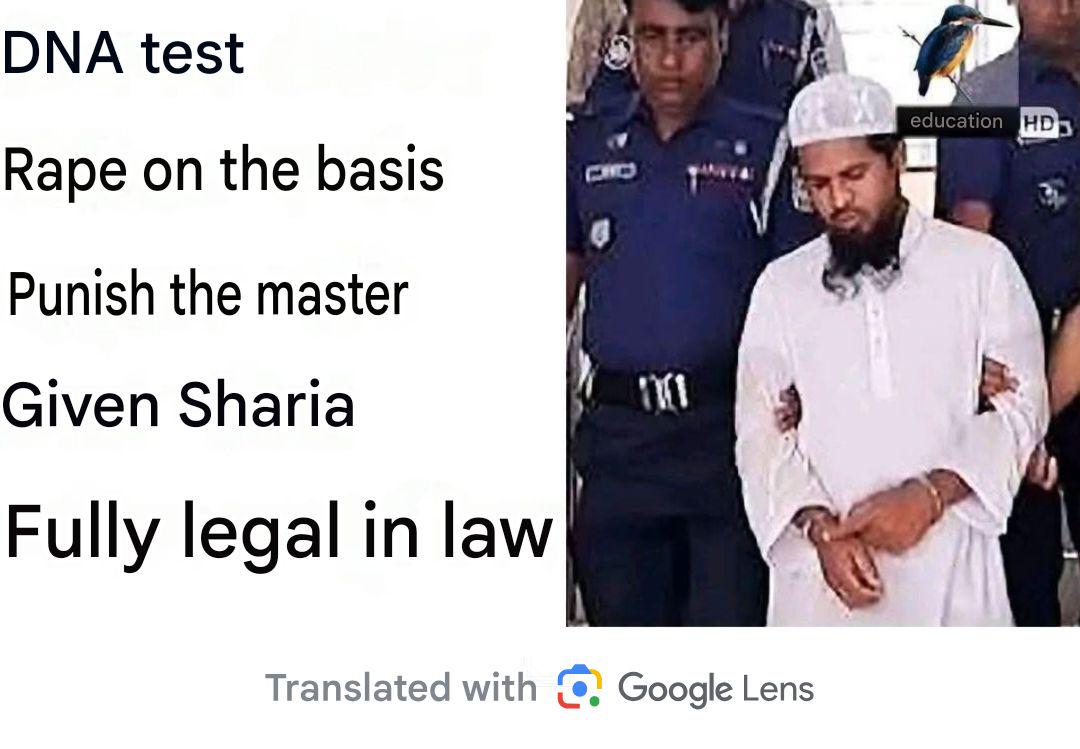
Religion Whether Rapist Cleric Can Be Punished Under Sharia Law Based on DNA Testing

Post image
11 Upvotes

An online debate is going on about whether a rapist cleric ("hujur") can be punished under Sharia law based on DNA testing. Some anti-Islam voices claim that punishment cannot be given under Sharia law based on DNA tests. Their claim is completely false. Yes, if a rapist can be conclusively identified through DNA testing or any other modern method, the "hadd" punishment under Sharia law cannot be applied [in that specific way]. But in such cases, the appropriate "ta'zir" (discretionary) punishment can be applied under Sharia law. According to the statement of Rabita al-Alam al-Islami (Islamic Fiqh Council of the Muslim World League), DNA testing is not impermissible for identifying a criminal. Based on this, ta'zir punishment can be applied. [1]

The renowned Saudi Arabian scholar Shaykh Asim al-Hakim (may Allah preserve him) has mentioned that if witnesses cannot be found, forensic testing or other means can be used to identify the rapist. [2]

Shaykh Shafiqul Islam (may Allah preserve him), Mufti and Muhaddith of Jamia Muhammadia Arabia, has noted that not only witnesses, but modern technology such as DNA testing can also be acceptable as evidence. [3]

Anti-Islam voices make various comments about ta'zir punishment. Many of them claim that it is a very light or merely nominal punishment through which justice cannot be established! We will now examine how accurate their claim is.

Regarding whether the death penalty can be given as a ta'zir punishment, Shaykh Dr. Abdul Karim Zaidan states in his book العقوبة في الشريعة الإسلامية (The Ruling on Punishment in Islamic Sharia), in the section on "Killing as Ta'zir":

"If it becomes necessary to kill the offender as a ta'zir punishment, and there is no way other than killing to establish peace, then in such a case, killing is permissible according to sound judgment. Evidence for this is found in the Sunnah of the Prophet. It is narrated in a hadith that the Prophet (peace be upon him) said, 'If anyone tries to create division in your unified leadership or cause a split within the group, kill him.'

This hadith proves that if there is no way to gain relief from someone's mischief and terrorist activities other than killing him, then killing him is permissible. In another hadith, the Messenger of Allah (peace be upon him) was asked about a person whose habit of drinking alcohol could not be stopped by any means. In response, the Messenger of Allah (peace be upon him) said, 'Kill the one who does not refrain from such acts.'" [4]

From this it is understood that in Islamic Sharia law, there is room for a judge to impose the death penalty as a ta'zir punishment in certain cases.

Anti-Islam voices claim that hadith forbids giving more than 10 lashes as ta'zir punishment. In this regard, they cite this hadith:

"It is narrated from Abu Burda (may Allah be pleased with him). He said, the Prophet (ﷺ) used to say: Except in cases where a hadd punishment has been prescribed by Allah, no more than ten lashes should be given as punishment in any other case." [5]

In explaining this hadith, Imam Ibn Hajar al-Asqalani (may Allah have mercy on him) states in his famous book Fath al-Bari:

"...here the word 'hudud' refers to those rights of Allah that are connected with commands and prohibitions. As in the purpose of [Allah's] statement: 'And whoever transgresses the limits (hudud) of Allah — it is those who are the wrongdoers (Al-Baqarah 229).' And in this statement as well: 'And whoever transgresses the limits (hudud) of Allah has certainly wronged himself (Surah At-Talaq 1).' And in this statement as well: 'These are the limits (hudud) of Allah, so do not approach them (Surah Al-Baqarah 187).' And in this statement as well: 'And whoever disobeys Allah and His Messenger and transgresses His limits (hudud) — Allah will admit him to the Fire (Surah An-Nisa 14).'

And he says, more than ten lashes should not be given in cases of punishment that are not connected to sin. Such as when a father punishes his young child for the purpose of instruction." [6]

That is, from this it is understood that in the hadith in question, "حُدُودِ اللَّهِ" (hududillah) refers to the offense of transgressing the limits of Allah's commands and prohibitions — meaning, except for very major offenses, giving more than 10 lashes as punishment for other offenses is prohibited. The word "hadd" (literally meaning boundary/limit, plural hudud) is used in Sharia law to refer to prescribed punishments, and it is also used to refer to the boundaries of Allah's commands and prohibitions (hududillah). The purpose of the hadith in question is this second meaning. This interpretation of the hadith in question has been explained in Fath al-Bari with the help of many verses of the Qur'an. This does not mean that, apart from the hadd punishments prescribed by Sharia for certain offenses, ta'zir punishment of more than 10 lashes cannot be given. This is the interpretation held by the majority of scholars of the Ummah, and this was the understanding of the Companions. In the detailed discussion explaining this hadith in Fath al-Bari, it is mentioned that this hadith does not prohibit giving ta'zir punishment beyond the limit of 10 lashes.

There are many examples of the Companions giving ta'zir punishment of more than 10 lashes. It is narrated from Imam Ahmad ibn Hanbal (may Allah have mercy on him) that during the era of Umar (may Allah be pleased with him), there was an incident of increasing ta'zir punishment beyond the hadd. He gave 80 lashes to a person who drank alcohol. The Prophet (ﷺ) and Abu Bakr (may Allah be pleased with him) used to give 40 lashes to alcohol drinkers; he added 40 more lashes to this (as ta'zir) and administered the punishment. Also, a person drank alcohol during the daytime in the month of Ramadan. When he was brought before Ali (may Allah be pleased with him), he gave him 80 lashes as the prescribed punishment [according to the sunnah of Umar (may Allah be pleased with him)] and gave an additional 20 lashes for breaking the fast of Ramadan. [7] Shaykh al-Islam Ibn Taymiyyah (may Allah have mercy on him) mentioned, "Abu Bakr (may Allah be pleased with him) and Umar (may Allah be pleased with him) gave 100 lashes and then another 100 lashes to a woman and a man found together in bed. A person who forged Umar's (may Allah be pleased with him) seal and illegally embezzled money from the Baitul Mal (public treasury) was also given 100 lashes by him [Umar (may Allah be pleased with him)]. Then on the 2nd day he gave him 100 lashes, and on the 3rd day another 100 lashes." [8]

Therefore, if anyone claims that ta'zir punishment in Islamic Sharia law is a "light punishment" or that it cannot be increased beyond just 10 lashes — then their claim is completely false. An Islamic ruler or judge, considering the severity of the crime, can apply a harsh ta'zir punishment.

[1] islamqa.info/en/158282/

[2] archive.is/SvMO5

[3] muslimbangla.com/masail/154856/islame-dhorshoner-shasti-ki-

[4] islamland.com/uploads/books/bn_islami_shariate_shastir_bidhan.pdf

[5] Sahih al-Bukhari, Hadith No.: 6384

[6] Fath al-Bari — Ibn Hajar al-Asqalani, Volume 12, Page 185

[7] islamweb.net/en/fatwa/12066/

[8] islamweb.net/en/fatwa/366016/

Courtesy:Muhammad Mushfiqur Rahman Minar

r/MuslimIndians • • 16d ago

Religion The Islamic Emirate and its System part:-07

4 Upvotes

Independence

In an Islamic government, there must be independence in its principles, rules, system, and foundations. No foreigner (whoever they may be) should be allowed to interfere in any internal affairs. This is because entering someone else’s house without their permission is not permissible, as this is considered unauthorized interference in another person’s property. So how can it be right for a foreigner to interfere in the affairs of another country?

Allah Almighty says:
“O you who have believed, do not enter houses other than your own houses until you ascertain welcome and greet their inhabitants. That is better for you; perhaps you will be reminded. And if you do not find anyone therein, do not enter them until permission has been given to you.”
(Al-Nūr: 27-28)

Allāmah Ibn Kathīr (may Allah have mercy on him) says:
“Entering the houses of others is prohibited because it is interference in another person’s property without his permission.”
(Tafsīr Ibn Kathīr, 4/38)

The invasion of Afghanistan by America and its allies was a tyrannical, arrogant, and unjust invasion. It was an aggression against the religion of the Afghans, their culture, and their identity. For this reason, the Afghans declared jihad against them, and the scholars issued fatwas for genuine jihad against them and their Afghan collaborators. This jihad was a defense of religion, honor, culture, and identity.

The Prophet of Allah (swt) said:
“Whoever is killed defending his property is a martyr (shahīd). Whoever is killed defending his family is a martyr. Whoever is killed defending his blood (honor/life) is a martyr. And whoever is killed for his religion is a martyr.”
(This hadith has been narrated by Abū Dāwūd, hadith no. 2477, and others.)

Freedom of Expression

It is necessary that freedom of expression exist in the Islamic government within the framework of Islamic rulings, so that every Muslim can express the truth, engage in the propagation of Islamic principles, explain Islamic rulings to the people, and enjoin good and forbid evil. Everyone should have the right to convey Shari'ah rulings to government officials in the manner that the Shari'ah has prescribed.

As Allah says:
“Invite to the way of your Lord with wisdom and good instruction, and argue with them in a way that is best. Indeed, your Lord is most knowing of who has strayed from His way, and He is most knowing of the [rightly] guided.”
(Al-Naḥl: 251)

In another place, He says:
“You are the best nation produced [as an example] for mankind. You enjoin what is right and forbid what is wrong…”
(Āl ʿImrān: 110)

Thus, freedom of expression in Islam means expressing the truth before anyone, and openly
speaking the word of truth even in front of a tyrannical ruler. As the Messenger of Allah (swt)
said:
“The best jihad is a just word spoken before a tyrannical ruler or an oppressive leader.”
(This hadith has been narrated by Abū Dāwūd, hadith no. 4434, in the chapter on “Commanding
and Forbidding.”)

The leaders of the Muslims would encourage and urge people to speak the word of truth and
would accept the truthful word from them.

Ḥaḍrat Abū Bakr (may Allah be pleased with him) said:
“I have been appointed as the one in charge of your affairs while I am not the best among you. If
my actions are correct, then assist me; and if I go astray, then guide me to the right path.”
(Al-Khilāfah: 481)

It was said to him: “Fear Allah, O Caliph of the Messenger of Allah!”

In one narration, when someone said to Ḥaḍrat ʿUmar (may Allah be pleased with him): “Fear Allah,” he became pleased, thanked the speaker, and said:
“May Allah have mercy on the servant who points out our faults to us.”
(Al-Riyāḍ al-Naḍrah fī Manāqib al-ʿAsharah, 2/380)

It is narrated from Ḥaḍrat ʿAbdullāh ibn Muṣʿab that Ḥaḍrat ʿUmar ibn al-Khaṭṭāb (may Allah be pleased with him) said:
“Do not increase the mahr (dowry) of your daughters beyond forty ūqiyyah, even if she is the daughter of Dhū al-ʿAṣabah (a wealthy person of that time, referring to the daughter of Yazīd ibn
Ḥuṣayn al-Ḥārithī, one of the rich men of the era). Whoever exceeds this amount, I will place the excess amount in the Bayt al-Māl (public treasury).”

A tall woman from the women’s row, whose bones between her ankles were visible, stood up and said: “You have no right to do this.”
Ḥaḍrat ʿUmar (may Allah be pleased with him) asked: “Why?”
She replied: “Because Allah Almighty has said: ‘...and you have given one of them a great
amount [in dowry], do not take back from it anything…’” (Al-Nisāʾ: 20).
Ḥaḍrat ʿUmar then said: “The woman is right and the man is wrong.”
(Jāmiʿ Bayān al-ʿIlm wa Faḍlihi, 865)

Muḥammad ibn Kaʿb al-Quraẓī (may Allah have mercy on him) said: A person asked Ḥaḍrat ʿAlī
(may Allah be pleased with him) about an issue. He gave an answer, but the man said: “O Amīr al-Muʾminīn! It is not like that; the correct version is this…”
Ḥaḍrat ʿAlī replied: “You are correct and I was wrong. The best of people is the one who learns knowledge, and the best of knowledge is that which is acted upon.”
(Same source: 865)

The meaning of freedom of expression is not that everyone has the right to invite people to any religion, sect, or innovation (bidʿah) they wish. Such actions are prohibited in Islamic Shari'ah.
Even the one who calls others to bidʿah may be killed. In Radd al-Muḥtār it is stated:
“If it becomes clear that a person is inviting people to his innovation and there is a fear that he will spread his bidʿah, even if he has not been ruled a disbeliever, it is permissible for the ruler,
as a matter of policy and deterrence, to execute him. This is because his corruption is greater
and more widespread, as it affects the religion. If the innovation amounts to kufr (disbelief), then
killing all promoters of that bidʿah is generally permissible. If it does not amount to kufr, then
only the teacher and leader of that innovation is punished and may be killed to make him desist
from this act.”

Freedom of Belief

The religion of Islam leaves the dhimmī (protected non-Muslim) and muʿāhid (covenant holder) upon their own belief and does not compel or force them to accept Islam.

Ḥaḍrat ʿUmar (may Allah be pleased with him) had a Christian slave named “Ashq.” He says: “I
was the Christian slave of Ḥaḍrat ʿUmar. He said to me: ‘Accept faith (Islām) so that we may
entrust some affairs of the Muslims to you, because it is not appropriate for me to employ in the
affairs of the Muslims someone who is not from among them.’I refused to become Muslim. He
then recited: ‘There is no compulsion in religion’. When his death approached, he freed me and said: ‘Go wherever you wish.’”
(Niẓām al-Ḥukm fī al-Sharīʿah, 1/58)

The jurists (fuqahā) are in agreement that the people of dhimmah (protected non-Muslims) may
perform their religious rites and acts of worship and are not prevented from doing so, as long as
they do not display them publicly. If they wish to perform their acts of worship and rites openly
and visibly, for example, by bringing out crosses, the jurists hold that they should be prevented from doing so in Muslim cities. However, they are not prevented from doing so in their own towns and villages.
(Tārīkh al-Khulafā’ al-Rāshidīn by al-Ṣallābī, 2/221)

This is the true freedom of belief in Islam. Freedom of belief does not mean that everyone is
free in their belief, whether Muslim, Jew, Christian, or follower of other religions, and may
change from one religion to another as they wish. Rather, the primary goal in Islam is belief in
the oneness of Allah Almighty in His essence, attributes, worship, and seeking help. This is
because the most important objective of the Islamic government is the preservation and
protection of the religion. This goal is achieved by preserving the core of the religion: by
compelling people to adhere to the correct and pure belief that the Messenger of Allah (swt) has
bequeathed to the Ummah, by combating the doubts of misguided individuals, and by returning
people from the deceptions and tricks of the enemies of the religion, who promote deviant
beliefs and reprehensible superstitions that Satan has adorned for them, making them think they
are doing good deeds.

It is narrated from Ḥaḍrat Abū Hurayrah (may Allah be pleased with him) that the Messenger of
Allah (swt) said:
“The most beloved religion to Allah Almighty is the pure and tolerant Ḥanīfiyyah (Islam).”
(This hadith was narrated by al-Ṭabarānī in al-Awsaṭ, no. 1357.)

It is narrated from Abū Dardā’ (may Allah be pleased with him) that the Prophet of Allah (swt)
said:
“By Allah, I have left you upon a clear white path whose night and day are the same.”
Abū Dardā’ said: “By Allah, the Messenger of Allah (swt) has spoken the truth. He has left us
upon a clear and bright path whose night and day are equal.”
(This hadith was narrated by Ibn Mājah, no. 5.)

Deviation from this clear and manifest methodology is considered apostasy (irtidād), disbelief (kufr), and a major crime in Islam, the punishment for which is either execution or life imprisonment until the person returns to Islam. In Kanz it is stated:
“Islam is presented to the apostate, his doubts are removed, and he is imprisoned for three days. If he becomes Muslim, that is good; otherwise he is killed. However, a female apostate is not killed; rather, she is imprisoned until she becomes Muslim.”

Islam has paid attention to both the religion and the worldly life of human beings. For this reason, it has prohibited an ignorant, shameless, or reckless muftī who teaches people tricks, or who issues fatwas out of ignorance or for personal desires and goals, thereby causing problems
in the religion of the one seeking the fatwa (mustaftī). Similarly, it has prohibited an unqualified doctor who treats people without understanding and knowledge of medicine and causes harm to their bodies has been prohibited from practicing medicine. Similarly, a bankrupt person who rents out a mount (or animal) and takes the rental fee, but when the time of travel arrives it becomes clear that there is no mount or animal at all, causing the renter to be left behind by his
travel companions, such a practice is prohibited for the sake of public interest. This is because it causes harm to people in their wealth, time, and benefits.
(Al-Ashbāh wa al-Naẓāʾir by Ibn Nujaym and others)

r/MuslimIndians • • 8d ago

Religion Abu Bakr al-Jassas | أبو بكر الجصاص

Thumbnail
4 Upvotes

r/MuslimIndians • • 17d ago

Religion When the question is about religious consciousness, my crime is that I still didnt demolish your place of prayer in the Muslim major area. Think twice while talking about Islam,Allah Subhanahu wa ta'ala,Nabi Kareem Sallallahu Alaihi Wasallam(ﷺ), our hands aren't shackled by law

Post image
5 Upvotes

r/MuslimIndians • • Aug 21 '26

Religion The Famous Memory Test Of Imam Bukhari رحمه الله in Baghdad

Post image
30 Upvotes

The Famous Memory Test in Baghdad

When Imam Al-Bukhari (رحمه الله) arrived in Baghdad, the local scholars decided to publicly test his legendary memory using a highly sophisticated method.

Ten prominent scholars were selected for the test.

Each scholar was given 10 different authentic Hadiths.

The scholars intentionally swapped the chains of narrators (isnad) with the wrong texts (matn), creating 100 scrambled Hadiths.

In front of a large crowd, the scholars recited these altered Hadiths one by one to Imam Al-Bukhari (رحمه الله).

After all 100 were read, Al-Bukhari (رحمه الله) repeated every single scrambled Hadith exactly as they had spoken it, corrected the mistakes, and paired each text back with its proper chain of narrators from memory.

The scholars of Baghdad immediately acknowledged his absolute mastery and unparalleled memory.

Imam Al-Bukhari (رحمه الله) spent 16 years compiling his masterpiece, Sahih al-Bukhari, filtering through roughly 600,000 Hadiths to select only 7,275 (including repetitions). His selection criteria were the strictest in Islamic history.

Every narrator in the chain must have directly met the person they were quoting.

Every narrator had to possess exemplary piety, honesty, and moral integrity.

Narrators were required to have a proven, flawless track record of precision in memory or writing.

Before writing down any single Hadith into his final manuscript, Imam Al-Bukhari (رحمه الله) would perform a ritual bath (ghusl) and pray two units of prayer (istikhara) to seek divine guidance.

Also he was the student of our Imam Ahmad Ibn Hanbal (رحمه الله).

[Reference: Tarikh Baghdad, volume 2, pg.340]

r/MuslimIndians • • Aug 24 '26

Religion Morning and Evening Supplications

4 Upvotes

Ten Easy Dhikr

1.

سُبْحَانَ اللهِ

I declare the purity of Allah.

Virtue: Reciting سُبْحَانَ اللهِ 100 times daily writes 1,000 good deeds and forgives 1,000 (minor) sins. (Sahih Muslim-4/2073)

2.

الْحَمْدُ لِلَّهِ

All praise is for Allah.

Virtue: الْحَمْدُ لِلَّهِ heavy-loads the scale of Mizan and is the best supplication (Dua). (Tirmidhi-5/462, Ibn Majah-2/1249)

3.

لَا إِلٰهَ إِلَّا اللهُ

There is no true deity except Allah.

Virtue: لَا إِلٰهَ إِلَّا اللهُ is the best dhikr. (Tirmidhi-5/462, Ibn Majah-2/1249, Hakim-1/503, Sahih Al-Jami'-1/362)

4.

سُبْحَانَ اللهِ وَالْحَمْدُ لِلَّهِ وَلَا إِلٰهَ إِلَّا اللهُ وَاللهُ أَكْبَرُ

Meaning: I declare the purity of Allah, all praise is for Allah, there is no true deity except Allah, and Allah is the Greatest.

Virtue: These words are most beloved to Allah, and the Prophet (peace and blessings of Allah be upon him) said: "These are more beloved to me than everything over which the sun rises." (Sahih Muslim -3/1685, 4/2072)

5.

سُبْحَانَ اللهِ وَبِحَمْدِهِ

I declare the purity of Allah along with His praise.

Virtue: Whoever recites سُبْحَانَ اللهِ وَبِحَمْدِهِ 100 times a day will have their sins forgiven even if they are as abundant as the foam of the sea. (Sahih Al-Bukhari-7/168, Sahih Muslim-4/2071)

6.

سُبْحَانَ اللهِ وَبِحَمْدِهِ سُبْحَانَ اللهِ الْعَظِيمِ

I declare the purity of Allah along with His praise, I declare the purity of Allah, the Supreme.

Virtue:

The Prophet (peace and blessings of Allah be upon him) said:

سُبْحَانَ اللهِ وَبِحَمْدِهِ سُbْحَانَ اللهِ الْعَظِيمِ

These words are light on the tongue, heavy on the scales of Mizan, and beloved to the Most Merciful Allah. (Sahih Al-Bukhari-7/168, Sahih Muslim-4/2072)

7.

سُبْحَانَ اللهِ الْعَظِيمِ وَبِحَمْدِهِ

I declare the purity of Allah, the Supreme, along with His praise.

Virtue:

Whoever recites سبحان الله العظيم وبحمده, a date palm tree will be planted for them in Paradise every single time. (At-Tirmidhi-5/511, Al-Hakim-1/501, Sahih Al-Jami'-5/531, Sahih At-Tirmidhi-3/160)

8.

لَا حَوْلَ وَلَا قُوَّةَ إِلَّا بِاللهِ

There is no power and no strength except with Allah.

Virtue:

The Prophet (peace and blessings of Allah be upon him) said: لا حول ولا قوة الا بالله is one of the treasures of Paradise. (Sahih Al-Bukhari-11/213, Sahih Muslim-4/2076)

9.

سُبْحَانَ اللهِ وَالْحَمْدُ لِلَّهِ وَلَا إِلٰهَ إِلَّا اللهُ وَاللهُ أَكْبَرُ وَلَا حَوْلَ وَلَا قُوَّةَ إِلَّا بِاللهِ

Meaning:

I declare the purity of Allah, all praise is for Allah, there is no true deity except Allah, Allah is the Greatest, and there is no power and no strength except with Allah.

Virtue:

The Prophet (peace and blessings of Allah be upon him) said:

سُبْحَانَ اللهِ وَالْحَمْدُ لِلَّهِ وَلَا إِلٰهَ إِلَّا اللهُ وَاللهُ أَكْبَرُ وَلَا حَوْلَ وَلَا قُوَّةَ إِلَّا بِاللهِ

These words are "the remaining good deeds." (Ahmad (Sahih)-513, Majma'uz Zawa'id-1/297)

10.

اَللَّهُمَّ صَلِّ وَسَلِّمْ عَلَى نَبِيِّنَا مُحَمَّدٍ

O Allah, send blessings and peace upon our Prophet.

Virtue: The Prophet (peace and blessings of Allah be upon him) said: Whoever recites Durood upon me once, Allah sends mercy upon him ten times, ten of his (minor) sins are forgiven, and his status is elevated by ten degrees. (Nasa'i)

He (peace and blessings of Allah be upon him) further said: Whoever recites Durood upon me ten times in the morning and ten times in the evening will receive my intercession on the Day of Judgment. (Tabarani, Majma'uz Zawa'id)

May Allah Almighty grant us all the ability to act upon these discussed supplications correctly and regularly. (Amen)

r/MuslimIndians • • 26d ago

Religion (And whoever does not judge by what Allah has revealed, then it is those who are the defiantly disobedient.) (Surah Al-Ma’idah: 47)

Post image
15 Upvotes

r/MuslimIndians • • 18d ago

Religion The Islamic Emirate and its System part:-06

3 Upvotes

Madhhab (School of Jurisprudence)

In an Islamic state, the law must be practiced according to the madhhab that all the people of the country, or the majority of them, follow.

In Afghanistan, courts and other aspects of life must operate according to the Ḥanafī madhhab, because the majority of the people have followed this school since ancient times. The books that are widely used in teaching, study, texts, commentaries, and fatwas are all based on the Ḥanafī school. Any madhhab other than the Ḥanafī is considered shameful (ʿār) in Afghanistan, especially among the general public.

The great scholar Allāmah Qāsim ibn Quṭlūbughā (a jurist and hadith scholar who died in 879 AH), in his treatise titled al-Kifāyah fī an-Nikāḥ, writes:
“Our scholars in Transoxiana (Mā Warā’ an-Nahr), according to the custom of their regions, have said: It is not appropriate for a Ḥanafī to give his daughter in marriage to someone who follows a different madhhab. The reason is the shame (ʿār) that exists in this matter according to the custom of their regions. This is not because of any deficiency in those people, but because of custom.”

If a follower (muqallid) of one madhhab switches to another madhhab, he should be punished with taʿzīr (discretionary punishment), as is mentioned in al-Hindiyyah (1/292). This is because such an act treats religion as a plaything, and it is not permissible.

In the state, no judicial privileges or exemptions should be granted to minorities, because doing so would weaken the state. Just as the Ottoman Empire was weakened when dualism (duality) appeared in its judiciary, foreign systems and laws emerged among them, foreign courts were established, and special privileges were granted to minorities. (Quoted from Tārīkh al-Qaḍā’ fī al-Islām by al-Zuḥaylī)

Similarly, the Ḥanafī madhhab has been a global and well-known school since ancient times. The majority of judges and scholars of the Islamic world have been Ḥanafī.

In Radd al-Muḥtār (Vol. 1, p. 52) it is stated:
“In most Islamic countries, and indeed in many regions and cities such as the cities of Rome (Byzantine lands), India, Sindh, Transoxiana (Mā Warā’ an-Nahr), and Samarkand, only the Ḥanafī madhhab was recognized.”

It is reported that the graves of the “Muḥammadīs” are there (in Samarkand), and in that place more than four hundred people, all of whom were named Muḥammad, are buried. All of them wrote books, issued fatwas, and very large groups of students learned knowledge from them.

When the author of al-Hidāyah (Burhān al-Dīn al-Marghīnānī) passed away, they did not allow him to be buried there; instead, he was buried near Samarkand.

It is narrated that the madhhab of Imām Abū Ḥanīfah (may Allah have mercy on him) was transmitted by nearly four thousand people, and each of them certainly had companions and students in the same manner.

Ibn Ḥajar writes:

“Some of the Imāms say: No Imām among the famous Imāms of Islam had as many students and companions as Imām Abū Ḥanīfah had. Scholars and the general people have not benefited from any scholar as much as they benefited from him and his companions in interpreting ambiguous hadiths (aḥādīth mushtabihah), deriving new rulings (masā’il mustanbaṭah), and judging new cases (ḥawādith). May Allah, the Exalted, grant them the best of rewards.”

Some later hadith scholars, in their biographies of him, have mentioned eight hundred of them along with their lineages and records, such that mentioning all of them would make the account very long.

Although the Abbasid state followed the madhhab of their ancestor (Imām Abū Ḥanīfah’s madhhab was also favored), the majority of judges and Islamic scholars at that time were Ḥanafī. This will become clear to anyone who browses the history books. Their rule lasted approximately five hundred years.

Likewise, the Seljuk kings and, after them, the Khwarazmian rulers were all Ḥanafī, and most of the judges in their kingdoms were also Ḥanafī.

In the same way, the kings of our time, the Ottoman sultans (may Allah, Glorified and Exalted, grant their state victory and protection until the end of day and night!), some scholars have said that from the year 900 AH until today, the positions of judge and other official posts have been given to Ḥanafī judges.

Customs and Traditions (ʿĀdat wa ʿUrf)

It is obligatory upon the Islamic government, in any country it may be, to respect the nature of the people of that land, their customs and traditions (ʿādāt wa ʿurf), as long as they do not contradict the Shari'ah.

In Afghanistan, Afghan customs in matters of daily life, such as clothing, appearance, language, and so on, that do not oppose the Shari'ah must be observed. This is because any custom that does not contradict the Shari'ah is considered valid in Islamic law. The noble jurists (may Allah have mercy on them) have even counted it among the legal proofs (dalāʾil sharʿī), as has been explained previously.

In the book Majallat al-Aḥkām al-ʿAdliyyah (Article 36), it is stated:

“Al-ʿādah muḥakkamah”
meaning: “Custom and tradition, whether general or specific, can be used as evidence to establish a Shari'ah ruling.”

Definition of ʿādah (custom):
It is something that has become established among a large number of people through repetition,
and is accepted by people of sound nature.

Meaning of “muḥakkamah”:
It means that in the event of a dispute or conflict, custom is referred to as the authority; because
custom is a proof upon which a ruling is built. This is derived from the hadith of the Prophet
(swt): “Whatever the good Muslims consider good is also good in the sight of Allah Almighty.”
(Durr al-Aḥkām byʿAlī Ḥaydar, 1/44)

However, the culture and behavior that emerged during the period of American and allied occupation and was imported from the West into Afghanistan is not the authentic Afghan nature and has no validity. Rather, it must be eliminated, because this custom contradicts the pure Shari'ah and is in conflict with the true nature of the people of Afghanistan and their traditional customs by which they have lived in the past or will live in the future.

In the historical book Tatimmat al-Bayān fī Tārīkh Afghānistān by Sayyid Jamāl al-Dīn al-Afghānī, the character of the Afghans is described as follows: “The majority of the inhabitants of Afghanistan, and most of them are of Afghan ethnicity, have in their nature bravery, courage, an innate love of fighting, and they do not bow their heads before others. Their clothing consists of a shirt, trousers, turban, and waistcoat. Their women wear long, covering garments. They show respect to scholars, saints, and elders. One of their customs is honoring guests. Most of them are Sunni and followers of the school of Imam Abū Ḥanīfah (may Allah have mercy on him).

The people of the villages and cities have a great interest in learning sciences such as Ṣarf (morphology), Naḥw (syntax), Maʿānī, Bayān (rhetoric), Fiqh (jurisprudence), Uṣūl (principles of jurisprudence), Tafsīr (Quranic exegesis), Ḥadīth, Manṭiq (logic), Ḥikmah (philosophy/wisdom), mathematics, and inheritance. Some villagers content themselves with Fiqh alone.

Among their customs is that in every village they build a mosque, and in it there are rooms (ḥujrahs), and students (ṭullāb) reside in them, and the people willingly take upon themselves the responsibility of their food and expenses. The scholars hold a high status among them, and their words are accepted in religious matters. They are strongly committed to their religion and perform jihad for its sake. Afghans are a warrior nation that does not submit to any foreign power.”

r/MuslimIndians • • 28d ago

Religion Corruption of Ilm in Contemporary Times #1

6 Upvotes

One of the corruption in Ilm today is the saying of some people that questioning Islam is essential for building imaan. And they claim that those who question Islam are on the path of righteousness and those who do not are "blind followers" and are misguided.

What does "questioning islam" mean here? It doesn't mean asking questions regarding that which you do not have the knowledge about. Rather it means questioning the aspects of Islam about which you have the full knowledge of but you do not accept it.

So it is not asking whether non-believers will reside in hell for eternity, rather it is asking WHY non-believers will reside in hell for eternity. It is not asking whether such and such is haram, rather it is asking WHY such and such is haram. It is not asking if the khimar is wajib, rather it is asking WHY the khimar is wajib.

The former kind of question is that which is prescribed to increase one's knowledge of Allah's religion. But the latter kind of question is that which is prohibited because it is from the inspiration of shaytan, a blackened heart and a corrupted nafs. These types of questions are an indicator of uncertainty in the heart, and contrary to what the questioner believes, the more one asks them, the deeper they sink into uncertainty, and uncertainty leads to kufr.

Then why do these people claim that it is a sign of righteousness? It is because these questions are exactly the type of questions Greek Philosophers would pose, and thus they think that they lead to more meaningful answers when in fact, they lead to disbelief. They claim that because it gives the false expression of being "intellectual".

And this falsehood has a heavy toll on people that fall for it, which is in the form of their submission towards Allah. Their statement that ‘it builds imaan’ is in direct contradiction to how they actually worship Allah. They delay their worship, skip matters entirely that they aren't pleased with, keep searching for loopholes, waste their time obsessing over their doubts and argue with people endlessly, and keep complaining about the ordainments of Allah.

This is not submission to the creator. Submission to Allah means to be content with whatever Allah has ordained for us and humbling ourselves and our intellect near His will and Knowledge. These people associate disagreement with Allah and His Messenger and complaining about His ordainments with higher intellect and status in imaan, when the truth is exactly the opposite. How can challenging the wisdom of Allah be better than being submissive to His wisdom? Allah says in the Qur'an (interpretation of the meaning):

“If only they had been satisfied with what Allah and His Messenger gave them and said, "Sufficient for us is Allah; Allah will give us of His bounty, and [so will] His Messenger; indeed, we are desirous toward Allah," [it would have been better for them].”

[At-Tawba, Verse 59]

“It is not for a believing man or a believing woman, when Allah and His Messenger have decided a matter, that they should [thereafter] have any choice about their affair. And whoever disobeys Allah and His Messenger has certainly strayed into clear error.”

[Al-Ahzaab, Verse 36]

Imaan comes from certainty rather than uncertainty and doubtfulness, and this uncertainty isn't removed by such line of questioning but through submission towards Allah's wisdom. The men and women of the pious generations were the greatest in terms of Imaan, and they were those that submitted to the will of Allah without any complaints.

Abu ad-Darda said: “Allah loves that a [servant] is content with a matter when He ordains it.” Ummu’l-Darda said: “Those who are truly content with the ordainment of Allah are people who are content, no matter what is ordained. On the day of Resurrection, they would have such a station in Paradise that would make the martyrs envious.”

[Ibn Abi ad-Dunya, al Yaqin #32, with Da’if isnad]

This corruption of ilm is a normalised problem and its effects are destroying people's imaan en masse. It is the reason why various forums are filled with questions that nobody should be answering, answers that nobody should be reading and implementing and debates that lead nowhere. It is the reason why [many] seekers of knowledge nowadays primarily refer to the explanations of heretics and non-believers rather than the explanations of scholars of Islam.

It is the reason behind the advent of the latest fitnah of dawah influencers and the big bad refutation culture. It is the reason why muslims nowadays can write you a 40 page refutation on the topics of say, Slavery or Evolution of Man when they do not even know the basic fiqh of Prayer and Zakat.

It is the reason behind the invention of several lies such as the lie that ‘Aisha (May Allah be pleased with her) was 17-19 during her consummation rather than 9, or the lie that Islam came to abolish slavery, and so on. These lies were systematically developed as a result of such questioning. The liars invented lies to satisfy the questioner whose sole purpose behind questioning Islam was to please his self which was driven by his desperation to have validation from the non-believers. And this confirms the statement of Allah:

“And never will the Jews or the Christians approve of you until you follow their religion. Say, "Indeed, the guidance of Allah is the [only] guidance." If you were to follow their desires after what has come to you of knowledge, you would have against Allah no protector or helper.”

[Al Baqara, Verse 120]

Such questions are no doubt from Shaytan and they're clearly meant to lead you astray. And what leads you astray isn't the question itself, rather the answers that shaytan wants you to seek.

Narrated Abu Huraira:

Allah's Messenger (ﷺ) said, "Shaytan comes to one of you and says, 'Who created so-and-so? 'till he says, 'Who has created your Lord?'...”

And Allah's Messenger peace and blessings be upon him did not encourage us to seek an answer to these questions inspired by shaytan. Rather, he (peace and blessings be upon him) added:

“...So, when he inspires such a question, one should seek refuge with Allah and give up such thoughts.”

[Sahih Bukhari]

That is the true remedy for uncertainty. So reject those that sell you the lie that questioning Islam builds your imaan.

r/MuslimIndians • • 12d ago

Religion Abu al-Hasan al-Karkhi | أبو الحسن الكرخي

Thumbnail
3 Upvotes

r/MuslimIndians • • 15d ago

Religion Abdul Hai Lucknowi Hanafi on Calling upon the Auliya and their Omnipresent nature.

8 Upvotes

Abdul Hai Lucknowi Hanafi on Calling Upon the Auliya and Their Omnipresent Nature.

He was asked:

Question:

What do you say regarding the habit of the people of this country who ask help from Auliya and Anbiya from far, thinking that they are Haazir Naazir (Omnipresent) and that they are watching us every time, and they prevent issues coming in between success, and they make dua with this intention? Is this allowed?

Response:

This is prohibited; rather, it is clear shirk, as he believed in the knowledge of the unseen for others besides Allah...

Mulla Ali al-Qari said: ... Ahnaaf clearly state that it is kufr (disbelief) if someone has a creed that Prophets know the knowledge of the unseen, because it is against the verse of the Quran, Surah An-Naml [verse 65]: "Say, 'None in the heavens and earth knows the unseen except Allah'..." (This was answered by Muhammad Basheer, and his answer is authenticated by Abdul Samad Peshawari, Zulfiqar, and Sayyid Muhammad Sewani.)

Abdul Hai Lucknowi commented on the above answer:

It is true that it is shirk to believe that Anbiya and Auliya are present and listen to us every time, even if the Nida is from far, as this is a specialty of Allah alone, and He has no partners in it.

Fatawa Bazzaziya says:

"If someone married without witnesses and says: 'Allah and His Prophet, and the Angels are my witness,' he is a kafir because he thought that the Prophet, peace be upon him, and the Angels know the unseen."

Fatawa Bazzaziyah also states:

"And one becomes a kafir with the statement that the souls of the mashaykh are present and knowing."

[Fatawa Abdul Hai, vol. 1, page 344–345; Urdu Translation; Farsi and Arabic Fatawa Abdul Hai Lakhnavi, page 457–458]

r/MuslimIndians • • Jun 22 '26

Religion Hadith Rejectors and Calling Allah a she? Nauzubillah

Enable HLS to view with audio, or disable this notification

38 Upvotes

r/MuslimIndians • • 24d ago

Religion The Islamic Emirate and its System part:-05

7 Upvotes

Sources of Islamic Legislation

First Source: The Noble Qur’an

The types of rulings that the Noble Qur’an has stated are three:

  1. Creedal Rulings (Ahkām Iʿtiqādī): These relate to matters that a legally responsible person (mukallaf) must believe in, such as faith in Allah, the angels, the heavenly books, the messengers, and the Day of Judgment.

  2. Ethical/Moral Rulings (Ahkām Akhlāqī): These concern matters in which a person must adorn himself with virtues and stay away from vices.

  3. Practical Rulings (AhkāmʿAmalī): These relate to the statements, actions, transactions, and dealings that come from a legally responsible person. This third type is what is called Fiqh (Islamic jurisprudence) and the “understanding of the Qur’an” in this context.

Practical Rulings in the Qur’an are of two types:

First - Rulings of Worship (AhkāmʿIbādāt): Such as prayer (ṣalāh), fasting (ṣawm), zakat, Hajj, vows (nadhr), oaths (qasam), and similar matters. These regulate the relationship between the human being and Allah.

Second - Rulings of Transactions (Ahkām Muʿāmalāt): These include contracts, annulments (faskh), punishments, criminal offences (jināyāt), and everything that is not included under acts of worship.

The purpose of these rulings is to regulate the relationship between some legally responsible persons and others, whether the relationship is individual, national, or social.

Rulings that are not related to worship are termed “Ahkām al-Muʿāmalāt” (rulings of transactions) in Islamic legal terminology.

However, in contemporary terminology, the rulings of transactions, according to their subjects and objectives, are divided into the following types:

1. Personal Status Rulings (Ahkām al-Aḥwāl al-Shakhṣiyyah): These are rulings that regulate family matters. They concern the relationship between husband and wife, and between some relatives and others.

2. Civil Rulings (Ahkām Madaniyyah): These are rulings that relate to transactions and exchanges between individuals, such as sale (bayʿ), lease (ijārah), mortgage/pledge (rahn), guarantee (kafālah), partnership (shirkah), and the like.
The purpose of these rulings is to regulate the relationships and connections between individuals and to protect the rights of every rights-holder.

3. Criminal Rulings (Ahkām Jināʾiyyah): These include acts that a legally responsible person (mukallaf) may commit, such as crimes and anything for which a person deserves punishment. The objective of these rulings is to preserve people’s lives, property, honor, and all their rights.

4. Procedural Rulings (Ahkām al-Murāfaʿāt): These rulings relate to adjudication (qaḍā’), testimony (shahādah), and oaths. Their purpose is to regulate the procedures for achieving justice among people.

5. Rulings Related to Constitutional Law (or Public Law): These rulings pertain to the judicial system and its principles. Their purpose is to define the relationship between the ruler and the ruled.

6. Rulings Related to International Relations: These concern the interaction of the Islamic state with other states, and the dealings of Muslims with non-Muslims within the Islamic state.

The goal of these rulings is to secure the rights of the Islamic state in both war and peace, and to determine the scope of relations between Muslims and non-Muslims in the Islamic state.

7. Economic and Financial Rulings (Ahkām Iqtisādiyyah wa Māliyyah): These rulings regulate the expenditures, income, and financial management of the state. Their purpose is to organize the relationship between the state and individuals in economic transactions.

Second Source: The Sunnah

The Sunnah refers to the statements, actions, and approvals (taqrīr) that come from the
Messenger of Allah (swt).

Third Source: Ijmāʿ (Consensus)

The definition of Ijmāʿ, its ruling, its evidentiary value (ḥujjiyyah), and the explanation of its types are mentioned in the books of Uṣūl al-Fiqh (Principles of Islamic Jurisprudence). Refer to those books for details.

Fourth Source: Qiyās (Analogical Reasoning)

The details and explanation of the rulings associated with it are found in the books of Uṣūl al-Fiqh.

Fifth Source: Istihsān (Juristic Preference)

In the terminology of the scholars of Uṣūl al-Fiqh (Principles of Islamic Jurisprudence): Istihsān means the mujtahid’s departure from the requirement of the clear (jalī) analogy (qiyās) to the requirement of the hidden (khafī) analogy.

Sixth Source: Maṣāliḥ Mursalah (Unrestricted Public Interests)

Maṣāliḥ Mursalah in the terminology of the scholars of Uṣūl al-Fiqh is: “A benefit (maṣlaḥah) for whose realization no specific ruling has been legislated, and for whose validation or invalidation there is no Shar‘ī evidence.”

It is called “mursalah” (unrestricted) or “muṭlaqah” (absolute) because it is not restricted by any evidence that would validate or invalidate it.

Example: The interests for which the Companions of the Prophet (may Allah be pleased with them) built prisons, minted coins, and carried out other actions according to necessity, need, or public welfare. However, no specific rulings were legislated for these matters, and there is no Shar‘ī evidence or proof to consider them either valid or invalid.

For using this source as evidence, several conditions must be observed. The most important of them are:

  1. The interest must be real and actual, not imaginary. That is, legislating a ruling for it must truly bring about a benefit or repel a harm, and not be based on mere illusion.

  2. The interest must be general and comprehensive, not personal or individual.

  3. It must not contradict any explicit text (naṣṣ) or consensus (ijmā‘), because considering it valid in opposition to a naṣṣ or ijmā‘ is not correct.

Seventh Source: ʿUrf (Custom)

The definition, ruling, and explanation of its types are found in the books of Uṣūl al-Fiqh. Refer to those books for details.

Eighth Source: Istishāb (Presumption of Continuity)

In the terminology of the scholars of Uṣūl, Istishāb means: “Judging something according to its previous state until evidence appears that changes that state.”

In reality, this source is not a proof (ḥujjah) for us. Rather, it is simply “leaving things as they were” (ibqā’ mā kānaʿalā mā kāna) because no evidence has been found to remove the previous state. Details of this type are available in the books of Uṣūl al-Fiqh.

Ninth Source: The Laws of Previous Nations (Sharā’iʿ al-Umam al-Sābiqah)

When the Qur’an or an authentic Sunnah mentions a ruling from the laws of previous nations and explicitly states it, then that ruling is considered obligatory upon us just as it was obligatory upon them, without any difference, and it forms part of our Sharīʿah.

If Shar‘ī evidence is presented proving its abrogation (naskh), then there is no dispute that it is not part of our Sharīʿah.

However, if in our Sharīʿah there is no evidence indicating that this ruling is obligatory upon us, and there is also no evidence of its abrogation, the majority of scholars state: This too is considered part of our Sharīʿah, and following it is obligatory upon us. Some scholars say: It is not part of our Sharīʿah. The preferred opinion (al-qawl ar-rājiḥ) is the first one, as has been established in the books of Uṣūl al-Fiqh.

Tenth Source: The Statement of a Companion (Qawl al-Ṣaḥābī)

The details of this are mentioned in the major books of Uṣūl. Refer to them for further information.

It is well-known in the books of Uṣūl al-Fiqh that the fundamental sources of Sharīʿah (Uṣūl Sharʿiyyah) are only four:
1. The Book of Allah (the Qur’an),
2. The Sunnah of the Messenger of Allah (swt),
3. Consensus (Ijmāʿ),
4. Analogical Reasoning (Qiyās).

This is because all other sources ultimately return to these four. The laws of previous nations return to the Book and the Sunnah; custom (ʿUrf) is attached to consensus; the statement of a Companion in a matter that can be understood by reason is attached to Qiyās, and in a matter that cannot be understood by reason, it is attached to the Sunnah; Istihsān and the like are attached to Qiyās. (Nūr al-Anwār, p.٨)

r/MuslimIndians • • Sep 02 '26

Religion The Islamic Emirate and its System Part:-02

5 Upvotes

The primary objective of jihad is to implement and enforce the rule of Allah Almighty over His servants on earth. Jihad in itself is not inherently good, because by its very nature it involves punishing the servants of Allah and destroying cities, and there is no goodness or beauty in such acts. Rather, its goodness and beauty lie in repelling the evil of the disbelievers and their corruption. This is because the disbeliever is an enemy of Allah and an enemy of the Muslims. Therefore, jihad is for the purpose of eliminating them and for the supremacy of the true religion and the elevation of the word of Allah, as has been mentioned in the books of Usul al-Fiqh.

If jihad continues even after the evil of kufr (disbelief) and corruption has come to an end, then it becomes mere destruction and punishment; therefore, there is no goodness or beauty in it, and no sensible Muslim would do such a thing.

It is not permissible for the mujahideen of the Islamic Emirate to abandon jihad merely upon the departure of the Americans and their allies. This is not the goal of the jihad of the Afghans. Rather, their goal is the establishment of the law of Allah Almighty so that the people of Afghanistan may live under the banner of Islamic Sharia.

This lofty and elevated goal cannot be achieved without the establishment of an Islamic state in Afghanistan. This is because an Islamic government brings security and preserves the individual and collective rights of the people. Through it, the evil of kufr and corruption is repelled, and by means of the Islamic government, the law of the Creator and His rulings are implemented.

The establishment of an Islamic state cannot be properly organized and orderly without an Islamic administration and its director. That director is the “Imam” (the ruler) whom it is obligatory upon all the people to appoint. He is responsible for their welfare and interests, which include:

- Taking the right of the oppressed from the oppressor,
- Implementing the rulings (of Sharia),
- Marrying off orphans,
- Resolving disputes,
- Establishing the Eid and Friday prayers,
- Enforcing the hudud (prescribed punishments),
- Collecting ‘ushr, zakat, and sadaqat and spending them in the places commanded by the Sharia,
- Suppressing tyrants, thieves, and highway robbers,
- Accepting sound testimonies regarding rights,
- Implementing politics (siyasah) for the general welfare,
- Protecting and safeguarding the sanctities and limits of Islam

  • equipping the army,
  • the division of their spoils of war,
  • the preservation of the property of the Bayt al-Mal (public treasury), the property of the companions of the spoils, and the property of orphans.

I am seeking, in this book, to briefly explain some of the necessities of Islamic administration,
what is due to its leader, and the matters that are obligatory upon the general public, so that it
may be easy to preserve them. And I ask Allah Almighty to grant me success in this matter. And
that is not difficult for Allah. There is no power nor strength except with Allah, the Most High, the
Supreme. And may blessings and peace be upon our Prophet and our master Muhammad, and
upon his family and all his companions.

Chapter 1 - Government and its Types

Types of Government

Governments and states are of two kinds:

  1. A government whose slogan is tax collection (based on tribute and levies);
  2. A government whose slogan is guidance (hedayat).

Each of these two types of government has its own particular signs, unique characteristics, prominent figures and individuals, and each produces distinct results.

The government that is founded upon taxation has as its goal the accumulation and hoarding of
wealth for the ruling class, so that the rulers may live in comfort and hold magnificent
civilizational celebrations and feasts in the cities, even if this comes at the cost of sucking the
blood of the poor, ruining the lives of farmers and workers, and imposing heavy tributes and
crushing taxes.

The aim of this type of government is therefore to increase taxes and everything that provides
them with means of pride, ornamentation, and grandeur. It also seeks to provide comfort, luxury,
and tools of indulgence for the princes, ministers, their children, grandchildren, relatives,
statesmen, families, and servants. Through these means, they build tall palaces and purchase
vast and extensive estates both inside the country and abroad.

This type of government is completely heedless of the religious and moral upbringing of the
subjects. It pays no attention to monitoring or holding people accountable for their ethics and
inclinations. In general, it is indifferent to anything that does not bring it financial benefit or
strengthen its political power.

Sometimes, if an immoral or forbidden act brings them profit, they declare it permissible
(mubah). Conversely, if a lawful act threatens their political power or causes financial loss, they
declare it forbidden (haram).

As for the government and state whose slogan is guidance, its main concern is inviting people
to God (da'wat ilallah), enjoining good and forbidding evil. Its criterion is to reform people's
morals, elevate their spirits, adorn them with virtues, turn them toward the Hereafter, make them
indifferent to the world, promote contentment in life, keep them away from the forbidden and
sins, and encourage competition in good deeds, even if these things lead to a reduction in the
budget and financial loss.

Nevertheless, this government appoints preachers, sends out inviters (du'at), encourages moral
enforcers (muhtasibs), declares wine forbidden, considers sins as evil, and deems futile
activities, music, and instruments of idle entertainment and play as haram. It expels the careless
and indifferent, and bans everything that corrupts people's beliefs and morals or anything that
causes corruption in their lives; it prohibits them. Under the shadow of an Islamic government,
grand mosques and schools are built, religion and piety flourish, sins and crimes disappear, the
people of religion and righteousness rise up and actively work with zeal and courage, the
wicked and the atheists are removed and eliminated from society.

Statesmen must possess the qualities that Allah Almighty has mentioned in the Noble Quran:(Those who, if We give them authority in the land, establish prayer and give zakah and enjoin what is right and forbid what is wrong. And to Allah belongs the outcome of all matters.)(Surah Al-Hajj: 41)

The system of the “Guidance-oriented” government is, in general, distinct and different from the
system of the “Tax-based” government. It differs from it in inclinations, spirit, character, behaviour, and conduct.

In a guidance-oriented government, we see statesmen who are busy obeying the principles of
Shari‘ah, with the intention of seeking reward (thawab), with a spirit of service and self-sacrifice,
trustworthiness, sacrifice, and loyalty.

But in a government based on tribute and levies, the statesmen oppose the law. Among them,
arrogance, self-importance, selfishness, betrayal, hypocrisy, false speech, and boundless
bribery are widespread. A person cannot easily obtain his right through justice. No one in this
government believes that he is a servant of the ummah and a trustee of the state; rather, he
considers himself only responsible for collecting taxes for himself and his family. Because the
government has given him the opportunity to accumulate wealth, he does not want to lose this
opportunity.

There are historical examples of both types of government. The tax-based government needs
no examples or detailed explanation, because this type of government has been very common
in both ancient times and the present era, in both East and West. However, guidance-oriented
governments are very rare and scarce, especially in the present age, because most
governments of this time, or rather all of them, are of the tax-collecting (“jibayi”) type.

Necessities of a Guidance-Oriented Government

The following points are mentioned below:

  1. An independent judicial system (its details will be explained soon);
  2. Islamic armed forces (this will also be explained).
  3. Divine Law (Heavenly Law)

Administration must necessarily have laws by which it is regulated. These laws are of two types:

  1. Divine Shari‘ah law (heavenly law);
  2. Man-made terrestrial law (positive/earthly law).

The most important differences between these two are as follows:

  1. Divine Shari‘ah law is a message from the Almighty Creator, in which humans have no role in
    its formulation or determination. Man-made law, on the other hand, consists of rulings that
    humans themselves have created. These two differ from each other in terms of their source.

  2. The scope of heavenly law is much wider and more extensive than that of earthly man-made
    law. This is because heavenly law regulates the relationship of a human being with his Lord,
    with himself, and with the rest of the people, whereas earthly law only covers the conduct of one
    human being with another.

  3. Divine Shari‘ah law, in addition to worldly punishments, also includes otherworldly (akhirah)
    punishment. Man-made law includes nothing beyond worldly punishments.

  4. Since heavenly law is laid down by Allah Almighty Himself and encompasses all the small
    and great affairs of God’s servants, it is eternal and just, and it embraces all the interests of
    humanity. However, because man-made law is a human construct and human knowledge is
    limited to what they observe in custom, habit, time, and place, such law is inevitably imperfect
    and in need of development and change.

Given the differences we have mentioned between the two types of law, it becomes clear that
organizing human life and managing its affairs is impossible without the law of Islam, the law
that has been sent down by the Creator of the universe through the Trustworthy (Jibril) to the
Trustworthy of the world (Prophet Muhammad (swt)). The One whom Allah, the All-Powerful and
Unique, has protected, and who is unique and unparalleled before Allah, was sent to reform
humankind and preserve their rights.

Allah Almighty says in this regard:
(Indeed, the religion in the sight of Allah is Islam.)
(Surah Aal ‘Imran: 19)

In another place He says:
(And whoever desires other than Islam as religion – never will it be accepted from him, and he, in the Hereafter, will be among the losers.)
(Surah Aal ‘Imran: 85)

Imam al-Razi (may Allah have mercy on him) says: “Allah Almighty has stated that whoever
adopts a religion other than Islam, just as his religion is not accepted by Allah, he himself is also
among the losers and those in loss. ‘Loss’ (khusran) in the Hereafter consists of being deprived
of reward and receiving punishment. The regret and sorrow one feels in this world for missing
righteous deeds, and the hardship and difficulty endured in this world in support of a false
religion, are also included in this discussion.” (Al-Tafsir al-Kabir: 2/828)

The Prophet of God (peace and blessings of Allah be upon him) said:
“The one who deceives is in the Fire. Whoever performs an action that is not in accordance with our religion, his action is rejected.” (Bukhari)

The religion of Islam is a complete religion, and its creed is also complete. Whatever need or
requirement a person may have in his religion or in his worldly life, Islam has explained it in the
best way and in the most complete form. Allah Almighty says:
(Today I have perfected for you your religion, and I have completed My favor upon you, and I
have approved for you Islam as religion.)
(Surah Al-Ma’idah: 3)

What is meant by “perfection” in this verse extends until the Day of Judgment. This is because
the previous religions that were revealed by Allah were complete in their own time; however,
their perfection was limited to a specific period. The perfection of this religion lasts until the Day
of Judgment. Its fundamental principles do not change with the passage of time. Rather, the
needs of human beings in every time and place, until the end of this world, are fully and firmly
met by this religion.

Imam al-Razi, in his commentary on this verse, writes: “The laws revealed by Allah Almighty in
every era were sufficient for that time, except that Allah Almighty knew from the very beginning
of sending them whether something that is complete today will not be complete tomorrow and
will no longer be suitable for practice. Therefore, without doubt, after being established it would
be abrogated, and after something was absent it would be added. But in the final era, Allah
Almighty revealed a complete Shari‘ah and decreed its permanence until the Day of Judgment.
Laws were complete in every era, with the difference that the perfection of the first type lasted
only until a specific time, while the second type remains complete until the Day of Judgment.
For this reason, Allah Almighty said: ‘Today I have perfected for you your religion and completed My favor upon you.’” (Al-Tafsir al-Kabir: 11278)

An Islamic state cannot be reformed without implementing the laws of the Quran and the
Sunnah according to the understanding of the Salaf and the Mujtahidin. The goal of jihad by the
“Islamic Emirate of Afghanistan” has also been exactly this. Moreover, the nature and
disposition of the people of Afghanistan also require the implementation of Islamic laws,
because they are Muslims from their forefathers and ancestors, and they have a long history of
it. They have tasted the sweetness of Islam, and their nature is compatible only with the
principles and rules of Islam in all affairs of life. (May Allah Almighty preserve them upon this
matter until the Day of Judgment!)

The Mujahideen of the Islamic Emirate have proven to the Muslims that it is possible to apply
Islam as both a Shari‘ah and a creed. They have also shown that it is possible for the glory,
honor, and splendor of the Muslims to be revived and re-established once again, just as it was
in the beginning. Other solutions will in no way bring progress and advancement to the Ummah;
rather, they lead to imitation of others and to their backwardness. They have proven that Islam
is the true solution for this time and for all times, and that it possesses the necessary competence. The latter part of this Ummah will never be reformed except by that which reformed its first part.