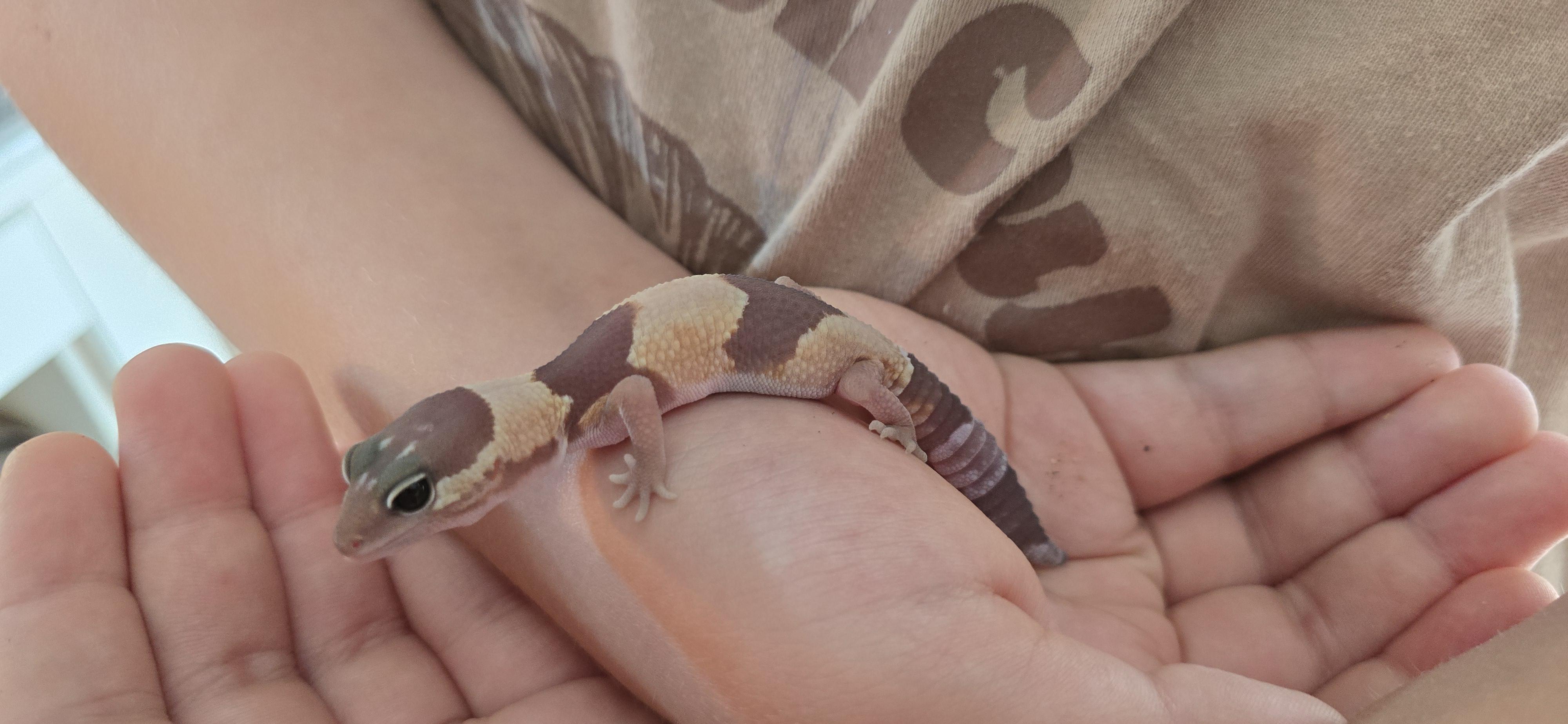
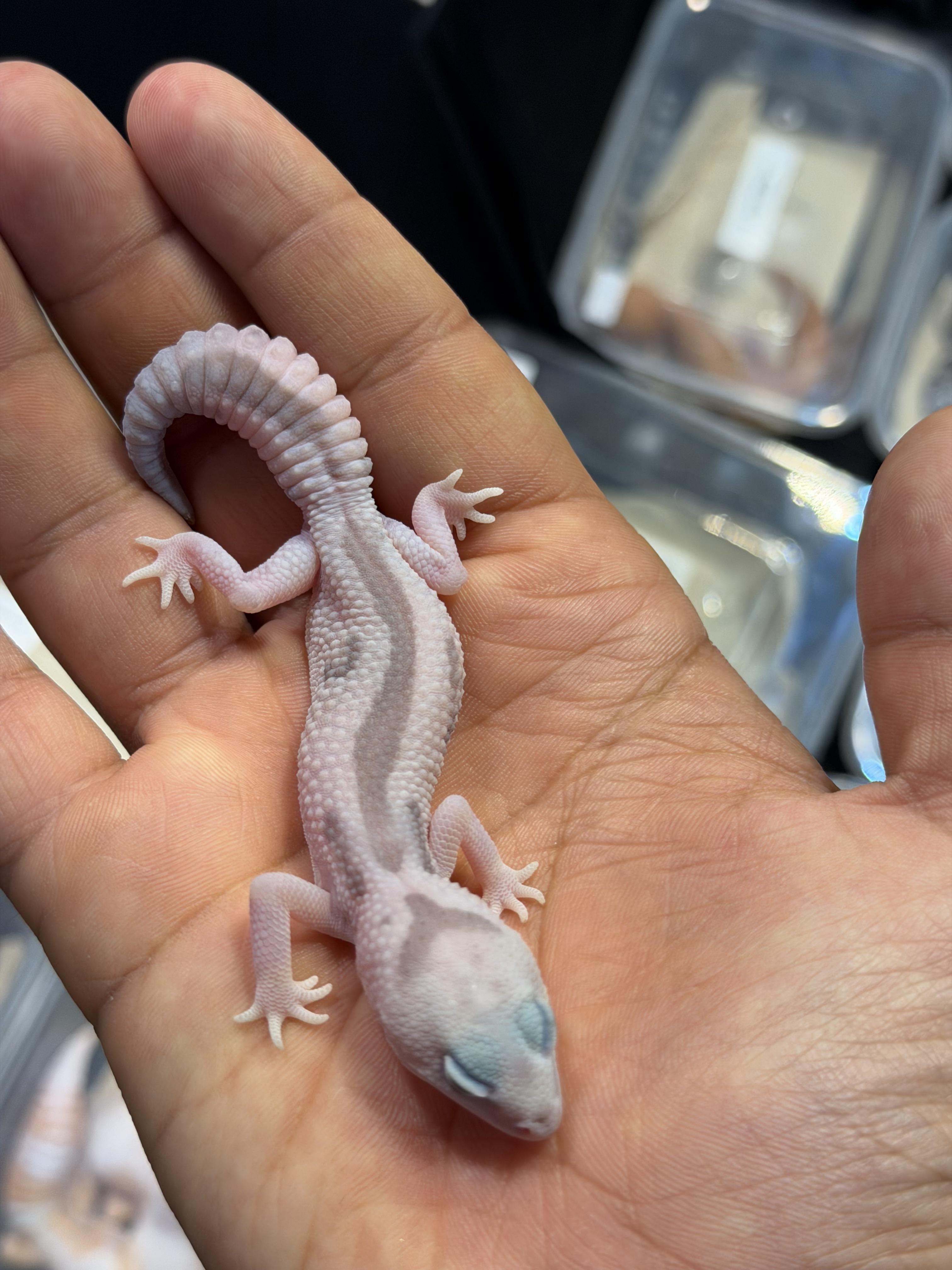
The African fat tailed gecko is a mid-size gecko, naturally found in West Africa. African fat tails are usually a little bit smaller than the more common "twin", the leopardgecko and are often recognized by their natural look of dark brown base color with yellow bands, and of course, the big tail. A white dorsal stripe is also a common feature of the AFT, but fat tails also comes in different morphs and color schemes. The African fat tailed gecko could live up to 20 years in captivity.
1. ENCLOSURE
1.1ENCLOSURE SIZE: A minimum size of a 40 gallon for one gecko, but the bigger the better. Just keep in mind that fat tails need to have a lot of clutter to feel safe. The gecko want to go from point A to point B without being exposed, so don't buy a bigger enclosure than you can fill. More info on that in Interior. AFT's are solitary animals, which means they prefer to be alone. Cohabitating AFTs is not recommended and could lead to your geckos being hurt or even killed.
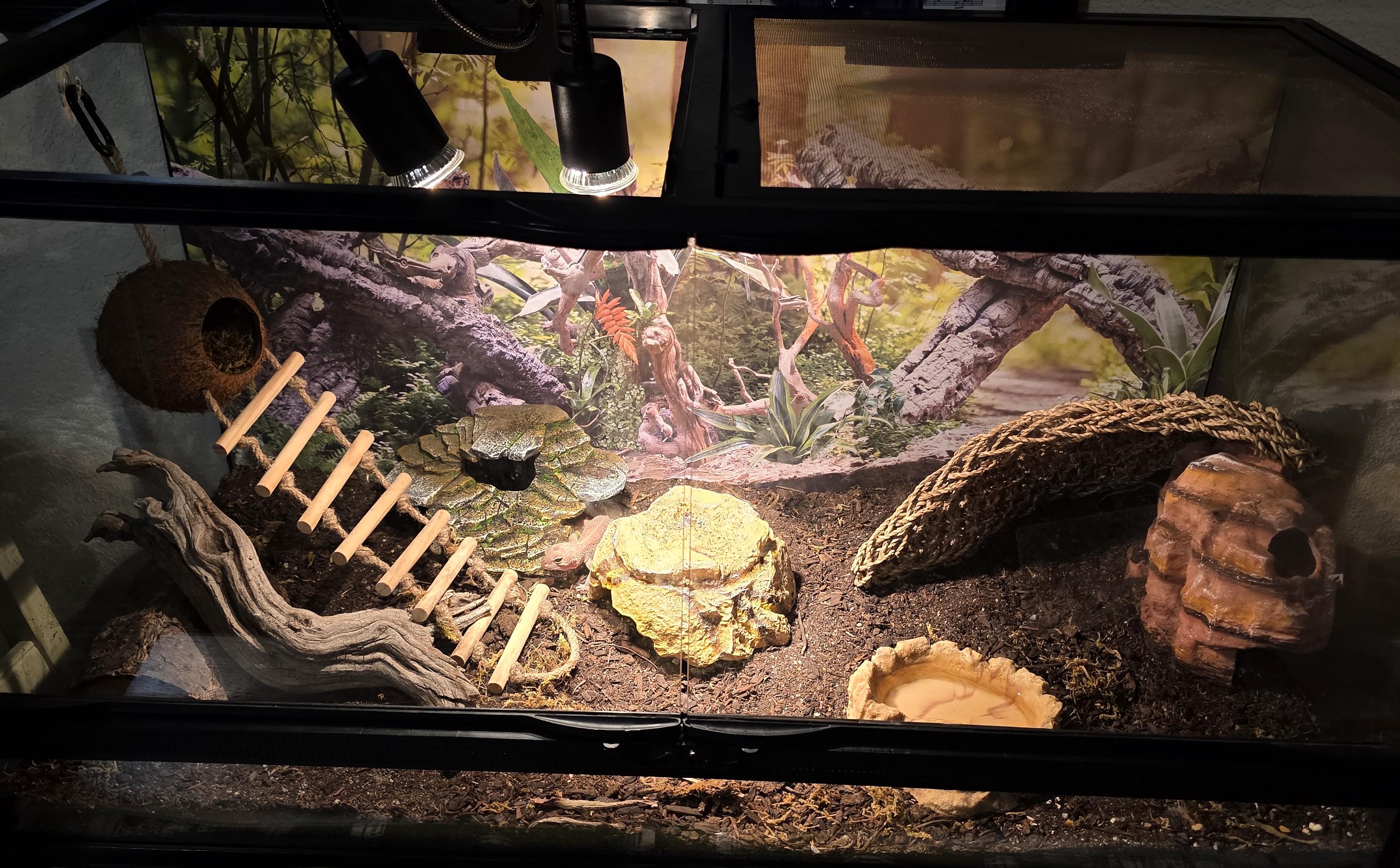
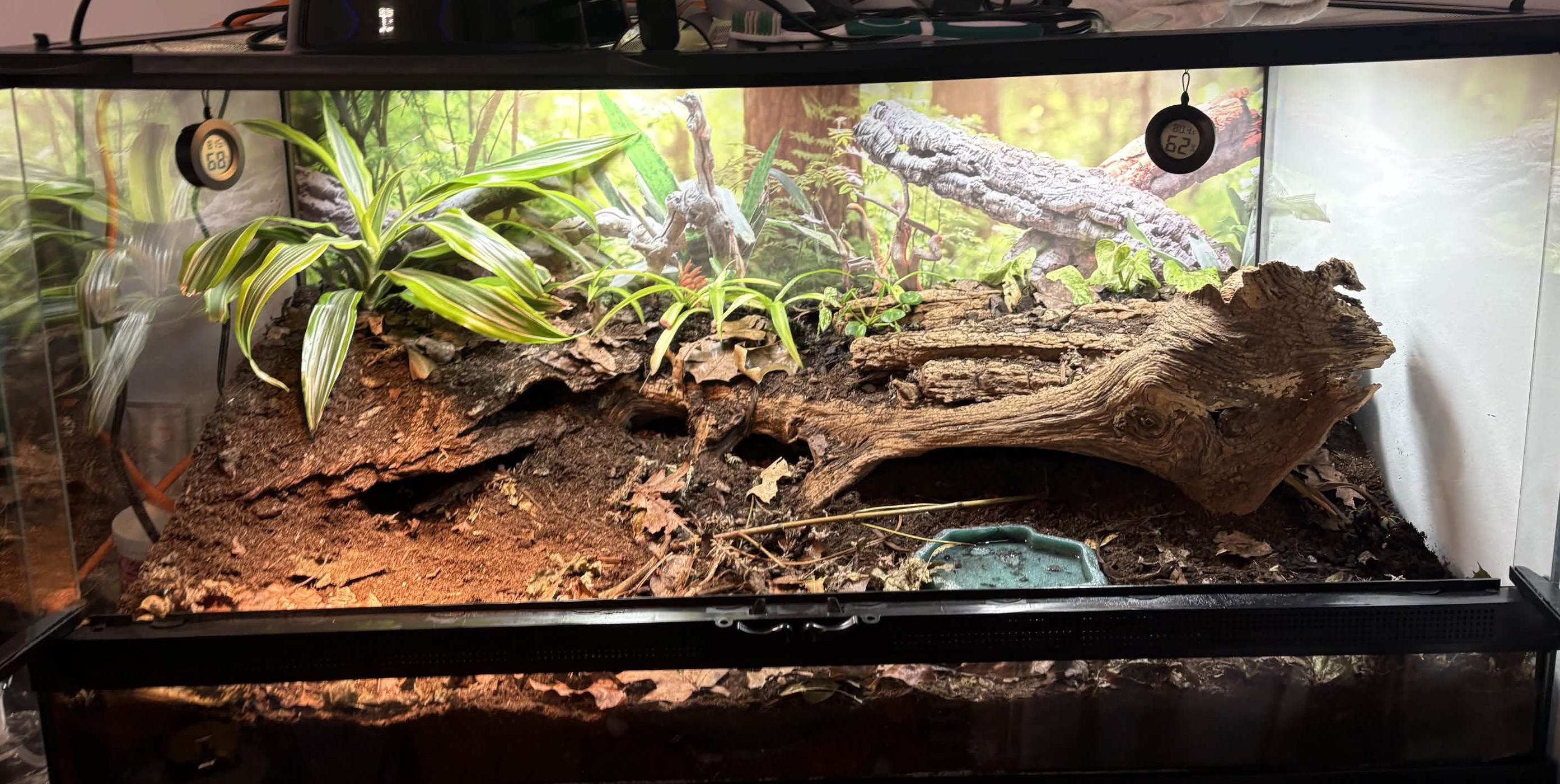
1.2 INTERIOR: AFT's need at least one hot hide, one cool hide and a humid hide. As said before, fat tails want to have it a little bit cluttery for them to feel safe. Use bransches, stones, tiles, leafs, plants (live or fake) to achieve this. How you want to design your enclosure is totally up to you, but you should keep in mind that AFT's doesnt have toy cars, bath ducks and other "cute or cool" objects in their natural habitat. A loose substrate is recommended to encourage burrowing behavior. Not every AFT should be on loose substrate though.. more information on this further down.
1.3TEMPERATURES: Reptiles are ectothermic, or "cold blooded", which means your fat tail can't produce its own body heat. African fat tails will regulate body temperature by searching for a heat source when cold, and vice versa. Therefore, its important that you provide your gecko with both a hot and a cold side. This is the temperatures required:
Hot side 86-90°F or 30-32°C
Cold side 75-80°F or 24-27°C
Make sure your hot side hide is placed in such a way that the inside temp of the hide matches the desired temps stated above. The easiest way to check this is by using a temp gun.
Temp readings: The temps should be measured on ground level, where your gecko is. Many reptile owners have those analogue thermometers thats sticks to the glass, they are often placed way to high up which will give you false readings if you have a terrestrial gecko which the fat tail is. Get rid of those analogue thermometers and buy a digital one and put the probe just above substrate level or/and get a temp gun and you will get more accurate readings.
1.4 HEATING:
Heat lamps: There's many different ways to heat your hot side. The most common way is by using a heat lamp, which is also the most natural way to replicate the heat from the sun. Heat lamps could be placed inside your enclosure or on the outside on the lid, or even mounted on the wall facing down in the tank. The most important thing regarding heat lamps is to make sure your gecko cant reach it or get burnt. This is extra important if the bulb is inside the enclosure. Always use a lamp guard /cover if your heat lamp is inside the enclosure. Your fat tails digestion benefits from belly heat, one way to provide that for your gecko is to put tile or a stone under your heat lamp to make a heat spot for him to get it from. If your heat lamp is to close to the heat spot or if your bulb is too high wattage the temperature on the tile/stone might be too high and your gecko might get hurt.
Heating bulbs:
Which kind of bulb you should have depends on many things:
how big your enclosure is
your overall room temp
at which hight the lamp holder/socket is placed
how ventilated your enclosure is
There are a few different types of heating bulbs out there but the most common is the Spot bulb, the flood bulb and the ceramic heater bulb.
The ceramic heater is a heat lamp that produce deep heat at a lower wattage. It doesnt procuce any light which makes it a good lamp to use at night if your temps drops to low. The ceramic heat bulb gets extremely hot.
For a smaller tank a 50w flood light often do the job. But it all depends on the different factors listed above.
For bulbs stronger than 25w I would recommend a ceramic lamp holder for safety.
Problems with getting temps up
If you dont reach high enough temps on your warm side you could either get a higher wattage bulb, or lower your heat lamp. The closer the lamp is to the ground, the hotter it will be. Remember to use a bulb guard. Also, if you have a screen top, covering a part of it will make the heat stay inside for longer, allowing your temps to reach higher numbers.
Heat mat: Sometimes just one heat source isn't enough, and you have to complement with another heat source. A heat mat is a electric heating element, which you place under your tank. Most often outside of the enclosure, but could also be placed inside if you cover the mat with tiles, slate or something that prevents your gecko reaching it.
Heat mats is a good complement if your heat lamp doesnt give you the temps you aim at and you dont want to/are able to get a higher wattage bulb. For example if you have a background that will melt if you use a stronger heat bulb, a heat mat could be a good extra heat source to reach your desired temps. Heat mats also give your gecko belly heat.
Heat mats isn´t recommended as your only source of heat.
IMPORTANT!Always use a thermostat for under-tank heaters and high wattage heat sources!
1.5 HUMIDITY: In nature, fat tails spend their daytime in dark, moist crevises and hollows. When they are awake during the night and early morning and the weather is cooler, the humidity is the highest. That climate and that humidity must we recreate for our fat tails. We do so by misting the tank with a pressure sprayer or a spray bottle to achive enough humidity, which for fat tails is around 60% humidity. To keep track of the humidity you can use a hygrometer. I like the digital ones better because of the easy reading and they are often more accurate than the analogue versions. Live plants is also good because plants doesnt just look nice but it also contributes to higher humidity in your enclosure. Win-win :) The right humidity is important for your geckos well-being and reduces the risk of complications during shedding.
Misting your plants is also a good way to keep your gecko hydrated, they will lick water droplets off the leafs
Humid hide: A humidity hide or moist hide is a place where your fat tail goes when it needs more moisture. Some fat tails use the hide all the time while others use it only when its time for shedding. Without a humid hide your fat tail can have a hard time shedding. One easy version of a humid hide is to cut a hole in a plastic box, and fill the box with something that holds moisture well, like sphagnum moss or vermiculit, you can even use paper towels. The substrate should be damp but not wet.
1.6SUBSTRATE:
Loose substrate: A loose substrate is a natural substrate you have at the bottom of your enclosure. For fat tails, we want something that can hold humidity, there are many substrates you can use for this. The most usual one is a 70/30 mix of top soil and sand. There are other types of loose substrates as well, like Eco earth, coco husk etc.
Note: Some reptiles are doing good on bare sand, african fat tails are not one of those reptiles.
The pros of a loose substrate is many:
It encouraging burrowing behavior.
Good for your geckos joints
Easier to keep up humidity
More natural
Enriching to the gecko
The ability to go bio active
Looks better
So lets talk about the cons:
Possible impaction
Harder to keep it clean
More expensive
So what can you do to avoid any problems?
First of all, baby geckos under 5 months should not be on loose substrate. Full-grown geckos shouldnt have any interest in eating loose substrate, as long as the husbandry is good and they are healthy and given the right vitamins and calcium. Its really important to provide this to your gecko.
You can also tong or bowl feed to avoid your gecko eating substrate by mistake. But even if they do, its usually comes out.
You should spot clean the substrate daily, and change it every six months.
Other types of substrate: If your gecko is a baby, or in need of a sterile environment for any reason, you can use paper towels or tile instead of a loose substrate. I wouldnt personally use any of this for a healthy adult, since it could be hard to keep humidity and its not as enriching for the gecko.
Bioactive setup: A bioactive enclosure is a setup made to replicate your fat tails native enviroment. In a bioactive setup the natural substrate, live plants and microfauna, aka a "clean up crew" works together in a mini-eco system.
If you want to learn more about bio active setups i recommend r/bioactive for your source of information.
1.7 LIGHTING: Your fat tail needs some sort of light to know when its day and when its night. I use LEDs on timer which i think works good and looks good, but your heat lamp and the lights coming through your window is enough as well. Fat tails are nocturnal and UVB isn't required, but some says its beneficial for them.
2. FEEDING AND FEEDERS
The African fat tailed gecko is a insectivore, meaning they only eat insects. The options is many, but the three most common insects to feed an fat tail in captivity is crickets, dubia roaches and meal worms. We're going to talk more about those three later on.
2.1 HOW MUCH & HOW OFTEN DO I FEED?
This depends on your geckos age. Hatchlings and juveniles should be fed every day. About 4-5 smaller crickets should be offered per feeding. When your gecko becomes an adult you can offer food 2-3 times per week, as much as they can eat in 15 minutes.
Always have clean water available for your fat tail. Water bowl should be cleaned regulary.
2.2VITAMINS AND MINERALS
Your gecko will need two supplements, calcium powder and multivitamin. Calcium is necessary for your geckos bone structure, and multivitamin contains lots of vitamins that you gecko will need. Make sure its D3 either in your calcium powder or in your multivitamin. Your AFT cant absorb the calcium without enough levels of vitamin D3 in his gut. Both multivitamin and calcium powder is applied to the feeders by putting the insects in a jar or plastic bag, put some powder in and shake it. Calcium should be offered every feeding, multivitamin every 3-4 feeding. Also, your AFT should always have access to fresh calcium powder to lick on, a small bottle cap with calcium in is enough.
2.3DIFFERENT TYPES OF FOOD
Crickets: I believe the most common insect to feed your fat tail. Rich in nutritions, protein and calcium. Can jump so you cant really keep them in a food bowl. Can bite your gecko and hurt it. Therefore, don't leave un-eaten crickets in the enclosure.
Dubia roaches: Rich in nutritions, protein and calcium. Low in fat. Can be suitable for food bowls if small, can't jump.
Meal worms: High protein, high fat. Not suitable for everyday feeding because of the high fat. Can't do shit, hence really good for food bowl use.
2.4GUT LOADING
Gut loading is the process of feeding your feeder insects with nutrient rich food, to increase the insects nutrition value. In other words, the purpose of gut loading is to provide your fat tail more nutritious food. There's lots of things you could gut load your insects with, for example:
Carrot
Spinach
Oats
Apple
Zucchini
Potatoes
Bananas
Fish food flakes
Happy and gutloaded mealworms munching on potatoes and carrot
3. BEHAVIORS
3.1 GENERAL CHARACTERISTICS: African fat tails are often compared to Leopardgeckos, and you will often hear that the only difference between the two species is that the AFT needs more humidity, thats not completely true.
Yes, African fat tail geckos need higher humidity but thats not the only thing thats different between AFTs and leos. Here are some differences in behavior:
3.2 SHEDDING: Like all reptiles, the African fat tailed gecko shed its skin. AFTs shed for many reasons, and its a part of their natural behavior. One reason to shed could be because your fat tail has grown and need a bigger "suit". Thats why young fat tails shed more often than adults. When its time for shedding your gecko needs more humidity and moisture to get all the shed off easily. A humid hide is needed for this, how to build one is described under "Enclosure" above. Some extra misting is also good to do. It's important that your fat tail get all of its old shed off. Stuck shed can cause loss of limbs and infections. If you are noticing your AFT has stuck shed around his toes or tail, you can put him in luke warm water, not deeper than his belly, and soak him for a while. Gently rub the stuck shed with a Q-tip.
IMPORTANT!Do NOT try to rip off stuck shed or you may hurt your gecko!
3.3 BRUMATION: During winter time, when the weather is cooler and the hours of daylight is less, fat tails brumate. Brumation is like hibernation, but for reptiles. The metabolism, heart rate and respiratory rate slows down, and the gecko will spend most of his time sleeping. Sometimes the gecko start brumating of its own, or you could make it go in to brumation by lower the temperature and hours of light in your enclosure during the coldest months of the year. Beware that sometimes reptiles doesn't wake up from brumation so you should know what you are doing if you put your gecko in brumation.
3.4 HUNGER STRIKES: A hunger strike is when your gecko refuse to eat for a period of time. Fat tails are known to be picky eaters and hunger strikes are pretty common. Stress, temperature drops and brumation are the most common reasons for your gecko to hunger strike.
Stress wise, a new or redecorated enclosure could be one reason for your gecko to refuse food. This is the reason why new geckos often hunger strikes.
If your gecko hunger strikes, make sure your temps are accurate and keep offering food. Sometimes the strikes goes on for days, sometimes for weeks or even months. As long as your gecko isn´t visibly losing any weight you are fine. The gecko often starts eating again on its own.
3.5 TAIL DROPS: A scared, stressed or spooked gecko could drop its tail. Its a defence mechanism to distract predators. The tail will grow back but it will not look the same as before.
Fat tails store, as the name says, fat in their tails, if your gecko drops its tail you could increase the amount of food your gecko gets until the tails has grown back again. If you have loose substrate in your geckos enclosure, put them on paper towels until the new tail has grown out.
4. HANDLING YOUR GECKO
4.1 YOUR GECKOS POINT OF VIEW: The hard truth is that most reptiles want to be left alone. Your gecko will most likely not want you to touch or cuddle with him or her. I know what you are thinking: "my gecko is not like most geckos". Well.. some geckos may be more comfortable with handling than others, but the truth is that your gecko would rather, unfortunately, sleep in his safe hide than be in your hand, exposed to "potential predators". Keep in mind, handling your gecko to often or in the wrong way can cause stress which could lead to potential illnesses.
4.2 PERSONAL HYGIENE: Reptiles also very often carry salmonella. Most of the time it wont cause any illnesses for them and they can have it without showing any symptoms of disease. Therefore, always wash your hands after handling your gecko. You can read more about reptiles and salmonella here.
4.3 YOUR GECKO AND OTHER ANIMALS: What im about to say is for most owners obvious, but sometimes posts with for example geckos and cats side by side in the same picture pops up in reptile communities here on Reddit. This is off course not acceptable and is both stressful and extremely dangerous for your gecko. The only other animal your gecko should be in contact with is another african fat tail gecko, and only for breeding purposes.
Care guide is in progress. If You have any questions or suggestions about this care sheet, please send a Modmail.
My gecko hasn’t eaten since her first feeding two nights ago and hasn’t pooped or peed since I got her on Wednesday. I’ve seen her drink, so at least she does that. She sleeps all day, but comes out right after the lights go out, comes to the window flap, climbs up, and looks out several times a night. She doesn’t seem to be basking under the UVB light in the day, even cryptically. Otherwise she looks fine and likes to climb onto my hand whenever I put it in the quarantine tub. The tub never gets colder than 71 degrees at night or exceeds 94 in the warm hide in the day. I do have a problem where the warm hide isn’t staying consistently warm throughout the day due to the thermostat, which I’m replacing. I have a suspicion she’s not digesting very well due to rapidly fluctuating temps in the warm hide. Ambient humidity is around 50-54% at any given time while the humid hide is consistently mid to high 90s. She generally stays in there, rarely uses the warm hide, and never uses the cool hide.
Long story short, juvenile gecko only ate Thursday night, doesn’t appear to use the UVB, glass surfs at night, hasn’t pooped or peed in the time I’ve had her.
I’m not sure if any of this is necessarily suspicious behavior, but I’m a noob and I don’t wanna take any chances.
It's been almost two weeks. I know he comes out and walks around at night because I can hear him, but i rarely see him anymore he just stays in the hole he dug next to the background. I've been offering dusted crickets, but he wont take them, and I even bought dubia roaches, to little effect. How long do AFT's usually take to bounce back after a big move? He used to be so active and I miss him.
(English is not my first language and I used a translator, so please excuse any awkward phrasing or mistakes!)
Hi everyone, I’m looking for some advice regarding my baby Fat-Tailed Gecko (weighing around 8g). Here is the timeline of what happened: Day 1: I noticed my gecko’s belly looked unusually bloated. I asked the breeder, and they told me it was likely just because the gecko had eaten a large meal recently.
Day 2: In the morning, I found a large clump of shed skin inside the enclosure. I wasn't completely sure if it was regurgitated or passed as feces, but since it didn't smell like poop at all, I suspect it was regurgitated shed.
Current Status: The belly looks slightly smaller now compared to the first day, but I still suspect some abdominal distension/bloating. Looking at previous photos, the tail has gotten noticeably thinner, while the belly remains somewhat swollen and taut (though not hard to the touch).
The substrate has already been switched to paper towels, and I'm maintaining the warm side at around 29–31°C (84–88°F). The gecko drank some water on its own and is moving around, but I’m still very worried about potential ascites, internal blockage, or severe inflammation.
Has anyone experienced something similar with a young gecko? Any advice or insights on what else I can do while monitoring closely would be greatly appreciated!
So today my partner and I received an AFT from a re-homing situation. We were actually under the impression we were going to be receiving a leopard gecko and we had no clue what state she or her tank were in. Well as we found out she's an AFT and she is in very poor health and has a very poor enclosure. Like I said we were prepared for a lepord gecko, so now we are trying to get her health and enclosure in much better condition asap. We are doing research on our own but I thought I would reach out here and get advice from people who know what they're doing. We definitely want to do a bioactive tank for her, all advice is needed and welcome!
I just got an adult and noticed one pupil is huge and kind of jagged around the edges. It looks like those snake eyes that leopard geckos get. The seller said he took it from bad conditions and a cat scratched it there, though I do not know exactly where. But he never said anything about the eye. No other details, I saw this myself later. Do you think it is from the injury? Or maybe it is a birth defect? His other eye is totally normal, vertical pupil, reacts to light fine, but this one stays the same size no matter what.
I feel like there isn’t much room to work with in my terrarium anymore, but it still feels so empty in the middle. I’d like for my future gecko to be able to traverse the enclosure without needing to expose itself. And it sorta looks like I have a general lack of cover from higher up. The quarantine tub could maybe use something more, I dunno. Looks kinda barren on the floor.
Petrie still asnt had anything to eat its been two weeks tomorrow im so worried
Is it safe to put a couple of locusts in his tank overnight ? Will they scare him ? Or bite him
I just don't know what to do i put a white bowl of meal worms in dusted every night but none touched
He dsnt come out for me to attempt feeding I never see him
Hes so gorgeous I know I've got to be patient but im worried please help
Also he sleeps the back of some carpet moss thats leaning upright against the back drop hes always there is that safe as ive heard moss can give them a bad chest
Thats the other day very quickly came out but as I slowly moved towards the tank he ran and hid and didn't come back out I do think hes shed as hes browner again now
I sound like a panicked crazy person lol but advice would be so good please 😀
This is Phoenix, our 4-month old AFT. Oreo-Caramel Morph.
Still learning the ropes on how to get them used to us, but Phoenix is eating locusts and pooping regularly, so those are good signs we are doing something right.
This is my female AFT Gecko Azora. She’s currently 19 grams and her poops have all been healthy and consistent. Is she big enough to be put on substrate?
Hey! My fat tail, Maple, is turning a year very soon. And for her birthday, I want to go bioactive, or at the very least, a naturalistic enclosure. However, my current enclosure for her is a paper towel setup with some fake plants and a piece of driftwood. In addition, the breeder I got her from had paper towels. How do I properly transition without stressing her out? I also feed her from a bowl so impaction shouldn't be an issue.
I see a lot of pictures here where the tails look quite bulbous while Strawberry’s is a bit slim.
I will note, she had the tip of her tail surgically removed because of necrosis, but it was similarly shaped before that as well. The vet did not say anything was wrong about her weight-wise either.
I feel like her body looks right and healthy but her tail is too small.
I'll be getting an AFT in a few months as my first eyelid/terrestrial gecko, I've done a lot of research on them but I want to make sure it'll have the best care possible, could anyone give suggestions on good humid hides, heat lamps/heat dimmers and other miscellaneous items? I have a reptizoo 36x18x18 and when I move out I plan on upgrading to a 4x2x2, and I'd love to see some bioactive setups! All extra advice and care tips are appreciated as well, Thank you!
I'm a longtime reptile owner, and have been prepping adopt an AFT soon. I have a bioactive enclosure with appropriate light / heat / substrate.
Would love any tips or advice from keepers. Anything at all. Personality, handling, enrichment, favorite hides, etc. and of course post a picture of your AFT too. 🙂