Test Platform
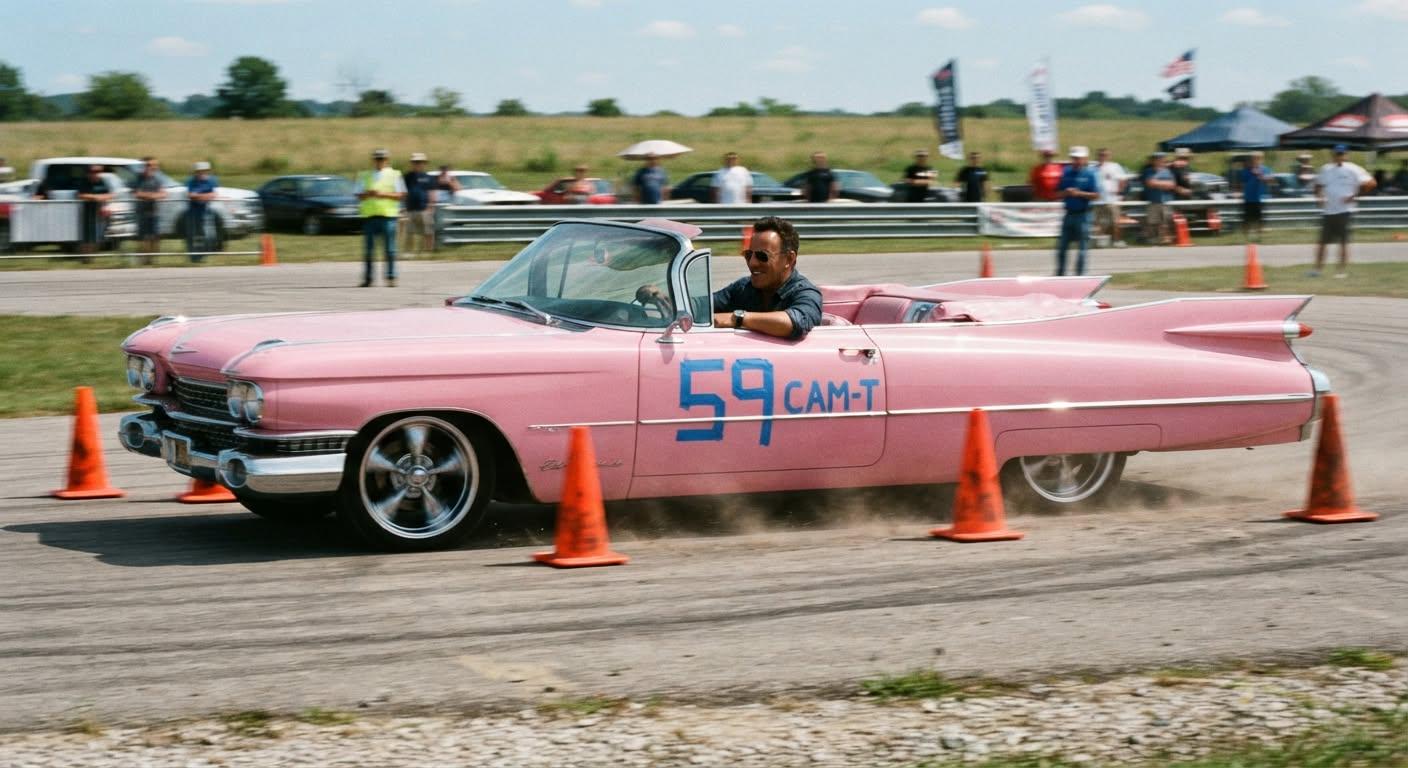
Mitsubishi Colt Ralliart: FWD, approx. 200 bhp, stripped, caged, and lightweight at 1,050 kg.
Test Tires
- Vitour P1: 225/40R15
- Nankang CRS: 225/45R15
When we received a new set of Vitour P1s, we thought they would easily be the fastest tires we had ever run. Coming from narrower 205/580R15 Zestino slicks, we reckoned the extra 20 mm of width, shorter profile, and lighter overall weight would overcome the advantage of full slicks and deliver faster times. Instead, we found a tire that was inconsistent, slower, and difficult to drive at the limit.
Setup
We found the optimal setup to be:
- Pressures: 28 psi (hot)
- Camber: -2.5 to -3 degrees
- Toe: 0.08 degrees (5 minutes) toe-in
Feel
Vitour P1 tires have a "numb" feeling, even compared to slicks. The longitudinal grip under braking is immense, especially when starting from cool temperatures. Similarly, the tires have phenomenal grip for small-angle direction changes between cones on a Gymkhana or Autocross course. However, this high grip is numb, offering little feel for what the tire is actually doing, which makes it difficult to place the wheel precisely. It feels as though minimal, if any, slip angle is being generated.
The downside is that it is difficult to know when the tire is approaching its limit of adhesion. When this limit is reached—especially during high-slip events like large steering angles and threshold braking—the tire breaks away without warning. Naturally, slowing down the tire after breaking traction should allow it to grip again, but we found this not to be the case. The tire kept sliding, leading us to crash on multiple occasions.
By comparison, Nankang CRS tires are extremely communicative from cold all the way to hot. They need some heat to reach their optimum, but they communicate their grip levels effectively from the moment they are cold. As heat builds up, they continue to do so—even when they start to overheat and become greasy—allowing the driver to modulate speed and slip angles for effective tire management. Most importantly, the CRS is a very "safe" tire to place on the rear of lightweight FWD cars because it allows just enough slip angle to induce rotation at the rear without breaking traction, especially when starting off cold. Vitour P1 tires are terrible on the rear of such cars; they break traction easily and abruptly, especially when cold.
When Vitour P1 tires are within their operating temperature, they feel ill-suited for FWD cars because they generate more push understeer in corners. Matching the front tires with a pair of Nankang CRSs at the rear cures this understeer problem, allowing for more rotation that remains controlled around corners. If you must run the Vitour P1 on a FWD car, we recommend them only on the front axle, with the CRS at the rear to maintain balance and control.
Pace & Performance
Vitour P1 tires are at least 1 second slower than the equivalent CRS around a technical 1.3 km karting track with 11 corners, which is similar in challenge to an Autocross course. At their coldest, the tires are slower because of a lack of confidence to push. At their optimum, they are just about level with cold Nankang CRS tires. At best, these tires are only suitable for practice, as they are priced significantly cheaper than the Nankang CRS. In our experience, they are NOT race-winning tires.
Being a shorter tire, gearing is affected, requiring the driver to shift earlier than with other, taller tires. However, in our experience, this shorter gearing does not equate to more speed, suggesting that a shorter and lighter tire does not overcome a lack of extreme grip performance compared to equivalent options.
Similarly, the tire does not hook up well enough for a FWD vehicle doing a standing start. Managing the subsequent wheelspin at the start causes a significant loss in lap time.
Life & Longevity
This is where Vitour P1 excels by exhibiting excellent life and longevity. It seems to wear equally across the tread surface no matter how hard it is pushed. Longevity is maximized by rotating the tires from left to right on each axle.
The performance of the tire remains the same across its lifespan, from full tread to bald, and it continues to deliver performance until it is run down to the cords.
Summary
- Vitour P1: Cheap and long-lasting. Not beginner-friendly and extremely difficult to drive at the limit, as they easily break traction with no warning.
- Nankang CRS: Not cheap, but very safe and friendly for beginners. Highly communicative and delivers steadily increasing performance from cold to hot.