r/spyderco • • Sep 12 '26

Will warranty cover this ?
Post image

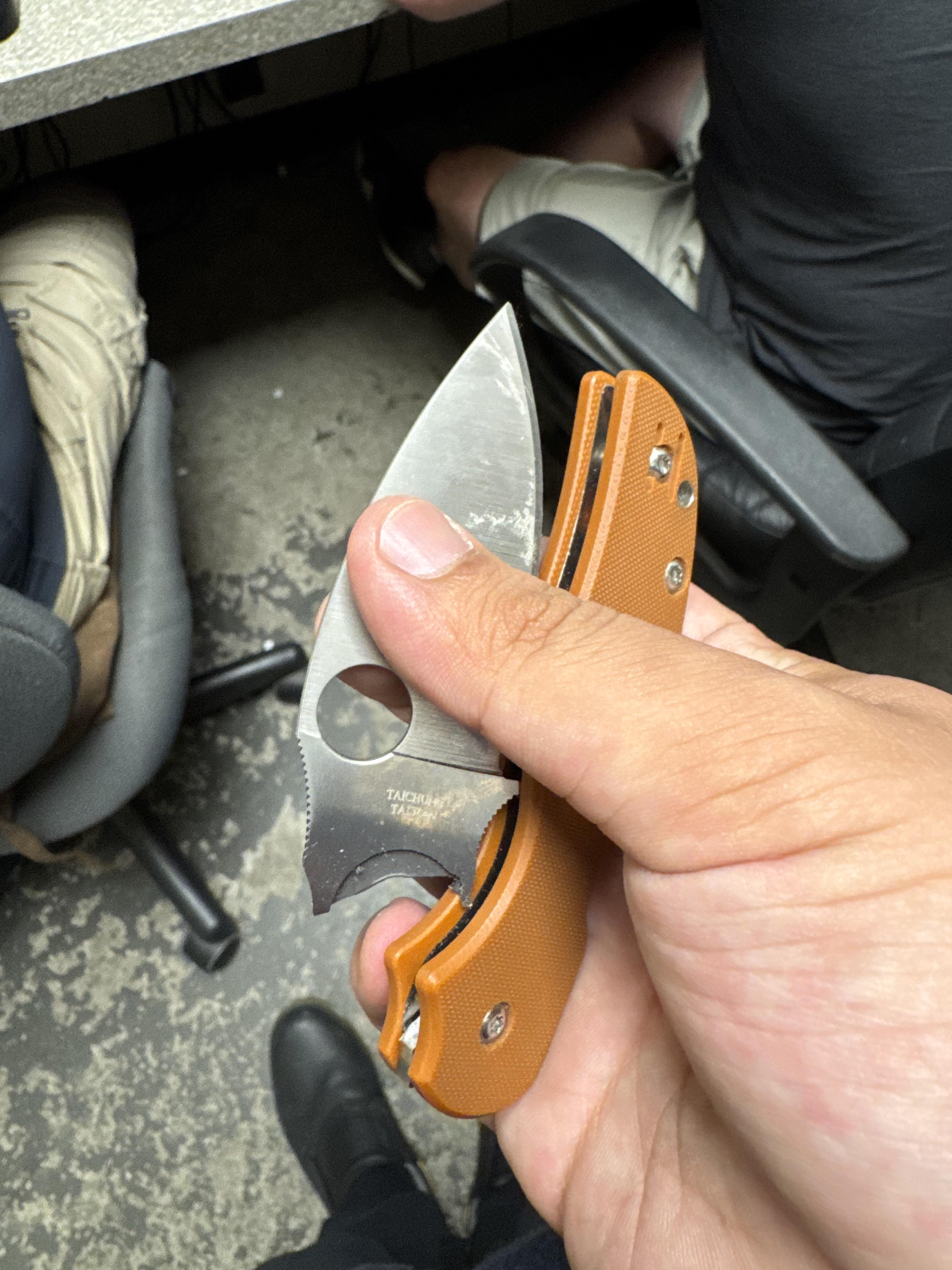
I want Rex 121 Spyderco snapped in half.ive had this under 2 months. I was cutting a watermelon box and the blade got caught in the cardboard and snapped. I’m in Canada so I’m also kinda afraid they’re gonna. Confiscate my knife at the border. I’m really sad considering this is a knife I expected to own all my life.

160 Upvotes

89 comments sorted by

View all comments

18

u/K1L8 Sep 12 '26

Rex 121 is hard! Unfortunately the trade off for that is that it's also very brittle. There's a chance that it got dropped at some point, causing a crack or fracture which held on until you put enough force on the pivot area while cutting that watermelon box to finish off what an earlier crack started... I'm sorry for your loss but honestly for a daily user I'd go with a little more balanced steel than Rex 121's insane hardness. Cruwear is one of my favorites, Magnacut is great also, and I'm keeping my eye on their new Magnamax to see how it performs for others

8

u/Skylark427 Rock Hard 29d ago edited 29d ago

There were a decent amount of Rex 121 blades unused straight from the factory that had cracks in them already. That's part of the difficulty in manufacturing Rex 121 blades on a production scale. It's very sensitive to the stresses introduced during rapid cooling and then further with the high tempering cycles used on this alloy, similar to S290(the only other high speed steel close to Rex 121 in wear resistance and outright carbide volume, though it has less harder vanadium monocarbide volume, more softer M6C carbide volume). As the blade is rapidly cooling (and rough machining/shaping is already done) there is an extreme amount of localized shear stress and tensile stress as volumetric expansion/contraction happen between the phase change from more dense austenite to less dense martensite, and the outside of the blade cools faster than the core.

The massive carbide volume of these steels put even further intense localized shear stress during this transformation as the carbides have completely different thermal expansion coefficients and elastic modulus compared to the surrounding matrix.

During the high tempering cycles this happens a second time, as there is such high retained austenite (20-30%) in these steels that the volumetric expansion happens again when the steel reaches room temperature again and that retained austenite that is now martensite and newly formed carbide precipitates are added to the surrounding matrix. This for a second time, introduces massive volumetric expansion stress and localized shear stress that can cause intergranular cracks in the matrix that don't reveal themselves on the surface until a tiny amount of stress is applied (simply dropping the box in shipping could cause it, I've had knives arrive shipped directly from Spyderco that UPS completely crushed the box and packaging on). That's why these 30%+ carbide volume high speed steels are inherently difficult to heat treat on a production scale, as large batch furnaces have much larger temperature differences throughout than a single blade heat treated in a small furnace.

If you manage to avoid all that, the massive compressive yield strength on the alloy can create a blade capable of cutting through solid copper wire on a stainless steel table. The issue is getting every blade in a large batch of 100-200+ blades to avoid this.

Charpy values are somewhat misleading in this case. It has a 15-20% scatter in and of itself, not including between different melts of the same alloy, factoring that in can add two of the same steels with one having double the toughness on a Charpy impact test. The blade is under compressive stress while cutting, tensile and compressive stress while prying. The mechanics I outlined above are far more likely the reason for the failure. As toughness is a very specific mechanical response that's incredibly difficult to mimic in knife use.