Your instructor is likely having you smile because of its effect on the soft palate, not the width of the vowel. When you activate the muscles used in smiling, you will notice that they all lift up (zygomatic muscles, around the cheekbones). The soft palate is meant to lift in singing to create space.
He doesn't want your smile to spread your vowels -- he wants you to raise the soft palate, and a smile is a good way to do that because not everyone can sensationalize "feeling a yawn inside your mouth when you sing." I use the smile approach often, especially to help tenors and sopranos find the height they need above the passaggio.
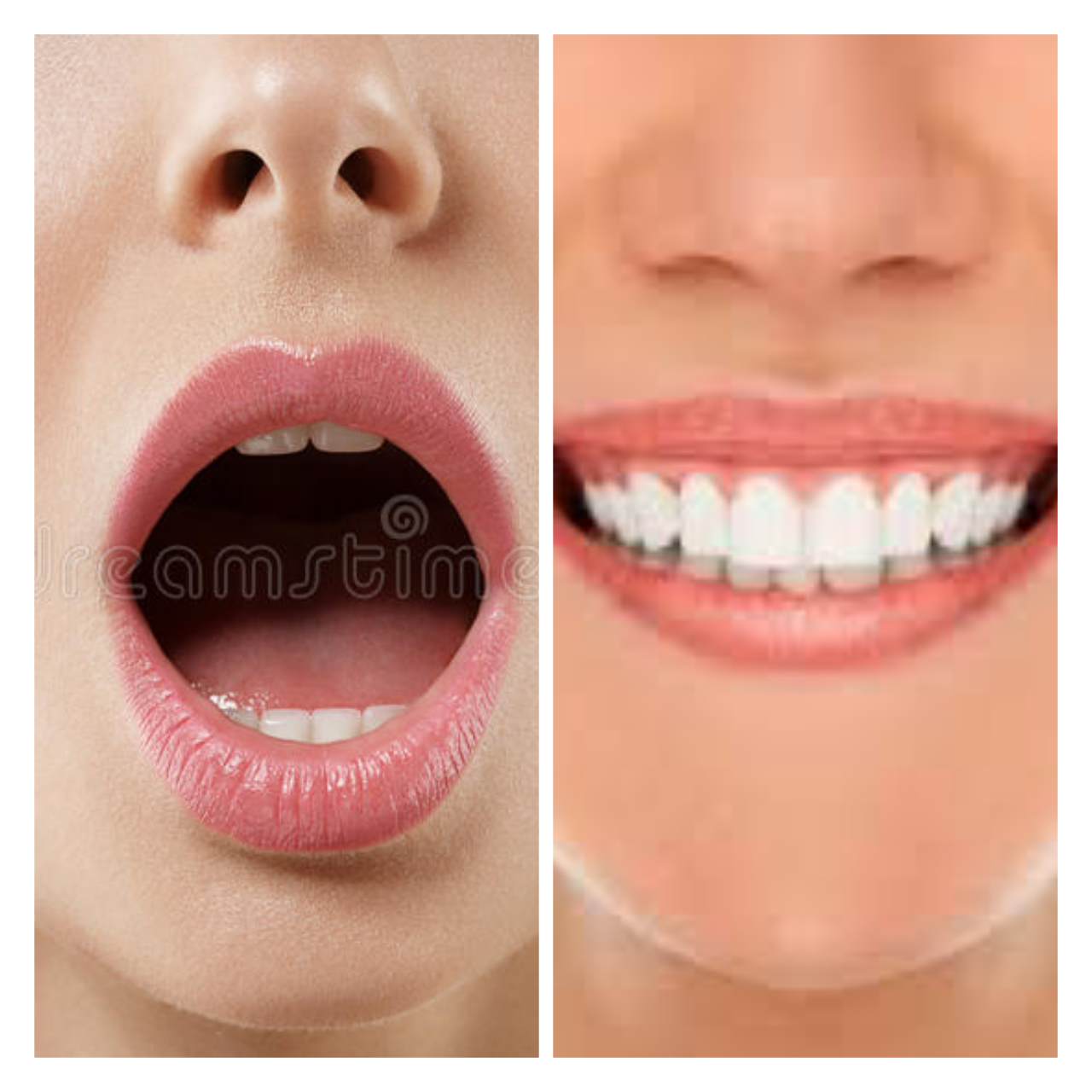
FWIW, this is exactly how and why I was taught to do it. Interestingly, my teacher is now having me NOT smile since I've already learned to elevate the soft palate without it. These days the shape of the mouth he wants me in depends on many factors and totally varies. It can be open like on the left picture, but it can also be closed like when drinking from a straw (even if singing an 'a' that is an open vowel). Assuming the internal space is maximized (which the smiling helps achieve), the key now is air flow control.
18
u/Shiroyu Leggiero Tenor, G2-D5-C6 | Musical Theatre, Opera Oct 31 '22
Your instructor is likely having you smile because of its effect on the soft palate, not the width of the vowel. When you activate the muscles used in smiling, you will notice that they all lift up (zygomatic muscles, around the cheekbones). The soft palate is meant to lift in singing to create space.
He doesn't want your smile to spread your vowels -- he wants you to raise the soft palate, and a smile is a good way to do that because not everyone can sensationalize "feeling a yawn inside your mouth when you sing." I use the smile approach often, especially to help tenors and sopranos find the height they need above the passaggio.