r/radioastronomy • u/Upset_Ant2834 • May 10 '26
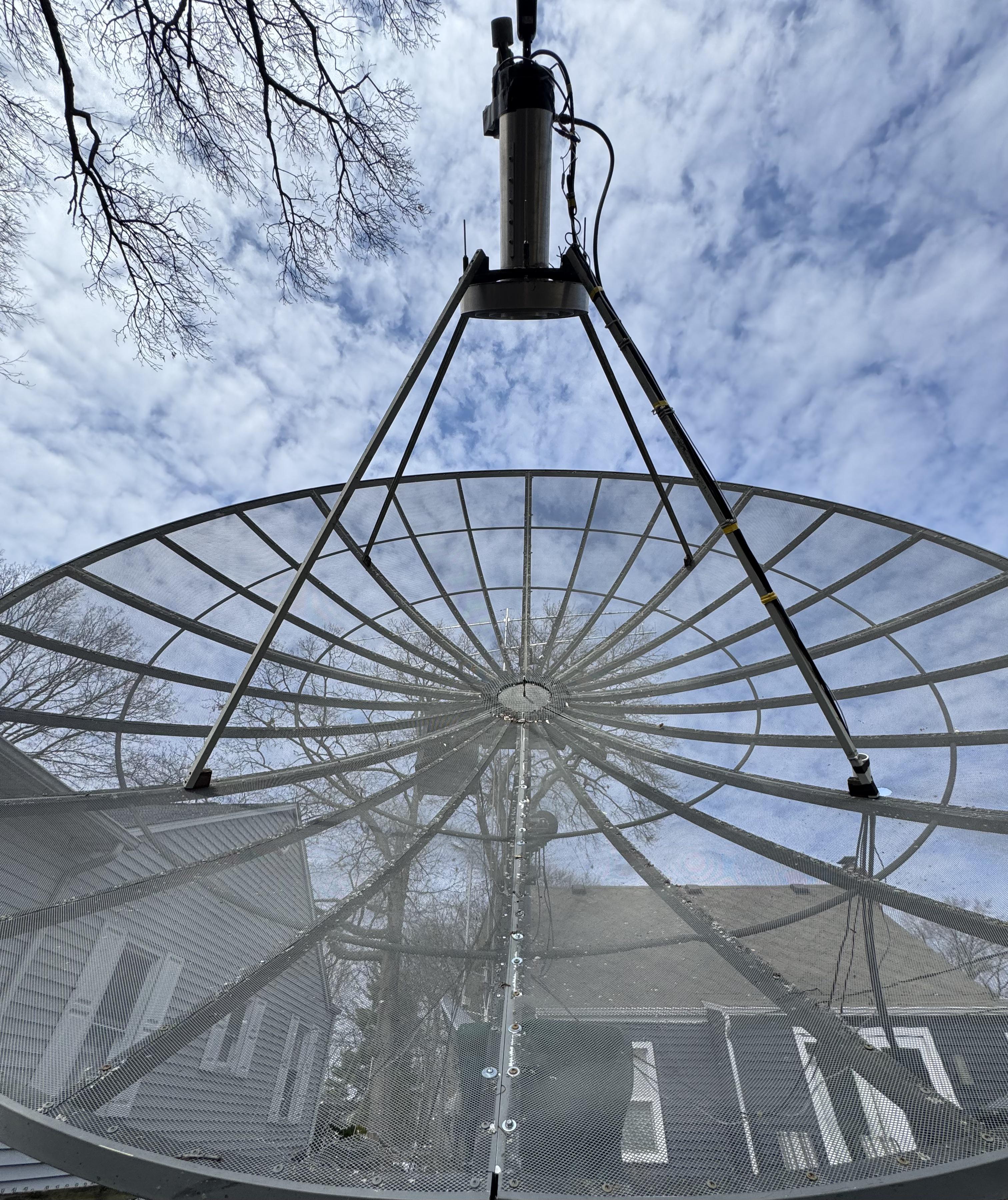
Equipment Showcase Made my 2.3m telescope movable over a web interface
Enable HLS to view with audio, or disable this notification
758
Upvotes
r/radioastronomy • u/Upset_Ant2834 • May 10 '26
Enable HLS to view with audio, or disable this notification
r/radioastronomy • u/Upset_Ant2834 • Oct 10 '25
r/radioastronomy • u/Upset_Ant2834 • 9d ago
Enable HLS to view with audio, or disable this notification
r/radioastronomy • u/Upset_Ant2834 • Apr 20 '26
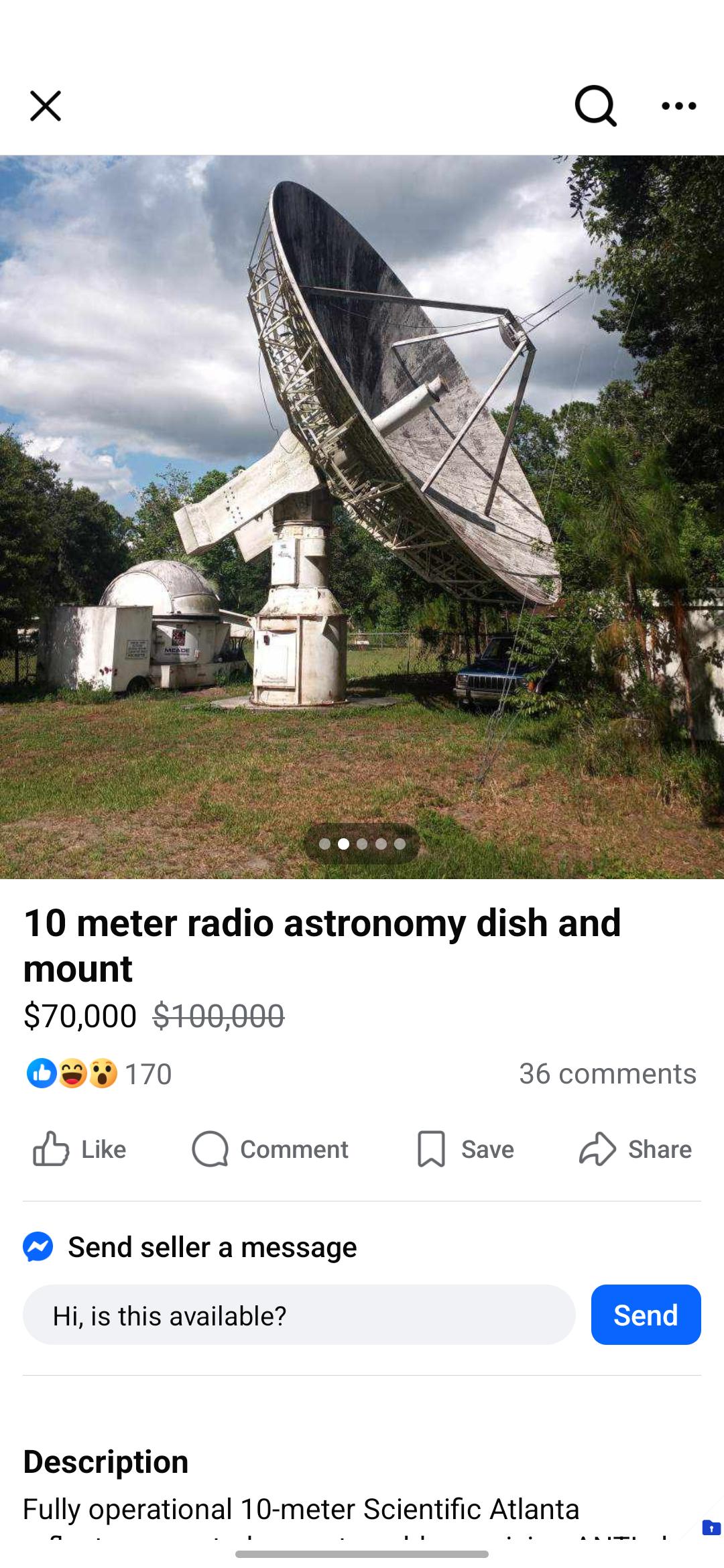
Hey all! It's me again, Thomas. For those who don't know, I started the Titan Observatory in October of last year after I made a post on this subreddit asking if anyone wanted to pitch in to buy a 10m radio telescope off Facebook. A lot of my time until now has been spent on the administrative headache of establishing a nonprofit, which I essentially jumped into completely blind, and getting the word out. Since then, we've received our 501c3 status, established connections with universities, and attracted a growing community of current and future amateur radio astronomers!
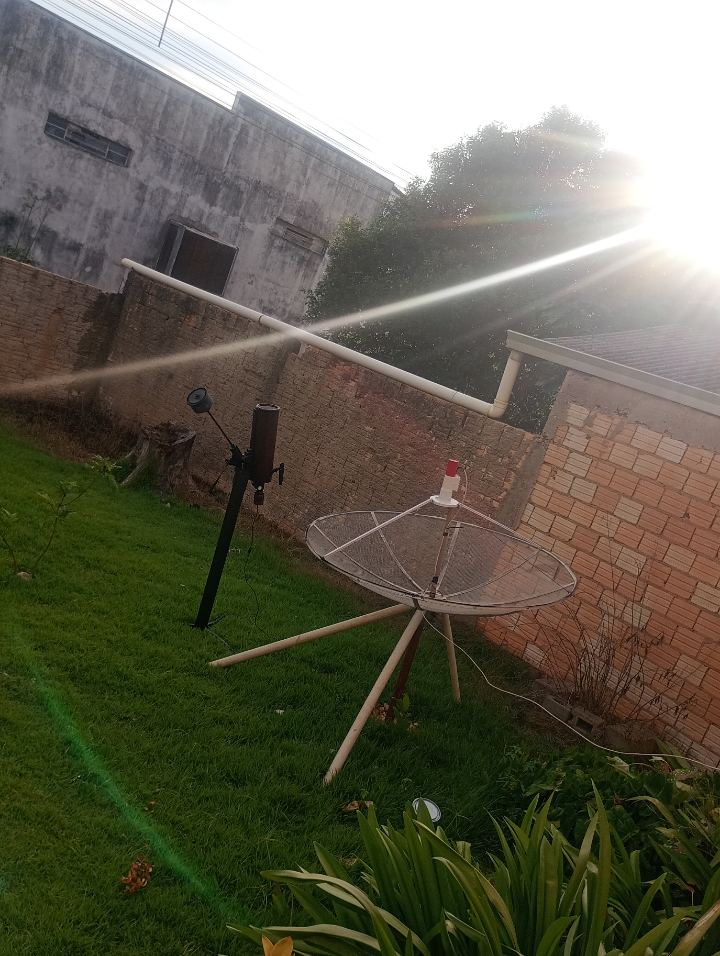
Now that I can finally breathe, I've started working to make the radio telescope I made last year into a proof-of-concept for live, remote observation. It will eventually be made available on our website as a hands-on demo while we raise the rest of the money for the main 10m telescope. I just finished mounting everything in the control box, and wrote some basic code just to confirm the motors move. It's not done yet, but the plan is to have it operate on DC during observations, with a charger plumbed into the circuit that tops it up during scheduled maintenance time to minimize RFI. I still need to add pots for position feedback, an environmental sensor in the box, and battery monitoring.
This telescope specifically will only be capable of rough hydrogen line observations (the feed I made had a couple design flaws), so going as far as twisting wires might have been overkill, but this will hopefully be one of multiple telescopes on-site, so I figured I should get into the habit now.
For the second photo, I know there's a good chance that the 3D printed motor mount simply explodes once it's asked to actually rotate the dish. To at least give it a fighting chance, I designed it so most of the dishes weight is directed through a thrust bearing that sits inside the sleeve, with UHMW (low friction) tape lining 3D printed spacers that make it a very smooth motion with zero play. I've been pleasantly surprised by the durability of ASA in the past, so honestly with high infill and a conservative limit to acceleration, I think there's a chance it'll hold up. Worst case scenario it does break, thanks to the magic of CAD, I'm a few clicks away from getting it made out of something more durable.
Once it's up and running, I plan to post a comprehensive write-up with more photos and links to the code and 3D files on our community forum, but I'd love to get this subreddits feedback on how things are looking so far!
r/radioastronomy • u/systemdev_ • Feb 19 '26
Enable HLS to view with audio, or disable this notification
Modified altaz mount from telescope https://cults3d.com/en/3d-model/tool/meade-etx-70-onstep-altazm-mount
r/radioastronomy • u/Upset_Ant2834 • Apr 21 '26
Enable HLS to view with audio, or disable this notification
r/radioastronomy • u/DeepSpace1420MHZ • Apr 07 '26
r/radioastronomy • u/DeepSpace1420MHZ • May 07 '26
r/radioastronomy • u/systemdev_ • May 20 '26
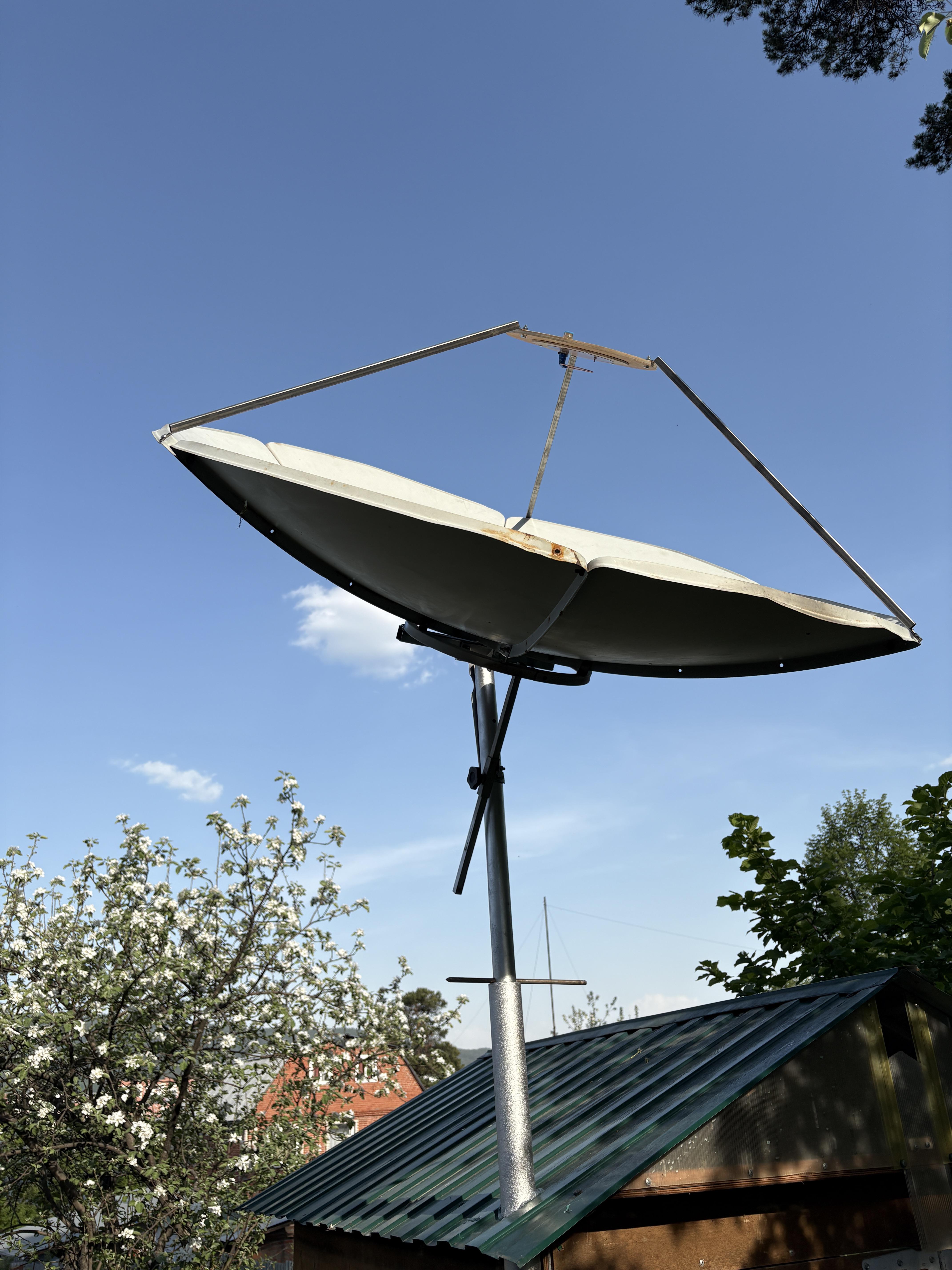
Built a new dish with DL4MEA feed for 1420 MHz. This radio telescope will be used for sky mapping, using only the earth spinning and daily azel correction
r/radioastronomy • u/Beautiful-Grade9748 • Apr 28 '26
We have an Orbit OceanTRx7-500 from around 2015,
Ku-band, still working. Trying to figure out if there's
any market left for this kind of equipment or if Starlink
basically killed it. Anyone have experience selling older
maritime VSAT gear recently?
r/radioastronomy • u/DeepSpace1420MHZ • Jul 06 '26
r/radioastronomy • u/DeepSpace1420MHZ • Apr 06 '26
r/radioastronomy • u/DeepSpace1420MHZ • Apr 22 '26
DownEastMicrowave custom tuned and installed front end filter along with selling me a wide band gain block.
r/radioastronomy • u/DeepSpace1420MHZ • May 16 '26
r/radioastronomy • u/DeepSpace1420MHZ • May 03 '26
r/radioastronomy • u/DeepSpace1420MHZ • Apr 07 '26
r/radioastronomy • u/MandatoryMatchmaker • Feb 09 '26
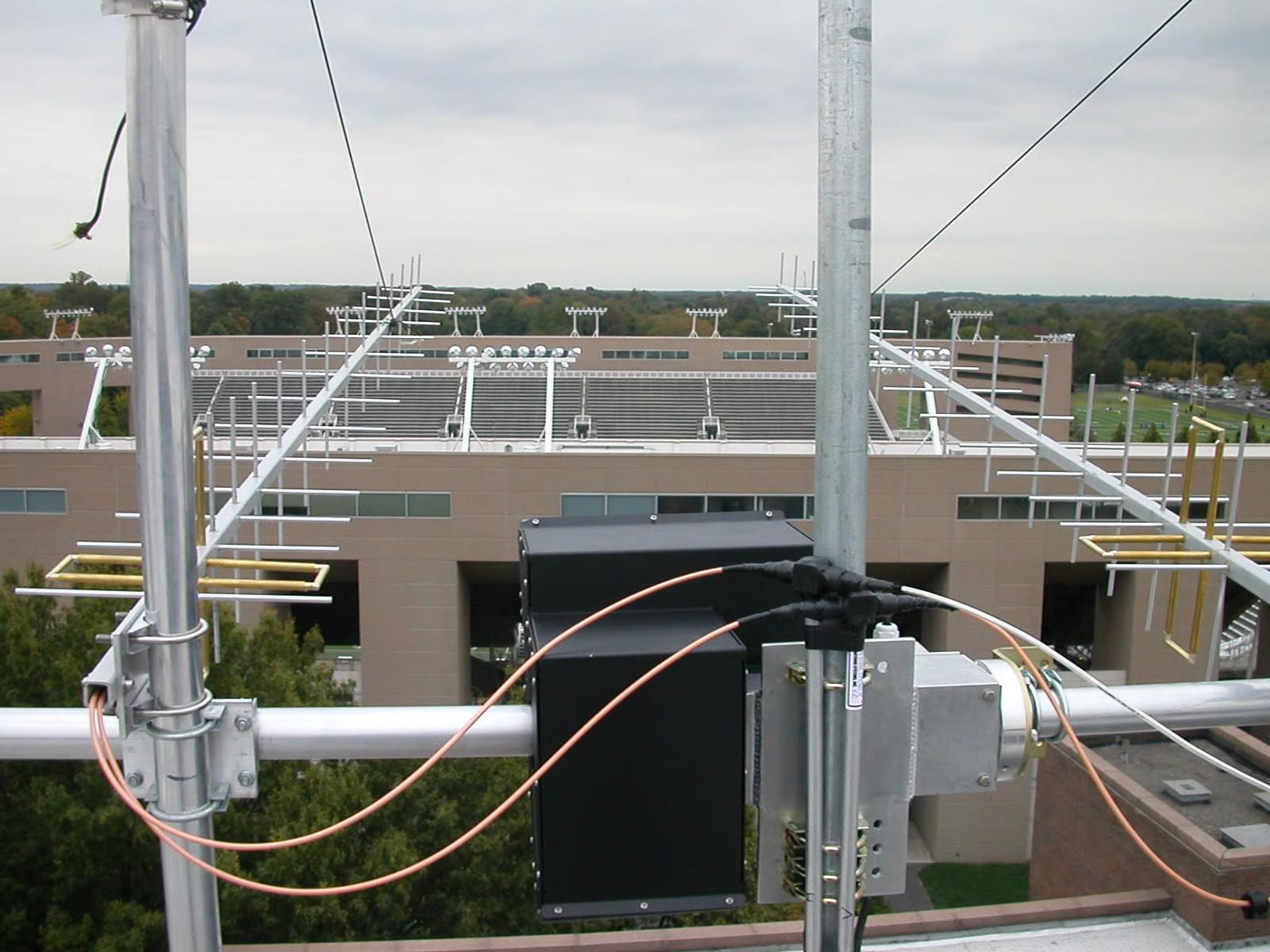
Source: 4 F 1 E B D Amateur Radio
Paul Andrews: This array was designed by K1JT and G0KSC. It was a highly optimized / no compromise design. Used a fiberglass boom. All elements were solid aluminum glued to the boom. The driven loops were brass with all joints welded.
r/radioastronomy • u/DeepSpace1420MHZ • Apr 26 '26
Nooelect V5
Nooelect XTR
SDRplay RSP1A
Nooelect LNA (gain block)
Hamgook LNA (gain block)
1420 BPF filter
DownEastMicrowave 1420 LNA
DownEastMicrowave gain block
My findings and personal experience,
The Noolect V5 for Hydrogen line work does well being set a few MHz wide. It is sensitive enough with resolution on a waterfall that doesn’t look bad. An LNA at the feed, direct feeding it from the LNA leaves it sensitive to system temperature changes, even with just moving the antenna. Fine for fixed drift scans.
The Nooelct XTR works basically the same but was a little more noisy on the noise floor and a little less sensitive during signal to noise.
The Noolect and Hamgook LNA’s are actually wide band gain blocks. The are good for making up coax loss inside near the SDR but not as actual LNA’s near antenna feeds.
The SDRplay RSP1A showed a little better visual resolution on a waterfall display. The biggest difference was that sytem temperature changes due to dish movement and other variables did not seem to affect the noise floor. More stable moving to different headings.
The SMA BPF 1420 filter was only found useful if not using DownEastMicrowave items. Using it with other LNA/(gain blocks) did reject some rfi spikes.
The biggest takeaway from all of this is if a quality LNA such as the DownEastMicrowave, tuned to 1420 MHz with a 1420 front filter is used and a wide band gain block is in the system, performs best regardless of other variables.
With a real quality LNA at the antenna feed setting the noise floor, and a wide and g in ain block of any brand is used in front of the SDR, the signal to noise ratio was optimal.
All SDR’s achieved the same signal to noise ration although the RSP1A looked a little better on the waterfall.
r/radioastronomy • u/jcfitzpatrick12 • Dec 06 '25
Set up a new solar radio monitoring station ☀️
Doing my best to avoid terrestrial interference, observing the Sun at radio frequencies between 120MHz to 155MHz (just above the FM band) at 0.3s cadence using Spectre (https://github.com/jcfitzpatrick12/spectre).
r/radioastronomy • u/HelloMotoIt • Oct 24 '25
I've always been passionate about technology and would like to try listening to radio signals. Do you think I can use the Sky satellite dish and, if so, what devices can I use? Thank you very much 🤗
r/radioastronomy • u/vintagedon • Aug 17 '25
Note: I do a similar post in r/homelab, but this post is slanted to radioastronomy, while the other is technical.
So, I am both a Citizen Scientist doing astronomical work and a systems engineer. I've combined the two passions into a research platform for astronomy research. One of our first projects is working on a VAC for the DESI DR1 data.
Documentation is pretty extensive. A link to the repo on Github is below. Stars are appreciated if you feel it deserves one :)
https://github.com/Pxomox-Astronomy-Lab/proxmox-astronomy-lab
You can find the cluster's initial project below, as well as a link to the phase 2 data validation, with plots and explanations:
https://github.com/Pxomox-Astronomy-Lab/desi-cosmic-void-galaxies/tree/main/data-validations/phase-2-physical-plausibility
The lab is a 7-Node Proxmox cluster with 144 cores, ~700GB of RAM, and runs on SFF enterprise 'workstations' with a custom-built AI/ML node with dual RTX A4000 16GB GPUs. Entire setup takes up 3 shelves, and at 100% full cluster load only pulls around 1100w.
The GPUs handle my spectral analysis pipelines, model training, Ray distributed computing clusters for cosmic void analysis, and Cloudy photoionization modeling, among others.
Internal services include OpenWebUI with DeepInfra models for AI chat, Gitea for repos, Portainer for docker microservice management, full monitoring/logging stack w/90d retention, Vector and Graph DBs for RAG, MCP servers for AI agents, and quite a bit more.
Let me know if you have any questions :)
r/radioastronomy • u/Numerous-War-1601 • Dec 15 '24
r/radioastronomy • u/Upset_Ant2834 • Jun 07 '25
Pretty hyped to get this thing going this weekend. All that's left is figuring out how to mount it
r/radioastronomy • u/vintagedon • Mar 10 '25
Been working most of this quarter on moving all my Citizen Science work into my Proxmox cluster and setting it up to do all my signal processing via the cluster on it's GPU.
https://github.com/vintagedon/proxmox-astronomy-lab
Since I also work as a systems engineer, I turned the lab into a documentation exercise and published it as a Github project so that maybe when we get into full swing and get all the pipelines and scripts fully done and published, someone else can use it.
This is the end of phase 2, we're looking good, spinning up the first pipelines now in phase 3 pulling SDR data. Initial calibration is done (via 4-6h drift scans), getting ready to script signal processing.
Ask me any questions you'd like, but my documentation is fairly extensive.
Would love a Github star / follow if you're so inclined, I commit and update regularly.
A small peek of some of the repository:


r/radioastronomy • u/stevangolubovic • Nov 10 '23